REVIEW · BERCHTESGADEN
Berchtesgaden: Via Ferrata Beginner Tour of Schützensteig
Book on GetYourGuide →Operated by Outdoor-Center-Baumgarten · Bookable on GetYourGuide
Climbing with a steel cable turns nerves into focus. The beginner via ferrata on Schützensteig in Berchtesgaden mixes hands-on technique with big alpine views over Berchtesgadener Land.
I like that you learn the basics of via ferrata belaying, climbing, and resting with a professional guide, and that coaching can be tailored on the spot—like when guides Lukas and Christoph help you feel confident enough to say you need a slower pace. I also love the setup: helmet, gloves, harness, and the via ferrata kit are included, so you can show up and climb without hunting for equipment first.
One thing to consider: this is not for people who freeze with heights. Even on an A/B to B route, the exposure and the way you move up the rock can be tough if you’re strongly afraid of heights.
In This Review
- Key things that make Schützensteig click for beginners
- Schützensteig in Berchtesgaden: the beginner via ferrata with mountain payoff
- What happens before you clip in: gear, safety, and the first lessons
- The Schützensteig route: what A/B to B really means for your body
- Belaying, clipping, and resting: the skills that keep you calm
- The views: what you’ll see and what to look for
- Guides and group size: why this tour feels personal
- Timing and pace: how 4 hours usually feels on this kind of route
- What to bring (and what to skip) so the tour runs smoothly
- Price and value: why $104 makes sense for beginners
- Should you book the Schützensteig beginner via ferrata?
- FAQ
- FAQ
- How long is the Berchtesgaden Schützensteig beginner via ferrata tour?
- What’s included in the tour price?
- Do I need to bring my own harness or climbing gear?
- What languages are the instructors available in?
- Is the tour suitable for children?
- Is it okay if I’m afraid of heights?
- Can I cancel if my plans change?
Key things that make Schützensteig click for beginners
- Beginner route with real challenge: difficulty runs around A/B up to B depending on how you’re guided
- You learn the full skill set: belaying, climbing, and resting—not just the climb
- Gear is included: kit, helmet, gloves, and harness come with the tour
- Coaching matters: guides like Helmut and Willi focus on instruction and comfort, not speed
- Small group feel: one review notes a group of 5 for more personal guidance
- Views are part of the curriculum: green hills, snow-capped peaks, and blue lakes from above
Schützensteig in Berchtesgaden: the beginner via ferrata with mountain payoff
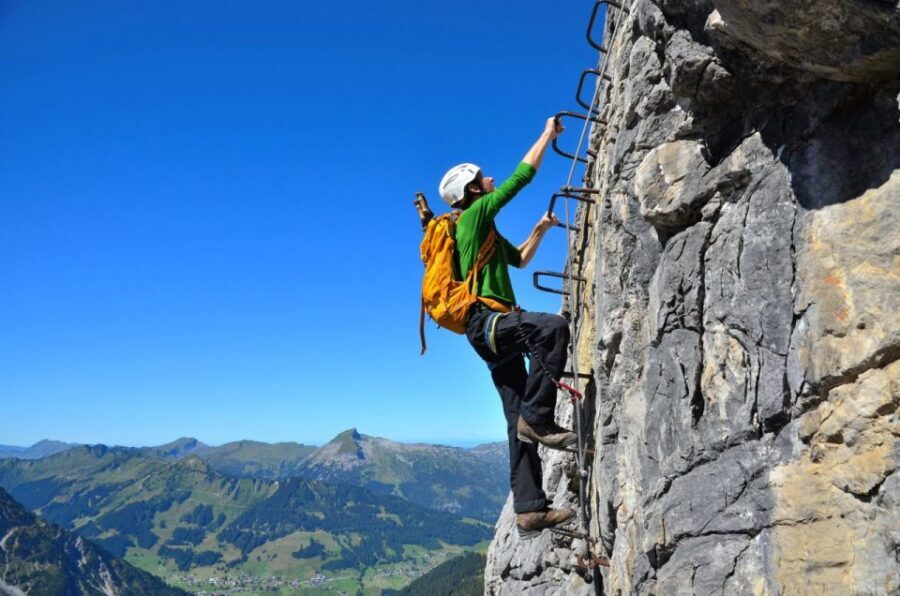
This tour is built for your first real contact with via ferrata, without turning it into a vague sightseeing stroll. You’ll climb a beginner course on Schützensteig and get the feeling of alpine rock under your fingers as you move along the fixed route.
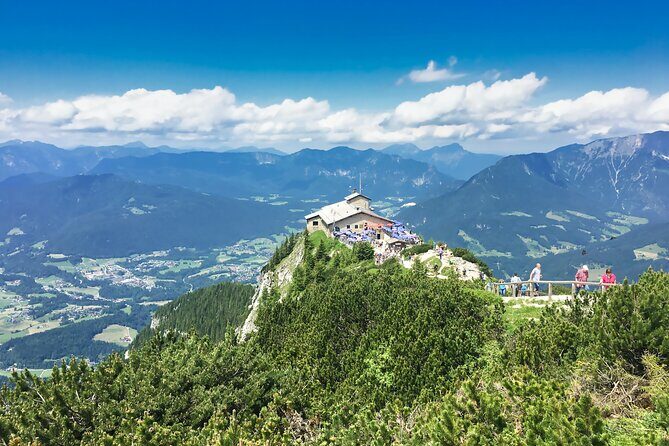
What makes it especially appealing is the combo of technique plus scenery. You’re not just trying to get through the metal and rock; you’re learning how to do it step by step, while you look out over Berchtesgadener Land—rolling green plains and hills, plus snow-capped peaks and blue lakes in the distance.
And yes, the word beginner is real here. Reviews back it up as Einstiegstour friendly, while also warning that there are a few spots that can feel more demanding than you’d expect from a beginner label.
Other Berchtesgaden day trips we've reviewed in Berchtesgaden
What happens before you clip in: gear, safety, and the first lessons
The tour starts with you meeting your guide at the beginning of the activity. From there, the first practical focus is getting you properly equipped and comfortable using the harness and via ferrata system.
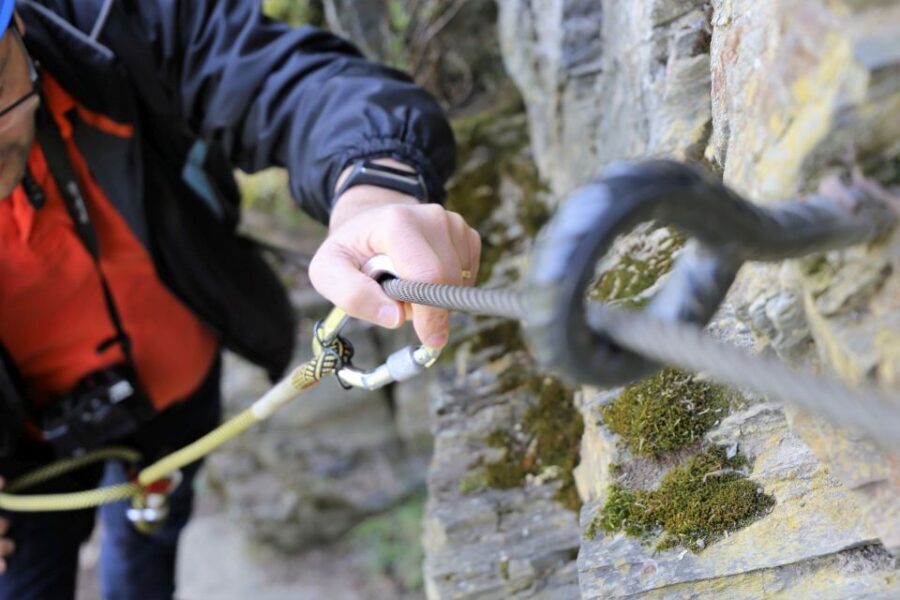
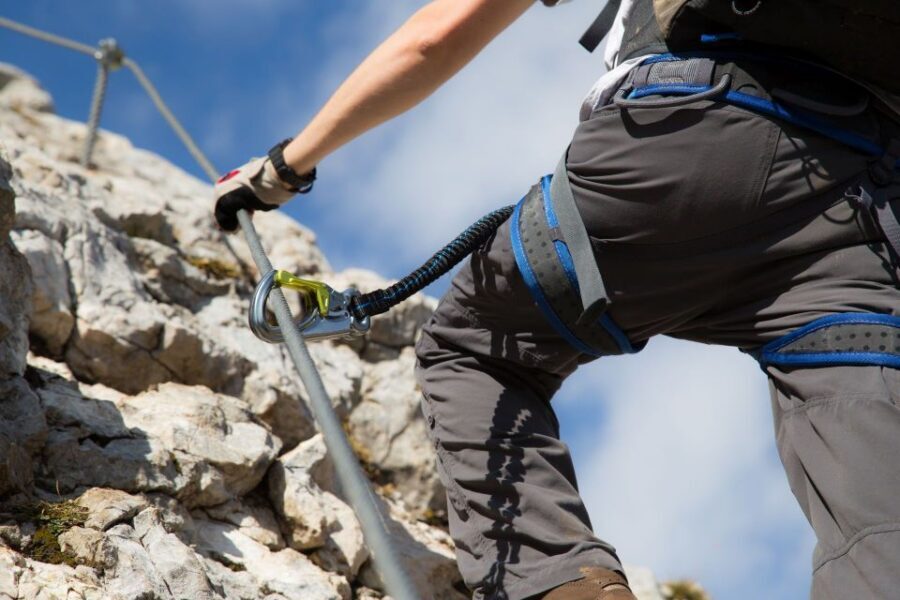
You’ll be given the essential gear: via ferrata kit, helmet, gloves, and harness. That matters more than it sounds. When your safety setup fits correctly from the start, you can spend your attention on technique instead of fiddling with straps or second-guessing the gear.
Then you get the fundamentals from your professional mountain guide, including belaying (how the system helps protect you as you move), climbing (body position and how to transfer weight), and resting (how to pause without panicking or getting stuck). This is the part that makes the rest of the route feel doable.
If you’re nervous, look for how the guides teach. One review describes guides having comfortable conversation on the way up and being clear that you don’t have to follow group pressure if you can’t manage a section right then.
The Schützensteig route: what A/B to B really means for your body
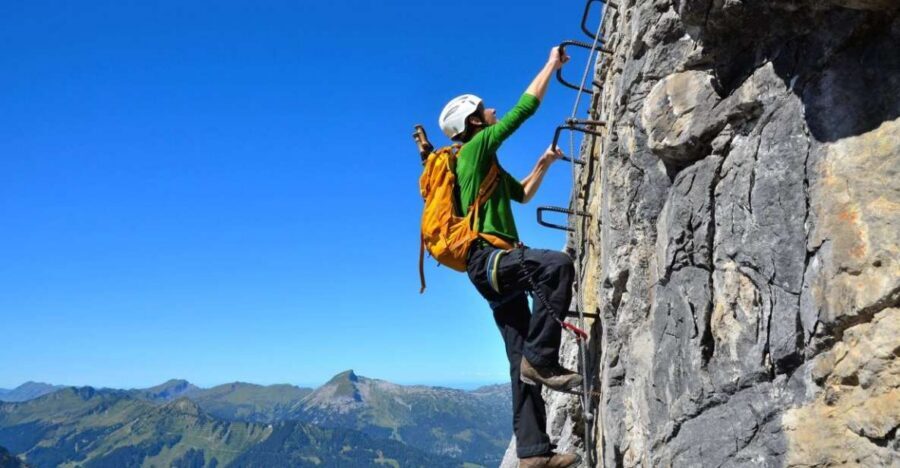
The course difficulty is described as ranging between A/B and B, depending on your level. For you, that translates to: expect a progression. Some sections should feel like guided learning, while others ask for more confident climbing technique and steady balance.
The highlights are honest about the physical feel: you’ll feel the rock at the tips of your fingers as you climb. That’s not just a poetic detail. It’s a reminder that via ferrata is hands-on movement, not just footwork on a trail with a cable nearby.
One review specifically flags that Schützensteig is suitable for beginners but includes parts that are sometimes challenging. That’s a good sign. You want a beginner tour that teaches you on a real route, not one that never asks for anything beyond easy standing.
If you’re in great hiking shape but brand-new to climbing, this tour can still work well. Another review notes that it was challenging but fine for a beginner with good condition and mountain hiking experience—so stamina helps, but it’s not the only factor.
Belaying, clipping, and resting: the skills that keep you calm
A via ferrata beginner course is basically a confidence machine. You don’t succeed because you’re fearless. You succeed because you learn what to do with your hands, where to put your weight, and how to pause correctly.
Here, the guide teaches belaying and how to move with the safety system. You also learn resting, which is huge for beginners. Many people get stuck because they don’t know how to stop without feeling trapped. When resting is taught, you can take a breath and continue instead of spiraling.
During the climb, you’ll follow the guide’s tips on technique. This is where you benefit from having an instructor who can adjust the pace and explain in a way you can actually use.
Reviews praise this kind of support repeatedly. One review mentions Helmut giving clear instructions and translating to English when German wasn’t fully understood. Another highlights Willi as empathetic, knowledgeable, and funny—which sounds like personality, but it usually equals better stress management on a route where you need steady attention.
The views: what you’ll see and what to look for
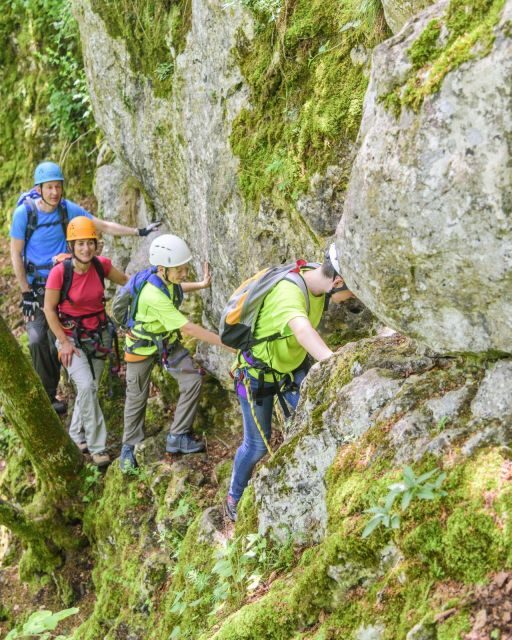
This is not a via ferrata where you spend the whole time staring at your feet. As you rise, the route puts you above the area’s famous mix of green and alpine features.
You’ll see rolling green plains and hills, plus snow-capped peaks and blue lakes from above. That’s a classic alpine viewing set, but what’s different here is the perspective. You’re not just looking from a viewpoint. You’re earning that view while learning how to move along fixed protection.
For your planning, think of it this way: the scenery is the reward, and technique is the path to get it. If you remember that, your brain tends to stay in the present instead of racing ahead to the end point.
And if you’re worried about exposure, use the route’s structure to your advantage. Rest points are there for a reason, and the guide’s job is to help you use them correctly.
Guides and group size: why this tour feels personal
A guided via ferrata can be either great or stressful. This one tends to land on the great side because the instruction style is part of the value.
The included element is a mountain guide for the via ferrata course, and reviews back up that the guides are interactive and supportive. One review calls out conversation with guides Lukas and Christoph that made it easier to speak up if you think you can’t manage a section.
Another review praises Helmut for clear instruction and language flexibility. That’s a practical detail you should care about. Misunderstand one key cue—foot placement, clipping steps, or how to rest—and you can get stuck longer than you need to.
Group size also matters. One review notes a small group of 5 participants, which often means fewer people to manage and more chances for the guide to watch your body position and adjust on the spot.
That’s how you get real beginner progress: not just learning the steps once, but having the chance to correct them while you’re still learning.
Timing and pace: how 4 hours usually feels on this kind of route
The tour duration is 4 hours, which is a sweet spot for a beginner via ferrata. You get enough time to learn the basics, climb the Schützensteig course, and come away feeling like you actually picked up a skill—not just had an exciting hour.
The pace is guided. That’s the point. Your guide can likely adjust how long you spend on technique learning versus climbing through sections rated A/B to B.
A helpful mindset: treat the first half as training and the second half as practice under improving confidence. If you focus on “good steps and clean technique,” you usually enjoy it more—even when a section feels more demanding.
What to bring (and what to skip) so the tour runs smoothly
This is the kind of outdoor activity where small prep choices make the day easier. Your list is straightforward:
Bring:
- Food and drinks
- Hiking shoes
- Weather-appropriate clothing
Not allowed:
- Alcohol and drugs
Here’s the practical angle: wear shoes with good grip for rock surfaces. You’ll be using your hands too, but your feet still do the heavy work. If your footwear is soft or slippery, you’ll feel it right away.
Also, don’t show up without planning for energy. Food and drinks aren’t included, so pack enough for the 4-hour effort and any waiting time before you start.
Price and value: why $104 makes sense for beginners
The price is $104 per person, and what you get matters more than the sticker number.
Included:
- Via ferrata kit
- Helmet
- Gloves
- Harness
- Mountain guide
- Via ferrata course
Not included:
- Food and drinks
- Cable car tickets
For value, the big win is that you’re paying for instruction plus all the essential safety gear. That reduces friction. You don’t need to rent or buy equipment before you’ve even learned whether via ferrata is your thing.
You also avoid the “I brought the wrong gear” problem. With helmet, harness, gloves, and kit included, you can focus on learning the system correctly.
One more line item: cable car tickets aren’t included. If you plan to use a cable car to reach the start area, factor that into your day. The tour itself also notes a parking fee in the large parking lot, so plan for that on arrival.
Should you book the Schützensteig beginner via ferrata?
Book it if you want your first via ferrata experience to be real, guided, and skill-focused. You’ll learn the basics of belaying, climbing, and resting, you get the full gear setup, and you get mountain views that make the effort feel worthwhile.
Think twice if you’re afraid of heights. The activity isn’t suitable for people who struggle with exposure, and the route’s fixed structure still involves moving along rock where you’re not fully protected from the feeling of height.
If you’re a beginner with solid hiking condition and you want a confidence-building introduction, this course is a strong match. The guide-led coaching style—helping you speak up, explaining clearly, and making the route feel manageable—seems to be exactly why people come back or recommend it for first-timers.
FAQ
FAQ
How long is the Berchtesgaden Schützensteig beginner via ferrata tour?
It lasts 4 hours.
What’s included in the tour price?
The tour includes the via ferrata kit, helmet, gloves, harness, a mountain guide, and the via ferrata course.
Do I need to bring my own harness or climbing gear?
No. The via ferrata kit, helmet, gloves, and harness are included, so you don’t need to bring your own.
What languages are the instructors available in?
The instructor (mountain guide) works in German and English.
Is the tour suitable for children?
It is not suitable for children under 10 years.
Is it okay if I’m afraid of heights?
No. The tour is not suitable for people afraid of heights.
Can I cancel if my plans change?
Yes. You can cancel up to 7 days in advance for a full refund.