The route is built around Munich’s old-city spine: walls, gates, a medieval castle, and even a 16th-century plague cemetery turned trendy today. You get a professional paranormal guide, an English tour, and a manageable size (up to 30), so it feels personal rather than like you’re being poured into a crowd.
One thing to keep in mind: this is primarily atmosphere and stories, not museum-style facts. If you want long, document-heavy history stops, you might wish for more time per location.
Quick hits: what makes this Haunted Walk work
- Old City Wall route: Your ghost stories track along the same urban boundary that shaped the city.
- Eight short stops: You get a hit of spooky at each place, without long stretches of standing still.
- Paranormal guide focus: The tour leans into haunting themes, not just folklore history.
- U-Bahn connection at Sendlinger Tor: One of the scariest elements ties to what’s beneath the streets.
- Plague cemetery finale: The last stop changes the mood from urban ghosts to serious 1600s illness and death.
- English and mobile ticket: You’ll need little more than your phone and a bit of walking shoes.
Meeting your guide and finding your start at Jungfernturmstraße 2

The walk starts at Jungfernturmstraße 2, 80333 München, and it kicks off at 7:15 pm. That timing matters. Munich looks different at night: lights soften the buildings, streets feel narrower, and every alleyway you’d normally ignore starts to feel like part of the story.
You’ll finish at Alter Südfriedhof, Thalkirchner Str. 17, 80337 München. That end point is a smart choice. Once you reach the cemetery area, you’re already on the edge of a neighbourhood known for bars, cafes, and restaurants, so you can trade ghosts for local spirits without changing plans.
The group is capped at 30 travelers, and you’ll be walking through multiple spots rather than touring one large venue. That’s good news if you prefer motion and small moments over sitting in one place.
Price, duration, and what you actually get for $34.88
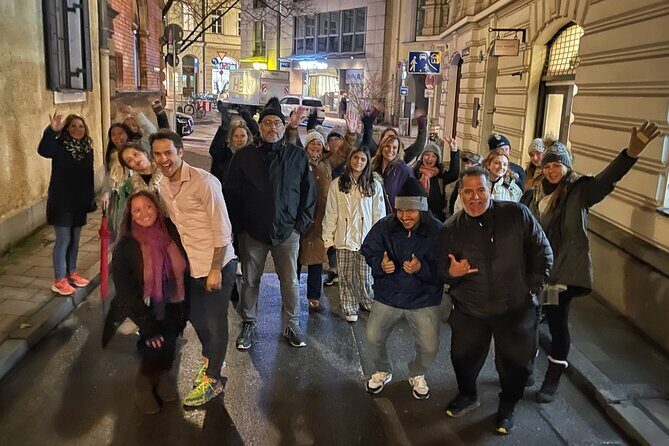
The price is $34.88 per person, and the tour runs about 1 hour 30 minutes to 2 hours. That’s a sweet spot for a night activity: long enough to feel like a real experience, short enough that you won’t lose your whole evening.
Value-wise, a couple details help. You get a professional paranormal guide, and the stops listed on the route are marked as no admission ticket required. So you’re not juggling extra fees mid-walk, and you can focus on the storytelling and the locations.
One practical note: this tour is booked about 45 days in advance on average. If you’re traveling in busier seasons or on a popular weekend, it’s worth reserving early so you don’t end up hunting for the right day and time.
How the walk is paced (and why that matters when it’s dark)
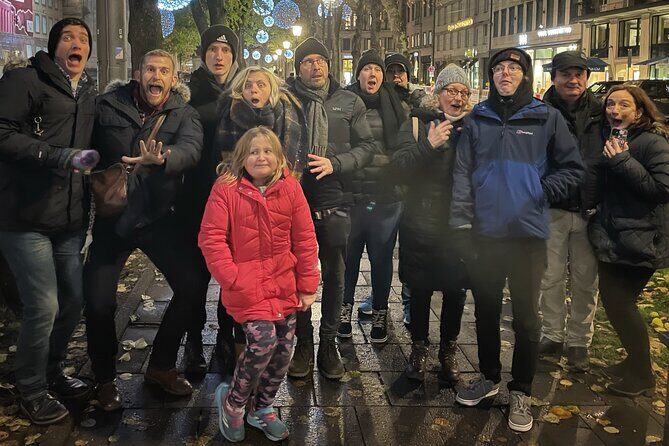
You’ll hit eight stops across the city, with each stop typically lasting about 10 to 15 minutes. That tempo keeps the tour from dragging, but it also means you won’t have long, quiet moments at every location.
At night, that’s a trade-off you should understand up front. The fast rhythm helps you stay in the mood, and you get multiple “spooky setup” moments. But if you’re hoping to stop and take a slow, detailed look around each site, you may want to plan for a quick photo moment on the move and save longer exploring for daytime.
The good news is that the meeting point is near public transportation, so you’re not forced into complicated transit before 7:15 pm. Service animals are allowed too, and the tour says most travelers can participate, so it’s generally built for a typical walking evening.
Stop-by-stop: Salvatorplatz to Alter Südfriedhof
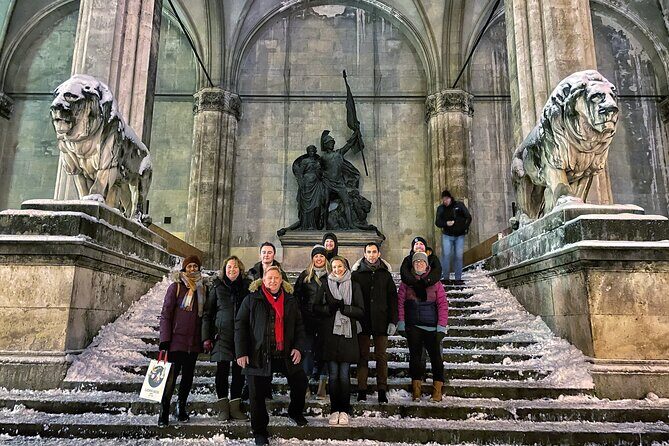
This walk feels like it’s following Munich’s perimeter—starting at a spot tied to the old city wall and finishing at a cemetery that once sat outside city limits. Each stop changes the flavor of the ghost story, from mysterious ladies to plague-era dread.
Stop 1: Salvatorplatz and the ghostly old wall
You begin at Salvatorplatz, in the shadow of the Old City Wall. This is a strong opening because the wall theme sets the rules for the whole night: the city once had boundaries, and boundaries create myths.
Expect a mix of bloody and deathly past stories, plus tales of two mysterious ladies. This first stop is where the guide usually hooks you into the mindset of the walk, so give it your attention. It’s the easiest point to buy into the atmosphere.
Stop 2: Max-Joseph-Platz and the royal family haunting vibe
Next is Max-Joseph-Platz, where a view of King Max I frames the storytelling. The ghost element here focuses on a harbinger that allegedly stalks the royal family, plus other entities connected to the area.
This stop can feel a bit more “royal legend” than “scare in the alley,” which makes it a nice shift. If you like variety in your spooky stories, this is where you’ll notice the tour doesn’t do one single type of ghost tale.
Stop 3: Alter Hof for medieval crime and castle shadows
At Alter Hof, you move into a medieval castle setting. The tour leans into the idea of dark and heinous crimes tied to the site.
The practical value here is location-based storytelling. Even without getting technical, the medieval setup helps your brain picture how old power and old violence could turn into legend. If you enjoy seeing how different eras get layered into city streets, this stop tends to land well.
Stop 4: Marienplatz and the pretty square with a brutal past
Marienplatz looks like the kind of place you’d associate with postcards: a central square with plenty of life. The tour flips that expectation by focusing on the fact that the square’s history includes bloody and gruesome threads.
This is one of the best stops for anyone who likes irony. You’re seeing a familiar “daytime Munich” location, then hearing why it has a darker storyline under the surface.
Stop 5: Viktualienmarkt and a dictator’s guilty pleasure
At Viktualienmarkt, the tone gets more specific and stranger. The story connects a 20th-century dictator to a secret love for one particular item from the market, and the ghostly reason behind the guilty pleasure.
This stop adds a modern edge to the evening. It’s also a reminder that hauntings aren’t only “medieval monks and old walls.” They can be tied to more recent history too, through rumor and legend.
Stop 6: St. Jakob am Anger and demons in the monastery walls
Next is St. Jakob am Anger, a 13th-century monastery. Here, the tour brings in demons and poltergeists allegedly hiding in the walls.
This stop is useful for two different kinds of travelers. If you love old religious architecture, the setting gives you instant atmosphere. If you prefer stories that feel supernatural rather than historical, this is where the haunting angle gets stronger.
Stop 7: Sendlinger Tor, bury-alive fear, and the U-Bahn underneath
At Sendlinger Tor, you reach the other side of the old city wall. The story plays with a simple, chilling question: is there anything scarier than being buried alive. You also get a warning about what might lurk inside the city walls, and what may lie beneath in the U-bahn station.
This is the stop that really benefits from paying attention to sounds and movement around you. When you’re walking near transit, the noise and the flow of people can make the “something under the streets” idea feel closer to reality. One review even singled out a creepy story tied to the subway, and it fits perfectly with this part of the walk.
Stop 8: Alter Südfriedhof and plague-era final dread
The last stop is Alter Südfriedhof, a 16th-century plague cemetery that used to sit beyond city limits. Expect the finale to shift from urban legend into something heavier: death, illness, and fear that doesn’t need fancy creatures to feel real.
There’s also a clever contrast here. The cemetery today is part of a trendy area with plenty of places to eat and drink nearby. That contrast can make the ending linger in your mind in a way that a single “dark location” wouldn’t.
Why the paranormal guide approach works here
A key part of this tour is that you’re with a professional paranormal guide, not a casual walk leader reading a few lines. That matters because Munich is full of beautiful stone and famous squares, and a scripted guide can turn it into background noise.
Here, the guide keeps the city from becoming just scenery. The route is structured so that each location brings a different story flavor, and you leave with a connected feeling: old walls, gates, crime stories, supernatural claims, and then the plague cemetery finale.
And yes, the guide experience can be a standout. In one account, Katrina’s storytelling was praised as top notch, with one particular subway-related story sticking for a long time. Even if you don’t remember every detail, that kind of delivery is the difference between a tour you forget and one you carry around.
What you should do before and during the walk
This is a night activity with real walking between stops. A few practical tips will help the experience feel smooth.
First, plan to be there a few minutes early at Jungfernturmstraße 2. Second, wear shoes that work on uneven sidewalks at night. Third, keep your phone handy for the mobile ticket, since that’s what you’ll use.
During the tour, listen even when the setting looks normal. The spooky magic here comes from how the guide connects what you see to what you’re told. If you drift into sightseeing mode, the story rhythm can break.
If you like asking questions, this tour style supports it. One review highlighted that the guide was friendly and happy to answer questions, which is a good sign for anyone who enjoys interactive moments instead of silent standing.
Who should book this haunted walk in Munich
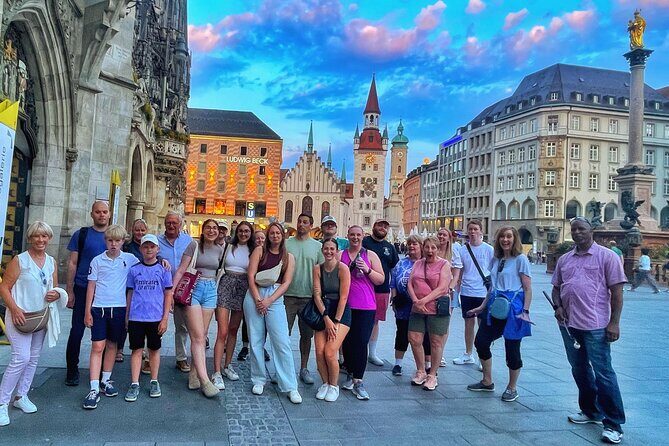
I think this tour is a strong fit if you want:
- A short, night-time activity that feels local and atmospheric
- Spooky stories tied directly to real places around Munich
- A group size that stays under control (up to 30)
It’s also a good choice if you enjoy the “city-walk storytelling” style, where you learn by moving rather than by sitting.
You might want to skip it if:
- You want a long, factual historical tour with deep document detail at each site
- Scary themes make you uncomfortable, especially demons/poltergeists and plague imagery
- You prefer tours with fewer stops and more time per location
Should you book the Original Haunted Walk of Munich?
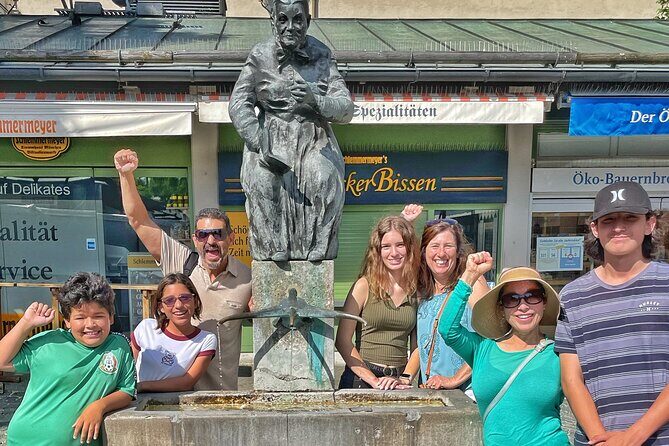
Yes, if your idea of a perfect evening in Munich includes walking at night and letting stories shape the city for a couple hours. The price is reasonable for a 2-hour, English, small-group guided experience with a professional paranormal guide, and the route is set up so each stop adds a new layer of spooky.
Book it sooner rather than later because it gets reserved about 45 days out on average. And plan your next stop right after: ending near Alter Südfriedhof means you can keep the night going with food and drinks nearby, without a long commute.
If you’re curious but a little cautious, go in with the right expectations: this is a guided ghost walk through Munich’s darker legends, with atmosphere as the main course.
FAQ
FAQ
Is the Original Haunted Walk of Munich offered in English?
Yes. This tour is offered in English.
How long is the tour?
The duration is about 1 hour 30 minutes to 2 hours.
Where do I meet the guide?
The meeting point is Jungfernturmstraße 2, 80333 München.
Where does the tour end?
The tour ends at Alter Südfriedhof, Thalkirchner Str. 17, 80337 München.
What is included in the ticket price?
You get a professional paranormal guide and a mobile ticket.
Are there extra admission fees at the stops?
The tour information lists the stops as admission ticket free, so you should not expect additional entry fees for those specific locations.
What is the group size limit?
The tour has a maximum of 30 travelers.
Can I cancel if my plans change?
Yes. You can cancel for a full refund up to 24 hours before the experience’s start time.
If you want, tell me your travel dates and whether you’re more into spooky stories or history-as-story, and I’ll suggest the best time to fit this into your Munich evening.
]]>Two things I really like: the offline-friendly setup helps you avoid surprise phone-data costs, and you can start and pause whenever you want. The main thing to consider is that a handful of stops show as admission not included, so you may need to budget extra if you want to go inside or climb.
Key highlights before you go
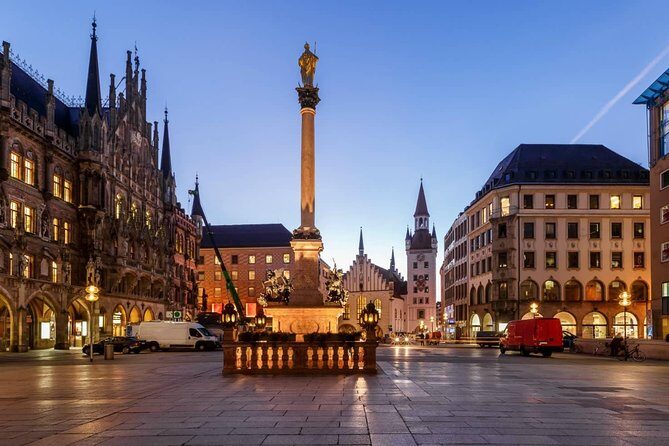
- Offline access to keep data charges down
- Start anytime and pause/resume on your schedule
- Private self-guided play means your group stays together without joining crowds
- English audio stories that guide you through the game
- Worth it for families and teamwork, since you’re solving and observing at the same time
- A mix of free and paid-entry checkpoints keeps the route flexible
What Ghosts of Munich actually feels like on the street
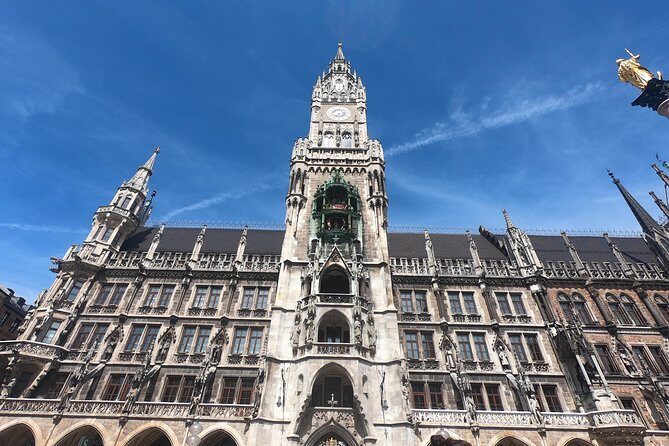
This isn’t a talk-at-you guided tour. It’s a quest game you play while you walk between landmarks, where each checkpoint asks you to notice something and answer a challenge. You’re trading long explanations for small, doable tasks.
If you like city strolling with a purpose, this format makes a big difference. You’ll naturally slow down at squares, church entrances, and odd little monuments that you might otherwise glide past.
And yes, it’s “haunted,” but it’s not jump-scare spooky. Think legends, old stories, and a little mischief wrapped around real locations.
Price, time window, and how to fit it into Munich days
The price is $7.21 per person, and the walk usually takes about 1 to 2 hours. That’s a good value if you want structure without paying for a more expensive guided tour.
You’ll get the most out of it if you treat it as a half-day activity inside Munich’s center. It’s also a smart pick if you’re trying to see a lot fast on a tight schedule, since the game-style stops are short and sequential.
One more planning note: it’s commonly booked about 12 days in advance, so booking earlier can reduce stress.
Start at Odeonsplatz: where a “minor band” story kicks off
Your route begins at Odeonsplatz in Munich’s Altstadt-Lehel area. The square is known for its early 19th-century design by Leo von Klenze, with an Italian-like feel that’s striking even if you’re not a design nerd.
What makes this start clever is how the story reframes a beautiful public space. The game points you toward a hidden slice of history from 1921, when an obscure leader tried to march into Munich to seize control of Bavaria. Authorities were waiting with machine guns at the square, and while some were killed, the leader they were after escaped—then later became tied to enormous tragedy across Europe.
Practical tip: since this is the first checkpoint, take a moment here to get oriented. Once you’re settled into the rhythm of the game, the rest flows quicker.
Hofgarten: a Renaissance garden that asks you to look twice
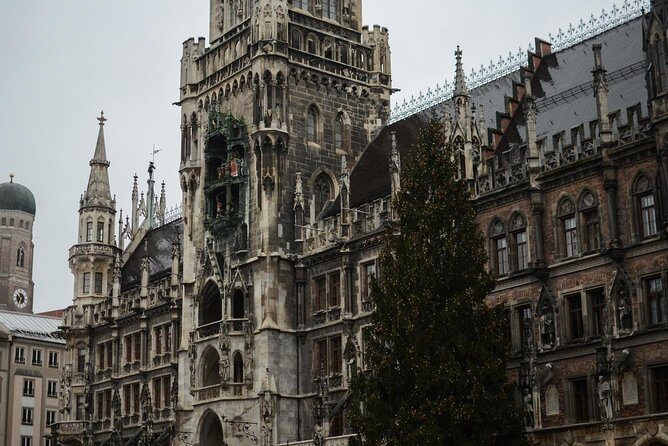
Next up is Hofgarten, a small park at the edge of Munich’s old town. The game’s angle here isn’t just scenic. You’re shown the garden’s origins as a 17th-century design by Elector Maximilian I, inspired by an Italian Renaissance style.
Historically, this was a place for high-ranking people—dukes, electors, and the like. Now it’s open to you, but the game invites you to ask: just because it’s peaceful today, does that mean it’s innocent?
The practical win: this stop is relaxing. You get a breather without leaving the story thread. If you’re walking with kids or teens, this is also a good moment to pause and snack, because the game doesn’t demand museum-level commitment.
Theatinerkirche St. Kajetan: church details you’ll actually remember
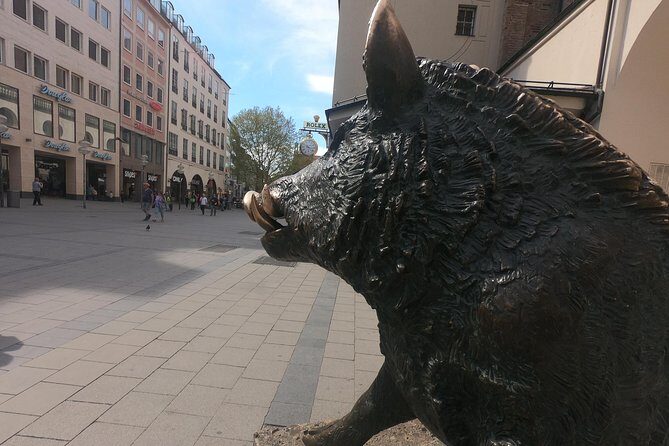
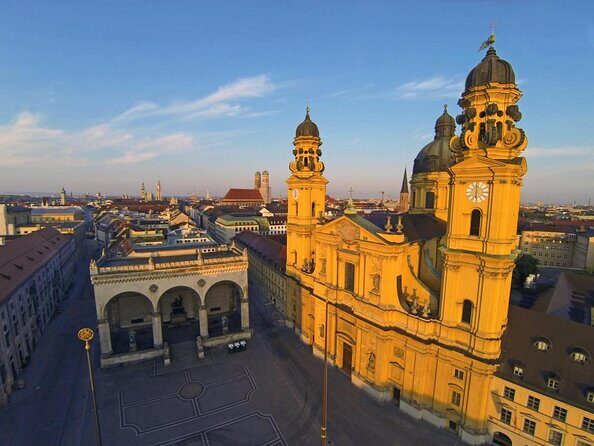
Then you head toward Theatine Church of St. Cajetan (Theatinerkirche St. Kajetan). This one has a strong “Munich Baroque” identity: the church was built in the mid-17th century by Elector Ferdinand Maria and his wife Henriette Adelaide, as a tribute to the long-awaited heir to the Bavarian throne.
Outside, you’ll likely notice the yellow facade. Inside, the contrast is part of the point—the interior is described as white and ornate, and it became influential in German Baroque architecture.
Here’s the practical consideration: the admission at this stop is listed as not included. That doesn’t mean skip it; it just means you should be ready for a paid entry decision if you want to see the interior and complete the challenge that depends on it.
Sitzender Keiler (Sitting Boar): the luck-rub moment
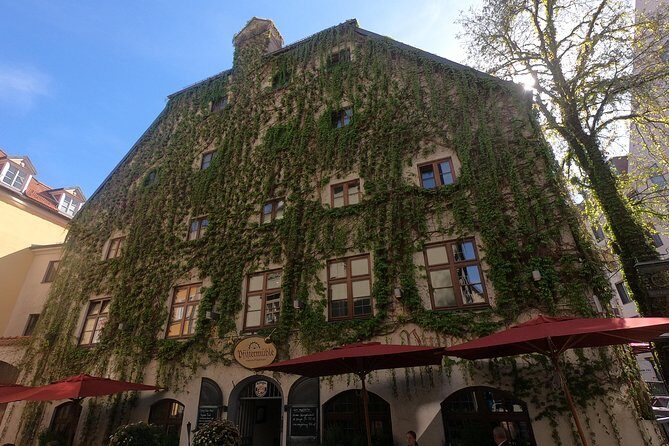
As you move onward, you’ll reach Sitzender Keiler, the Sitting Boar. It’s a quirky statue with a very specific “pose,” where the pig rests on its hind legs and sits up on short front legs, as if it’s watching something in the distance.
The statue is at the entrance area for the Hunting and Fishing Museum, and the game builds in a classic bit of local superstition: you’re meant to rub the boar’s nose for luck. It’s playful, and it works because it gives you a hands-on action inside a mostly “look and read” experience.
If you’re traveling with people who get bored easily, this is a great checkpoint. It breaks the pattern, adds a physical moment, and keeps the pace from turning into pure sightseeing.
Frauenkirche: twin towers, stained glass, and a Devil story
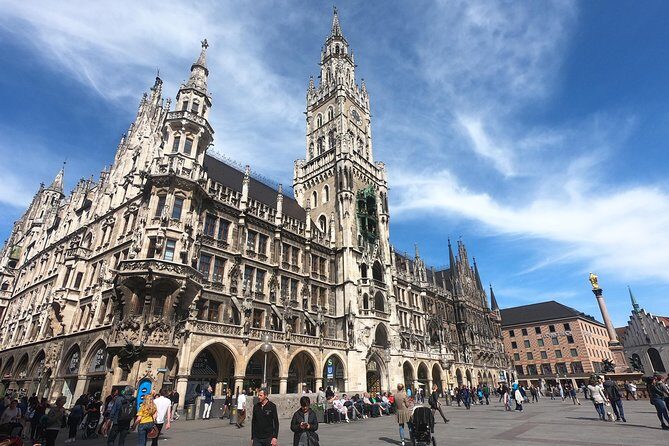
Now you hit one of Munich’s best-known landmarks: the Frauenkirche with its two twin towers around 100 meters high. Even from a distance, it’s hard to ignore.
You’ll likely notice the contrast between the grand exterior presence and the detailed interior—vaulted ceilings and stained glass windows are part of what makes it memorable. The game also turns the spotlight to an entrance legend: the Devil’s footprint.
The story goes like this: the builder supposedly bet the Devil that the church would have no windows. When the Devil realized he’d been tricked, he left a footprint behind. Your job is to figure out the rest by solving the game challenge.
Admission here is listed as not included, so same practical logic applies: decide if you want to pay to go inside and finish the story beats tied to this stop. If you’re okay with skipping paid interiors, you might still get plenty from the exterior experience and views.
Marienplatz: the city’s meeting point for everything
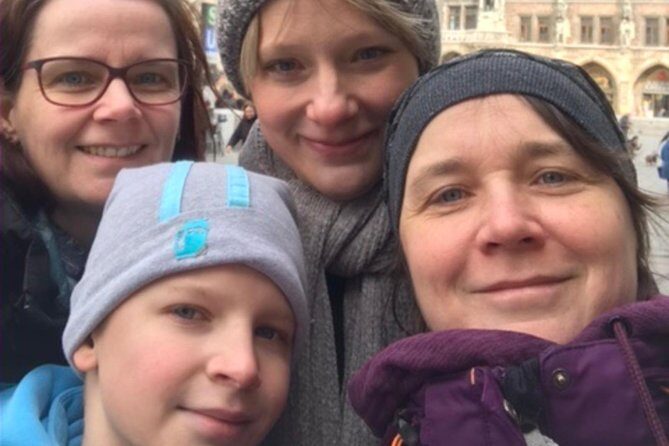
From there, you come into Munich Marienplatz, the central square that’s become a stage for everything: Christmas markets, city celebrations, and sports-related energy when FC Bayern is in the spotlight.
Marienplatz matters historically because it sits at the center of older Munich. The game points you to the idea that the city’s important streets converge here, and that tournaments and events happened there from the early days of the city.
This is a “people watching plus puzzle” stop. If you like to feel the city’s rhythm, Marienplatz is where you’ll get it. And because the stop is only about 10 minutes, it’s not a time sink.
St. Peter’s Church: 299 steps and a mix of styles
Next is St. Peter’s Church, Munich’s oldest Catholic church and a survivor of fires and wars over roughly 800 years. That survival matters because the architecture has been rebuilt again and again, which shows up in a mix of Gothic, Baroque, and Rococo elements.
Then comes the part that makes people say, I get why that was worth it: you can climb 299 steps to reach the tower view. The game’s built-in reward is the bird’s-eye look over Munich’s center.
Admission at this stop is also not included, so if climbing is your goal, plan around the cost and the effort. The good news is that even if you’re not climbing, the church itself is still a meaningful pause, since the style mix is visually obvious.
New Town Hall (Neus Rathaus): Glockenspiel + FC Bayern balcony energy
Your final major stop is the New Town Hall (Neus Rathaus). It’s not just a pretty building. The game frames it as the home of local politics and city council meetings, and it also connects it to FC Bayern, including the idea of the club using the area as a kind of fan-facing balcony on big wins.
Another reason this stop is fun in a game format is the Glockenspiel in the hall’s tower. It draws attention from around the world, and the game ties it to an old story after a plague epidemic, when barrel makers were among the first people willing to step back into the streets and dance for a population gripped by fear.
The final challenge leans into action—think dancing your way through the clue—so by the time you finish, you’re not just standing and reading. You’re ending with a small moment of play.
Admission at this stop is marked not included, so if any part of the experience depends on entering or accessing specific areas, expect separate entry choices.
Offline play: why that matters more than you think
One of the strongest practical features here is that you can access the game offline, helping you avoid expensive phone data charges. In Munich (and elsewhere), that kind of control is underrated. It means you can still move through the city even if signal is weak between stops.
Here’s how to make it work smoothly: once you book, set up your phone before you start and keep your battery in mind. A game that uses location cues and audio can be easy to run—just don’t leave everything to the moment you step onto the sidewalk.
No physical guide: the good and the trade-offs
You won’t have a person with a microphone. That’s part of why the experience can stay private and flexible.
The upside: you can take a break whenever you want without feeling like you’re slowing down strangers. The game is designed so you can start and pause, then resume later, which is great if you’re traveling with kids, older relatives, or anyone who needs frequent hydration stops.
The trade-off is responsibility. You’re the guide for your group. If you want a lot of extra context beyond what the game gives you, you might feel a bit more limited than with a traditional tour.
If something goes wrong, know where to get help
The overall experience score is strong, but tech-based activities can fail sometimes. If you get charged unexpectedly or the activity doesn’t seem ready, the provider support contact listed for help is:
I’d treat this as your plan B, not your first assumption. Just know that there is a real support channel if your app experience isn’t smooth.
Who this haunted Munich game suits best
This is a great fit if you want structure without crowds. It works well for couples, small groups, and families who like teamwork and observation.
It’s also ideal if you’re the kind of traveler who enjoys puzzles and small “find-the-detail” games more than long speeches. And since the English version includes audio stories, it’s not only about reading text on your screen.
You might prefer a different type of tour if:
- You want a live guide to answer questions on the spot
- You don’t want to deal with paid entry decisions at multiple church stops
- Your group dislikes phone-based experiences, even when offline
Should you book Ghosts of Munich?
Yes, I’d book it if you’re doing Munich at a walking pace and you want to turn famous sights into a short, engaging mission. The biggest value is the combo of offline play, flexible timing, and a private self-guided format that keeps your group together.
I’d hesitate only if your priority is a guided, narrated history lecture with no self-management, because this is built around your phone, your pace, and your puzzle-solving.
If that style sounds like your kind of sightseeing, Ghosts of Munich is a smart, cost-effective way to get deeper than a quick photo stop.
FAQ
How long does Ghosts of Munich take?
It’s listed as about 1 to 2 hours total.
What does it cost?
The price is $7.21 per person.
Where does the experience start and end?
It starts at Odeonsplatz (Odeonspl., 80 München-Altstadt-Lehel, Germany) and ends at Rindermarkt 17, 80331 München, Germany.
Is it available in English?
Yes, the experience is offered in English, with audio stories in English.
Can I use it without mobile data?
Yes. The game can be accessed offline to help you avoid phone data charges.
Do I need a physical tour guide?
No. This is a private self-guided activity, so there is no physical tour guide.
Can I start at any time and take breaks?
Yes. You can start at any hour, and you can start and pause for breaks, then resume later.
Are tickets for all stops included?
Not all of them. Some stops list admission as not included, so you may need to pay separately if you want to enter those places.
Is it private or shared with strangers?
It’s private for your group only.
Can I cancel for a full refund?
Yes. You can cancel up to 24 hours in advance for a full refund. If you cancel less than 24 hours before the start time, the amount paid is not refunded.
]]>My other big plus is how the route is built around Nuremberg’s most atmospheric spots after dark, from the Hauptmarkt to the medieval city fabric around the Kaiserburg. One thing to factor in: there is some uphill walking, and bad weather can stretch the pace toward the closer end of the 1 hour 30 minutes to 2 hours range.
Key highlights worth your attention
- English paranormal guide for story-driven history that stays understandable
- Small group limit (20 travelers), so the walk feels personal rather than chaotic
- Start at Schöner Brunnen in the Hauptmarkt and keep moving through the Old Town
- Seven themed stops built around executions, death, and city secrets
- Near Nürnberg Hbf at the end, which makes it easy to continue your evening
- Moderate fitness needed due to inclines, especially near the castle area
First Steps at Schöner Brunnen: a 5:00 pm start in the right mood
You’ll meet at Schöner Brunnen in the Hauptmarkt area, right where the action is in the daytime. Starting at 5:00 pm matters because you’re seeing Nuremberg with that in-between light: shops may still be busy, but the streets feel cooler and quieter, and the stories land better. It also means you’re not wasting your whole day. You can do museums, food, or a bit of wandering, then shift into ghost-mode as night falls.
The tour uses a mobile ticket, which is handy if you’re bouncing between transit and sights. And since it ends near Nürnberg Hbf (Bahnhofspl. 9, across from the central station), you can stay flexible after the walk instead of hunting for a return plan deep in the Old Town.
What your $42.24 covers: value for a guided evening route
At $42.24 per person, you’re paying for an organized evening with a professional paranormal guide speaking English. The real value shows up in the format: you get a focused route with multiple stops rather than a single highlight, and the group stays small enough for the guide to keep everyone together.
A nice detail is that the stop plan lists admission as free at each of the locations you visit. That keeps the total cost simple. You’re not trying to guess which sites you’ll need tickets for mid-walk. You also get a structured evening that’s easier than doing a self-guided route if you want the backstory tied directly to each street corner.
Stop 1: Hauptmarkt and the Beautiful Fountain wish for luck
Your first stop is the Hauptmarkt, the classic heart of Nuremberg. The tour points you toward the Beautiful Fountain, and asks you to treat it like a lucky charm before you go digging into the city’s darker past. This is the kind of opening that gets you in the mindset fast: you’re in a central square, but the stories turn the atmosphere serious.
If you like history that feels lived-in—where commerce, power, and punishment all mixed in the same public spaces—this stop is a strong start. The Hauptmarkt also works well for photos because you’re not moving out into side streets immediately. You’ll hear the setup and then start feeling the “creep factor” rise as you walk.
Nurnberger Rathaus: what might be hiding beneath the City Hall
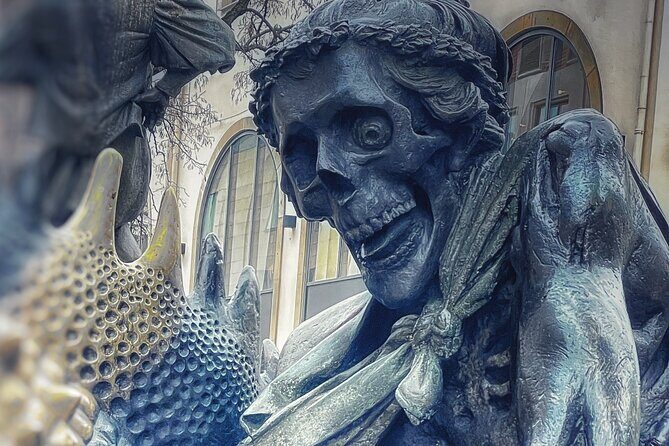
Next you’ll visit Nurnberger Rathaus, the historic City Hall area. The focus here is what lurks beneath—stories that frame the building as more than just a pretty landmark. Even if you’re not expecting anything supernatural to literally jump out at you, the point is the same: public institutions once held real consequences, and the guide connects that to the local legend mood.
This is also a good moment to slow down and listen. The pace is still manageable, but the story content shifts toward how places like this can carry fear and memory. It’s the sort of stop where the guide’s voice matters, since you’ll be standing around long enough to actually take it in.
Kaiserburg after dark: the steep climb and the castle vibe
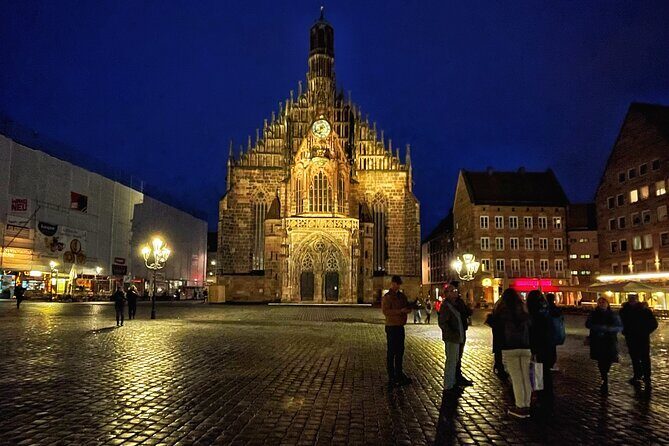
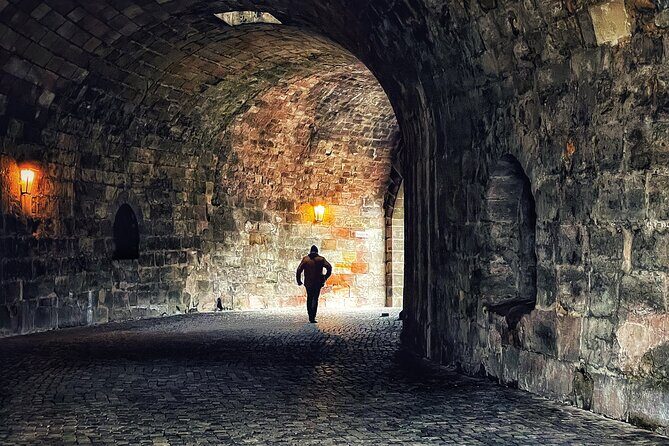
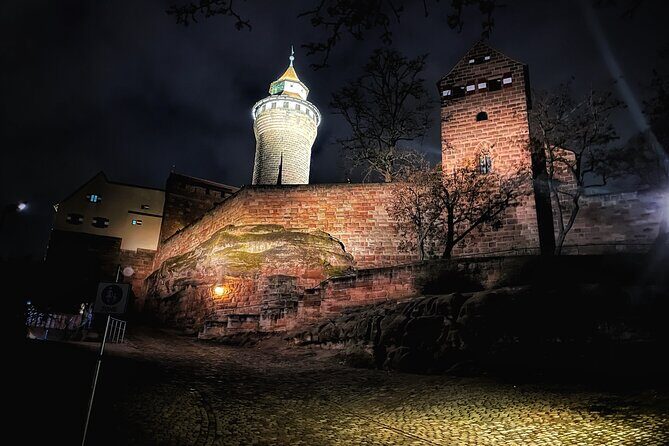
Then comes Kaiserburg Nuremberg—medieval castle territory, and yes, you should plan for a climb. When the sun goes down, this area feels more closed-off, even if you’re still surrounded by city lights in the distance. The tour’s framing is that the castle staff goes home, leaving the shadows behind, and that idea sets up the next wave of stories.
Practical note: if you’re not a fan of uneven steps or uphill segments, wear shoes with good grip and take your time. The tour is rated for moderate physical fitness, and this is one of the spots where that rating becomes real. Still, the payoff is a strong sense of place: you’re walking through the city’s medieval backbone at night.
Albrecht-Dürer-Haus square: stars, sky thoughts, and a lighter tone
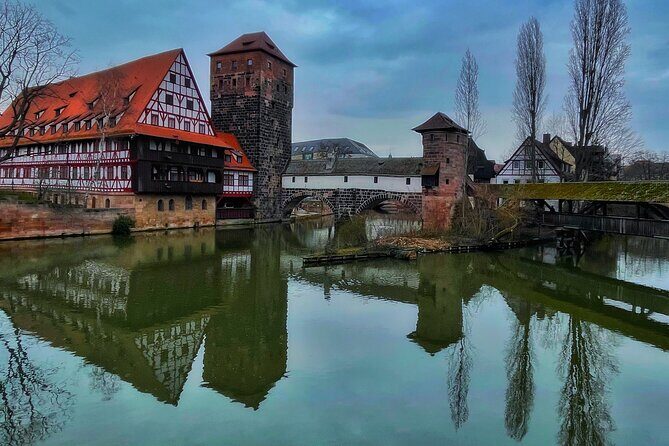
After castle terrain, the tour shifts toward a more open, lively feel near Albrecht-Dürer-Haus. This stop is built around an atmosphere that’s almost supernatural—encouraging you to look up, relax, and let the mood do its work. It’s also a breather in the walk, which helps when you’ve already done the steeper bit.
This part works well if you like your ghost stories with a bit of humor or theatrical play, not just gloom. You’re still in character for the evening, but you’re not stuck in the darkest mood the whole time. It’s a good rhythm choice for a 90-minute to 2-hour experience.
Hangman’s Bridge: crossing the wooden bridge with the executioner in mind
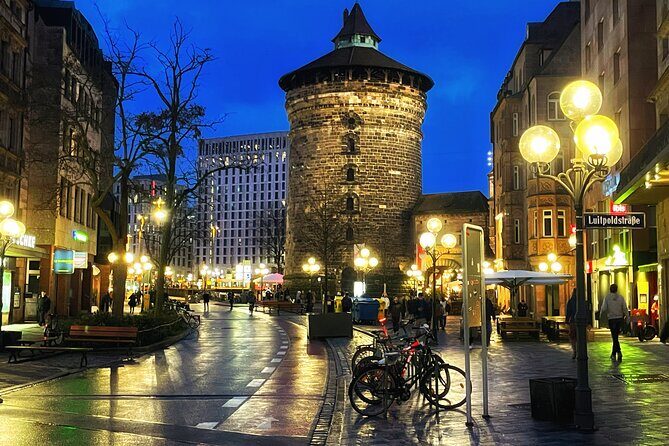
Then you’ll reach Hangman’s Bridge, where the tour leans into the plight of the medieval executioner. Crossing is part of the storytelling here. You’re not just hearing about punishment in the abstract—you’re walking across a spot that helps the guide make the history feel concrete.
This stop tends to be memorable because it’s a specific image: the wooden bridge, the idea of the condemned, and the human machinery of punishment. If you’re a thrill-seeker, this is the moment where the evening starts to feel like a real movie scene. If you’re more history-focused, you’ll appreciate that the tour doesn’t treat death as a joke—it keeps it tied to how medieval justice played out in public.
Weißturmgasse and the White Tower: a not-so-scary reminder
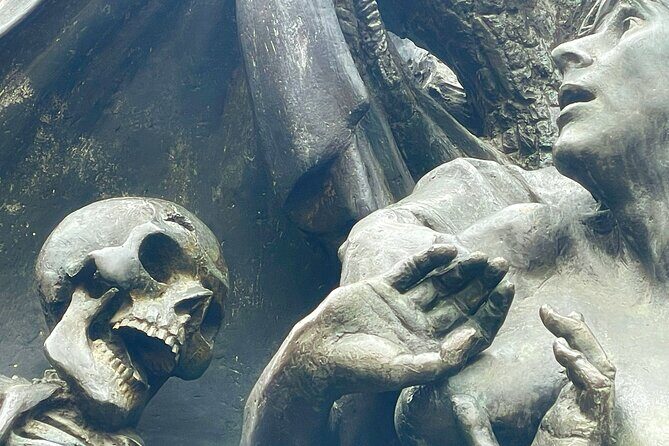
At Weißturmgasse you’ll hear about death in a blunt-but-friendly way at the White Tower. The language in the stop description leans toward a reminder rather than a shock. Think: a guided nudge to consider how people once lived with mortality in daily sightlines, architecture, and public places.
This is another stop where listening matters more than filming. The guide’s job is to connect the tower and the streets around it to the story theme: death comes for us all. Even if you’re someone who hates being scared, this approach usually lands as thought-provoking rather than frightening.
Königstorgraben ending near Nürnberg Hbf: the last story, then real life
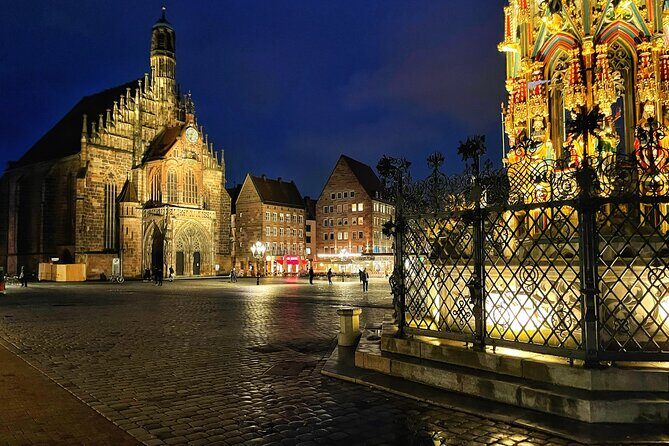
The tour wraps up near Königstorgraben, ending near one of the city’s sinister specters. By then, you’ve gone through the main “dark theme” stops in the Old Town, so you’re primed to notice how the city’s layout supports the legends.
The best practical part: the end point is convenient. You finish across from Nürnberg Hbf (Bahnhofspl. 9), so you can grab dinner, catch a train, or keep moving without trekking back into the far corners. It’s a small thing that makes the whole evening feel easier.
Walking logistics and timing: what to expect from the pace
The tour runs about 1 hour 30 minutes to 2 hours. In good conditions, it feels like a tight evening loop. In worse conditions, you might take a little longer, especially if the ground is slick or visibility changes.
The tour also specifies moderate physical fitness. That doesn’t mean it’s a strenuous hike, but it does mean you should come ready for some uneven streets and an uphill stretch around the castle area. If you’re bringing a group—friends, couples, or solo travelers who want companionship—plan to stick together and wear grippy shoes.
Weather is the one variable you can’t control. If rain is in the forecast, dress for it and accept that the tour may run closer to the longer end of the timing window.
How scary is it, really? Fun spooky, not a horror show
This evening walk is designed as a spooky story experience. It’s pitched for thrill-seekers and history buffs, not for people who want extreme scares. The tone you’ll feel on the walk is more fun than frightening, with the guide using the setting to add tension.
That said, the topic is executions and death imagery. If you’re sensitive to those themes, you might want to mentally prepare for darker content. For most people, though, it comes across as storytelling with restraint: more atmosphere and history-minded chills than jump-scare theatrics.
The guide matters: English delivery and a group that stays together
A paranormal guide is only as good as the clarity of the telling. You’ll want your guide to keep the group moving while still giving enough time at each stop for the story beats. This tour is built for that: a small maximum group size helps, and the guide’s job is to keep the pacing from turning into a shuffle.
If you care about understanding every word in English, this kind of guided approach is worth it. Clear storytelling also makes the locations feel connected instead of scattered. You finish with a mental map of how Nuremberg’s streets tie to the legends.
Who this Nuremberg ghost tour is best for
I’d book this tour if you want an evening that blends atmosphere + history, and you prefer guided storytelling over wandering with an app. It’s also a good first-stop choice for newcomers because it gives you a quick mental framework for the Old Town, ending right back by the main train hub.
It suits:
- History-minded travelers who like their facts shaped into stories
- People who want spooky vibes without going full horror
- Small-group travelers who hate crowds and long waits
- Anyone who will appreciate the route’s mix of squares, bridges, towers, and the castle area
Should you book Nuremberg Ghosts and Gallows?
If your plan includes Nuremberg after 5:00 pm and you’re okay with an uphill walk, I think this is a smart choice. The price buys you a structured evening, a small group, and an English-speaking paranormal guide that connects several famous (and infamous) parts of the Old Town into one coherent night.
Skip it if you want a quiet, low-activity evening, or if you strongly dislike walking when it’s wet or hilly. Otherwise, it’s an easy win for making Nuremberg feel different the moment night arrives.
FAQ
What time does the Nuremberg Ghosts and Gallows evening tour start?
The tour starts at 5:00 pm.
How long does the tour take?
It takes about 1 hour 30 minutes to 2 hours.
Is the tour offered in English?
Yes. The tour is offered in English with an English-speaking paranormal guide.
Where do I meet the guide, and where does it end?
You meet at Schöner Brunnen in the Hauptmarkt area. The tour ends near Nürnberg Hbf at Bahnhofspl. 9, across the street from the central train station.
What is the maximum group size?
The tour has a maximum of 20 travelers.
Are tips included, or do I need to budget for them?
Tips or gratuities for your guide are not included.
FAQ
Is the tour suitable for people with moderate fitness?
The tour is listed as suitable for travelers with a moderate physical fitness level.
Are service animals allowed?
Yes, service animals are allowed.
]]>I also like the human touch. The guide makes the history feel close-up, and the group stays together under night conditions. On reviews, guides such as Hannah Maria, Victoria, Julia, Hugo, and Erika get praised for lively storytelling and keeping people engaged, even when the weather is nasty.
Key Highlights You’ll Actually Feel
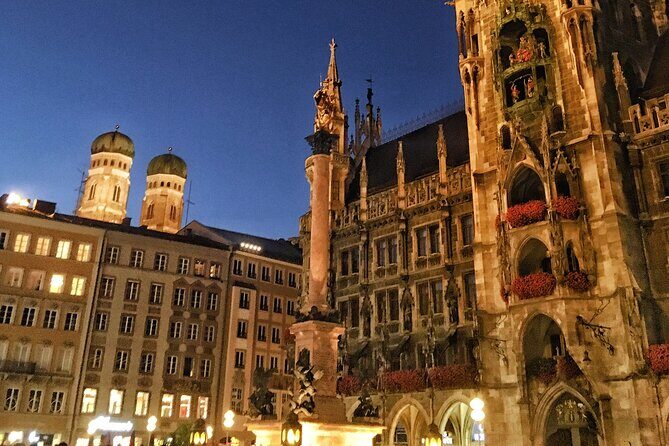
- Night-time route across top Munich squares like Marienplatz, Odeonsplatz, and Frauenplatz
- Three spirit shots included to take the chill out of a long evening walk
- Easy meetup at Ludwig Beck near Marienplatz, with the tour ending back there
- Small group size (max 30) for a more controlled, easy-to-follow stroll
- Non-alcoholic shots available if you request in advance (kids get a non-alcoholic option automatically)
- Classic spooky themes ranging from vampire and werewolf lore to Nazi-era and devil-related legends
Night Walking in Munich, But With the Volume Turned Up
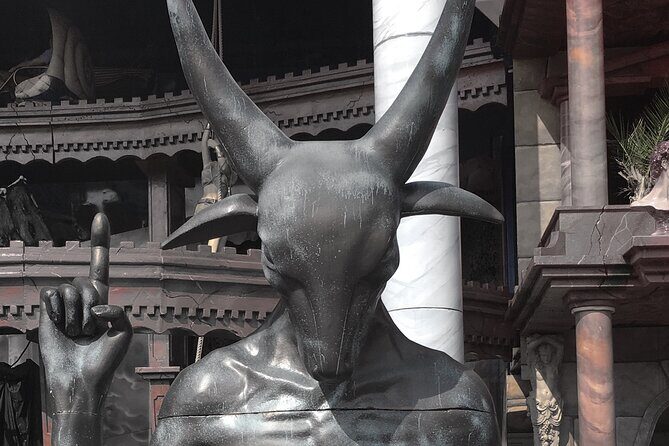
This is the kind of tour that takes Munich’s well-lit reputation and quietly swaps it for something moodier. You’re not just seeing squares. You’re learning the stories that locals attached to those spots after dark.
The format is simple: you meet near Marienplatz, you walk through a handful of specific areas, and your guide connects each stop to ghostly lore. Then, over the course of the evening, you get three spirit shots that the tour treats like part of the theater of it all.
This kind of experience is great if you like history, but you also enjoy the human side of how stories spread. People passed tales around for centuries. They wrapped fear, morality, and power into legends. This tour leans into that tradition hard.
Price and Value: What $60.46 Buys You
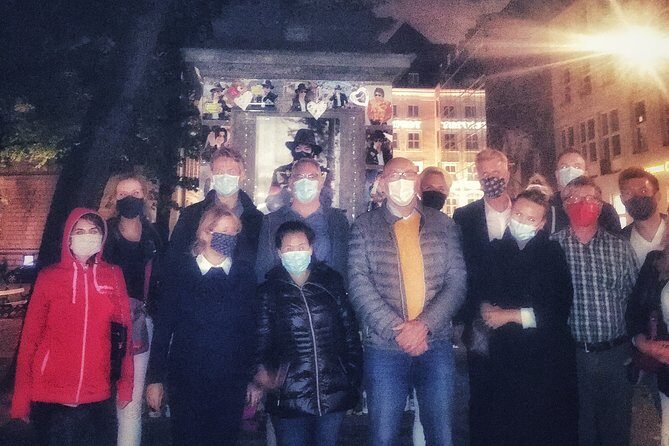
At $60.46 per person for about 2 to 2.5 hours, the value comes from three parts working together.
First, you get a guided evening route that stays in the city center. That matters because you avoid wasting time figuring out where to go once daylight is gone.
Second, the tour includes three alcoholic shots. Even if you don’t plan to drink much, it reduces the extra costs you’d normally expect on a night outing.
Third, it’s capped at a max of 30 people. That size is big enough to feel social, but small enough that your guide can keep control of the group while walking in the dark.
The only “cost” you should factor mentally is your tolerance for night walking. This is not a sit-down show. You’ll be on your feet most of the time.
Meeting at Ludwig Beck Near Marienplatz (And Why That Helps)
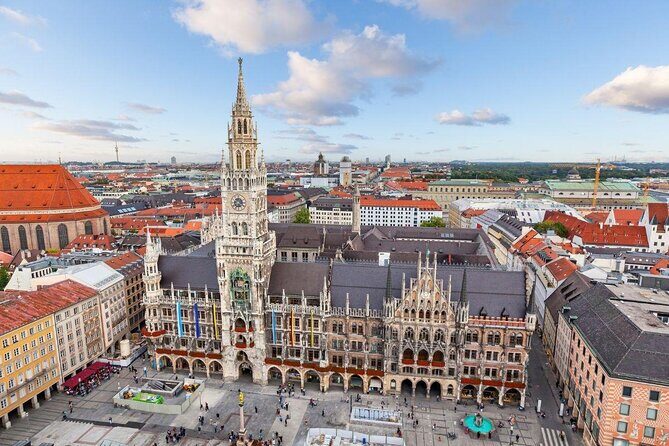
Your starting point is Ludwig Beck – Kaufhaus der Sinne on Marienplatz 11. The tour starts at 7:00 pm, and it ends back at the same meeting spot.
That return-to-start detail is more important than it sounds. At night, it keeps things predictable. You’re not stuck trying to navigate back through unfamiliar streets after the last story hits.
Also, the meetup location is central and near public transportation. That makes it easier to pair this with other plans before or after dinner. And because it’s a mobile ticket experience, you don’t need to worry about printing anything.
Stop 1: Marienplatz’s Darker Angle and the First Legend
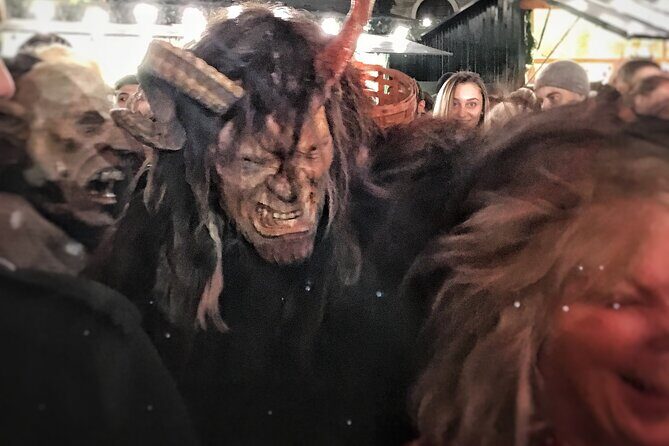
Marienplatz is Munich’s classic postcard square. So it’s a smart place to begin your night, because everyone can orient quickly, even when it’s dark.
At the first stop, your guide sets the tone and introduces the city through its more unsettling side. You’ll hear a legend tied to a miracle nearby, which is a nice move: it reminds you that these stories often grow out of real events and local interpretation, not pure fantasy.
The time here is short, about 10 minutes, which keeps the pace moving. You’ll get the vibe fast, then you’re off to the more story-dense areas.
Stop 2: Platzl and Hofbräuhaus Lore, Including Vampires and Witches
Platzl is where Munich’s beer-hall energy starts to show its teeth. You’ll spend about 20 minutes here, walking through the district with Hofbräuhaus as the anchor point.
What makes this stop fun is the contrast. On the surface, it’s lively and familiar. In the stories, it’s twisted—your guide ties the area to legends like vampires, werewolves, and real-life witches.
This is also where many people start leaning in. After Marienplatz, you’ll probably feel more ready for the myths, because the tour has already shown you how it will connect tales to the places you’re standing in.
If you want your Munich night to mix recognizable landmarks with folklore, this is one of the strongest stops.
Stop 3: Odeonsplatz and the Spooky Politics of the Nazi Era
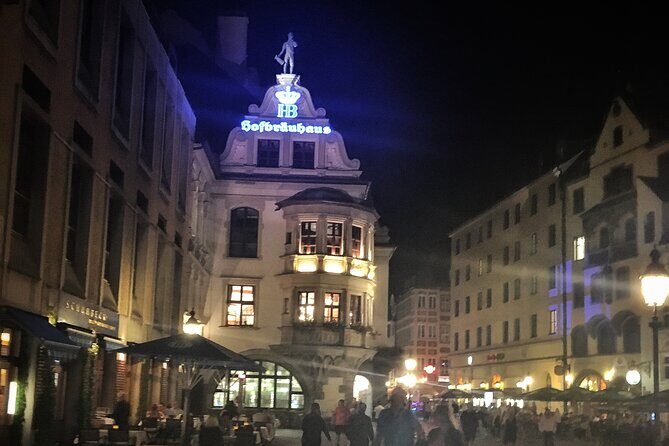
Odeonsplatz brings a heavier theme into the walk. Expect a mix of Nazi-era hauntings and the idea of a devil deal gone wrong.
It’s brief—about 10 minutes—but it’s not pointless. Haunted-history tours can sometimes skip the real weight of modern tragedies. Here, that darker thread gets pulled into the narrative, which changes the emotional temperature of the tour.
If you prefer your horror purely supernatural, this might feel like a sudden shift. But if you’re okay with learning how people mythologize fear, politics, and guilt, it fits the overall style of the night.
Stop 4: Salvatorplatz Old Streets, Towers, and a Third Spirit Shot
Salvatorplatz is where the tour starts to feel like a proper creepy stroll. You’re looking at old streets, quiet corners, and a stop that leans into haunted towers, an evil spirit, and bloody executions.
It’s also about 20 minutes long, so you’ll have time to settle into the mood. This is the kind of stop where your guide’s delivery matters, because the story needs pacing to land without feeling like a list.
And yes, this is where you’ll enjoy your third spirit shot. That timing works well. After the darker material, a quick shot breaks the tension and keeps the tour feeling playful rather than grim.
Stop 5: Promenadeplatz and the Michael Jackson Memorial Twist
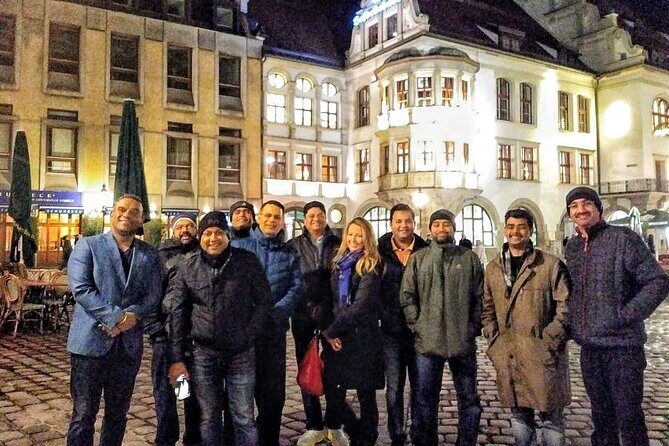
Promenadeplatz adds variety in a clever way. You’ll hear about the ghost of a cruel man, tied to how the citizens of Munich were said to have been terrified.
But then the tour swerves into something unexpected: the Michael Jackson Memorial is part of the stop. It’s one of the strangest attractions in the city, and that oddness works perfectly here because ghost tours do best when they keep you alert and slightly off-balance.
This is about 10 minutes, so it’s not a long detour. Think of it as a palate cleanser: horror, then pop-culture weirdness, then back to the final crescendo.
Stop 6: Frauenplatz as the Big Finale (Satanic Contracts and Tragedy)
Frauenplatz is the penultimate stop, and it’s pitched as one of the spookiest moments of the night.
Here you’ll hear local legends involving Satanic contracts and one of the tragic haunts in Munich. This is the kind of finale that stays in your head because it’s structured like a closing chapter—your guide takes you through the last major story beats and then brings you back toward the meeting point.
It’s another short stop (around 10 minutes), but you end it with momentum. By the time the tour finishes back at Ludwig Beck, you’re likely to feel like you did something memorable, not just walked around in the dark.
The Guides Make It Work: Energy, Storytelling, and Staying Together
A tour like this lives or dies on the guide’s performance. The reviews you provided make one theme clear: guides are praised for being charismatic, enthusiastic, witty, and clear enough that everyone can hear.
Names that came up include Hannah Maria, Victoria, Julia, Hugo, Erika, Erica, and Kristina. People mention that their inflections and delivery make the stories feel alive, not read off a page.
That matters for a ghost tour because you’re absorbing tone as much as content. The difference between a boring story and a good one is often the way it’s told—especially at night when attention can drift.
Good guides also handle the practical side: keeping the group together and making sure nobody gets separated in dark streets.
Alcohol Shots: Fun for Some, Planful for Others
The biggest built-in twist here is that the tour includes three alcoholic shots during the trek.
If you’re a casual drinker, this can be a fun part of the atmosphere. Several reviews point out that the shots help with cold weather and add to the sense of camaraderie.
If you don’t drink alcohol, you still have options, but plan ahead. The tour offers a non-alcoholic substitute upon request in advance. For children, the non-alcoholic option is automatically provided.
So the real advice is simple: if alcohol isn’t your thing, don’t wait until you show up. Request the substitute before the evening so the tour can set it up correctly.
Walking Pace and Night Comfort: What to Expect Under Real Weather
This is a walking tour, and that’s the main “fitness” requirement. Most travelers can participate, but you’ll still want comfortable shoes and a jacket. The tour is at 7:00 pm, so darkness and temperature are part of the deal.
Even in rain, guides are reported to keep things entertaining, which suggests the tour is resilient to typical weather swings. Still, Munich nights can be cold, and you’ll likely appreciate layers.
Also, the route is designed to keep you oriented, with a central meeting point and a return to the same place. That reduces stress, even if you’re tired.
Who This Tour Is Best For (And Who Might Skip It)
This works especially well if you want a different side of Munich on your first evening. It’s not just sightseeing. It’s alternative history with spooky storytelling and drinks folded into the schedule.
I’d also recommend it if you like a mix of vibes: medieval legends, folklore, and even modern-era hauntings such as Nazi-era themes. Reviews mention that it pairs nicely with other history-focused walks because it adds “what people said happened” rather than only dates and facts.
You might skip it if:
- you strongly dislike alcohol even in small shots and don’t want to request a substitute
- you need a quiet, low-energy experience with minimal walking
- you prefer only lighthearted ghosts and want to avoid darker topics
Should You Book the Munich Ghosts and Spirits Evening Tour?
If you’re deciding between another standard walking tour and something with more mood, this is a solid pick. For $60.46, you get a guided night route through major Munich landmarks, plus three included spirit shots that make the evening feel like an event rather than homework.
My booking call: book it if you want an easy, central meetup and a guide-driven story night where the streets actually matter. Ask for the non-alcoholic substitute ahead of time if you don’t drink. Bring warm layers either way, because the stories are only half the reason this tour feels unforgettable.
FAQ
How long is the Munich Ghosts and Spirits Evening Walking Tour?
It runs for about 2 hours to 2 hours 30 minutes.
What time does the tour start?
The start time is 7:00 pm.
Where do we meet for the tour?
Meet at LUDWIG BECK – Kaufhaus der Sinne, Marienplatz 11, 80331 München, Germany.
Where does the tour end?
It ends back at the original meeting point.
Is the tour in English?
Yes, the tour is offered in English.
What is included in the price?
The tour includes a knowledgeable guide and three alcoholic shots. Non-alcoholic substitutes are available upon request.
Can I get a non-alcoholic option?
Yes. You can request a non-alcoholic substitute in advance. For children, a non-alcoholic option is automatically provided.
Are tips included for the guide?
No. Tips or gratuities for your guide are not included.
How many people are in the group?
The tour has a maximum of 30 travelers.
Are service animals allowed?
Yes, service animals are allowed.
]]>