The route is designed for a smooth loop from Stachus Passagen (Karlsplatz) to Marienplatz, with a timeline that puts you at each spot for about 10 to 25 minutes. You get practical brewery rules, food ideas, and even instructions for two viewing points—without needing to hunt down Wi-Fi first (no WiFi required).
Quick hits before you go
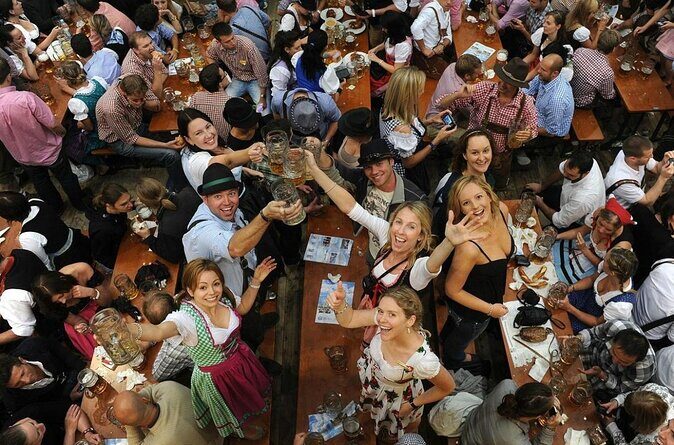
- Offline app navigation: use the route, audio, text, and pictures without Wi‑Fi.
- Breweries plus landmarks: Augustiner and Staatliches Hofbräuhaus are built into the sightseeing flow.
- Oktoberfest context: the Bier- und Oktoberfest Museum helps you understand what you’re seeing during the season.
- Optional viewpoints: you’ll get guidance for tower views, even though tickets aren’t included.
- Local-life stop at Viktualienmarkt: a market break that fits the beer theme without feeling like a gimmick.
A self-guided Munich beer tour that walks you through the classics

This tour works because it doesn’t treat beer like a side quest. Instead, it uses Munich’s most famous places as your wayfinding markers, then swaps in brewing context right when you’re standing where it makes sense. That’s a big deal in a city where you can easily spend half a day “seeing” things without really understanding why they matter.
You’re given a time plan that’s short enough to keep energy up—about 2 to 3 hours total—and it’s paced so you don’t feel trapped in a rigid group schedule. Each stop includes an app guide with audio and text, so you can slow down for photos or speed up when you just want the key points.
And the language match is solid: it’s offered in English. For a self-guided tour, that matters because you can’t rely on signage alone at churches and historic buildings.
Price and value: $37.84 per person for more than “just directions”
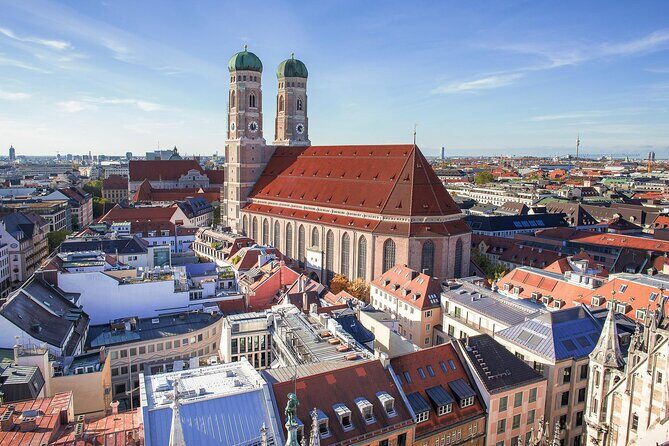
At $37.84 per person, the value is mainly in what’s bundled with the app and guidance—not in a long list of included admissions. You’re paying for:
- an app-based experience with navigation (offline), plus audio, text, and pictures
- tips and rules for brewery visits in Bavaria
- food recommendations for what to try along the way
- a comfortable sightseeing route that links the main sights
- instructions for getting to two viewing points
If you’re the type who likes knowing what you’re looking at before you reach the big photo spots, this price starts to make sense fast. If you only want directions and don’t care about context, you might prefer something cheaper. But if you want the story behind Augustiner, the legends around Frauenkirche, and the Oktoberfest timeline, this is a reasonable way to buy time (and understanding) without adding much planning pressure.
Also, there are group discounts available. If you’re traveling with friends, checking that could lower the per-person cost.
Phone reality check: battery, downloads, and the “no headphones” detail
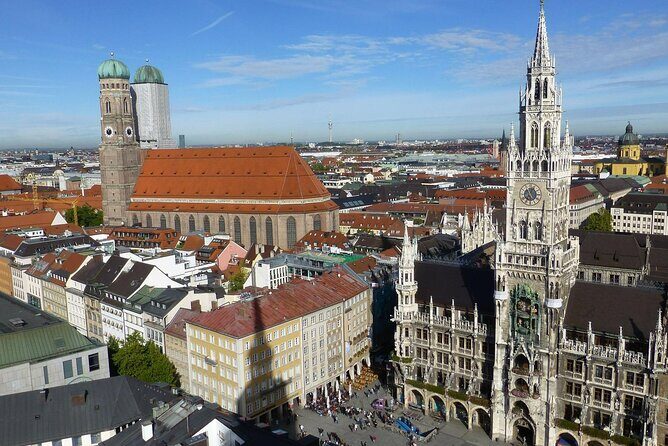
Because this is self-guided, your phone is the guide. The tour expects you to:
- download and use the app
- know how to use your phone during walking days
- have a full battery (and bring a power bank in winter, since cold drains batteries faster)
One practical note: headphones aren’t included. If you don’t already have wired or wireless headphones, plan for it. Otherwise, you’ll be relying on phone audio in a busy street scene.
If your plan includes lots of photos and you’re already the person who drains battery on day trips, take the power bank suggestion seriously. It’s the difference between a smooth experience and a scramble.
Karlsplatz and St. Michael’s: start at Munich’s busiest nerve center
Your walk begins at Stachus Passagen, Karlsplatz 1. This is a good starting point because it’s a known local hub—easy to find, easy to orient from, and right where Munich’s street energy feels real.
Stop 1: Karlsplatz (10 minutes)
You’re there mostly to get oriented. It’s the kind of start that helps you stop thinking in terms of “where do I go next?” and start thinking in terms of “what should I notice here?”
Stop 2: Neuhauser Straße and St. Michael’s Church (10 minutes)
Next you head along Neuhauser Straße for St. Michael’s Church. The appeal here is simple: Munich’s church architecture isn’t just postcard scenery. It’s part of the city’s daily rhythm and older identity—so pairing it with beer culture later gives you a nice contrast.
Possible drawback: churches can require a bit of patience—quiet moments, changing lighting, and sometimes slower movement inside. If your group hates waiting, keep your pace brisk and come back for details later if you want.
Augustiner and Bavaria’s brewing timeline: monks, beer culture, and why it matters
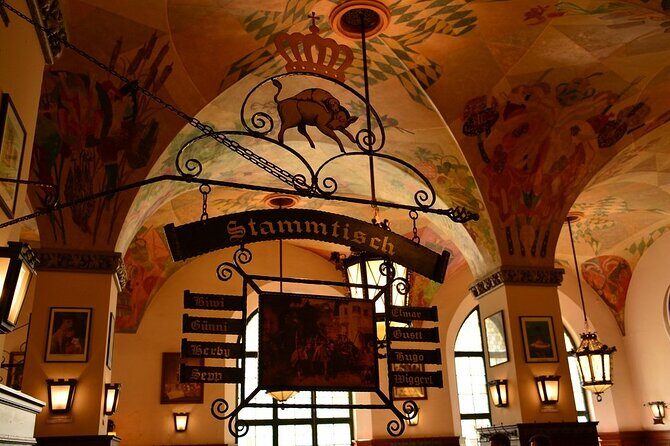
This is where the tour becomes a beer tour, not a walking route that happens to include beer.
Stop 3: Augustiner (Brau Munden) (10 minutes)
At Augustiner, you learn about Bavarian beer production and its history, including the idea that monks brewed beer already from the 12th century. That detail is useful because it reframes beer as part of life and work—not just nightlife.
This stop is short, but it’s packed with the kind of context that makes the later brewery visits feel more meaningful. You’ll have a framework for what you’re seeing: traditions, brewing heritage, and why beer became a natural part of Bavarian culture.
Tip: even if you’re not a “beer historian,” you’ll still benefit. The point is not memorizing dates—it’s understanding why a place like Augustiner isn’t a one-off tourist trap.
Frauenkirche: legends, a footprint, and the skyline rule

Stop 4: Frauenkirche (15 minutes)
Frauenkirche is one of Munich’s big identity anchors. The app focuses on legends and a famous entrance detail: a footprint and the story connected to it. You’ll also get an explanation about why there are no other buildings higher than Frauenkirche. That’s the kind of fact that turns a good view into a reason to care.
Why this stop is valuable: it helps you read the city. Once you know why certain structures dominate, the skyline becomes more than a set of photos.
Possible drawback: 15 minutes can be just enough time to hit the highlights and move on. If you like slow museum-style pacing, plan to add extra time at the church after the tour portion ends.
Marienplatz clocks and St. Peter’s tower options: the “look up” hour

Stop 5: Munich Marienplatz (20 minutes)
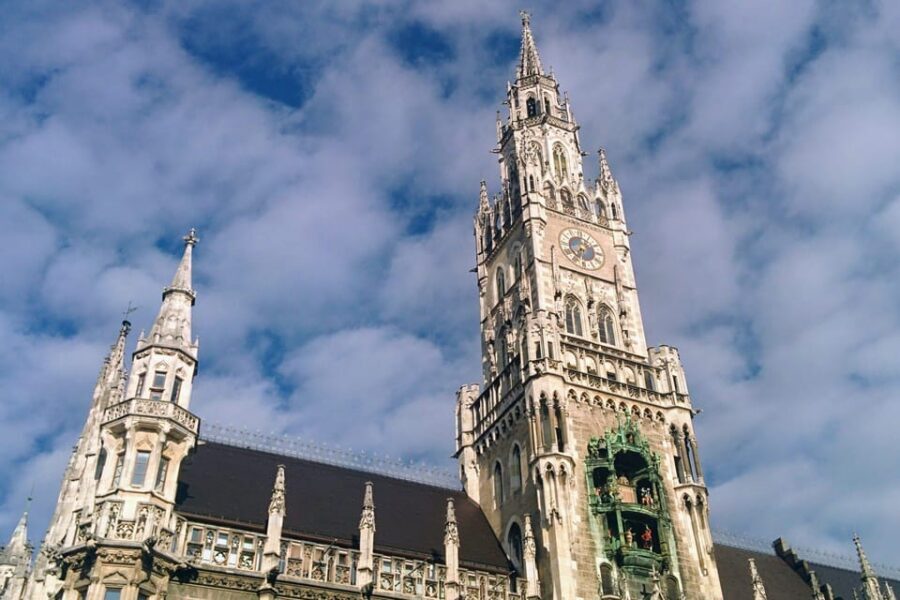
At Marienplatz, you’re stepping into the city’s main square energy. The tour points out mechanical clocks and the dancing figures on the tower—classic Munich sights that people photograph for a reason.
The stop also includes an optional route moment: if you want the panoramic view from the top of the tower, you can—though panoramic tower tickets aren’t included.
Stop 6: St. Peter’s Church (10 minutes)
Then you head to St. Peter’s Church, described as a place full of legends. Like Marienplatz, there’s also an optional main tower panoramic view if you choose to add it (again, tower tickets aren’t included).
Practical note: both churches give you the same payoff: you get the view if you’re willing to pay and climb a bit. The tour’s value here is that it tells you where the viewing options are and how to reach them.
Viktualienmarkt: market life, beer garden vibes, and snack potential
Stop 7: Viktualienmarkt (25 minutes)
This is one of the best “real Munich” stops in the whole route. Viktualienmarkt is where local people meet, and it’s described as a famous farmer market with beer garden time and a May pool. You’ll explore traditions and gastronomy here, and it’s a natural place to slow down because you’re basically in eat-and-wander country.
Why you’ll enjoy it: after church bells and beer history, a market is a reset. It’s where you can switch from “what am I learning?” to “what am I hungry for?”
Possible drawback: markets can be crowded, and the tour portion is timeboxed. If you want a longer sit-down break, treat the tour timing as a suggestion, not a leash.
Residenz München: royal power between beer stops
Stop 8: Residenz München (15 minutes)
Now you reach Residenz München, where Bavarian kings lived and ruled. The tour highlights the impressive halls and interiors. Importantly, the tour says you can visit inside, but it’s not required for the experience.
How to think about this stop: it’s here to explain why beer culture is tied to institutions. Breweries and celebrations don’t just appear out of nowhere—cities like Munich build them into their identity.
Possible drawback: the palace side of things can be more time-consuming than you expect if you add interior exploring. Keep your pacing in mind so you don’t run late for the later brewery highlights.
Staatliches Hofbräuhaus: the Munich brewery everyone recognizes
Stop 9: Staatliches Hofbräuhaus (25 minutes)
This is the big-name brewery stop: Staatliches Hofbräuhaus, described as one of Munich’s most famous breweries and a must-see for beer lovers and non–beer lovers alike.
The app helps you understand:
- brewery traditions
- brewery history
- local dishes you might pair with beer
It’s also given a longer time window than some of the landmarks, which signals what matters here: it’s not just look-and-leave. This is your beer-culture anchor.
Practical approach: use the 25 minutes to do two things:
1) understand what makes Hofbräuhaus a Munich institution
2) pick one local food pairing idea from the tour recommendations
You don’t need to turn it into a feast to enjoy it, but ordering something local makes the stop feel complete.
Oktoberfest Museum and Old Town Hall: where the season story lands
Stop 10: Bier- und Oktoberfest Museum (20 minutes)
The tour heads into Oktoberfest territory at the Bier- und Oktoberfest Museum. You learn about what’s arguably the most famous Bavarian festival and how it has roots going back to the 19th century. You also have a chance to try traditional Oktoberfest beer.
Important catch: tickets for the museum and tasting aren’t included. So treat this as an optional “pay-to-do” moment, not a guaranteed tasting on a budget.
Stop 11: Old Town Hall (10 minutes)
Finally you finish at Old Town Hall and the surrounding area, with a hint that there are more than 20 historical and gastronomical sights you can explore on your own after the tour portion. The timing stays short so you still end the experience on schedule without cutting off free wandering time.
The tour ends at Marienplatz, right where you can keep going with your own plans.
What’s especially well-designed about the route
A lot of city tours end up being either too sight-heavy or too food-heavy. This one balances both because:
- it pairs icons (Marienplatz, Frauenkirche) with identity themes (beer, brewing history, Munich legends)
- it keeps the walking corridor in central Munich, so it feels efficient for a half-day plan
- it gives you practical brewery manners and food guidance, so you can make better choices on the spot
And the stop order helps you build momentum. The earlier “orientation” stops set the stage, and by the time you hit Hofbräuhaus, you’ve already been primed with beer culture context.
The support factor: when self-guided still feels cared for
Self-guided doesn’t have to mean “good luck.” The tour is associated with Anna Tirol, and the experience includes help with app setup and questions. That’s huge because if you can’t download or navigate smoothly, the whole “self-guided” idea collapses.
If your travel style includes planning tech checks, this support makes it easier to trust the process before you even arrive.
Who should book this self-guided Munich beer tour
This is a strong fit if you want:
- a 2 to 3 hour Munich activity with structure
- a phone-based guide that works offline
- a beer-centered route that also includes major landmarks
- English guidance without joining a live group
It may not be the best match if:
- you hate relying on your phone for directions and interpretation
- you don’t want any optional paid add-ons (like towers or museum tasting)
- your group prefers slow, unstructured strolling without timeboxes
Should you book this self-guided Munich beer tour?
I’d book it if your goal is a smart “Munich in half a day” plan where beer culture and city icons reinforce each other. The included app content—offline navigation plus brewery rules and food suggestions—helps you avoid the most common self-guided problem: wandering without meaning.
I’d hesitate only if your phone battery is unreliable, you can’t download apps ahead of time, or you don’t want to make optional paid choices at towers or the Oktoberfest Museum tasting.
One more practical note: the experience is described as weather-dependent. If conditions are poor and the tour gets canceled due to weather, you’ll be offered a different date or a full refund.
FAQ
How long does the self-guided Munich beer tour take?
It’s listed as about 2 to 3 hours.
What language is the tour offered in?
The tour is offered in English.
Do I need Wi-Fi to use the app?
No. The app includes navigation that works without Wi‑Fi.
Where does the tour start and end?
It starts at Stachus Passagen, Karlsplatz 1, and ends at Marienplatz.
Is there a ticket included for the main attractions?
The tour includes free admission for the stops as listed. It also notes that Munich Residence entry and panoramic tower tickets are not included, and Oktoberfest Museum tickets/tasting are not included.
Do I need headphones?
Headphones are not included. The tour relies on your phone audio, with a fully charged battery recommended.
Are optional viewing points included?
You’ll get instructions in the app to reach two viewing points. Panoramic tower tickets are not included.
What should I bring for the best experience?
Bring a phone with the app downloaded and a full battery. A power bank is recommended in winter.
What if the weather is bad?
The experience requires good weather. If canceled due to poor weather, you’ll be offered a different date or a full refund.
FAQ
How long does the self-guided Munich beer tour take?
It’s listed as about 2 to 3 hours.
What language is the tour offered in?
The tour is offered in English.
Do I need Wi-Fi to use the app?
No. The app includes navigation that works without Wi‑Fi.
Where does the tour start and end?
It starts at Stachus Passagen, Karlsplatz 1, and ends at Marienplatz.
Is there a ticket included for the main attractions?
The tour includes free admission for the stops as listed. It also notes that Munich Residence entry and panoramic tower tickets are not included, and Oktoberfest Museum tickets/tasting are not included.
Do I need headphones?
Headphones are not included. The tour relies on your phone audio, with a fully charged battery recommended.
Are optional viewing points included?
You’ll get instructions in the app to reach two viewing points. Panoramic tower tickets are not included.
What should I bring for the best experience?
Bring a phone with the app downloaded and a full battery. A power bank is recommended in winter.
What if the weather is bad?
The experience requires good weather. If canceled due to poor weather, you’ll be offered a different date or a full refund.
]]>What I like most is the way it points you at the main landmarks, but forces you to notice details instead of just taking photos. You’ll pass Frauenkirche and then move into the heart of Munich around Marienplatz and the New Town Hall, where the puzzles make you look up and slow down.
The main drawback to consider is that it’s not a live guided narration. If you expect a human guide chatting with you the whole time, you’ll want to know it’s more of a self-play mystery, and you’ll need to bring your own mobile phone since one isn’t included.
Key highlights that make this rally worth your time

- Encrypted audio-and-text detective messaging that drives the game
- A clear 2-hour route through Munich’s old town and city center
- Frauenkirche, Marienplatz, Marian Column, and Viktualienmarkt as real puzzle stops
- Mini-games and on-site puzzle challenges (not just a map walk)
- Digital tour badge after you finish, so solving the case feels final
Turning Munich landmarks into a game you can actually follow
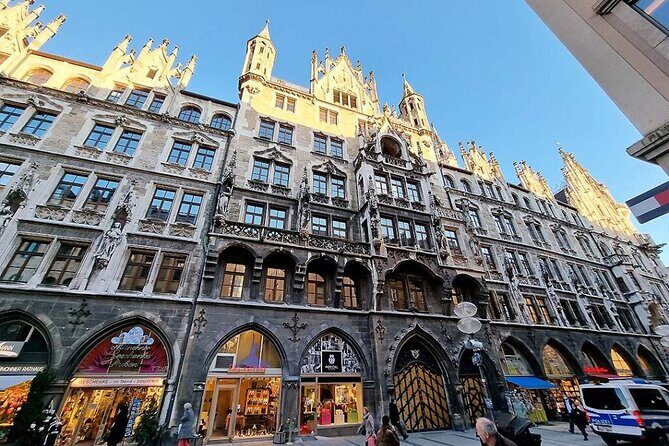
Munich can be great to explore, but it’s easy to speed through the big sights like you’re checking off a list. This rally changes that by giving you a mission, then routing you through the city center so every stop has a reason to exist. Instead of reading plaques for fun, you’re completing tasks to move forward, which makes the whole walk feel more purposeful.
The detective theme also helps. You’re not just wandering—you’re a trainee at the Academy working under Sir Peter Morgan’s case plan. When that theme is paired with puzzle “orders” that you have to solve, you end up seeing the spaces between the postcard views. Even if you already know Munich, the route structure pushes you to pick up details you’d usually miss.
Value-wise, it’s built for small groups. The price is per group (up to 6), and the experience is private, meaning you’re not sharing the puzzle space with strangers. That matters in a city center where crowds can change the vibe fast. With your own group, you can pause, argue gently about the answer, and keep going without trying to manage a larger pack.
Your private detective: audio clips, text orders, and puzzle momentum
This is a puzzle tour you play using your phone. The detective communicates with you via an encrypted messenger service, sending both text and audio clips that introduce the next challenge. You’re meant to solve each order to receive the coveted awards, so the game has a strong cause-and-effect loop.
A practical detail: the tour is described as a “private detective” experience with audio messages, not a scripted walking audio tour that you just listen to. That means you’ll be interacting with the device a lot—reading, checking, and deciding your next move. If you like scavenger-hunt energy, you’ll probably enjoy this. If you want passive sightseeing, this may feel like homework.
One more thing I’d plan for: audio is great when it’s clear and timed right, but it works only if your phone experience is stable. Bring a phone that can open the messenger smoothly, and set yourself up to avoid being stuck waiting for audio to load. Since a mobile phone is not included, you’re responsible for having the right device ready from the start.
Where you start, how long it takes, and how to pace it
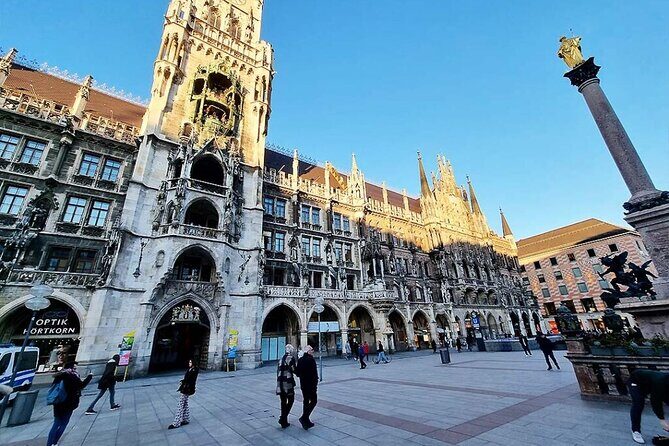
You begin at Färbergraben 5, 80331 München, and the tour ends back at the same meeting point. The duration is about 2 hours, which is a useful size in Munich. It’s long enough to get a real route through the core sights, but short enough that you can still add a meal or museum visit afterward.
You can start at any time after booking, which is a big plus if your day in Munich is chaotic. The operation hours list 8:00 AM to 7:00 PM (with service running across a broad booking window), so you can pick a time that matches your energy and the light you want for photos.
Because this is private (your group only), you don’t need to arrive early to “join a tour group” and wait around. But you should still build a little buffer for setup. The tour uses a mobile ticket and an app-style puzzle format, so you want to be ready to begin immediately once you’re standing at the start.
And yes, you’ll likely walk. This is an outdoor city-center rally, and it’s designed around Munich’s old town landmarks. Comfortable shoes are not optional here; you’ll appreciate them even more because the game encourages you to pause and look closely.
Frauenkirche to Marienplatz: solving your case in Munich’s spotlight
The route pulls you into Munich’s core landmarks in a way that feels more like “follow the clues” than “tour the city.” A key early highlight is Frauenkirche—the Cathedral of Our Lady in the old town. It’s one of those places you can either rush past or use as your first big visual anchor for the game. In this rally, it’s there to kick-start your momentum with a puzzle stop that connects to the detective storyline.
From there, the tour moves you toward Marienplatz and the New Town Hall area. This is the world-famous center of the Bavarian capital, so the setting is dramatic even before you start solving tasks. The game structure is what makes it different: instead of simply admiring the square, you’ll be working through mini-challenges that guide where you look next.
Two practical tips for this zone:
- Plan for photo distractions. Marienplatz is easy to turn into a selfie moment. The puzzle format helps, but you’ll still want to keep one eye on your next task.
- Look up as well as around. Landmarks here have details worth noticing, and the game format tends to reward attention to small specifics.
If you enjoy landmarks but hate slow, lecture-style tours, this is a good middle ground: the landmarks do the heavy lifting visually, and the tasks keep you mentally engaged.
Marian Column and the logic of “city details”
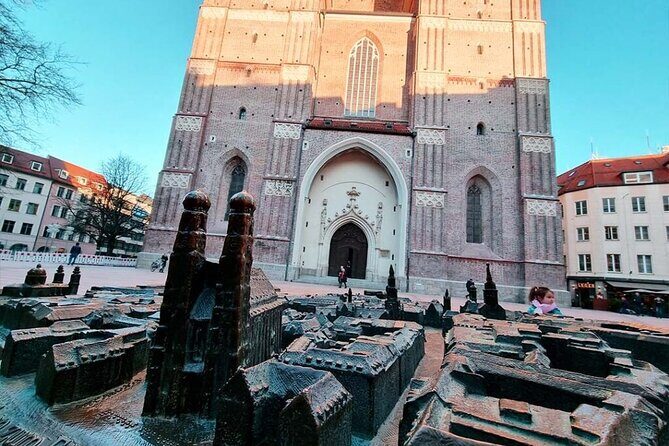
After Marienplatz, the route includes the Marian Column. This is a spot where many visitors stop briefly. In a puzzle rally, you get a reason to stay a bit longer and actually investigate the space. That’s one of the most underrated benefits of this style of tour: it forces a pause at places that are usually treated as background.
What makes this valuable for you is the way it turns Munich’s “famous objects” into questions. You’re not just looking at something; you’re using it. That helps you learn things without feeling like you’re cramming facts.
Also, because the detective sends orders as text and audio clips, you’re less likely to get lost in pure wandering. The game wants you to move forward through an intended sequence. That’s a comfort in a dense city center where it’s easy to go off-route, then spend time retracing your steps.
One consideration: puzzles tend to feel most fun when you can read instructions quickly. If your phone is bright and the text is small, you might want to adjust accessibility settings beforehand. Nothing in the tour data guarantees font size or display behavior, so test it early.
Viktualienmarkt: a market stop that rewards curiosity
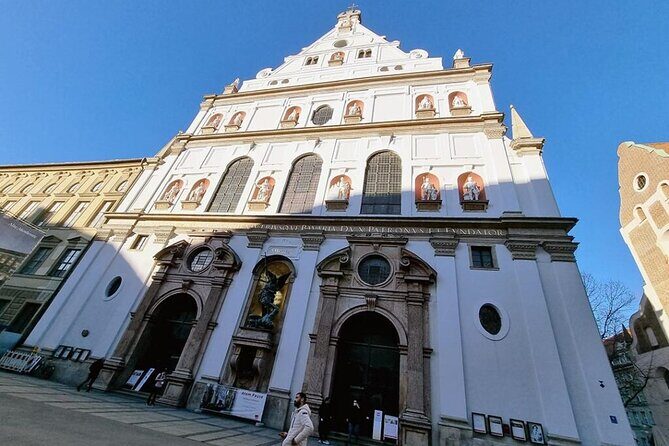
One of the most engaging listed stops is Viktualienmarkt, described as a popular place for connoisseurs and gourmets. Even if you’re not shopping, markets have a special kind of energy: sights, labels, and everyday items that make it easy to spot details.
In this rally, the market area is part of the puzzle chain. You’ll be solving mini-games and challenges tied to the route, so you’ll likely slow down and look at your surroundings more closely than you would on a normal walk.
There is one caution I’d give based on feedback tied to the market task style: if a puzzle asks you to count something specific, don’t blindly trust the prompt. Use what you see on-site to make your best call, because a number-related detail connected to the market area may not always match the exact situation you’re seeing.
If you’re planning what to wear, keep in mind markets can be lively and change quickly through the day. The rally is still designed for a 2-hour window, so you don’t need to linger for shopping. You’re there to solve, then move.
Mini-games, the Academy theme, and getting the awards
The game doesn’t end at just one question. The tour is built around numerous minigames and puzzles, with the detective stepping in with the next set of tasks as you progress. This is where the “private detective” concept becomes more than a fun label. It gives you a reason to keep going, even when you’d otherwise want to stop and just admire the view.
The Academy theme is also part of the motivation. You’re positioned as a trainee at Sir Peter Morgan’s Academy, working through tasks until you earn the coveted awards. The structure matters because the reward system gives closure. You’re not just completing a walk—you’re finishing a case.
After the tour, you also receive a digital tour badge. That’s small, but it’s a nice “receipt” for your effort. For many people, puzzle tours feel best when there’s a tangible end point, and this one clearly marks the finish.
Private group value: price, timing, and who it suits best
The listed price is $46.43 per group (up to 6) for a roughly 2-hour outdoor rally. That pricing can be a bargain if you can fill the group. If you bring a full party of 6, it works out to around $7.74 per person. If you’re just two people, it’s about $23.22 per person. If you’re solo, it would be the full group price divided by 1, which is much less attractive.
So the sweet spot is clear: get a couple of friends or family members together, and the cost suddenly looks light compared with traditional guided tours.
Who this is for:
- People who enjoy puzzles, detective stories, and “solve as you go” sightseeing
- Small groups that want a shared activity rather than a lecture
- Anyone who has already been to Munich a few times and wants a different angle
Who should think twice:
- If you mainly want a human guide to explain everything in detail
- If your idea of fun is more about passive sightseeing than reading and solving
- If you’re traveling without access to a smartphone
What might disappoint you (and how to set expectations)
This is a puzzle rally, not a fully guided tour with constant conversation. The detective communicates via audio and text clips, and that means the “interaction” is one-way: you receive orders and respond by solving. If you’re hoping for a dialogue with a real guide on every corner, you may find the format a bit limited.
Also, puzzle tours can vary in difficulty depending on your group. If your team likes broad, general clues and doesn’t want to hunt for specifics, keep it light and treat tricky tasks as team fun rather than a test.
Finally, there can be small friction with puzzle prompts. One feedback point connected to a market-related counting task suggests the exact number in the challenge may not perfectly match what you see on the ground. That doesn’t ruin the whole tour, but it’s a reason to bring a flexible mindset. Use the on-site reality to reach a sensible solution and keep moving.
Should you book this Munich detective rally?
If you want a Munich experience that feels like a game—without sacrificing the chance to see major sights—this is a strong fit. The route hits big names like Frauenkirche and Marienplatz, but it does it through tasks that keep your attention engaged for the full walk. The private setup and the group pricing make it especially good value when you’re traveling with friends or family.
I’d book it if:
- you have a smartphone and you like puzzles
- you’re okay with a self-led structure
- you want a 2-hour activity that doesn’t require museum tickets or long waiting lines
I’d skip or reconsider if:
- you want a live guide with lots of spoken commentary
- you’re traveling solo and don’t have enough people to share the group price
- you don’t want to spend time reading and solving on your phone
FAQ
How long is the private audio city rally in Munich?
It lasts about 2 hours.
How much does it cost?
It’s $46.43 per group (up to 6 people).
Where does the tour start?
The start point is Färbergraben 5, 80331 München, Germany.
What sights does the route include?
You’ll go through Munich’s old town and city center, including Frauenkirche, Marienplatz (with the New Town Hall area), the Marian Column, and Viktualienmarkt.
How do you receive the clues during the tour?
The private detective communicates through an encrypted messenger service using text and audio clips.
Do I need a mobile phone?
Yes. A mobile phone is not included.
Is this a private experience?
Yes. It’s private, and only your group participates.
Can service animals join?
Service animals are allowed.
Can I choose when to start?
You can start at any time after booking.
What’s the cancellation policy?
This experience is non-refundable and can’t be changed for any reason.
]]>I especially like how the story is tied to real places: you’re sent to legends like knight Eppelein von Gailingen, plus specific sights such as the Frauenkirche, the Albrecht Dürer House, and the Albrecht Dürer Hare. Second, I like the format for groups because it’s built like a guided puzzle experience, with a mobile ticket and a final digital tour badge—so you’re not just wandering and guessing.
One drawback to consider: the puzzles can feel heavy if you prefer quick, straightforward clues. A few people found the math or logic a bit too much, and some also said a couple directions felt unclear.
Key points before you go
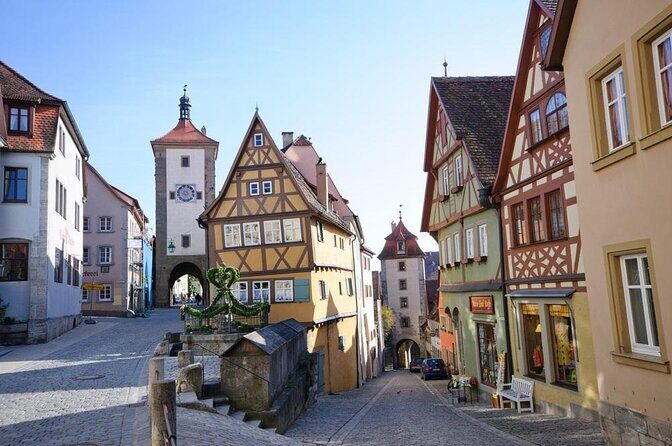
- Encrypted audio and text from Private Detective Morgan keeps the story moving while you solve tasks
- Landmarks are not random: you’ll hit the Imperial Castle, Frauenkirche, Albrecht Dürer House, and Weissgerbergasse
- You earn rewards for finishing mini-games and missions, not just walking to stops
- Designed for groups up to 15 with a private format, which can make it a strong value
- Some puzzles may be mathy, so bring patience if you want an easy stroll
How the encrypted Private Detective Morgan story keeps you moving
This is not a passive audio walk. The whole experience is built as a private detective storyline where you complete missions to unlock the next part. Private Detective Morgan communicates with you via an encrypted messenger service, using text and audio clips. That means you’re not just hearing facts—you’re getting prompts that push you to solve small challenges as you go.
The “why” behind this style is simple. Nuremberg is full of historic corners, but it’s easy to lose the thread when you’re sightseeing on your own. Here, the story gives you a thread, and the tasks give you a reason to look closely. You’ll be hunting for specific details tied to the setting, including a clue in the walls linked to a historic hoof print.
Another nice touch is the academy framing. The experience has you proving yourself like an intern at the Sir Peter Morgan Academy, which makes the puzzles feel themed rather than random. If you like scavenger-hunt energy—even when you’re not 100% sure—you’ll probably enjoy the momentum.
Starting at Hauptmarkt 14: a smart way to get your bearings
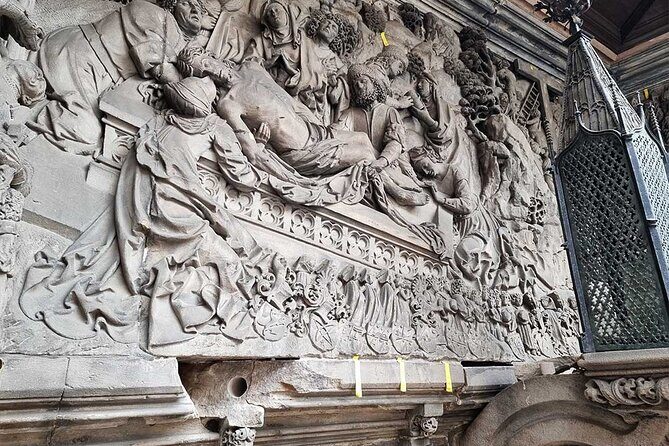
Your start is Hauptmarkt 14 in Nürnberg’s historic center, and the tour ends back at the same meeting point. That loop matters. When an old-town tour brings you back to where you began, you don’t have to stress about transit or navigation once you’re done.
Hauptmarkt is also practical because it puts you at the heart of pedestrian movement, so it’s easy to meet up and regroup. From there, the route pulls you into the Old Town area around the Pegnitz, which is a convenient geography for a short, focused outing.
One more logistics detail that helps: this is offered as a private tour/activity. Only your group participates, so you’re not competing for space at tricky stations. That can make a puzzle format feel smoother, especially if your group has mixed ages or puzzle skill levels.
Imperial Castle time and the Eppelein von Gailingen legend
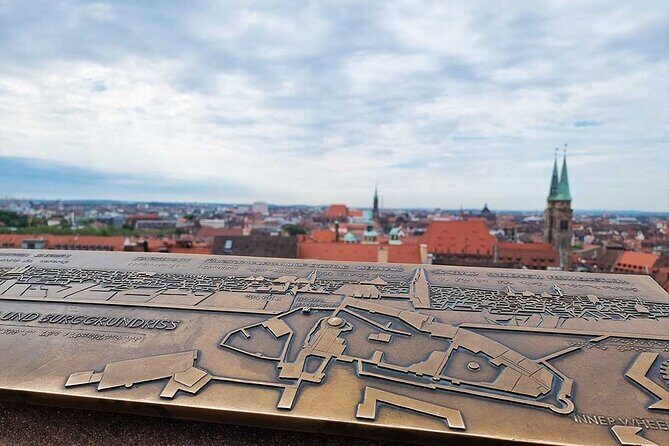
A big attraction here is the chance to connect the city’s dramatic medieval setting with a specific storyline. The experience includes the Imperial Castle area, and it ties your missions to the knight Eppelein von Gailingen and his jump from the Imperial Castle. Whether you already know the legend or you’re meeting it fresh, the point is that you’re not just seeing stones—you’re walking inside the narrative.
The castle approach also tends to create natural “pauses” in a puzzle tour. You get points where you slow down, read what you need (or listen to the prompt), and search for the next clue. If you like tours where you feel active instead of just hearing commentary, this castle portion is the kind of stop that fits.
There’s also a chance for memorable city views during this kind of route. One review specifically called out enjoying the view over Nürnberg, and castle-area points are exactly where that usually happens on foot. Even if you’re not chasing photos, that visual reward can make the effort feel worth it.
The hoof print, the fountain, and Frauenkirche: where clues live
After the castle story beats, the tour moves deeper into the historic center. You’ll look for a historical hoof print in the walls, plus follow missions around a fountain and the Frauenkirche.
This is where the experience can feel especially satisfying. Puzzle tours sometimes fail because they give you a clue that could be anywhere. Here, the prompts are tied to recognizable landmarks—the kind you can verify quickly. When the clue is anchored to something you can see, you spend less time guessing and more time enjoying the hunt.
At the Frauenkirche area, the experience adds more than location—it brings story “right to the site.” The result is that you’ll likely slow down more than you would on a normal walking tour. And if your group likes photo stops, this section gives you both the landmark and the reason to pause.
The fountain segment also helps break up the walking rhythm. Even within a compact 1.5-hour tour, it’s good to have a mix of bigger monuments and smaller, more investigative stops. This keeps the rally from feeling one-note.
Albrecht Dürer House and Albrecht Dürer Hare: art you can solve
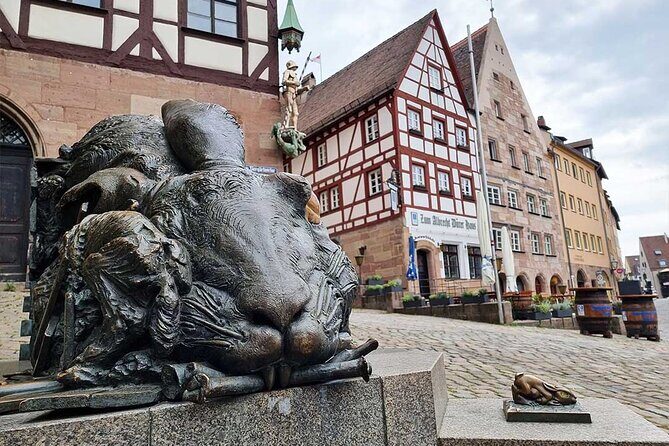
Two of the named highlights are the Albrecht Dürer House and the Albrecht Dürer Hare. Even if art history isn’t your main interest, these stops give you built-in motivation: you’re going there to answer puzzle prompts, not to skim and move on.
What makes this style work is that it forces attention. If you just walk past something like Dürer’s connections, it can become background noise. But in a puzzle format, you’re looking for specific details and patterns the tour is asking about. That kind of attention tends to stick better.
This portion also tends to be good for mixed groups. Art-themed landmarks can appeal to people who like culture, while the “hunt” elements appeal to people who prefer doing rather than listening. One review highlighted that the experience felt exciting, interesting, and informative for a group ranging from 18–22-year-olds to adults, which is exactly the kind of crossover these named stops encourage.
Weissgerbergasse: turning the best street into an ending you’ll remember
Near the end of the rally, you’ll make your way through Weissgerbergasse. The tour description calls it probably the most beautiful street in the world, and even if you take that as playful marketing, it points to what you can expect: an especially photogenic, character-heavy street that makes for a strong finish.
In a puzzle tour, final stretches matter. If you finish right in the most atmospheric section, your brain links the story to a vivid scene. That’s how “I remember this place” happens, not just “I saw that place.”
Also, finishing near a dramatic old street can help you slow down after the mental work. Even if you’re tired from solving, you can shift gears into enjoying the setting and swapping what you found. For groups, that social reset is a big part of why the experience can feel fun rather than stressful.
Puzzle design: great for fun, tricky if you want zero thinking
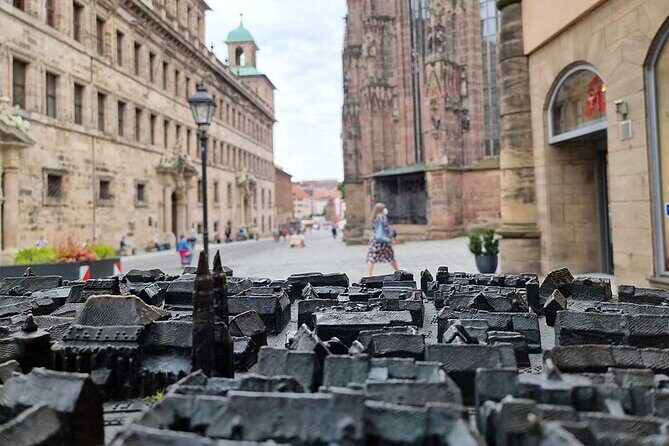
The core of the tour is mini-games and puzzles, plus story “missions” that you handle with detective Morgan’s prompts. The upside is obvious: you get something more engaging than a standard walking tour script. The best reviews describe the rally as varied, full of fun, and worth recommending.
But the critiques are important because they tell you who this may fit best. Some people found the puzzles less satisfying because they felt like too much math. Others said the solutions were not easy to work out even with tips, and that some parts of the directions weren’t clear enough.
So here’s the practical takeaway for your planning:
- If your group enjoys puzzles and doesn’t mind thinking, you’ll probably have a great time.
- If you want mostly sightseeing with light interaction, this might feel like homework.
- If you get stuck, keep your group working together instead of splitting into frustration modes.
Also, remember the tour does require coordination. It’s private and group-based, but the experience is driven by prompts and tasks. Bring a good attitude about problem-solving, and you’ll likely come out feeling like you “earned” the ending, not like you got pulled around.
Price and value: $46.23 per group, up to 15 people
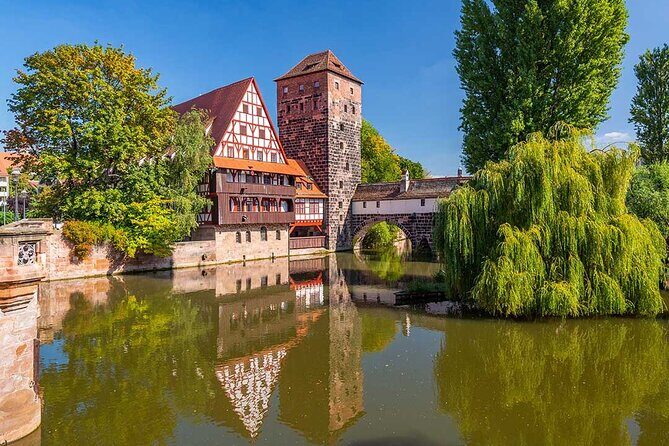
The price is $46.23 per group for up to 15 people, and the tour runs about 1 hour 30 minutes. That setup can be a great value if you fill the group capacity.
If you max out 15 people, you’re looking at roughly $3 per person for a private, story-driven rally. Even with smaller groups, the big idea is the same: you’re paying for the experience package, not per-head narration. For a short timeframe, that’s often what makes the difference between “fun” and “not sure.”
What’s included is also important. You get a puzzle tour plus a digital tour badge after the tour. You also get the whole detective-driven structure that keeps you moving between major sights.
What’s not included is just as crucial: you need a mobile phone for the mobile ticket and the experience delivery. If your group won’t bring phones, you’ll likely have a problem. And for anyone thinking about cost-cutting with a phone that barely works, don’t. A puzzle hunt needs readable screens and reliable access.
Who this Nuremberg detective rally fits best
This is listed as most travelers can participate, and it’s a private format. Service animals are allowed, and the meeting area is near public transportation, so it’s generally easy to plug into a day in the city.
Where it really shines is in group dynamics. One review described it as very cool and fun for a mixed group of young adults and two adults. That tells me the design isn’t limited to one age bracket or one type of interest.
It also suits people who enjoy active learning. Instead of receiving a fixed set of facts, you learn as you solve. You’ll encounter named places like Frauenkirche and Albrecht Dürer House, plus story links like Eppelein von Gailingen and a clue involving a hoof print in walls. That’s a lot of “attention hooks” packed into 1.5 hours.
Who might hesitate? If you strongly dislike puzzles, or if your group has low tolerance for math-style steps, plan for that upfront. A small amount of frustration can be part of puzzle tours, but a few people felt the puzzle level didn’t justify the price for them. If you’re risk-averse, you’ll want to choose this only if you’re genuinely in the mood to solve.
Booking advice: when this tour is a yes or a maybe
You should book if you want:
- A private old-town experience that feels like a game
- A route built around major Nuremberg highlights, including Imperial Castle areas and Dürer sites
- Story-led clues from Private Detective Morgan using encrypted audio/text prompts
- A short outing that ends where it started, at Hauptmarkt 14
You might skip or choose a different option if:
- Your group prefers minimal thinking and maximum wandering
- You expect every clue to be obvious and every step to be painless
- Everyone in your group hates math or logic puzzles
If you do book, go in with the right mindset. Wear comfortable shoes, bring a phone you can use, and treat the detective prompts as part of the fun. When it clicks, this kind of rally is exactly the way to make Nuremberg feel alive.
FAQ
Where is the start point for the rally?
It starts at Hauptmarkt 14, 90403 Nürnberg, Germany, and it ends back at that same meeting point.
How long does the experience take?
It lasts about 1 hour 30 minutes.
Is this a private tour or shared group?
This is private. Only your group participates.
What does the tour include?
You get the puzzle tour experience, and you receive a digital tour badge after the tour.
Do I need my own phone?
Yes. A mobile phone is not included, and the tour uses a mobile ticket, so you should have a phone with you.
What sites does the tour cover?
The experience includes the Imperial Castle area, the Old Town around the Pegnitz, plus stops connected to the Frauenkirche, Albrecht Dürer House, Albrecht Dürer Hare, and Weissgerbergasse.
How does the detective guidance work?
You receive challenges through an encrypted messenger service, with text and audio clips from Private Detective Morgan.
Is there a refund if I cancel?
This experience is non-refundable and cannot be changed for any reason.
]]>You get a sturdy metal box delivered by post with all the envelopes, maps, and puzzle materials, so you are not depending on Wi-Fi to figure things out. You bring just a pen, and you finish with a final envelope surprise once you crack the solution word.
Key highlights at a glance
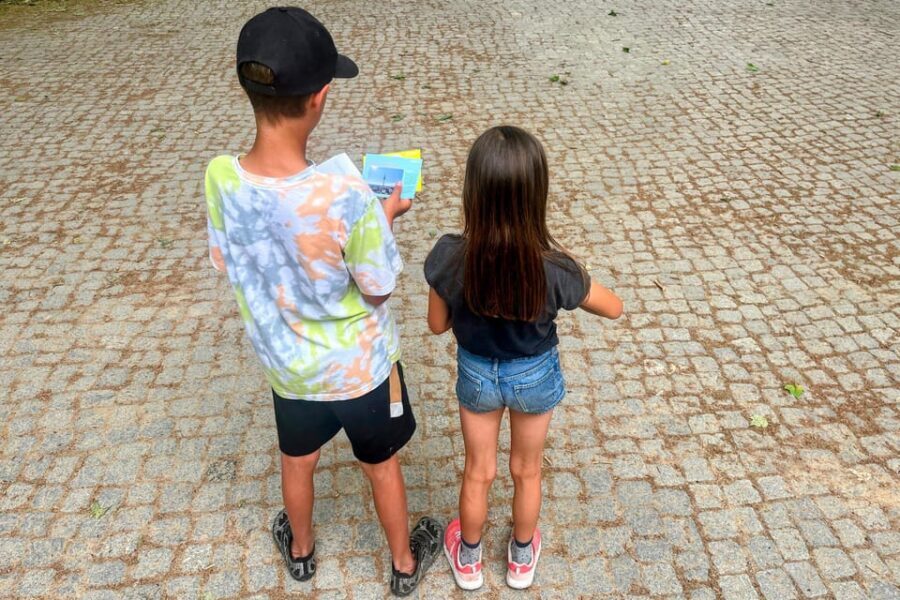
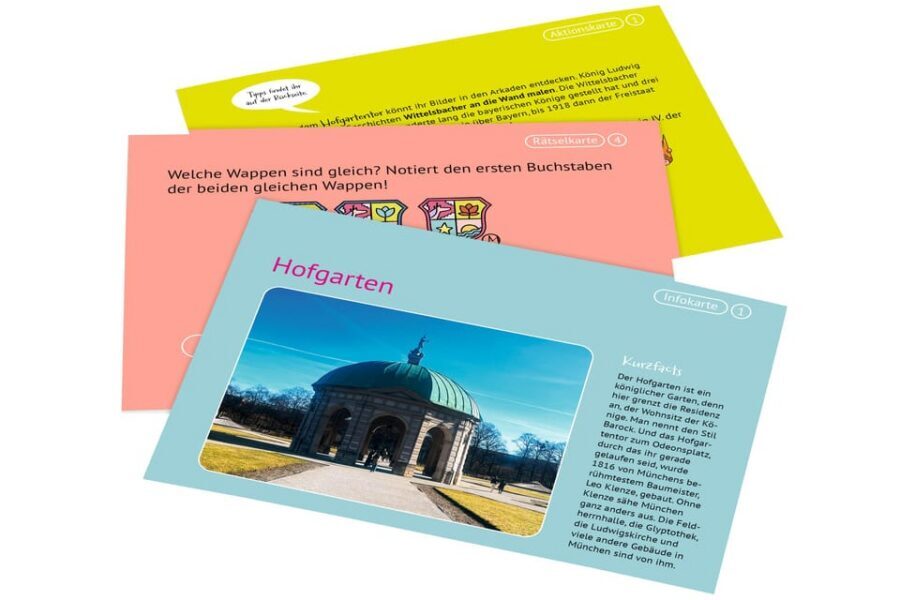
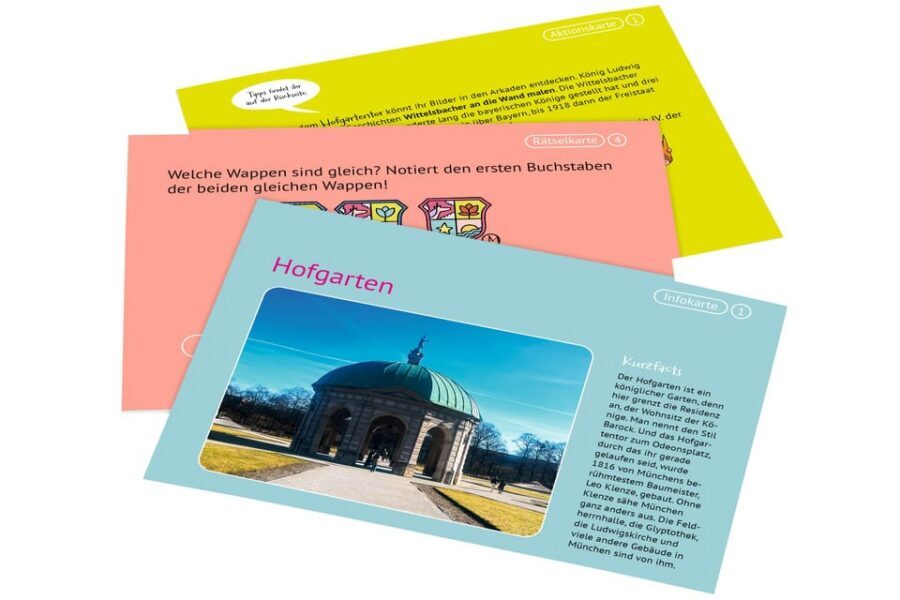
- 8 stations you move through at your own pace from Hofgarten to Viktualienmarkt
- Lili and Oskar mascots guide the hunt with family-friendly jokes and local facts
- Puzzle-and-task format that makes sightseeing feel like a scavenger game
- Built-in help with a motivational envelope and a solution envelope if you get stuck
- Bonus detour tips for nearby museums, playgrounds, and parks along the city-center walk
- Flat-rate group pricing up to 8 for about 150 minutes of family fun
Turning Munich into a family game (without scheduling stress)
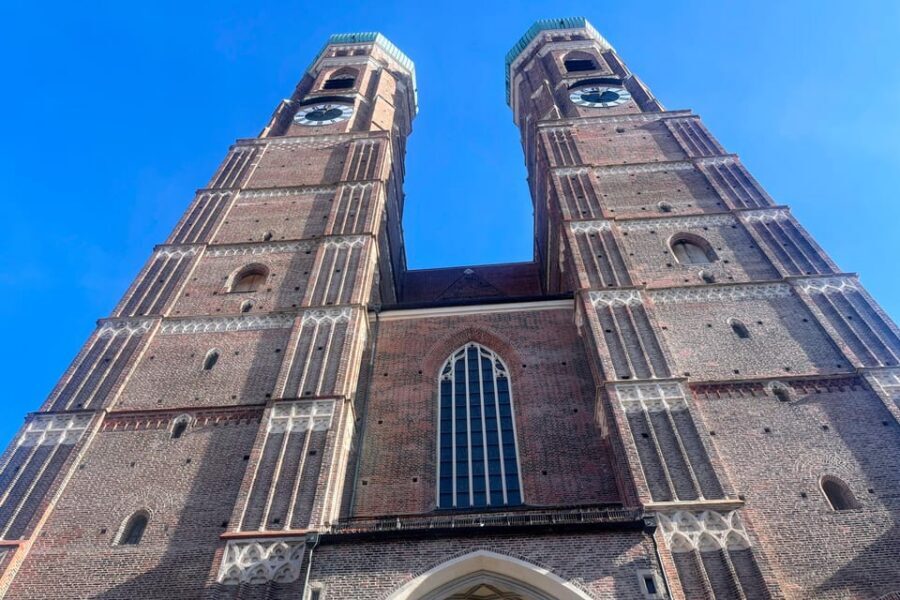
This is the kind of activity that changes the whole vibe of a city day. Instead of standing around reading plaques, you walk, open an envelope, solve a task, and keep moving. And because it is self-guided, you can slow down, speed up, or stop to buy a sweet treat without asking anyone’s permission.
I also like that the hunt is designed for families, not just adults on a mission. The information is child-friendly, but adults get plenty of fun city context too. Kids stay engaged because the day is structured like a series of mini-missions.
The one real consideration is language. The hunt materials are only available in German, and while the tone is family-friendly, some of the text may be harder for younger children who want short, punchy answers.
Hofgarten to Viktualienmarkt: the route and how the hunt unfolds
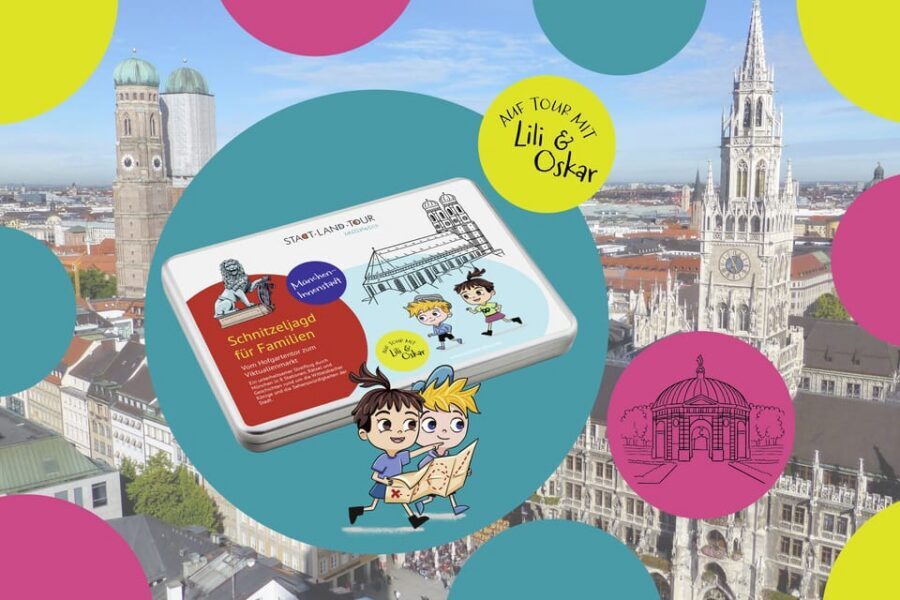
The route starts in the city center at the Hofgarten and ends at Viktualienmarkt. You are walking through Munich city-center sights “from station to station,” and each station is introduced through the envelopes in the box.
Here’s how the flow works in practice:
You begin when you want. The box has directions for your starting point, and you can start at any time—there’s no guide waiting at a meeting point. Once you are at Hofgarten, you follow the first map, then open the first envelope.
From there, it is a steady rhythm:
- Read the instructions inside the envelope.
- Learn something about the attraction connected to your next stop.
- Do the creative task or puzzle.
- Move on to the next station.
There are 8 stations, and each one has its own mini focus, so the day feels like progress instead of one long slog. The total time listed is 150 minutes, which is a solid window for families: enough time to take breaks, but not so long that everyone starts bargaining for screen time.
How each station keeps you moving (and keeps kids from zoning out)
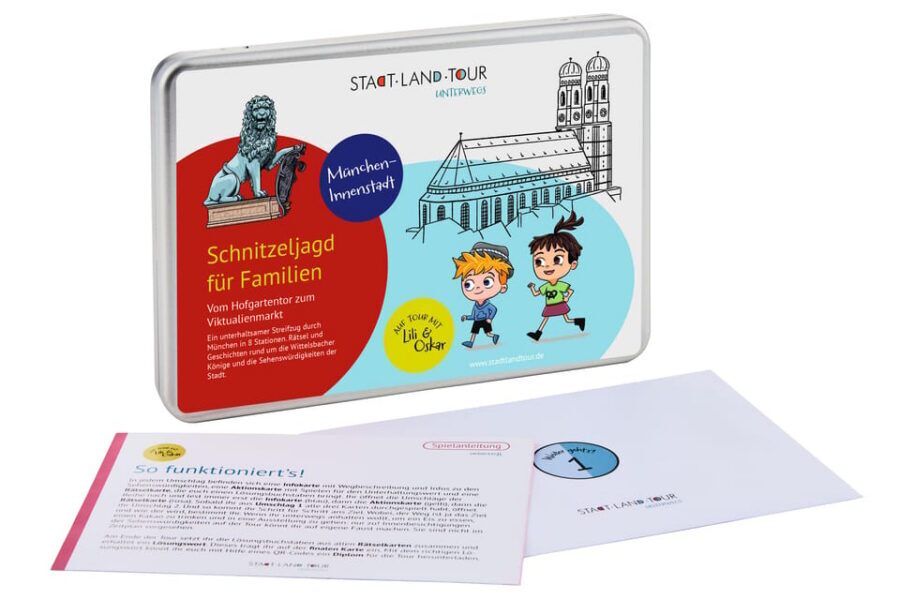
You won’t just be answering questions like a trivia worksheet. Each station mixes information with hands-on tasks, so kids stay part of the action. That matters in Munich, where you can otherwise burn the morning staring upward at façades while kids negotiate snack breaks.
Since the exact attractions per station aren’t listed here, the best way to think about it is by the structure you will feel on the street:
- Every station connects to a specific city-center sight you pass between Hofgarten and Viktualienmarkt.
- You will be asked to do something playful—solving puzzles, completing a small mission, or using clues tied to what you see.
- You collect pieces toward a solution word, which is revealed at the end.
If you like scavenger hunts, you’ll probably like this format a lot. It turns sightseeing into movement and decision-making. And because you can pause for an ice cream or a museum stop, you’re not forced into a strict “walk nonstop” schedule.
One caution: the hunt depends on reading the materials in German. One family noted that parts of the text can feel too long or too dry for children. That doesn’t mean the hunt is bad—it means you may want to plan for a parent-led read-aloud moment, especially at the start.
Lili and Oskar: the mascots that make Munich feel friendly
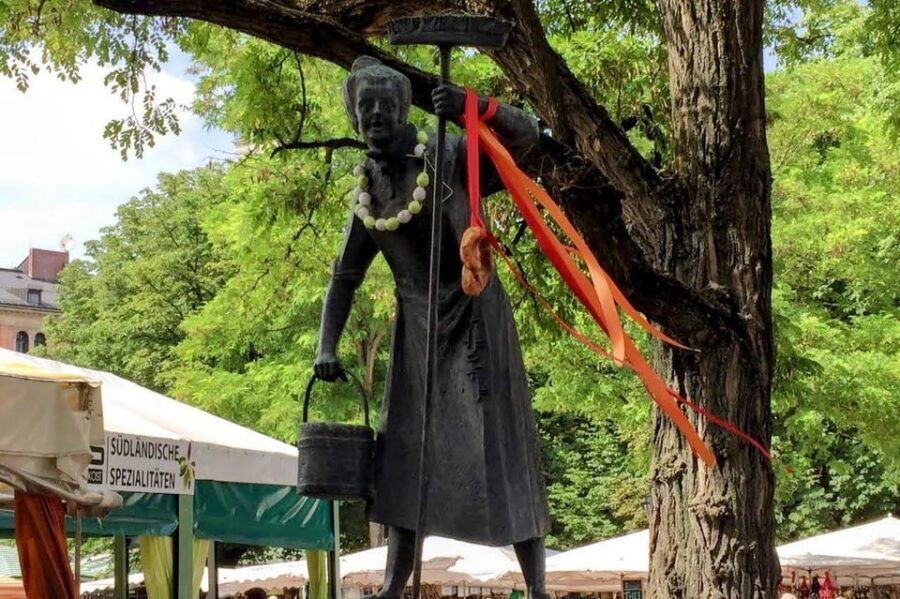
Lili and Oskar aren’t just decorations. They are the guides for the hunt, and they bring a local, kid-focused voice through the envelopes. You’ll get local information and fun facts, with a light, joke-filled tone meant to keep the whole family smiling.
This is where the experience feels different from a typical self-guided route. Instead of you translating everything yourself into “kid-friendly terms,” the structure is already written for families. The mascots also help you learn Bavarian dialect and local information along the way.
That dialect piece is more than a gimmick. It gives you a sense of how Munich feels day-to-day, not just how it looks in postcards. Even if you only catch a few words, it makes the city feel more personal as you walk.
Puzzles, the solution word, and what happens when you get stuck
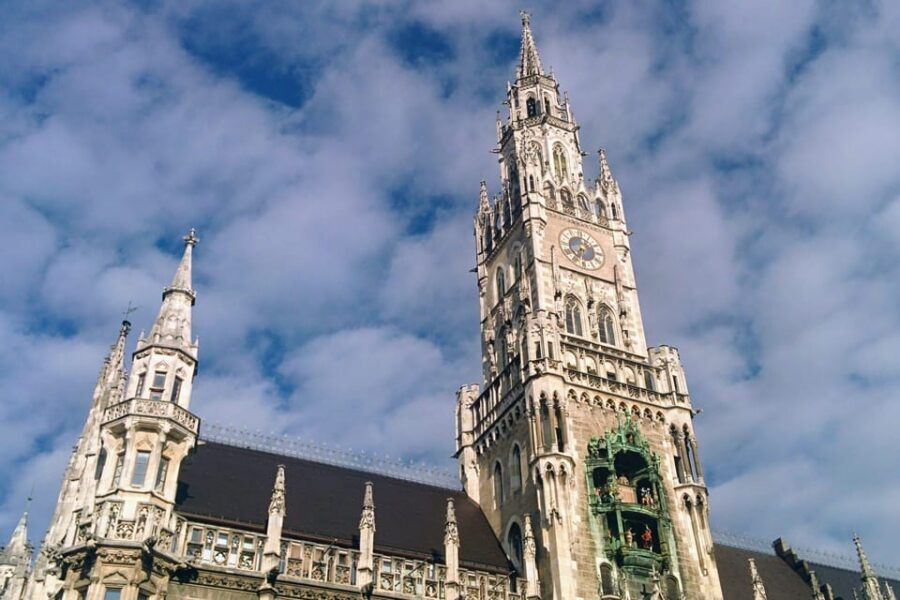
The hunt is built with family pacing in mind. It has multiple layers of support so you do not grind your way into frustration.
Two features stand out for keeping morale high:
- An additional motivational envelope to restart momentum if your group runs out of steam.
- A solution envelope if you get stuck and need help to keep the hunt moving.
And yes, there is a finish line payoff. At the end, you open a final envelope with a little surprise, assuming you solved the puzzles and found the solution word. If you did not solve everything, the built-in help is there so you can still finish the experience rather than abandoning it.
This matters for families, because scavenger hunts can fall apart when kids feel like they are failing. Here, the design nudges you toward success without dragging the day down.
Bonus rounds: mixing the hunt with real Munich stops
A nice touch is the idea of flexibility inside the format. During your walk through the city center, you pass beautiful places that are not part of the 8-station hunt. You still get tips about these spots, and you decide on the spot whether you want to detour for something like a museum, playground, or park.
In other words, you are not locked into a single plan. The hunt gives you structure, but you still control your day. That helps if your kids suddenly need movement or if you spot something you genuinely want to see while you are already in the area.
If you want to build in a classic Munich-style pause, the hunt even mentions the chance to detour toward the English Garden from the start area at Hofgarten. That’s a great option if your family likes open space and fresh air during sightseeing.
Munich value check: is $47 for a group up to 8 actually good?
For a family, the pricing model is one of the biggest wins. The cost is listed as $47 per group up to 8 for about 150 minutes. That means the price doesn’t explode as you add kids or extra relatives.
To judge value, think about what you would normally pay for:
- A guided family tour (often priced per person)
- A paid activity that keeps kids engaged for 2+ hours
- Or the cost of “just walking and hoping they stay interested”
Here, you get a physical kit (a sturdy metal box) plus the puzzle content, and you get to run it at a time that fits your schedule. You are paying for organization, translation into a family-friendly tone, and a built-in adventure structure.
If you are traveling with a bigger family unit, it is especially cost-effective. Even for smaller groups, it can still work well because the activity is designed to fill a block of time without adding stress.
Practical tips: how to make this scavenger hunt feel easy
This is a straightforward experience, but a few choices make it go smoother.
Wear comfortable shoes. You’ll be walking through central Munich, and you will want mobility for breaks and detours.
Bring your own pen. It is specifically noted as not included, and you’ll need it for tasks.
Plan your language support. Since everything is in German, I suggest you skim as the parent and let kids handle the puzzles, answers, or hands-on parts. If you have one child who reads faster, rotate roles so no one feels stuck.
Let the hunt set your pace. The experience is meant to be done your way. If you push through too fast, you may miss the point, since the goal is fun sightseeing with tasks, not racing to complete envelopes.
Think about timing. The hunt is about 150 minutes, and it includes a motivational envelope plus a solution envelope. That support is helpful, but it also signals that you might take time reading and discussing.
Who should book this hunt, and who might not love it
This works best for:
- Families who like scavenger hunts, puzzles, and short tasks
- Kids who enjoy solving clues more than listening to long explanations
- Parents who want structure but also want freedom to pause for breaks
- Groups traveling together (because the price is per group up to 8)
It may not be ideal if:
- You need English-only materials (the hunt is German only)
- Your kids struggle with reading longer text, since some parts may feel a bit text-heavy
- You prefer a live guide who can adjust instantly and speak in your preferred language
If your family is comfortable with a little parent translation and you are okay treating the puzzles as the main activity, you will likely have a great time.
Should you book StadtLandTour’s Munich family hunt?
I think this is a strong choice if you want a family activity that makes city sightseeing feel like play. The built-in support system (motivational envelope and solution help), plus the mascots Lili and Oskar, helps keep the day on track even when kids lose focus.
Book it if you can handle German materials or you’re willing to read key parts aloud. Skip it if language is a deal-breaker for your group, or if you know your children get impatient with longer stretches of text.
FAQ
FAQ
Where does the scavenger hunt start?
It starts at the Hofgarten in Munich city centre.
Where does it end?
It ends at Viktualienmarkt.
How long does the hunt take?
The duration is listed as 150 minutes.
Is there a guide with you during the hunt?
No. There is no guide at the meeting point, and you run it yourself using the box.
How do the stations work?
You move from one station to the next using the envelopes in the metal box, opening them in order as you follow directions and complete tasks.
What language is the experience available in?
The tour is only available in German.
What do I need to bring?
You should bring comfortable shoes and your own pen. The game box comes with the shipment.
What is included in the box?
Included are the sturdy metal box, eight envelopes for eight stations, additional motivational and solution envelopes, a final envelope with a surprise, and locally themed puzzles and illustrated materials featuring Lili and Oskar.
Does the price include museum entry?
No. Admission to museums is not included.
How quickly will I receive the box in Germany?
It is shipped to your home or hotel, and it usually takes at least 2–4 working days within Germany.
]]>I especially like the flexibility: start 24/7, pause whenever you want, and your access stays active for a full year. I also like that the route is short enough to fit between plans—about a 3.2km walk with lots of chances to slow down and stop for photos or snacks.
One thing to consider: it’s outdoors-only and you need mobile data. If your phone battery is low, or the connection is weak, the whole experience depends on that tech.
Key highlights you’ll feel right away
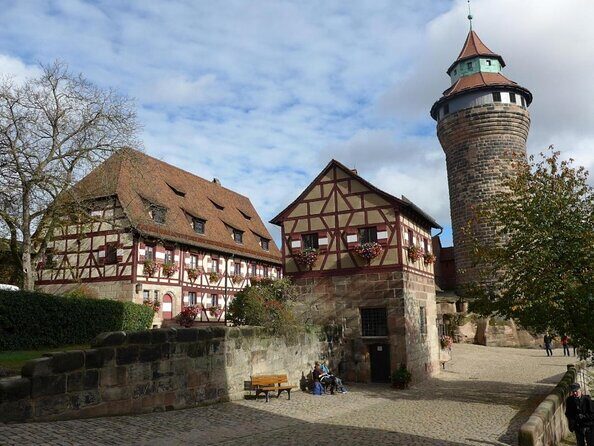
- Start anytime (24/7) from the Nuremberg Opera House, with no one waiting for you
- GPS navigation + audio so you’re not constantly checking maps
- Puzzles at major sights using imagination and observation, not just reading
- Pause and resume so you can build in coffee breaks without losing your place
- Outdoor-focused route with no entrance fees needed for the activity
- 24/7 chat support if you get stuck (no phone support)
How this Nuremberg hunt works in the World City Trail app
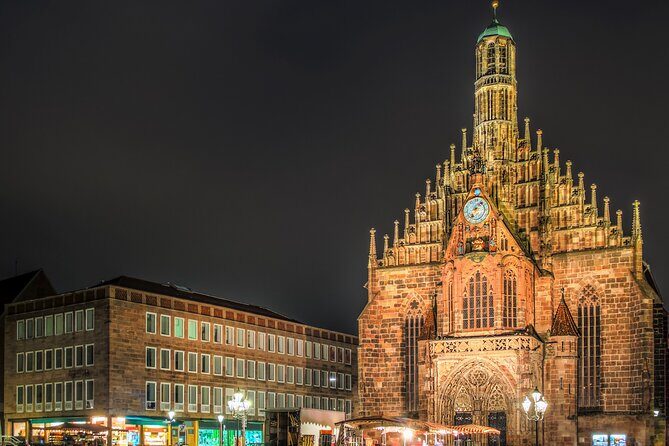
This is not a tour where a guide herds you around. It’s a self-guided hunt built around an app. You download the World City Trail app, log in with your 10-digit booking reference, then hit Create to start your session.
From there, the phone becomes your navigator and your narrator. The app provides audio directions and GPS navigation as you move between the stops. You’ll solve riddles using what you can see around you, and that’s what pushes you from place to place.
The experience is designed to be low-pressure. There’s no fixed starting time, no group meeting point drama, and no end-of-tour deadline that makes you feel rushed.
Getting oriented: starting at the Nuremberg Opera House
The app suggests starting at the Nuremberg Opera House (Opera House, 90402 Nuremberg). If you do, you’ll get a route that makes sense for walking.
You’re also free to start and finish anywhere you like—at least in the app’s experience design. Just be aware there’s also a note that the activity ends back at the meeting point area. My practical advice: treat the Opera House as your home base, then follow what the app shows on your screen when it’s time to finish.
Once you start, you’ll be walking a manageable loop. It’s listed as about 3.2km, with an estimated walking time around 41 minutes. Your actual time will be longer because you’ll spend time on the puzzles, reading/listening, and any breaks you choose to take.
The 3.2 km puzzle walk: what each stop gives you
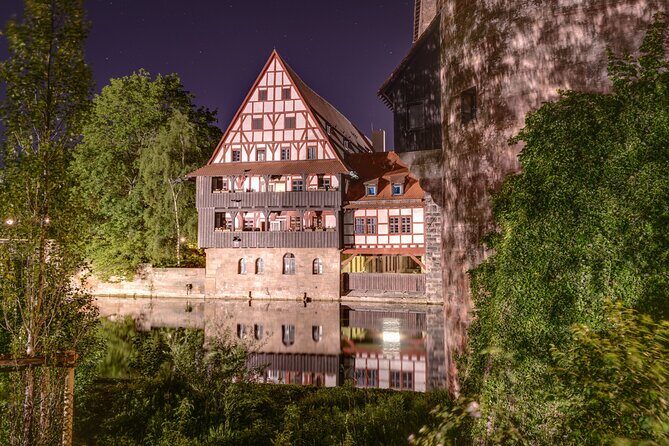
You’ll move through nine named stops. The core idea is consistent: you arrive, look around, and use the audio/text clues to figure out what comes next. Because the puzzles tie to outdoor areas, you can keep the pace casual and avoid extra spending.
Here’s what to expect from the flow of the walk and why each stop matters to the game.
1) Handwerkerhof
This is your first puzzle stop, so it’s a good place to get warmed up. Expect the app to “train” your brain on how it wants you to notice small details before the route gets more interesting.
Practical tip: wear shoes you’re comfortable walking in for repeated short bursts. The first stretch is where you’ll get your rhythm.
2) St. Lorenz
Next comes the first of the bigger-feeling central-city sights. The hunt format here is about observation, not speed. You’ll be guided to look around and match what you’re seeing with what the audio prompts.
If you’re a “wander and photo first” person, this is still workable. The scavenger hunt structure helps you avoid the trap of walking past the important stuff.
3) Ehekarussell
This stop is a fun shift in tone. It’s a reminder that the hunt covers more than the obvious monument list. You’re still solving, but the environment makes the experience feel lighter.
If you’re traveling with family, this kind of stop often helps keep younger participants engaged because it feels less like a homework assignment and more like a game.
4) Fleischbrucke
By the middle of the route, you’ll likely settle into the cadence: walk, solve, listen. The app keeps you moving between the points without turning it into a marathon.
A good strategy: don’t try to sprint through the puzzles. The hunt is designed so each stop nudges your attention in a different direction.
5) Hauptmarkt
Now you’re in the heart of the action. This is where you’ll get that sense of being in a main public space rather than tucked-away streets.
This is also a good spot to check your pace. If you’re running ahead, slow down here and take your time with the puzzle.
6) Der Schoene Brunnen
This is one of the stops that stands out in the experience design because the name itself signals a “look closely” objective. Expect the app to guide you toward a detail-based solution rather than a quick read.
If you’re the type who likes finishing strong, this stop is a useful confidence boost. Once you see how the riddle logic works, the rest feels more natural.
7) St. Sebaldus Church
This is a more contemplative stop, and it often pairs well with taking a few minutes to listen to the audio before you move on. You’ll be solving at an outdoor location, but you’ll probably want to stand and focus.
Consider using this moment for a quick reset if you’re traveling with kids or anyone who wants a slower rhythm.
8) Albrecht-durer-haus
This is where the hunt’s “story” side really shows. The experience includes text or audio guide content at sites like Albrecht Dürer’s House, so you’re not only playing riddles—you’re also getting context.
One practical note: the station information can sometimes feel text-heavy. If you prefer short, punchy stories, skim the audio/text first, then go right back to solving.
9) Kaiserburg Nurnberg
The route ends with the Kaiserburg Nurnberg, which gives you that “big finale” feeling. It’s the kind of stop that makes the walk feel like it was leading somewhere all along.
When you reach the final station, you’re usually ready to wrap up either at the suggested finish or wherever you planned to end in the app.
Audio + story stops: how the information actually helps

The app doesn’t just give directions. It also offers stories and tips at certain points, including hand-picked local restaurant and shop tips.
That’s the value in a hunt like this: it gets you to key areas first, then helps you make better decisions right after. Instead of wandering around hungry and guessing, you have a short list of places to check.
A realistic note from the overall design: some station content can run a bit like straightforward reference material. If you love quirky anecdotes, you might find yourself wanting more “fun facts” in a few spots. Still, the audio and text provide enough context that you won’t feel like you’re only doing busywork.
Timing and pacing: planning for 2 hours without feeling trapped
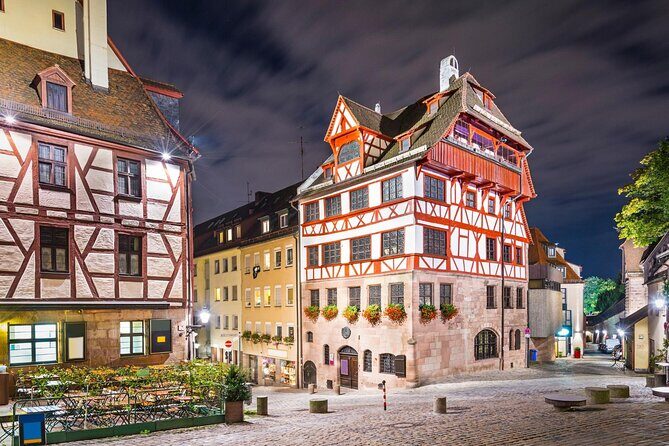
The listing calls it about 2 hours (approx.), and the route includes around 41 minutes of walking for the 3.2km stretch. On average, the total activity lands closer to 2.5 hours, depending on how often you stop, read, or pause.
What makes it practical is the built-in flexibility. You can pause for a coffee break, step away to browse a site longer than expected, or simply take your time without losing your place. Then you resume right where you left off.
Also, there’s no time limit on your access. You get access for a full year, which is handy if you want to do it in smaller chunks or revisit a segment.
Tech setup that matters: internet, VPNs, and battery life
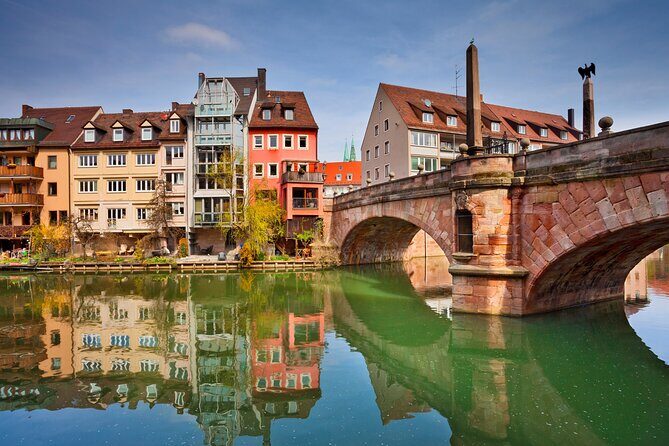
This is an outdoor-only experience, so it relies heavily on your phone working well outdoors. You need:
- a fully charged smartphone
- active mobile data
- internet working reliably in the area
Two tech cautions are especially important:
- Disable any VPN
- Avoid city Wi‑Fi, since it can cause the app to malfunction or disconnect
I strongly recommend you do a quick “dry run” before you commit your whole walk. Open the app at your start point, confirm GPS is finding you, and start audio once. That way you don’t discover connection problems right after you’ve started walking.
If you want audio privately, use headphones. If not, you can play it through your phone speaker.
Outdoor-only means no entrance fees for the hunt
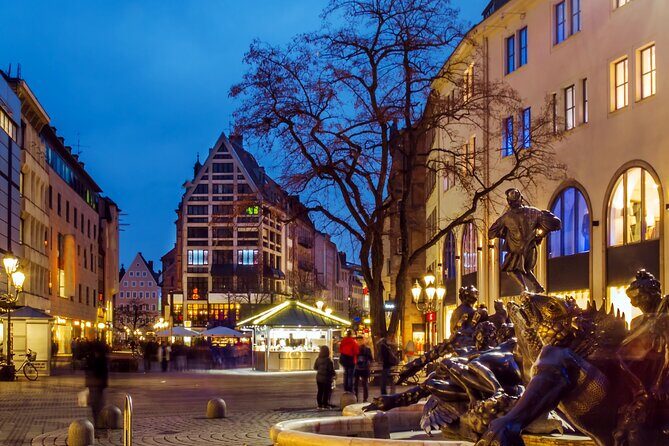
The activity is built around outdoor areas, and you shouldn’t need to pay entrance fees for the puzzles. The riddles are tied to what you can access outside, so you can keep this as a budget-friendly sightseeing day.
That matters because it turns the scavenger hunt into an easy add-on. You don’t need to plan ticket purchases, and you can stay focused on walking and solving.
Price value: why $8.40 can work if you like to self-direct
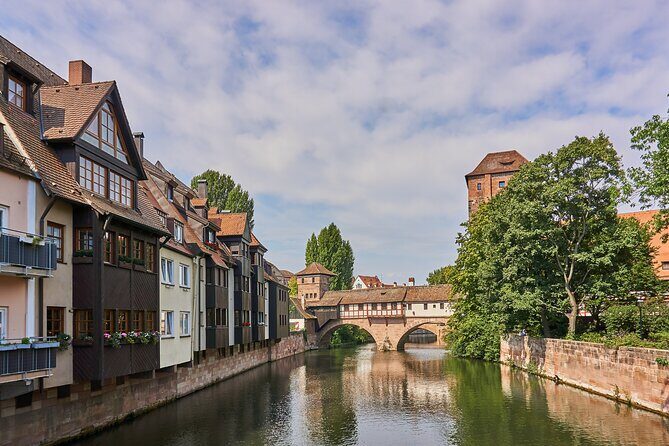
At $8.40 per person, you’re paying for a complete experience: navigation, audio, puzzle prompts, and local recommendations, all on your schedule.
Is it worth it? Usually, yes—if you like independent exploring and you want structure without paying for a live guide. The hunt also gives you a reason to cover several notable stops in a compact distance, without feeling like you’re checking boxes.
It’s less of a slam dunk if you need a guide to explain everything on the spot, or if you dislike puzzle formats. Since this is fully self-guided, you get the best value when you enjoy being active rather than passive.
Who should book this hunt (and who might not)
This works great if you:
- like walking and want an easy plan with clear stops
- enjoy puzzles and figuring things out with your eyes, not just your ears
- want flexibility, coffee breaks, and a start time that doesn’t depend on anyone else
- prefer audio stories and short local tips rather than a long lecture
It might be less ideal if you:
- can’t reliably use mobile data outdoors
- don’t enjoy riddle-style prompts
- want a deep, detailed spoken guide the whole time
Families can still have fun here. The information complexity can feel like a mix of history-reference and names, so consider whether the kids in your group like reading or audio explanations. The sweet spot is often a mixed-age group where adults enjoy the story, and kids enjoy the game aspect.
Should you book the Nuremberg Scavenger Hunt and Highlights Audio Tour?
I’d book it if you want a low-cost, self-paced way to see key areas of Nuremberg without the pressure of a guided schedule. The biggest strengths are the app’s practical navigation, the short and walkable route, and the freedom to pause and resume.
If you’re picky about entertainment style, plan for the fact that some station text can feel more factual than story-like, and a few puzzles may be either too tricky or too straightforward depending on your taste. Still, the mix of navigation, audio, and outdoor puzzle stops makes it a strong value for a couple of hours in the city.
FAQ
Do I need a live guide for this Nuremberg scavenger hunt?
No. It’s 100% self-guided. No one will meet you at the start, and you can start anytime.
What do I need to download and how do I start?
Download the World City Trail app and use your 10-digit booking reference. In the app, select Create to start.
What time can I start the tour?
You can start anytime 24/7. The start window is listed as Monday through Sunday from 12:00 AM to 11:30 PM.
How long does the activity take?
The walk is about 3.2km (around 41 minutes walking time), and the total activity averages about 2.5 hours depending on your pace and breaks. The overall duration is listed as about 2 hours.
Can I pause and resume later?
Yes. You can pause for a break or to explore and resume exactly where you left off. There’s also no time limit, and you have access for a full year.
Do I need internet on my phone?
Yes. The experience is outdoor-only and requires internet. You need mobile data, and you should disable any VPN and avoid city Wi‑Fi.
Is there an entrance fee for the attractions?
No. The activity doesn’t require entrance fees because the puzzles relate to outdoor areas of the attractions.
How do I get help if I get stuck?
Support is available 24/7 via chat at worldcitytrail.com/chat. There is no phone support.
What if I need to cancel or the weather turns bad?
You can cancel for a full refund up to 24 hours in advance. If bad weather or illness prevents you from going, you can do the tour on another day (and you can even contact support to switch to a different city).
]]>I also like that it’s built for different ages and moods: you get quiz-style prompts, plus photo tasks when you want something playful. One thing to consider: you’ll be using the app during the hunt, and if your phone lacks Wi‑Fi/data you might struggle to keep going and finish.
Key highlights before you start

- App-based hints and a map help you reach each stop without guesswork
- Questions tied to what you can see (signs, pictures, details) make the city feel more readable
- Photo challenges add creativity and keep the walk from turning into pure sightseeing
- Stays flexible since there’s no strict time limit and you can take breaks
- A route made for a short visit with stops at places like Marienplatz and Hofbräuhaus München
- Great for groups and families since the game format works with different energy levels
How this Munich hunt works on the ground
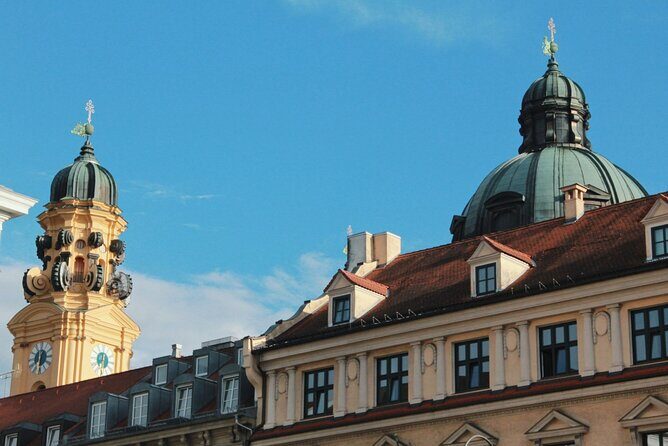
This is not a sit-and-listen tour. It’s a walkable game where you follow a route, stop at listed places, and answer questions tied to what you’re looking at. You get points for solving tasks, and you also get moments to be a bit ridiculous—in a good way—thanks to the photo challenges.
After you buy your ticket, you receive an access code. Then you download the app, enter the code, and start at the meeting point at Viktualienmarkt 3 (80331 München). The tour is designed to be simple: follow the map function in the app, use the hints, and only then answer what the sight is asking you.
The practical win here is pacing. The experience is not limited in time. You’ll average around 1–2 hours, but you can pause when you want to sit, snack, or just watch Munich life for a minute longer. If you’ve got a day with multiple plans, that flexibility matters.
The app, the code, and the one logistics point that matters
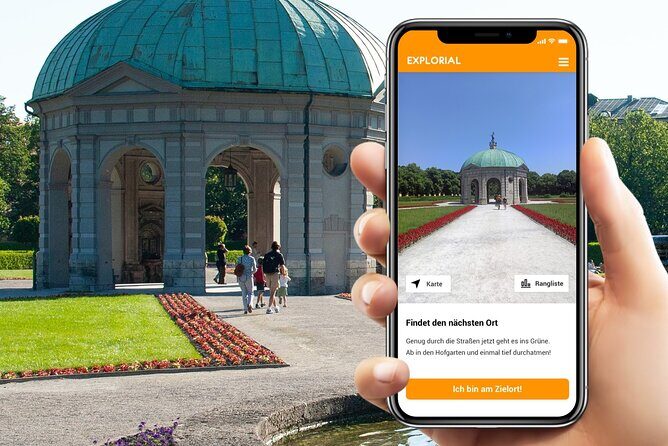
Everything runs through your phone. That means two things for your day:
First, plan for connectivity. The map function and the interactive tasks rely on the app, and one prior player couldn’t finish after assuming they were offline. I’d treat that as a clear warning sign: bring enough data or ensure you have reliable Wi‑Fi.
Second, set yourself up before you head out. Once you have the access code, download and open the app before you arrive at Viktualienmarkt. This helps you avoid that awkward moment of standing on a sidewalk trying to get signed in while everyone’s hungry.
Good news: the experience is available in English, and it’s built so you can participate without needing special skills. The tour is private too, meaning only your group plays.
The route in plain English: from Viktualienmarkt back to Viktualienmarkt
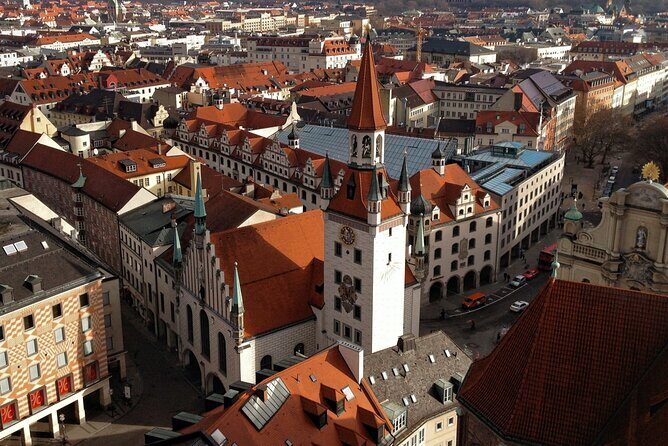
You’re walking a compact loop. The stops include:
- Viktualienmarkt
- Juliet Capulet Statue
- Munich Marienplatz
- Alter Hof
- Staatliches Hofbrauhaus
- Max-Joseph-Platz
- Hofgarten
- Eisbachwelle
Even if you don’t know Munich well, the structure is friendly. You don’t need to memorize an order of streets. The app guides you from stop to stop, and the hints are meant to help you find what the question wants you to look at.
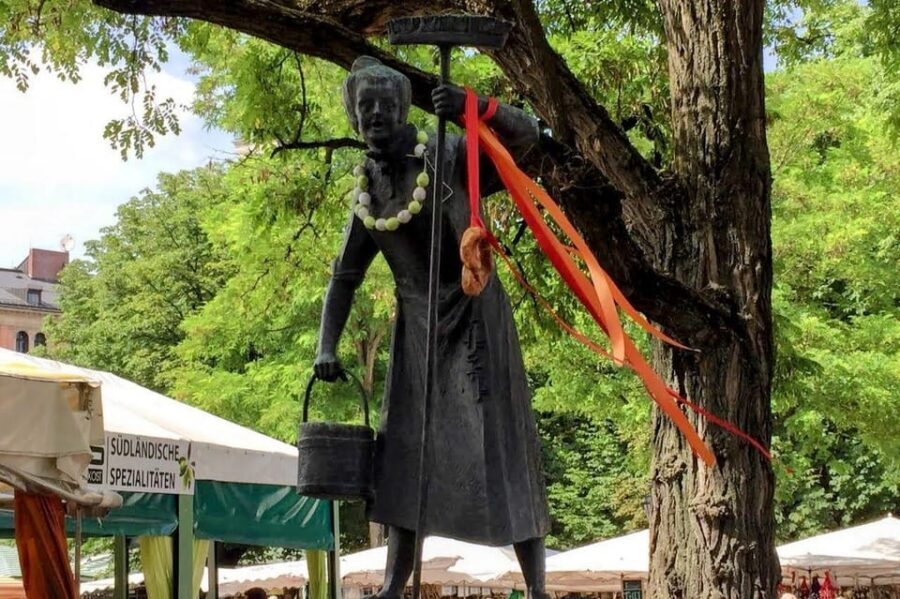
As you move through the day, you’ll also come across places referenced in the overall description like the Biergarten area at Viktualienmarkt, the Hofbräuhaus München, and Odeonsplatz. In other words, this isn’t a route that only points at random corners. It’s aimed at giving you a recognizable Munich cross-section, plus some more quirky stops like the Juliet Capulet Statue.
Stop-by-stop: what you’ll actually do at each place

Here’s how to think about each stop. The common thread is the same: you arrive, you use hints to locate the exact spot the question is pointing to, then you answer something you can see nearby. Often, the answers are hidden in signage, pictures, or other details in the area.
Stop 1: Viktualienmarkt
You start at Viktualienmarkt 3. This is a smart choice for a game because it’s easy to orient yourself and settle into the rhythm fast. You’ll likely get the first taste of how the questions work right away.
If you’re the kind of person who likes to warm up with a relaxed start, you’ll appreciate this location. And since the description calls out the Biergarten area at Viktualienmarkt, you might also take advantage of the sit-down vibe if your group needs a breather before continuing.
Drawback to consider: it can be a lively starting point, so if you’re hoping for quiet concentration, try starting right as your group is ready to play, not when everyone’s already tired.
Stop 2: Juliet Capulet Statue
This is the playful, slightly surprising turn in the route. A statue stop in a scavenger hunt tends to work well because it’s a clear target: you can look, compare, and then answer what the clue asks you to find.
Photo-task lovers often do well here, since statues and landmarks are built for snapshots. If you’re traveling with kids, this stop also tends to fit the bill—something specific to spot, something to photograph, and no long walking detour required to “figure it out.”
Stop 3: Munich Marienplatz
Now you shift into the core “this feels like Munich” area. Marienplatz is one of those places where you can usually find visual details easily: signs, architectural elements, and other cues that scavenger-hunt questions love.
Expect your hunt questions here to push you to look beyond the big visual impression. The game format means you’ll practice the skill of scanning for small answers rather than only taking the wide shot.
Possible snag: if your group enjoys moving fast, this stop might slow you down a bit. That’s not a fault of the game—it’s just the nature of “find the clue, then answer.”
Stop 4: Alter Hof
Alter Hof is another stop that fits the hunt style. Instead of dragging you through long detours, it’s built for short, focused searching. You arrive, then look for the detail that matches the hint.
This is a good stop if you like learning by inspection. The questions are designed so the answers are somewhere you can physically point your eyes at, like pictures or signs in the area.
Stop 5: Staatliches Hofbrauhaus
This stop is a strong “you’re in a landmark zone now” moment. The route description also names Hofbräuhaus München, so the game is steering you toward a major, well-known stop.
From a scavenger-hunt perspective, this kind of place can be great because there are usually lots of surfaces for clues—information boards, visible text, and details around the entrance area.
Consideration: if it’s busy when you arrive, take a little time to locate your exact point before answering. The game rewards careful spotting more than speed.
Stop 6: Max-Joseph-Platz
Max-Joseph-Platz is a classic mid-route reset. You’ll likely feel the “okay, we’ve got this” confidence here because you’ve already completed several question-and-hunt cycles.
Use this stop if you want to regroup with your group. Check that everyone’s app is running, you’re still logged into the game, and you understand the hint workflow. Then continue without stress.
Stop 7: Hofgarten
Hofgarten works well as a slower, steadier stretch. Even without knowing the setting details ahead of time, you can expect the hunt logic to guide you: arrive, find the answer location, answer the question, then move on.
If you want a bit of shade or a calmer moment, this kind of stop is often where the game becomes enjoyable instead of challenging. Take your time. The tour isn’t limited in time.
Stop 8: Eisbachwelle
You finish at Eisbachwelle and the tour ends back at the meeting point at Viktualienmarkt. This last stop is a good “wrap-up” because it gives you a clear target and a final round of questions or photo tasks.
If your group is competitive about points, plan your energy for the end. You’ll feel more confident if you save your best photo creativity for the final stretch.
Why the question style feels so effective
The questions are not trivia pulled from thin air. They’re usually tied to what you see: answers hidden in signs, pictures, and details around the sight. That changes the way you experience a city.
Instead of reading a plaque after the fact, you’re actively searching for clues while you’re there. It’s a practical way to learn without turning the day into an exam.
And the photo tasks add balance. When the quiz questions start to feel too serious, the camera prompts bring it back to play. I like this blend because it keeps the walk engaging for groups with mixed interests.
This also explains why the experience works well with kids and mixed ages. A game that includes both spotting and creative tasks gives everyone something to contribute.
Timing: how long it really takes and when to schedule it
The tour runs about 2 hours on average, with some sessions lasting around 1–2 hours. Since it’s not limited in time, your actual duration depends on how long you want to linger at stops, solve questions, and chase photo tasks.
Opening hours are listed as Monday through Sunday from 12:00 AM to 11:30 PM for the date range shown, so you can pretty much pick what fits your day. If your plans include evening activities, this is nice because you’re not forced into an early start.
My practical tip: if you want an easy, low-stress play session, choose a time when your group isn’t rushing to catch a train or meet someone immediately after.
Price and value: $13.29 for a short, self-paced city “game”
At $13.29 per person, this is priced like an inexpensive city activity, not a premium guided tour experience. For that cost, you’re buying structure: a route, an app, prompts, and a reason to walk with purpose.
I think it’s good value when:
- You want to cover a lot in a short time
- You’d rather explore at your pace than follow a guide’s schedule
- Your group enjoys puzzles, photos, or family-friendly challenges
The only real “value risk” is connectivity. If your phone can’t run the app properly, the experience can become incomplete. So if you hate relying on Wi‑Fi or data, make sure you’re prepared before you start.
Who should book this hunt in Munich
This is a great fit for:
- Families with kids who do better with activities than lectures
- Friends who want a shared challenge and a fun way to walk together
- First-time visitors who need an easy way to get oriented fast
- Even people who know Munich already, because the game format tends to force new noticing
It’s less ideal if:
- Your group dislikes phone-based activities
- You need guaranteed offline operation (since the app is central)
- You want a guided, explanatory narrative rather than spot-the-clue prompts
Quick FAQ before you commit
FAQ
How long is the Munich Scavenger Hunt and Sights tour?
It’s listed as about 2 hours on average, with the experience typically lasting around 1–2 hours.
Where do I start the tour?
The tour starts at Viktualienmarkt 3, 80331 München, Germany.
Where does the tour end?
It ends back at the meeting point in Viktualienmarkt.
Is the tour timed?
No. The experience is not limited in time, so you can explore at your own pace and take breaks.
What language is the experience offered in?
It’s offered in English.
How do I access the game after booking?
After you buy the ticket, you receive an access code that you can use in the app. Then you download the app and start at the starting point.
Do I need Wi‑Fi or mobile data?
You use the app (including map guidance). One past experience notes that being offline caused trouble finishing, so it’s smart to have data or Wi‑Fi.
Is this a private activity?
Yes. It’s private, so only your group participates.
Are service animals allowed?
Yes, service animals are allowed.
Can I cancel and get a refund?
You can cancel for a full refund up to 24 hours in advance. If you cancel less than 24 hours before the start time, the amount paid will not be refunded.
Should you book it?
Book it if you want a fun, structured walk that mixes sightseeing with puzzles and photo moments. It’s especially strong for families and groups because the format gives multiple ways to participate, and it keeps the day from turning into passive wandering.
Skip it (or think twice) if you want a fully offline experience with no phone reliance. The biggest practical risk is connectivity during the hunt.
If you’re traveling to Munich and want to come away feeling like you actually noticed the city—this is a smart way to do it without overplanning.
]]>I also like the way the tour is built: it’s written by local historians and archaeologists and narrated by recording artist Noah Kershishnik, so you’re not stuck with a generic travel voice. And it’s English-only, which keeps things smooth.
The main drawback is practical: you have to download the mp3 and map ahead of time, and if your phone has trouble with the file, the audio experience can get annoying fast.
Key highlights at a glance
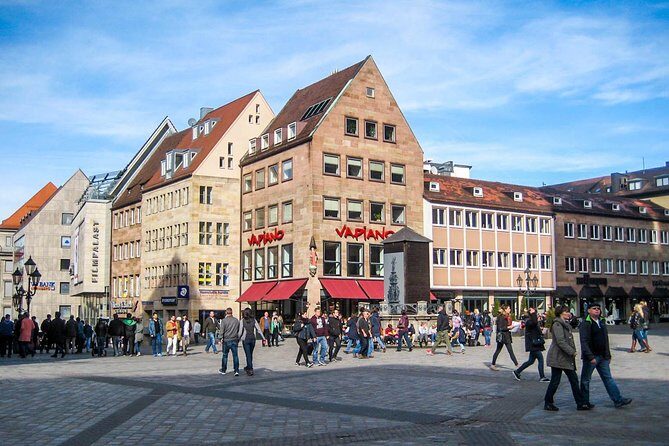
- Fleischbrücke start by the Pegnitz for fast orientation and great city views
- Church of Our Lady with restored Gothic brick sculptures after WWII damage
- Altes Rathaus (Old Town Hall) and its spire rebuild plus monumental frescoes
- Nuremberg Toy Museum covering playthings from the Middle Ages to today
- Nuremberg Castle as the skyline finale you can photograph from town
Why a self-guided Nuremberg audio tour fits the city
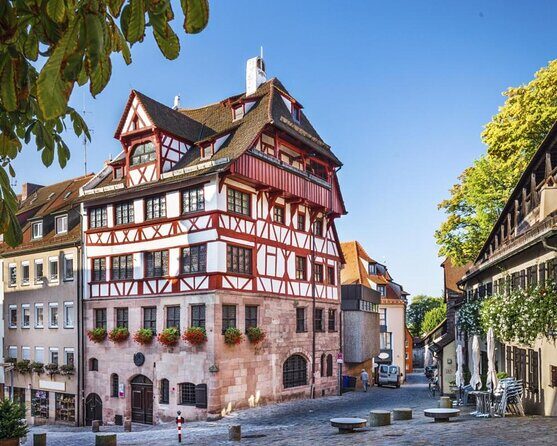
Nuremberg is one of those places where walking is half the fun. The Old Town is compact enough that you can take your time at each landmark, but not so compact that you want to be trapped in a group pace. That’s exactly where a self-guided audio format pays off.
Instead of waiting for someone who’s taking photos of every door knocker, you control the timing. If you want to linger near a sculpture on the church exterior or stop to study frescoes at the Town Hall, you can. If you need a breather, you can pause the audio and move when you’re ready.
You also get stories that connect the dots. The tour doesn’t just point at famous buildings; it explains why they look the way they do, including the impact of World War II and how multiple structures were rebuilt.
Downloading the mp3 and map: do this before you leave
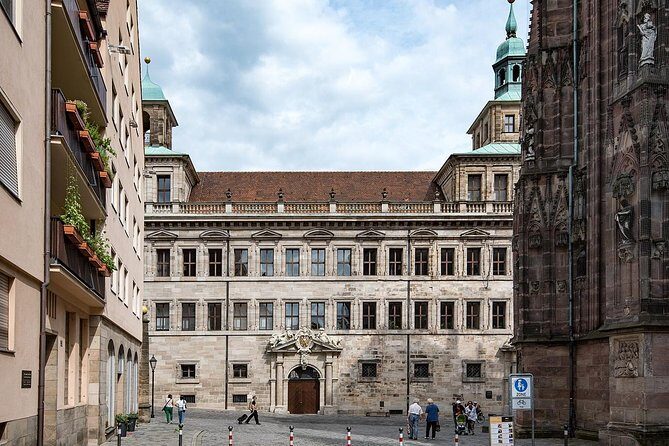
This is an audio tour only, with no physical guide walking with you. Your “ticket” is basically your phone access plus the mobile audio files. That makes preparation important.
Plan to:
- Download the mp3 and the map link before you start
- Get it ready on your smartphone or tablet in advance
- Bring your own headphones (they are not included)
The tour instructions strongly suggest you download and prepare the files before your walk. That matters because the tour is designed to run as you go, and it’s easier to troubleshoot at home than on a street corner. I’d also recommend downloading on Wi-Fi so you’re not fighting spotty coverage mid-route.
One more small thing: the start is 9:00 am at Fleischbrücke (Fleisch Bridge), 90403 Nürnberg. If you show up late without having the audio ready, you lose the easiest part—getting oriented by the river and starting smoothly.
Fleischbrücke on the Pegnitz: the smartest place to begin
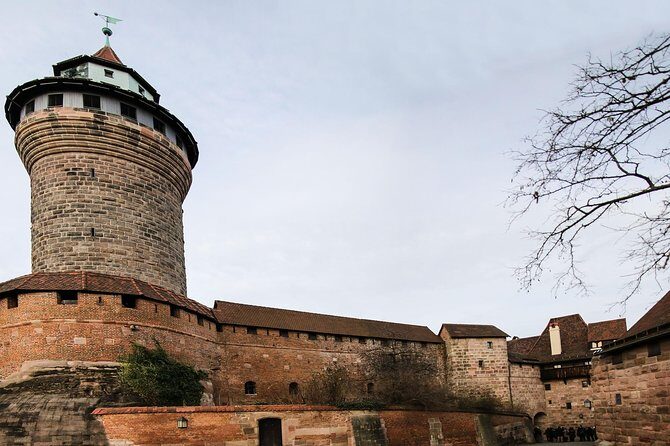
Your tour starts on the banks of the River Pegnitz at Fleisch Bridge, a Late Renaissance stone bridge. This is a good opening because bridges naturally give you a sense of direction—water on one side, old buildings and street lines on the other.
From here, you get “arrival energy” fast. You can scan the city, spot landmarks in the distance, and start walking with context instead of wandering blind. If you’re the type who likes to know what you’re looking at, the audio setup pays off right away.
And since the tour ends back at the meeting point, this bridge works like an anchor for the whole loop. It’s the kind of start-and-finish structure that helps you stay calm, even if you stop for photos.
Church of Our Lady (Frauenkirche): Gothic brick plus WWII restoration
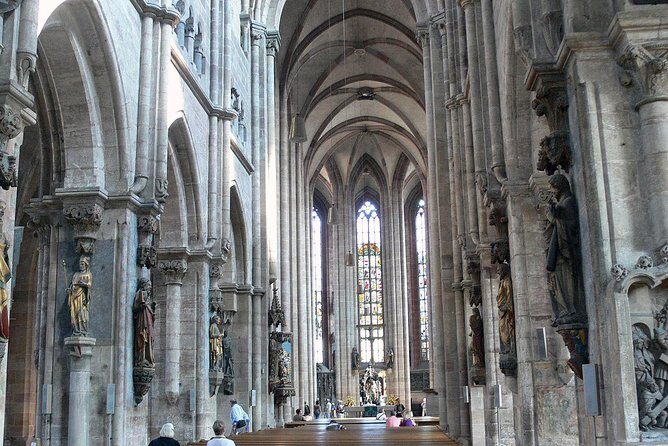
One of the tour’s major highlights is the Church of Our Lady, known for its Gothic brick architecture. The key idea the audio focuses on isn’t only the look—it’s the fact that many of its impressive sculptures were restored after the church was nearly destroyed in the Second World War.
When you stand in front of a building with that kind of history, details start to matter. You’ll want to slow down for the sculptural work rather than treating it like a quick selfie stop. The tour’s emphasis on restored elements helps you notice what was rebuilt and why those pieces are part of the story of survival and repair.
Practical note: even though this is an exterior-focused kind of stop (based on how audio tours like this are commonly experienced), bring comfortable shoes and expect some walking. The tour lists a moderate physical fitness level, so plan for real pavement time.
Altes Rathaus (Old Town Hall): spire rebuild and frescoes you’ll want to see twice
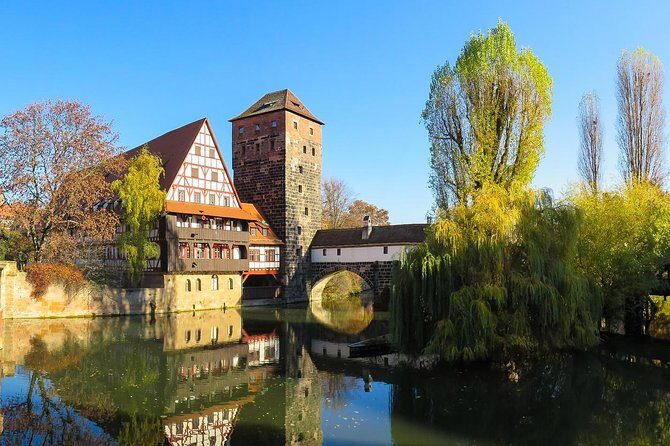
The tour route includes Altes Rathaus, where you can look for the rebuilding story made visible. The audio points you toward the awe-inspiring rebuild of the hall’s spire and the monumental painted frescoes.
This is a great stop if you like architecture that has a narrative. A rebuilt spire isn’t just pretty—it’s a clue that the city had to repair what was lost. Pair that with frescoes, and you get a mix of “art as record” and “city as ongoing project.”
If you’re going to take only one photo for the Old Town Hall area, I’d aim for the spire and then come back for the fresco section. The frescoes often reward closer looking than people expect, and the audio helps you know where to focus so you don’t miss the good parts.
Albrecht Dürer: how an artist becomes a thread through the walk
Nuremberg is tied to the legacy of Albrecht Dürer, and the tour builds in that connection. Even if you’re not an art-nerd, Dürer’s name is one of those anchors that can make a city feel smarter and more personal.
What you’ll likely appreciate is how the audio treats him as more than a name on a brochure. By weaving Dürer into the tour, you get a sense that Nuremberg isn’t only medieval walls and grand churches—it also shaped artists and ideas.
If you’re short on museum time, an audio tour like this is a good substitute for getting the context you’d normally need before a deeper dive later.
Nuremberg Toy Museum: why the Middle Ages to today stop works
A fun surprise on this route is the Nuremberg Toy Museum. The highlight here is the range: toys and miniatures from the Middle Ages to today.
This stop can be surprisingly useful, even if you only plan to spend a quick window on the museum area. The concept—seeing how play has evolved over centuries—turns a museum visit into a human story, not just a collection.
It’s also a nice rhythm change. After stone architecture, spires, and war-and-repair narratives, toys feel lighter. They remind you the city wasn’t only rebuilding monuments—it was also rebuilding everyday life, creativity, and culture.
Nuremberg Castle: the skyline finish that earns your walking time
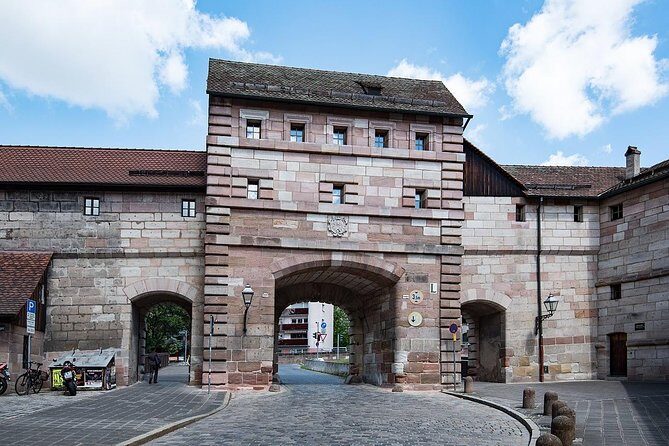
The final big “wow” is Nuremberg Castle (the audio route includes it). Castle viewpoints in German cities usually do two things: they prove why the site mattered historically, and they give you a clear city map from above.
For you as a walker, the value is simple: you get a payoff that feels worth the effort. For photography, the castle silhouette tends to be the kind of subject that looks good from multiple angles, so don’t feel pressured to get it perfect on the first try. If the audio is guiding you to the right time to look up and around, you’ll benefit from the timing without needing to sprint.
Just keep in mind: this is a 2-hour tour “approx.” That means castle time is often about smart looking rather than long museum wandering. If you love castles, you can always tack on extra time after the audio ends.
Price and value: is $15.49 worth it?
At $15.49 per person for about 2 hours (approx.), this is priced for a “bring-your-own-experience” style of sightseeing. You’re paying for:
- Expert-written context from historians and archaeologists
- A narrated track by Noah Kershishnik
- A downloadable mp3 plus a map
- The freedom to go at your own pace
It’s not priced like an admission-ticket museum day. It’s more like a paid guide you control. That can be great value if you’re the type who hates waiting around, and if you want background that makes architecture and history feel less random.
Where value can drop is when the download step doesn’t cooperate. Since headphones are also not included, you need your own setup (and a charged phone). If you already travel with headphones and you can download before you start, the cost starts to feel very fair for what you get.
For context, the tour is offered as a mobile ticket, and it’s in English only. That also helps value, because you’re not translating in your head while you’re trying to enjoy the view.
Timing, pacing, and what to wear
The tour starts at 9:00 am and ends back at the meeting point. Duration is listed as roughly 2 hours, and the route is built for walking plus listening—not for long indoor museum sessions.
Here’s how to make the timing work:
- Start with your audio ready before you reach Fleisch Bridge
- Expect to pause the audio for photos and close-up looks
- Plan for a steady walking pace, but don’t rush stops
The tour suggests comfortable walking shoes, plus a hat and sunscreen. That tells you the route is meant to be experienced outdoors for at least parts of it. Near public transportation is listed too, which is helpful if you need an easier way back.
Also, since it’s private in the sense that only your group participates, you won’t have to deal with stranger noise in the middle of your listening moments.
Who should book this audio tour in Nuremberg
This is a strong match for:
- You if you like independent sightseeing and don’t want to adjust to a group’s pace
- You if you want your stops explained, especially the WWII restoration angle and why structures look the way they do
- You if you enjoy architecture and art history, like Dürer and the story behind major civic buildings
It might be less ideal if:
- You hate pre-planning downloads and rely on your phone internet to function on the fly
- You want a guided experience with a person on-site answering questions (there is no physical guide)
Should you book this Nuremberg self-guided audio tour?
I’d book it if you’re visiting Nuremberg for the first time and you want a smart route that hits the city’s big talking points: church architecture, Town Hall rebuild stories, an artist thread through Dürer, the Toy Museum, and the Castle views. The price is reasonable for a self-paced format, and the expert narration keeps it from feeling like random sightseeing.
I’d hesitate only if you know your phone struggles with large downloads or you tend to forget tech prep. If you handle that part—download early, charge your device, bring headphones—this tour is an efficient way to get meaning from the buildings instead of just collecting photos.
FAQ
How long is the Discover Nuremberg self-guided audio tour?
It’s listed as approximately 2 hours.
What time does the tour start, and where do I begin?
The start time is 9:00 am, and the meeting point is Fleischbrücke, 90403 Nürnberg, Germany.
What sights are included on the route?
The highlights include the Church of Our Lady, Old Town Hall (Altes Rathaus), Nuremberg Toy Museum, and Nuremberg Castle, with the tour beginning at Fleisch Bridge on the Pegnitz.
Is this tour in English?
Yes, the tour is only available in English.
Do I need headphones or an audio device?
Headphones and an audio device are not included. You can download the tour on your own smartphone or tablet.
What do I receive after booking?
You get a downloadable link to download an mp3 file and map, plus a zip folder of audio files and a map.
Is it a guided tour with a person accompanying me?
No. It’s an audio tour only, and there is no physical guide.
Are admission fees included for museums or attractions?
No. Food and admission fees are not included.
]]>I especially like the hands-on format: you’re not just reading plaques, you’re solving little prompts as you go. I also like that it’s built around points and photo tasks, so the experience has energy even on days when you don’t want a formal guided tour.
One thing to consider: since it’s self-guided (no live guide is described), you’ll be doing more figuring-out yourself. If you prefer a person to explain history in real time, this will feel more like a structured game than a lecture.
Key points
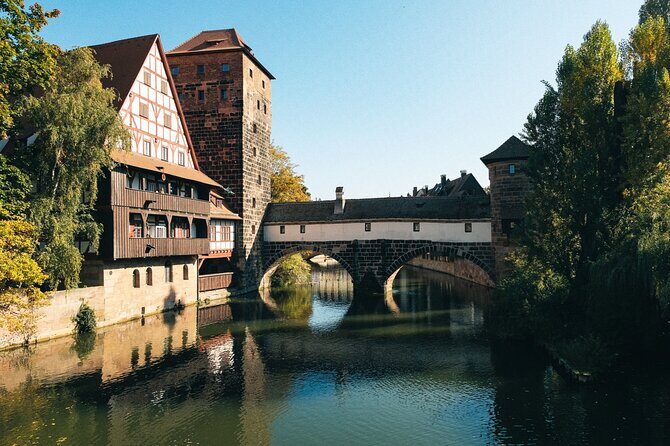
- Self-paced scavenger hunt with no time limit, so you can pause and snack
- English app support with hints and an in-app map to guide your walking route
- Sight questions designed to make you look closely at what’s already in front of you
- Creative photo challenges that reward effort with points
- Start at Germanisches Nationalmuseum and finish back where you begin, keeping logistics simple
- Private by group (your group only), which makes it easier to play together
What this scavenger hunt really is (and why it works in Nuremberg)
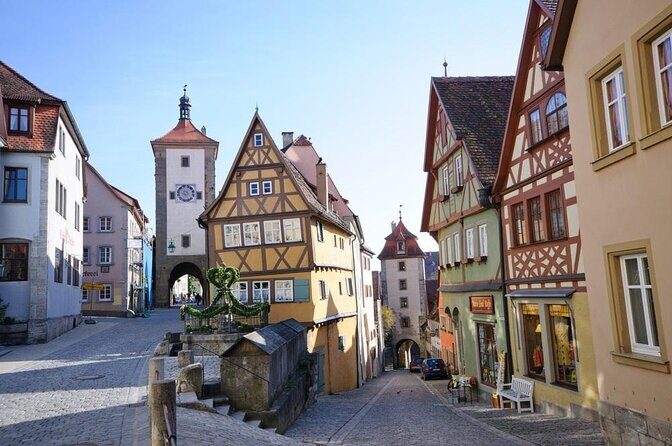
This is not a traditional walking tour. It’s a city game that uses real streets and real landmarks, then adds tasks that force you to pay attention. That mix is the secret sauce: you get movement, curiosity, and small wins without needing a full itinerary brain.
You’ll start at Germanisches Nationalmuseum (Kartäusergasse 1, 90402 Nürnberg). From there, you’ll use the app to find sights, answer questions, and do photo tasks for points. The duration is listed as about 2 hours (with an average 1–2 hours), but the bigger detail is that it’s not limited in time, so the pace is totally yours.
I like how the experience is designed for both first-timers and repeat visitors. If you’re new to the city, the tasks give structure. If you already know Nuremberg, you can still enjoy the game mechanics and the photo prompts to see familiar spots differently.
Starting at Germanisches Nationalmuseum: your “game base”
Your meeting point is Germanisches Nationalmuseum, at Kartäusergasse 1. The activity ends back at that same meeting point, which is a real comfort on a scavenger hunt. You’re not forced to figure out an ending station or worry about how to get back.
Plan to arrive with a charged phone and your access code ready. After you buy the ticket, you get an access code to use in the app. The sooner you enter it at the start, the sooner you can start playing instead of doing app setup mid-walk.
A practical note: even though the start-point address is clear, the experience is interactive. That means you’ll likely be stopping often—at signs, pictures, and the sights themselves—so give yourself time to actually enjoy the process rather than rushing through it like a checklist.
The app-led flow: hints, map, questions, and points
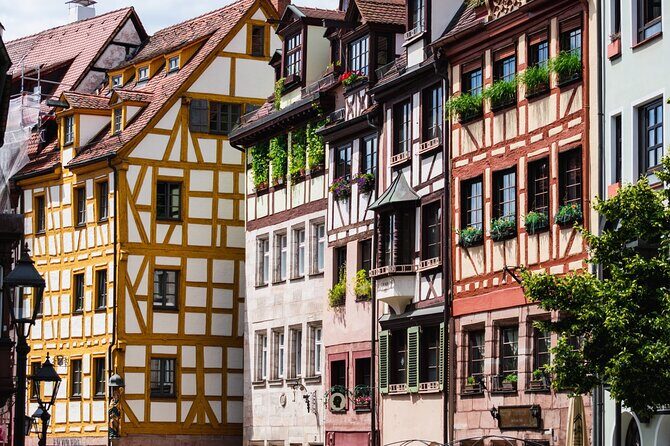
This hunt is built as a loop: navigate, arrive, answer, then move on. You’ll get hints to locate sights and hidden gems, and the app’s map helps you get there. Once you arrive, you’ll face questions about the sight you’re looking at.
The questions aren’t random trivia. The format described is that answers are hidden in things like signs and pictures around the spot. That design is why this feels educational without turning into a museum quiz. You’re training yourself to read what’s already there.
Then there are the points and photo tasks. If you handle the snapshot challenges well, you earn points during the adventure. This adds a playful layer for groups and keeps the walk from becoming too serious.
Photo tasks: how to stay creative without stress
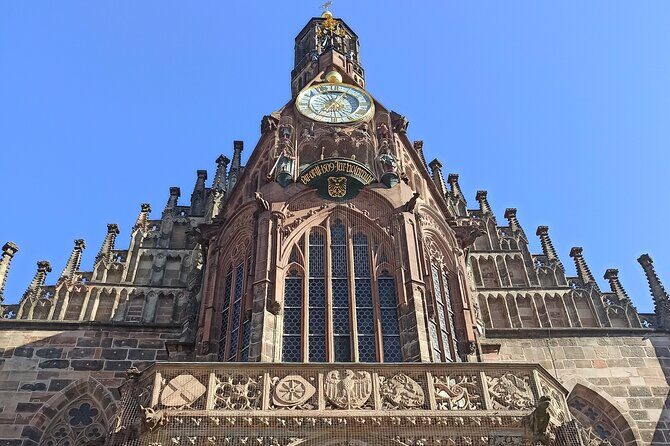
Photo tasks sound fun, but you’ll enjoy them more if you treat them as quick prompts, not complicated productions. The activity notes say the photo tasks require creativity, and mastering the snapshots earns points. That’s enough to get you thinking, but it doesn’t suggest you need special gear.
For couples and friends, photo tasks are a great way to break the “let’s hurry to the next stop” habit. For families, they can turn landmarks into something kids want to participate in, not just something to look at.
If you’re traveling with limited time, photo challenges are still worth doing because they slow you down in a good way. You get a reason to pause, look, and notice details you might otherwise skip.
The route’s highlights: Hans Sachs fountain, Dürer hare, and Schöner Brunnen
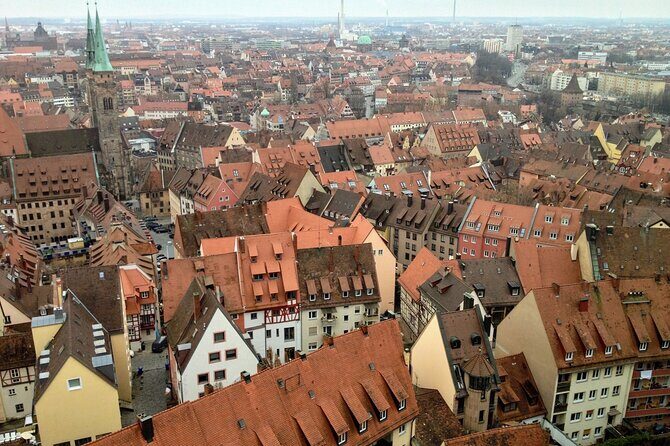
The hunt doesn’t list a full formal schedule of every stop, but it does name several big targets you’ll reach along the way. Think of these as anchors in your route—places where the experience likely shifts from navigation into sight-focused tasks.
You can expect to chase landmarks such as:
- The Hans Sachs Marriage Carousel fountain
- The Durer Hare Sculpture
- Schöner Brunnen
- and many more
Here’s why these named stops matter for your experience. A scavenger hunt needs “targets” that make it satisfying to arrive. Fountains and sculptures are ideal for this kind of game because they’re easy to spot and fun to frame in photos. Even if you only know them by name right now, the hunt format gives you a reason to examine them closely and answer questions tied to what you see.
A small strategy that helps: when you reach one of these sights, slow down for the question round. Don’t just snap and walk. The whole point of the hunt is that the info is present nearby—often in signs or visible details.
How long should you plan for: 1–2 hours, or longer if you want
The tour duration is listed as about 2 hours. At the same time, the experience notes that it’s on average 1–2 hours, and it’s not limited in time.
That means your real planning decision is how you like to travel. If you want a focused run with minimal pauses, you can likely finish closer to the faster end. If you enjoy wandering, reading thoroughly, or taking extra time for the photo tasks, build in extra slack.
I like that this format respects how travel goes in real life. Weather changes, phones die, and you may want coffee mid-route. Because the hunt is self-paced, you’re not trapped by a clock you didn’t choose.
Best for who: groups, families, and first-time city explorers
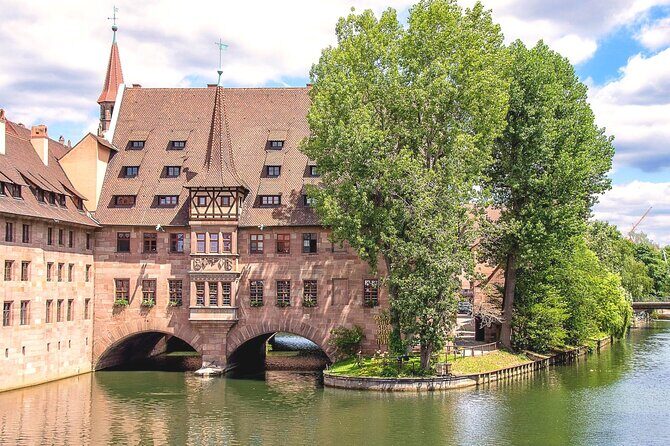
This works particularly well as a group activity. The feedback you were given emphasizes group play, ease of use, and fun discovery as a unit. Since it’s private, only your group participates, which helps keep the vibe relaxed.
It also seems to fit families well. One example in the feedback mentions doing the trail with kids aged 11 and 16, with the note that the map made it easy to find places. That’s a good sign: the app-based guidance reduces the friction that often makes self-guided activities hard with younger participants.
If you’re traveling solo, it can still work because the tasks are designed to be interactive. But the points and photo prompts may feel extra motivating when someone else is playing along.
Accessibility and comfort: what to expect on foot
The experience is near public transportation, which matters because it keeps you from feeling stranded. It’s also described as allowing service animals, and it notes that most people can participate. That’s all good baseline info if you’re picking a first activity in town.
What isn’t spelled out in detail is physical difficulty. Since it’s a city walk and you’ll be stopping often, you’ll want comfortable shoes and a phone you can rely on. The app helps you navigate, but it can’t protect you from sore feet.
Also, plan for lots of short pauses. The questions are tied to what you see at each stop, and the photo tasks add their own timing. This is a “walk, look, answer” format, not a “see everything from one bus stop” format.
Value check: $13.29 per person for an app-driven city game
At $13.29 per person, this isn’t expensive for what you get: an English app experience with navigation support, sight questions, and point-earning photo challenges. The big value isn’t just the landmarks. It’s the way the hunt turns those landmarks into active learning and a shared activity.
You also avoid a common cost: paying for a live guide for the exact length of time you want. This setup lets you spend time where the tasks feel rewarding and skip the parts that don’t.
One more value angle: it’s low pressure. You’re not committing to a long day of touring. You can run it for about 1–2 hours and still feel like you did something memorable and city-specific.
Practical start-to-finish tips before you begin
These are small choices that make the difference between a smooth hunt and a frustrating one:
- Charge your phone before you leave. The app is your map and clue system.
- Have the access code ready right when you start at Germanisches Nationalmuseum.
- Read the hint, then look around when you arrive. The answers are described as hidden in signs and pictures.
- Do photo tasks as you go, not at the end. Waiting can make you miss the best moment and lighting.
- Set your own pace, because the experience isn’t limited in time.
If you want to play well, treat each stop like a mini puzzle. The fun is in noticing, not just moving.
Should you book this Nuremberg scavenger hunt?
Book it if you want an easy first experience that turns Nuremberg into a game you can control. The combination of English app guidance, sight questions, and photo tasks for points is a strong fit if you like active sightseeing and hate the feeling of getting lost or wasting time.
Skip it if you want a traditional guided explanation of history at each stop. This format is built for self-directed discovery, so the trade-off is fewer real-time narratives and more puzzle-solving.
If you’re traveling with kids, it’s a smart option. The map-based navigation and group-friendly game structure are exactly what you want when multiple ages need to stay engaged. And if you’re short on time, it’s also friendly, because the hunt typically lands in the 1–2 hour range—but you can take breaks since it’s not time-locked.
FAQ
FAQ
Is this a guided tour with a person?
This is a self-guided experience using an app. The plan is based on following hints, using the in-app map, and answering questions on your own.
How long does the scavenger hunt take?
It’s listed at about 2 hours approximately, with an average duration of about 1–2 hours. The experience is not limited in time, so you can take breaks and go at your pace.
Where does the tour start and end?
It starts at Germanisches Nationalmuseum, Kartäusergasse 1, 90402 Nürnberg, Germany. It ends back at the same meeting point.
What language is the experience available in?
It’s offered in English.
How do I start after booking?
After you buy the ticket, you receive an access code you can use in the app. You then download the app, go to the starting point, and begin the game.
Can I take breaks during the hunt?
Yes. The experience is not limited in time, and you can explore at your own pace and take breaks.
What about refunds if plans change?
You can cancel for a full refund if you cancel at least 24 hours in advance of the start time.
Is it private for our group?
Yes. It’s described as a private tour/activity, meaning only your group participates.
Is the location easy to reach?
The start point is near public transportation, which should make it simpler to get there.
]]>What I like most is the self-paced format. You can stop whenever you want, then restart without losing your place, and you still have lifetime access to replay it later. It’s also set up for a small, private group experience limited to your party.
One thing to think about: the route can be hard to follow if you miss a step in the large squares, and construction can add confusion. Also, a couple people flagged that the narration accent took some getting used to.
Key highlights you’ll notice right away
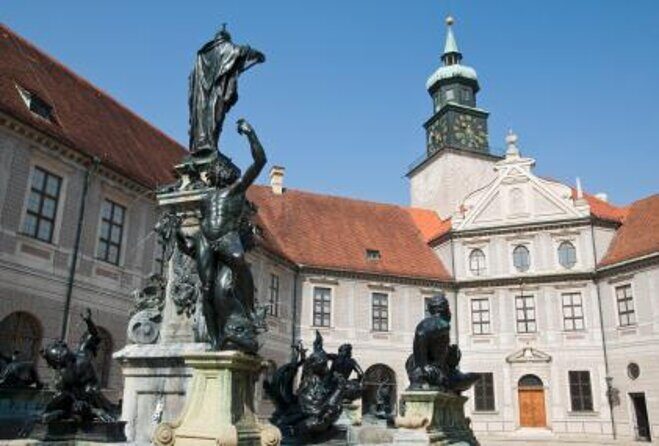
- Marienplatz is the start and finish, so you always know where you began.
- VoiceMap app + offline downloads lets you use the tour even with spotty data.
- Self-paced stopping works well when you want to shop, snack, or just linger.
- A long list of Munich landmarks keeps the walk interesting from start to end.
- Live location on the map helps you stay on track when streets get busy or tricky.
- Private tour format means it’s limited to your group, not a mixed crowd.
Marienplatz to Frauenkirche: what this Munich audio walk feels like

If you want a quick hit of historic Munich without lining up for tickets or waiting for a group schedule, this format fits. You start at Marienplatz and end back there, then follow the narration as it carries you past major sights along the way.
The total time is about 1 hour 10 minutes to 1 hour 30 minutes, so it’s the kind of plan that works for an evening stroll or a first-day orientation walk. And because it’s built for stop-and-start, you’re not forced to keep a steady marching pace while your feet are deciding whether to protest.
Why VoiceMap GPS audio works so well in Munich

In a place like Munich, the streets can feel like they all lead to something important. That’s exactly where GPS audio shines: it gives you a storyline as you move, instead of making you constantly check your phone map.
Two details really help the experience:
- The app provides offline access to audio and the map data, so you can keep walking and listening without stress.
- You get lifetime access, which is great if you want to repeat the walk after you’ve seen a museum or two and now the names make more sense.
If you’ve tried other self-guided audio tours that are awkward on the device, this one is set up to feel more natural. One reviewer specifically praised the live map with their location for staying on track, which is exactly what you want when you’re weaving through busy intersections.
The stop-by-stop route: what to expect at each landmark
This tour follows a clear sequence of sights, with narration timed to your position. You’ll pass churches, squares, market areas, and well-known historic stops, and the audio is designed to help connect what you’re seeing to what came before.
Here’s the route you’ll be following, and how it usually plays out on the walk.
Marienplatz: the easy starting point
You kick things off at Marienplatz, a straightforward meeting point because the tour begins and ends there. It’s a good anchor for navigation: you don’t have to guess where your walk starts, and you always return to familiar ground at the end.
Practical tip: once you start, keep your headphones ready. This is the type of tour where missing a minute can matter if you’re trying to match directions to what you see.
St. Peters Church: a listening stop, not a sprint
Next up you pass St. Peters Church. This is a good moment to slow down and actually listen, because church-front areas tend to feel visually busy and it’s easy to drift without realizing it.
If you’re the type who likes to pause in place for a couple photos, this stop supports that style. The tour is designed so you can pause as needed and then continue when you’re ready.
Viktualienmarkt and Honighäusl: where you can break for food and shopping
Then you head through Viktualienmarkt and by Honighäusl. This stretch is ideal if you want a natural snack or shopping break built into your plan, not tacked on later.
One of the most praised perks was the ability to stop mid-route for what you want—like grabbing something to eat or wandering shops—without losing the tour’s flow. That flexibility makes this a better choice than a timed walking tour when your day includes errands or a hungry stomach.
Hofbräuhaus: choose to pop in or keep moving
You pass Hofbräuhaus on the way. This is a classic Munich stop that tends to invite curiosity, so your best move is simple: decide on the spot whether you want to add a quick visit or just keep walking.
The audio format is handy here because it doesn’t force you to commit. If you detour, you can rejoin when you’re back on the route.
Alter Hof and Max Joseph Platz: brief pauses to reset your bearings
The route includes a short stop at Alter Hof, then continues through Max Joseph Platz. Think of these points as your mental reset moments—less about rushing forward and more about making sure your orientation stays good as the walk transitions between different parts of town.
In big open areas, it’s easy to lose the feeling of direction. One practical advantage you’ll have is the map with your position, which can reduce that stress if you’re paying attention.
Residenz: a “take your time” stretch
You pass through Residenz. This kind of historic setting benefits from a slower pace, even if only by a few minutes. The audio is built for you to follow along at human speed, not tour-bus speed.
If your schedule is tight, you can also keep moving. Because the tour is GPS-guided, you can still make progress without constantly stopping your day to plan.
Feldherrnhalle and Theatine Church: monuments and churchfront narration
Next, you pass Feldherrnhalle, then the route goes by Theatine Church. This pairing is great for listeners who like contrast: civic monument vibes, then back to the quiet drama of church architecture and history.
One drawback to keep in mind: a couple people found route guidance confusing in big squares. When you’re here, slow down at intersections and pay attention to the app’s map so you don’t drift to the wrong side of the block.
Palais Holnstein and Frauenkirche: finish strong with iconic sights
The tour then passes Palais Holnstein, and later you arrive at Frauenkirche and Frauenplatz. This is the tail end of the walk where having good audio context can make the final stretch more satisfying, not just a set of last-minute photo stops.
If you like details, bring that energy here. One review mentioned a wish for more guidance to find a specific detail in a church fresco, which is a reminder that some spots reward careful looking. If that’s your style, you’ll probably enjoy this ending stretch more than you expected.
Pair this with your day: best times and best travel style
This is a smart choice as a first evening plan because it helps you get oriented around familiar names. When you return later for dinner or a longer visit, you’ll have a mental map in your head.
It also works well for travelers who don’t want a rigid schedule. The “pause when you need” approach is especially useful if you want to:
- stop to browse in the market area,
- take a photo break without guilt,
- or step into a shop or stop briefly and rejoin the walk.
And since it’s limited to your group, it’s easier to keep the pace that fits your party. You’re not negotiating with strangers about how fast to move.
Price and value: is $9.99 a good deal?
At $9.99 per person, the biggest value isn’t just the narration—it’s the setup. You get the VoiceMap app, plus offline access to audio and maps, plus lifetime access so you can repeat the walk later when you’re in the mood or when you want to revisit specific areas.
The “hidden costs” are mostly on you, not the tour:
- you’ll need a smartphone and headphones,
- and if you want to go inside places with admission, that won’t be included.
If you’re paying for flexibility and self-guided learning, this pricing is hard to argue with. But if you strongly prefer a live guide who answers questions in real time, then a self-guided audio walk might feel limiting—one reviewer noted that you can’t ask individual questions.
Logistics: what you should bring and how to avoid common hiccups
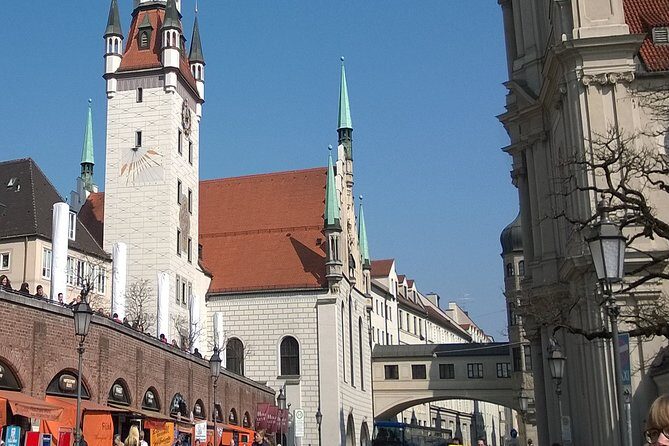
Here’s the simple packing list: smartphone, headphones, and enough battery life to feel comfortable.
A few practical tips based on what can go wrong with GPS audio:
- Use the VoiceMap app (not a separate web experience). Some people reported needing to advance repeatedly in a non-app setup, which can become tedious.
- Don’t sprint in big squares. Route clarity can suffer in crowded open areas, and construction may affect how the path feels on the ground.
- If directions feel confusing, trust the on-screen map. One important update described by the provider is that the map on your screen helps you handle short-term changes.
Also, if you’re visiting in cold weather, there’s a real advantage to not keeping the phone in your hand. One review described keeping the phone away while the tour continues when you reach the next point, which helps a lot when your fingers get numb.
Who should book this Munich audio tour
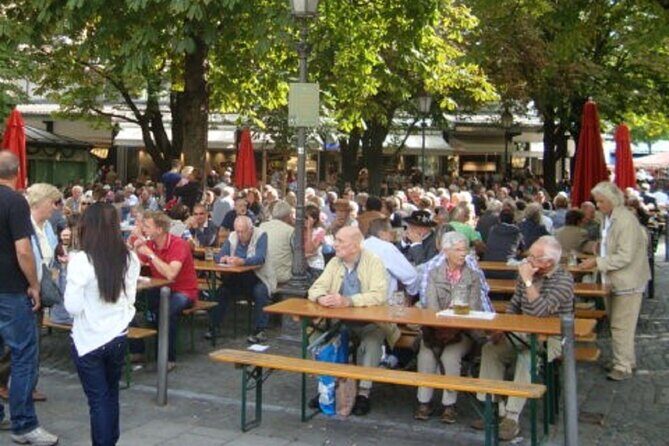
I’d recommend it if you want:
- an easy self-guided way to learn as you walk,
- the ability to pause for shopping, food, or photos,
- and a low-commitment plan that still feels like you’re doing something meaningful with your time.
It’s also a good match if your travel style is “walk first, decide later.” Since you pass many major sights, you’ll often get enough context from the audio to decide what’s worth a second visit.
When it might not be the best fit
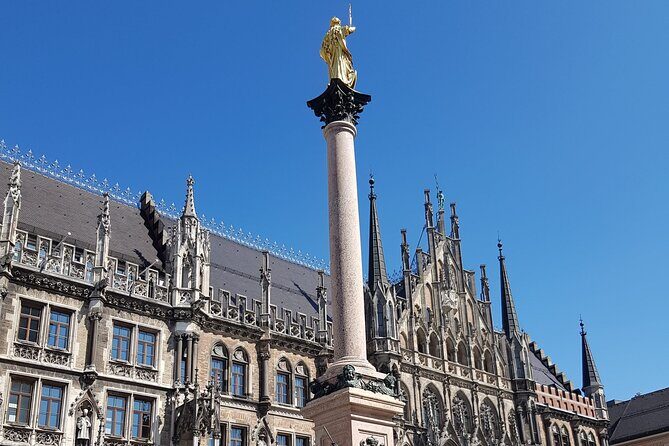
This tour may be less ideal if you:
- need a lot of detailed guidance step-by-step,
- get frustrated by accent differences in audio narration,
- or want to ask questions and get answers on the spot.
If you dislike any form of self-guided navigation and prefer a live human guide, you might find the experience too hands-off, even if the content is good.
Should you book? My quick decision guide
Book this if you want a practical Munich GPS audio tour that’s flexible, works with offline use, and keeps you moving through recognizable historic landmarks without the pressure of a fixed group schedule.
Skip it if you’re looking for a chatty, Q&A-driven guided walk, or if you know you often struggle with app-based directions in busy city squares. In that case, a traditional guided tour might suit you better.
FAQ
FAQ
Where does the tour start?
The tour starts at Marienplatz, 80331 München-Altstadt-Lehel, Germany.
Does it end where it starts?
Yes. This activity ends back at the meeting point.
How long does the Munich GPS audio tour take?
The duration is approximately 1 hour 10 minutes to 1 hour 30 minutes.
Is the tour available in English?
Yes, it’s offered in English.
Can I pause and restart the tour when I want?
Yes. You can stop and start as you like and pausing is part of how it’s designed to work.
Do I get offline access?
Yes. It includes offline access to audio, maps, and geodata.
Is it limited to just my group?
Yes. This is a private tour/activity, so only your group participates.
What do I need to bring with me?
You’ll need your smartphone and headphones. Transportation and food/drink are not included.
What if I need to cancel?
You can cancel up to 24 hours in advance for a full refund. If you cancel less than 24 hours before the start time, the amount paid is not refunded.
What are the opening hours?
The listed opening hours run Monday through Sunday, 12:00 AM to 11:59 PM, for the period 07/13/2020–03/06/2027.
]]>The route is designed around major landmarks in the old town core, from St. Lorenz Church to the Meat Bridge and the Hangman’s Bridge area. You get a small chunk of story at each stop, then you move on at your pace. Some segments also skip entry, so you’ll be solving around the site rather than paying to go inside.
At just $6 per person for about 3 hours, this is a low-cost way to stitch together famous sights with an actual reason to look closer. I think it’s best if you enjoy light problem-solving while sightseeing, not if you want a classic guided tour where everything is spelled out for you.
Key things to know before you play
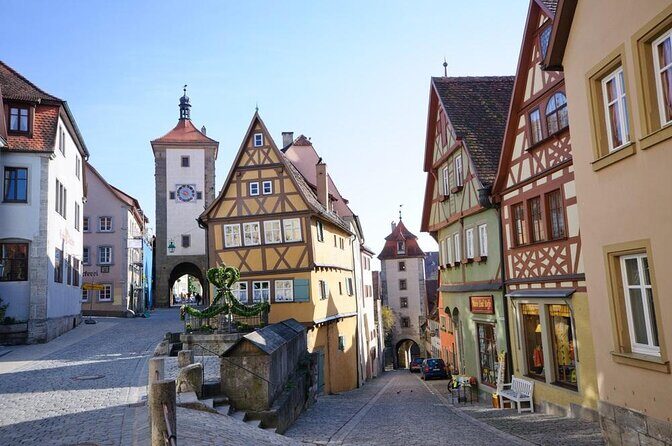
- Phone-only, no equipment: Your ticket lives in your phone and the game runs there.
- Start when you want: No fixed tour time after booking; you can play anytime during the app window.
- Outdoor landmarks with a story: You’ll hit churches, bridges, squares, and gates, with clues at each.
- Some big stops are outside only: The Hole Prison, Imperial Castle, Dürer House, and Rockcellars are not included for interior visits.
- Navigation may need help: The in-app directions can be less clear than you expect, so use your phone GPS.
- It can be a little puzzly: If a question feels hard, tap fast so you don’t lose your momentum with the countdown.
A phone-based medieval mystery game across Nuremberg
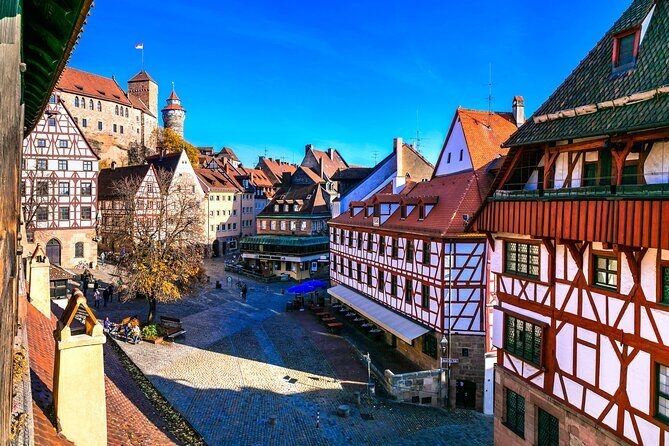
This experience is an interactive walk using your smartphone. You are not looking for a tour leader or waiting for a group to regroup. Instead, you show up at the start point, open the game, and follow a sequence of clue locations across central Nuremberg.
The medieval tone is part of the fun. The city’s famous landmarks are already dramatic—stained stone, old bridges, and towers with very serious names—so the game uses that atmosphere instead of trying to manufacture thrills. You get a short story clue at each stop, then the game directs you to the next place. It’s sightseeing with a mission.
Also, the pacing is flexible. Each site segment is built around a quick clue moment, but you can linger and keep exploring around the landmark before you move to the next one. That matters in Nuremberg, where you’ll often want a few extra minutes to look at details you noticed a moment ago.
Price and time: a 3-hour value walk
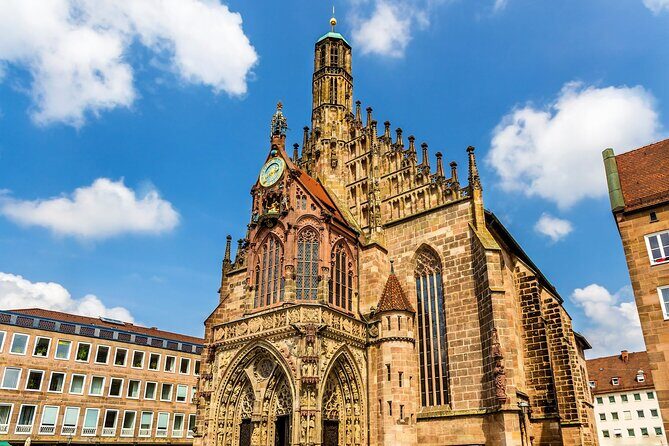
At $6 per person, the math is pretty friendly. You are not paying for museum admissions (most entry tickets are not required to complete the game), and you are not paying for a guide’s labor. What you are paying for is the structure: the route, the prompts, and the self-contained “why am I going here?” storytelling.
The timing range is about 2 hours 55 minutes to 3 hours 25 minutes. That’s a solid half-day slot. If you like to read signs and pause for photos, plan closer to the longer end. If you are fast with clues and you keep moving, you can finish on the shorter side.
One small value trade-off: a couple of the most “headline” locations are not part of the interior visit. You’ll still visit the area, solve around it, and move on. If you were hoping for a museum-style experience inside those places, you’ll want to plan separate tickets later.
Entering St. Lorenz: the first clue at Lorenzer Pl. 1
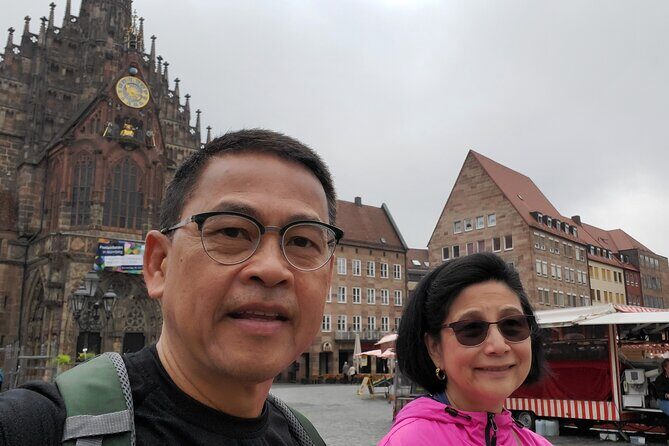
You begin at St. Lorenz Church (St. Lorenz / Lorenzer Pl. 1). This is a smart starting choice because it’s a big visual anchor for the old town—so even if you’re slightly lost at first, you have a landmark that feels important right away.
At this first stop, you get the opening clue. It sets the story and gives you directions to the next location. You do not need any special equipment here. Just have your phone ready, tap through the prompts, and then step out to start matching the clue to what you see.
Practical tip: if the game has a question countdown, don’t wait until you’ve walked away to answer. Look first, then tap quickly. That simple habit saves time and keeps the game fun instead of stressful.
Nassauer Haus and Frauenkirche: clues in the old town core
Next you’ll bounce to Nassauer Haus. This segment is short but useful because it keeps the route moving through the core area. You get another clue to solve, then you are free to explore around that spot for as long as you like.
Then comes Frauenkirche (Church of our Lady). This is one of those stops where the building itself gives you good material for puzzle-solving: angles, facade details, and the general feel of the square area. The game uses that environment rather than asking you to hunt for something hidden indoors.
Two things I like about this stretch:
- You get repeated “reset points,” so you’re not stuck trying to solve a long chain of hints in your head.
- The pace stays walkable. You’re not shuttling far outside the historic center.
A drawback to plan for: if app directions feel vague, you may want your phone GPS to confirm you’re heading to the correct side of a square or street.
Schöner Brunnen: using a landmark you can see from far away
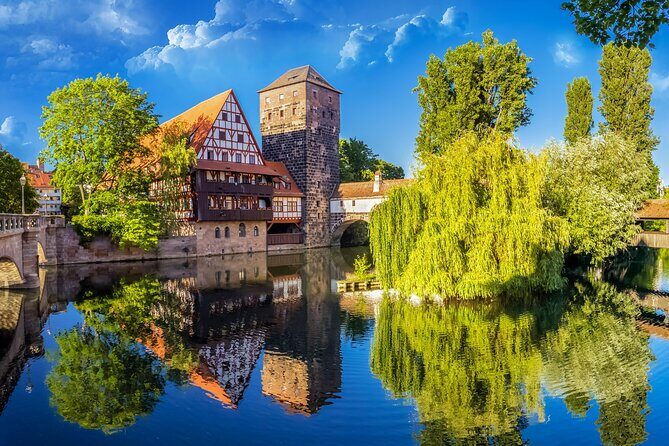
Your next stop is Schöner Brunnen (Beautiful Fountain). This is a classic Nuremberg “meet you in the middle” landmark, which makes it a friendly game stop. When something is visually obvious, you waste less time confirming location and more time enjoying the scene.
You’ll get a new clue at the fountain, then the game points you onward. Again, you can linger. Even if you’re not spending long inside anything, you can still take time to study what’s around you and let the game prompts connect to the real world.
If you like the outdoors-and-details type of sightseeing, this is where the game starts feeling smoother. When a location is easy to find, the puzzle side feels like a bonus, not a chore.
The Hole Prison and Imperial Castle: outside-only stops that still matter
Now the game heads toward some of the darker, high-drama parts of the medieval story.
Stop five is Mittelalterliche Lochgefängnisse / The Hole Prison. Here’s the key detail: the experience does not include a visit inside this attraction. You’ll solve the clue and continue, but you should not expect entry tickets or an interior tour as part of the game.
Stop seven is Imperial Castle of Nuremberg (Kaiserburg). Same idea: the tour does not include an inside visit. You’ll reach the castle area as part of the route and use it for story and clues, then move on.
This is not a bad setup. It can actually be a good one for budget travelers who want to see the famous sites without stacking ticket costs on top. But it does mean you may finish the game wanting to learn more at the castle or the dungeons with separate visits. If those interiors are a priority for you, make that a separate plan after the game ends.
Tiergärtner Tower gate, Albrecht Dürer House, and Rockcellars
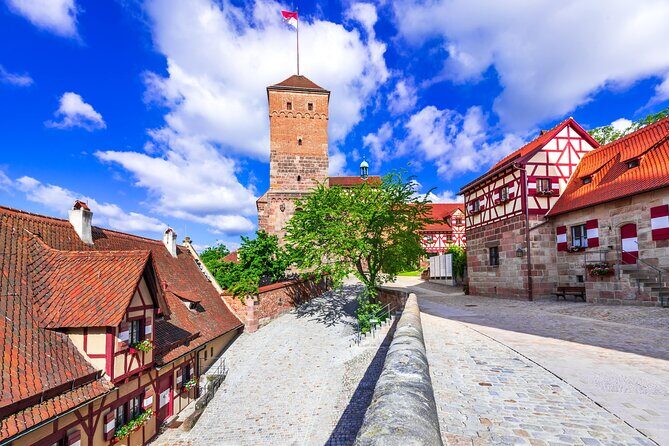
Next you’ll hit Beim Tiergärtnertor (Tiergärtner Tower gate). Gates and towers are great game locations because they’re built to be recognizable. Even if you’re still figuring out navigation, the physical structure helps you orient fast.
Then the route includes Museums Nuremberg – Albrecht Dürer House. Like the castle and Hole Prison, the experience does not include a visit inside. You’ll use the location as a clue stop and keep moving.
Then comes the Förderverein Nürnberger Felsengänge e.V. (Rockcellars) stop. Again: no interior visit included. You’ll get the clue and move on.
This part of the route is a reminder that this is primarily a walking game, not an admission-heavy checklist. If you’re happy with “see the place, do the puzzle, keep walking,” it works well. If you want to be inside several major attractions during the same outing, you’ll likely want to schedule additional paid visits separately.
St. Sebaldus to bridge crossings: the route tightens for the ending
After the Rockcellars segment, you reach St. Sebald (Sebalduskirche Nürnberg). Another clue, another chance to slow down and read the details around a church stop.
Then you’ll cross into the bridge-and-old-street energy with Fleischbrücke (Meat Bridge) and Hangman’s Bridge (Henkersteg). Bridges are great for these kinds of games because they act like natural timeline markers. You can look over the area, orient yourself, and then answer the next clue with what you just noticed.
The walk here feels like it gathers momentum. You are closer to the finish, and the scenery supports that shift. If you’re someone who likes city-walk rhythm, this section is satisfying.
One caution: bridges can feel obvious in daylight, but at dusk or in tricky weather, you may rely on GPS more. I suggest you don’t wait until you’re completely turned around to turn on location services.
Ending at the Ehekarussell: story finish, city continuation
The game wraps at Ehekarussell (Am Weißen Turm, 90402 Nürnberg). This is where the story and the city exploration game both end.
It’s a good finish point because it’s located near a recognizable “old town” feel rather than out in the suburbs. After the final clue, you can keep walking without feeling like you’re wandering away from everything.
I like endings like this. You get closure from the game, but you don’t feel trapped in it. If you still have energy, you can branch off toward whatever you want next—churches, shops, or just a quiet coffee somewhere nearby.
How to make the game smoother (and less frustrating) in real life
This is a fun concept, but it can go sideways if you approach it like a slow scavenger hunt. Here’s how I’d do it so you enjoy it more:
- Use your phone GPS from the start. The route is doable, but in-app maps/directions can feel unclear in parts. GPS helps you avoid wandering in circles.
- Answer quickly when a question appears. If there’s a timer or quick-respond feel, look at the landmark first, then tap to answer fast so you don’t miss the moment.
- Treat it like a walk, not a museum visit. Several stops are outside-only. Plan on standing, looking, solving, and moving on.
- Bring a charged phone and a small step rhythm. This is self-guided. If your battery dies or the screen times out, your progress stalls.
- Wear comfortable shoes. You’ll connect multiple church, bridge, gate, and square areas in one outing.
Also, keep your expectations realistic. At this price and format, the game is a structure for exploring. It’s not meant to replace a guided explanation for every major landmark.
Who this Nuremberg medieval darkness game fits best
This works best for you if:
- You want a self-guided way to see famous Nuremberg sights without coordinating with a guide.
- You like light puzzles and story clues that make you pay attention to what you’re standing in front of.
- You’re traveling on a budget and prefer spending money on local meals and optional paid entries rather than built-in admissions.
It might feel less satisfying if:
- You want a detailed, narrated interpretation of each landmark.
- You planned to go inside multiple attractions during the same session.
- You dislike timed interactions on your phone and prefer fully open-ended sightseeing.
One more thought on value: because the average rating is 3.8 from 18 ratings, you should expect the occasional rough edge, like unclear navigation or clue difficulty. That doesn’t kill the experience, but it does mean you should go in with the right attitude: playful, flexible, and ready to use GPS.
Should you book it?
If you’re in Nuremberg for a few days and you want one outing that mixes “see the sights” with “do something fun while you see them,” I’d say yes. The $6 price, the phone-only setup, and the route through major landmarks make it a practical way to cover a lot of ground in about three hours.
Book it when you:
- Like walking routes you can start and stop at your own pace.
- Want an easy win on navigation with help from your phone.
- Are okay with outside-only stops at several attractions.
Skip it if you:
- Want a guided explanation at every stop.
- Need guaranteed crystal-clear directions with no phone use.
- Expect interior tickets to be part of the package.
FAQ
How long is the Nuremberg medieval darkness exploration game?
Plan for about 2 hours 55 minutes to 3 hours 25 minutes.
Do I need a tour guide?
No. It is a self-guided experience. There is no tour guide included.
Do I need entry tickets to attractions?
Entry tickets are not included for some attractions, and they are not needed to complete the tour. Several stops note admission is free, while others specify tickets are not included and that the tour does not include a visit inside.
What language is the game offered in?
The game is offered in English.
Where do I start and where do I finish?
Start at St. Lorenz (Lorenzer Pl. 1, 90403 Nürnberg) and finish at Ehekarussell (Am Weißen Turm, 90402 Nürnberg).
Can I play the game at any time after booking?
Yes. You can play anytime after booking without rescheduling.
]]>Two things I really like: the offline-friendly setup helps you avoid surprise phone-data costs, and you can start and pause whenever you want. The main thing to consider is that a handful of stops show as admission not included, so you may need to budget extra if you want to go inside or climb.
Key highlights before you go

- Offline access to keep data charges down
- Start anytime and pause/resume on your schedule
- Private self-guided play means your group stays together without joining crowds
- English audio stories that guide you through the game
- Worth it for families and teamwork, since you’re solving and observing at the same time
- A mix of free and paid-entry checkpoints keeps the route flexible
What Ghosts of Munich actually feels like on the street
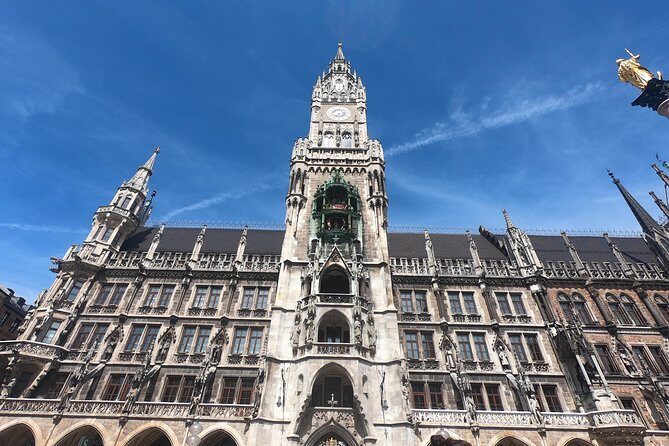
This isn’t a talk-at-you guided tour. It’s a quest game you play while you walk between landmarks, where each checkpoint asks you to notice something and answer a challenge. You’re trading long explanations for small, doable tasks.
If you like city strolling with a purpose, this format makes a big difference. You’ll naturally slow down at squares, church entrances, and odd little monuments that you might otherwise glide past.
And yes, it’s “haunted,” but it’s not jump-scare spooky. Think legends, old stories, and a little mischief wrapped around real locations.
Price, time window, and how to fit it into Munich days
The price is $7.21 per person, and the walk usually takes about 1 to 2 hours. That’s a good value if you want structure without paying for a more expensive guided tour.
You’ll get the most out of it if you treat it as a half-day activity inside Munich’s center. It’s also a smart pick if you’re trying to see a lot fast on a tight schedule, since the game-style stops are short and sequential.
One more planning note: it’s commonly booked about 12 days in advance, so booking earlier can reduce stress.
Start at Odeonsplatz: where a “minor band” story kicks off
Your route begins at Odeonsplatz in Munich’s Altstadt-Lehel area. The square is known for its early 19th-century design by Leo von Klenze, with an Italian-like feel that’s striking even if you’re not a design nerd.
What makes this start clever is how the story reframes a beautiful public space. The game points you toward a hidden slice of history from 1921, when an obscure leader tried to march into Munich to seize control of Bavaria. Authorities were waiting with machine guns at the square, and while some were killed, the leader they were after escaped—then later became tied to enormous tragedy across Europe.
Practical tip: since this is the first checkpoint, take a moment here to get oriented. Once you’re settled into the rhythm of the game, the rest flows quicker.
Hofgarten: a Renaissance garden that asks you to look twice
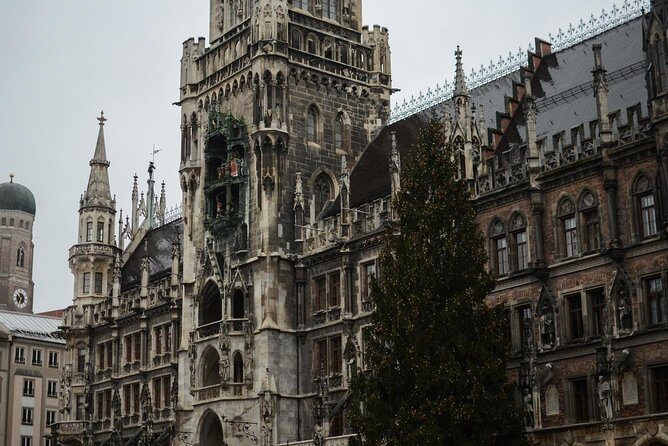
Next up is Hofgarten, a small park at the edge of Munich’s old town. The game’s angle here isn’t just scenic. You’re shown the garden’s origins as a 17th-century design by Elector Maximilian I, inspired by an Italian Renaissance style.
Historically, this was a place for high-ranking people—dukes, electors, and the like. Now it’s open to you, but the game invites you to ask: just because it’s peaceful today, does that mean it’s innocent?
The practical win: this stop is relaxing. You get a breather without leaving the story thread. If you’re walking with kids or teens, this is also a good moment to pause and snack, because the game doesn’t demand museum-level commitment.
Theatinerkirche St. Kajetan: church details you’ll actually remember
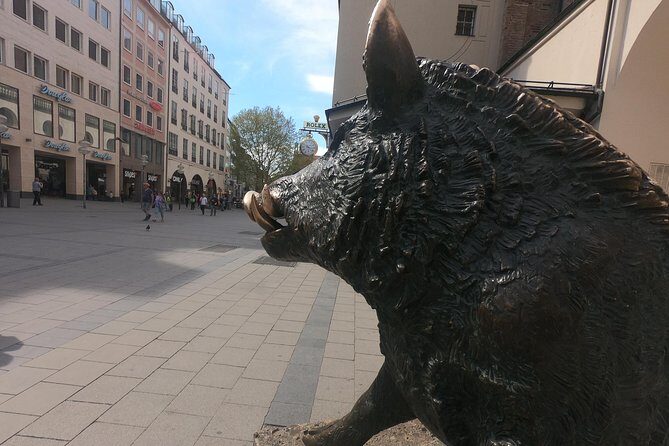
Then you head toward Theatine Church of St. Cajetan (Theatinerkirche St. Kajetan). This one has a strong “Munich Baroque” identity: the church was built in the mid-17th century by Elector Ferdinand Maria and his wife Henriette Adelaide, as a tribute to the long-awaited heir to the Bavarian throne.
Outside, you’ll likely notice the yellow facade. Inside, the contrast is part of the point—the interior is described as white and ornate, and it became influential in German Baroque architecture.
Here’s the practical consideration: the admission at this stop is listed as not included. That doesn’t mean skip it; it just means you should be ready for a paid entry decision if you want to see the interior and complete the challenge that depends on it.
Sitzender Keiler (Sitting Boar): the luck-rub moment
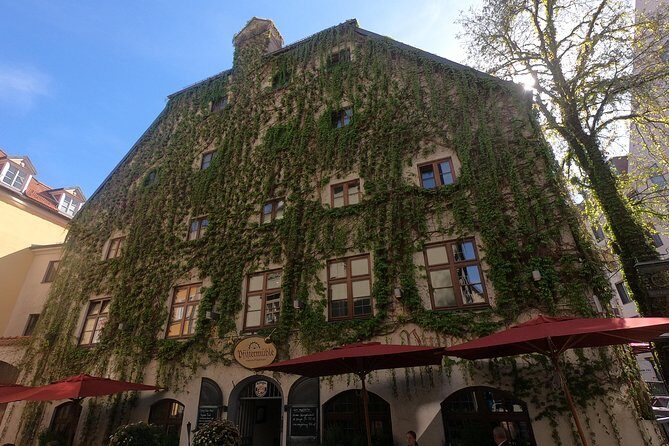
As you move onward, you’ll reach Sitzender Keiler, the Sitting Boar. It’s a quirky statue with a very specific “pose,” where the pig rests on its hind legs and sits up on short front legs, as if it’s watching something in the distance.
The statue is at the entrance area for the Hunting and Fishing Museum, and the game builds in a classic bit of local superstition: you’re meant to rub the boar’s nose for luck. It’s playful, and it works because it gives you a hands-on action inside a mostly “look and read” experience.
If you’re traveling with people who get bored easily, this is a great checkpoint. It breaks the pattern, adds a physical moment, and keeps the pace from turning into pure sightseeing.
Frauenkirche: twin towers, stained glass, and a Devil story
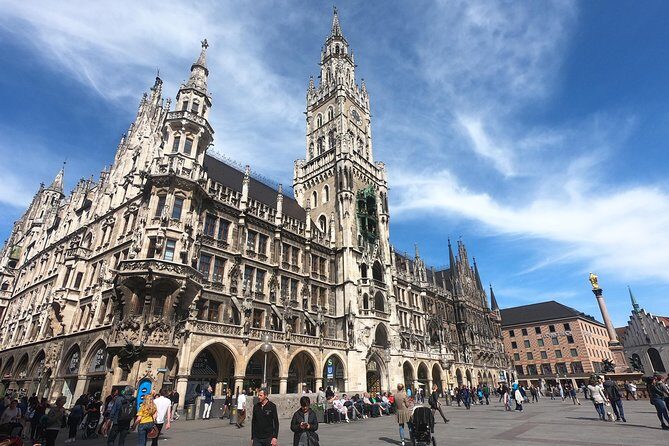
Now you hit one of Munich’s best-known landmarks: the Frauenkirche with its two twin towers around 100 meters high. Even from a distance, it’s hard to ignore.
You’ll likely notice the contrast between the grand exterior presence and the detailed interior—vaulted ceilings and stained glass windows are part of what makes it memorable. The game also turns the spotlight to an entrance legend: the Devil’s footprint.
The story goes like this: the builder supposedly bet the Devil that the church would have no windows. When the Devil realized he’d been tricked, he left a footprint behind. Your job is to figure out the rest by solving the game challenge.
Admission here is listed as not included, so same practical logic applies: decide if you want to pay to go inside and finish the story beats tied to this stop. If you’re okay with skipping paid interiors, you might still get plenty from the exterior experience and views.
Marienplatz: the city’s meeting point for everything
From there, you come into Munich Marienplatz, the central square that’s become a stage for everything: Christmas markets, city celebrations, and sports-related energy when FC Bayern is in the spotlight.
Marienplatz matters historically because it sits at the center of older Munich. The game points you to the idea that the city’s important streets converge here, and that tournaments and events happened there from the early days of the city.
This is a “people watching plus puzzle” stop. If you like to feel the city’s rhythm, Marienplatz is where you’ll get it. And because the stop is only about 10 minutes, it’s not a time sink.
St. Peter’s Church: 299 steps and a mix of styles
Next is St. Peter’s Church, Munich’s oldest Catholic church and a survivor of fires and wars over roughly 800 years. That survival matters because the architecture has been rebuilt again and again, which shows up in a mix of Gothic, Baroque, and Rococo elements.
Then comes the part that makes people say, I get why that was worth it: you can climb 299 steps to reach the tower view. The game’s built-in reward is the bird’s-eye look over Munich’s center.
Admission at this stop is also not included, so if climbing is your goal, plan around the cost and the effort. The good news is that even if you’re not climbing, the church itself is still a meaningful pause, since the style mix is visually obvious.
New Town Hall (Neus Rathaus): Glockenspiel + FC Bayern balcony energy
Your final major stop is the New Town Hall (Neus Rathaus). It’s not just a pretty building. The game frames it as the home of local politics and city council meetings, and it also connects it to FC Bayern, including the idea of the club using the area as a kind of fan-facing balcony on big wins.
Another reason this stop is fun in a game format is the Glockenspiel in the hall’s tower. It draws attention from around the world, and the game ties it to an old story after a plague epidemic, when barrel makers were among the first people willing to step back into the streets and dance for a population gripped by fear.
The final challenge leans into action—think dancing your way through the clue—so by the time you finish, you’re not just standing and reading. You’re ending with a small moment of play.
Admission at this stop is marked not included, so if any part of the experience depends on entering or accessing specific areas, expect separate entry choices.
Offline play: why that matters more than you think
One of the strongest practical features here is that you can access the game offline, helping you avoid expensive phone data charges. In Munich (and elsewhere), that kind of control is underrated. It means you can still move through the city even if signal is weak between stops.
Here’s how to make it work smoothly: once you book, set up your phone before you start and keep your battery in mind. A game that uses location cues and audio can be easy to run—just don’t leave everything to the moment you step onto the sidewalk.
No physical guide: the good and the trade-offs
You won’t have a person with a microphone. That’s part of why the experience can stay private and flexible.
The upside: you can take a break whenever you want without feeling like you’re slowing down strangers. The game is designed so you can start and pause, then resume later, which is great if you’re traveling with kids, older relatives, or anyone who needs frequent hydration stops.
The trade-off is responsibility. You’re the guide for your group. If you want a lot of extra context beyond what the game gives you, you might feel a bit more limited than with a traditional tour.
If something goes wrong, know where to get help
The overall experience score is strong, but tech-based activities can fail sometimes. If you get charged unexpectedly or the activity doesn’t seem ready, the provider support contact listed for help is:
I’d treat this as your plan B, not your first assumption. Just know that there is a real support channel if your app experience isn’t smooth.
Who this haunted Munich game suits best
This is a great fit if you want structure without crowds. It works well for couples, small groups, and families who like teamwork and observation.
It’s also ideal if you’re the kind of traveler who enjoys puzzles and small “find-the-detail” games more than long speeches. And since the English version includes audio stories, it’s not only about reading text on your screen.
You might prefer a different type of tour if:
- You want a live guide to answer questions on the spot
- You don’t want to deal with paid entry decisions at multiple church stops
- Your group dislikes phone-based experiences, even when offline
Should you book Ghosts of Munich?
Yes, I’d book it if you’re doing Munich at a walking pace and you want to turn famous sights into a short, engaging mission. The biggest value is the combo of offline play, flexible timing, and a private self-guided format that keeps your group together.
I’d hesitate only if your priority is a guided, narrated history lecture with no self-management, because this is built around your phone, your pace, and your puzzle-solving.
If that style sounds like your kind of sightseeing, Ghosts of Munich is a smart, cost-effective way to get deeper than a quick photo stop.
FAQ
How long does Ghosts of Munich take?
It’s listed as about 1 to 2 hours total.
What does it cost?
The price is $7.21 per person.
Where does the experience start and end?
It starts at Odeonsplatz (Odeonspl., 80 München-Altstadt-Lehel, Germany) and ends at Rindermarkt 17, 80331 München, Germany.
Is it available in English?
Yes, the experience is offered in English, with audio stories in English.
Can I use it without mobile data?
Yes. The game can be accessed offline to help you avoid phone data charges.
Do I need a physical tour guide?
No. This is a private self-guided activity, so there is no physical tour guide.
Can I start at any time and take breaks?
Yes. You can start at any hour, and you can start and pause for breaks, then resume later.
Are tickets for all stops included?
Not all of them. Some stops list admission as not included, so you may need to pay separately if you want to enter those places.
Is it private or shared with strangers?
It’s private for your group only.
Can I cancel for a full refund?
Yes. You can cancel up to 24 hours in advance for a full refund. If you cancel less than 24 hours before the start time, the amount paid is not refunded.
]]>The only watch-out: the puzzles are designed for kids roughly 6 to 12, so some older kids may find parts pretty straightforward. Also, there’s no guide waiting for questions at the start, so if you want extra context on the spot, you’ll be doing some of that yourself.
Key takeaways before you go
- 8 numbered envelopes with riddles, directions, info, and kid-friendly facts keep the walk structured
- Stachus is the easy launch point in Munich’s center, so you’re not figuring out logistics first
- Frauenkirche, Marienplatz, and Viktualienmarkt cover the wow-moments most families want
- Pause anytime for photos, snacks, or a breather without ruining the flow
- Emergency envelope with solutions helps you keep going if the clues stall you
- $47 per group up to 10 can be good value when you’ve got more than a couple of kids
Why a family scavenger hunt beats another Munich lecture
Munich is a city where you can do the “walk past something famous” routine. This experience is different. You’re not just looking at landmarks—you’re working through clues that push you to notice details you’d otherwise miss.
What makes it especially family-friendly is the format. Each part is broken into small steps (from envelope to envelope), with directions and bite-size facts. You still get the big-name stops—Frauenkirche, Marienplatz, and Viktualienmarkt—but the energy comes from problem-solving as you go.
And because it’s self-guided, you control the pace. If your child needs a longer look at a church tower or your group stops for a photo at the perfect moment, you can pause the hunt and restart when you’re ready.
The vibe is: structured enough to keep kids engaged, flexible enough to keep you from feeling rushed. In a city like Munich, that balance matters.
Getting started at Stachus: box in hand, no guide in sight
The hunt begins at Stachus, a large central square in Munich. There’s no guide at the start. Instead, you bring your scavenger hunt box (the one shipped to you) and begin whenever you want.
Before you leave for Munich, build in time for shipping. The hunt box is mailed to your address, and shipping can take up to 4 working days within Germany. It ships at the earliest 2 weeks before your selected date. Pickup in Munich isn’t available, so plan ahead like you would for any “arrives-by-mail” activity.
Once you’re at Stachus, the experience becomes straightforward: open the first envelope, follow the directions, solve the riddle, then continue to the next envelope. You can start on any date and at any time that works for your day, as long as you already have the box.
One practical tip: bring a stable spot where kids can sit and read their envelopes. Standing around while everyone tries to decode clues in a windy square gets old fast.
Also, plan on comfortable shoes. You’re walking through the historic center, and you’ll likely spend extra time at the most interesting corners.
From Stachus to the Frauenkirche: a riddle-led church stop
The Frauenkirche is treated as one of Munich’s key symbols, and the hunt uses that importance in a smart way. You’ll be guided toward the church while solving clues that keep you oriented and moving.
What I like about this approach is how it turns a big, impressive building into something your kids can “work on.” Instead of the usual adult commentary—this is old, this is significant—your family is reading directions and kid-friendly facts in small pieces.
A riddle-based stop also changes your attention span. Kids don’t drift as easily, because there’s a job to do next: answer, move, check, repeat. And adults tend to learn too, because the game points you at details you might overlook when you’re only trying to photograph quickly.
Possible drawback: you’ll miss out on deeper, spoken explanations that a live guide could provide. The envelopes include information, but it’s designed to be digestible for families. If your group wants long historical context, you’ll either need to read what’s in the envelopes carefully or look up extra info on your own.
Still, for a 150-minute family outing, it’s a strong trade-off: less lecture, more momentum.
Marienplatz and the two town halls: old Rathaus, new Rathaus
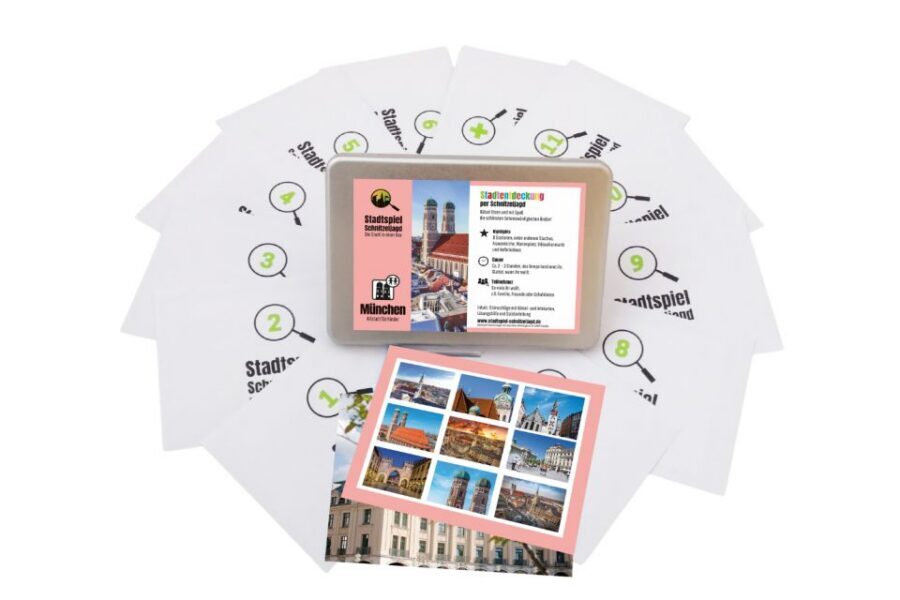
After the church, you reach Marienplatz—Munich’s iconic central square. This is where the hunt leans into one of the city’s most recognizable contrasts: the old and the new town halls.
Your envelopes take you to Marienplatz and include references to both the Altes Rathaus (Old Town Hall) and the Neues Rathaus (New Town Hall). That’s a big win for families, because kids can see the difference visually and the hunt gives you a reason to look closely instead of just passing by.
This stop works well because Marienplatz is naturally “sticky.” People gather there, and it’s easy to take photos, get your bearings, and reset your energy. Since the game can be paused anytime, you’re not trapped in a nonstop march.
I also like that the hunt keeps you from treating Marienplatz as one single scene. The mention of both town halls encourages you to treat it as more than a postcard. You’ll end up doing a quick compare-and-notice, which is exactly what helps kids remember.
One consideration: Marienplatz is in the thick of central Munich. On busy days, you may need to wait for a clear moment to read or solve in a calm way. That’s not a fault of the game, just a real-world city thing.
Viktualienmarkt: where the clues meet everyday Munich

Viktualienmarkt is the kind of place that makes Munich feel real. It’s a popular gourmet food market, and the hunt uses it as a “reward stop” and a learning stop at the same time.
In the context of a scavenger hunt, markets do something special: they give you sensory variety. You’ll still be moving through the envelopes, but the environment invites pauses—watching vendors, looking at stalls, and getting a sense of how locals experience food culture.
Even if your family doesn’t plan a big snack, Viktualienmarkt helps break the rhythm after a more architectural portion of the route. The game’s kid-friendly facts keep the stop educational, but the market keeps it fun.
Keep your expectations practical: food and beverages aren’t included, and entrance fees aren’t included (though market wandering usually doesn’t require paid entry). If you want a treat, treat it like a choice you make during the hunt, not something the experience guarantees.
If you have kids who tire of “serious sightseeing,” this is the part that often brings them back.
How the envelopes keep kids moving (and what to do when you stall)
This is the mechanics section, but it matters. The hunt includes 8 envelopes with riddles, directions, information, and kid-friendly facts. Each envelope is a self-contained step, which reduces the mental load for parents.
Then there’s the safety net: an emergency envelope with all solutions. If your group gets stuck or a riddle takes longer than expected, you’re not stuck in puzzle limbo for the rest of the walk.
That’s one reason the game works in real life. Kids lose focus. Parents lose patience. Streets don’t always cooperate. The emergency envelope means you can keep the day moving and still finish.
One more thoughtful detail: the hunt can be paused any time for breaks and photos. That’s important. Old Town sightseeing with kids often fails because of time pressure. Here, you can breathe, reset, and return to the next clue when your group is ready.
As for difficulty, the broad age target is 6 to 12. I’d treat that as a guide, not a rule. One family with a slightly older kid still enjoyed it, but there’s also feedback that some puzzles may feel a bit light for children toward the upper end of the target range. If your children are serious puzzle-solvers who want tough challenges, set the expectation that this is more about playful city learning than competition.
Timing and pacing: what 150 minutes feels like in Munich
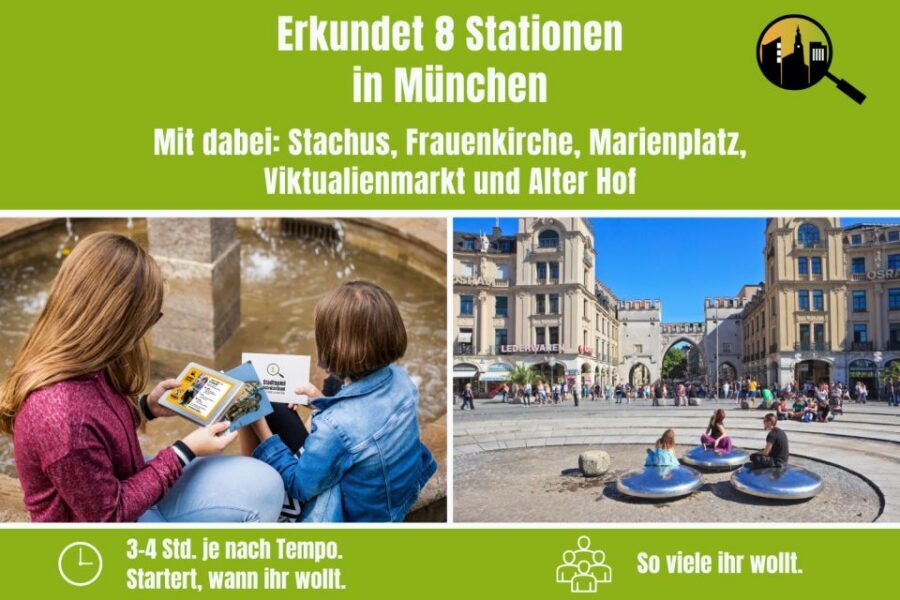
The tour duration is listed as 150 minutes. Because it’s self-paced, “150 minutes” doesn’t mean you’ll be done no matter what. It means you have a realistic window to cover the main stops without it taking over your whole day.
In practice, that time usually feels best when your group uses pauses well. Plan for:
- a couple of short stops to read clues
- slow moments near the big sights
- at least one photo break (because the kids will ask)
If you rush reading and skip the pause options, you might finish faster. If you stop often and linger at Viktualienmarkt, it could run closer to the full 150 minutes.
What helps most is using the pause feature as a pressure-release valve. When kids get bored, don’t fight the mood. Pause, snack or stretch, then resume the envelope when everyone’s ready.
Also, because there’s no guide, the hunt doesn’t “wait” for you like a traditional tour might. That’s good for freedom, but it means your group should be comfortable navigating on your own.
Price and value: $47 per group up to 10
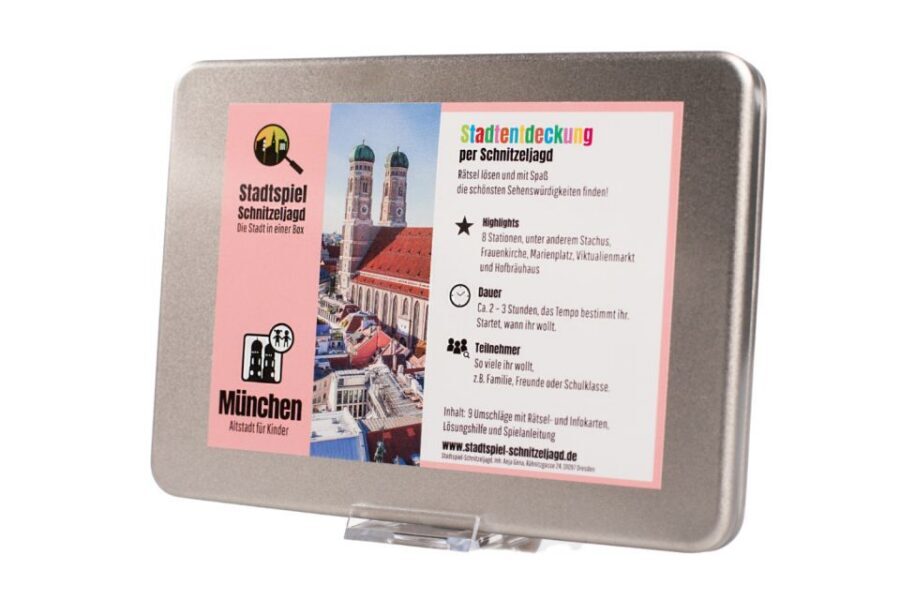
At $47 per group up to 10, this can be a strong deal for families who have more than one child—or who want grandparents included without multiplying costs.
Here’s the value logic I’d use: you’re paying for the scavenger hunt box (with shipping included), plus the structure that turns sightseeing into an activity. You’re also paying for time. Instead of spending the day trying to keep kids entertained while you move between sights, you’re effectively buying an off-the-shelf game that makes the walk purposeful.
What’s not included matters too. Food and beverages are not part of the price, and entrance fees are not included. Transport tickets aren’t included either. So if your plan includes paid museum entry or anything ticket-based, you’ll need to budget separately.
But if your goal is mainly outside sightseeing and market strolling, this price can feel very reasonable because the core experience is the city walk plus the puzzle steps.
Also, the booking flexibility is helpful for families: you can reserve and pay later, and cancellation is free up to 24 hours in advance for a full refund. That reduces stress if your itinerary is still moving.
Who should book this Munich hunt, and who should skip it
This is a great pick if you want:
- a family-friendly self-guided way to see Munich’s center
- an activity for kids ages 6 to 12
- a route that includes major sights without needing a live guide
- a low-pressure outing where you can pause for breaks
It can also work for mixed ages. One booking noted that a group spanning ages 7 to 58 found it interesting. That makes sense: adults get facts and structure, and kids get tasks.
You might skip it if:
- you want a spoken, in-depth tour explanation from a guide
- your children are looking for very hard puzzles and will feel bored by easier riddles
- you don’t want to rely on a mailed box you must receive before your start day
If you’re staying in Munich with limited time and you want your day to feel active rather than passive, this fits the moment.
Should you book this Munich scavenger hunt?
If you’re traveling with kids and you want Munich to feel like an adventure instead of a checklist, I’d book it. The strengths are clear: big landmarks in Munich’s center, puzzle steps that keep kids engaged, and the freedom to pause and move on your own schedule.
Just be realistic about difficulty. It’s family-designed, not a hardcore escape-room challenge. And since there’s no guide at the meeting point, plan to use the envelope information and carry a little patience for occasional stumbling.
Overall, it’s a smart value way to see Frauenkirche, Marienplatz, and Viktualienmarkt while your children are actively doing something—not just tagging along.
FAQ
Do we get a guide during the hunt?
No. There is no guide at the meeting point, and the tour is self-guided.
Where does the hunt start?
The scavenger hunt starts at Stachus, a large square in the center of Munich.
How long does the experience take?
It lasts about 150 minutes.
How many envelopes are in the scavenger hunt box?
You receive 8 envelopes with riddles, directions, information, and kid-friendly facts, plus an emergency envelope with all solutions.
Can we start at any time?
Yes. You can start on any date and at any time you wish.
What sights are included in the route?
The hunt includes the chance to discover the Frauenkirche, Marienplatz (with Altes Rathaus and Neues Rathaus), and Viktualienmarkt.
Is food or entrance tickets included?
No. Food and beverages are not included, and entrance fees are not included.
How do we receive the box?
The scavenger hunt box is shipped to your address by mail. Shipping can take up to 4 working days within Germany, and it is shipped at the earliest 2 weeks before your selected date.
Is the activity wheelchair accessible?
Yes, the experience is listed as wheelchair accessible.
]]>