
REVIEW · BAVARIA
Bavarian Schnitzel Cooking Class in Oberaudorf Farmhouse
Book on Viator →Operated by Adventure Bavaria · Bookable on Viator
A schnitzel hammer beats a tour bus. In Oberaudorf, this hands-on cooking class takes place in a 150-year-old farmhouse kitchen (modernized inside), where you learn a classic Bavarian dinner with Wiener Schnitzel and regional sides. It’s small too, with English offered and room for real interaction.
What I like most is that you do the work, not just watch it. You’ll also leave with take-home Bavarian recipes, so the day doesn’t end the moment the oven goes quiet. One thing to consider: Oberaudorf is a bit of a commute from Munich, and while pickup is available, it can cost extra—so plan your train timing carefully.
In This Review
- Key highlights at a glance
- Oberaudorf farmhouse cooking: the setting that makes it feel real
- How the class runs from Bahnhof Oberaudorf to your first cappuccino
- The Bavarian sides: potato salad and radish salad prep you’ll actually use
- Wiener Schnitzel step-by-step: pounding, breading, frying
- Kaiserschmarrn dessert: how the batter rests and the pancake gets ripped
- What you eat during the class menu (and what the strudel mention means)
- Recipes to take home: the real souvenir
- Price and value: is $252.05 worth it?
- Logistics from Munich: trains, timing, and a practical station tip
- Who should book this class in Oberaudorf (and who should skip it)
- Should you book this Bavarian schnitzel cooking class?
- FAQ
- How long is the cooking class?
- What time does the class start?
- What dishes are included in the class?
- Is pickup from the Oberaudorf train station included?
- What language is the class taught in?
- Do you provide recipes to take home?
- What’s the group size limit?
- Can the hosts accommodate vegetarian diets?
- If I cancel, is it refundable?
Key highlights at a glance
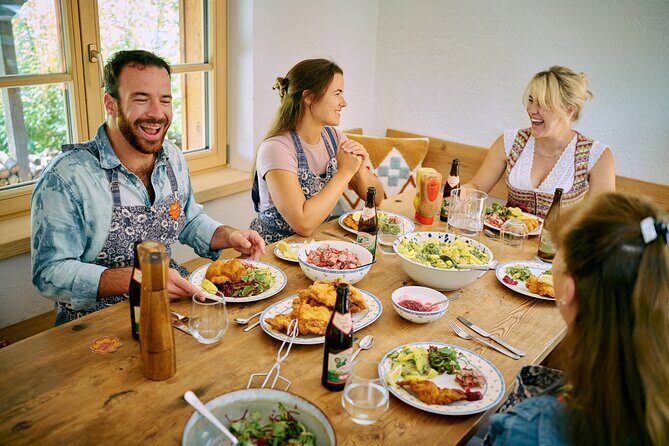
- 150-year-old farmhouse kitchen with old-world vibes and modern amenities
- Hands-on schnitzel pounding with Adventure Bavaria schnitzel hammers
- You make the sides (potato salad, radish salad, and a green salad)
- Wiener Schnitzel technique: breading and frying one at a time for crisp results
- Dessert is real work: kaiserschmarrn batter, then flip and rip
- Small group of up to 10 with an English-speaking host team and recipe cards to take home
Oberaudorf farmhouse cooking: the setting that makes it feel real
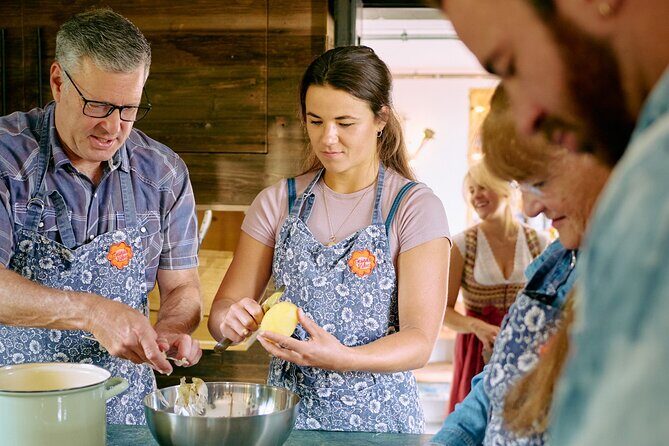
This is the kind of Bavarian experience where the room matters. The class happens in the Adventure Bavaria Werkstatt Kitchen, inside a 150-year-old farmhouse in Oberaudorf. It’s been newly renovated, so you get practical kitchen setup, but you don’t lose the cozy, lived-in feeling.
That matters because schnitzel is not “mystery food.” It’s rhythm. You pound cutlets, bread them, fry them, and watch for the moment they go from pale to golden and crisp. In a kitchen like this, you can actually stay focused on the process, not the logistics.
You’ll also notice the pacing. You start with drinks and Bavarian appetizers, then you move into prep work, and only then do you hit the main event. That order is good for beginners, because you warm up with salad prep before you’re standing over hot oil.
If you're still narrowing it down, here are other tours in Bavaria we've reviewed.



How the class runs from Bahnhof Oberaudorf to your first cappuccino
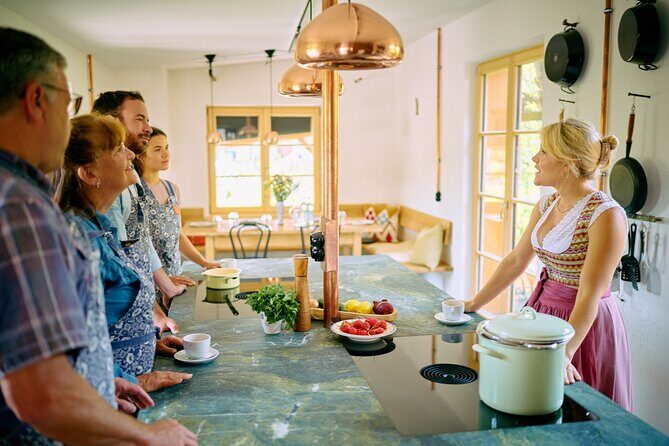
Most days begin at 10:00 am and end back at the meeting point. The start is at Bahnhof Oberaudorf (Bahnhofpl. 2, 83080 Oberaudorf). If you’re arriving by train, the team meets you at the station.
From the station, it’s about a 5-minute drive to the kitchen area. In other words, you’re not spending your day commuting in circles. If you want transfers from Munich, they can arrange a personal car (at an added cost), but the core plan is train to Oberaudorf, then meet-and-go.
The early part of the session is welcoming and lightly structured:
- You’ll get a cappuccino.
- Then you’ll snack on Bavarian appetizers, including pretzels with Obazda.
That sets the tone. You’re not rushed. You settle in, learn a bit about what you’re making, and you get your bearings in the kitchen before knives and pans come out.
The Bavarian sides: potato salad and radish salad prep you’ll actually use
Before schnitzel starts, you’ll prep the supporting cast. This is where many cooking classes lose people because they turn into a blur of chopping. Here, the focus stays practical and tied to the menu.
You’ll make the classic sides that show up with Bavarian comfort food:
- Potato salad
- Radish salad
- Plus a fresh green salad to round it out
The best part is that these sides teach you timing and seasoning logic. Potato salad is a “texture” dish. It needs the right cut, the right mixing method, and the right balance so it doesn’t turn heavy or bland. Radish salad is a different skill set. It’s sharper, fresher, and you learn how to keep it lively rather than watery.
One bonus from recent participant experiences: people who thought they were just doing schnitzel ended up loving the salads as much as the main course. That’s a good sign. Sides are what you replicate at home without a special trip to Bavaria.
Wiener Schnitzel step-by-step: pounding, breading, frying
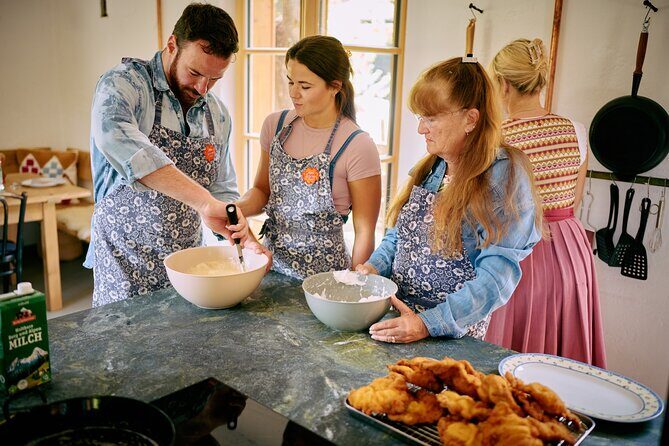
This class is built around Wiener Schnitzel, and you don’t just hear about it. You physically handle the process. The hosts provide custom Adventure Bavaria schnitzel hammers, and they’ll put the hammer in your hands.
That’s a big deal because schnitzel starts with thin cutlets. Thin means quick cooking and that signature tenderness once the crust sets. You’ll learn how to pound each cutlet evenly to get consistent results.
Once the cutlets are ready, you’ll move through the breading and frying stage:
- bread and fry each piece one at a time
- aim for schnitzel that’s crispy, puffed, and golden
That one-at-a-time approach is practical. It helps the oil recover heat between pieces, and it prevents the coating from getting greasy or soggy. If you’ve ever made schnitzel at home and wondered why it turned out flat or oily, this is the kind of instruction that fixes the problem at the source: heat control and timing.
You’ll also serve the schnitzel with typical accompaniments:
- lingonberry jam
- lemon
That sweet-tart jam and fresh lemon pairing is one of those Bavarian moves that makes sense once you taste it. It’s also easy to recreate at home if you stock lingonberry jam and keep lemons on hand.
Kaiserschmarrn dessert: how the batter rests and the pancake gets ripped
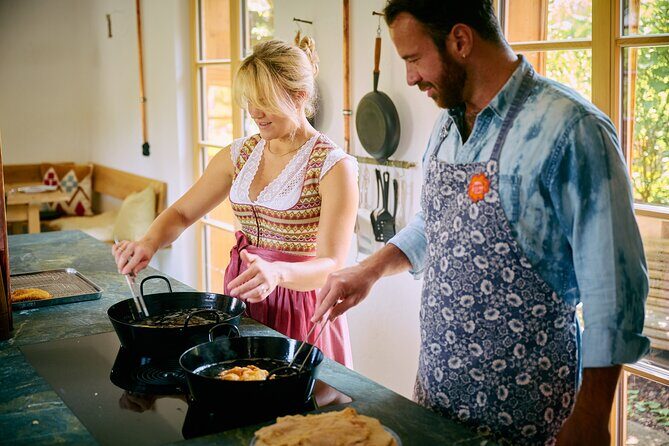
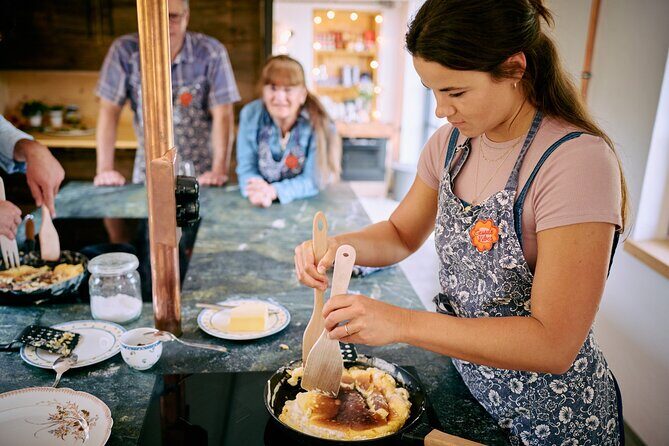
While the schnitzel fries, you shift to dessert. The dessert is kaiserschmarrn, an alpine-style sweet pancake that’s ripped up rather than sliced.
Here’s what you’ll do:
- prepare the batter while schnitzel cooks
- let the batter rest
- finish by flipping and ripping the kaiserschmarrn
That resting step matters. It helps the texture set so you get that soft, fluffy interior without turning the result into something rubbery. When it’s time to flip, the goal is not perfection. It’s character—pieces that are crisped on the edges and tender inside.
You’ll then sit down to eat the main meal while it’s fresh, then return to finish dessert. And yes, there’s often a drink moment to wrap it up. Some participant notes mention a selection of schnapps after dinner, which fits the Bavarian rhythm of meal to sweet to something warm.






What you eat during the class menu (and what the strudel mention means)
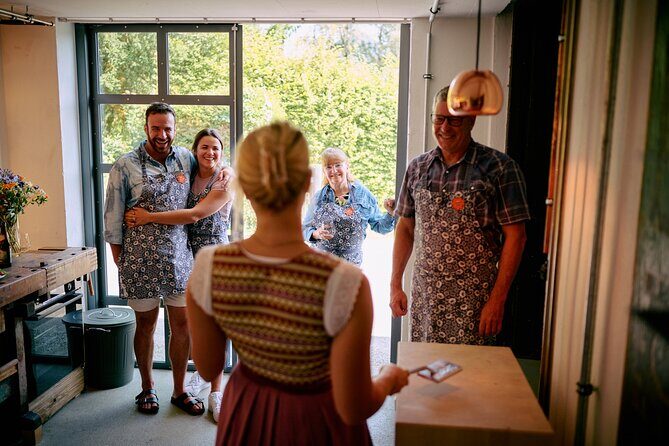
The day’s sample menu includes:
- Starter: Pretzels with Bavarian spreads (Obazda)
- Main: Veal schnitzel with Bavarian sides, lemon, and lingonberry jam
- Dessert: Kaiserschmarrn
One detail to be aware of: the overview mentions a Bavarian dinner that includes schnitzel and strudel, but the written menu focuses on kaiserschmarrn for dessert. That doesn’t mean you won’t see strudel at all—just that the clear, named dessert here is kaiserschmarrn. If strudel is a must-have for you, message the provider before booking to confirm what’s on the menu for your exact date.
Either way, the core of the class is clear: schnitzel technique plus Bavarian sides plus a regional dessert that uses a batter you prepare yourself.
Recipes to take home: the real souvenir
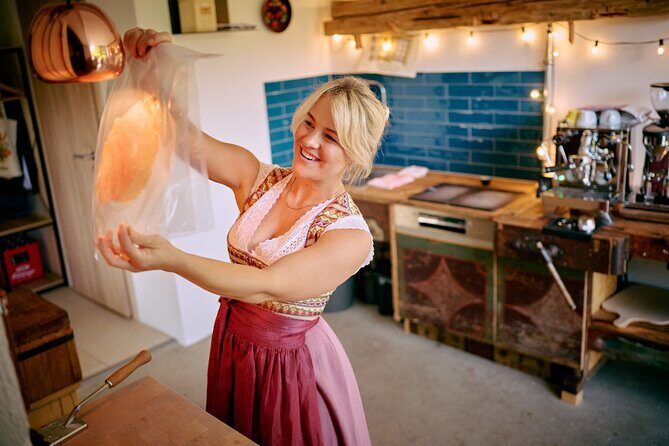
The class doesn’t end when the pan cools down. Before it’s over, you’ll be handed the recipes so you can make the food at home.
This is where the value comes in. Many cooking classes give you a vague memory and a photocopy. Here, you get cards tied to the actual menu you prepared: the sides, the schnitzel approach, and the kaiserschmarrn method.
If you’ve cooked before, you’ll probably appreciate this even more. One theme in participant feedback is that even experienced home cooks learned new technique—especially the way schnitzel is hammered thin and handled through breading and frying. The point isn’t just taste. It’s repeatability.
Price and value: is $252.05 worth it?
At $252.05 per person for about 4 hours, you’re paying for more than food. You’re paying for:
- small-group teaching (maximum 10 travelers)
- a real kitchen setup and equipment (including the schnitzel hammers)
- structured cooking time where you do the work
- a full meal experience (starter, schnitzel with sides, dessert)
- take-home recipe cards
Could you eat schnitzel in Bavaria for less? Sure. But the reason this price holds up is that you’re buying a skill set. When schnitzel is done right, it’s crispy without being greasy, tender without being thick, and seasoned in a way that doesn’t taste like a shortcut.
Also, you’re in a farmhouse kitchen with hosts who explain both food and context. That kind of day is hard to replicate with a DIY plan, especially if you want someone to correct your technique while you’re still at the cutting board.
Pickup is optional and costs extra. If you’re comfortable with trains and meeting at the station, that’s one way to keep costs closer to the base price.
Logistics from Munich: trains, timing, and a practical station tip
Trains run hourly between Munich and Oberaudorf. When you arrive, look for the team at Bahnhof Oberaudorf (people in lederhosen and dirndl are part of the cue).
The commute itself is usually smooth because the trip is straightforward. Still, do yourself a favor and plan timing so you arrive with breathing room. A short 5-minute drive after meeting is quick, but missing the greeting moment can scramble the day.
One practical tip from real-world experience: on some routes, trains can be split further along the way. A helpful strategy is to sit in the front two coaches when departing Munich, just in case your train is divided later. It’s the kind of small move that saves stress.
Once you’re done with the class, the activity ends back at the meeting point, so you’ll head back from the station area.
Who should book this class in Oberaudorf (and who should skip it)
This works especially well if you:
- want a hands-on food experience rather than a sit-and-watch tour
- like Bavarian comfort food and want a method you can repeat at home
- enjoy small-group settings with plenty of conversation
- are traveling with family members who can cook alongside each other (it’s the kind of day that lands well across ages)
It may be less ideal if you:
- hate cooking with your hands (this is not a spectator class)
- want a strictly flexible itinerary with lots of wandering built in
- need every minute to be open-ended. The meal and dessert flow is part of the structure.
The hosts are part of the appeal too. Anna and Tyler run the day, and the teaching style emphasizes warmth and clear direction. In fact, participants repeatedly highlight how welcoming the hosts are and how much fun the kitchen time feels, even for non-cooks.
Should you book this Bavarian schnitzel cooking class?
Yes, if you want a Bavarian day that turns into a skill you can use later. This class is built around real technique: pounding schnitzel thin, breading and frying for crisp results, and finishing with kaiserschmarrn you prepared yourself.
Book it if you’re coming from Munich and you like the idea of getting out of the city for a few hours into the mountains region. Oberaudorf is small, the station meeting is clear, and the class duration is tight enough that you’re not losing a whole travel day.
If strudel is your top priority, confirm your date’s menu first. And if you’re sensitive to cost, weigh it against what you’d spend on dinner plus a second activity in Munich. For most people who want the cooking part to matter, the $252 price feels fair because you leave with both recipes and a method.
FAQ
How long is the cooking class?
It runs for about 4 hours.
What time does the class start?
The start time is 10:00 am.
What dishes are included in the class?
You’ll make Bavarian starter pretzels with Obazda spread, Wiener Schnitzel (veal schnitzel) with sides like Bavarian potato salad and radish salad, and dessert kaiserschmarrn.
Is pickup from the Oberaudorf train station included?
Pickup is offered, but it’s listed as an additional cost.
What language is the class taught in?
The class is offered in English.
Do you provide recipes to take home?
Yes. You’ll be handed Bavarian recipes to enjoy at home.
What’s the group size limit?
The class has a maximum of 10 travelers.
Can the hosts accommodate vegetarian diets?
Vegetarian accommodation has been mentioned as being handled with ease in participant feedback.
If I cancel, is it refundable?
This experience is non-refundable and cannot be changed for any reason.
If you want, tell me your travel dates and whether you’re starting from Munich, and I’ll suggest a simple train-and-timing plan to avoid stress.