REVIEW · MUNICH
Best of Munich Electric Bike Tour
Book on Viator →Operated by Fat Tire Tours Munich · Bookable on Viator
Munich goes by fast. That is the point of this e-bike tour: you cover a lot of ground without arriving wrecked. In about four hours, you glide through major landmarks, pause for short history stops, then end back where you started near Karlsplatz.
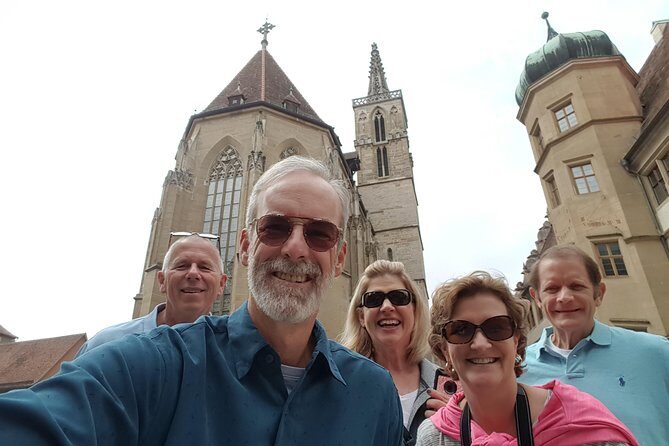
I especially like the way the guide shapes the day. You get clear context at places like Königsplatz and the Residenz area, and the ride stays organized instead of feeling like random wandering. A second favorite is the mix of old-world architecture, modern Munich, and the outdoors stops in the English Garden zone, so the city feels whole, not just museum-deep.
One thing to think about: the group can be up to 20 people. If you prefer a tiny, ultra-personal tour, you might want to pay attention to how the guide handles traffic and spacing, especially when riders are a mix of e-bikes and non-e-bikes.
In This Review
- Highlights You’ll Actually Feel During the Tour
- The “Munich in Four Hours” Sweet Spot
- E-Bike Riding That Keeps You Comfortable (Even When the Weather Isn’t)
- Wittelsbacherbrunnen and the Squares of Power: Starting With Neo-Classic Munich
- Führerbau to Pinakothek Stops: When Munich’s Buildings Tell Hard Truths
- Siegestor to Odeonsplatz: Triumph, Memory, and the 1923 Beer Hall Putsch
- Residenz, Hofgarten, and the Courtyard-Garden Break That Resets Your Brain
- The English Garden Loop: Big Park Views Plus Munich’s Outdoor Beer Culture
- Eisbachwelle: The Surfer Wave You Can See Without Leaving Munich
- Friedensengel and Maximilianeum: Peace Monuments and a Parliament Building
- Deutsches Museum and Viktualienmarkt: Culture and Shopping in the Same Breath
- Ohel Jakob Synagogue: A Modern Jewish Landmark with Deep Historical Timing
- Price, Timing, and Booking: Is $71.90 Worth It?
- Should You Book This Munich Electric Bike Tour?
- FAQ
- How long is the Munich electric bike tour?
- What is included in the price?
- Is the tour offered in English?
- Where does the tour start and end?
- Is the group limited in size?
- Can I cancel for a full refund?
Highlights You’ll Actually Feel During the Tour

- E-bike comfort for a big route: you get help when you want it, so stops don’t turn into a slog
- A guide who connects the dots fast: you’ll hear stories tied to what you’re seeing right now
- Architecture across eras: from neo-classical squares to WWII-era memory sites
- Museums, but in bites: short looks that tell you where to go next on your own
- English Garden + beer-garden break: real Munich outdoor culture, not just a photo stop
- Practical local moments: sights like the Eisbach wave and Viktualienmarkt add color to the day
The “Munich in Four Hours” Sweet Spot
This tour is built for first-timers and history lovers who also hate wasting hours getting to the good parts. With a live guide and an electric bike plus helmet, you’re set up for momentum from the start at Karlsplatz 4 (80335 München). The tour then loops back to the meeting point, which makes it simpler to build the rest of your day.
Most stops are timed for quick context—think 5 to 10 minutes—so you get an overview without committing to long museum time. That matters because Munich is wide enough that walking-only sightseeing can feel slower than it should.
And yes, there’s a reason people pick an e-bike here. Munich’s central areas are fairly flat, but you still have to cross streets, deal with crowds, and keep moving. The assist helps you stay in the moment, not in recovery mode.
Other Munich city tours we've reviewed in Munich

E-Bike Riding That Keeps You Comfortable (Even When the Weather Isn’t)
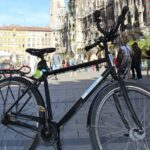
You get an electric bike and a helmet included. The ride is designed so most travelers can participate, and it can include both e-bike and non-e-bike riders. That mix is practical, but you should plan on sticking to the guide’s pace.
A few practical notes help you enjoy it more:
- Dress for stop-and-start weather. Even if the city is mild, you’ll be outside for chunks of time.
- If you’re sensitive to cold, bring layers. One guide group specifically called out staying warm in cold conditions.
- If it rains, the experience can still work, but expect slicker roads and slower comfort. One group noted rain during their ride.
In other words, the bike isn’t just a novelty. It is a time-saver and an energy-saver, which is exactly why it fits a four-hour “highlights” plan.
Wittelsbacherbrunnen and the Squares of Power: Starting With Neo-Classic Munich
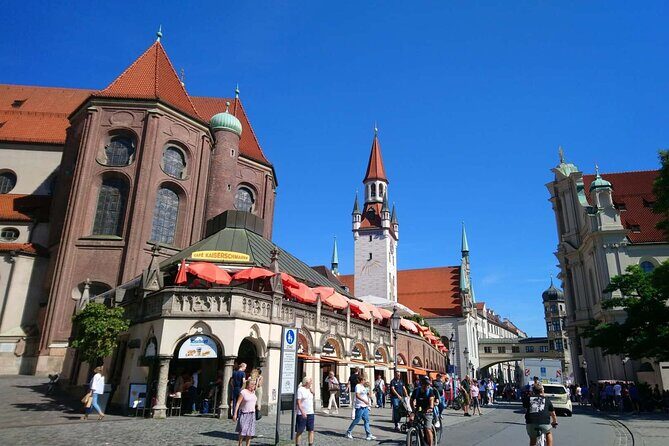
The tour begins with the Wittelsbacherbrunnen, a monumental fountain at the edge of the city center. It was built in the 1890s by Adolf von Hildebrand and designed in a Neo-Classical style. What I like about starting here is that it signals the theme of the day: Munich loves symbolism, and you’ll see it in stone, water, and street geometry.
From there, you roll into Karolinenplatz, named for Queen Caroline of Bavaria. It symbolizes a relationship between Bavaria and France in the early 1800s. It is the kind of detail you’d miss if you simply walked past—so even a short stop feels like it pays off.
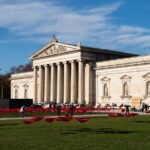
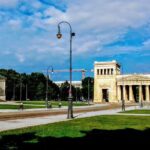
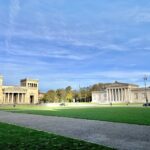
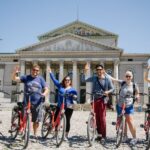
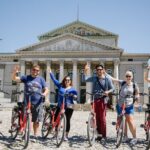
Next comes Königsplatz, the “King’s Square,” a showcase of European Neoclassicism. You get the Propyläen Gate in the mix, plus the Glyptothek and the State Collection of Antiquities facing it. Around here is Munich’s museum quarter, so it’s both scenic and strategically useful.
Führerbau to Pinakothek Stops: When Munich’s Buildings Tell Hard Truths
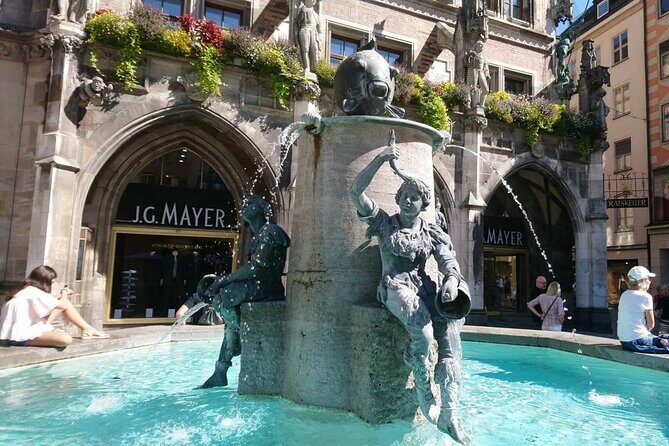
You’ll pass the Führerbau, a building from the Nazi period that was used extensively by Adolf Hitler and still stands today. Right now, it houses the University of Music and Performing Arts Munich. That contrast—history embedded in a building that’s still in active use—is one of those moments that makes a short guided stop feel more meaningful than a long self-guided walk.
Then you hit the museum corridor. You stop near:
- Alte Pinakothek (Old Pinakothek), one of the oldest galleries in the world, known for Old Master paintings
- Pinakothek der Moderne, which brings together collections of modern and contemporary art, plus works on paper and design/applied arts
A key reality: this tour does not try to “finish” museums in five minutes. What it does well is giving you orientation. You’ll learn what the buildings are and why they matter, and that helps you decide later if you want to spend real time inside.
If you’re an art fan, this is a good opener. If you’re not, the stops still work because the guide can frame how Munich builds identity through culture.
Siegestor to Odeonsplatz: Triumph, Memory, and the 1923 Beer Hall Putsch
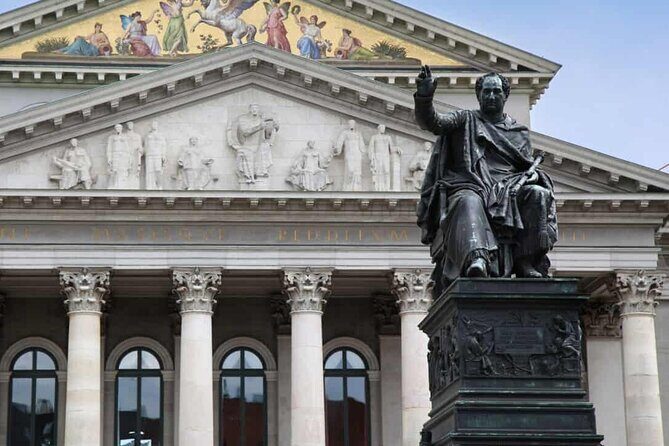
As you move on, you’ll see Siegestor (Victory Gate). It has three arches and a statue of Bavaria with a lion-quadriga. Originally it was dedicated to Bavarian military glory. After World War II, restoration turned it into a reminder to peace. It’s a perfect example of how one city can hold competing meanings depending on when you look.
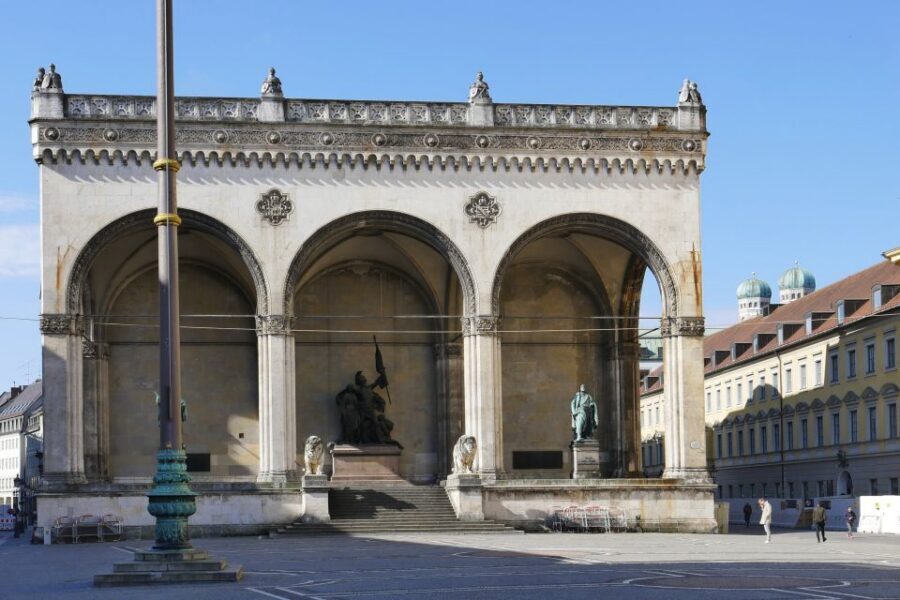
Then you reach Odeonsplatz, a major central square developed in the early 1800s. The guide stop is tied to the area’s role in the 1923 Beer Hall Putsch, including a fatal gun battle linked to that event. You get the place in context, not as a random plaza.
From a travel-planning angle, these stops are useful because they help you read Munich like a timeline. You start connecting squares, monuments, and building choices to what happened in the region.
Other Munich bike tours we've reviewed in Munich


Residenz, Hofgarten, and the Courtyard-Garden Break That Resets Your Brain
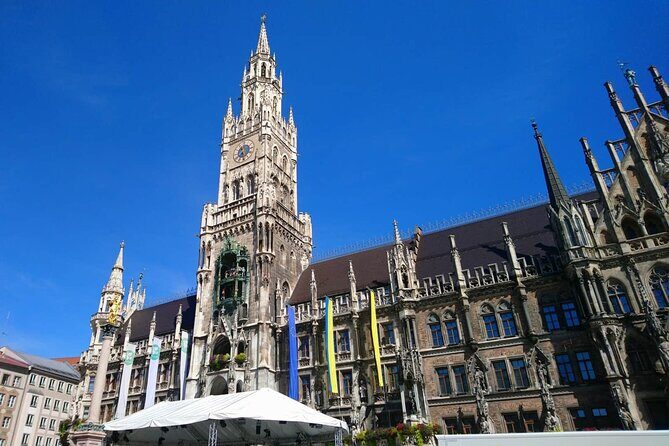
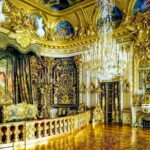
One of the most satisfying parts of the tour is how it transitions from power to calm. You spend time in the Residenz München, the former royal palace of the Wittelsbach monarchs. It is described as the largest city palace in Germany, and it is open for visitors for architecture, room decoration, and royal collections.
Then you step into the Hofgarten, a garden built in the early 1600s in an Italian Renaissance style. The pavilion for the goddess Diana (built in 1615) sits at the center. This stop feels like a palate cleanser. It is also a reminder that Munich does not treat “sightseeing” as only buildings. It treats it as space and atmosphere.
The English Garden Loop: Big Park Views Plus Munich’s Outdoor Beer Culture
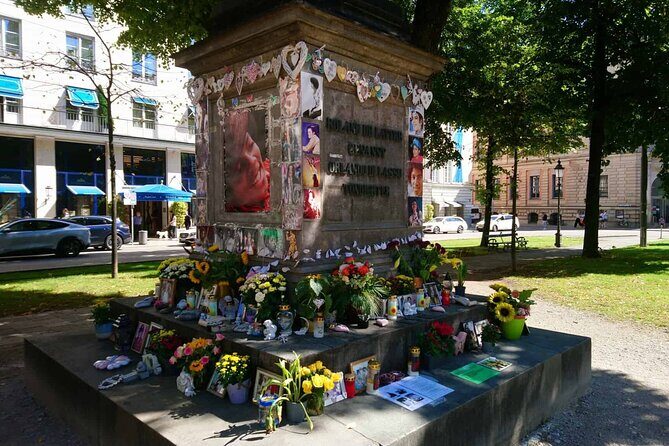
The ride gets especially fun once you approach the English Garden, one of the world’s largest urban public parks. It’s huge by area, and the name hints at the style: informal English garden landscaping.
Then comes a longer stop at the Biergarten am Chinesischen Turm. This is not a quick token pause. The timing gives you a real break—about 40 minutes—where the focus is outdoor Munich life rather than moving on.
A few details that make this stop more than a generic beer break:
- A beer garden run by Antje Schneider has operated since 1974
- The seating capacity is huge, with 7,000 places
- It is the second-largest beer garden in Munich after Hirschgarten
- It sells Hofbräu beer
There is also a note that a traditional German beer sample at a legendary beer hall is part of the overall concept, but that beer-hall sampling is listed as extra cost. In practice, plan on drinks and food being on you.
If you’re a beer aficionado, this part of the day delivers. If you’re not, the park setting still works because it’s a genuine local scene: trees, shade, and shared tables.
Eisbachwelle: The Surfer Wave You Can See Without Leaving Munich
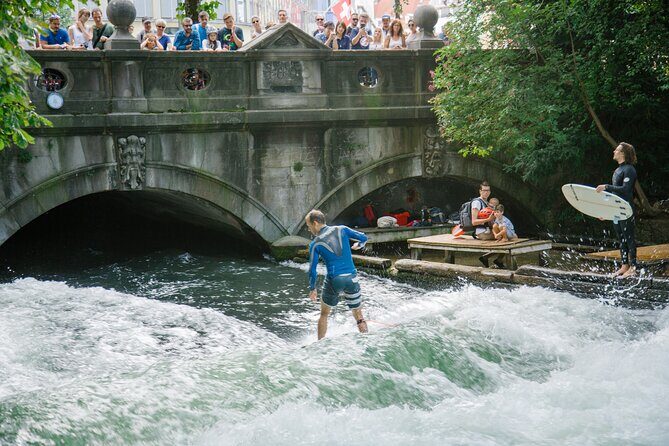
Near the Haus der Kunst area, you’ll stop by Eisbachwelle, a standing wave formed by the river. It’s about one meter high and is a popular river surfing spot.
The useful part for you: the water can be very cold and shallow—sometimes around 40 cm deep—so surfing is for experienced riders. As a spectator, you’ll still get an eye-catching “only-in-Munich” moment that feels current and a little quirky.
This stop is great for photos, but it’s also great for perspective. Munich isn’t frozen in the past; people use the city’s waterways.
Friedensengel and Maximilianeum: Peace Monuments and a Parliament Building
Next up is the Friedensengel (Angel of Peace) in Maximilian Park. It sits in a viewpoint line connected to Prinzregentenstrasse, and it includes a fountain with a dolphin waterspout plus four smaller spouts. Two staircases lead up to the observation deck.
On top of a Corinthian-style column rises a six-meter statue of the Angel of Peace. It is noted as a replica of the Nike of Paeonius. This is one of those spots where a short stop can still make you feel the city’s layers—war memory on one hand, and idealized peace on the other.
Then you see Maximilianeum, built as the home for a gifted students’ foundation. Since 1949, it has housed the Bavarian State Parliament. So you’re looking at education roots and government function in one stop.
Deutsches Museum and Viktualienmarkt: Culture and Shopping in the Same Breath
You’ll pass Deutsches Museum, described as the world’s largest museum of science and technology, with about 125,000 exhibited objects across 50 fields. It gets around 1.5 million visitors per year.
In a five-minute stop, you won’t “do” the museum. What you gain is direction. If you like tech, engineering, or hands-on learning, this is the place you’ll likely want to schedule time for later—because the scale is hard to absorb any other way.
Then you reach Viktualienmarkt, which started as a farmers’ market and grew into a gourmet market. The stop is designed to give you a taste of how locals shop and snack. It covers flowers, exotic fruit, game, poultry, spices, cheese, fish, juices—plus more in those roughly 140 stalls and shops. Even if you don’t buy anything, this stop gives you texture.
Ohel Jakob Synagogue: A Modern Jewish Landmark with Deep Historical Timing
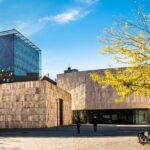
The tour ends with a stop at the Ohel Jakob Synagogue. It was built between 2004 and 2006 as the new main synagogue for Munich’s Jewish community. It was inaugurated on 9 November 2006, marking the 68th anniversary of Kristallnacht.
Even as a quick stop, this matters because it connects present-day Munich to a painful history date, without turning the city into a single-issue story. It also broadens your understanding of who Munich is for today.
Price, Timing, and Booking: Is $71.90 Worth It?
The price is $71.90 per person for about 4 hours. With live guide service plus an electric bike and helmet included, you’re paying for structure, interpretation, and energy efficiency.
Here’s the value equation in plain terms:
- If you were walking, you’d likely cover fewer highlights with less context in the same time.
- If you were doing self-guided bike riding, you’d miss the “why” behind the buildings and squares.
- Because many stops are quick, a guide helps you get the right takeaways without spending your whole day in lines.
Also, it’s helpful that the tour is offered in English and uses a mobile ticket. It’s near public transportation, so arriving and meeting up doesn’t feel like a scavenger hunt.
One timing note: the tour is often booked about 61 days in advance. If your dates are firm, I’d lock it in early, especially in peak season when schedules fill up.
Should You Book This Munich Electric Bike Tour?
Book it if you want a guided “highlights map” of Munich that mixes palace areas, major squares, museum architecture, and the English Garden zone—without turning the day into a leg workout. It’s also a strong fit for history buffs and beer fans, since you’ll get both context and time to enjoy Munich’s outdoor beer culture.
Skip it or adjust your expectations if you hate bigger groups. With up to 20 riders and short stop windows, it’s designed for overview, not deep, slow conversations. And if you’re very sensitive to rain or slippery conditions, check weather before you go—bike tours can still run, but you’ll feel the difference.
If you want an easy way to get your bearings fast and then choose what to revisit, this tour is a smart start.
FAQ
How long is the Munich electric bike tour?
It runs for about 4 hours.
What is included in the price?
The tour includes a live guide, an electric bike, and a helmet. Food and drinks are not included.
Is the tour offered in English?
Yes, it’s offered in English.
Where does the tour start and end?
It starts at Karlsplatz 4, 80335 München, Germany, and ends back at the meeting point.
Is the group limited in size?
Yes. The group has a maximum of 20 travelers, and it may include a mix of e-bikes and non-e-bikes.
Can I cancel for a full refund?
Yes. You can cancel for a full refund up to 24 hours in advance. After that window, the amount paid is not refunded.