REVIEW · MUNICH
Munich: Big Bus Hop-On Hop-Off Sightseeing Bus Tour
Book on GetYourGuide →Operated by Big Bus Tours Munich · Bookable on GetYourGuide
Munich goes by fast, in the best way. This hop-on hop-off bus lets you pace the city yourself, with an open-top ride through the big landmarks you’d otherwise cram in on foot. You’ll pass Marienplatz, ride by the Pinakotheken area, and have easy access to sights like Nymphenburg Palace, the BMW Museum, Olympiapark, and the English Garden.
I especially like that the tour gives you practical orientation plus enough time to actually look, not just photograph. The audio commentary comes with headphones and covers multiple languages (including English, German, and several others), so you’re not stuck guessing what you’re seeing out the window. The main thing to watch is timing: parts of the route run less often, so you’ll want a quick plan if you’re hopping off at farther-apart stops.
In This Review
- Key things that make this bus work well in Munich
- Why a hop-on hop-off bus fits Munich so well
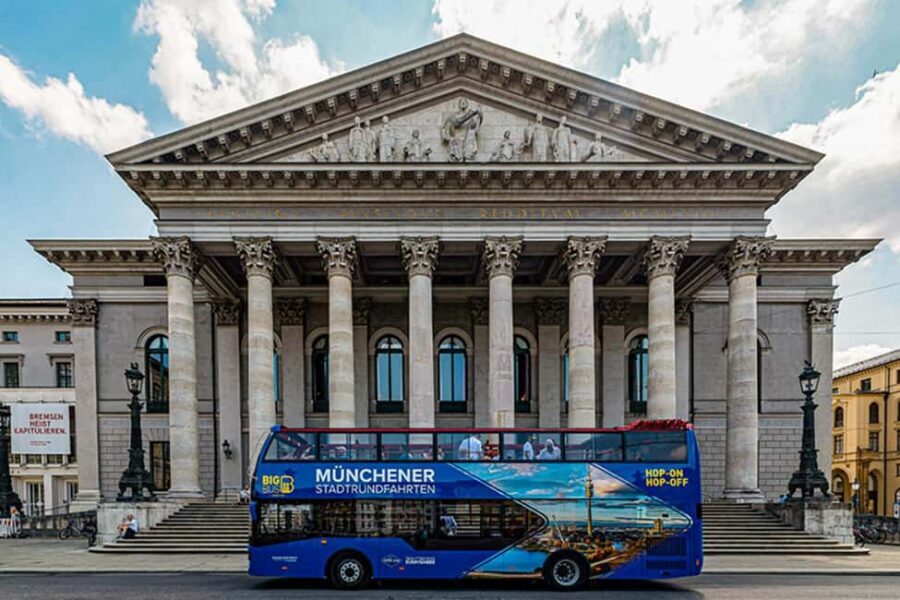
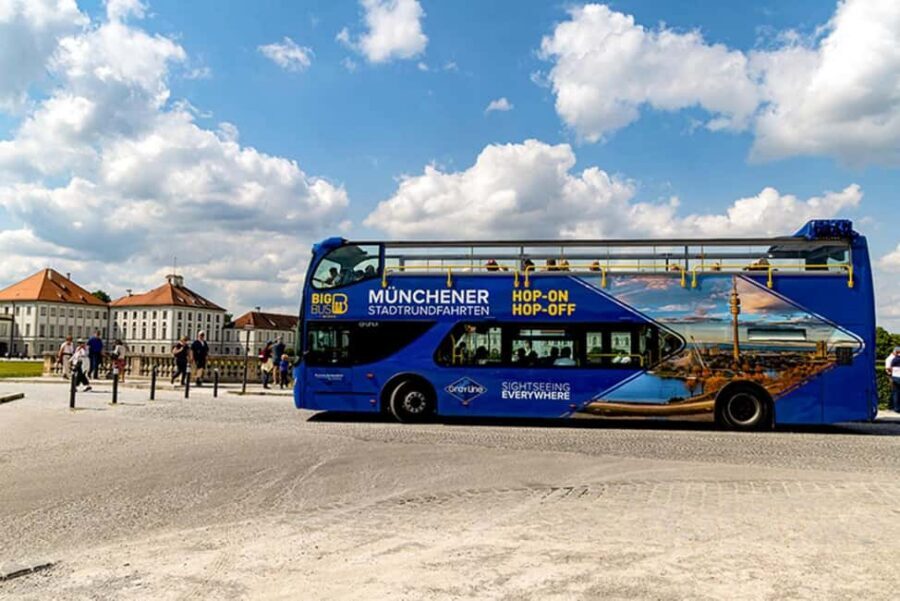
- The blue double-decker ride: audio, WiFi, and weather control
- Planning your 1–2 days: match your day to the bus frequency
- Stop-by-stop: what you’ll actually want to do at each area
- Karlsplatz / Stachus: start in a convenient Munich hub
- Kunstareal + Odeonsplatz: architecture and the art-world belt
- Eisbach: the unexpected Munich weirdo moment
- Deutsches Museum stop: construction can interrupt this one
- Marienplatz and Tal: Munich’s postcard core
- Max-Joseph-Platz: royal-era elegance vibes
- Nymphenburg Palace: the big garden-and-palace day
- BMW Museum, BMW Welt, and the modern Munich cluster
- Olympiapark: big-venue views and open air
- Schwabing + English Garden: shops nearby, nature not far
- Audio commentary: why it matters more than you think
- Price and value: is a $27 ticket a smart buy?
- Who this Munich bus tour is best for
- Should you book the Big Bus hop-on hop-off in Munich?
- FAQ
- How long is the hop-on hop-off ticket valid?
- How often does the bus run along the route?
- Is the audio guide included, and what languages are available?
- Is WiFi available on the bus?
- Where do I meet the bus?
- Does the tour include hotel pickup or drop-off?
- Is the bus wheelchair accessible?
- Will the bus stop at the Deutsches Museum?
Key things that make this bus work well in Munich
- Open-top views with a retractable roof, so you can still ride comfortably when the weather turns
- Headphones included and audio in 9 languages, which is great when you want to move at your own pace
- Strong stop coverage for the old core plus modern Munich: Marienplatz, the Pinakotheken area, BMW Welt/Museum, and Olympiapark
- Orange Line style routing is built for longer sightseeing blocks, including Nymphenburg and the BMW side of town
- Frequency changes by section: every 20 minutes on the early stretch, then about every 60 minutes on later stops
- One stop can be affected by construction: Deutsches Museum stop may be temporarily suspended
Why a hop-on hop-off bus fits Munich so well
Munich is one of those cities where the highlights are spread out, but public transport can be a little work if you’re short on time. This tour solves that with a simple promise: ride the loop, hop off when something catches your eye, then get back on when you’re ready. It’s a smart move for your first visit, or for a day when you don’t want to manage maps every hour.
I like that it’s not pretending to be a high-effort guided tour. Instead, it’s built for recognition and choices. You get the big architectural moments—squares, palaces, museums, and big modern landmarks—then you decide how deep to go once you’re on the ground.
The best use I’ve seen for this kind of ticket is pairing it with a loose plan. For example, do the city core first, then save one longer stop for a later block (like Nymphenburg or BMW/Olympiapark). That way, you’re not rushing between distant neighborhoods while trying to listen to audio.
Other Munich city tours we've reviewed in Munich



The blue double-decker ride: audio, WiFi, and weather control
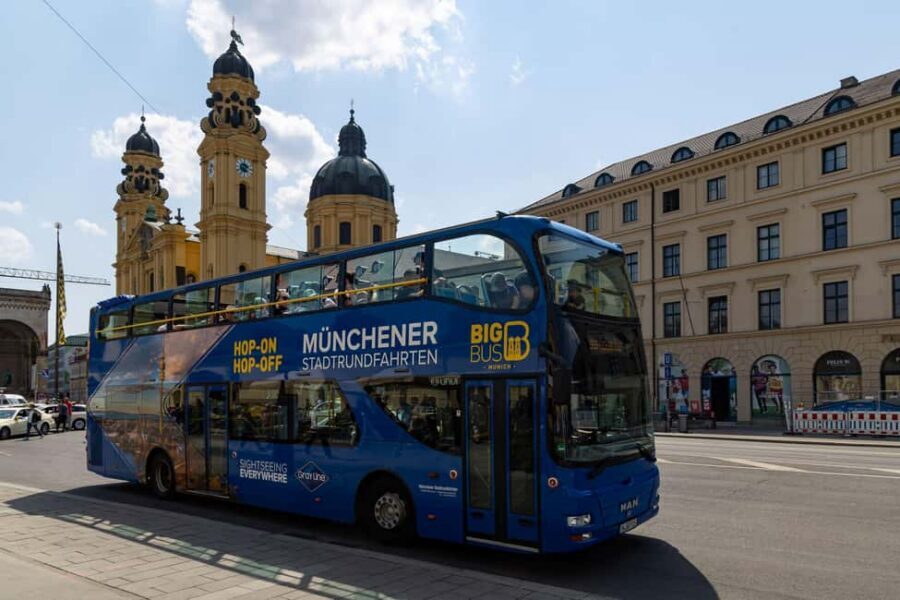
You’re on an open-top double-decker bus, and that matters more than you might think in Munich. Flat, centered streets with landmark buildings look great from above, and you avoid the stress of trying to see everything at sidewalk level.
A few comfort wins:
- Headphones and audio guide are included (multiple languages, 9 total)
- WiFi is onboard, which is handy for ticket checks or quick lookups between stops
- The buses are wheelchair accessible, so you’re not shut out if mobility support is needed
- The double-decker design includes a retractable roof, which helps on sunny days and can make a rainy ride less miserable
Audio is the core experience here. It’s designed to give you context while you ride, so you can look at the architecture with a clue in mind rather than staring blankly at yet another façade.
One practical note: audio tracks can be time-sensitive with bus traffic and stop changes. The tour still works great, but if you’re the type who likes to see a visual plus audio, you might find it helpful to bring a small map or screenshot of major stops so you’re never wondering what you’re passing.
Planning your 1–2 days: match your day to the bus frequency
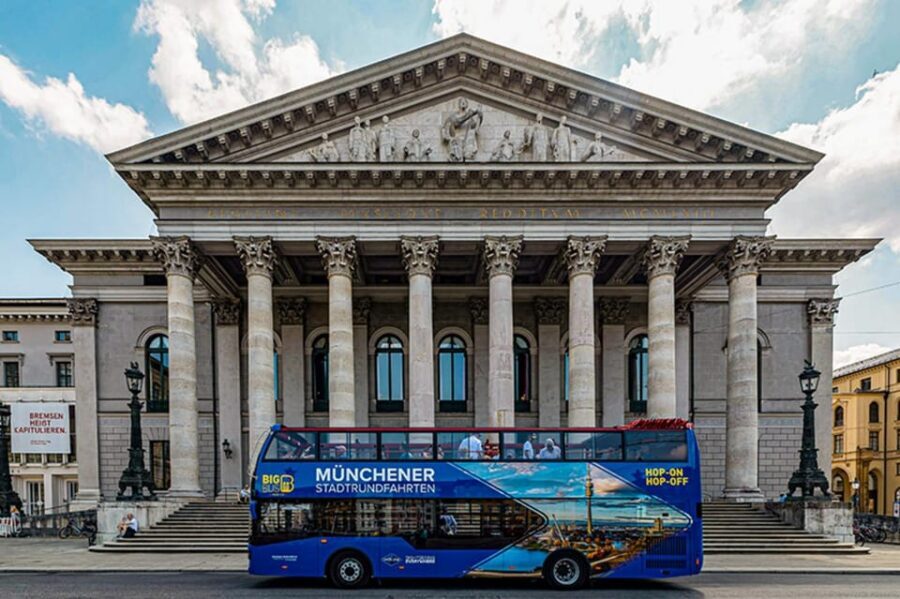
This ticket is valid for 24 or 48 hours, depending on what you choose. Even if your time is tight, I’d think in terms of blocks rather than trying to see every stop in one go.
Here’s how the bus timing works across the route:
- Stops 1–7: buses come about every 20 minutes
- Stops 7–11: buses come about every 60 minutes
- Schedule can shift seasonally, so check the latest bus times when you’re there
That difference changes the feel of the day. The early segment is easier because you can hop off, browse a bit, and still catch your next bus without sweating the clock. Later, with the longer gaps, you’ll want to decide how long you plan to spend at each stop—especially if you’re pairing museum time with a second hop.
If you have only one day, my suggestion is to pick one side of town to focus on fully (either the central sights loop or the Orange Line style run with Nymphenburg and BMW/Olympiapark). If you have two days, you can split it: Day 1 for the center and Marienplatz area, Day 2 for the palace + modern Munich cluster.
Also: the route doesn’t take forever if you don’t hop off. If you stay on the bus the whole time, plan on about 2.5 hours for the main ride.
Stop-by-stop: what you’ll actually want to do at each area
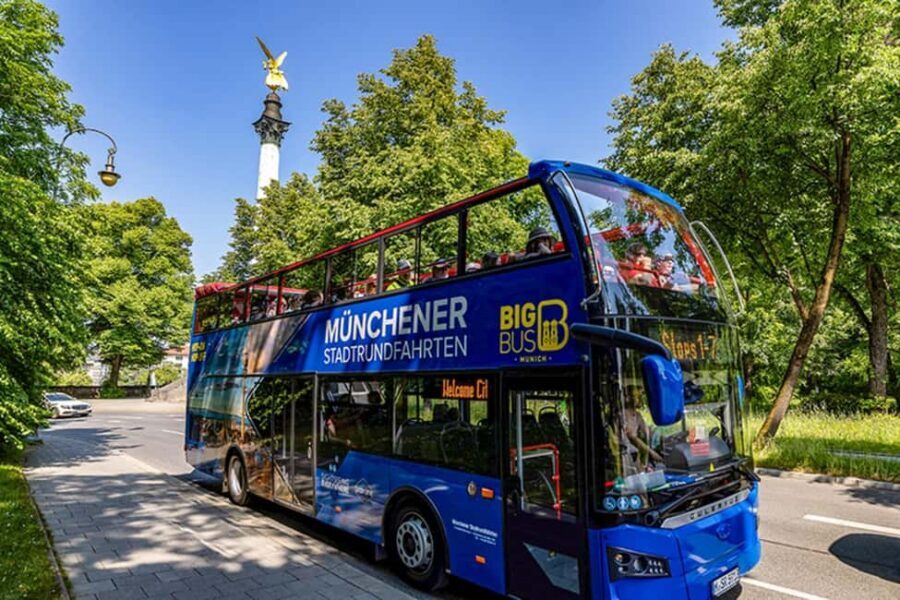
The route is built around several clusters, so treat each cluster like its own mini-plan. Here’s what each key stop adds to your day, plus what to watch for.
Karlsplatz / Stachus: start in a convenient Munich hub
This is a solid launch point because it sits near major pedestrian streets and shopping. It’s a great place to stretch your legs before you settle in for audio time. If you’re hungry, this is also where you can often pivot toward easy food without backtracking.
The vibe is practical: you’re not yet in the quiet royal-garden mode. You’re setting your bearings.
Other hop-on hop-off tours we've reviewed in Munich


Kunstareal + Odeonsplatz: architecture and the art-world belt
The area around the Kunstareal and Odeonsplatz is a big deal for Munich’s visual identity. You’ll ride by the Pinakotheken zone, known for serious art institutions and striking classical architecture.
Even if you don’t go into museums, this stretch is worth it from the top deck. The buildings are the show, and audio helps you understand why the architecture is such a focal point.
If you do want museum time later, this is one of the best parts of the day to build a plan around, since it’s close to multiple art options in a walkable radius.
Eisbach: the unexpected Munich weirdo moment
At Eisbach, you’re in one of those places that feels like Munich has a sense of humor. It’s a recognizable sight that gives your bus day a bit of texture beyond palaces and museums.
This is also a good hop-off if you want a short walk before your next larger destination. Keep it light—this stop shines most when you don’t overstay.
Deutsches Museum stop: construction can interrupt this one
One stop is a known issue: the Deutsches Museum stop can be temporarily suspended due to construction work. If you were counting on that museum stop as a must, build in flexibility. Your bus day can still work, but be ready to adjust your hop-off plan.
Marienplatz and Tal: Munich’s postcard core
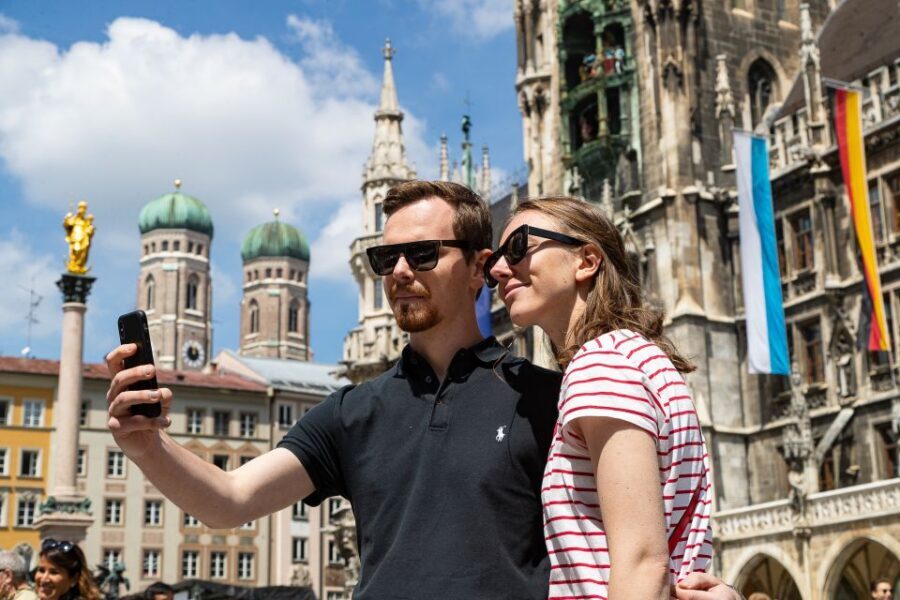
Marienplatz is the kind of place where you instantly understand why Munich is loved. The square is iconic, and it’s also where you’ll feel the city’s energy even if you’re just passing through.
If you only hop off once in the center, I’d make it here. Take a slow walk, grab a snack, and let the square reset your day before you move on.
Max-Joseph-Platz: royal-era elegance vibes
Max-Joseph-Platz is another stop that works beautifully from the bus and on foot. It fits the Munich style: clean lines, grand buildings, and a bit of formality to the streetscape.
This is a good place to do a short wander and then get back on before you lose the rhythm of your day.
Nymphenburg Palace: the big garden-and-palace day
Nymphenburg is one of the tour highlights for a reason. You’re looking at a major palace experience paired with tranquil gardens, and it’s the kind of place that benefits from real time on-site.
One important caution: you should double-check that your ticket and route choice actually includes the Nymphenburg stop. Some riders have warned that getting to Schloss Nymphenburg may depend on choosing the larger/full tour option rather than a shorter loop. So when you book, confirm that Nymphenburg is in your plan, not just mentioned in marketing.
If you’re doing only one palace visit, make it this one.
BMW Museum, BMW Welt, and the modern Munich cluster
This is where the city switches gears. On the Orange Line style routing, you’ll reach the BMW side via stops that connect the BMW Museum and the BMW Welt area, with additional time around Olympiapark.
This is great if you like modern design, technology, and architecture, and it’s also just fun to see how Munich frames itself in the present tense.
One practical reality: BMW-area timing depends on when you arrive, and bus traffic can shift actual arrival times. If you’re aiming for a specific time entry somewhere in that zone, build in a buffer.
Olympiapark: big-venue views and open air
Olympiapark gives you open space after museum-heavy blocks. It’s also a good place to slow down and enjoy Munich from different angles. Even if you don’t go deep into every facility, the surroundings make the stop feel like a mini getaway.
Schwabing + English Garden: shops nearby, nature not far
The route can take you to Schwabing and then to the English Garden area. This is a strong pairing because you can do both: browse a neighborhood with style and then escape into a major green space.
And yes, the tour’s broader Orange Line highlights also point toward the beer-garden culture around Neuhausen, including the famous idea of one of the largest beer gardens. So you can structure your day around a classic Munich pause, not just sightseeing.
If you’re riding in rain, this is where you’ll appreciate flexibility. You can hop off, walk quickly between points, and get back on before the weather forces hard choices.
Audio commentary: why it matters more than you think

The audio guide is included, offered in several languages, and delivered through headphones. That means you can listen while you’re moving, then step off with context already in your head.
This is also where the bus shines for mixed groups. If you’ve got one person who wants the art background and another who just wants to understand what they’re seeing, the same ride covers both needs.
A few practical caveats:
- Audio timing may not perfectly match every stop if the bus runs late or changes routing.
- English delivery quality can vary depending on who’s covering your segment, so don’t assume every playback will feel crystal clear.
- If you want a visual cue while listening, bring a phone screenshot of major sights. That quick backup makes the experience smoother.
Price and value: is a $27 ticket a smart buy?
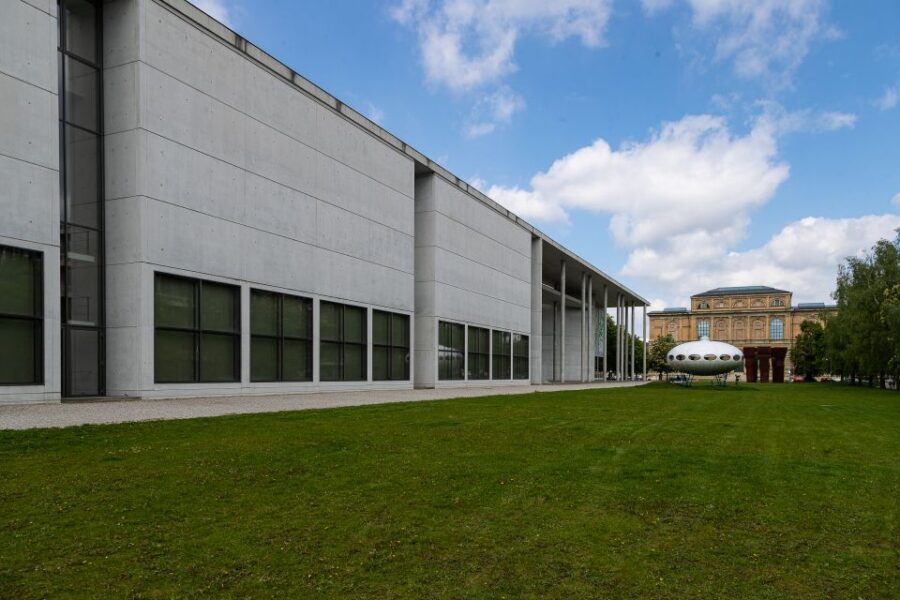
The price listed here is about $27 per person, and you’re getting a 24- or 48-hour hop-on hop-off ticket plus an onboard audio guide with headphones and WiFi. You’re also using an open-top double-decker bus, which is more comfortable for sightseeing than walking for several hours straight.
Is it worth it? For me, it’s worth it when two things are true:
1) You need quick orientation and landmark access without plotting every tram ride.
2) You want flexibility more than you want a tight schedule.
If you’re a solo traveler, it can be an easy win. If you’re a family, one drawback that can sting is that hop-on hop-off tours can feel pricey because the ticket is still paid per person. In that case, it’s more valuable to commit to using the full hop-and-browse style rather than treating it like a single ride.
Also, remember that parts of the route run less often later in the day. Paying for a 1-day ticket only makes sense if you plan your hop-offs to match the bus frequency.
Who this Munich bus tour is best for
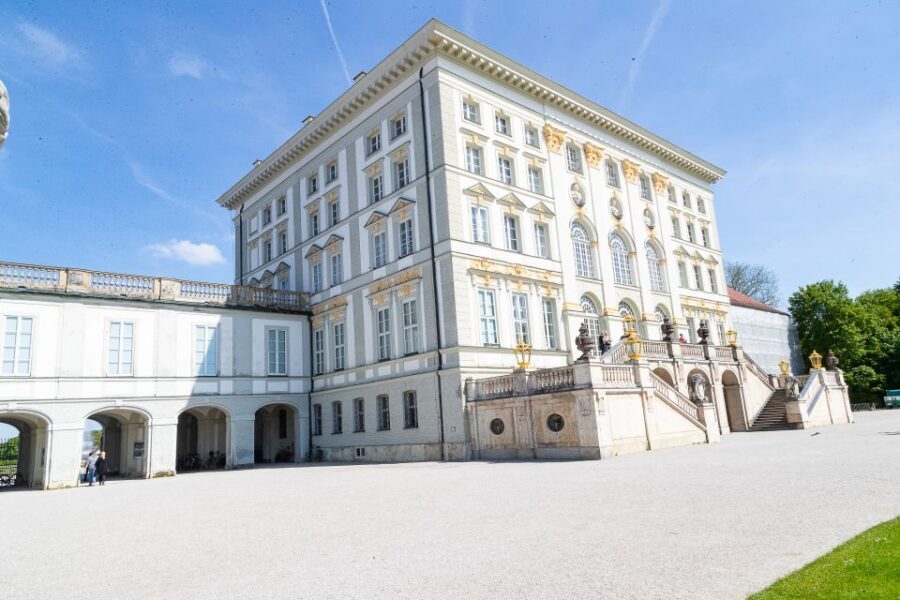
This is a good fit if you:
- Want to get your bearings fast on a first visit
- Prefer pacing with stops you control
- Appreciate landmarks but don’t want to build a complex itinerary from scratch
- Need multilingual audio support while moving around the city
It’s less ideal if you:
- Want a highly detailed, stop-by-stop guided lecture the entire way
- Have a strict timed museum plan where bus delays would ruin your schedule
- Expect every stop to run at the exact same times every day (construction and seasonal schedule changes can happen)
Should you book the Big Bus hop-on hop-off in Munich?
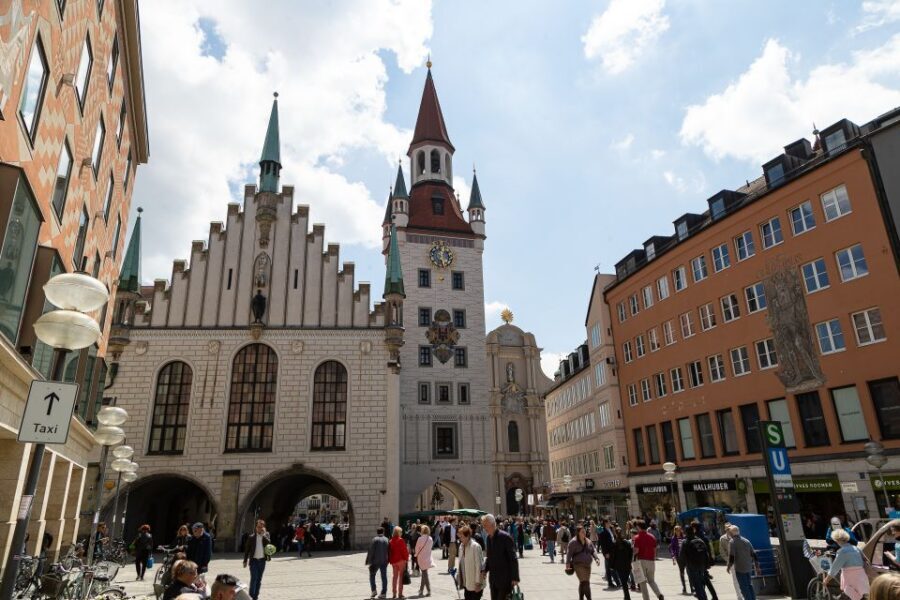
If your goal is to see Munich’s main hits without sweating transit, I’d book it. It’s a practical day-saver, especially with headphones included, an open-top ride, and solid coverage from the old center to the BMW/Olympiapark side.
Just do two things before you pay: confirm that your route choice includes Nymphenburg if that’s a must for you, and plan your hop-off time around the bus frequency shift after the earlier stops. With that small bit of planning, this ticket earns its place in a Munich itinerary.
FAQ
How long is the hop-on hop-off ticket valid?
The ticket is valid for 24 or 48 hours, depending on the option you choose.
How often does the bus run along the route?
Buses come every 20 minutes daily for stops 1–7. For stops 7–11, buses come every 60 minutes daily. The schedule can also change seasonally.
Is the audio guide included, and what languages are available?
Yes. An audio guide with headphones is included, and it covers multiple languages including Chinese, English, French, German, Italian, Japanese, Portuguese, Russian, and Spanish.
Is WiFi available on the bus?
Yes. WiFi is included onboard.
Where do I meet the bus?
The meeting point can vary depending on the option you book. The tour ends back at the meeting point.
Does the tour include hotel pickup or drop-off?
No. Hotel pickup and drop-off are not included.
Is the bus wheelchair accessible?
Yes. The bus tour is wheelchair accessible.
Will the bus stop at the Deutsches Museum?
The Deutsches Museum stop may be temporarily suspended due to construction work, so you should be ready for potential changes.