REVIEW · MUNICH
Hop-On Hop-Off Tour CitySightseeing Munich
Book on Viator →Operated by CitySightseeing Munich · Bookable on Viator
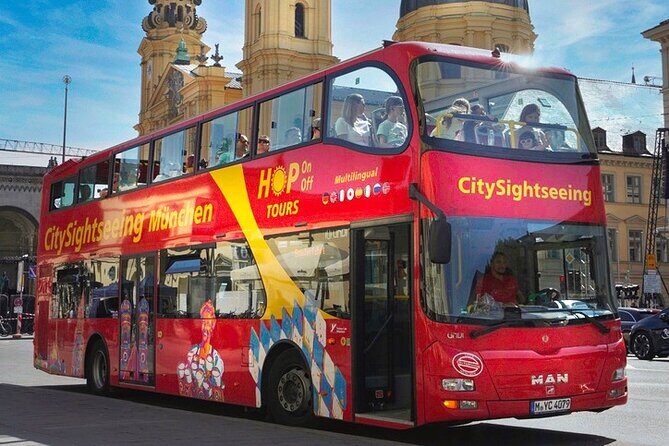
Hop-on buses make Munich click fast. This CitySightseeing hop-on hop-off loop is a practical way to see the big sights without committing to a fixed walking route. I like the flexibility to hop on and off whenever something grabs you, and the audio commentary that covers key landmarks in multiple languages.
The stop list is built around real Munich anchors, not random curb corners. You get access to classic center highlights like Marienplatz and nearby sights around the Old City, plus stops that reach into Schwabing and beyond.
One thing to watch: route changes can happen (events, construction, modified operations), and the bus timing can run a few minutes off. If you’re relying on a very specific pickup, give yourself a little buffer and double-check the plan before you walk out.
In This Review
- Key things I’d bet on
- Entering the system: Hauptbahnhof and the Red Bus welcome center
- Three routes (Red, Purple, Blue) and the trick to not getting stuck
- Old City Center highlights: Odeonsplatz, Marienplatz, and the Oper area
- Deutsches Museum and Haidhausen: when you want more than squares
- Schwabing and the north pull: Stachus, Karlsplatz, and Leopoldstr
- English Garden side trip: Englischer Garten and the Siegestor area
- Pinakotheken and classical Munich: Theresienstraße and the art district approach
- Olympic Park and beyond: Olympiapark München and the BMW-world connection
- Audio commentary in 8 languages: what to expect in real life
- Timing, crowding, and transfers: how to keep it smooth
- Price and value: is $28.28 worth your time
- Who should book CitySightseeing Munich HOHO
- Quick heads-up if you run into problems
- Should you book this hop-on hop-off bus in Munich?
- FAQ
- How long is the Hop-On Hop-Off Tour CitySightseeing Munich?
- What languages are available on the audio?
- Where is the ticket redemption point?
- What are some of the main stops included on the route?
- Are service animals allowed?
- Is the tour near public transportation?
- Can I cancel for a full refund?
- If I have a 24-hour ticket, when does it start?
Key things I’d bet on
- Clear first-stop access near Hauptbahnhof: The Red Bus welcome point is set up where transit riders already are.
- 8-language audio that’s easy to follow: You’ll hear landmark context as you roll past major sights.
- Stops built for actual sightseeing: Marienplatz, Odeonsplatz, Oper area, Deutsches Museum, and more.
- Three-route structure: Red, Purple, and Blue let you stitch together the day your way.
- Easy connections to “big-ticket” areas: You can reach major districts like the English Garden side and Olympic Park side with fewer headaches.
Entering the system: Hauptbahnhof and the Red Bus welcome center
Munich is a city where trains, trams, and buses matter, so the best bus tours are the ones that start where the transit web already is. This one begins with a Welcome Center for Red Bus Sightseeing at Hauptbahnhof (main train station), which is exactly where you’re likely to land if it’s your first day.
You’ll also redeem tickets at Luisenstraße 4, 80335 München. That matters because it helps you avoid the classic first-day scramble: redeem first, then go straight to the bus stops with a plan.
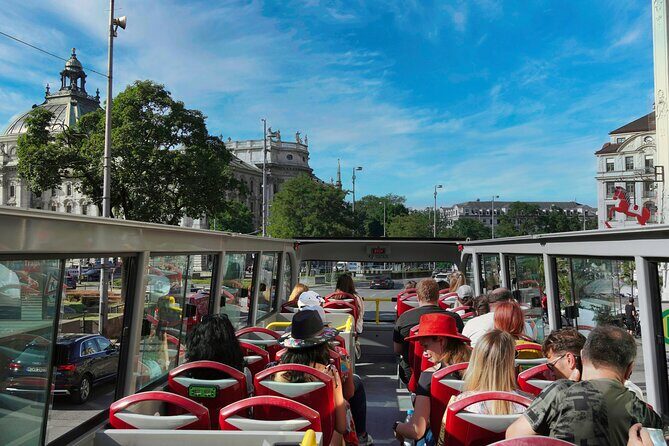
Once you’re on board, the big appeal is the simple rhythm: ride, look, hop. The audio runs as you go, and the sights come in big chunks, which is perfect when you want an overview without committing to a full-day guided walking tour.
Other Munich city tours we've reviewed in Munich



Three routes (Red, Purple, Blue) and the trick to not getting stuck
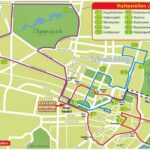
This tour is designed around three bus lines. In practice, the Red line is the one you’ll think of for the central sights, while Purple and Blue widen the net toward other neighborhoods and big parks.
Each line is timed as its own loop (about an hour per route), so the strategy is to treat the hop-off points like chapters. If you want a museum stop plus a garden stop plus a classic square, you can do it by chaining routes—but you’ll need to switch buses.
That switch is where timing matters. If a bus is full, you may have to wait for the next one, and a couple of people noted crowded return rides on one of the lines. The fix is easy: when you hop off, make sure you know your next boarding stop and give yourself time to catch the next bus instead of trying to sprint between platforms.
Also keep an eye on day-of operations. Some routes can run on modified patterns due to events, and that can affect where you expect the bus to show up. If your schedule is tight, build in a small cushion.
Old City Center highlights: Odeonsplatz, Marienplatz, and the Oper area
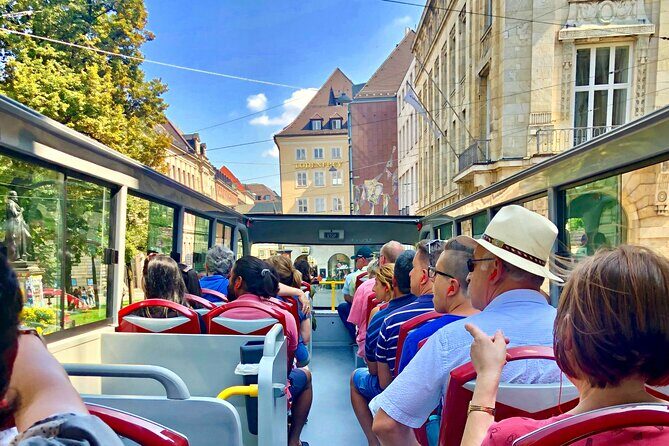
The central loop is the heart of why this bus tour works for first-timers. You’ll pass the kind of squares and landmark buildings that you could never fully appreciate from a quick stroll.
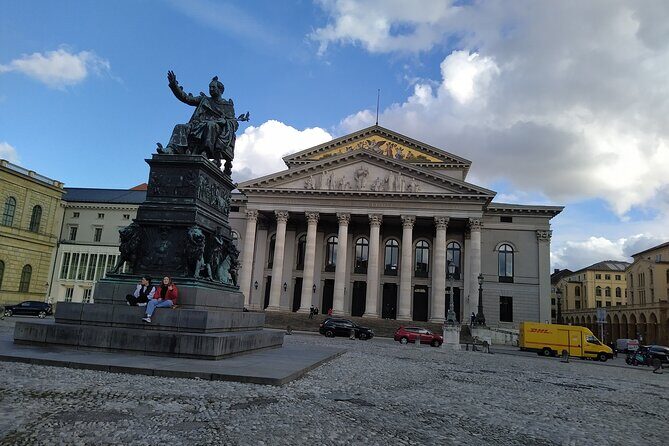
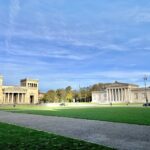
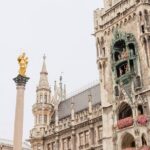
Early on, you’ll hit Odeonsplatz, one of those Munich squares that feels like it belongs in a postcard. From there, Marienplatz is a must—this is the square most people use as their internal compass for Old Town orientation. Even if you plan a deeper visit later, riding past it with audio helps you connect names to buildings fast.
Then the route heads toward the Oper area, including a stop at Falkenturmstraße 6. This is a good segment for architectural watchers, because the streets around the opera district feel more “grand” than the everyday city blocks. If you’re not sure what to prioritize, hop off here for a quick look, then return if it’s not enough. The hop-on hop-off setup is built for that exact decision.
Deutsches Museum and Haidhausen: when you want more than squares
Munich isn’t only churches and squares. It’s also tech, science, and a river-and-city mix, and this route gives you access to one of the biggest attractions in that category: Deutsches Museum.
If your travel style includes museums (or even just a curious wander inside), stopping for Deutsches Museum is a strong use of your limited sightseeing time. It’s also a good reminder that a bus tour isn’t just for looking up at buildings. It helps you reach places where you can actually slow down.
You’ll also find a stop connected with Haidhausen, including a location listed as Convertini. Haidhausen sits in a different mood than the formal center. If you want a side of Munich that feels more local and less ceremonial, that shift is part of the value here.
One practical note: museum days are walking days. Once you hop off, you’re likely going to cover some distance on foot. I’d bring water, especially if you’re doing more than one stop.
Schwabing and the north pull: Stachus, Karlsplatz, and Leopoldstr
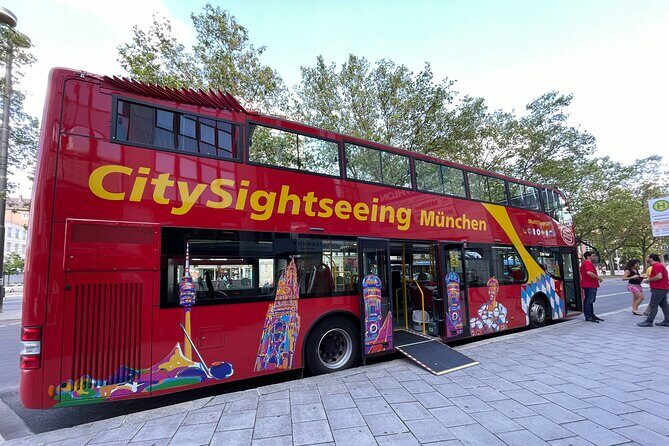
Munich’s Schwabing energy is a big part of why people love spending time in the city beyond the center. This tour reaches that area with stops like Stachus (also shown around Karlsplatz) and points around Leopoldstr.
The stop listing includes M-net Shop Karlsplatz / Stachus Passagen (U-Bahn Zwischengeschoss), which is helpful because it’s tied to transit infrastructure. That means it’s easier to rejoin the tour and easier to plan what you’ll do after your ride.
Leopoldstr shows up as a named stop area as well, and that connects you with a more boulevard-style Munich feel—more room, more city rhythm, and generally better opportunities for you to wander between stops.
If you’re trying to build a day around neighborhoods, not just individual attractions, this part of the route is your friend. You don’t have to decide everything in advance; you can hop off, check the vibe, and then choose your next move.
Other hop-on hop-off tours we've reviewed in Munich
English Garden side trip: Englischer Garten and the Siegestor area
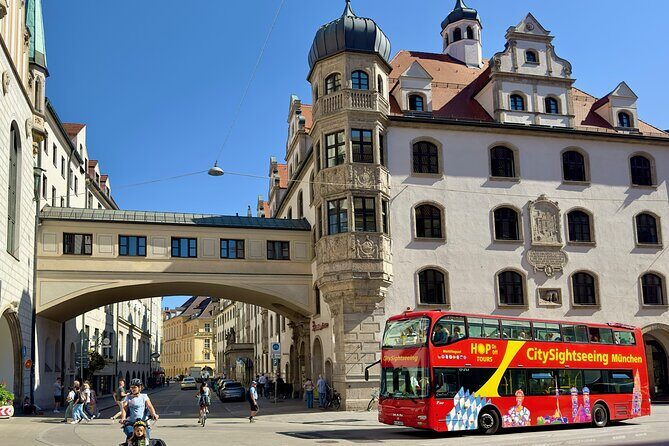
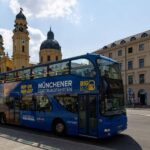
If you want Munich to look like more than a set of landmark photos, the English Garden (Englischer Garten) is the place that usually delivers. This route includes a stop on Englischer Garten, so you can break away from the dense center and give your eyes a rest.
The bus also reaches toward the university zone with a stop related to Ludwig-Maximilians-Universität München – Munich Center for Mathematical Philosophy, listed near Siegestor. Even if you’re not there for academic architecture, it’s a strong way to see the city’s “everyday big institution” side.
This combination is useful because it gives you two very different Munich moods without you having to stitch together multiple taxi rides or complicated transit transfers.
Practical tip: if you’re hoping to hear every detail from the audio, keep an eye on volume. A few people found the English audio clear but suggested turning it up, and the audio experience can vary depending on how loud the bus is and where you sit.
Pinakotheken and classical Munich: Theresienstraße and the art district approach
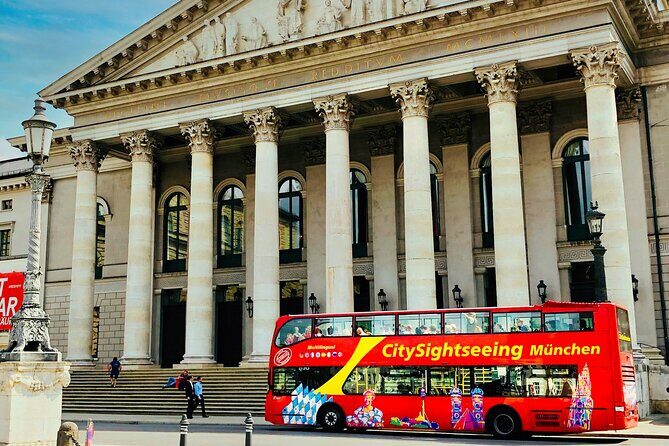
This tour also touches the art-and-culture corridor through stops linked to Pinakotheken. One stop listing includes Theresienstraße 54 (Pinakotheken), and that’s an excellent place to hop off if your plan includes Munich’s major museum names.
Even if you don’t go inside a museum, this is where you can appreciate how Munich lays out its culture districts: more space, more formal facades, and lots of walking-friendly surroundings once you’re off the bus.
If your goal is a quick cultural sweep, plan to hop off, take a short look around, and then decide whether you want more time. That’s the beauty of the hop-on hop-off format: you can change the day’s plan without blowing the whole schedule.
Olympic Park and beyond: Olympiapark München and the BMW-world connection
At some point, you’ll probably want to see Munich at a different scale. The route includes a stop at Olympiapark München, which is the perfect entry point for people planning time at the Olympic Park area.
This part of the city can feel more spread out, and it’s the kind of place where a bus loop helps you move without spending half your day figuring out bus stops.
You’ll also hear this tour mentioned as a helpful stepping stone for other Munich attractions in that broader west-side orbit, including the BMW Museum and BMW Welt area. You still may need some walking or a public transit connection depending on the exact destination, but the fact that the tour reaches the Olympic Park zone is the key.
Audio commentary in 8 languages: what to expect in real life
The audio commentary is one of the most praised aspects of this tour. The style is recorded, which means you get consistent information as you ride and don’t have to search for a guide’s attention.
A few things to know so you don’t waste your time:
- Audio is delivered in multiple languages (the tour description says 8).
- English is listed as available.
- In some cases, language choice may not match what you expect, even if marketing hints at certain options.
The audio itself can also be affected by bus noise. If you’re wearing headphones or sitting near traffic zones on the route, consider turning volume up so you get the details about what you’re looking at—especially on the longer stretches.
If you prefer visuals over audio, the bus window time is still useful. The stops are designed for you to read the setting and then decide where you’ll want more time.
Timing, crowding, and transfers: how to keep it smooth
This is a simple tour, but Munich traffic and events can change the experience. Some riders reported buses arriving a few minutes late. Others described a modified route for one of the lines due to an event, and that wasn’t reflected in the way they expected the stop schedule to work.
Here’s how to keep stress low:
- Pick your first hop-off stop near the start of the loop.
- If you’re switching routes, don’t cut it too close. Give yourself time to wait for the next bus.
- When a bus is full, expect you may have to wait. One of the weaker moments in feedback was about not having room on reboarding.
There’s also the human factor. A few notes mention driver mood or a tough back-and-forth between staff that spilled into the passenger experience. That’s not the norm, but it’s a reminder to stay calm and focused on your plan. A good day in Munich is about flexibility, and this tour gives you that—if you use it like a tool, not a rigid schedule.
Price and value: is $28.28 worth your time
At about $28.28 per person, this tour can be a good value if you use it the way it’s meant to be used: as an overview engine.
Think about what you get:
- Central stops that let you build a mental map quickly.
- Multiple routes, so you can cover several districts without planning every transit transfer.
- Recorded audio in multiple languages, so you get context while you ride.
The big value move is timing. Many people do a hop-on hop-off tour early in a visit. That way, you learn which neighborhoods and landmarks deserve a second visit on foot later.
It’s less of a bargain if you only ride one short segment and hop off once. If you’re the type who likes to move fast and see a lot in one day, it’s a strong fit. If you prefer wandering slowly without buses, you might spend the money and still end up not using it fully.
Who should book CitySightseeing Munich HOHO
This fits best if you:
- Want an easy first-day overview.
- Like having choices mid-day instead of following a fixed itinerary.
- Appreciate audio context while you travel between sights.
- Want a low-effort way to reach areas like the museum district and major parks.
It’s less ideal if you:
- Need absolute certainty about exact stop order due to a tight appointment schedule.
- Hate waiting when a bus is full.
- Expect every route to run identically on every day regardless of events or construction.
Quick heads-up if you run into problems
If your ticket doesn’t scan correctly, don’t panic. One issue described here was with a QR code after changing the date. The fix was resolved by the company after some time, so keep your booking details handy and allow some buffer time.
If you’re buying online, also be prepared that tech glitches can happen. Bring your confirmation and be ready to show it if needed.
Should you book this hop-on hop-off bus in Munich?
I’d book it if your goal is to get oriented fast and then build the rest of your Munich days around what you discover from the bus window. The stop mix—Old City, museum zone, and major park areas—makes it a solid way to cover ground without overplanning.
Skip it if you already know your route, hate waiting for full buses, or only want one or two landmarks. In that case, you may get more value from targeted public transit and walking between a smaller set of priorities.
FAQ
How long is the Hop-On Hop-Off Tour CitySightseeing Munich?
The tour duration is approximately 1 hour.
What languages are available on the audio?
The audio commentary is available in 8 languages, and English is offered.
Where is the ticket redemption point?
Tickets are redeemed at Luisenstraße 4, 80335 München, Germany.
What are some of the main stops included on the route?
Stops include Hauptbahnhof (Welcome Center for Red Bus Sightseeing), Odeonsplatz, Marienplatz, the Oper area (Falkenturmstraße 6), Haidhausen (Convertini), Deutsches Museum, and Stachus (M-net Shop Karlsplatz / Stachus Passagen).
Are service animals allowed?
Yes, service animals are allowed.
Is the tour near public transportation?
Yes, it is near public transportation.
Can I cancel for a full refund?
Yes. You can cancel up to 24 hours in advance for a full refund.
If I have a 24-hour ticket, when does it start?
24-hour tickets are valid for 24 hours from the moment they are first activated.