REVIEW · MUNICH
Third Reich Walking Tour Munich
Book on Viator →Operated by Radius Tours GmbH · Bookable on Viator
Munich has a dark story. This tour links Nazi power to real streets and buildings, from Königsplatz to the political pull of Munich’s beer-hall culture. I like the clear, English-first storytelling and the way guides (like Michael and Jake) explain how Hitler’s rise played out in public space. I also value the built-in memorial moments for people who opposed the Nazi ideology.
One thing to consider: it’s a heavy topic in a short 2.5-hour walk, mostly outdoors, so you’ll want to pace yourself and dress for the weather. The good news is that you start at Radius Tours and finish at Marienplatz, right in Munich’s center.
In This Review
- Key Highlights
- Why This Third Reich Walking Tour Fits Munich
- Starting at Radius Tours: A Quick Check-In, Then Off You Go
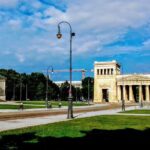
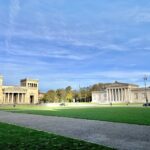
- Königsplatz: When Architecture Was Used for Power
- Odeonsplatz: Marches, Memorials, and Munich as a Political Stage
- Staatliches Hofbräuhaus (Hofbräuhaus): Beer-Hall Politics You Might Not Expect
- Old Town Hall: Power Meets the City Center
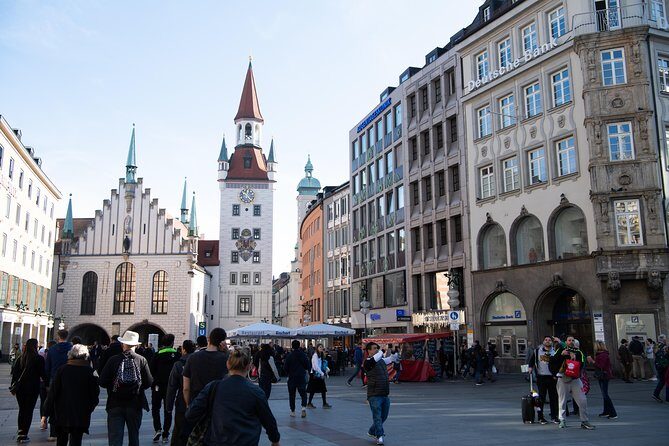
- Marienplatz Finish: Time to Recenter in Munich’s Main Square
- Memorial Moments: Remembering People, Not Just Events
- Price and Value: Is $45.95 Worth It?
- Who Should Book This Tour (and Who Might Skip It)
- Should You Book This Third Reich Tour?
- FAQ
- How long is the Third Reich Walking Tour in Munich?
- Where does the tour start and end?
- Is the tour offered in English?
- How much does the tour cost?
- How many people are on the tour?
- Is a mobile ticket used?
- What landmarks are included on the route?
- Do I need good weather?
- Can I bring a service animal?
- What is the cancellation policy if plans change?
- Is it easy to reach the starting point with public transportation?
Key Highlights
- Königsplatz in Nazi context: you’ll see a major landmark and understand why it mattered
- Odeonsplatz for marches and memorials: a public stage for politics and intimidation
- Hofbräuhaus as political gathering space: not just beer and tourists
- Memorial stops for victims and resisters: the route includes remembrance, not just sites
- Small groups (up to 25): better Q&A and fewer lost-in-the-crowd moments
- Ends at Marienplatz: easy to continue your sightseeing afterward
Why This Third Reich Walking Tour Fits Munich
If you’re trying to understand Munich, you can’t skip the Nazi chapter. This Third Reich Walking Tour Munich does something smart: it doesn’t keep the story trapped in books. It ties propaganda, rallies, and political theater to streets you can still walk today.
The experience is also practical. You’re on foot for about 2 hours 30 minutes, with an English-speaking local guide leading you from one landmark to the next. Guides may use photos and visual cues to help connect what you’re hearing to what you’re seeing in front of you. That matters, because a lot of the meaning behind these places isn’t obvious at street level.
I also appreciate the emotional balance. You get context for how the regime gained traction, and you also get pauses to remember those harmed by Nazi hate or who opposed it. That’s an important difference between a history lesson and a route through memory.
Other Third Reich & WWII tours we've reviewed in Munich


Starting at Radius Tours: A Quick Check-In, Then Off You Go
Your tour begins at Radius Tours (Dachauer Str. 4, 80335 München). Expect a brief check-in and then you’re walking. This is the kind of tour where the first minutes matter: you want to find the group fast, get oriented, and settle in before the history turns serious.
A few practical details help you plan well:
- English speaking guide, with a format built for questions.
- Mobile ticket use, with confirmation at booking.
- A maximum of 25 travelers, which keeps the pace manageable and helps you hear explanations without shouting over other groups.
You’ll also want to think about weather. The tour is outdoors-based, and one clear theme from past experiences is that you should dress for cold and wind. If you’re sensitive to weather, bring a warm layer even if the forecast looks mild.
Königsplatz: When Architecture Was Used for Power
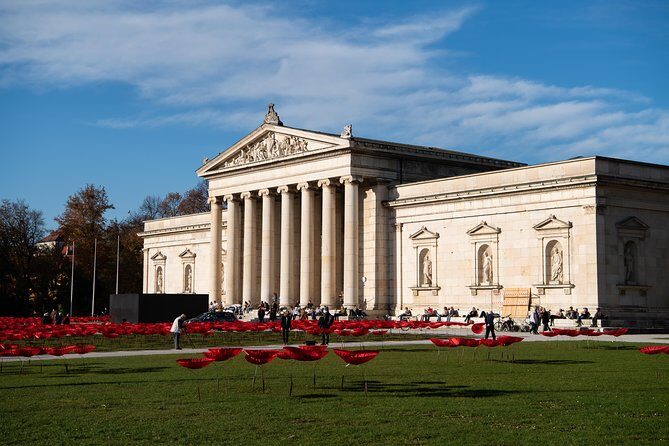
Königsplatz is one of the most important stops on this walk. It was a key Nazi-era landmark, and seeing it on the ground is very different from seeing it in a photo. You get time to look around and hear how the public square fit into the Nazi program.
This is where the story shifts from individuals to systems. The guide’s job is to connect the ideology to the built environment—how movements need space, symbols, and crowds. Once you understand that, the buildings and sightlines stop being just “old stones” and start reading like stage sets.
You’ll spend around 15 minutes here. That’s short enough to avoid fatigue, but long enough that the guide can point out what to watch for. If you like asking questions, this is a good place to do it; guides often use this stop to set the framework for the rest of the tour.
Odeonsplatz: Marches, Memorials, and Munich as a Political Stage
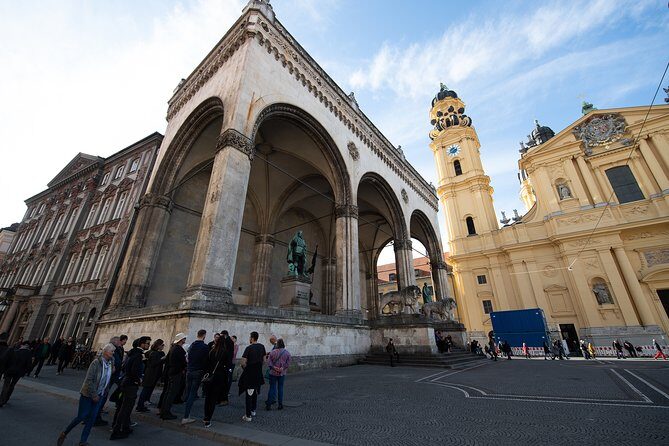
Next up is Odeonsplatz. This square was used by the Nazi Party for marches and memorial events. That use turns the place into more than a landmark—it becomes evidence of how power wanted to look and sound in public.
This stop is about timing and atmosphere. In a few minutes, you can usually spot whether you’re looking at a site that stayed in the background of daily life versus one that was designed for crowd movement and ceremony. The guide helps you interpret those signals so you’re not guessing.
You’ll have about 30 minutes at Odeonsplatz, giving the guide time to connect events and propaganda themes to the surrounding streets. If you’re the type who likes details—names, dates, how rhetoric turned into action—this is where the tour tends to feel especially tight and informative.
One practical tip: bring a notepad or use your phone notes. Some people wish they had a simple outline of each stop to review later. Even a few bullet points from the Odeonsplatz explanation can turn this tour into a stronger long-term memory.
Staatliches Hofbräuhaus (Hofbräuhaus): Beer-Hall Politics You Might Not Expect
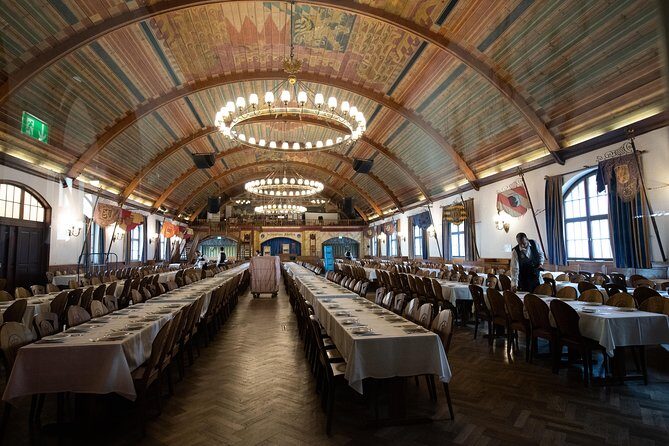
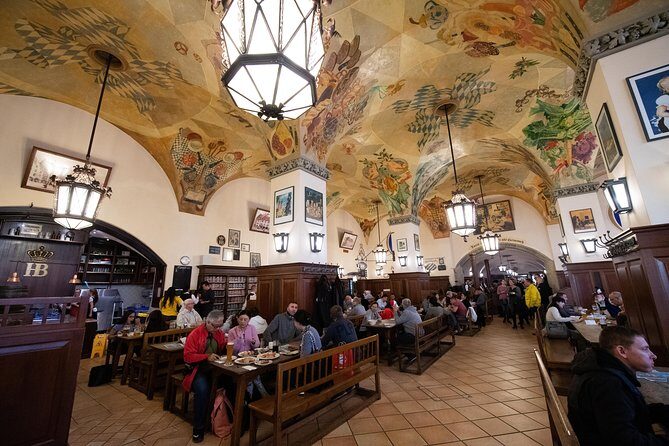
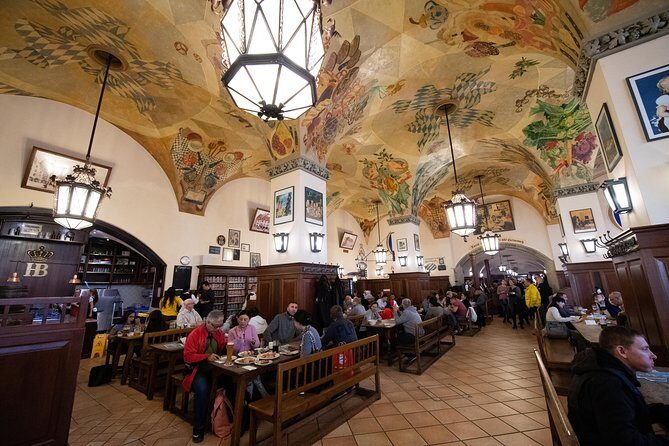
Then you’ll head to Staatliches Hofbrauhaus—often associated with Munich’s beer-hall tradition. The surprise here is that Hofbräuhaus wasn’t only a place for drinks. It was also part of the political environment, even in Nazi-era use.
This stop is around 20 minutes, and it helps you understand a key idea: propaganda doesn’t live only in speeches. It also lives in social spaces—places where people gather, listen, and feel included. The guide’s explanations can help you see how “normal” routines can be bent toward ideological goals.
Because this is still a major public destination, expect activity around you. That makes it even more valuable that the guide frames the site historically. Without that framing, it’s easy to treat the location like a backdrop for photos.
Also, if you’ve ever felt that history tours can become dry, this is usually where the guide’s tone and pacing matter most. Many guides on this route manage to keep the mood serious without turning the walk into nonstop gloom.
Other Munich city tours we've reviewed in Munich

Old Town Hall: Power Meets the City Center
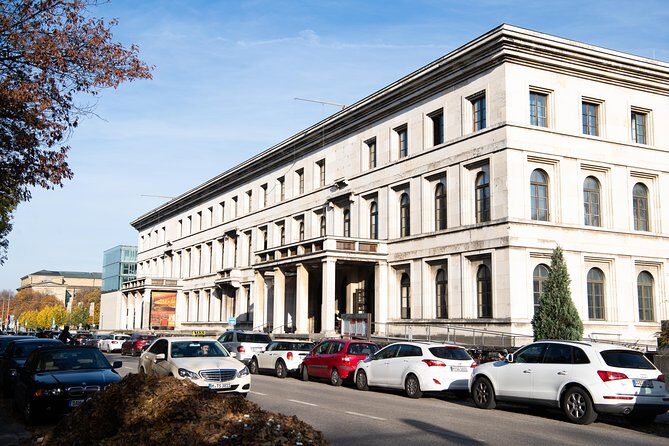
At the Old Town Hall, the tour shifts again. You get to see a civic building in the heart of Munich and hear how the Nazi rise played out against everyday governance and public identity.
You’ll be here for about 15 minutes. In that time, don’t just look at the facade—listen for how the guide frames the city’s role. The goal isn’t to make you memorize architecture. It’s to help you connect the dots: propaganda and marches were real, but they were also meant to translate into control.
This is also a stop that works well if you’re broadening your understanding beyond Hitler-only storytelling. A good guide will show you the social and political pressures that helped the movement gain traction, not just the actions of one leader.
Marienplatz Finish: Time to Recenter in Munich’s Main Square
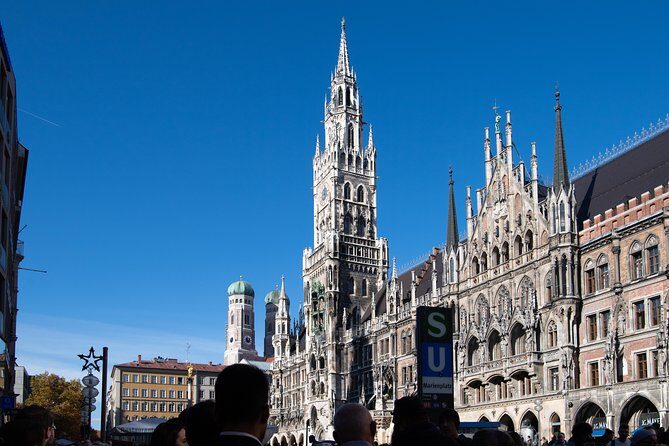
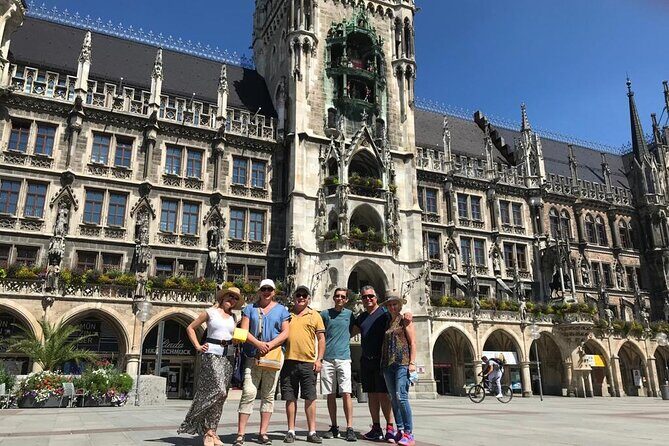
The tour ends at Marienplatz, Munich’s central square. You’ll get about 20 minutes in this final area, enough time to absorb the wrap-up and then get your bearings for the rest of the day.
Ending at Marienplatz is practical for two reasons:
- You can immediately continue with sightseeing without a long ride or extra directions.
- You’ll naturally reset your perspective from “historical route” to “city center life,” which is helpful after a heavy topic.
If you’re planning your day, this is a smart place to do it right. You can pair the tour with a meal nearby, pop into a museum, or just wander the streets while the context is still fresh in your head.
Memorial Moments: Remembering People, Not Just Events
A strong part of this experience is that it doesn’t limit itself to the rise of the regime. The tour includes memorials to those who died opposing the hate-filled Nazi ideology. That’s not a minor add-on. It changes how you walk through the rest of the route.
Here’s what I find important: a tour like this can easily become a catalog of symbols and dates. But the memorial pauses push you to think about consequences. They remind you the Nazi system wasn’t abstract. It targeted people, and resistance mattered.
Guides also tend to handle questions openly, even when answers might feel uncomfortable. That can be a relief if you’ve been holding questions in your pocket since you started reading about the era. Just know you may hear details you’re not expecting—and that’s part of understanding the real impact.
Price and Value: Is $45.95 Worth It?
At $45.95 per person for roughly 2 hours 30 minutes, this isn’t a “free walking tour” kind of deal. You’re paying for an English-speaking local guide and a route that focuses on meaning, not just movement.
What makes the price feel reasonable is the structure:
- You get guided context across multiple key sites (including Königsplatz, Odeonsplatz, Hofbräuhaus, and Old Town Hall).
- You finish in the center at Marienplatz, so you don’t waste time repositioning.
- The tour format supports questions, and guides often bring visual aids to help you connect story to place.
Also, the itinerary stops are listed with admission ticket as free, so your money goes into the guide experience rather than museum entry fees. If you like learning on your feet and turning Munich streets into a clearer story, the value can be strong.
If you prefer passive learning only—reading, watching videos, or quiet self-guided browsing—this may feel more “paid interpretation” than “independent discovery.” But if you enjoy being guided, it’s a solid use of an afternoon.
Who Should Book This Tour (and Who Might Skip It)
This tour is a good match if:
- You want to understand how Nazi ideology took root in Munich, not just Germany.
- You like real landmarks connected to real political behavior.
- You appreciate a serious tone with room for questions.
It may not be ideal if:
- You get overwhelmed by heavy subject matter and prefer lighter historical themes.
- You’re looking for a mostly sightseeing-focused stroll with minimal discomfort.
- You struggle with lots of outdoor time in cooler weather.
On the other hand, one review theme stands out: even people who thought they knew a lot often learned new angles, like how cultural and social factors fed into the rise. Guides like Michael, Jake, Aileen, and others are described as pushing beyond surface-level explanations.
Should You Book This Third Reich Tour?
I think you should book it if Munich matters to you and you want the city’s story in full, not only the pretty parts. The combination of landmarks + interpretation + memorial pauses is what makes this more than a checklist walk.
Book it early if you can. This tour tends to be popular, with people booking about a month in advance on average. And once you’re booked, prepare like it’s a real classroom session outdoors: warm layers, comfortable shoes, and a willingness to listen.
If you only have one afternoon for context, I’d choose this over trying to piece the story together on your own. It helps you see why those squares and buildings were used, and why the memory of victims and resisters still belongs in the conversation.
FAQ
How long is the Third Reich Walking Tour in Munich?
It runs for about 2 hours 30 minutes.
Where does the tour start and end?
It starts at Radius Tours, Dachauer Str. 4, 80335 München, and ends at Marienplatz in the city center.
Is the tour offered in English?
Yes, the tour is offered in English.
How much does the tour cost?
The price is $45.95 per person.
How many people are on the tour?
The tour has a maximum group size of 25 travelers.
Is a mobile ticket used?
Yes, the tour uses a mobile ticket.
What landmarks are included on the route?
You’ll see Königsplatz, Odeonsplatz, Staatliches Hofbrauhaus, the Old Town Hall, and Marienplatz, plus memorials connected to those who opposed the Nazi ideology.
Do I need good weather?
Yes. The experience requires good weather, and if it’s canceled due to poor weather, you’ll be offered another date or a full refund.
Can I bring a service animal?
Yes, service animals are allowed.
What is the cancellation policy if plans change?
You can cancel for free up to 24 hours in advance for a full refund. If you cancel less than 24 hours before the start time, the amount paid is not refunded.
Is it easy to reach the starting point with public transportation?
Yes. The meeting point is near public transportation.