REVIEW · MUNICH
Munich City Hop-on Hop-off Tour
Book on Viator →Operated by Gray Line Münchener Stadtrundfahrten · Bookable on Viator
Munich is easier when you can ride first. This hop-on hop-off bus tour gives you a flexible route and narrated sights, so you can decide what’s worth a longer stop. It also runs on a 24- or 48-hour ticket window, which is perfect for a first day that might go faster (or slower) than planned.
What I like: the open-top double-decker views make even short moves feel like sightseeing, and you get a personal audio guide in multiple languages through a headset. It’s a simple setup that helps you understand the city without digging through apps every time you move.
The main downside to plan for is timing. Some rides can run less often in certain seasons, and that can turn “quick hop” into a longer wait at a stop—especially if you’re trying to stack multiple attractions.
In This Review
- Key Things to Know Before You Ride
- The Value Play: Why This Bus Tour Makes Munich Feel Manageable
- Tickets: Express vs Grand Tour and How to Choose
- Express Tour (24-hour)
- Grand Tour (24-hour or 48-hour)
- Price and Logistics: What You’re Paying For (and the Stuff That Can Go Wrong)
- Entering the Route: Stop-by-Stop Munich Highlights
- Stop 1: Karlsplatz 21 (Karlsplatz / Stachus area)
- Stop 2: Gabelsbergerstraße 35 (Kunstareal)
- Stop 3: Odeonsplatz
- Stop 4: Prinzregentenstraße 26 (Eisbach – English Garden)
- Stop 5: Ludwigsbrücke (Deutsches Museum listed as closed until Oct 2022)
- Stop 6: Tal 1 (Marienplatz)
- Stop 7: Max-Joseph-Platz 2 (Opera area)
- Stop 8: Karlsplatz 21 (back to Karlsplatz / Stachus)
- Grand Tour additions: Stop 9 and beyond
- Riding Tips That Save Time (and Reduce Stress)
- Do one full loop before you start making decisions
- Watch the bus intervals, especially in off-peak seasons
- Expect the stop to be clearly marked, but arrive using the exact address
- Mobile ticket and QR scan
- Audio Guide: What’s Included, and When It Feels Off
- Accessibility, Pace, and How Long You’ll Actually Use the Pass
- Who This Bus Tour Suits Best
- Should You Book This Munich Hop-On Hop-Off Tour?
- FAQ
- How long is the Munich Hop-on Hop-off tour?
- What ticket options are available for this hop-on hop-off bus?
- Is the tour in English?
- Do I get a headset for the audio guide?
- How often do the buses run?
- Where does the tour stop first?
- What are some of the main stops on the route?
- Are service animals allowed?
- Can I cancel and get a full refund?
- Is weather a factor for this experience?
Key Things to Know Before You Ride

- You pick your pace with 24-hour Express or a longer Grand Tour window (including farther stops like Nymphenburg and Olympiapark area).
- Headset audio comes in many languages, so you can switch between English and others without hassle.
- Buses generally run about every 20 minutes, but season can affect spacing, so build in buffer time.
- The meeting-point details matter; Stop 1 is listed with a specific address and basement exit clue.
- The “full loop first” trick works—do one circuit to map the city, then hop off where it clicks.
The Value Play: Why This Bus Tour Makes Munich Feel Manageable
Munich can look compact on a map, but the day-to-day reality is different. Streets are busy, distances feel longer than you expect, and first-time navigation can steal energy. That’s why hop-on hop-off works here: you get an organized sightseeing spine, then you choose your own branching paths.
This particular tour is priced around $31.24 per person, which is not “cheap” in the way a metro pass is. But the price buys you three things that add up fast: (1) flexibility over a ticket window, (2) narrated context via headset, and (3) easy hop-on/hop-off access to major landmarks without figuring out which stop is closest to what you want.
If you have only a day or two, you’ll often use the bus for orientation first, then switch to walking or transit for deeper time in the places you like best. That is where the value shows.
Other Munich city tours we've reviewed in Munich



Tickets: Express vs Grand Tour and How to Choose
You’ll see ticket options built around time and route length:
Express Tour (24-hour)
The Express option is designed to aim you at the center and the best-known sights. If you like a “see the highlights, then explore on foot” plan, Express fits well. It’s also a good pick if your schedule is tight, your walking legs are limited, or you prefer to keep one day simple.
Grand Tour (24-hour or 48-hour)
The Grand Tour expands the reach beyond the core. The stop list includes areas like Schloss Nymphenburg and the Olympiapark / BMW World & Museum region. If those are on your Munich wishlist, a Grand Tour pass is the logical way to get there without re-planning your day from scratch.
A practical tip: if you’re unsure, do this mental math. If you want mostly city-center sights, Express is enough. If you’re likely to chase the farther “Munich icons” on the outskirts of the center, go Grand and give yourself the extra time to actually get off the bus and linger.
Price and Logistics: What You’re Paying For (and the Stuff That Can Go Wrong)
At $31.24, you’re buying a structured sightseeing tool, not a guided private day. That matters. You’ll still need to manage your own timing for hop-offs, museum entry (if you choose to go in), and walking between stops.
Also, keep expectations honest about buses as a system. The tour’s own rhythm is described as roughly every 20 minutes, but winter season operations can reduce frequency, meaning longer waits. One person’s “I was on in 10 minutes” can be another person’s “I waited almost an hour.” If you’re traveling in colder months or you’re on a tight clock, add buffer time between stops.
Lastly, the meeting-point details are specific. Stop 1 is listed as:
- Karlsplatz 21
- with directions: corner Karlsplatz / Sonnenstraße (Bayerstraße corner), and Exit G from the basement
If you arrive expecting a generic curbside bus stop sign, you could waste time. I’d rather you arrive early than angry.
Other hop-on hop-off tours we've reviewed in Munich
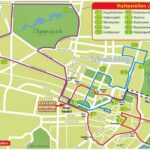
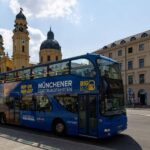
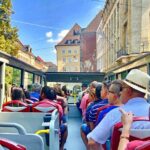
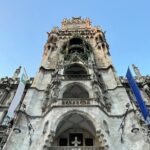
Entering the Route: Stop-by-Stop Munich Highlights
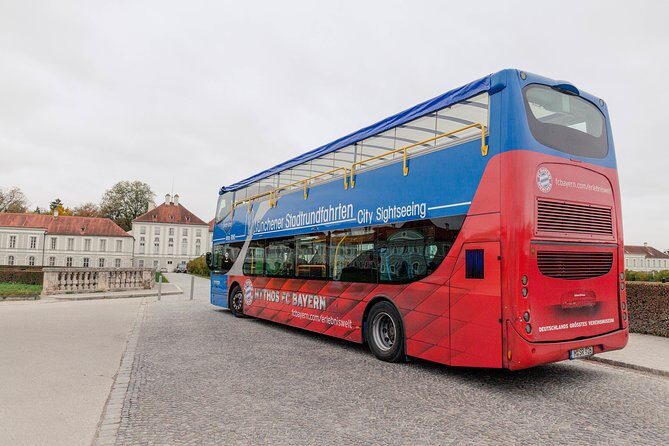
The route loops back to the starting area, which makes it easier to re-board later. You’ll be able to get off wherever the attraction is most tempting, then hop back on when you’re ready.
Stop 1: Karlsplatz 21 (Karlsplatz / Stachus area)
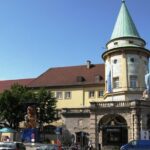
This is your launch pad. Karlsplatz is one of those “you’ll be passing through here again” zones. If you do one full loop first, Stop 1 becomes the home base you can return to.
Consideration: the stop location instructions are precise. Treat this one like an appointment: find the exact corner and basement exit clue, then stay alert for the bus.
Stop 2: Gabelsbergerstraße 35 (Kunstareal)
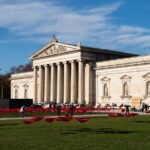
Kunstareal points you toward Munich’s museum and cultural district area. Even if you don’t pick a specific museum for entry, this stop is useful because it helps you understand where the city places its major art institutions.
Why it’s worth it: it turns a “walk around and hope” morning into a planned cultural area you can explore on foot.
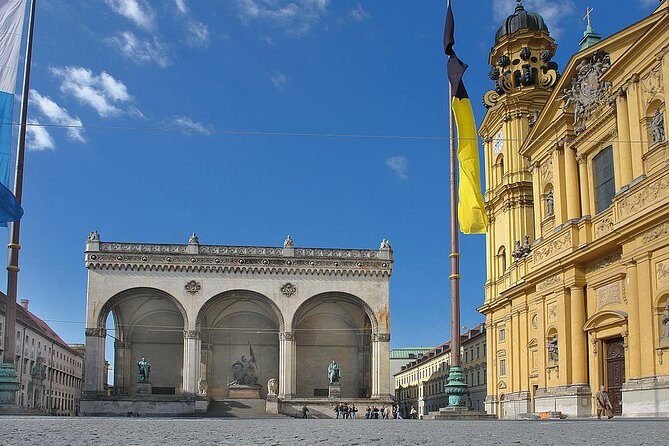
Stop 3: Odeonsplatz
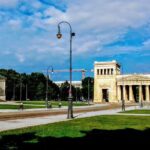
Odeonsplatz is a strong “old Munich feel” kind of stop. It’s also useful because it helps you connect the city’s monumental spaces with what you’ll see later near the central squares.
If you like architecture and the built form, spend extra time here. If you prefer quick viewing, stay mobile and save your energy for the big central square.
Stop 4: Prinzregentenstraße 26 (Eisbach – English Garden)
This is your green break. The name alone tells you the angle: you’re heading toward the English Garden area.
Why this stop matters: after squares and buildings, the English Garden zone helps you reset. It’s a great time for a slow walk, a snack, and photos without feeling like you’re rushing.
Stop 5: Ludwigsbrücke (Deutsches Museum listed as closed until Oct 2022)
This is a river-crossing type of location, and the stop name includes Deutsches Museum (with a note that it was listed as closed until Oct 2022 in the provided info).
How to handle this: if you plan to enter Deutsches Museum, verify the status for your exact date. If it’s closed, use the stop anyway for the bridge setting and the chance to re-frame your day around other museums or a longer walk.
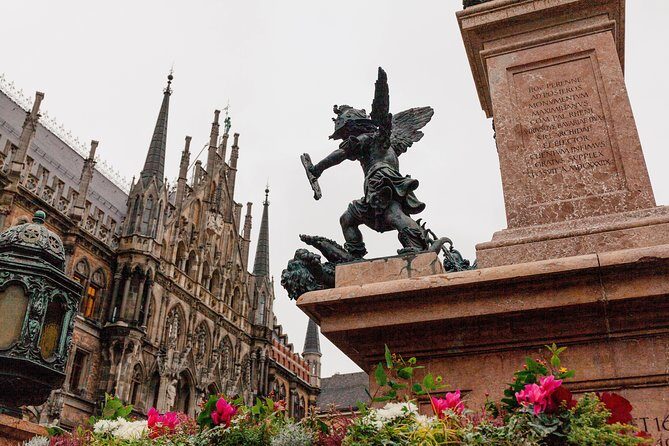
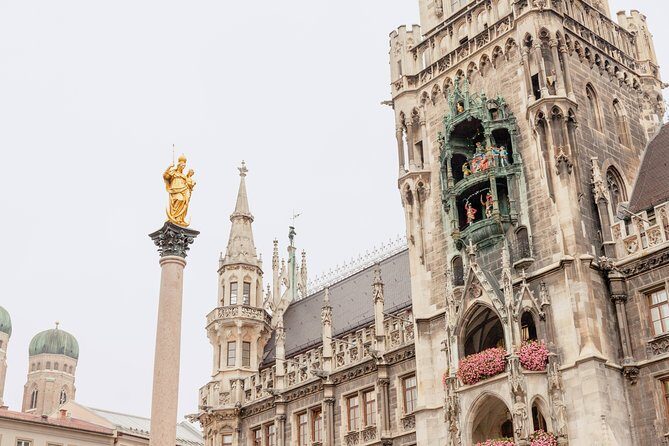
Stop 6: Tal 1 (Marienplatz)
Marienplatz is the public square that anchors classic central Munich. If you only remember one “Munich looks like this” place, it’s Marienplatz.
Practical move: hop off here and give yourself real time. It’s one of the stops where “quick glance” turns into “I’m staying longer because this feels like the city center you expected.”
Stop 7: Max-Joseph-Platz 2 (Opera area)
This stop points to the opera district vibe. Even if you don’t attend a performance, the area is part of Munich’s grand central layout.
Why it’s a smart hop: it helps balance your day between everyday public squares and the more formal, ceremonial side of the city.
Stop 8: Karlsplatz 21 (back to Karlsplatz / Stachus)
You’re back near your starting area. This makes it easy to end your day without a complicated route back.
Value tip: if you kept notes on which parts you liked best, this is where you return after a full loop to do a second pass on the good stuff on foot.
Grand Tour additions: Stop 9 and beyond
If you’re on the longer Grand Tour window, you’ll see the route expand outward.
- Stop 9: Nördliches Schloßrondell 4F (Schloss Nymphenburg)
This is for the palace-and-grounds style of Munich. It’s your “get out of the center” option without having to solve transit math.
- Stop 11: Olympiapark / BMW World & Museum
This is where Munich shifts to modern design territory. If you’re into contemporary architecture or you want the BMW area experience, this is your planned access point.
Riding Tips That Save Time (and Reduce Stress)
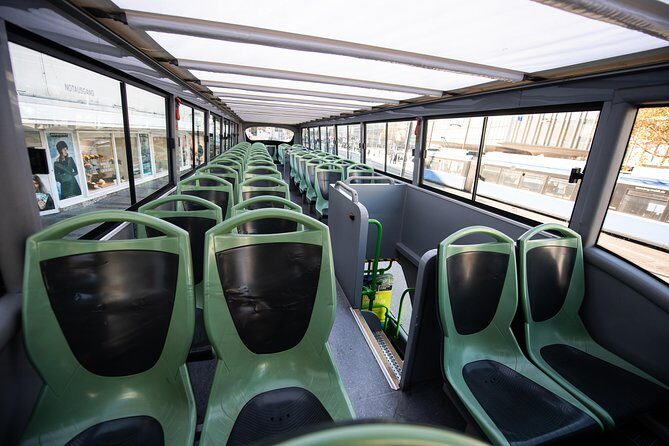
Do one full loop before you start making decisions
More than one person praised the same tactic: ride around once to build a mental map, then pick your hop-off spots. I agree with that method because it stops you from making early decisions that feel different once you’ve seen the whole route.
Watch the bus intervals, especially in off-peak seasons
Buses are described as roughly every 20 minutes, but winter season can stretch the wait. If your day includes timed plans, set your expectations like this: the bus is helpful, but it’s not a personal driver.
Expect the stop to be clearly marked, but arrive using the exact address
If you show up at “Karlsplatz” and wander, you can lose time. Use the listed Karlsplatz 21 and follow the basement exit direction. You’ll still have a short walk, but it’s controlled walking instead of aimless searching.
Mobile ticket and QR scan
The tour uses mobile tickets and QR code scanning is part of boarding. If you’re screenshotting your QR code, make sure your phone battery won’t die halfway. It’s the simplest failure point.
Audio Guide: What’s Included, and When It Feels Off
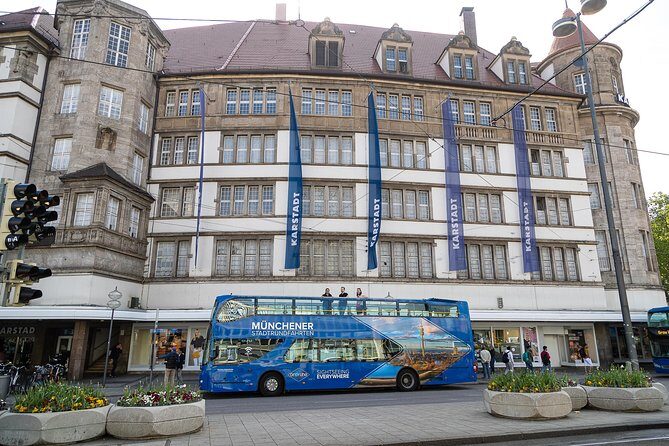
You get onboard audio in a bunch of languages, including English (plus German, French, Spanish, Portuguese, Italian, Russian, Chinese, and Japanese), and you’ll receive headphones.
In a perfect world, the narration lines up with what you’re seeing. In real life, audio can start late or feel out of sync when traffic slows the bus. That’s not unique to Munich, and it can happen if traffic changes timing through the route.
Two ways to handle it:
- If the audio feels delayed early on, don’t panic. Try waiting for the next stop segment before you assume the guide is useless.
- If narration seems mismatched, move your attention to the immediate surroundings and use the stop names as your anchor. The tour is built around stop-by-stop sightseeing, and the signage helps you connect the audio to the location.
Also, keep in mind that at least one stop on the provided info list showed a temporary closure (Deutsches Museum). In those cases, you’ll want to use the bus ride for what’s still visible and then pivot your plan.
Accessibility, Pace, and How Long You’ll Actually Use the Pass
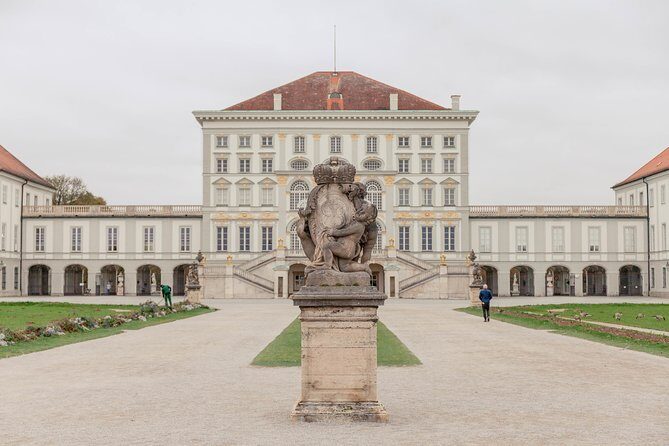
The tour is described as open to most people, and service animals are allowed. It also notes it’s near public transportation, which is handy if you want to combine the bus with trains and trams.
The overall tour duration is listed as about 2 hours. That likely refers to the main sightseeing loop, but your ticket window is what turns it into a flexible day. With a 24- or 48-hour pass, you can spread the sightseeing across multiple moments rather than cramming everything into one ride.
Here’s the sweet spot I’d aim for:
- Use the bus early for orientation.
- Hop off at Marienplatz and the English Garden area for real time.
- Save palace or Olympiapark stops for when you’re ready to go farther from the center.
Who This Bus Tour Suits Best
This fits best if you:
- want an easy first-day plan that doesn’t require nonstop planning
- like guided context but still want freedom to get off
- need to cover both central Munich squares and at least one “bigger” out-of-center stop (if choosing Grand)
It can feel less satisfying if you prefer deep-dive museum learning or if you hate waiting at any sort of curbside stop. Hop-on hop-off is a trade: less planning effort, but you accept the rhythm of buses and city traffic.
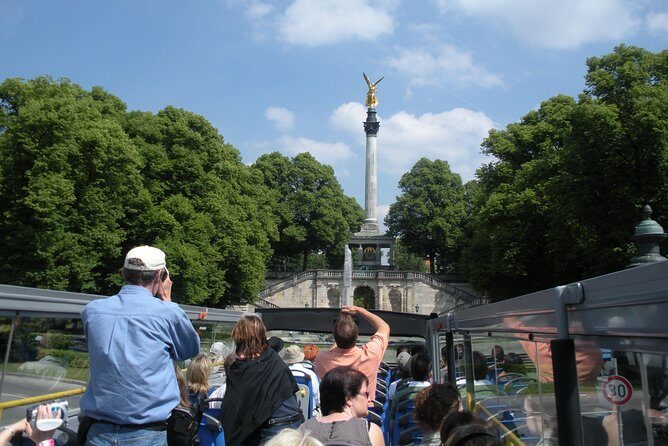
One more note: the open-top bus is a real perk. When the weather is cooperating, the upper deck makes photos and sightseeing feel more immediate.
Should You Book This Munich Hop-On Hop-Off Tour?
Yes, if you want an efficient way to get bearings fast and you like the idea of narrated stops with a headset. The price makes more sense when you use the pass for more than a single ride—especially if you’ll re-board after doing your own walking around key areas like Marienplatz, the English Garden zone, and the cultural districts.
Skip or reconsider if:
- you’re traveling in a season where bus frequency might be lower and you can’t afford delays
- you need ultra-precise timing for multiple bookings in the same hour
- you’re expecting the narration to perfectly match every second of your bus route
FAQ
How long is the Munich Hop-on Hop-off tour?
The tour is listed as approximately 2 hours.
What ticket options are available for this hop-on hop-off bus?
You can choose an Express ticket valid for 24 hours, or a Grand Tour ticket valid for 24 hours or 48 hours.
Is the tour in English?
The tour is offered in English, and the onboard audio guide is available in multiple languages.
Do I get a headset for the audio guide?
Yes. The tour includes a personal headset.
How often do the buses run?
Service frequency is described as roughly every 20 minutes, with changes depending on season.
Where does the tour stop first?
Stop 1 is listed at Karlsplatz 21, with an instruction to use Exit G from the basement at the Karlsplatz / Sonnenstraße corner (near Bayerstraße).
What are some of the main stops on the route?
Stops listed include Odeonsplatz, Marienplatz (Tal 1), the English Garden area near Eisbach, and Karlsplatz/Stachus (Karlsplatz 21). Grand Tour additions include Schloss Nymphenburg and Olympiapark / BMW World & Museum.
Are service animals allowed?
Yes, service animals are allowed.
Can I cancel and get a full refund?
There is free cancellation, and you can cancel up to 24 hours in advance for a full refund.
Is weather a factor for this experience?
Yes. The experience requires good weather; if it’s canceled due to poor weather, you’ll be offered a different date or a full refund.