REVIEW · MUNICH
Munich: Middle Ages Tour with Night Watchman
Book on GetYourGuide →Operated by schwarzgold.info - Wolfgang Brehm · Bookable on GetYourGuide
Medieval Munich sounds grim, but it’s fun. This 1.5-hour night watchman walk with Wolfram turns famous squares and gates into a living story of beheadings, punishments, and old relics. I love the costumed performance and the way Wolfram keeps the pace moving with lively, question-friendly answers. I also love the very specific stops—St. Peter’s Church, Metzgerzeile, the Talburg Gate, and the Schwabinger Gate—so you’re not just hearing vague medieval talk. The one drawback: the content includes executions and torture techniques, so you’ll want to be okay with darker history.
You meet in the center of town at Rathaus Apotheke near Marienplatz, rain or shine, and you’ll move on foot through key old-town landmarks at night-watchman tempo. The guide speaks German, and this isn’t aimed at young kids (not suitable for children under 12), but it can be a great pick if you want a memorable, story-driven overview without spending half a day on buses.
In This Review
- Key highlights worth planning for
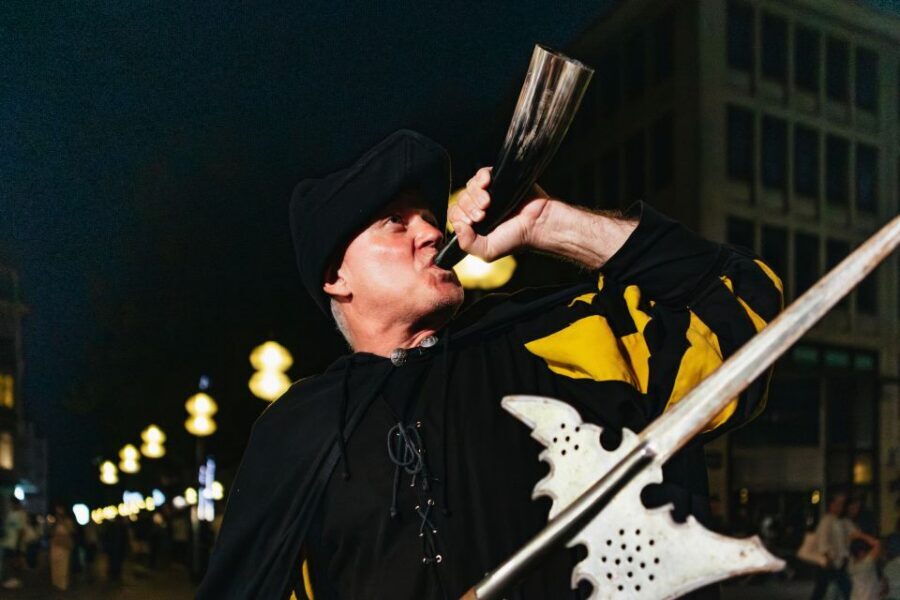
- Meeting Wolfram at Marienplatz: lantern, horn, and medieval garb
- Value check: $21 for a story-heavy night walk
- How the night-watchman story works in 1.5 hours
- St. Peter’s Church: incense, ancient remains, and why it matters
- Old Town Hall, Alter Hof, and Marienhof: power centers you can read
- Viktualienmarkt and Metzgerzeile: medieval rules you can picture
- Munich’s walls and Talburg Gate: security made visible
- Castle time and the Schwabinger Gate: the route connects the city
- Executions and prisons: what you’ll hear, and how to prepare
- Practical tips for a smooth night watchman experience
- Who should book this tour (and who might skip it)
- Should you book the Munich Middle Ages Tour with Night Watchman?
- FAQ
- How long is the Munich Middle Ages Tour with Night Watchman?
- Where does the tour start?
- What language is the live tour guide?
- What is included in the price?
- Are food and drinks included?
- Is the tour rain or shine?
- Are flash photography or video recordings allowed?
- Is the tour wheelchair accessible?
- Is this tour suitable for children?
- Can I join a private group?
- What should I expect in terms of themes and content?
Key highlights worth planning for
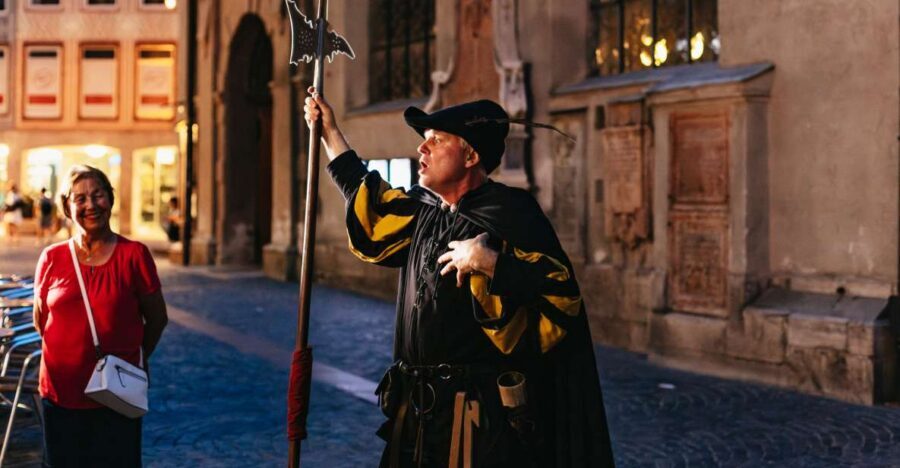
- Wolfram’s medieval garb with lantern, halberd, and horn for a true night-watchman vibe
- Marienplatz start that makes it easy to connect with the rest of your Munich evening
- St. Peter’s Church incense stop that adds senses, not just facts
- Metzgerzeile punishment talk (including bad bakers) that shows everyday medieval rules
- Talburg Gate dramatization with a halberd fight and gate-closing moment
- City walls, castle, and Schwabinger Gate woven into one tight walking route
Meeting Wolfram at Marienplatz: lantern, horn, and medieval garb
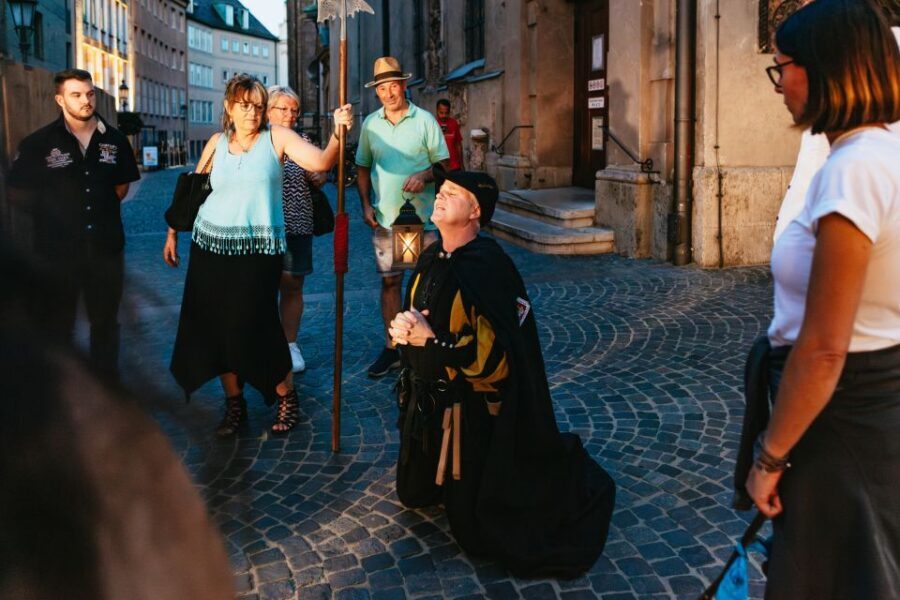
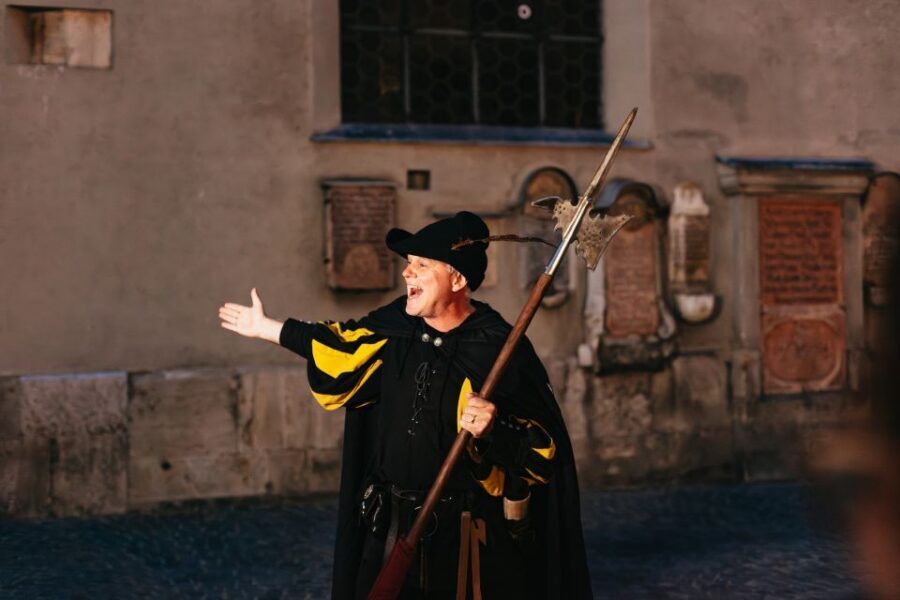
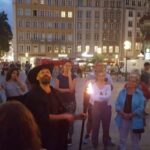
I like tours that feel like a story, not a lecture. This one starts in the middle of Munich at Rathaus Apotheke am Marienplatz, about 25 meters left of number 8, and you’ll spot the guide in full medieval-style clothing.
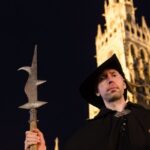
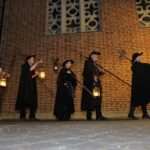
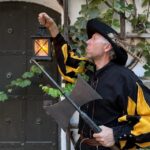
When Wolfram shows up carrying a lantern plus a halberd and horn, the whole group instantly shifts into “let’s role-play history” mode. It’s a small thing, but it matters: you’re paying for a lived-in atmosphere, and the costume makes it easier to follow the darker chapters of medieval justice without getting lost in dates.
Also, it’s not a long slog. At 1.5 hours total, you’re getting a compact walk that fits well into a tight schedule. You don’t have time to fade out, and that keeps the experience sharp.
Other Munich city tours we've reviewed in Munich


Value check: $21 for a story-heavy night walk
At $21 per person for 1.5 hours, you’re paying less for time on foot and more for guided storytelling and dramatized moments. Munich can be expensive, and this is one of the better ways to get an organized “big picture” of old-town power and punishment without needing museums or long lines.
The value is strongest if you want:
- a guided route through central landmarks
- a performance-style guide who answers questions
- medieval themes that go beyond churches and buildings
If you prefer only light sightseeing with zero dark material, you might feel the balance is too intense. But if you like history as lived reality—messy, strict, and sometimes brutal—this price feels fair for what you get.
How the night-watchman story works in 1.5 hours
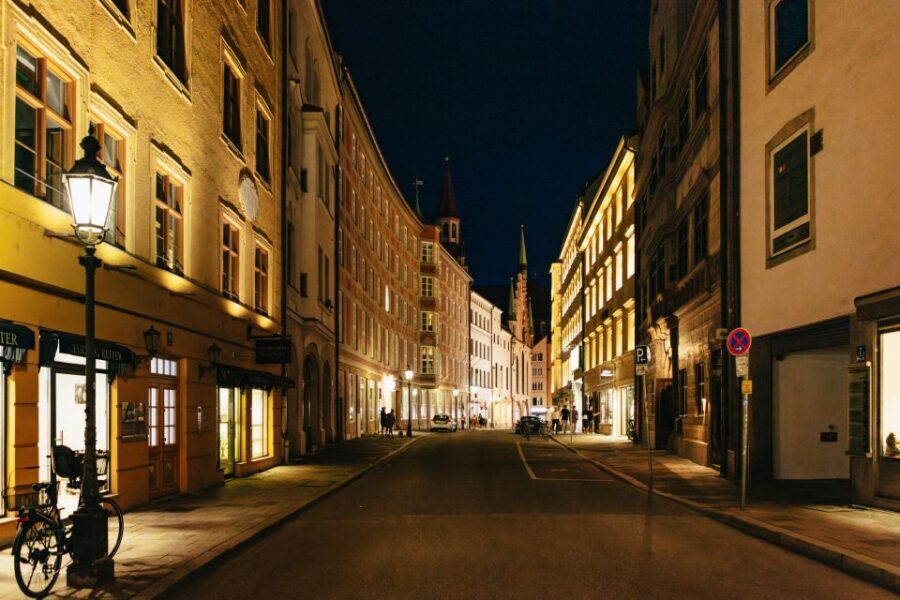
This tour moves quickly on purpose. You’ll cover key old-town stops in short segments, with Wolfram tying each place to the medieval world: security, rules, and consequences. Even though the route is tight, the experience doesn’t feel rushed in the “skip past details” way. You get enough time at each stop to orient yourself and understand why it mattered.
Rain or shine is part of the package, too. Munich weather can change fast, and you should expect you’ll be outside the whole time. Bring a light rain layer and wear shoes you can trust on uneven old-stone surfaces.
One more note: the guide is German-speaking. If you don’t read German well, you’ll still be able to follow much of the visual storytelling, but comprehension will be better if you’re comfortable with basic spoken German or you’re okay catching the gist through context.
St. Peter’s Church: incense, ancient remains, and why it matters
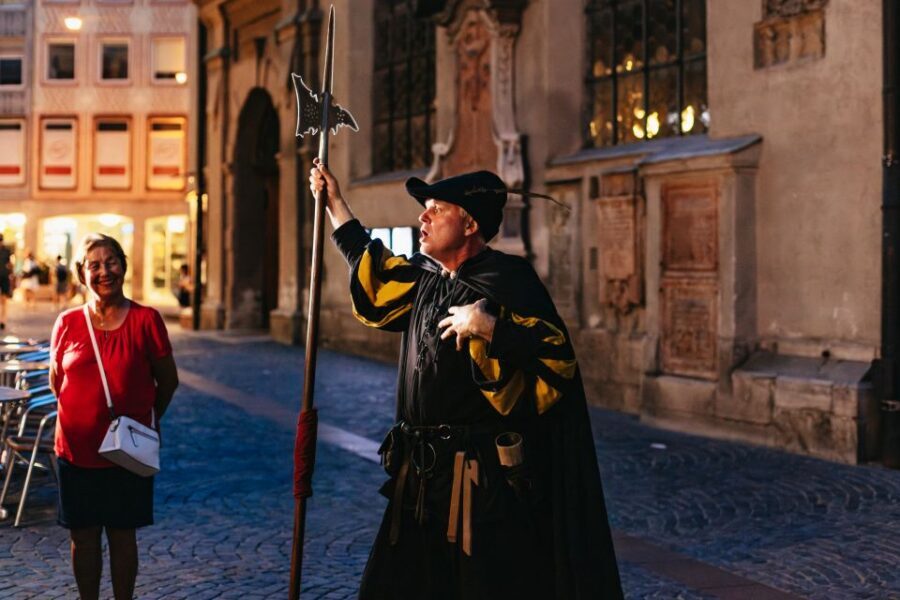
St. Peter’s Church is one of the first themed stops. You’ll spend time at and around the church area, including a moment where Wolfram guides you through the ancient remains and the experience of incense.
That incense detail is more than a gimmick. It adds atmosphere you can actually sense, which helps you imagine the space as it was used and visited. You’re not just learning about medieval life in abstract terms—you’re breathing the idea of the place.
This stop also helps set the tone for what comes next. After you get a feel for ritual and religious settings, the shift to justice and punishment later on lands better. The tour is basically building a worldview: faith, order, and enforcement all tied together.
Old Town Hall, Alter Hof, and Marienhof: power centers you can read
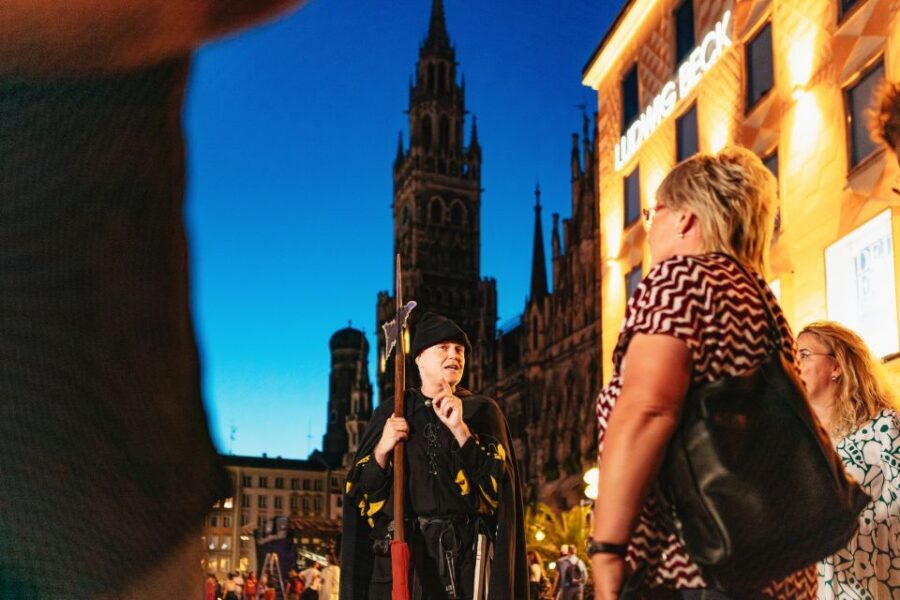
As you move through the old-center landmarks—Old Town Hall, Alter Hof, and Marienhof—you’re getting the “where decisions were made” layer of medieval Munich. These aren’t random photo stops. Wolfram connects them to governance and control, which is the backbone of the tour’s themes.
Here’s the practical benefit: if you’ve only seen Munich as beer halls and museums, this route helps you see it as a city with systems. Who had authority? Where were the rules enforced? Why did people fear the consequences?
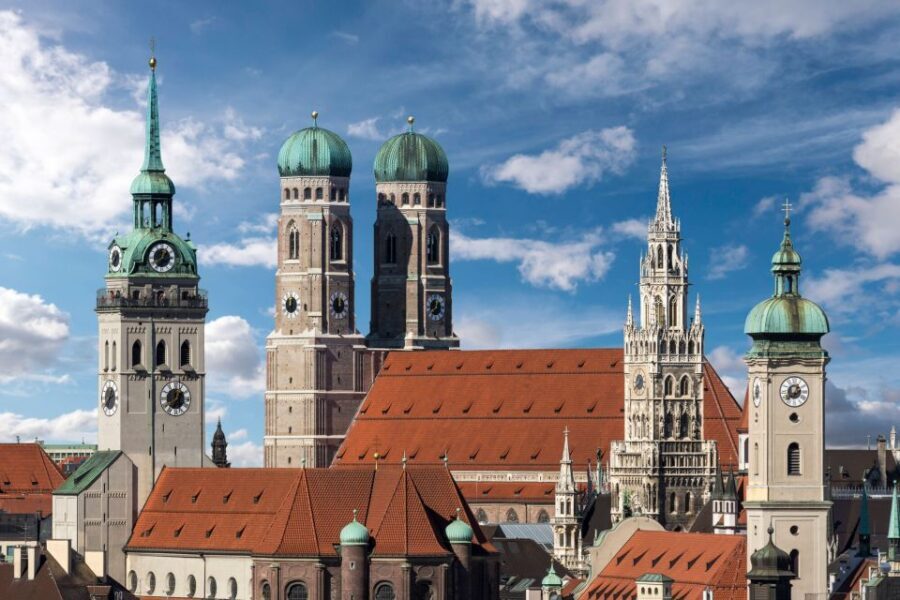
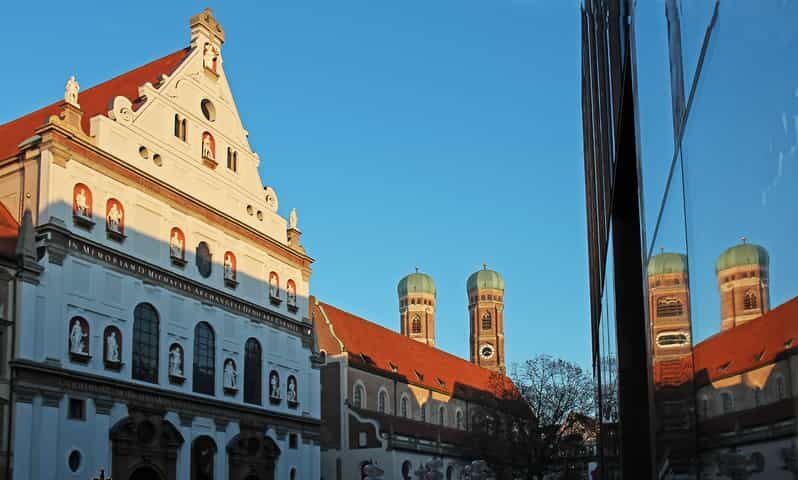
You’ll also see the Frauenkirche as part of the walk. Even if you’re not thinking about its exact age in your head, it works as a familiar landmark that keeps you oriented while the story jumps around through medieval justice and city structure.
Other Night Watchman tours we've reviewed in Munich

Viktualienmarkt and Metzgerzeile: medieval rules you can picture
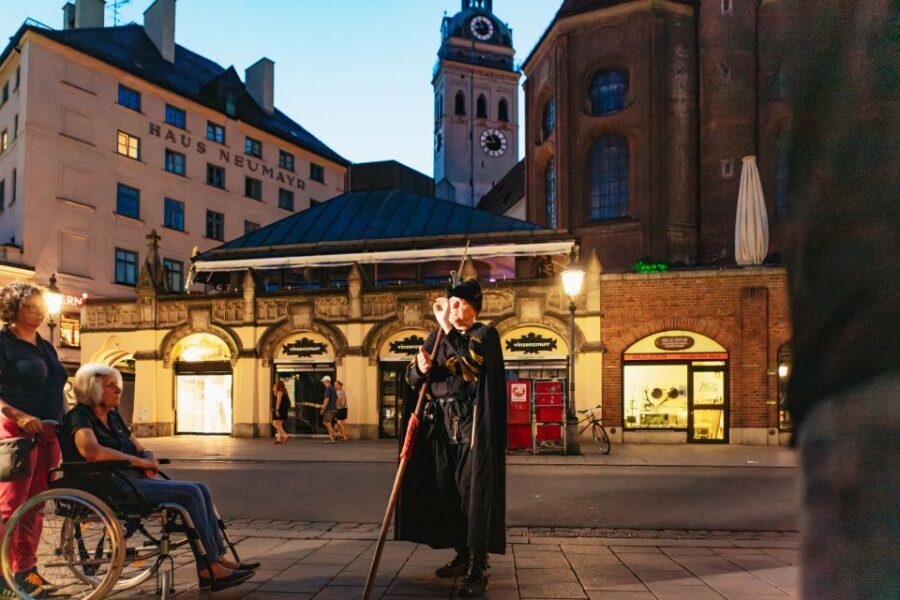
Viktualienmarkt comes up early in the route, and it’s a smart choice. Markets are where daily life happens—where people buy, trade, and get judged by the same systems that later show up in courts and punishments. You get a chance to think about medieval Munich as a working city, not just a collection of monuments.
Then you hit Metzgerzeile, where the tour includes punishments for bad bakers. That’s an especially effective topic because it’s relatable: it’s about food quality, trust, and regulation. You can almost feel how serious that would be when there’s no modern food safety and when one bad product can ruin more than just one person’s dinner.
Even when the story turns darker, these street-level details keep it grounded. You’re learning how enforcement touched normal routines.
Munich’s walls and Talburg Gate: security made visible
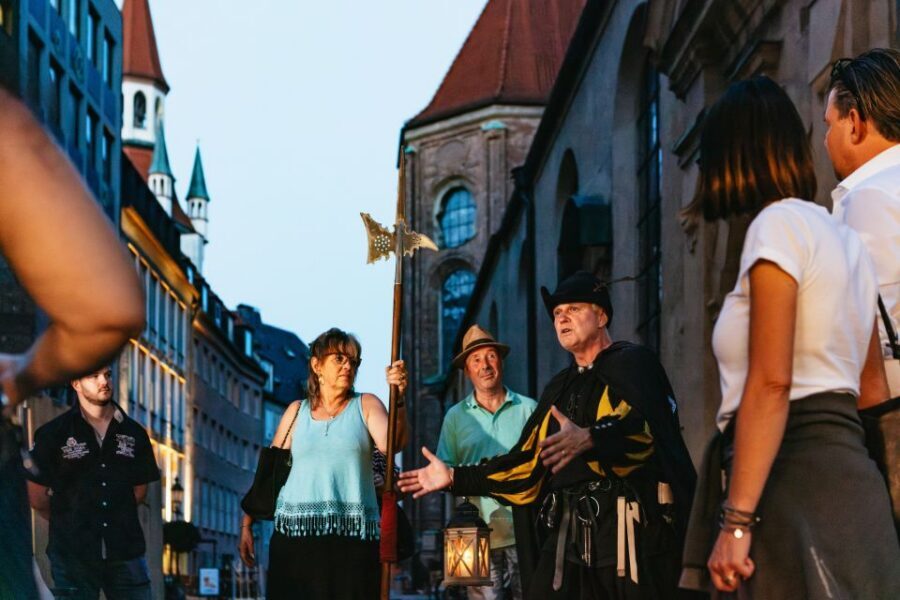
One of the biggest theme shifts is the walk to the 12th-century city wall area. City walls are easy to admire from the outside. But Wolfram’s approach makes you think about them as practical infrastructure—how a city defended itself, and what happened when order broke down.
From there, the Talburg Gate moment is a standout. You’ll witness the closing of the Talburg Gate, and there’s a dramatic halberd fight element. This isn’t just theatrical for its own sake. It helps you picture what “control at the gate” meant in daily terms: who could enter, who couldn’t, and how quickly tension could turn into violence.
If you like history you can see in your body—walking near the wall line, standing where people once needed to check threats—this is the part that makes the tour click.
Castle time and the Schwabinger Gate: the route connects the city
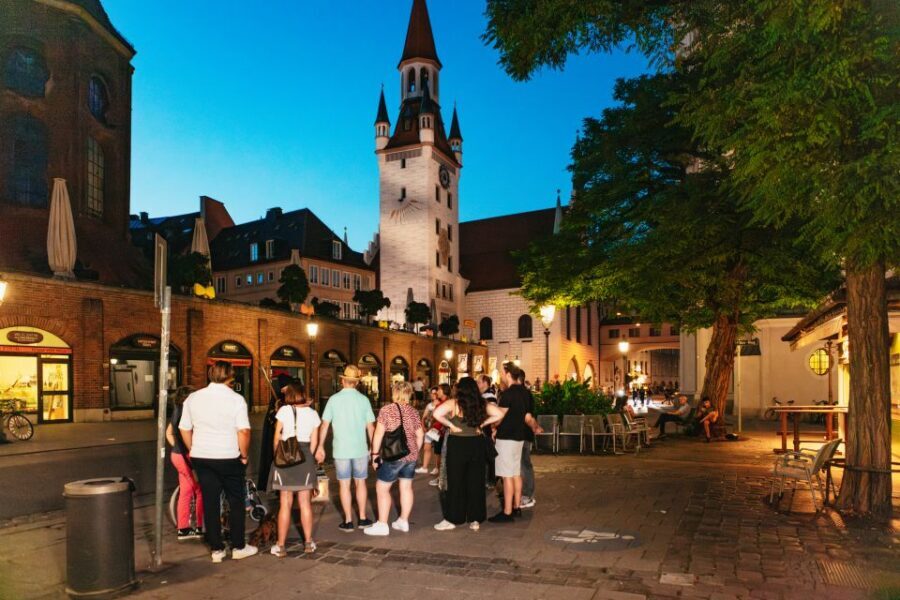
The tour also explores the city castle area and includes the Schwabinger Gate. This is one of the ways the 1.5-hour format punches above its weight. You’re not stuck in one neighborhood theme. You see how the old city connected—fortifications, key points of passage, and the power structures behind them.
The Schwabinger Gate in particular matters because it rounds out the “gate and boundary” story. Gates are story machines: they combine geography with authority, and authority with consequences. By the time you reach this area, the earlier talk about punishments and enforcement makes more sense.
And because you’re moving on foot, your brain starts mapping the city faster. That’s one of the quiet wins of a guided walk like this: you build mental geography in a short time.
Executions and prisons: what you’ll hear, and how to prepare
This is the part you should think about before booking. The tour covers executions and beheadings of the Middle Ages and also describes terrifying torture techniques used in medieval prisons.
You don’t need to be squeamish to enjoy the tour—but you should be mentally ready. The guide is presenting history, not shock entertainment, but the subject matter is real and heavy.
A practical way to handle it: if you want a balanced experience, remember that the goal is to understand a system of law and fear. The story connects these practices to how cities controlled behavior. If you walk in curious about how power worked in medieval Munich, the darker scenes won’t feel pointless.
If you’re sensitive to graphic topics, you may want to skip this one and choose a lighter old-town history walk instead.
Practical tips for a smooth night watchman experience
A few things will make your time easier:
- Wear comfortable shoes for walking on historic streets and uneven ground.
- Expect the tour to run rain or shine—pack a light rain jacket or poncho.
- Bring your curiosity, not your phone. Flash photography is not allowed, and video recording isn’t allowed.
- The guide is in German, so set expectations accordingly.
Also, think about the timing. Because this is centrally located, it pairs well with a pre- or post-dinner stroll around Marienplatz and the surrounding old town. You’ll return to the starting area at Rathaus Apotheke am Marienplatz.
Who should book this tour (and who might skip it)
I’d steer you toward this tour if you want:
- a performer-style guide with medieval garb and props
- a compact old-town walk that covers walls, gates, and key landmarks
- the dark side of medieval life explained in a structured way
- a guide who keeps things lively and answers questions
You might skip it if:
- you want only gentle sightseeing
- you don’t want any mention of executions or torture techniques
- you’re traveling with kids under 12 (this tour isn’t suitable for them)
If you’re a first-timer to Munich and you want something different from the usual “church and beer” loop, this is a strong choice. You’ll leave with a mental map of the city’s old defenses and a clearer idea of how punishment shaped daily life.
Should you book the Munich Middle Ages Tour with Night Watchman?
If you’re curious about how medieval Munich worked—rules, enforcement, and the city’s protective boundaries—book it. For $21 and 1.5 hours, you get a story-forward walk that uses real locations like St. Peter’s Church, Metzgerzeile, and the Talburg Gate moment to make the history stick.
Just go in with two expectations set: it’s German-led, and the themes get dark (executions and prison torture techniques). If that’s okay for you, Wolfram’s lively, question-friendly performance makes this one of the more memorable ways to understand the medieval layers of Munich.
FAQ
How long is the Munich Middle Ages Tour with Night Watchman?
The tour lasts 1.5 hours.
Where does the tour start?
Meet your guide in front of Rathaus Apotheke am Marienplatz, about 25 meters left of number 8. GPS coordinates are 48.13737, 11.57588.
What language is the live tour guide?
The live tour guide speaks German.
What is included in the price?
You get a guide in medieval garb as part of the experience.
Are food and drinks included?
No. Food and drinks are not included.
Is the tour rain or shine?
Yes, the tour takes place rain or shine.
Are flash photography or video recordings allowed?
No. Flash photography and video recording are not allowed.
Is the tour wheelchair accessible?
Yes, it’s listed as wheelchair accessible.
Is this tour suitable for children?
No. It’s not suitable for children under 12.
Can I join a private group?
Private group availability is offered.
What should I expect in terms of themes and content?
The tour includes medieval punishments, executions and beheadings, and discussion of torture techniques used in medieval prisons. It also covers city defenses like walls and gates.