REVIEW · MUNICH
Third Reich & WWII Walking Tour
Book on Viator →Operated by munich walk tours Ralph Luenstroth · Bookable on Viator
Munich has dark corners. This Third Reich walking tour ties famous locations like Königsplatz and Feldherrnhalle to the story of how Nazism grew in Munich’s streets during the WWII era. You also stop near places tied to the White Rose resistance, so the route isn’t only about rallies and power.
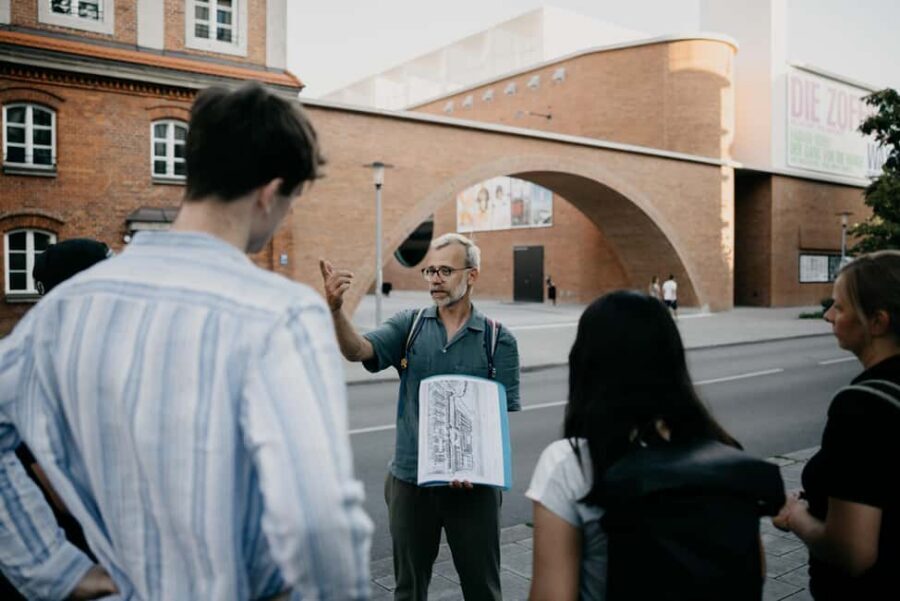
I like the small-group feel (limited to 10 on the tour) and the fact that the guides handle a heavy topic with care. Guides named Michael, Alex, Josh, Danielle, Joel, Ulrich, and Bridget are repeatedly praised for clear narration, strong background facts, and a respectful tone that leaves room for quiet reflection.
One possible drawback: it’s a lot of walking and standing (roughly 2 hours 45 minutes), with limited break time. A few people also flagged that hearing the guide can be tricky, especially in cold weather or busy areas—so bring a drink and something small to snack on.
In This Review
- Key Points Worth Knowing
- Munich’s Nazi-era Geography: Why This Walk Works
- Route and Timing: Marienplatz to Königsplatz (and Beyond)
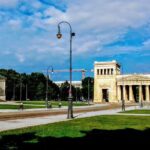
- Stop 1: Königsplatz—From Defeat to Movement-Building
- Hofbräuhaus: The First Mass Meeting Feeling
- Feldherrnhalle: The Failed Attempt to Seize Power
- Hofgarten and the White Rose: Resistance in the Same City
- Where It Ends: Hitler’s Former Headquarters Area
- The Guides: Clear Facts, Good Rhythm, and Respect
- Walking Comfort Tips That Actually Help
- Is It Worth $35.09? Value in One Very Focused Morning
- Who This Tour Is Best For (and Who Should Think Twice)
- Booking and Planning: Quick Practical Notes
- Should You Book This Third Reich & WWII Tour?
Key Points Worth Knowing
- A tight 2.5-hour route that hits several major Nazi-era sites without dragging
- Königsplatz, Feldherrnhalle, and Hofbräuhaus all appear on the itinerary, so you get a real sense of the geography
- White Rose resistance discussion is built into the walk, not tacked on
- Small group (max 10) plus professional guidance helps you ask questions
- Respectful pacing: moments for processing and discussion are part of the experience
- Comfort matters: expect standing, and plan for cold or noise around central Munich
Munich’s Nazi-era Geography: Why This Walk Works
This tour works because it keeps your eyes on the map. Instead of reading names in a book, you’re standing where events happened, watching the story unfold stop by stop. Munich played a key role in the Nazi movement before it took over Germany, and the tour’s route is built to show that progression: from early mass gatherings to attempted power grabs, and out to the city’s later devastation.
I also appreciate that the walk doesn’t only frame history as spectacle. The itinerary includes a discussion of the White Rose resistance movement in the Hofgarten area, which helps balance the narrative. You learn about the machinery of ideology, but you also get a reminder that resistance existed and that ordinary people paid real consequences for speaking up.
Finally, the best part is the guide. Multiple guides mentioned in the feedback—like Josh, Alex, and Michael—are described as strong storytellers who keep facts honest and delivery sensitive. That matters here. This is not a casual history stroll, and you want someone who can keep the tone respectful while still staying factual and clear.
Other Third Reich & WWII tours we've reviewed in Munich


Route and Timing: Marienplatz to Königsplatz (and Beyond)
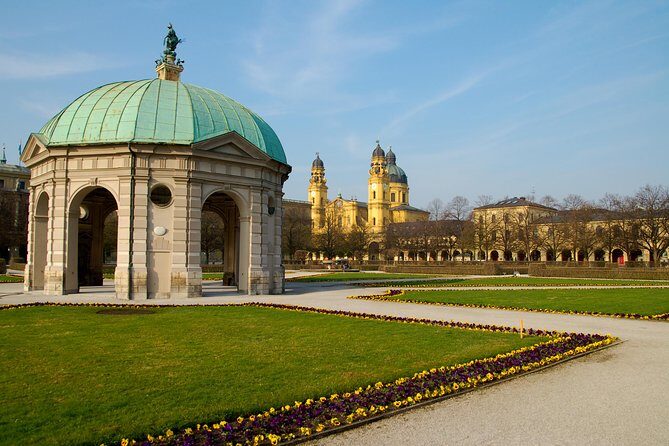
You start at Marienplatz (80331 München) and the tour ends at Königsplatz 1 (80333 München). The tour description says the experience ends at Hitler’s former headquarters, which is a heavy final note after walking through the lead-up sites.
The duration is about 2 hours 45 minutes, and that timing is realistic for central Munich. The route covers multiple stops, so your feet will be doing most of the work. The reviews back this up: pacing is often praised as well managed, but comfort gets mentioned too—especially for anyone who hates long standing.
Here’s the practical takeaway: treat this like an active city walk, not a museum tour. Wear shoes you can trust. If you’re the type who likes to stop and stare, give yourself that chance—but don’t count on frequent rests. One reviewer suggested adding clearer guidance about snacks and breaks, and that’s good advice for you: plan to bring a drink and something small.
Stop 1: Königsplatz—From Defeat to Movement-Building
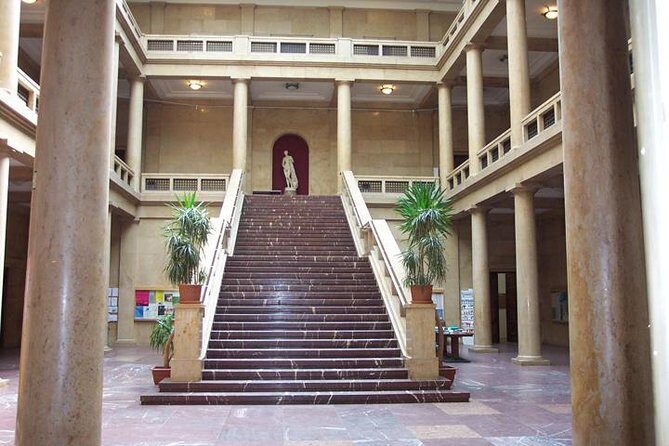
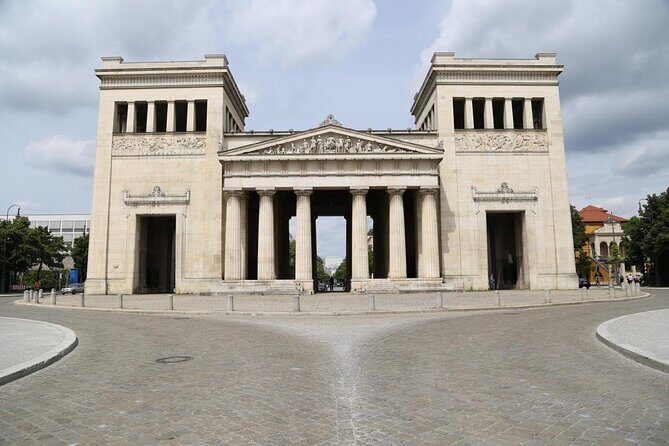
The tour spends time at Königsplatz, and this is one of the most important stops on the whole route. The framing is political and social: after World War I, Germany was dealing with defeat and humiliation. Munich is described as gripped by hyperinflation and instability, with revolution and assassination shaping daily life.
That matters because it explains how a movement like the Nazis could gain traction. You’re not just learning dates. You’re learning the conditions that made extremist messages sound like solutions to desperate people. Standing at Königsplatz helps connect the emotional tone of that era with the physical space where mass energy was later staged.
At this point in the walk, you’ll also hear how the tour connects early Nazi organizing to later attempts at power. That connection is key. Many history tours jump straight to the rise of Hitler without fully showing the messy, chaotic runway that came before.
A small caution: it’s early in the tour and the subject is heavy. If you’re easily overwhelmed by difficult history, keep pace with the group and ask questions if you need clarification. The guides are generally praised for being interactive and willing to talk.
Hofbräuhaus: The First Mass Meeting Feeling
The tour narrative includes the first mass meeting at the Hofbräuhaus, a turning point where the Nazi movement starts pulling in larger crowds. This kind of stop is valuable because it shows how politics worked in real life—how public gatherings helped shape identity and momentum.
Hofbräuhaus also helps you understand why the Nazis were so skilled at staging. They weren’t only selling ideas. They were building scenes where supporters could feel like they belonged to something larger and inevitable.
One practical angle: this area can be crowded, especially at peak tourist times or around seasonal events. Guides mentioned in the feedback handled busy conditions well, but you’ll still want patience if you’re going during a popular stretch of the year.
Feldherrnhalle: The Failed Attempt to Seize Power
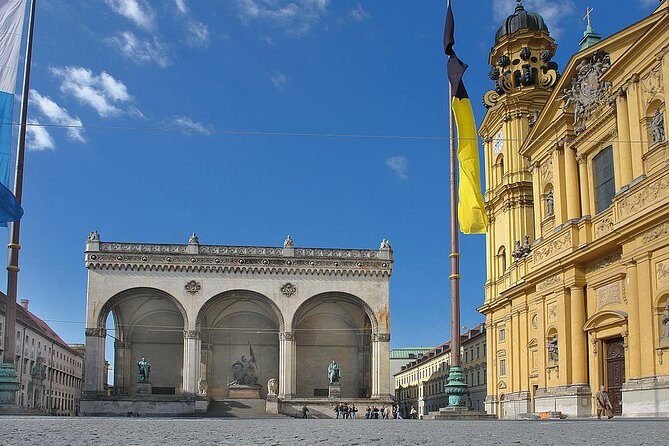
Next, the tour covers Feldherrnhalle, tied to the Nazis’ failed attempt to seize power. This stop adds tension to the story. You’re seeing the gap between propaganda and reality—the moment where the movement tried to force change, but it didn’t go cleanly.
Why it’s worth including: it keeps you from thinking the Nazi rise was a smooth, unstoppable march. Instead, you see that it involved setbacks, planning, and persistence. It also sets up a better understanding of how later strategies differed once the movement learned what did and didn’t work.
If you’re someone who likes “what happened, then why” history, this stop is a good anchor. It makes the timeline feel less like a list and more like cause and effect.
Other walking tours we've reviewed in Munich
Hofgarten and the White Rose: Resistance in the Same City
The tour doesn’t leave you with only rallies and buildings. In the Hofgarten area, you’ll talk about the White Rose resistance movement. That’s a big deal for two reasons.
First, it reminds you that not everyone accepted Nazi ideology, even when fear and coercion were real. Second, it keeps your understanding grounded. Resistance often gets treated as a side note in school narratives. Here, it’s part of the walk’s flow.
This also makes the tour feel more balanced. You get the psychology of how dictators gain support, and you also get a thread of moral action against that pressure. Reviews specifically praise guides for handling tragedy with sensitivity while still not shying away from hard truths.
Where It Ends: Hitler’s Former Headquarters Area
The tour ends at Königsplatz 1, described as Hitler’s former headquarters. Ending here has an emotional weight that you can’t really avoid. It also gives you a physical sense of what proximity meant—how power was positioned in the center of the city.
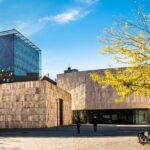
One review adds an extra suggestion: a guide recommended going into the nearby document museum, pointing out that it includes powerful movies, photographs, and art from the era. That’s not stated as a guaranteed built-in stop, but it’s a strong optional add-on if your timing allows. If you want deeper context beyond the street-level narrative, this is the kind of place you’ll likely appreciate.
The Guides: Clear Facts, Good Rhythm, and Respect
The biggest repeated praise across the feedback is not about the route alone. It’s about the delivery.
Guides named Josh, Alex, Michael, Danielle, Joel, Ulrich, and Bridget are mentioned as strengths, with comments highlighting:
- Clear, factual narration
- Respectful handling of tragic events
- Good pacing so the walk doesn’t feel like a single long lecture
- Interactivity, including time for questions and discussion
- Helpful local guidance after the tour
That matters for value. A tour like this lives or dies on the guide’s ability to keep you engaged without turning hard history into a performance. The way the feedback describes guides creating moments for reflection and encouraging thoughtful conversation tells you you’re likely to get a serious experience that still feels humane.
Still, take one practical warning seriously. One reviewer said it can be hard to hear the guide and suggested better amplification. If you know you struggle with audio in groups, stand where you can hear clearly. Don’t be afraid to ask the guide to repeat something if you miss a point.
Walking Comfort Tips That Actually Help
This walk is short enough to do in a day, but long enough that comfort will affect how much you absorb. Here’s what you should do before you meet your group:
- Wear comfortable shoes. You’ll be on your feet most of the time.
- Bring a drink and a small snack. Several comments point out there’s limited time to rest.
- Dress for the weather. Cold days show up in the feedback, and some guides even helped warm the group with care—but you’re still walking outside.
- Plan for a bit of crowding. Central Munich is central, and popular areas can get busy fast.
If you’re the type who likes to take photos constantly, remember that the guide’s timing matters. You’ll get better context when you listen first and shoot second.
Is It Worth $35.09? Value in One Very Focused Morning
At $35.09 per person for about 2 hours 45 minutes, the value is in what you get packed into a small time window: multiple key sites connected to the Nazi movement, plus a professional guide who can handle the context responsibly.
You’re also paying for organization. This isn’t a self-guided route where you have to build the story yourself. Instead, you get a guided timeline linking early mass meetings (like the Hofbräuhaus), public staging (Königsplatz), the attempted power grab (Feldherrnhalle), and resistance context (White Rose discussion in Hofgarten). That’s a lot to “assemble correctly” on your own.
The small-group cap of 10 people is another value boost. In a big crowd, it’s harder to ask questions, hear details, or keep track of where you are in the narrative.
So if your goal is a serious overview that’s easy to fit into a Munich visit, this price makes sense.
Who This Tour Is Best For (and Who Should Think Twice)
This is clearly aimed at adults and older teens. The tour says it is not recommended for children under 12. The topic is grim, and the walk includes discussion of tragic events and resistance.
You’ll likely enjoy it most if:
- You want a clear, site-based explanation of how the Nazis gained power in Munich
- You’re comfortable with heavy WWII-era history
- You like asking questions and hearing how a guide connects buildings and ideology
- You want a practical way to see major locations without spending the whole day
You might rethink if:
- You hate long standing and minimal breaks
- You need very frequent pauses
- You’re looking for something light or purely sightseeing-focused
Booking and Planning: Quick Practical Notes
You’ll get confirmation at booking, and the ticket is described as mobile. The meeting point is Marienplatz, and you’ll finish at Königsplatz 1.
If you want this to be a calm experience, avoid showing up late. With a tight route and several key stops, being late can throw you off the listening rhythm. And if hearing is a concern for you, position yourself well so you’re not stuck craning your neck the whole time.
Should You Book This Third Reich & WWII Tour?
Yes, if you want a focused, guided walk through Munich’s most important Nazi-era locations and you care about getting the story told with sensitivity and factual clarity. The repeated praise for guides like Josh and Alex—clear narration, respect, and good pacing—makes this feel like the right kind of tour for an honest overview.
Book it if you also plan smart: bring a drink, wear good shoes, and accept that the walk is mostly standing. If you can handle heavy subject matter and you want the stops connected into a timeline you’ll actually remember, this is a strong choice for your Munich visit.