REVIEW · MUNICH
Munich: Birthplace of the Third Reich Guided Walking Tour
Book on GetYourGuide →Operated by Radius Tours GmbH · Bookable on GetYourGuide
Munich has a way of showing you the past. This guided walk lays out how the Nazi movement took root in the city, moving from early speeches and staged power to the machinery of persecution. You’ll see sites tied to Hitler’s early gatherings, the propaganda world around him, and the brutal pivot toward Kristallnacht.
I especially love the clear, stop-by-stop storytelling. You move between beer halls, street locations, and a site linked to Goebbels, so the history feels grounded in actual streets, not just a timeline. I also like that the guides keep the tone humane; one highlight from recent experiences is how guides such as Jake, Sam, Dan, and Nic handled tough moments with empathy plus smart pacing, and still made room for questions.
The main consideration is emotional: this is heavy subject matter. If you want only architecture and trivia, you may find it draining; wear comfortable shoes and plan for the walk to feel intense.
In This Review
- Key highlights you should care about
- Entering Munich’s darker origin story in 2.5 hours
- Meeting at the Radius Tours office and reaching the historic center
- Beer halls where early Nazi speeches and meetings took shape
- Walking Munich streets where Brownshirts fought for power
- Nazi Headquarters and WWII scars you can still see
- Goebbels, the Night of Broken Glass, and the pivot to organized persecution
- Memorials for victims and opponents: remembering in the same city
- How the guides keep 2.5 hours moving without losing the message
- Price and value: $29 for a guided walk through power, propaganda, and memory
- Who should book this Munich Third Reich walking tour?
- Should you book this tour?
- FAQ
- How long is the Munich Birthplace of the Third Reich guided walking tour?
- Where do I meet the tour?
- Is the tour guided in English?
- What’s included in the price?
- What locations and themes will we see?
- Is free cancellation available?
- Can I reserve without paying right away?
Key highlights you should care about
- Hitler-linked beer halls: See where early party meetings and speeches helped turn an idea into a movement.
- Goebbels and Kristallnacht planning: Stand at a building tied to how the regime organized the violence.
- Walking through power struggles: Follow the streets where Hitler and his Brownshirts pushed their way up.
- Official Nazi headquarters: Get a look at Nazi-era buildings that survived while parts of central Munich were bombed in WWII.
- Memorials for victims and opponents: End with remembrance you can’t ignore, placed right where the city still lives.
- Guides who field real questions: Recent tours praised guides like Steve, Aileen, Mark, and Josh for strong Q&A and clear explanations.
Entering Munich’s darker origin story in 2.5 hours

This tour compresses a lot of history into a focused walk—about 2.5 hours—and it doesn’t waste time. The best part is that you’re not just learning dates. You’re learning how a political movement built momentum in everyday spaces: meeting rooms, public speech locations, and institutions that were already part of city life.
Expect a route that takes you from early Nazi momentum to the point where anti-Semitic violence stopped being propaganda and started becoming organized action. The guide keeps the connections tight: failed efforts for power, the rise of the party, then the milestones that led the world into a second war.
If you’re the type who likes your history with names and cause-and-effect, this should click. If you’re easily overwhelmed by modern echoes of hate, take care of yourself and go in with a steady mindset.
Other Third Reich & WWII tours we've reviewed in Munich


Meeting at the Radius Tours office and reaching the historic center
You start at the Radius Tours office, and the tour includes transportation to the historic center of Munich. Hotel pick-up isn’t included, so you’ll want to plan to arrive at the office on your own.
Why this matters: it keeps the tour simple. You’re not waiting around for individual hotel schedules, and you’re likely getting to the walking portion without dragging the group all over town first.
One practical note from real-world experience in Munich: weather can change fast. People have mentioned cold mornings and rainy conditions, and the tour still runs—so bring layers you can stand and walk in comfortably.
Beer halls where early Nazi speeches and meetings took shape
The core of the tour’s first phase is what you might call the “street-level rise of an ideology.” You’ll visit beer halls where Hitler had his first party meeting and speeches—places that helped turn a small circle into something bigger and more public.
This is important because beer halls in Germany weren’t just places to drink. They were social engines: stages for persuasion, gathering points, and loud rooms where crowds could be made to feel like a shared identity.
As you stand where early speeches happened, it’s easier to grasp how Nazi ideas spread beyond a few conspirators. Instead of starting with mass violence, the movement started with attention—then repeatable events—then normalization.
And yes, the contrast can feel unsettling: warm lighting, familiar public spaces, and then the knowledge of what was being staged there.
Walking Munich streets where Brownshirts fought for power
After the early meeting spaces, you’ll walk through streets connected to the Nazi push for dominance—specifically where Hitler and his Brownshirts fought their way up.
This section matters because it shows how political power can grow through intimidation and street control, not only through votes and legislation. The guide’s narrative ties these street conflicts back to how the party’s ideology gained supporters and leverage.
For you, the value here is pattern recognition. You start noticing how the same themes repeat: propaganda language, group identity, and the use of public pressure to shrink what people feel they can safely say or do.
If you’re the kind of traveler who likes to see the “how” behind big historical turns, this part earns its place.
Nazi Headquarters and WWII scars you can still see
You’ll stop at the official Nazi Headquarters, and you’ll also see other nearby buildings marked by the scars of WWII. The tour points out that while much of central Munich was devastated by Allied bombing, many Nazi-era buildings survived and still stand today.
This is one of those moments where history becomes architecture. You’re not reading about what remains; you’re standing in the middle of it. That can feel uncomfortable, but it also makes the lesson harder to forget.
One nice benefit: the guide doesn’t treat the buildings like museum objects. The story connects what you see now to how those places were used then, and how the city has to live alongside that memory.
Other Munich city tours we've reviewed in Munich

Goebbels, the Night of Broken Glass, and the pivot to organized persecution
The tour includes a stop at the building where Goebbels plotted the Night of Broken Glass. That’s the point where you move from the growth of a movement to the machinery of violence.
The Night of Broken Glass—linked in this tour to the road toward the Holocaust—is described as a dismal milestone. The guide frames it in terms of escalation: how anti-Semitism hardened, how the regime orchestrated events, and how violence became part of policy rather than an emotional outburst.
If you’re hoping for a purely educational stroll, this portion may hit hardest. Expect the guide to keep the focus on victims and the lived impact of persecution, including the reality of anti-Semitism and the memory of those who suffered.
Memorials for victims and opponents: remembering in the same city
A major end-point is visiting monuments that honor the victims and opponents of Nazism. That’s not a side stop—it’s the emotional conclusion of the story.
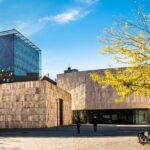
What makes these memorials meaningful on foot is their placement. You’re not leaving the city to visit remembrance somewhere separate. The city has made room for memory, and you experience it as part of daily space.
This tour also emphasizes the contrast between those who were targeted and those who resisted. You leave with a clearer sense that the story doesn’t end with perpetrators and speeches. It ends with the people who were harmed and the people who fought against the regime.
Guides have been praised for handling this ending with a balance of gravity and humanity. One example: feedback highlighted that Jake delivered the tour with a careful mix of empathy and humor—humor not as a distraction, but as a way to keep the group steady while the topic stays heavy.
How the guides keep 2.5 hours moving without losing the message
This tour lives or dies by the guide, and the recent record looks strong. People have highlighted guides such as Steve, Sam, Dan, Nic, Iain, Aileen, Mark, and Josh for three recurring skills:
First, they’re good at keeping the pace. One review singled out how earlier morning options were appreciated for getting through the walk comfortably. Another noted how guides dealt with rain without letting the tour fall apart.
Second, they answer questions in real time. Several comments mention that guides invited questions and fielded them thoughtfully, which is crucial for a topic where people often want clarification.
Third, some guides bring visuals. One review specifically mentioned a binder of photos used to help you picture events in places you can still see today. Even if your guide doesn’t use the same format, the goal is the same: help your brain connect street corners to what happened there.
If you’re worried about clarity, focus on this: the tour’s structure is designed for comprehension. Beer halls, headquarters, and memorials give you anchor points so the guide can connect cause-and-effect without turning it into a blur.
Price and value: $29 for a guided walk through power, propaganda, and memory
At $29 per person for a 2.5-hour guided experience, this is a value play—especially because the tour includes the guide and transportation to the historic center. Hotel pick-up is not included, but the trade-off is simple: you show up at the office and you get a tight route.
Where the value really shows is in what you get for the time. This isn’t a single-site visit. You’re seeing multiple categories of places:
- early public meeting spaces (beer halls),
- sites tied to political enforcement and organization (headquarters and the Goebbels-linked building),
- and public remembrance (monuments for victims and opponents).
That mix is hard to replicate on your own quickly, especially if you don’t already know what each stop is and why it matters.
So if you’re doing Munich for a few days and you want one guided experience that gives you a framework for understanding the city’s Nazi-era role, this price feels like it’s aimed at people who want meaning without spending all day.
Who should book this Munich Third Reich walking tour?
This is a strong fit if you:
- want a structured way to understand the rise of the Nazi Party in Munich,
- like walking tours that link street-level scenes to big historical turns,
- and prefer a guide who can handle difficult questions with respect.
It may be less ideal if you:
- want a light, sightseeing-only day,
- or you’re not emotionally prepared for discussions of anti-Semitism and persecution.
Also, if you’re traveling with teens or college-age students, this can work well as long as you’re ready to talk afterward. The tour’s memorial emphasis helps keep the lesson human rather than abstract.
Should you book this tour?
I’d book it if you want to understand Munich in a way that goes beyond beer gardens and royal squares. The stops are connected: early speeches, street power, Nazi leadership sites, and memorials for those harmed and those who resisted.
I’d think twice if you’re seeking a relaxed outing or if you know you struggle with heavy historical topics. In that case, you can still visit these places on your own—but a guide is what turns scattered locations into a clear, respectful story.
If you decide to go, do one thing for yourself: wear comfortable shoes, dress for the weather, and give your brain a moment at the end to process the memorial stops.
FAQ
How long is the Munich Birthplace of the Third Reich guided walking tour?
It runs for 2.5 hours.
Where do I meet the tour?
Meet at the Radius Tours office.
Is the tour guided in English?
Yes. The live guide provides the tour in English.
What’s included in the price?
The price includes the guide, the tour, and transportation to the historic center of Munich. Hotel pick-up is not included.
What locations and themes will we see?
You’ll visit beer halls tied to Hitler’s early speeches and meetings, a building linked to Goebbels and the Night of Broken Glass, the official Nazi Headquarters, and monuments honoring victims and opponents of Nazism.
Is free cancellation available?
Yes, you can cancel up to 24 hours in advance for a full refund.
Can I reserve without paying right away?
Yes. There’s a reserve now & pay later option. You can reserve and pay later.