REVIEW · MUNICH
Munich City Walking Tour, includes Third Reich & Viktualienmarkt
Book on Viator →Bookable on Viator
One great day in Munich is a story you can walk through.
This tour strings together the big visual hitters and the meaning behind them, from the twin towers of Frauenkirche to the old-town squares where Munich’s modern identity took shape. I especially like the way it blends architecture, everyday city tips, and beer-and-food culture, so you don’t just see places—you learn how to use the city. Another thing I like is the small-group size (up to 20), which makes it easier to ask questions and hear details without shouting over the crowd.
The main drawback is physical and weather-based: you’ll be outside a lot, and the walking time adds up. If it’s cold or wet, plan to dress for standing around, not just for movement—some people will find the pace challenging in winter.
In This Review
- Quick highlights to look forward to
- A Munich Walking Tour That Feels Like City-Life, Not a Checklist
- Price and Time Value: What $31.78 Really Buys You
- Start at Schützenstr 11: How the Route Sets You Up
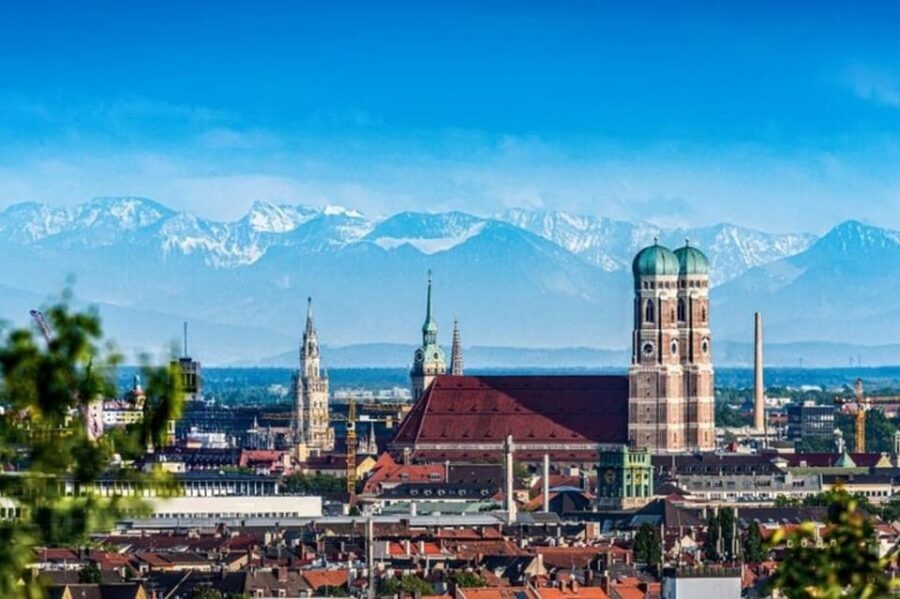
- Stop One: Frauenkirche and the Shape of Late Gothic Munich
- The German Hunting and Fishing Museum: Weird in the Best Way
- Hofbräuhaus at a Practical Moment: Beer Hall With Context
- Isartor and Marienplatz: From Medieval Gate to Munich’s Heart
- Max-Joseph-Platz to Munich’s Theatrical Power Center
- St. Michael München and St. Peter: Two Church Styles, Two Kinds of Views
- Odeonsplatz and Karlsplatz: Where Munich’s 19th-Century Design Meets Harder History
- Wolfsbrunnen and Viktualienmarkt: The Break That Turns the Day Into Food and Real Munich
- How to Use This Tour for the Rest of Your Munich Days
- Should You Book This Munich Walking Tour?
- FAQ
- How long is the Munich City Walking Tour?
- What is the price per person?
- Is the tour offered in English?
- Where does the tour start and end?
- Does the tour include a lunch stop at Viktualienmarkt?
- Are admission tickets included for the stops?
- What’s the group size limit?
- Are service animals allowed?
- Is there free cancellation?
- Can I get to the meeting point by public transportation?
Quick highlights to look forward to
- Small group (max 20) means more interaction and better explanations at each stop
- Third Reich context on key central sites helps connect what you see to what happened
- Hofbräuhaus stop plus food break keeps the day practical, not museum-only
- Marienplatz, churches, and gates give you an easy route through the historic core
- Viktualienmarkt lunch timing is built into the flow so you can plan your own food afterward
A Munich Walking Tour That Feels Like City-Life, Not a Checklist
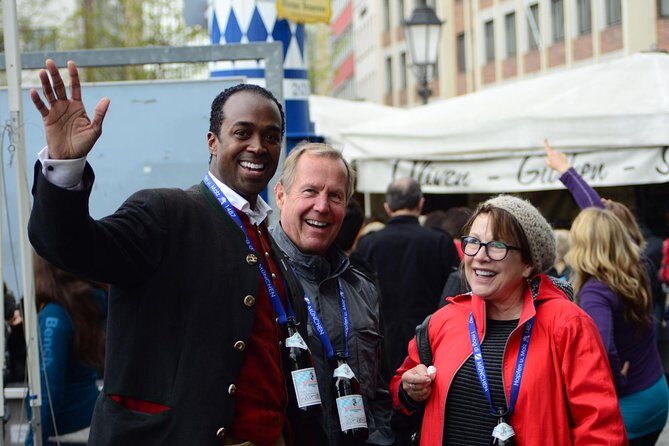
This is the kind of Munich tour that helps you stop guessing. After a few hours, you’ll know where you are on the map, how the neighborhoods connect, and which landmarks matter more than the group selfie spots. The route is tightly centered, so you get real context for how Munich’s old streets, squares, and big institutions fit together.
What makes it work is the balance. You’re not stuck in one mode: you’ll spend time looking at churches and medieval structures, then you pivot to a beer hall landmark, then you land at the kind of market where locals actually snack. One review-style theme you can count on is the guide’s ability to connect the past to today. That can include history that’s heavy—especially around the Third Reich era—handled with care and context instead of gimmicks.
You’ll also get practical “how to move through Munich” tips from the guide. That’s valuable because it saves you time later: you’ll spend less effort figuring out routes and more effort enjoying your own plans.
Other Third Reich & WWII tours we've reviewed in Munich


Price and Time Value: What $31.78 Really Buys You
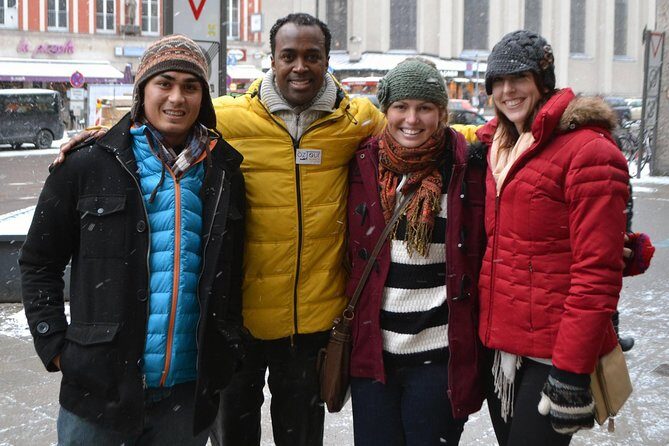
The price is $31.78 per person for about 3 hours and 15 minutes, in English, with a maximum of 20 people. On paper, that’s a good deal for Munich because so many cities charge you extra just to keep your day organized. Here, the tour does the organizing for you and keeps the walking route efficient.
A key value point is that many stops are listed with free admission during the tour time blocks. That matters because it reduces the “surprise costs” feeling you can get with other walking tours where you think entry is optional—then it isn’t. Also, the tour includes your guide time, and guide time is what you’re truly paying for. You’re not just paying to be taken to photo stops.
One more value angle: you get a mid-tour food break at Viktualienmarkt, a market that’s more about real German eating than performance. Snacks aren’t listed as included in the tour price, but the stop is built into the schedule, so you can eat without breaking your day’s rhythm.
Start at Schützenstr 11: How the Route Sets You Up
The tour starts at Schützenstr 11 (80335 München) and ends at Odeonsplatz (Odeonspl. 3, 80539 München). That’s a smart setup because it keeps you in the central grid of Munich from beginning to end. You’re not trekking across town just to get from “this church” to “that square.”
Because the tour is near public transportation and designed for most travelers, it’s easy to slot in early. I like doing this kind of route soon after you arrive, because it turns your next day into a self-guided route with confidence. Even if you don’t copy the guide’s exact path, you’ll understand where to go next and why.
Also, keep in mind that the tour includes multiple short stops (often around 5–10 minutes). That means you’ll get highlights quickly, but you shouldn’t expect long sitting time inside every church. If you love deep, slow museum visits, treat this as orientation plus storytelling, then plan any extra time on your own.
Stop One: Frauenkirche and the Shape of Late Gothic Munich
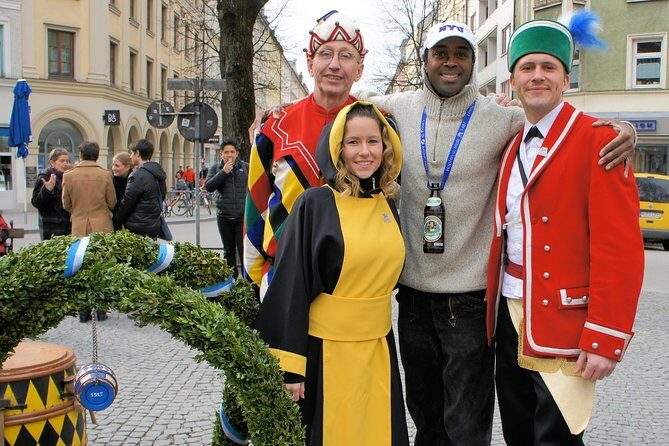
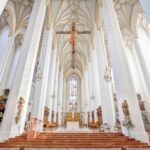
Your day opens at Frauenkirche, Munich’s iconic twin-towered cathedral. It’s a late Gothic masterpiece built in the 15th century, and it serves as the seat of the Archbishop of Munich and Freising. The tour focuses on seeing the interior, the historic crypt, and a legend tied to the building—so you get both “what it is” and “why people remember it.”
What I like about starting here is that it instantly shows you Munich’s scale and confidence. Twin towers like this aren’t just pretty skyline markers; they’re power symbols and community anchors. Once you’ve seen Frauenkirche up close, it’s easier to understand why Munich’s later civic spaces feel so intentional.
A practical note: cathedral interiors can feel cooler and quieter. Plan to move steadily and listen for the guide’s key points, because the stop is short. If you’re the type who wants to linger, you may need to save extra time for a return visit later.
The German Hunting and Fishing Museum: Weird in the Best Way
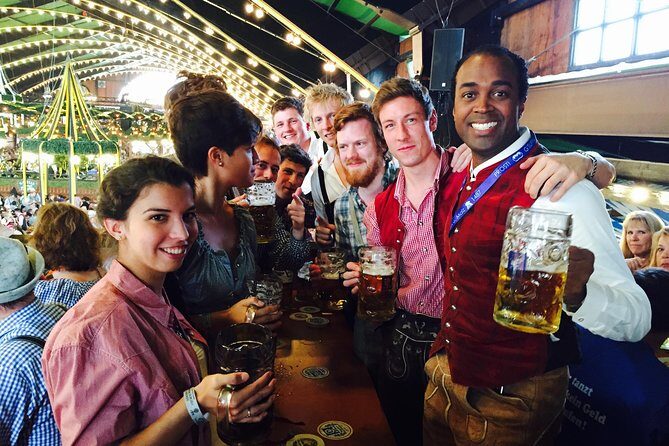
Next comes the German Hunting and Fishing Museum, housed in a former Augustinian church. That building choice already tells you something: Munich doesn’t treat this topic like a niche hobby store. You’re stepping into a place where hunting and fishing are framed as part of German cultural life and tradition.
The exhibits cover a lot—around 3,000 square meters—with stuffed wildlife, antique weapons, and the Bavarian Wolpertinger, the legendary creature that appears in Bavarian folklore. This stop is a great gear-shift. After churches and squares, it gives you something tactile and surprising.
The drawback? If you don’t like animal specimens, this part may feel uncomfortable. On the flip side, if you’re curious about regional traditions and folk beliefs, this is exactly the kind of stop that makes a Munich tour feel like more than postcards.
Other Munich city tours we've reviewed in Munich

Hofbräuhaus at a Practical Moment: Beer Hall With Context
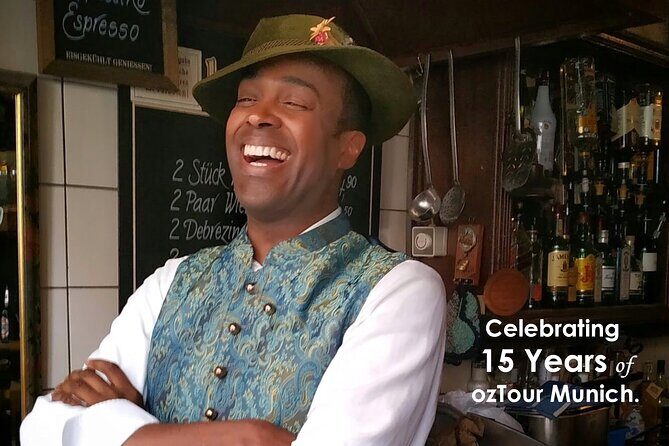
Then you roll into Staatliches Hofbräuhaus, or the Hofbräuhaus, which dates back to 1589. It started as a royal brewery and now functions as a landmark beer hall with Bavarian beer, hearty food, and live traditional music. Even when the visit window is brief, it’s a place that immediately changes the energy of the walk.
This stop is also where the tour earns its label as part culture, part logistics. The guide’s city tips often land best around food and drinks because you can ask real questions and connect them to what you’re doing that day.
The main consideration is simple: beer halls can be loud. If you want quieter conversation, you’ll need to pay attention during the guide’s key points and save deeper chats for later. Don’t worry, though—this is one of the most memorable landmarks on the route.
Isartor and Marienplatz: From Medieval Gate to Munich’s Heart
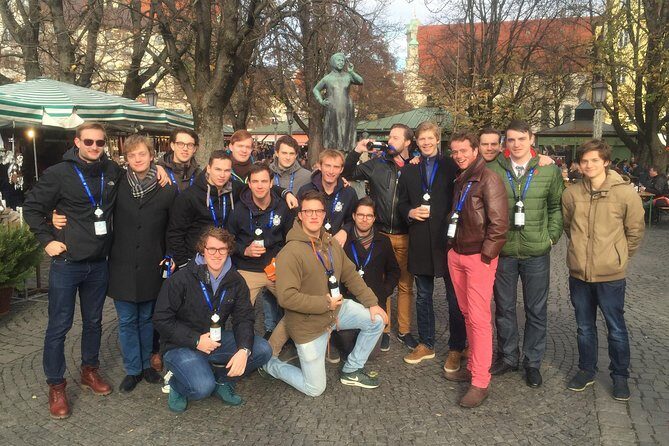
Isartor is one of Munich’s last medieval city gates, built in 1337 as part of fortifications. The tour points out its central tower and frescoes, and it ties in the Valentin-Karlstadt Museum, connected to Bavarian comedian Karl Valentin. That combination—military architecture plus humor culture—keeps Munich from feeling like a museum town.
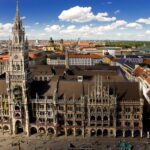
After that, you reach Marienplatz, Munich’s central square since 1158. Here you get New Town Hall and the famous Glockenspiel, plus the Mariensäule and the shopping streets branching off nearby. This is where you see how the city organizes itself around a core public space.
A smart planning tip: Marienplatz is popular. If you want the best views for the Glockenspiel, stand where you can see without craning and keep your timing in mind. Because your guided time there is limited, you may want to return later if you’re chasing details.
Max-Joseph-Platz to Munich’s Theatrical Power Center
Max-Joseph-Platz sits next, a grand square tied to institutions like the National Theatre and the Munich Residenz. Named for King Maximilian Joseph, the square has neoclassical architecture and a statue honoring the king. It’s a “big Munich” moment: official buildings, ceremonial spaces, and a sense of city prestige.
Even if you don’t plan to go inside every institution, the external views matter. This is one of those areas where the architecture is doing cultural work. It helps you understand why Munich feels both Bavarian and European at the same time—grand, formal, and intentionally designed.
If you’re moving fast, the stop can feel short. That’s normal for a walking tour. Use it to orient, then choose what you want to see later.
St. Michael München and St. Peter: Two Church Styles, Two Kinds of Views
St. Michael’s Church is Munich’s largest Renaissance church, built in the late 16th century as a center for the Jesuit order. Expect the striking facade and the vast barrel-vaulted ceiling, with early Baroque influence. The royal crypt is also part of the stop, which ties religious space to political leadership.
St. Peter’s Church, nicknamed Alter Peter, is Munich’s oldest parish church dating back to the 12th century. Its 91-meter tower is known for city views, and inside you’ll find a mix of Gothic, Baroque, and Rococo elements, including the high altar.
This pair of stops is great for readers who like contrast. You’re not only seeing church “types,” you’re seeing how styles evolve and overlap across centuries. If you’re sensitive to step-heavy interiors (some churches have uneven floors or stairs), move carefully and keep your pace steady.
Odeonsplatz and Karlsplatz: Where Munich’s 19th-Century Design Meets Harder History
Odeonsplatz comes next. It includes the Theatine Church, the Feldherrnhalle, and the Residenz area, with Italian-inspired architecture influences tied to early 19th-century planning by Leo von Klenze. This is also where the tour’s Third Reich element starts to make more sense in the real-world city layout. The Feldherrnhalle area is a key kind of site: a place where political messages and public space overlap.
Then you head to Karlsplatz, locally known as Stachus. It’s a famous square that replaced medieval city walls, and it features the Karlstor gate, a fountain in summer, and an ice rink in winter.
One reason I like placing these stops later in the walk is that you’re already warmed up to “Munich as a story.” You’ve seen how the city builds identity with churches and squares. Now you see how that same public architecture can be used for ideology.
Practical consideration: Karlsplatz and surrounding areas can be very active, and your stop time may be best used by focusing on what the guide points out rather than trying to read every building detail on your own.
Wolfsbrunnen and Viktualienmarkt: The Break That Turns the Day Into Food and Real Munich
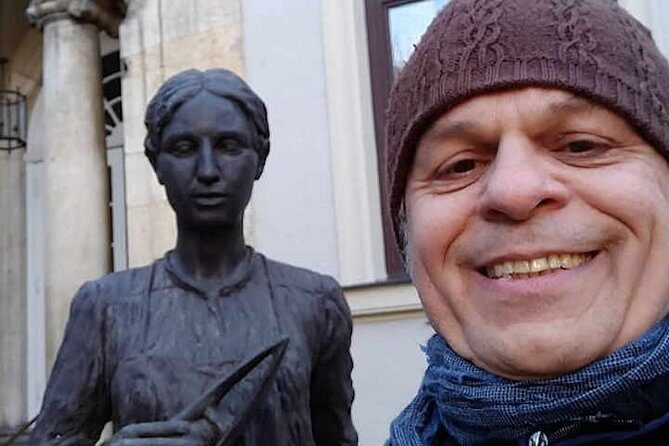
Wolfsbrunnen is an Art Nouveau fountain built in 1904 by sculptors Heinrich Düll and Georg Pezold. It features a bronze depiction of Little Red Riding Hood and a wolf, commissioned by the Wolf family. It’s odd, charming, and oddly memorable. When a tour inserts something playful like this, it gives your brain a reset before the market.
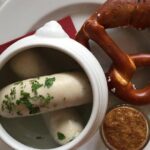
Then comes the highlight for many people: Viktualienmarkt. This open-air market has been around since the early 19th century and started as a farmers’ market. Today it’s about fresh produce, Bavarian delicacies, and artisanal goods, with beer garden space and the iconic Maypole.
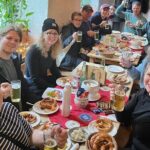
You get a mid-tour lunch break here. Snacks aren’t included, but the market makes it easy to eat something solid without going off-route. There’s also an emphasis on choices without artificial flavors, colors, preservatives, additives, fillers, or GMOs among the guided selections. That gives you a good reason to trust the food stop as more than just a convenient pause.
If you want to copy a local habit, do this: eat first, then walk the market slowly while digesting. You’ll see more stalls and feel the market’s rhythm instead of treating lunch as a quick transaction.
How to Use This Tour for the Rest of Your Munich Days
This tour is best viewed as a foundation. Once you’ve walked from the Frauenkirche area through central squares and ended near Odeonsplatz, your self-guided planning gets easier. You’ll know where to pivot to museums, where the big pedestrian corridors are, and what to revisit if you want longer time.
I also like that the guide’s style tends to go beyond dates. One guide has been known to connect Munich history to present-day Germany context, including comparisons up to 2026. Even if the political details aren’t your main interest, it helps you understand why people talk about certain symbols and buildings the way they do.
For practical success, come ready with small questions. Ask about transit shortcuts between your hotel and key sights, or what to do first if you only have a limited number of hours. That kind of guidance is what you’ll feel later when you stop “figuring it out” and start enjoying.
Should You Book This Munich Walking Tour?
If you want a first-day orientation that mixes major landmarks with real context—especially the Third Reich portion done sensitively—this is a strong pick. The price is low for the length of guided time, and the route is efficient because many stops are described as free admission during the tour windows.
Book it if you like walking tours with a guide who tells stories and gives city-use tips, and if you’re comfortable with lots of outdoor time. I’d skip it or prepare differently if winter weather makes you miserable standing still for long stretches, or if you strongly dislike animal-related exhibits.
FAQ
How long is the Munich City Walking Tour?
The tour lasts about 3 hours and 15 minutes.
What is the price per person?
The price is $31.78 per person.
Is the tour offered in English?
Yes, it is offered in English.
Where does the tour start and end?
It starts at Schützenstr 11, 80335 München, and ends at Odeonsplatz (Odeonspl. 3, 80539 München).
Does the tour include a lunch stop at Viktualienmarkt?
Yes. The tour includes a mid-tour break at Viktualienmarkt for a freshly made Bavarian lunch. Snacks are not listed as included.
Are admission tickets included for the stops?
Admission tickets are listed as free for the stops in the itinerary, but only the guided tour is explicitly included.
What’s the group size limit?
The maximum group size is 20 travelers.
Are service animals allowed?
Yes, service animals are allowed.
Is there free cancellation?
Yes, free cancellation is available. You can cancel up to 24 hours in advance for a full refund.
Can I get to the meeting point by public transportation?
Yes. The meeting point is near public transportation.