REVIEW · MUNICH
Munich: National Socialism Historical Tour in GERMAN
Book on GetYourGuide →Operated by Weis(s)er Stadtvogel GmbH · Bookable on GetYourGuide
Munich can feel heavy, fast. I like how this tour uses real locations to explain how National Socialism grew, not just vague timelines. I also like the guide’s black-and-white photo approach, which makes the 1920s and 1930s feel suddenly specific.
One thing to consider: this is a walking route built around key sites, and while wheelchair access is listed, it’s also marked not suitable for people with mobility impairments. So I’d plan carefully and ask questions before you go.
In This Review
- Key points I’d plan around
- Where the Tour Starts at Staatliche Antikensammlungen
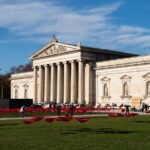
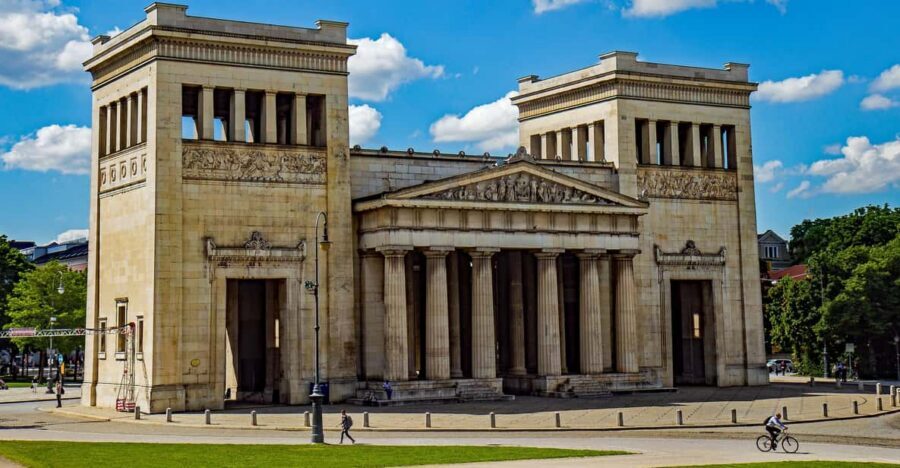
- Königsplatz: Munich’s “City of the Movement” starting point
- Führerbau and the Munich Agreement site (1938)
- Briennerstrasse walking segment and black-and-white photo stops
- Passing the former Gestapo headquarters toward Odeonsplatz
- Feldherrnhalle at Odeonsplatz and the Beer Hall Putsch
- How the tour connects photos to dates (and keeps you oriented)
- Price and time: Is $34 for 2 hours good value?
- Group tour or private tour: which fits your brain?
- What to bring for a rain-or-shine walking tour
- Who should book this Munich National Socialism Historical Tour?
- Should you book this tour?
- FAQ
- Where does the tour meet?
- How long is the tour?
- What language is the guide?
- How much does the tour cost?
- Does the tour run rain or shine?
- Is food included?
- Are entrance fees included?
- Is it possible to book a private tour instead of a group tour?
- Is the tour wheelchair accessible?
Key points I’d plan around
- Königsplatz to Odeonsplatz: A focused walking route through the city’s most symbolic spots
- November 9, 1923 and Beer Hall Putsch: The guide ties dates to what you see on the ground
- Führerbau and the Munich Agreement (1938): You’ll stand where a major Nazi-era event is tied to Munich
- Former Gestapo headquarters area: The tour brings you past the machinery of repression (from the outside)
- Photo-assisted storytelling: Historic black-and-white images help explain key moments in the rise of the NSDAP
- Group or private option: Choose the vibe that matches how you like to learn
Where the Tour Starts at Staatliche Antikensammlungen
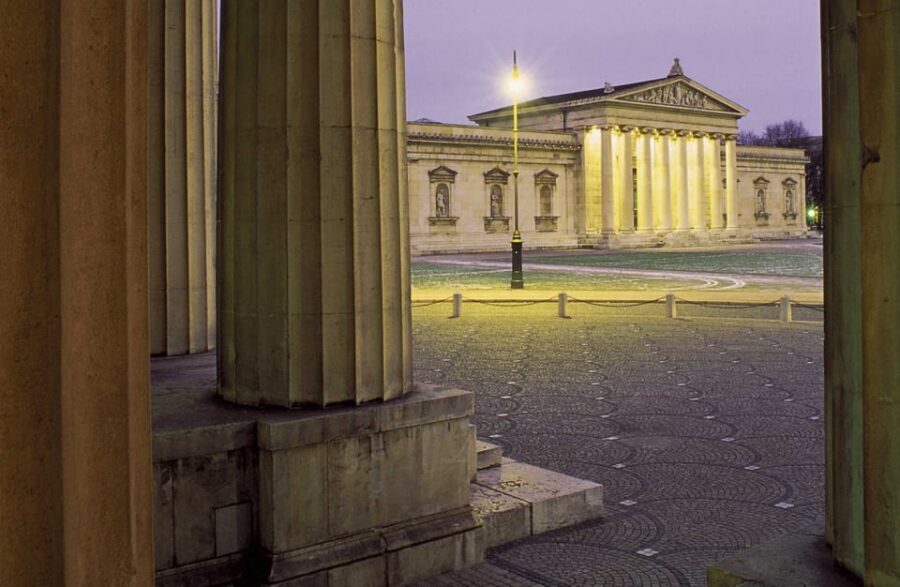
The tour begins in front of the main entrance of the Staatliche Antikensammlungen. If you’re the kind of person who hates standing around guessing, you’ll feel relieved here: the guide is easy to spot.
Look for the guide wearing a BIG BLUE BAG with the white words Weis(s)er Stadtvogel. That detail matters. It cuts down on the usual first-5-minutes chaos, and it also signals you’re with a specific provider: Weis(s)er Stadtvogel GmbH.
You’ll be on a 2-hour walking tour with a live guide speaking German. That’s useful to know up front. If German isn’t your thing, this may be more about following locations and photos than full comprehension—though the tour is still structured enough that you’ll keep up with the story beats.
Other Munich city tours we've reviewed in Munich

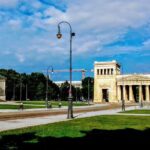
Königsplatz: Munich’s “City of the Movement” starting point
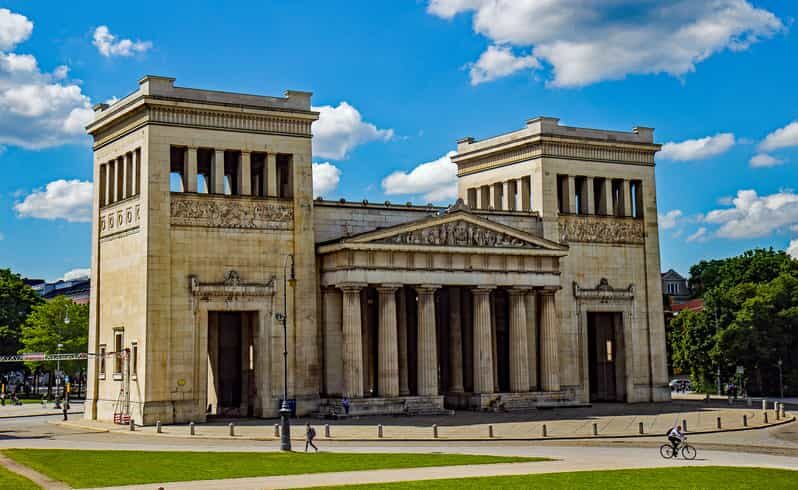
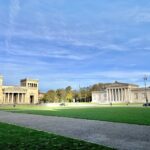
Königsplatz is where the tour’s tone sets itself. This area connects directly to the time when Munich became known as the City of the Movement—the city where National Socialism began in the 1920s and 1930s.
From here, your guide sets the story in motion: the guide explains how the NSDAP rose to power and why Munich mattered in that process. The point isn’t just to hear about ideology. It’s to see how a city’s public spaces can be used to build momentum—politically, symbolically, and socially—while you stand in the same urban frame where those campaigns took place.
The route starts with that sense of place. Then it keeps turning history into a series of walkable, check-it-with-your-own-eyes stops.
Führerbau and the Munich Agreement site (1938)
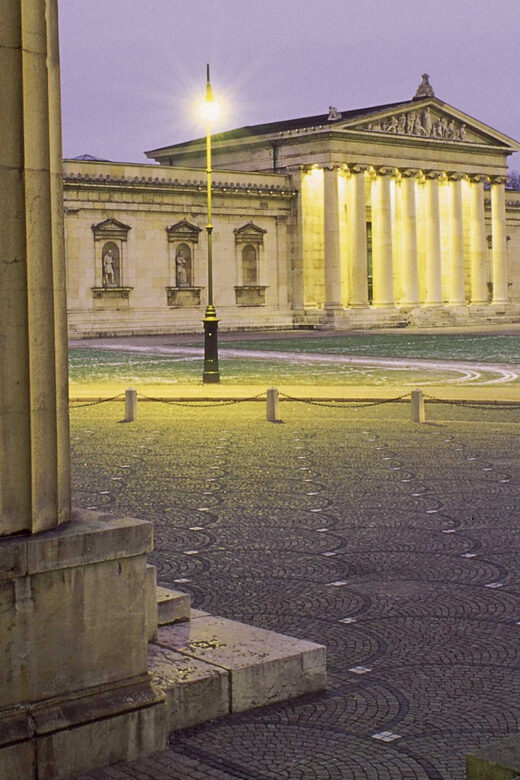
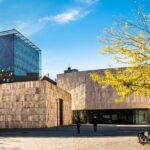
Next comes the former Führerbau, described on this tour as the place tied to the Munich Agreement in 1938 and what is today the Munich Documentation Centre for the History of National Socialism.
Even if you’ve read about the Munich Agreement before, I like seeing how the tour keeps it grounded. You’re not just collecting facts. You’re standing at a location with institutional memory attached to it—one that has become a documentation center rather than a propaganda backdrop.
This is also where the tour’s structure starts to feel really practical. You’ll learn a sequence of events and then walk to the next stop that supports the sequence. That way, the story doesn’t float. It connects.
Briennerstrasse walking segment and black-and-white photo stops
After Führerbau, the tour continues along Briennerstrasse. This stretch is included for more than just moving from A to B. It’s part of the guided rhythm that turns a city walk into a historical path.
Your guide brings along historic black-and-white photographs showing Munich in the 1920s and 1930s. This is one of the most praised parts of the experience, and I get why.
Photos do two things in a tour like this:
- They give you visual anchors when the present-day streets might feel too modern.
- They help you understand what the guide is talking about without needing guesswork.
If you enjoy learning by seeing, you’ll probably latch onto these photo moments right away. If you prefer pure lecture style, you may still find the photos helpful because they break up the emotional weight of the subject with concrete visual context.
Passing the former Gestapo headquarters toward Odeonsplatz
The tour then moves you past the former Gestapo headquarters to reach Feldherrnhalle at Odeonsplatz.
This is where the tour becomes difficult in a real way—not because it’s vague, but because it’s direct. You’re asked to process what such a site represents, from the outside, while your guide explains the wider story of Germany during National Socialism.
You don’t get to hide behind “history happened long ago.” You’re still in Munich, looking at a real address tied to the darker machinery of that era. The guide’s job here is to keep it factual and connected to the larger narrative, not to shock you for its own sake.
Other historical tours in Munich


Feldherrnhalle at Odeonsplatz and the Beer Hall Putsch
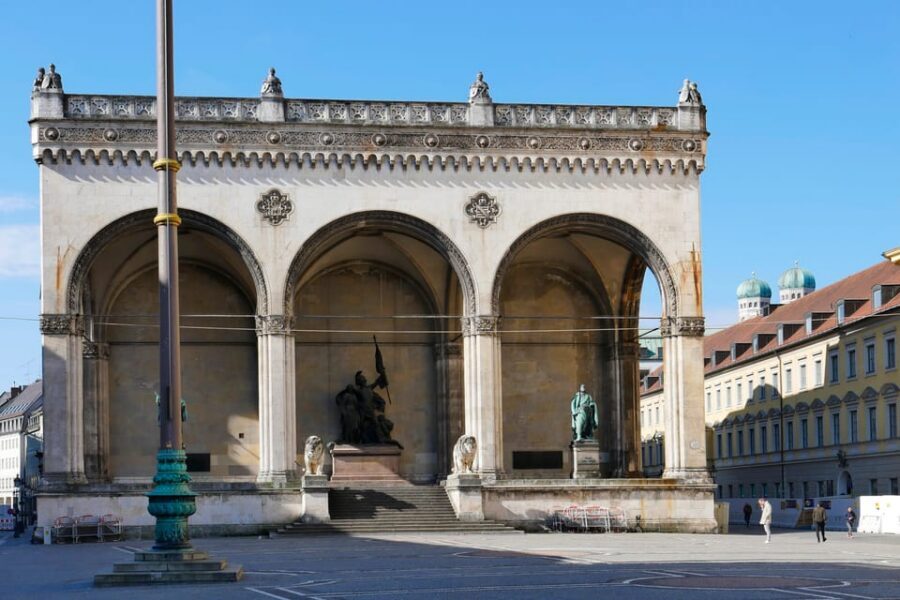
At Odeonsplatz, you reach Feldherrnhalle, highlighted on the tour as the place where Hitler’s Beer Hall Putsch took place on November 9, 1933.
There’s a date lesson woven through this tour. The highlights specifically mention November 9, 1923, and the itinerary pinpoints the November 9, 1933 event at Feldherrnhalle. That pairing of dates matters. It helps you track how a movement and its public actions evolved over time in the same city.
This stop is also likely to make the tour click for you if you’re the kind of person who needs a concrete reference point. A specific place, a specific day, and a guided explanation tying it back to the rise of the NSDAP and the city’s role in the movement.
How the tour connects photos to dates (and keeps you oriented)
This experience doesn’t rely only on speeches. It uses a simple method: locations first, images second, dates and connections throughout.
You’ll see black-and-white photos depicting Munich in the 1920s and 30s, and the guide uses them to illustrate events and topics as you walk. That means the photos aren’t random. They’re used to clarify what you’re hearing.
For me, that’s the best kind of tour tool. Photos are easiest to understand when they match the place and the time your guide is talking about. Here, they’re integrated into the route logic: learn, look, connect, walk to the next site.
Price and time: Is $34 for 2 hours good value?
The price is $34 per person for a 2-hour walking tour. That’s not a full-day commitment, which keeps the cost from creeping up with extra time, transit, or museum add-ons.
What you’re paying for (based on what’s included) is a city guide and a structured route through multiple key locations tied to National Socialism in Munich. The tour also includes photo-assisted explanations, which is a real teaching aid, not just decoration.
What’s not included is also important to budget for. Food and drinks aren’t included, and entrance fees aren’t included (so plan on this being mostly exterior walking, based on what the tour describes). Hotel pickup and drop-off aren’t included either.
So the value is strongest if you want a focused, guided orientation to Munich’s National Socialist-era story without paying for extra add-ons.
Group tour or private tour: which fits your brain?
This tour offers a choice between group and private options. That changes the learning feel more than you might expect.
A group tour can work great if you like a steady pace and don’t mind sharing the guide’s attention. A private tour is often better if you want to ask more direct questions while standing at sensitive locations and want the guide to slow down where you need it.
Since the tour is in German, private might also help if you’re comfortable discussing details in that language and want clarification on the fly. If your German is basic, you may find a group tour still works because the landmarks and photos carry a lot of the meaning—but private gives you more chance to resolve confusion.
What to bring for a rain-or-shine walking tour
This tour runs rain or shine. That alone changes what you should pack.
Bring comfortable shoes. You’ll be walking between distinct sites around the center of Munich, and the duration is only 2 hours, so there isn’t much slack if your feet hurt.
Also, have a simple plan for weather:
- A light layer you can handle if it turns damp
- A small umbrella or rain protection if you prefer not to get soaked
And since the tour is described as not suitable for people with mobility impairments (even though wheelchair accessibility is listed), you’ll want to think realistically about your own comfort and mobility before you commit.
Who should book this Munich National Socialism Historical Tour?
This is a smart pick if you want:
- A walking-route approach instead of a museum-only experience
- Clear coverage of the rise of the NSDAP and Germany during National Socialism
- Specific stops tied to major moments, including November 9, 1923 and the November 9, 1933 Beer Hall Putsch at Odeonsplatz
- Photo-led storytelling with black-and-white images that show Munich in the 1920s and 1930s
It’s less ideal if you’re looking for a casual, lighthearted city stroll. This subject is heavy. The tour is built to be educational and structured, not entertaining.
It’s also a bit of a language and accessibility check. The guide is German, and the activity notes don’t fully align on mobility needs—so do yourself a favor and confirm what the walk looks like for your situation.
Should you book this tour?
I think you should book it if you want a focused, guided route through Munich’s most symbol-heavy National Socialism sites, and you like learning with photos and specific dates attached to real places. The $34 price makes it reasonable for a concentrated 2-hour experience, especially since you’re not paying for entrances or extra add-ons.
You might skip or reconsider if you need English-only guidance, if walking time and mobility limitations are a concern, or if you prefer a less direct, less location-based approach to this era.
If you go, do it with comfortable shoes, a calm mindset, and an expectation that this is meant to help you understand how history played out in the streets—not just in books.
FAQ
Where does the tour meet?
Meet in front of the main entrance of the Staatliche Antikensammlungen.
How long is the tour?
The tour lasts 2 hours.
What language is the guide?
The live tour guide speaks German.
How much does the tour cost?
The price is $34 per person.
Does the tour run rain or shine?
Yes, it takes place rain or shine.
Is food included?
No. Food and drinks aren’t included.
Are entrance fees included?
No. Entrance fees aren’t included.
Is it possible to book a private tour instead of a group tour?
Yes. You can choose between a private or group tour.
Is the tour wheelchair accessible?
The activity notes list wheelchair accessible, but it also says it is not suitable for people with mobility impairments. If you have mobility needs, you should check with the provider before booking.