REVIEW · MUNICH
Private Munich Tour for History Buffs with Architectural Gems and WWII sites
Book on Viator →Operated by Friendly Local Guides · Bookable on Viator
WWII in Munich feels close up here. This private tour stitches key sites to the buildings you’ll actually see on foot. You’ll move through classic city landmarks while your guide ties events, power, and rebuilding into a clear storyline.
I especially like two things: the WWII focus that helps you connect locations fast, and the photo-minded guidance that points you toward the best angles in the center. If you love walking but hate getting lost in facts, this format is built for you.
One thing to consider: it’s only about two hours, so you’ll get an excellent overview, not a slow, all-day museum crawl. Also, entrance fees aren’t included across the board, even though several stops note admission is free.
In This Review
- Key takeaways before you go
- A short window into Munich’s WWII story
- Price and value: what $217 buys you
- How pickup and walking pace actually work
- Stop 1: New Town Hall (Neues Rathaus) and the tower views
- Stop 2: Nymphenburg Palace and Wittelsbach power in Baroque form
- Stop 3: Residenz München—where Bavarian rulers rebuilt, and WWII left marks
- Stop 4: Odeonsplatz and the 1923 Beer Hall Putsch moment
- Stop 5: St. Peter’s Church (Old Peter) and the medieval heart of Munich
- What I love about the guide experience (especially with Tanja)
- Limitations to plan for (so you enjoy it more)
- Who this private tour is best for
- Should you book this Munich WWII and architecture tour?
- FAQ
- How long is the private Munich tour for history buffs?
- Is this a private tour or shared with other people?
- What’s the price per person?
- Where does the guide meet us?
- Is pickup available from the airport?
- Are entrance fees included?
- Does the tour run in bad weather?
- What language is the tour guide?
- Do we need to call to confirm the tour?
- What’s the cancellation policy?
Key takeaways before you go

- Private, just your group: You can keep things paced to your comfort level.
- A WWII-linked route through the center: You’ll connect famous events to real streets and buildings.
- Top architecture at several stops: Neo-Gothic, Baroque palace grandeur, and major church views.
- Photo tips built into the walk: You’ll get practical suggestions for shots, not just history.
- Tanja’s approach stands out: Clear explanations, patience when people tire, and a real love for Munich.
A short window into Munich’s WWII story
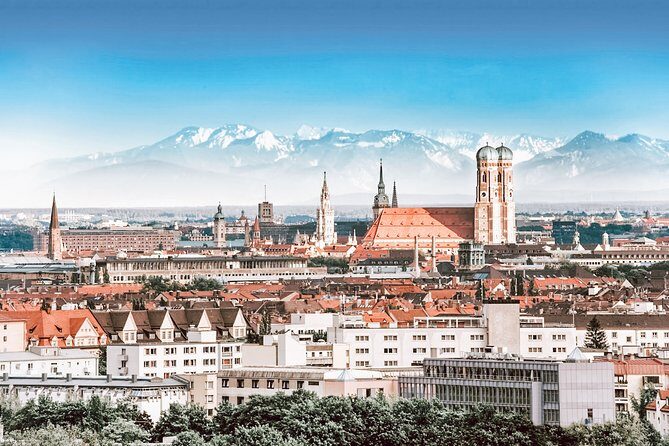
Munich has a way of hiding major chapters in plain sight. This private walk helps you read the city like a map of cause and effect, not just a lineup of landmarks. You start with an elegant city-building and end near one of the oldest churches in the center, with WWII-era connections in between.
What makes this work is the timing and focus. It’s a short route—about two hours—yet it covers several big names: city government, royal residence power, Nazi-era links tied to specific spots, and a church that anchors the medieval core. You get context without feeling buried in lectures.
And the vibe matters. The reviews highlight guides who explain details with patience and a good sense of humor. Tanja, for example, shows up as warm and accommodating, especially when the group slows down near the end after days of walking and standing. That flexibility makes a big difference on a focused walking tour.
Other Third Reich & WWII tours we've reviewed in Munich


Price and value: what $217 buys you
At $217 per person for roughly two hours, this isn’t the cheapest way to see Munich’s center. But the value depends on how you travel.
If you’re the type who wants a “why this place matters” explanation for every stop, private guiding is often the best money you’ll spend. You’re paying for:
- a local guide who can connect locations quickly,
- a route designed for history buffs, not generic sightseeing,
- and private pacing for your group.
There’s also group discount availability, and pickup from your hotel lobby is offered (within the city center). One more small but useful detail: you’ll get a mobile ticket, which keeps things simpler once you’re on the move.
The main trade-off is the short duration. You’ll see a lot of key exteriors and get tight context, but you won’t have unlimited time for long interior exploration at every stop. If you want deep museum time, you may still add another visit on your own afterward.
How pickup and walking pace actually work
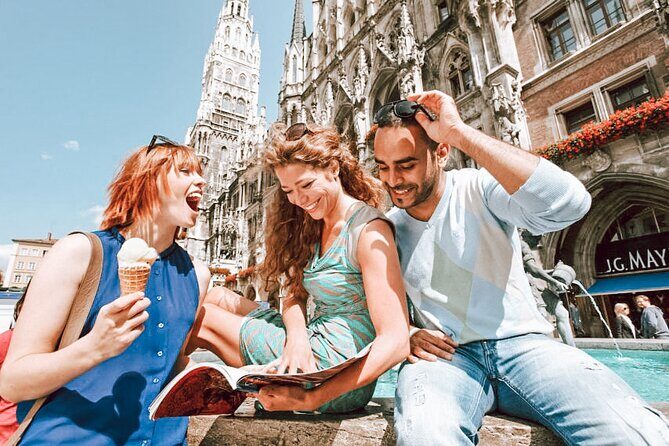
This tour meets you in the hotel lobby. You provide your exact hotel name and address, and you don’t need to call to confirm. Your local supplier contacts you by email. It runs rain or shine, so dress for Munich weather changes.
You’ll also want moderate physical fitness. The pace is manageable, but it’s still a walking tour with several stops. The good news: the private format lets you adjust. In real life, people don’t always keep perfect energy for every leg, and Tanja’s patience shows that the guide is ready for that.
Transportation costs aren’t included (and there’s no airport pickup), so plan on being in the central area on foot or by local transit. The route is built around the old-town feel—so comfortable shoes help, even if the tour stays relatively short.
Stop 1: New Town Hall (Neues Rathaus) and the tower views

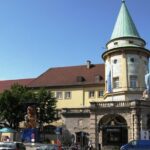
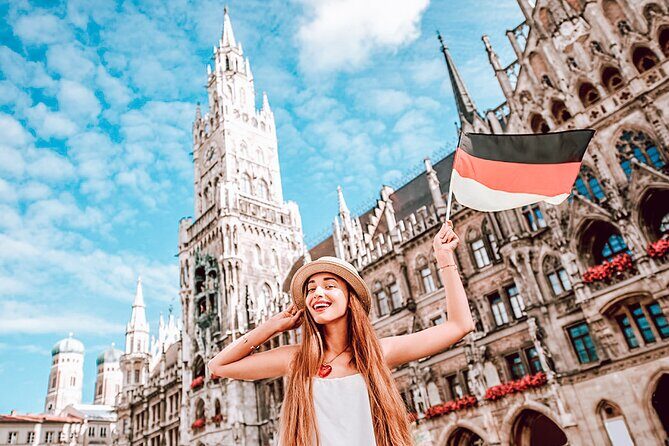
You begin at Munich’s New Town Hall, a neo-Gothic building constructed between 1867 and 1874 using brick and shell limestone. It’s one of those places that looks impressive from the street, but it gets more satisfying once you understand what was going on inside.
This stop isn’t just about pretty architecture. The guide explains why the building mattered to city life—where city administration and decision-making lived. You also get a sense of the building’s craftsmanship, including the 100 meters of intricate work that still feels visually delicate and important at the same time.
Two practical highlights here:
- Tower access: You can climb up for views over Munich’s roofs.
- A traditional restaurant in the vault: Down below, there’s a traditional spot dating to 1867.
Timing-wise, it’s about 20 minutes. That’s enough to get your bearings, understand the role of the building, and decide if you want more time independently later. Since it’s private, you can also swap sights. If you’re more interested in another nearby building or want more tower time, you can usually adjust within reason.
A small consideration: tower time can feel like a lot if your group is tired. If you’re planning a longer day, go easy with pacing here.
Stop 2: Nymphenburg Palace and Wittelsbach power in Baroque form
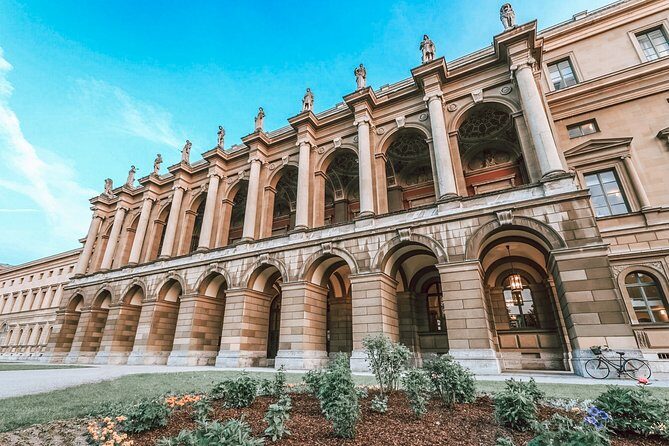
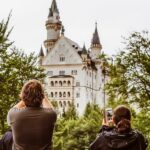
Next comes Nymphenburg Palace, the summer residence of Bavarian monarchs. This is where you see how wealth and politics get expressed through architecture. The palace is Baroque, grand in scale, and closely tied to the Wittelsbach family.
You’ll get a storyline around their rule—described as spanning five generations of rulers—and you’ll hear why Nymphenburg became such a major royal palace. One fact that helps you visualize the palace’s purpose: construction is traced to 1664, and it was connected to a prince dedicating it to his wife.
This stop is about 20 minutes. That’s not long enough to absorb every room or wing, but it is enough to:
- understand what kind of power this place represented,
- appreciate the exterior and the palace setting,
- and get a feel for why it’s considered one of the biggest royal palaces in Europe.
If you’re the type who likes to know what to look for before you take photos, this is a good pause. You’ll likely get guidance on where to frame the palace and how to position yourself for the best shot—exactly the kind of photo tips that make a difference in the middle of a busy walk.
Other Munich city tours we've reviewed in Munich


Stop 3: Residenz München—where Bavarian rulers rebuilt, and WWII left marks
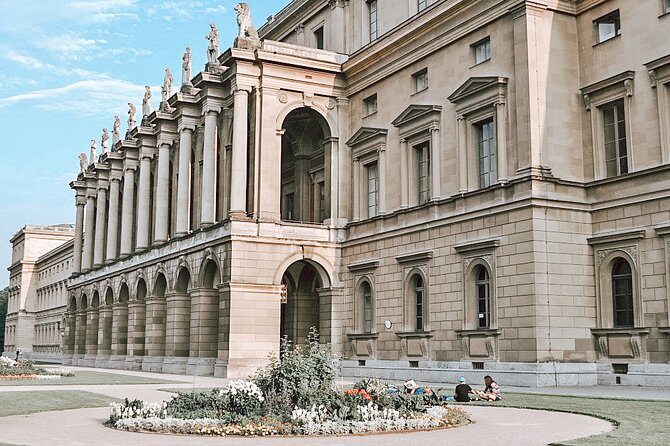
Then you shift from monarchy to the darker modern layers of Munich. Your next stop is Residenz München, the Munich Residence.
The guide connects the building to a long timeline starting in 1385, when Bavarian dukes and kings transformed and rebuilt it into what you see today. That’s important because it stops the story from becoming only WWII-focused. Instead, you see continuity: power, rebuilding, and how rulers left their mark on the same physical space.
Here’s what makes this stop hit harder. The Residence also housed former Gestapo headquarters, and it’s tied to a moment when Hitler joined the Nazi Party. Then comes the WWII part: the castle ensemble was mostly demolished during WWII, and it was reconstructed gradually from 1945.
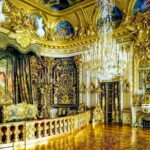
Today, the Residence functions as the largest museum in Bavaria. In about 20 minutes, you won’t cover the whole museum, but you’ll understand the essential idea: the rooms and structure you see are shaped by centuries—and also by deliberate rebuilding after destruction.
A drawback to keep in mind: because this stop carries heavy historical weight, the tone can feel serious. If your group wants a lighter pace, ask your guide to adjust the depth of WWII discussion. Private tours can flex.
Stop 4: Odeonsplatz and the 1923 Beer Hall Putsch moment
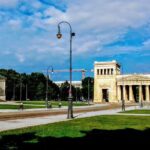
Odeonsplatz gives you the street-and-square angle of Nazi-era history. You’ll look at a classic Italian-style square near the Residence, where the Beer Hall Putsch culminated in 1923, and it was blocked by Bavarian police.
This is one of those “you stand where history happened” stops. The square has long served for major public events like demonstrations, funerals, and gatherings—places where political movements could gain attention. The guide points out how that kind of public visibility fits the Nazi march behavior and the broader context of the period.
It’s also surrounded by major landmarks, including:
- Feldherrenhalle
- the Barocco Theatine Church of St. Kajetan
- and the oldest café in Munich
And it’s not stuck in the past. Today, it’s a popular meeting place and hosts the Open-Air Classics Concert annually.
This stop is about 20 minutes. It’s enough to absorb the history and take photos with key buildings in the background. The only consideration: squares can be windy and exposed, so if it’s cold or rainy, plan layers.
Stop 5: St. Peter’s Church (Old Peter) and the medieval heart of Munich
The final stop brings you back to the older fabric of the city: St. Peter’s Church. It’s one of Munich’s major must-see sights and the oldest parish church in the city, constructed in the 11th century.
Locals call its tower Old Peter, and it rises to 91 meters. You’re near the city center, close to Marienplatz, so it’s an ideal close to a history route. The guide gives the building’s architectural story and explains why the church was rebuilt in 1327.
What you’ll likely appreciate here is the contrast. Earlier stops tie into monarchy and WWII, but St. Peter’s helps you feel the deeper timeline of Munich—how the medieval core persisted while power structures changed.
This also ends up being a very practical photography moment. A tower like this helps you “anchor” your mental map of the city, so the rest of your evening feels easier to navigate.
What I love about the guide experience (especially with Tanja)
The best part of this kind of tour isn’t only the locations—it’s how they’re explained. The reviews are consistent about one thing: the guide experience makes the difference between seeing buildings and actually understanding them.
Tanja comes up repeatedly as:
- very knowledgeable (in the sense of explaining details clearly),
- patient when people slow down,
- and accommodating without making anyone feel rushed.
If you’re someone who likes to ask questions, private guiding makes that easy. You can go a little deeper at one stop and skim another, based on what matters to you. And if your group is tired, the guide adjusts—so the tour stays enjoyable rather than turning into a speed-walk with guilt.
You also get insider tips for photos, plus suggestions that help you move around Munich after the tour. That’s a big win because history tours often end with people unsure where to go next. Here, you’re more likely to leave with a plan.
Limitations to plan for (so you enjoy it more)
This is a tight, focused route. That’s a strength, but it can also be a mismatch if you want long interior visits.
A few realistic considerations:
- Short stop times (about 20 minutes each) mean you’ll absorb highlights, not everything.
- Entrance fees aren’t included as a general rule, even though some stops state admission is free.
- No transport included, so you’ll rely on walking and getting to/from the meeting point near your hotel.
Also, WWII discussions can be emotionally heavy. This tour tackles specific, real sites tied to the Nazi era, including Gestapo headquarters and the Beer Hall Putsch location. It’s handled as historical context, but you’ll feel the weight.
If you know you want a lighter day, tell the guide early. Private tours can adjust what gets emphasized.
Who this private tour is best for
This is a strong match for:
- history buffs who want WWII context linked to real Munich locations,
- travelers who love architecture and want quick explanations tied to events,
- groups who want a private walking experience instead of joining crowds,
- people who want photo guidance and not just facts.
It also works well for couples and small groups who want to build a coherent story without spending hours researching on their own. The route hits multiple “anchor” sites, so you walk away with a clearer understanding of how Munich’s modern layers sit on older streets.
If you’re traveling with teens or family members, it may still work—especially if everyone likes stories. But if you’re looking for a kids-only pace or hands-on activity, you might prefer a different style of tour.
Should you book this Munich WWII and architecture tour?
Yes, if you want a smart, efficient way to connect Munich’s most important sites—especially the ones tied to WWII—with the architecture you’ll remember. The private format, hotel-lobby pickup, and guide-led storytelling make it feel like Munich is speaking back to you, not just posing for pictures.
Book it if:
- you care about seeing the connections between places,
- you want photo tips built into the walk,
- and you like the idea of a guide adjusting to your group’s pace.
Skip it or pair it with something else if:
- you want long museum time or deep interior exploration at multiple stops,
- or you prefer a purely exterior walk with minimal historical weight.
With a short route done rain or shine, this tour is also a practical choice when you have only one or two days in Munich and you want your center sights to mean something.
FAQ
How long is the private Munich tour for history buffs?
It runs about 2 hours (approximately), with stop times around 20 minutes each.
Is this a private tour or shared with other people?
It’s a private tour/activity, so only your group participates.
What’s the price per person?
The price is $217.00 per person.
Where does the guide meet us?
The guide meets you in your hotel lobby. You’ll need to provide the exact name and address of your hotel.
Is pickup available from the airport?
No, there’s no airport pickup.
Are entrance fees included?
Entrance fees are not included, even though some stops list admission as free. It’s smart to plan on checking any site-specific requirements.
Does the tour run in bad weather?
Yes, tours run rain or shine. Dress appropriately for the conditions.
What language is the tour guide?
The tour is offered in English.
Do we need to call to confirm the tour?
No. You don’t need to call to confirm; the local supplier contacts you via email.
What’s the cancellation policy?
You can cancel for a full refund up to 24 hours in advance of the experience start time. If you cancel less than 24 hours before, the amount paid isn’t refunded.