REVIEW · MUNICH
Munich WWII and Dachau Concentration Camp Private Tour with Licensed Guide
Book on Viator →Operated by Sightseeing Bavaria Exclusive · Bookable on Viator
Nazi Germany, shown room by room. This private day blends Munich’s Third Reich-era streetscapes with a guided Dachau Concentration Camp Memorial visit, so you’re not just collecting photos. You’ll ride in comfort with a chauffeur and a licensed guide who keeps the story clear from Marienplatz to the memorial.
What I like most is the private, chauffeured transport (new VW or Mercedes minivan with a/c, only your group) and the fact that Dachau is handled by the same kind of professional, licensed guidance instead of a quick stop. One possible drawback: it’s a long day and emotionally intense, so you’ll want to pace yourself and wear shoes that can handle rough paths at the memorial.
In This Review
- Quick hits before you go
- The real appeal: Munich WWII sights plus Dachau, both with licensed guidance
- Price and value: what you’re paying for at $804.18 per person
- Pickup, comfort, and how to plan a 9.5-hour day
- Munich in the 3rd Reich: Marienplatz to the churches
- Residenz, power, and the small street detail that sticks
- Feldherrnhalle to Opfer des Nationalsozialismus: from attempted coup to remembrance
- LMU, the White Rose, and how the guide connects people to places
- Schwabing and Hofbräuhaus: the propaganda-soaked nightlife map
- The Nazi architecture walk: Altstadt-Lehel, House of German Art, and more
- From homes and shelters to model settlements: Bogenhausen, Prinzregentenstraße, Ramersdorf
- White Rose at Stadelheim and the shift to party center at Königsplatz
- Closing Munich stops: Karolinenplatz and Maxvorstadt’s Hitler-linked rooms
- Dachau Concentration Camp Memorial: what the visit is like and how long to plan
- Food, water, and keeping your energy up
- Who this tour fits best
- Should you book this Munich WWII and Dachau private tour?
- FAQ
- How long is the Munich WWII and Dachau private tour?
- Where does pickup happen?
- Is the tour in English?
- Do you have to buy tickets to the stops?
- Will we visit both Munich sites and Dachau in one day?
- Is lunch included?
- Is the tour suitable for children?
- What should we wear for Dachau?
- Is cancellation free?
Quick hits before you go
- Private pickup in Munich: start at 8:00 a.m., 9:00 a.m., or 9:30 a.m., or request another time
- Two main storylines, one day: Munich’s Nazi-era city sites plus a Dachau memorial visit with a licensed guide
- Context at Dachau first: you’ll see villas on the former SS grounds before you enter the memorial route
- Expect a real time commitment: plan about 1.5 to 2.5 hours at Dachau
- Comfort matters for a 9.5-hour tour: minivan/coach, a/c, and mineral water included
- Shoes are not optional: some Dachau footpaths use coarse pebbles
The real appeal: Munich WWII sights plus Dachau, both with licensed guidance
This tour is built for people who want more than a list of buildings. Munich is filled with surviving architecture from the Nazi era, and it’s easy to walk past details without catching what you’re seeing. That’s why the licensed guide approach matters. You get a guided through-line: where power sat, how propaganda showed up in daily city space, and how the city connects to what happened at Dachau.
What I find especially valuable is the balance of settings. You’ll spend time in places that look “normal” today—churches, squares, universities—then you’ll see how Nazi influence appeared in those same civic spaces. That contrast is the whole point: you’re learning how ideology used ordinary landmarks and institutions.
And then Dachau shifts the mood in the most serious way possible. The memorial visit is framed to go beyond shock-only tourism. Before you walk, the guide shows luxurious villas on the former SS grounds, which helps you understand the chilling inequality of the place you’re about to tour.
Other Dachau Memorial tours we've reviewed in Munich
Price and value: what you’re paying for at $804.18 per person
At $804.18 per person for an approx. 9 hours 30 minutes, you’re paying for three things you usually can’t get together on your own:
1) Private, door-to-door transport in a new minivan or Mercedes (or a small coach for groups over 7), with hotel pickup and return options across Munich.
2) A licensed professional guide handling both Munich and the Dachau memorial site.
3) A schedule that strings together many specific stops instead of forcing you to figure out transit and timing.
Lunch is not included, and tips are not included, so you’ll still handle meals on your own. But the rest is handled: mineral water is provided, and there are no hidden costs.
For me, the value equation is simple. If you care about accuracy and pacing—especially around sensitive history—this kind of guided private structure is where your money goes.
Pickup, comfort, and how to plan a 9.5-hour day
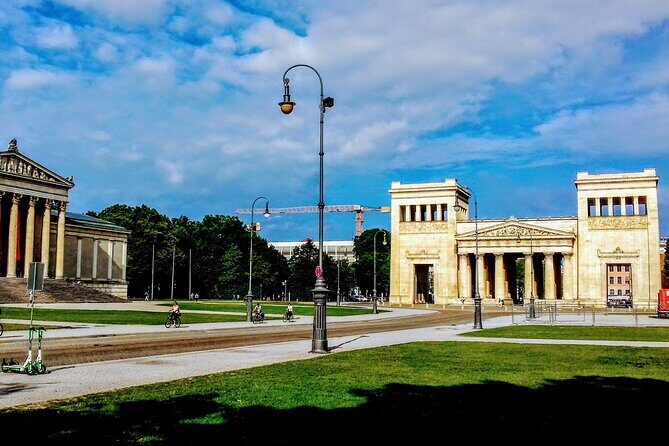
You start with pickup at your hotel or address in Munich at 8:00 a.m., 9:00 a.m., or 9:30 a.m. You can also request another time if needed. If you’re arriving via the airport, pickup/return outside Munich (like MUC) is possible on request, with any extra costs handled separately.
Transportation is part of the experience quality here. You ride in a new VW or Mercedes minivan with a/c, and only your group is in the vehicle. For groups larger than 7 people, you switch to a small coach, still with a driver.
On a day like this, that matters because you’re not just traveling between points—you’re also mentally switching tracks all day. A chauffeured ride keeps you focused on the guide’s explanations and lets you arrive at each stop ready to pay attention.
Munich in the 3rd Reich: Marienplatz to the churches
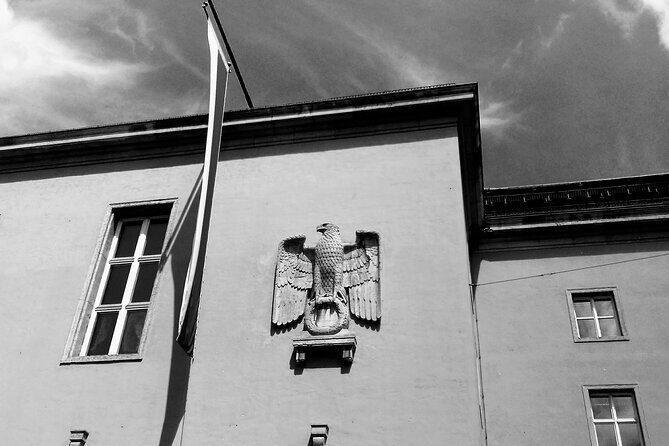
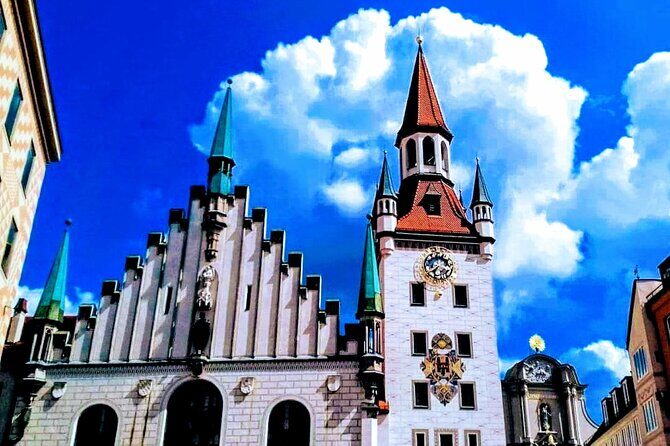
Your Munich story starts at Marienplatz, the city’s bourgeois center since the 12th century. You’ll get an approx. 1-hour old-town tour as a foundation, including how the area’s civic buildings and layouts shifted under National Socialists. One striking detail is how the neo-Gothic town hall got swastika flags during that period, and how a broader passage was added to manage increasing traffic.
Then you move to two late-Gothic and Mannerist church settings—Frauenkirche and St. Michael—where the guide uses historical images to illustrate destruction from Allied bombings and changes during reconstruction. Even if you know Munich for beer halls, these stops change the tone fast. It’s not just about what was built; it’s about what was erased and rebuilt, and what survived.
A couple specifics make these stops feel more grounded:
- Frauenkirche was built at the end of the 15th century in just 20 years, and you’ll be guided through how bombing impacts show up in the modern look.
- St. Michael is known for its second-largest barrel vault in the world and its Mannerist style, built about 100 years after Frauenkirche. The guide connects architectural features to the same bombing-and-reconstruction story.
Residenz, power, and the small street detail that sticks
Next comes Residenz München, one of the city’s big palace complexes. The tour notes that in 1933, SS Brigade Leader Christian Weber set up residence in one of the largest and most magnificent city residences in Europe. You won’t go inside for a full palace tour, but you will tour the huge complex from the outside and hear how the guide explains different stylistic epochs.
This is also where you’ll hear about the lions at the side entrances, including the guide’s emphasis on petting one (or all) of them—because Munich tours can’t help being a little playful, even in heavy history.
After that, the schedule slips toward something more intimate: Viscardigasse, a tiny street with a name that the guide explains. It’s only a short stop, but it’s the kind of detail that makes the day feel less like a bus tour and more like walking through clues in a real city.
Other Third Reich & WWII tours we've reviewed in Munich




Feldherrnhalle to Opfer des Nationalsozialismus: from attempted coup to remembrance
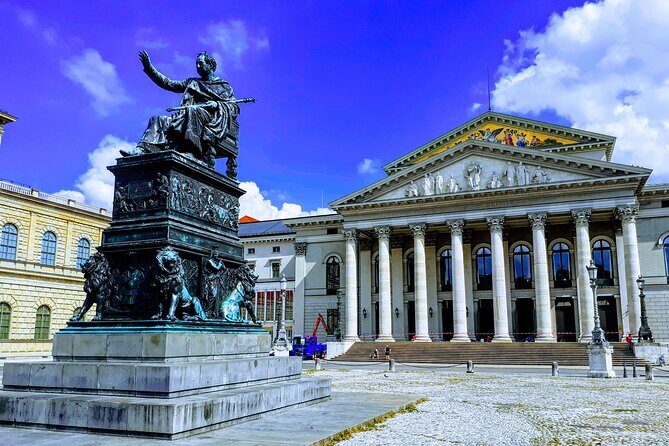
At Feldherrnhalle, you reach a dramatic turning point in Munich’s Nazi-era story. This is the southern viewpoint on Ludwigstraße built on behalf of King Ludwig I, and you’re told that the attempted Hitler putsch in 1923 ended here.
The tour pairs that with another kind of memorial thinking at Platz der Opfer des Nationalsozialismus. This site, erected in 1985 on the location of the destroyed Schiller memorial, includes an eternal flame burning in a symbolic dungeon as a sign of freedom. It’s a sharp emotional pivot from the 1920s plot to a modern reminder of the people harmed by the regime.
The result is a tour that doesn’t treat history like a single theme. It shows escalation, then it shows response and remembrance.
LMU, the White Rose, and how the guide connects people to places
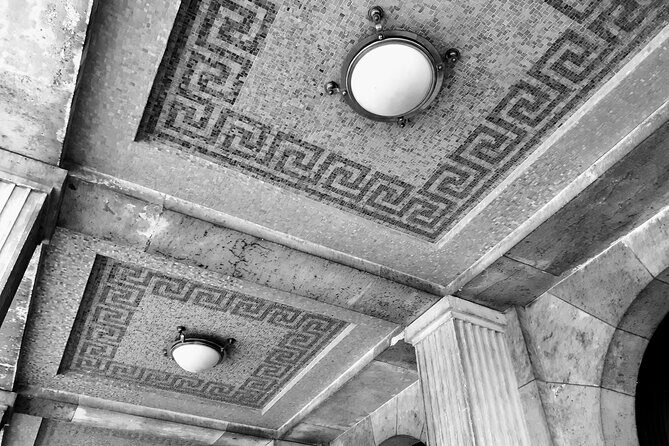
One of the most important stops is at Ludwig Maximilians University. The tour frames the university’s role by mentioning it moved from Ingolstadt to Munich in 1826, then explains that the White Rose resistance group formed there.
You’ll specifically hear about members:
- Hans and Sophie Scholl
- Christoph Probst
- Alexander Schmorell
- Willi Graf
- and Professor Kurt Huber
And you’ll also be guided through what happened in 1943, when the caretakers were murdered. The stop includes a visit to the memorial with your guide, and that extra time helps you land the human side of the story in the place connected to it.
If you prefer tours where history is tied to names—not just buildings—this section is likely to be one of your favorites.
Schwabing and Hofbräuhaus: the propaganda-soaked nightlife map
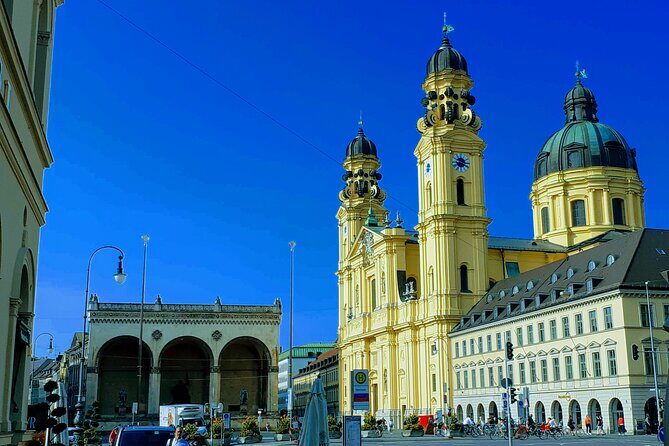
From there, you move into Schwabing, the former artists’ quarter. The tour points out that Hitler liked to stop at Osteria Italiana, which still exists today. It also brings up key media locations like the Völkischer Beobachter editorial house and Heinrich Hoffmann Verlag National Socialist Pictures.
Then it lands on a personal connection that the guide uses to explain how power embedded itself in everyday nightlife and business: in 1929, Hitler met Eva Braun at what later became the Photohaus Hoffmann.
This is also one reason the day feels real. You’re not only looking at official party sites. You’re looking at the city’s social geography—where influence showed up in leisure and publishing.
At Staatliches Hofbräuhaus, you’ll see why the tour schedule includes it. The guide notes that Hitler and his entourage particularly enjoyed meeting there, specifically in a niche on the first floor of the Hofbräuhaus. The stop runs about an hour, and the guide even recommends where to sit for a hearty lunch (not included). There’s also time to look at the famous dining rooms, whether or not you plan to eat.
The Nazi architecture walk: Altstadt-Lehel, House of German Art, and more
You then tackle Altstadt-Lehel, where the tour points out a dark-era monumental building erected in 1937 by Hermann Göring’s Reich Aviation Ministry for Luftgaukommando V. You’ll learn what to look for on the exterior—like swastikas on window grilles and steel helmets on house walls—so you’re not stuck guessing what the guide wants you to notice.
Next is Haus der Kunst, described as the first representative Nazi building in Munich. In Hitler’s time, it was called the House of German Art, and it shows works of artists conforming to the Nazi regime. The guide uses the modern presentation to help you spot what decoration and design choices mean in context. This is a good stop if you want an example of how aesthetics were used to signal approved ideology.
Right after, the itinerary offers a short but memorable reset: Eisbachwelle, the famous Eisbach surfers standing wave. It’s only a brief stop, but it helps you breathe for a moment during a heavy historical day. Sometimes you need a place where the city’s normal life is visible again.
From homes and shelters to model settlements: Bogenhausen, Prinzregentenstraße, Ramersdorf
The tour then shifts into residential and elite spaces through Bogenhausen. You’ll visit the area connected to Adolf Hitler’s house. The tour specifies that he moved into a luxurious 317 sqm apartment with 9 rooms in 1929, and today it’s the police station. You can only view it from the outside, but that matters. Even without entering, the location still ties the story to geography.
You also get the nearby connection to Eva Braun, who lived in a villa there since 1936. That property has been demolished in recent years, and the tour is clear about that limitation—so you know not to expect to see the villa itself standing.
From there, Prinzregentenstraße brings you a curious piece of Nazi planning: an apartment building with air raid shelters built on both sides, meant as a model for other buildings. The tour notes that it’s the only one of its kind completed due to World War II.
Then comes Ramersdorf, a Nazi model settlement. In 1934, almost 200 settlement houses with their own gardens were built for German national comrades, meant as a template for more. Today it’s listed, which gives you a chance to see how the built environment lingers in protected form.
This whole block is a good example of what a skilled guide can do. They aren’t just pointing out plaques. They help you read the city like a document.
White Rose at Stadelheim and the shift to party center at Königsplatz
The schedule includes a heavier stop connected directly to resistance history. At Stadelheimer Straße, you’re told that in 1943 White Rose members—Hans and Sophie Scholl, Christoph Probst, Alexander Schmorell, Willi Graf, and Professor Kurt Huber—were guillotined at the penal institution in Stadelheim. You also learn that their graves are in a nearby cemetery in the Perlacher Forest.
Then the tour jumps back to the party center logic at Königsplatz. The area between Karolinenplatz and Königsplatz became the NSDAP party center with administrative buildings and the Führerbau. The tour notes that almost all Nazi buildings survived bombing attacks unscathed. It also includes a modern interpretation layer: the NS Documentation Center, opened in 2015, was built on the site of the destroyed Brown House.
This is one of the reasons I think the itinerary is strong. You’re not only touring old architecture; you’re also seeing how Germany memorializes and explains it today.
Closing Munich stops: Karolinenplatz and Maxvorstadt’s Hitler-linked rooms
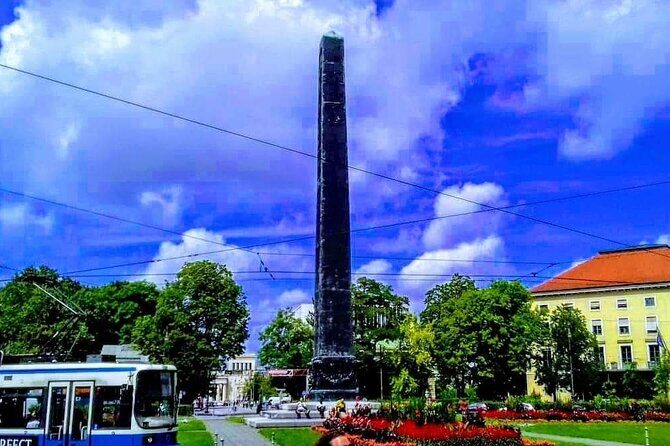
At Karolinenplatz, the tour says the Nazi power center was built 100 years later around an obelisk ordered by King Ludwig I in 1833. The obelisk gives you a hard visual anchor for the timeline shift the guide is explaining.
Then you get Maxvorstadt and two more connections tied to Hitler’s early life. You’ll see a renovated apartment house where Hitler reportedly shared a shabby room with Rudolf Häusler after moving from Vienna to Munich in May 1913. The guide also shows the location of a planned mausoleum and an adjoining Hall of the Party associated with Hitler’s own plans, with a note that he was stimulated after visiting Paris in 1940 and seeing Napoleon’s sarcophagus in the Invalides.
Even if you’ve seen other Hitler-related tours before, this segment can feel different because it focuses on planning and personal space rather than only grand public monuments.
Dachau Concentration Camp Memorial: what the visit is like and how long to plan
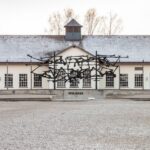
Then the day finally takes its most serious turn: Dachau Concentration Camp Memorial Site with your licensed guide.
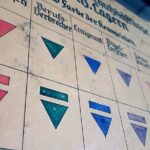
The tour description is direct about the scale. During its 12 years of existence, more than 200,000 people were imprisoned, and 41,500 were murdered. The tour also notes that Dachau opened just 6 weeks after Hitler was appointed Chancellor. If you’re preparing yourself for an emotionally heavy day, this is the section where that preparation matters most.
A unique element is the set-up before you enter the memorial route: you’ll be shown some luxurious villas on the former SS grounds. That contrast is not comfortable, but it does make the power structure easier to understand when you’re walking the memorial grounds afterward.
The visit time is not fixed for everyone. The experience says the average length of stay at the memorial is 1.5 to 2.5 hours. Plan for the longer end if you want time to absorb explanations and not rush through.
Footwear is called out for a reason. Some footpaths consist of coarse pebbles, so you’ll be glad you brought suitable shoes. On a day that already includes lots of walking and standing around Munich city stops, this is a practical detail that changes how the visit feels in your body.
Age note: visiting Dachau is not recommended for people under 12.
Food, water, and keeping your energy up
Mineral water is included. That’s a small thing, but on a long day it matters more than you think.
Lunch is not included. The tour explicitly recommends having a hearty meal at the Hofbräuhaus area if you want one, and the stop is long enough that this is realistic. If you’re not hungry, you still get a chance to look around the Hofbräuhaus for atmosphere.
The other practical tip is simple: pace your emotions. This is not a history-quiz tour. It’s a history-with-places tour, and Dachau especially asks for quiet attention.
Who this tour fits best
This is a strong pick if you:
- want a private format with hotel pickup, not a crowded group
- care about having a licensed guide explain context and connect sites
- prefer a one-day structure that covers both Munich’s Nazi-era geography and the Dachau memorial visit
It may be less suitable if you:
- don’t handle emotionally heavy content well
- want a light and casual sightseeing pace
- need very limited walking surfaces, since some Dachau paths include coarse pebbles
Should you book this Munich WWII and Dachau private tour?
If your goal is a serious, guided day that links Munich’s built environment to what happened at Dachau, I think it’s an easy yes. The private transport cuts logistics friction, the licensed guide keeps the story clear, and the Dachau timing (with a set average of 1.5 to 2.5 hours) gives you enough time to take it in.
The main question is personal: are you ready for the emotional weight? If you are, and you want accuracy plus comfort, this tour is built for exactly that.
FAQ
How long is the Munich WWII and Dachau private tour?
The tour is listed as approx. 9 hours 30 minutes, with an average of about 1.5 to 2.5 hours spent at the Dachau memorial site.
Where does pickup happen?
Pickup is offered at any hotel or address in Munich. Pickup times listed are 8:00 a.m., 9:00 a.m., and 9:30 a.m., and you can also request another time.
Is the tour in English?
Yes, the tour is offered in English.
Do you have to buy tickets to the stops?
Admission tickets are listed as free for the included stops, and a mobile ticket is offered.
Will we visit both Munich sites and Dachau in one day?
Yes. The schedule includes multiple Nazi-era sites around Munich plus a guided visit to the Dachau Concentration Camp Memorial Site.
Is lunch included?
No. Lunch is not included.
Is the tour suitable for children?
Visiting the Dachau Concentration Camp Memorial is not recommended for people under 12 years of age.
What should we wear for Dachau?
The tour recommends suitable footwear because some footpaths at the memorial consist of coarse pebbles.
Is cancellation free?
Cancellation is listed as free, with full refund if you cancel at least 24 hours in advance of the experience start time.