REVIEW · MUNICH
Munich Old Town Highlights Private Walking Tour
Book on Viator →Operated by Rosotravel - Munich · Bookable on Viator
Old Town Munich can feel like a lot of corners.
This private route turns Marienplatz into a guided storyline, with commentary as you move between landmarks and churches. I especially like how it mixes the public “power” sights (city hall and the Glockenspiel) with the spiritual stops like St. Peter’s Church—so you don’t just see pretty buildings, you get why they matter.
The second thing I like: you get a licensed, fluent guide, and the tour is structured around realistic time blocks. Guides I’ve seen praised on this route include Marianne, Osborn, Heidi, and Wolfgang—and the common theme is that they explain the city in plain language, then point out details you’d miss on your own.
One consideration: church access can change. If you hit church services (daily, Sunday, or holidays), the tour may only visit from the outside, and you’ll also want to budget for optional paid extras like tower viewpoints.
In This Review
- Key highlights to look forward to
- Walking Munich’s Old Town, one well-chosen stop at a time
- Marienplatz landmarks: New Town Hall and the Rathaus-Glockenspiel
- Toy Museum Munich and the odd-but-meaningful symbols of power
- St. Michael and St. Peter: Counter-Reformation and the oldest church story
- Asamkirche: baroque interior that feels like a gold set
- Karlsplatz gates and the medieval texture you’d miss without a guide
- Frauenkirche and the Wittelsbach dynasty: sacred art plus dynasty clues
- Residenz: the biggest payoff, with skip-the-line for the longer option
- Theatinerkirche St. Kajetan and Odeonsplatz: Rococo wow and a dark turning point
- Tour value: why $205.95 can make sense (or not)
- What to ask your guide on the day
- Will churches be open when you go?
- Should you book this Munich Old Town highlights private walk?
- FAQ
- Where does the tour start?
- Is pickup available?
- What language is the tour offered in?
- How long is the tour?
- Is this a private tour?
- What tickets are included?
- Is Frauenkirche admission included?
- Do I need to pay extra for St. Peter’s tower or views?
- Can church interiors be unavailable?
- Can I cancel for a full refund?
Key highlights to look forward to
- A private guide lets you ask questions and adjust pacing without rushing your group.
- Marienplatz centerline tour hits the New Town Hall, Rathaus-Glockenspiel, and the toy-and-coats-of-arms facade stop.
- St. Peter’s Church and Asamkirche are big “interior wow” moments.
- Frauenkirche includes key art and the Wittelsbach dynasty story (option-dependent entry).
- Residenz is the heavyweight finish, with skip-the-line tickets for the longer option.
- Optional add-ons like Theatinerkirche St. Kajetan and extra sights (including gates and fountains) depend on your chosen duration.
Walking Munich’s Old Town, one well-chosen stop at a time
This tour works because it starts where Munich actually feels like Munich: Marienplatz. The meeting point is BEYOND by Geisel, Marienplatz 22 (opposite St. Peter). You’ll stay in the historic core, which means less time figuring out directions and more time looking up at façades and clockwork details.
It’s also private, so your group sets the tone. That matters in a city where the best conversations often happen between landmarks, not inside a museum. A good guide will use the short walking stretches to connect dots—politics, religion, art, and who paid for what.
You can pick a duration from about 2 to 6 hours. The shorter options focus on the core highlights; the longer options add more of the big-ticket interiors, especially around Residenz.
Other Munich city tours we've reviewed in Munich


Marienplatz landmarks: New Town Hall and the Rathaus-Glockenspiel
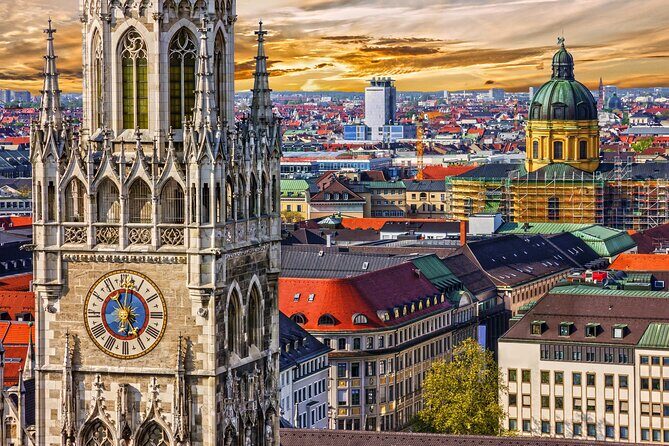
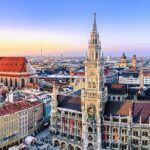
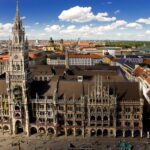
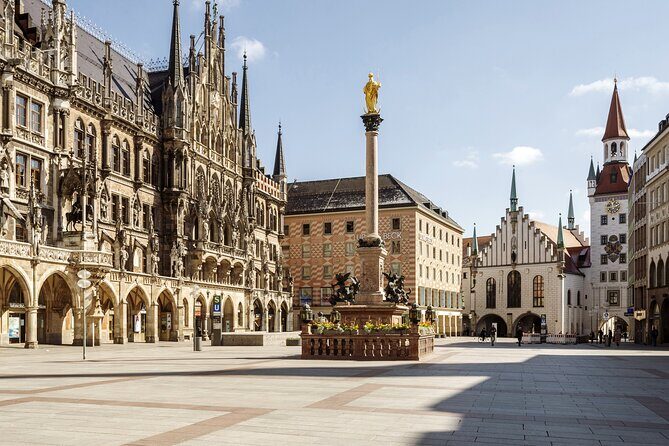
Your tour’s backbone is the Marienplatz cluster. First you’ll head to the New Town Hall (Neus Rathaus), the seat of Munich’s city government today. Even if you’ve seen grand town halls before, this one lands differently because it’s right in the middle of daily life.
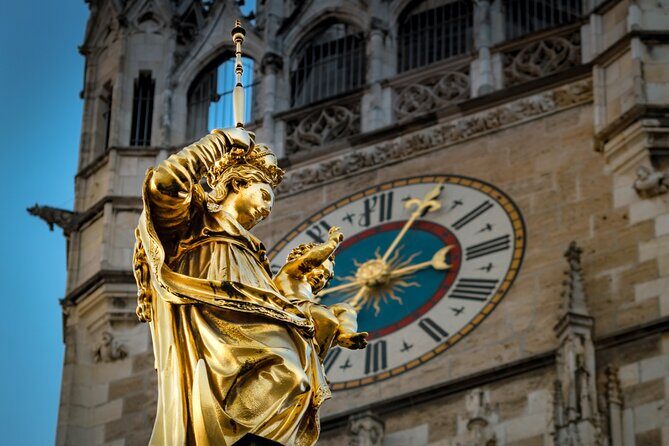
Next comes the Rathaus-Glockenspiel, one of those stops where you don’t want to just glance and move on. Your guide should explain the history behind the display, not only point out the architecture. If you care about how cities narrate themselves through clocks and ceremonies, this is where the tour starts to click.
Practical tip: arrive with a small amount of patience for timing. This is a walking tour with planned stops, so if you want more linger time here, tell your guide early and you’ll likely get the pacing adjusted.
Toy Museum Munich and the odd-but-meaningful symbols of power
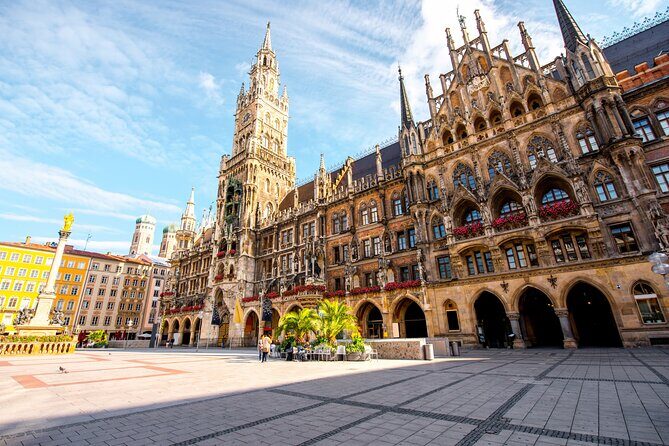
After the clockwork, the tour shifts toward an architectural detail you can’t ignore: the Toy Museum Munich stop on Marienplatz. The point here isn’t just the name—it’s the building’s civic symbolism. You’ll see a facade with the city’s coats of arms, which helps you understand how Munich branded itself as it grew.
This is a good stop for two kinds of people:
- those who like the “what does this building mean?” approach
- those who want visual variety without committing to a full museum session
If you’re the type who hates spending time reading plaques, a guide can still make this stop worthwhile by pointing out what to notice on the facade and how to connect it to the city’s governance.
St. Michael and St. Peter: Counter-Reformation and the oldest church story
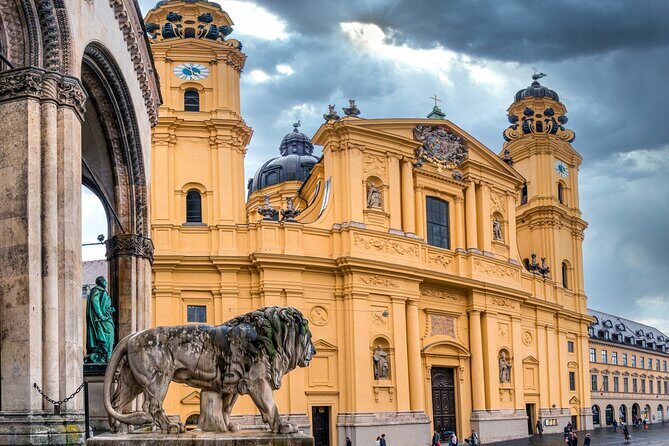
From Marienplatz, you’ll move into major church territory. You’ll see St. Michael München with guidance on the Counter-Reformation in Bavaria and what that meant for Roman Catholic influence in the region. The value of this stop is context: churches are never just churches. They’re politics made visible.
Then the tour shifts to St. Peter’s Church, where you’ll get to step inside. St. Peter is described as the city’s oldest church, with roots reaching even before the city was officially founded. That’s a big claim, and your guide should help you understand what that means in real terms: continuity, changes over time, and why certain spots became anchored points for Munich.
Important add-on reality check: tower access has an extra fee. The listing includes tower pricing (shown as €3.00 and also €5 €), so treat “tower viewpoints cost extra” as the accurate takeaway. If your goal is the skyline shot, budget for it.
Asamkirche: baroque interior that feels like a gold set
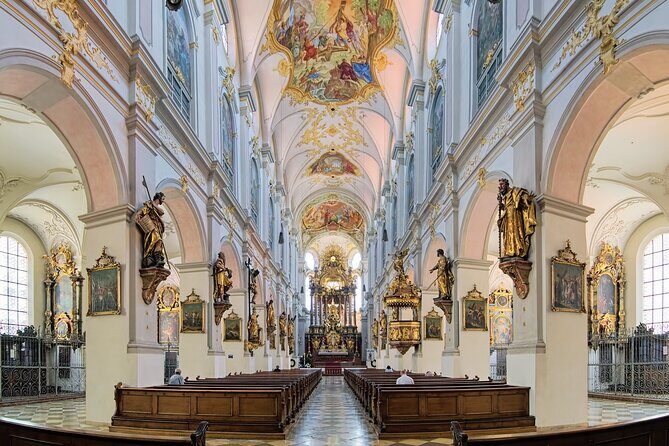
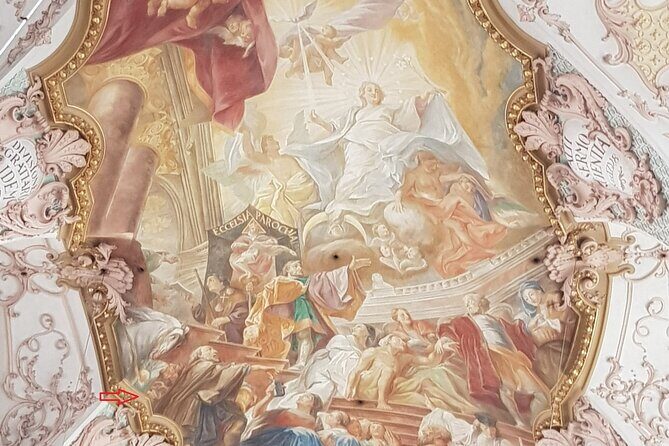
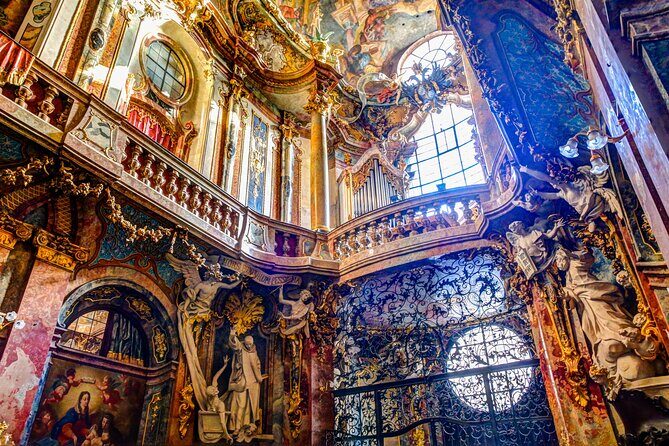
Next up is Asamkirche, famous for a baroque interior heavy on gold leaf, frescoes, and stucco. This stop is one of the best “I’m glad I picked this tour” moments because it’s built for atmosphere.
A walking tour like this is at its best when it gets you inside one or two places where the building design does the storytelling for you. Asamkirche does that. Don’t rush it. Even with a time limit, you should get enough minutes to look upward and notice how the decoration guides your eye.
If you’re traveling with limited museum time, this church is a strong trade. You’re paying attention to art, but in a place that still feels like Munich, not a themed exhibit.
Other Old Town walking tours we've reviewed in Munich
Karlsplatz gates and the medieval texture you’d miss without a guide
After the church pair, you’ll reach Karlsplatz, a square where you can pick up the feel of the older city grid. Your guide will show you historic gate details and other medieval building elements.
This stop matters because it gives you a different texture than the grand civic buildings and major churches. Instead of “big statement,” it’s “small story inside the stone.” You’ll start noticing how Munich evolved by adding layers rather than replacing everything.
If you’re the kind of traveler who likes cities the way they actually are—staggered, slightly messy, and full of leftovers from different eras—this is a good breather.
Frauenkirche and the Wittelsbach dynasty: sacred art plus dynasty clues
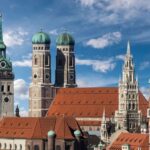
Then comes Frauenkirche—Munich Cathedral. You’ll learn the key sacred art elements, including the Assumption of Mary and an altarpiece by Peter Candid. Your guide should also connect what you’re seeing to the Wittelsbach dynasty, since family members are buried here.
This stop is also where the tour can feel like “big city meets big ideas.” Frauenkirche isn’t only about beauty; it’s about who held authority and how that authority made itself permanent.
There’s also an extra payoff if your guide is good at reading architecture. The cathedral sits within a wider network of historic city elements. The extended walking route can include Sendlinger Tor and Karlstor, plus the Wittelsbach Fountain, the Promenade, and even the Michael Jackson Monument.
That last one often surprises people. It’s not “medieval Munich,” but it’s a reminder that cities keep adding symbols long after the old story is written. Your guide can place it in the larger “Munich as a living place” frame.
One more practical note: Frauenkirche entry can be included for some duration options. The listing says free entry to Frauenkirche in the 3, 4, and 6-hour options, but it also lists a €7.50 fee. If you’re choosing the shortest time, double-check what your exact option includes.
Residenz: the biggest payoff, with skip-the-line for the longer option
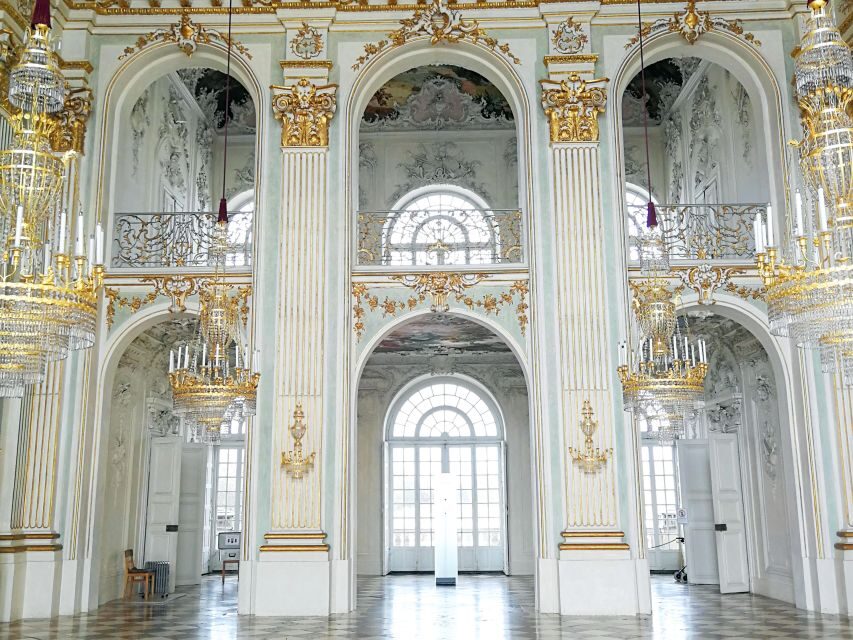
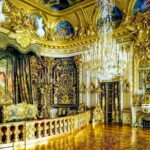
If you choose the longer route, the centerpiece is Residenz Munchen, Munich’s royal palace complex. You’ll spend about 1 hour here, and it’s positioned as the top attraction on the itinerary.
The listing specifically mentions skip-the-line access for Residenz Museum and Treasury in the 6-hour option only. That matters because palace museums can eat time fast when tickets bottleneck. If your schedule allows, going longer is often the difference between “you saw the palace” and “you actually got inside the best rooms.”
What you can expect in the palace complex:
- royal apartments and court chapel
- the Ancestral Gallery
- Porcelain Cabinet
- the Residenz Museum and Treasury (in the longer option)
- garden access points, with the note that the Court Garden is open seasonally from April to October
Don’t sleep on the garden season detail. If you’re visiting outside April–October, you might still enjoy the palace, but the garden experience may be limited.
Theatinerkirche St. Kajetan and Odeonsplatz: Rococo wow and a dark turning point
Near the later portion of the walk, you’ll see Theatinerkirche St. Kajetan. From the outside, it’s described as relatively plain, with a yellow Rococo facade. Then inside, it becomes dramatic: a high altar, sculptured columns, statues, and heavy stucco work.
It’s a great counterweight to the earlier baroque church stop. One is gold-and-stucco church intensity; the other gives you another angle on how Bavaria put style and devotion to work.
Finally, you’ll end at Odeonsplatz, where your guide should bring you through the square’s early 19th-century development and the story of the 1923 Beer Hall Putsch. This is where Munich’s narrative shifts from medieval and royal to 20th-century history.
Tour value: why $205.95 can make sense (or not)
At $205.95 per person, this is not a “budget stroll.” You’re paying for:
- a licensed 5-star guide
- a structured private route through tightly packed attractions
- inclusion details that change by duration (like free Frauenkirche entry on some options and skip-the-line Residenz museum/treso on the 6-hour option)
- and optional pickup within Munich Old Town (ZIP 80331)
So here’s how to decide if it’s a good value for you.
You’ll likely feel good about the price if:
- you want churches plus palace interiors, not just exteriors
- you’re short on time and want the day organized
- you’d benefit from a guide who can explain details you’d otherwise miss (the feedback around guides like Heidi and Wolfgang highlights that they function like a living guidebook)
It may feel expensive if:
- you only want quick exterior photos
- you plan to spend most of your day at one or two sites anyway
- your group doesn’t care about palace museums or church interiors, which are where the longer options add the most
My practical suggestion: if you’re choosing between durations, treat it like a trade study. The longer option adds major indoor time and (in the 6-hour version) skip-the-line access to Residenz museum and treasury. If that sounds like your plan, spending more on duration is often the smarter use of money than trying to cram palace highlights into a short walk.
What to ask your guide on the day
Because this is private, you can get a little smarter than a fixed group tour. A few good, practical questions:
- Can we spend a few extra minutes at Frauenkirche if the interiors are open?
- If churches are limited due to services, what other interior alternatives should we swap in?
- Can you help us time the Rathaus-Glockenspiel moment so we see what’s worth seeing?
- If we want dinner soon, can we end close to a place we name
That last one isn’t random. One of the praised guide stories includes a guide (with the group tour feedback tied to Osborn) making sure the route finished right by Hofbräuhaus. With a private tour, that kind of ending point adjustment is exactly the kind of service you’re paying for.
Will churches be open when you go?
The listing flags a real issue: church visits can be restricted during daily, Sunday, and holiday masses. When that happens, tours may take place only from the outside.
This isn’t a deal-breaker, but it changes what you’ll get. If you want interiors for sure, check your travel dates and plan around likely service schedules. If interiors are restricted, lean into what the guide can still do well: explaining symbolism, architecture, and the stories behind what you can see from outside.
Also remember: even when churches are open, time is finite on a walking route. As long as you’re standing in the right places, you’ll still get the key design points.
Should you book this Munich Old Town highlights private walk?
Book it if you want Munich’s center in a tight, logical route—and you care about meaning, not only photos. This tour is built for people who want St. Peter’s Church, Asamkirche, Frauenkirche, and the palace experience at Residenz, with a guide who can connect the dots while you walk.
Skip it (or consider a shorter option) if you’re mostly in “check off buildings” mode. At this price, you’ll feel best when you’re using the guide for interpretation and timing—especially around the churches and Residenz.
If you do book, I’d pick your duration based on one question: Do you want major indoor time at Residenz? If yes, the longer plan is the one that turns the day into a full Old Town day, not just a pretty hallway tour.
FAQ
Where does the tour start?
The tour starts at BEYOND by Geisel, Marienplatz 22, 80331 Munich, Germany (opposite St Peter). It ends back at the meeting point.
Is pickup available?
Pickup is offered only for accommodations within ZIP-code zone 80331. If your accommodation isn’t in that zone, the meeting point is in front of the Fish’s Fountain, Marienplatz 8, 80331 München.
What language is the tour offered in?
The tour is offered in English.
How long is the tour?
It runs for about 2 to 6 hours, depending on the option you choose.
Is this a private tour?
Yes. It’s private, and only your group participates.
What tickets are included?
The tour includes admission for St. Peter’s Church and Asamkirche. Residenz Museum and Treasury have skip-the-line tickets included in the 6-hour option. Mobile tickets are included.
Is Frauenkirche admission included?
The listing says free entry to Frauenkirche is included for the 3, 4, and 6-hour options only. The cost of entry is listed as €7.50 otherwise.
Do I need to pay extra for St. Peter’s tower or views?
Tower access for St. Peter’s Church has an extra fee listed in the information as €3.00 per person (and also references €5€). If you want the tower, plan to pay extra.
Can church interiors be unavailable?
Yes. Visiting churches during daily, Sunday, and holiday masses may be restricted, and in that case the tour may take place only from the outside.
Can I cancel for a full refund?
Yes. There is free cancellation, and you can cancel up to 24 hours in advance for a full refund.