REVIEW · MUNICH
Ghosts of Munich: The Haunted Apprentice Exploration Game
Book on Viator →Operated by Questo · Bookable on Viator
Haunted Munich, minus the crowd pressure. This self-guided adventure game turns major sights into bite-sized puzzles, using English audio stories as you walk and look closer than you normally would. I like that it’s built for your pace, not a fixed group march.
Two things I really like: the offline-friendly setup helps you avoid surprise phone-data costs, and you can start and pause whenever you want. The main thing to consider is that a handful of stops show as admission not included, so you may need to budget extra if you want to go inside or climb.
In This Review
- Key highlights before you go
- What Ghosts of Munich actually feels like on the street
- Price, time window, and how to fit it into Munich days
- Start at Odeonsplatz: where a “minor band” story kicks off
- Hofgarten: a Renaissance garden that asks you to look twice
- Theatinerkirche St. Kajetan: church details you’ll actually remember
- Sitzender Keiler (Sitting Boar): the luck-rub moment
- Frauenkirche: twin towers, stained glass, and a Devil story
- Marienplatz: the city’s meeting point for everything
- St. Peter’s Church: 299 steps and a mix of styles
- New Town Hall (Neus Rathaus): Glockenspiel + FC Bayern balcony energy
- Offline play: why that matters more than you think
- No physical guide: the good and the trade-offs
- If something goes wrong, know where to get help
- Who this haunted Munich game suits best
- Should you book Ghosts of Munich?
- FAQ
- How long does Ghosts of Munich take?
- What does it cost?
- Where does the experience start and end?
- Is it available in English?
- Can I use it without mobile data?
- Do I need a physical tour guide?
- Can I start at any time and take breaks?
- Are tickets for all stops included?
- Is it private or shared with strangers?
- Can I cancel for a full refund?
Key highlights before you go
- Offline access to keep data charges down
- Start anytime and pause/resume on your schedule
- Private self-guided play means your group stays together without joining crowds
- English audio stories that guide you through the game
- Worth it for families and teamwork, since you’re solving and observing at the same time
- A mix of free and paid-entry checkpoints keeps the route flexible
What Ghosts of Munich actually feels like on the street
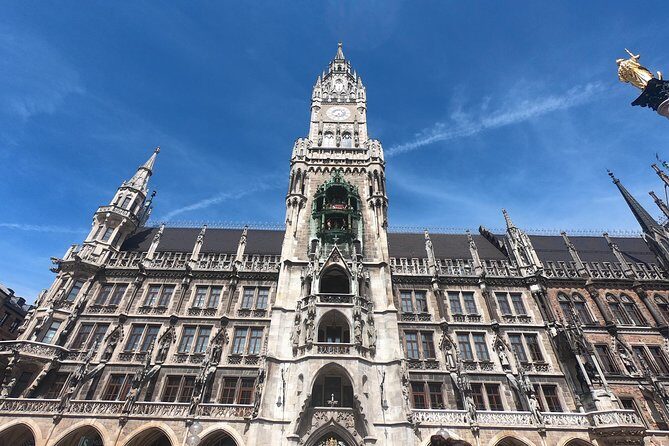
This isn’t a talk-at-you guided tour. It’s a quest game you play while you walk between landmarks, where each checkpoint asks you to notice something and answer a challenge. You’re trading long explanations for small, doable tasks.
If you like city strolling with a purpose, this format makes a big difference. You’ll naturally slow down at squares, church entrances, and odd little monuments that you might otherwise glide past.
And yes, it’s “haunted,” but it’s not jump-scare spooky. Think legends, old stories, and a little mischief wrapped around real locations.
Other Munich city tours we've reviewed in Munich



Price, time window, and how to fit it into Munich days
The price is $7.21 per person, and the walk usually takes about 1 to 2 hours. That’s a good value if you want structure without paying for a more expensive guided tour.
You’ll get the most out of it if you treat it as a half-day activity inside Munich’s center. It’s also a smart pick if you’re trying to see a lot fast on a tight schedule, since the game-style stops are short and sequential.
One more planning note: it’s commonly booked about 12 days in advance, so booking earlier can reduce stress.
Start at Odeonsplatz: where a “minor band” story kicks off
Your route begins at Odeonsplatz in Munich’s Altstadt-Lehel area. The square is known for its early 19th-century design by Leo von Klenze, with an Italian-like feel that’s striking even if you’re not a design nerd.
What makes this start clever is how the story reframes a beautiful public space. The game points you toward a hidden slice of history from 1921, when an obscure leader tried to march into Munich to seize control of Bavaria. Authorities were waiting with machine guns at the square, and while some were killed, the leader they were after escaped—then later became tied to enormous tragedy across Europe.
Practical tip: since this is the first checkpoint, take a moment here to get oriented. Once you’re settled into the rhythm of the game, the rest flows quicker.
Hofgarten: a Renaissance garden that asks you to look twice
Next up is Hofgarten, a small park at the edge of Munich’s old town. The game’s angle here isn’t just scenic. You’re shown the garden’s origins as a 17th-century design by Elector Maximilian I, inspired by an Italian Renaissance style.
Historically, this was a place for high-ranking people—dukes, electors, and the like. Now it’s open to you, but the game invites you to ask: just because it’s peaceful today, does that mean it’s innocent?
The practical win: this stop is relaxing. You get a breather without leaving the story thread. If you’re walking with kids or teens, this is also a good moment to pause and snack, because the game doesn’t demand museum-level commitment.
Theatinerkirche St. Kajetan: church details you’ll actually remember
Then you head toward Theatine Church of St. Cajetan (Theatinerkirche St. Kajetan). This one has a strong “Munich Baroque” identity: the church was built in the mid-17th century by Elector Ferdinand Maria and his wife Henriette Adelaide, as a tribute to the long-awaited heir to the Bavarian throne.
Outside, you’ll likely notice the yellow facade. Inside, the contrast is part of the point—the interior is described as white and ornate, and it became influential in German Baroque architecture.
Here’s the practical consideration: the admission at this stop is listed as not included. That doesn’t mean skip it; it just means you should be ready for a paid entry decision if you want to see the interior and complete the challenge that depends on it.
Other ghost & spirits tours we've reviewed in Munich


Sitzender Keiler (Sitting Boar): the luck-rub moment
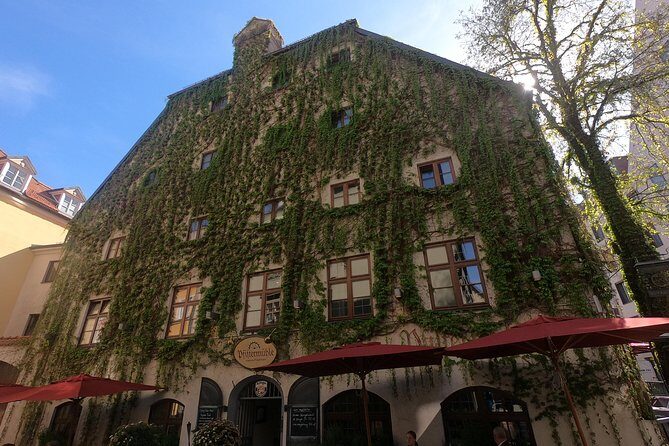
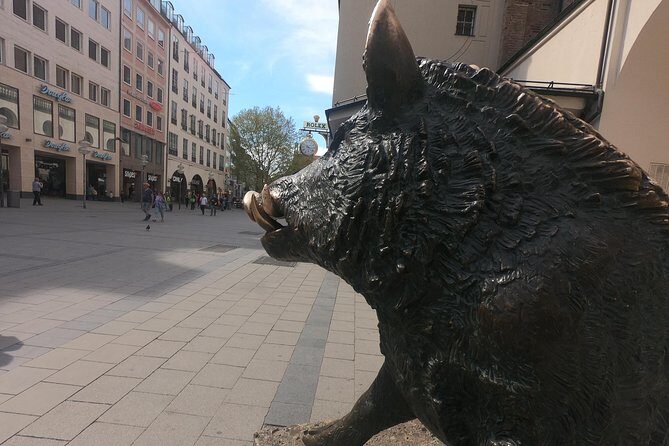
As you move onward, you’ll reach Sitzender Keiler, the Sitting Boar. It’s a quirky statue with a very specific “pose,” where the pig rests on its hind legs and sits up on short front legs, as if it’s watching something in the distance.
The statue is at the entrance area for the Hunting and Fishing Museum, and the game builds in a classic bit of local superstition: you’re meant to rub the boar’s nose for luck. It’s playful, and it works because it gives you a hands-on action inside a mostly “look and read” experience.
If you’re traveling with people who get bored easily, this is a great checkpoint. It breaks the pattern, adds a physical moment, and keeps the pace from turning into pure sightseeing.
Frauenkirche: twin towers, stained glass, and a Devil story
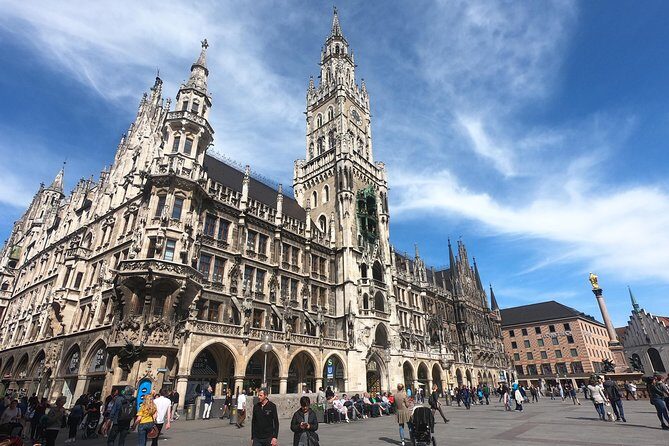
Now you hit one of Munich’s best-known landmarks: the Frauenkirche with its two twin towers around 100 meters high. Even from a distance, it’s hard to ignore.
You’ll likely notice the contrast between the grand exterior presence and the detailed interior—vaulted ceilings and stained glass windows are part of what makes it memorable. The game also turns the spotlight to an entrance legend: the Devil’s footprint.
The story goes like this: the builder supposedly bet the Devil that the church would have no windows. When the Devil realized he’d been tricked, he left a footprint behind. Your job is to figure out the rest by solving the game challenge.
Admission here is listed as not included, so same practical logic applies: decide if you want to pay to go inside and finish the story beats tied to this stop. If you’re okay with skipping paid interiors, you might still get plenty from the exterior experience and views.
Marienplatz: the city’s meeting point for everything

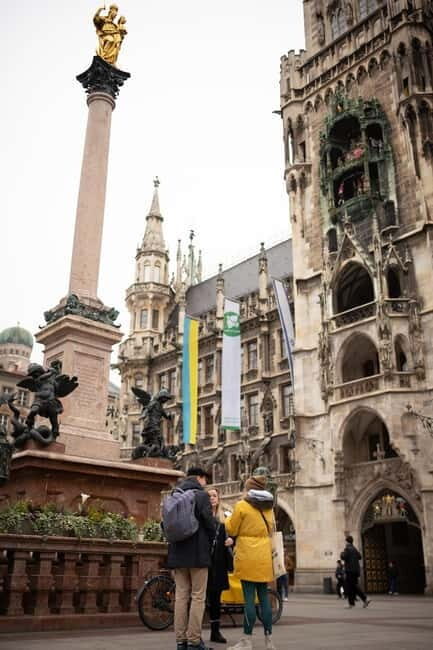
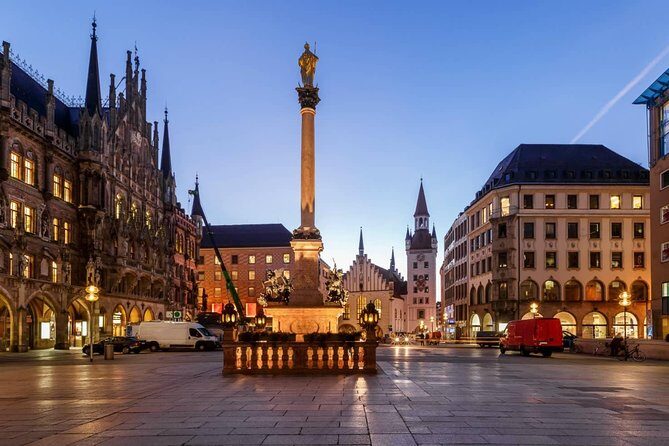
From there, you come into Munich Marienplatz, the central square that’s become a stage for everything: Christmas markets, city celebrations, and sports-related energy when FC Bayern is in the spotlight.
Marienplatz matters historically because it sits at the center of older Munich. The game points you to the idea that the city’s important streets converge here, and that tournaments and events happened there from the early days of the city.
This is a “people watching plus puzzle” stop. If you like to feel the city’s rhythm, Marienplatz is where you’ll get it. And because the stop is only about 10 minutes, it’s not a time sink.
St. Peter’s Church: 299 steps and a mix of styles
Next is St. Peter’s Church, Munich’s oldest Catholic church and a survivor of fires and wars over roughly 800 years. That survival matters because the architecture has been rebuilt again and again, which shows up in a mix of Gothic, Baroque, and Rococo elements.
Then comes the part that makes people say, I get why that was worth it: you can climb 299 steps to reach the tower view. The game’s built-in reward is the bird’s-eye look over Munich’s center.
Admission at this stop is also not included, so if climbing is your goal, plan around the cost and the effort. The good news is that even if you’re not climbing, the church itself is still a meaningful pause, since the style mix is visually obvious.
New Town Hall (Neus Rathaus): Glockenspiel + FC Bayern balcony energy
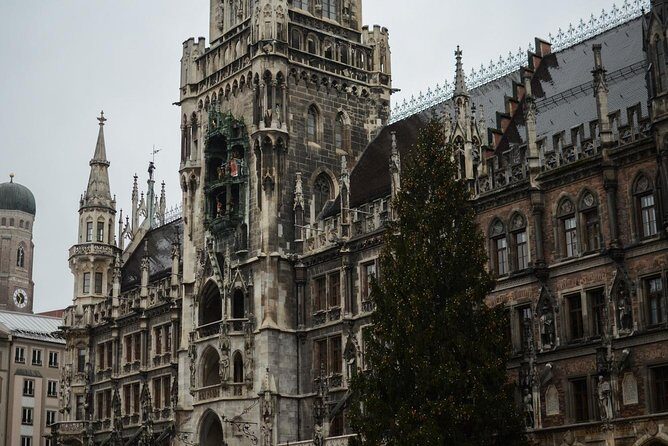
Your final major stop is the New Town Hall (Neus Rathaus). It’s not just a pretty building. The game frames it as the home of local politics and city council meetings, and it also connects it to FC Bayern, including the idea of the club using the area as a kind of fan-facing balcony on big wins.
Another reason this stop is fun in a game format is the Glockenspiel in the hall’s tower. It draws attention from around the world, and the game ties it to an old story after a plague epidemic, when barrel makers were among the first people willing to step back into the streets and dance for a population gripped by fear.
The final challenge leans into action—think dancing your way through the clue—so by the time you finish, you’re not just standing and reading. You’re ending with a small moment of play.
Admission at this stop is marked not included, so if any part of the experience depends on entering or accessing specific areas, expect separate entry choices.
Offline play: why that matters more than you think
One of the strongest practical features here is that you can access the game offline, helping you avoid expensive phone data charges. In Munich (and elsewhere), that kind of control is underrated. It means you can still move through the city even if signal is weak between stops.
Here’s how to make it work smoothly: once you book, set up your phone before you start and keep your battery in mind. A game that uses location cues and audio can be easy to run—just don’t leave everything to the moment you step onto the sidewalk.
No physical guide: the good and the trade-offs
You won’t have a person with a microphone. That’s part of why the experience can stay private and flexible.
The upside: you can take a break whenever you want without feeling like you’re slowing down strangers. The game is designed so you can start and pause, then resume later, which is great if you’re traveling with kids, older relatives, or anyone who needs frequent hydration stops.
The trade-off is responsibility. You’re the guide for your group. If you want a lot of extra context beyond what the game gives you, you might feel a bit more limited than with a traditional tour.
If something goes wrong, know where to get help
The overall experience score is strong, but tech-based activities can fail sometimes. If you get charged unexpectedly or the activity doesn’t seem ready, the provider support contact listed for help is:
I’d treat this as your plan B, not your first assumption. Just know that there is a real support channel if your app experience isn’t smooth.
Who this haunted Munich game suits best
This is a great fit if you want structure without crowds. It works well for couples, small groups, and families who like teamwork and observation.
It’s also ideal if you’re the kind of traveler who enjoys puzzles and small “find-the-detail” games more than long speeches. And since the English version includes audio stories, it’s not only about reading text on your screen.
You might prefer a different type of tour if:
- You want a live guide to answer questions on the spot
- You don’t want to deal with paid entry decisions at multiple church stops
- Your group dislikes phone-based experiences, even when offline
Should you book Ghosts of Munich?
Yes, I’d book it if you’re doing Munich at a walking pace and you want to turn famous sights into a short, engaging mission. The biggest value is the combo of offline play, flexible timing, and a private self-guided format that keeps your group together.
I’d hesitate only if your priority is a guided, narrated history lecture with no self-management, because this is built around your phone, your pace, and your puzzle-solving.
If that style sounds like your kind of sightseeing, Ghosts of Munich is a smart, cost-effective way to get deeper than a quick photo stop.
FAQ
How long does Ghosts of Munich take?
It’s listed as about 1 to 2 hours total.
What does it cost?
The price is $7.21 per person.
Where does the experience start and end?
It starts at Odeonsplatz (Odeonspl., 80 München-Altstadt-Lehel, Germany) and ends at Rindermarkt 17, 80331 München, Germany.
Is it available in English?
Yes, the experience is offered in English, with audio stories in English.
Can I use it without mobile data?
Yes. The game can be accessed offline to help you avoid phone data charges.
Do I need a physical tour guide?
No. This is a private self-guided activity, so there is no physical tour guide.
Can I start at any time and take breaks?
Yes. You can start at any hour, and you can start and pause for breaks, then resume later.
Are tickets for all stops included?
Not all of them. Some stops list admission as not included, so you may need to pay separately if you want to enter those places.
Is it private or shared with strangers?
It’s private for your group only.
Can I cancel for a full refund?
Yes. You can cancel up to 24 hours in advance for a full refund. If you cancel less than 24 hours before the start time, the amount paid is not refunded.