REVIEW · MUNICH
Munich: Private Walking Tour of the Historical City Center
Book on GetYourGuide →Operated by Travmonde OÜ · Bookable on GetYourGuide
Munich can feel like a movie set. This private walking tour strings together the city’s landmarks with stories that explain why they matter, from the Rathaus clock tower to the events that tried to interrupt WWII. I especially like how the guide connects everyday sights to big moments in German history.
I also like the hands-on way you walk through the center—Marienplatz, St. Peter, Frauenkirche, Odeonsplatz, and Viktualienmarkt—so your brain can map the city fast. One thing to consider: it’s a walking tour with a lot of stops, and if you end up in a smaller group you’ll want to stay close to the guide to catch every detail.
In This Review
- Key things I’d focus on before you go
- Starting at Marienplatz’s fish fountain: where your walking map begins
- Rathaus-Glockenspiel and Mary’s Column: the stories behind the symbols
- From monks to St. Peter: how Munich’s religious roots took hold
- Frauenkirche and the devil’s footprint legend: worth slowing down for
- Odeonsplatz and the Beer-Hall Putsch: where the power grab started
- Beer culture with Hofbräuhaus (1589): Munich’s long memory
- Viktualienmarkt finish: the food market that doubles as a meeting point
- WWII threads: Eva Braun and Georg Elser explained on the route
- Optional Residenz Museum: when you want the “inside” version
- Price and value for a private group up to 15 people
- Who this tour fits best (and who should think twice)
- A practical way to get the most out of it
- Should you book this Munich private walking tour?
- FAQ
- How long is the Munich private walking tour?
- Where does the tour meet?
- How many people are included in a private group?
- What languages are the live guides?
- What’s included in the price?
- Are entrance fees included, like for the Residenz Museum option?
- Is the tour good for wheelchair users?
- Is free cancellation available, and how does pay later work?
Key things I’d focus on before you go
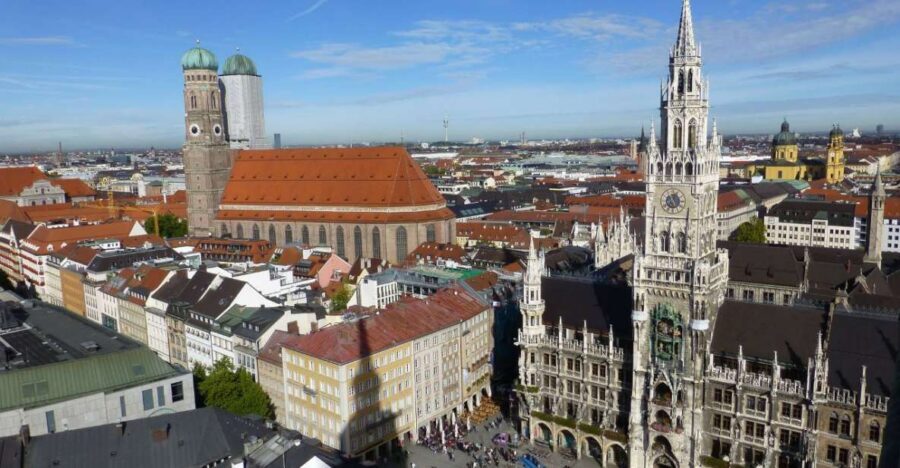
- Marienplatz to Munich’s old heart: You get your bearings around the city’s central square and town halls.
- Rathaus-Glockenspiel meaning: You’ll learn what’s happening on the clock tower and why locals care.
- WWII threads, explained on the street: Stories include Eva Braun’s connection and Georg Elser’s attempt to stop the war’s outcome.
- Beer culture with real age: Hofbräuhaus dates back to 1589, and you’ll also see long-running beer-garden culture.
- Cathedral legends, not just photos: The devil’s footprint legend at Frauenkirche is part of the story here.
- Optional Residenz Museum add-on: A great choice if you want more than the exterior landmarks.
Starting at Marienplatz’s fish fountain: where your walking map begins
Your tour meets at the fish fountain in front of the Town Hall on Marienplatz (Marienplatz 8, 80331 München). This is a smart starting point because it puts you right in the center of Munich’s “decision-making space”—the places where people meet, trade, celebrate, and argue.
From there, the walk feels like a guided way to read the city. You’re not just ticking off sites. You’re learning which corners matter and what to watch for as you move.
Because it’s private for up to 15 people, you can usually keep a comfortable pace and hear the guide’s explanations without the crowd energy of big bus tours. That said, you’ll still be on foot for about 3 hours, so plan for cobblestones and lots of standing around exterior viewpoints.
Other Munich city tours we've reviewed in Munich


Rathaus-Glockenspiel and Mary’s Column: the stories behind the symbols
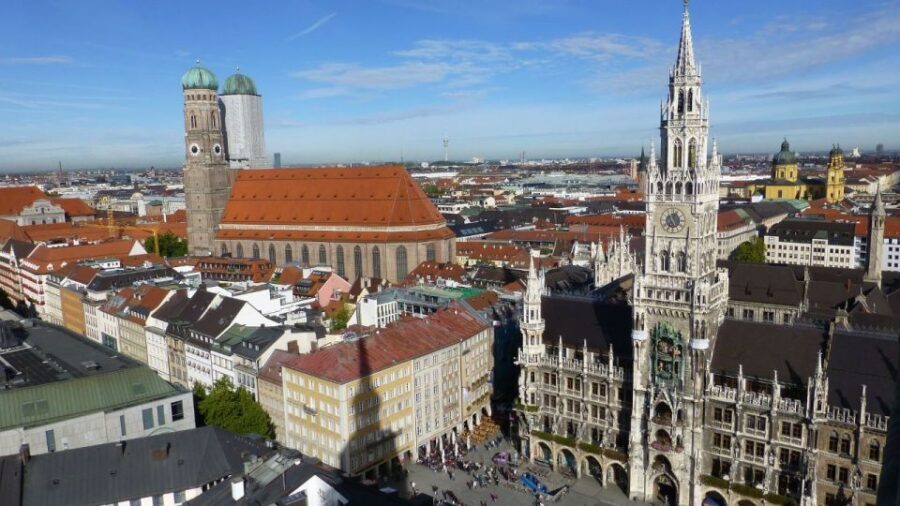
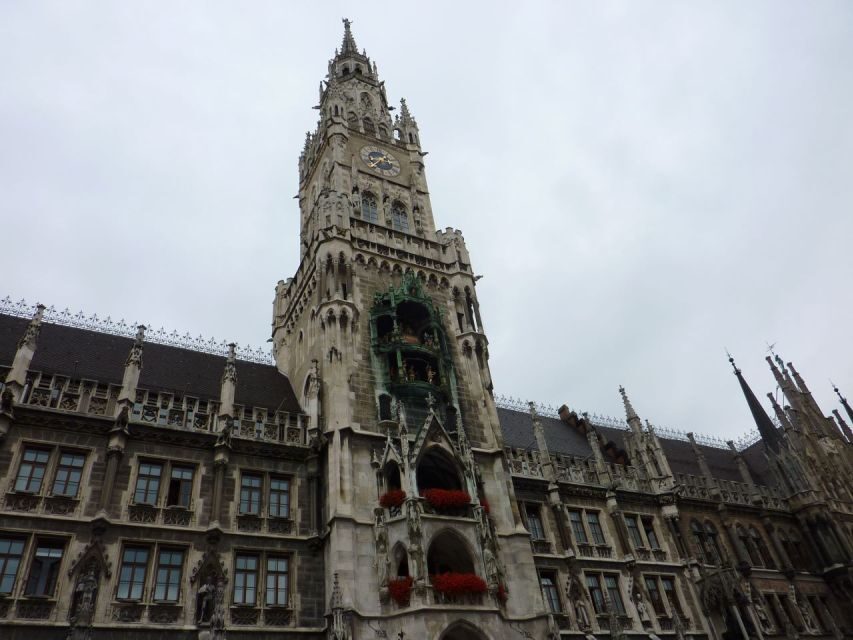
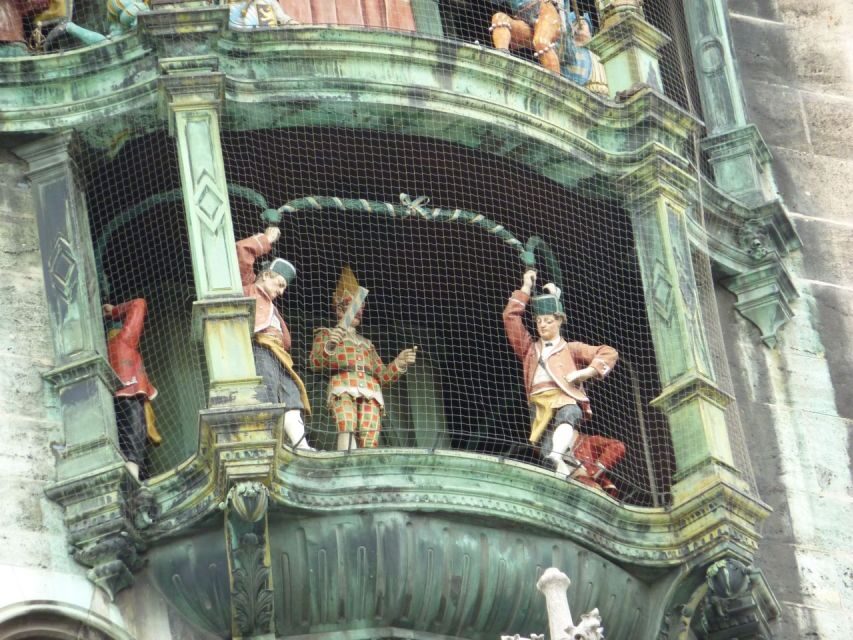
One of the tour’s best tricks is that it explains Munich’s landmark symbols in plain language. At Rathaus-Glockenspiel—the famous clock tower—your guide breaks down the meaning behind what you see. It’s a lot more satisfying after you know the story that makes those moving figures matter.
You also connect the central square to Mary’s Column. This column is why the area is known as Marienplatz, and your guide ties the name to why people gathered there historically. It’s the kind of detail that turns a landmark from background scenery into something you can actually explain to a friend.
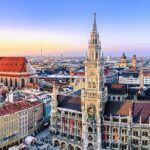
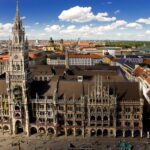
And you’ll see both the Old and New Town Hall from the outside. That pairing helps you understand how Munich’s civic life evolved without needing museum tickets to make it click. Even if you’re not an architecture person, you’ll walk away knowing what each building represents.
From monks to St. Peter: how Munich’s religious roots took hold
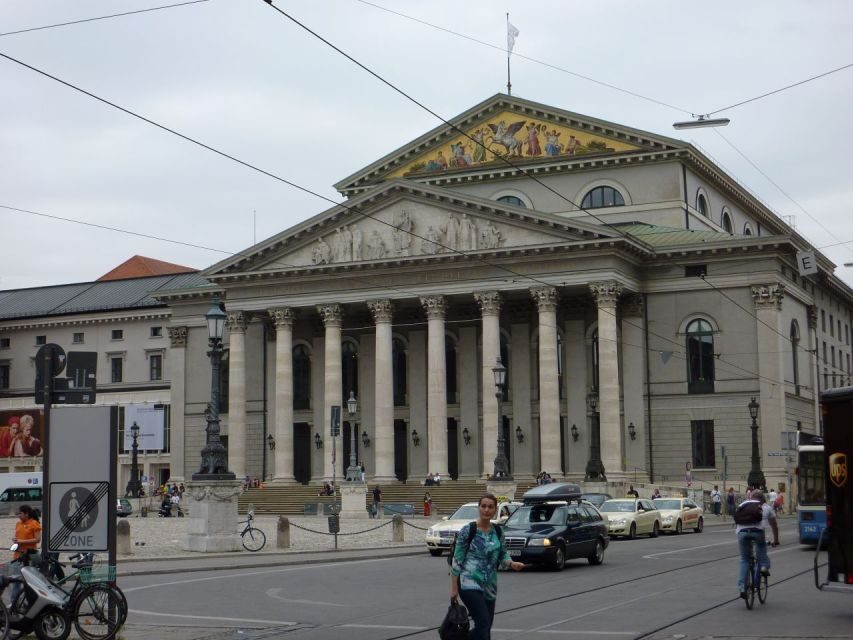
The route continues toward St. Peter, the oldest catholic church in Munich. Here, the tour focuses on how monks helped give rise to the city, with the church acting like a historical anchor for what came later.
This stop is valuable because it provides the “before all the big events” context. WWII stories are heavy, and beer-hall history is dramatic, so it helps to know that Munich also has a quieter origin story that starts long before the 20th century.
If you like legends and local belief, you’ll appreciate how the guide frames religion in everyday terms—what people believed, what they built, and how those choices shaped the city’s layout. It’s not just dates and names. It’s why these places stayed important.
Frauenkirche and the devil’s footprint legend: worth slowing down for
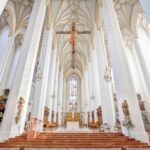
One of the tour’s standout visual moments is getting a good view of the double towers of Frauenkirche, Munich’s largest church. These towers are a signature for a reason, and the guide helps you spot what makes the cathedral so recognizable.
Then comes the fun part: the devil’s footprint at the cathedral. Your guide describes the legend behind it, and it’s one of those stories that sounds wild until you realize it’s also how communities pass along meaning and moral lessons.
This is a great stop for photos, but it’s better if you slow down and listen. The legend makes you look at the building like locals might have for generations, not just like a tourist backdrop.
Odeonsplatz and the Beer-Hall Putsch: where the power grab started
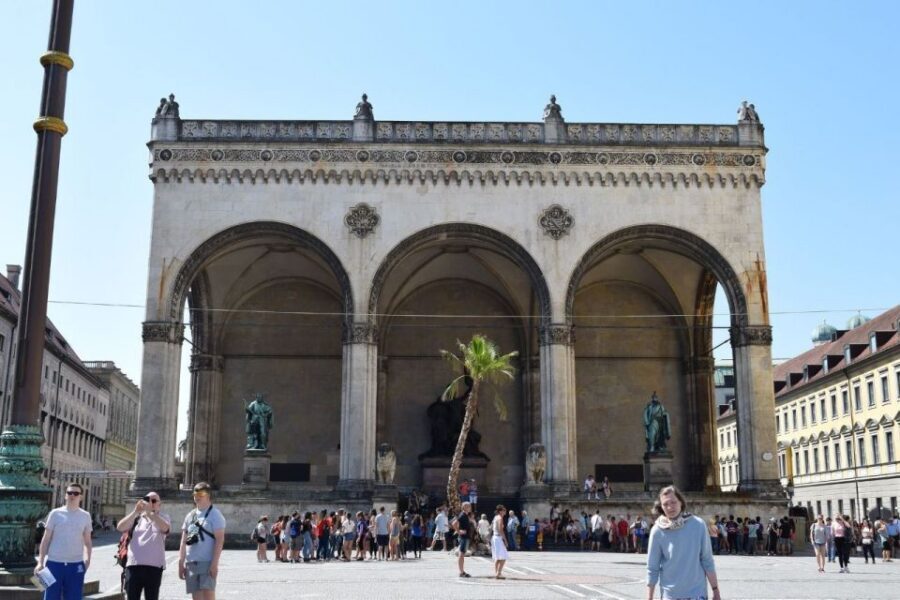
At Odeonsplatz, the tour turns to a dark chapter: the Beer-Hall Putsch. Your guide explains how about 2,000 men led by Adolf Hitler marched to the center of Munich during the Nazi’s first attempt to seize power.
This isn’t presented as a remote history lesson. It’s framed as a street-level explanation of how public spaces can become stages for political violence. If you’ve ever wondered how a movement goes from propaganda to action, this stop gives you that connection.
The pacing here matters. This is heavy material, so I’d treat it like a mental breather. Let the guide set the scene, ask questions if you have them, and then move on with the walk instead of trying to mentally sprint through it.
Other walking tours we've reviewed in Munich
Beer culture with Hofbräuhaus (1589): Munich’s long memory
Munich and beer are tied together in a way that’s hard to fake. Here, the tour points you toward Hofbräuhaus, the royal brewery established in 1589. That date is the kind that changes your perspective: this isn’t a trend. It’s a tradition with deep roots.
What I like is that the guide doesn’t treat beer as a punchline. They connect beer culture to how Munich gathered people—how public life worked, where conversations happened, and why certain places became social hubs.
You’ll also see famous beer-garden culture in the center area, including one connected with the Viktualienmarkt finish. The tour gives you the sense of how food, drink, and community share the same streets.
If you’re the type who enjoys learning what locals do, this is one of the stops that actually helps you plan your own time after the tour. You’ll have ideas for where to sit, what vibe to look for, and what to try later—without guessing blindly.
Viktualienmarkt finish: the food market that doubles as a meeting point
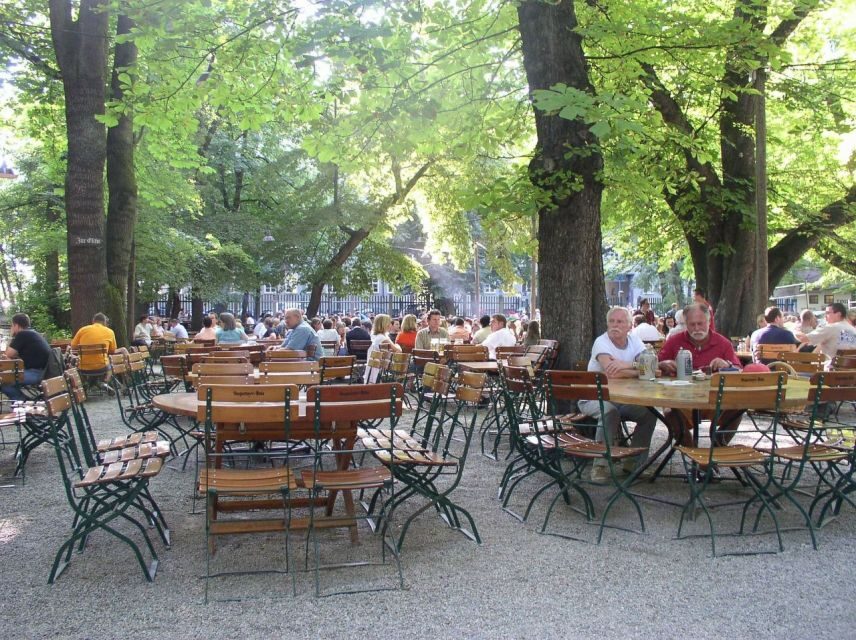
You wrap up by passing Viktualienmarkt, a public food market. The focus is on what the market offers—local delicatessen, fresh produce, and a central beer-garden atmosphere.
This is a smart ending for a walking tour. It gives you a natural place to pause and decide what you want next: a snack, a drink, or just a slow stroll while you decompress. By the time you reach Viktualienmarkt, you’ve already learned the city’s story and you can enjoy this section as the living version of it.
Even if you don’t stop for food, you’ll appreciate how central markets keep a city grounded. They’re where history meets daily life, right on the same ground you just walked.
WWII threads: Eva Braun and Georg Elser explained on the route
This tour doesn’t avoid WWII. It chooses to explain it where it belongs: in the places that shaped events and the people tied to them.
Your guide covers the hometown connection of Eva Braun, the young German girl who later became Hitler’s wife. Knowing that connection makes the story feel less like a distant historical file and more like something rooted in real people and real locations.
Then you get Georg Elser, a carpenter in Munich who tried to prevent the outbreak of WWII. Your guide explains how he planned a daring assassination attempt against the Fuhrer’s life—an effort that mattered because it nearly changed the course of events.
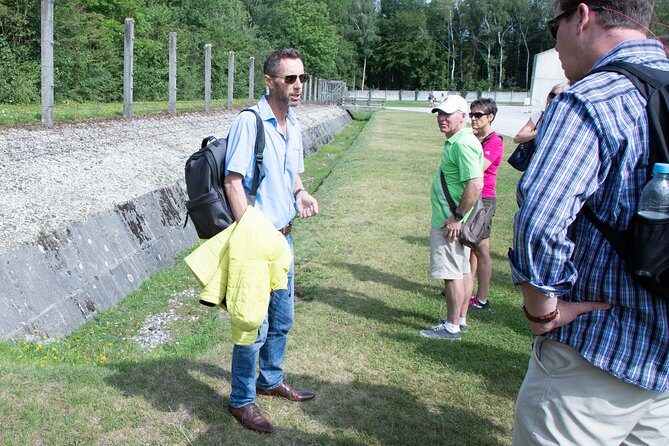
This segment is where private format shines. You can ask questions, and the guide can adjust the pacing to match your comfort level. The goal isn’t shock. It’s clarity.
Optional Residenz Museum: when you want the “inside” version
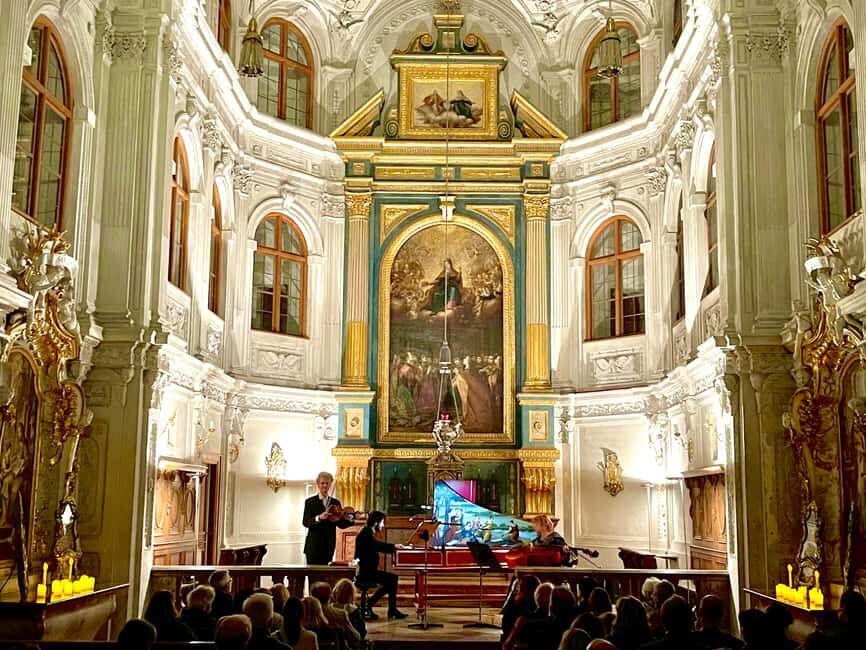
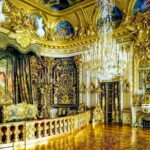
You have the option to add a visit led by your guide to the Residenz Museum. If you’re the sort of traveler who likes power, art, and royal court life behind the scenes, this is the logical extension of the walking tour.
The key practical point: entrance fees aren’t included. So if you choose this option, you’ll want to budget for museum admission on top of the tour price.
I’d consider adding Residenz Museum if you want your landmarks to come with deeper context. If you’re mainly after streets-and-stories and prefer to keep the itinerary light, you can skip it and still get plenty from the outdoor stops.
Price and value for a private group up to 15 people
The price is $288 per group for up to 15 people, with a 3-hour duration. That means your value depends heavily on group size.
If you book as a full group, the per-person cost becomes quite reasonable for a private guided walk through major city sights plus specialized WWII context. If you book just a couple of people, you’ll feel the higher per-person cost—but you still get the advantage of a private pace and the ability to tailor questions to what you actually care about.
Either way, the included part is a local professional guide. Entrance fees and food and drinks aren’t included, so think of it as a guided walking experience first, with museum add-ons as optional.
Who this tour fits best (and who should think twice)
This tour fits best if you want a guided walk that mixes top Munich landmarks with “why it happened here” explanations. It’s especially good if you care about history, legends, and how public spaces connect to big events.
It also works well for people who like beer culture but want something more than a recommendation for a restaurant. The tour gives you context—dates, places, and what Munich’s traditions are rooted in.
One clear mismatch: it isn’t suitable for wheelchair users. Since it’s a walking route with multiple stops, you’ll likely have trouble with uneven terrain and frequent standing.
Language is English or German, so check that the guide matches what you’re comfortable following.
A practical way to get the most out of it
To enjoy this tour fully, I’d show up ready to listen. This is a story-driven walk, and the value comes from understanding the meaning behind the landmarks, not just taking photos.
Wear shoes you can trust on cobblestones and plan for frequent “look up” moments at towers and facades. Bring a light layer too—Munich weather can shift, and you’ll be outside most of the time.
If you want the optional Residenz Museum visit, decide early in your planning so you don’t have to scramble later about budgeting for entrance fees.
Should you book this Munich private walking tour?
I’d book it if you want a guided walk that feels like Munich makes sense. The combination of Marienplatz landmarks, the Glockenspiel and its meaning, Frauenkirche’s devil’s footprint legend, and WWII stories like Georg Elser and Eva Braun is a smart mix.
I’d also book it if you want a private group format that stays flexible and gives you room for questions, especially when discussing heavy history and local legends.
Skip it or consider alternatives if you need an easy route (because it’s not suitable for wheelchair users) or if you only want a casual overview. This tour leans into explanation and context, and it’s best when you’re ready for that style.
FAQ
How long is the Munich private walking tour?
The tour lasts 3 hours.
Where does the tour meet?
It meets at the fish fountain in front of the Town Hall at Marienplatz 8, 80331 München.
How many people are included in a private group?
It’s a private group for up to 15 people.
What languages are the live guides?
The live tour guide is available in English and German.
What’s included in the price?
A local professional guide is included.
Are entrance fees included, like for the Residenz Museum option?
No. Entrance fees are not included, and entrance costs would apply if you choose the Residenz Museum add-on.
Is the tour good for wheelchair users?
No, the tour is not suitable for wheelchair users.
Is free cancellation available, and how does pay later work?
Free cancellation is available up to 24 hours in advance for a full refund, and you can reserve now and pay later.