REVIEW · MUNICH
Munich Private Walking Tour with the BMW Museum and BMW Welt
Book on GetYourGuide →Operated by Travmonde OÜ · Bookable on GetYourGuide
Munich has two faces: machines and myths. This private, 4-hour walk/journey pairs BMW’s world with city-center stories that range from royal romance to the dark weight of the 20th century. I like that it’s not just photos and facts; you get a guide focused on your group only, plus BMW Museum entrances included.
Two other big wins: the BMW stop is designed around innovation across cars, motorcycles, and engines, and the Munich portion covers major landmarks like Marienplatz, the clock tower Glockenspiel area, and key sites tied to Nazi history. One drawback to consider is the pace: with only 4 hours, you’ll see a lot, but you’ll need to keep moving and accept that food and drink are on your own time.
In This Review
- Key Takeaways Before You Go
- BMW Museum and BMW Welt: Seeing How Munich Thinks
- From Marienplatz Fish Fountain to Munich’s Main Icons
- Royal Romance, Rule, and Reputations: Ludwig and Lola
- St. Peter’s Church to Frauenkirche: Two Churches, Two Kinds of Meaning
- Odeonsplatz and the Beer-Hall Putsch: Where History Got Ugly
- White Rose and Georg Elser: Munich’s Resistance Thread
- Hofbräuhaus Beer Culture (Since 1589): Ending the Day on Purpose
- The Guide Factor: When Claudio Brings It Together
- Price and Value: What $539 Per Group Really Buys
- Who This Tour Suits Best
- Should You Book This Munich BMW-and-History Tour?
- FAQ
- How long is the tour?
- What does the tour cost?
- Is this a private tour?
- Where does the tour start?
- Where does the tour end?
- What’s included in the price?
- Are food and drinks included?
- Is public transportation included?
- What languages is the guide available in?
- FAQ
- What if I need to change plans?
- Can I reserve now and pay later?
Key Takeaways Before You Go
- Private group up to 15 means questions can actually happen, not just nods in the crowd.
- BMW Museum entrances included lets you spend time inside the exhibits rather than lining up on your own.
- BMW Welt + MINI and Rolls-Royce showroom time gives you a contrast: past engineering vs future vision and design.
- Munich legends plus Nazi-era impact are both on the route, with stories tied to specific places like Odeonsplatz and the Frauenkirche.
- Hofbräuhaus (since 1589) makes it easy to end the tour with beer culture, not just sightseeing.
- Public transportation isn’t included, so plan for the small extra cost and a bit of local navigation.
BMW Museum and BMW Welt: Seeing How Munich Thinks
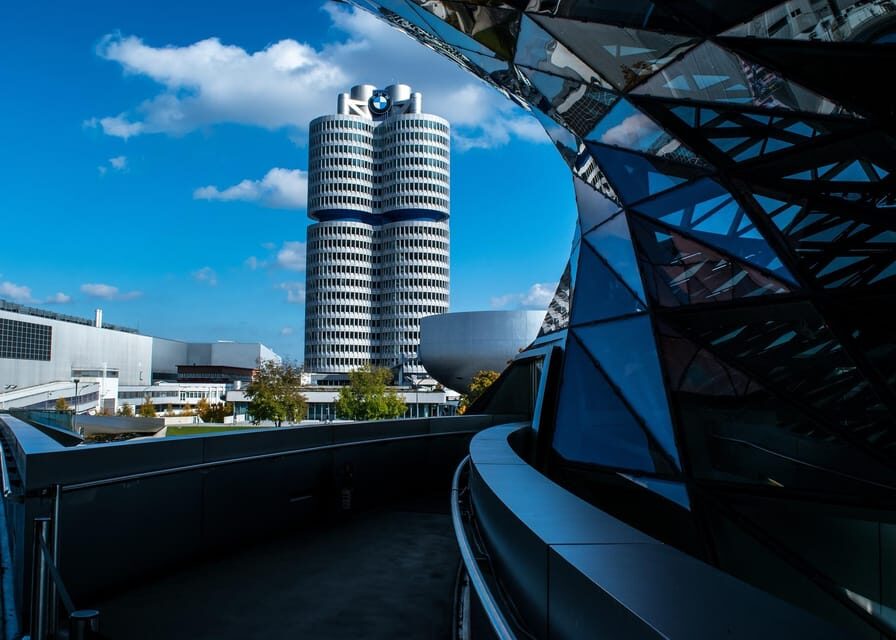
Start with a smart combo: the BMW Museum for the historical build-up, and BMW Welt for what comes after. The BMW Museum portion is set up to show a century of success and innovation, with attention on motorsports and the engineering behind cars, motorcycles, and engines. You don’t just look at vehicles; you learn the story of why the design choices matter.
Then comes BMW Welt, where you get the other side of BMW: future vision, iconic design, and a tech-focused feel. The tour also includes time to see the showroom exhibit featuring MINIs and Rolls-Royces, which is a great “contrast moment.” You’ll feel how the brand language can shift while staying unmistakably tied to German design and craftsmanship.
A practical note: BMW Museum entrance is included, but the rest of the BMW time is guided and planned for the tour. That means it’s ideal if you like structure—seeing the main threads without needing to build a mini itinerary from scratch.
Other Munich city tours we've reviewed in Munich

From Marienplatz Fish Fountain to Munich’s Main Icons
After the BMW portion, you’ll head toward Munich’s historical center using public transportation (not included). The tour meets at Marienplatz, right in front of the city hall area: the fish fountain in Am Marienplatz, 80809 München. It’s an easy landmark to find and an ideal place to start because everything else radiates from here.
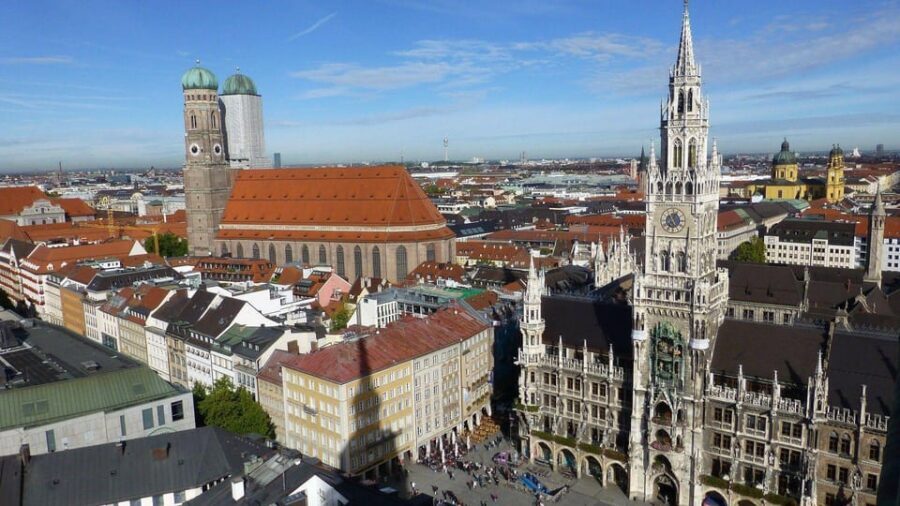
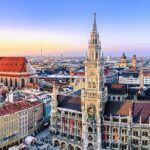
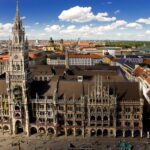
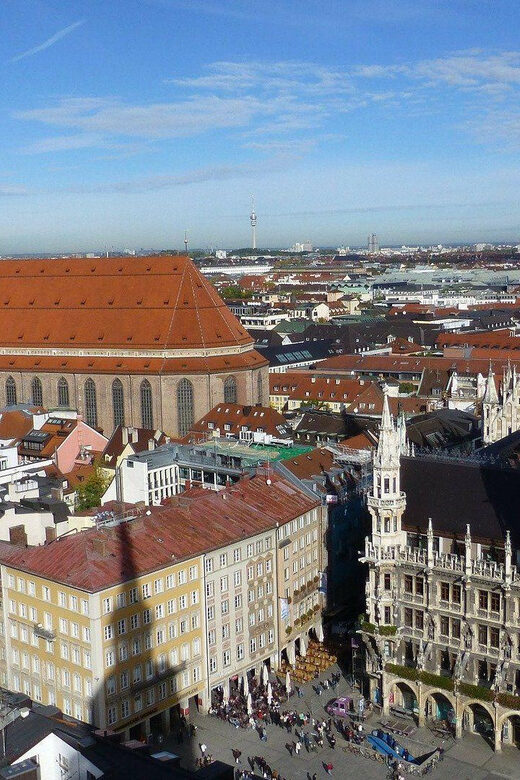
Once you’re in the center, you get the classic “first look” landmarks in a guided way. The route includes Mary’s Column, the Old and New Town Halls, and the clock tower zone where the Glockenspiel is located. This isn’t just name-dropping. With a local guide leading the connections, those spots start to feel like stage sets for the stories you’re hearing.
The main advantage of this structure is orientation. Munich can feel organized but still confusing at street level. This part helps you connect what you’re seeing—squares, church fronts, landmark façades—to what you’re learning about the city’s role and reputation.
Royal Romance, Rule, and Reputations: Ludwig and Lola
One of the tour’s best qualities is how it mixes big famous names with human-scale stories. You’ll hear about the royal love story of King Ludwig I and Lola Montez, plus the tale of Ludwig II, often described as the Not So Mad King. You also cover the misunderstood life of Eva Braun, Hitler’s wife.
I like the way these aren’t treated like distant history facts. The guide ties them to the places in the center, so the city becomes easier to read. You’re not just passing buildings; you’re picking up context for why Munich talked about these people the way it did.
Still, there’s a consideration: these stories span romance, power, and propaganda-era reality. If you prefer only one tone—like pure monarchy or only WWII—this tour may feel like whiplash. But if you want Munich to make sense as a whole, this range is exactly the point.
St. Peter’s Church to Frauenkirche: Two Churches, Two Kinds of Meaning
Religious architecture is usually one of those parts that becomes “just another church” unless you have something to look for. Here, you get St. Peter’s Church (Munich’s oldest Catholic church) and the Frauenkirche with legends attached.
At St. Peter’s Church, the value is its age and role as a marker in the city’s timeline. The tour gives it weight by putting it in the flow of squares and civic landmarks rather than treating it as a standalone stop.
Then you move to Frauenkirche, and the guide shares the legend about the devil’s footprint. This kind of story is useful because it gives you a reason to stop and look longer than you otherwise would. You’ll also start noticing details in the façade and surroundings that you’d likely miss during a quick walk-by.
If you’re traveling with limited time, this is a strong approach. Instead of spreading church visits across multiple days, you get two big emotional and historical touchpoints in one timed block.
Odeonsplatz and the Beer-Hall Putsch: Where History Got Ugly
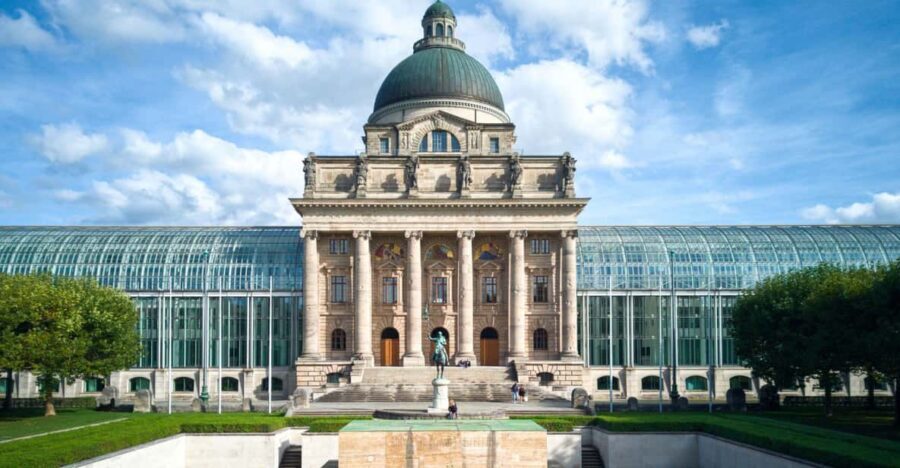
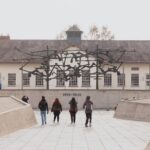
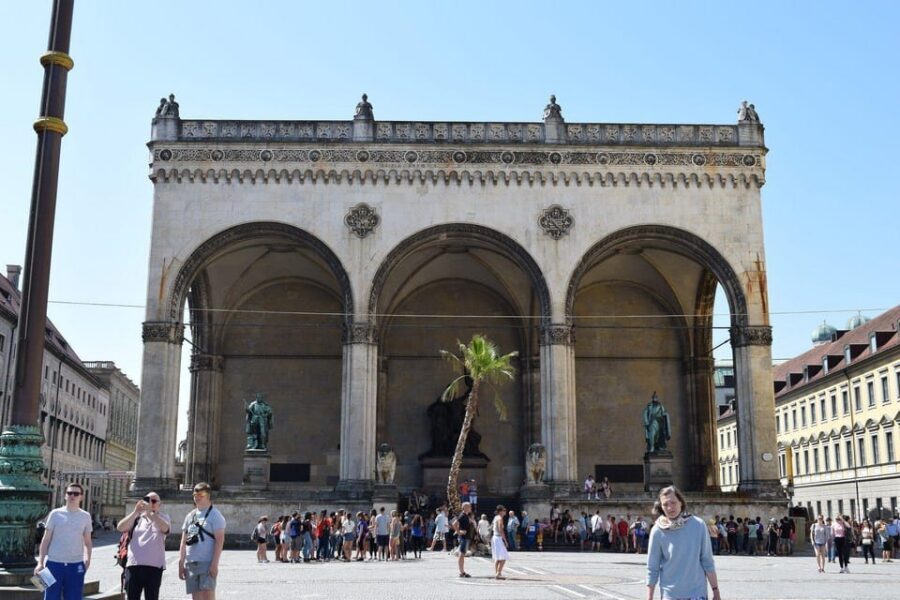
Not every walking tour includes the difficult stuff, and not every guide can handle it without getting lost in heavy narration. This one points you to Odeonsplatz and focuses on the Beer-Hall Putsch—when Hitler and his followers attempted to seize power.
I appreciate that the tour doesn’t treat this as an abstract lesson. By tying it to a named square, you get a sense of place. Even if you’ve only read the basic outline before, being physically at the location helps history feel more concrete and less like a textbook chapter.
One consideration: this part of the tour is heavy by nature. If you want a lighthearted sightseeing day only, you might prefer a different Munich walk. If you can handle serious history and you want to understand how it shaped the city’s narrative, this stop is a key reason to book.
Other walking tours we've reviewed in Munich
White Rose and Georg Elser: Munich’s Resistance Thread
Alongside the Nazi-era events tied to specific locations, the tour includes resistance history: the White Rose and Georg Elser’s bold act. The way this fits into the overall flow matters. You don’t just get the perpetrators’ story; you also get the idea that people pushed back, even when the risks were extreme.
This is one of the most praised parts of the experience because it adds balance. BMW gives you innovation and achievement; Munich gives you consequences and resistance. The result is a tour that feels like a real city with contradictions, not a checklist.
Practical tip: be ready to ask questions here. If the guide pauses, jump in. Resistance history can be dense, and a good local guide can connect the stories to what you’re seeing around you.
Hofbräuhaus Beer Culture (Since 1589): Ending the Day on Purpose
A tour like this needs a release valve. Here, it’s Hofbräuhaus, established in 1589. The plan is built for beer culture: a lively atmosphere and time to savor local-style food and refreshing beverages.
What makes this stop valuable for you is the reset. After BMW engineering and hard history, the beer hall gives you a Munich moment that feels social, ordinary, and real. It’s also a convenient way to end the tour because you’ll likely have built up an appetite just by walking and riding transit for a few hours.
One drawback to watch: the tour does not include food or drinks. That’s not a flaw; it’s normal for tours. But it does mean you should plan your budget for a beer hall meal if you want the full experience rather than a quick sip and move on.
The Guide Factor: When Claudio Brings It Together
A standout detail from prior groups is the guide performance—especially when Claudio is leading. Comments highlight his strong historical knowledge and a warm, affable style, with answers that connect different parts of the story so nothing feels random.
That matters because this tour has a lot of emotional range. BMW, royal romance, Nazi-era sites, resistance history, and beer hall culture all in one afternoon. A guide who can keep the storyline coherent turns it from a jumble into a satisfying narrative.
If you’re picking a tour specifically for guidance quality, this one has a genuine edge. A dedicated local guide for your group only is also a plus for families, friend groups, and couples who want to move at a pace that fits them.
Price and Value: What $539 Per Group Really Buys
The price is $539 per group, up to 15 people, for a 4-hour private tour. On its face, it’s not cheap. But you’re not paying for a solo ticket—you’re paying for a dedicated guide and a planned route that covers two major, ticketed attractions.
Here’s the value logic I’d use:
- You get entrances to the BMW Museum included, so you’re not absorbing that cost yourself.
- The private format means fewer delays and more control. If you have a question about what you’re seeing, you can stop and ask.
- You also get a guided path through central landmarks like Marienplatz, the town halls, and Frauenkirche, rather than trying to stitch it together on your own.
The main cost caveat is that food, drinks, and public transportation aren’t included. So if you plan to eat at Hofbräuhaus and use transit during the day, your personal total will go up. Still, that’s common and usually worth it when the route is efficient.
Who This Tour Suits Best
This is a great fit if you want Munich to feel like a story, not a photo reel. You’ll probably love it if you enjoy:
- BMW beyond the basics, including museums and the BMW Welt design side
- Major city landmarks with meaning, not just street names
- A balanced route that includes both Nazi-era history tied to locations and resistance history (White Rose and Georg Elser)
It may be less ideal if you dislike historical topics connected to WWII and its aftermath, or if you want unstructured time for long museum wandering. With a 4-hour cap, you’ll move steadily from stop to stop.
Should You Book This Munich BMW-and-History Tour?
I’d book it if you want a single afternoon that connects engineering, architecture, royal legends, and the city’s darker chapters—then ends with Hofbräuhaus beer culture. The private format is a real advantage for families and small groups who want questions answered and a clear route without logistics headaches.
I’d skip or swap it if you’re only interested in BMW and could spend more time inside exhibits at your own pace. Or if you want a lighter day with no heavy Nazi-era content, you’ll likely feel the weight of this itinerary.
If you want a guided day that makes Munich feel like one coherent place, this tour is a solid choice.
FAQ
How long is the tour?
The tour duration is 4 hours.
What does the tour cost?
The price is $539 per group, up to 15 people.
Is this a private tour?
Yes. It’s a private group tour with a local guide dedicated to your group only.
Where does the tour start?
It starts in front of the fish fountain in front of the city hall at Marienplatz Square, Am Marienplatz, 80809 München, Germany.
Where does the tour end?
It ends back at the meeting point.
What’s included in the price?
A local guide dedicated to your group only, plus entrances to the BMW Museum.
Are food and drinks included?
No. Food, drinks, and other expenses are not included.
Is public transportation included?
No. Public transportation is not included.
What languages is the guide available in?
The live tour guide is available in English and German.
FAQ
What if I need to change plans?
You can cancel up to 24 hours in advance for a full refund.
Can I reserve now and pay later?
Yes. You can reserve now and pay later.