REVIEW · MUNICH
Munich: Walking Tour Old Town 3D VR Tour in GERMAN
Book on GetYourGuide →Operated by Weis(s)er Stadtvogel GmbH · Bookable on GetYourGuide
Munich rewinds in your own hands. This walking tour uses 3D VR glasses so you can stand in today’s Altstadt and see key spots as they looked in different ages, explained by a live guide as you move.
I really like the Marienplatz time-split idea, with the western side set around 1570 and the eastern side jumping roughly 300 years later. I also like that the German guide connects the visuals to real details you’d miss if you were just sightseeing on your own.
One big thing to think about: the VR experience depends on your smartphone app and internet, and some people found the glasses felt more like a still-image device than fully animated VR.
In This Review
- Quick hits you can count on
- Meeting at Orlandohaus (Platzl 4) with a blue-bag guide
- The 3D VR setup: why your charged smartphone isn’t optional
- Marienplatz split in two: 1570 on the west side, later Munich on the east
- Western Marienplatz around 1570: grain market, gallows, and the disgraceful donkey
- Eastern Marienplatz a few centuries later: old town hall in 1870 and street life visuals
- Platzl in 1895: how the area became the Urmünchner place you see today
- Hofbräuhaus: seeing a legend in past and present forms
- How to make the most of a tech-and-walking combo in Munich
- Price and value: is $37 for 2 hours a good deal?
- Who should book this Munich Old Town 3D VR tour?
- Should you book this Munich Old Town 3D VR tour?
- FAQ
- What is the meeting point for the tour?
- How long is the Munich Old Town 3D VR tour?
- What language is the live guide?
- Do I need my smartphone for the VR part?
- What should I bring?
- What’s included in the price?
Quick hits you can count on
- Marienplatz as a time machine: western side around 1570, eastern side later (including a look tied to the 1870 old town hall)
- Guided stories at street level: you don’t just watch renderings, you hear what you’re looking at and why it mattered
- Clear “then vs now” comparisons: Hofbräuhaus is covered in both its past and present forms
- A focused set of 3D stops: the tour centers on four places with dedicated 3D renderings
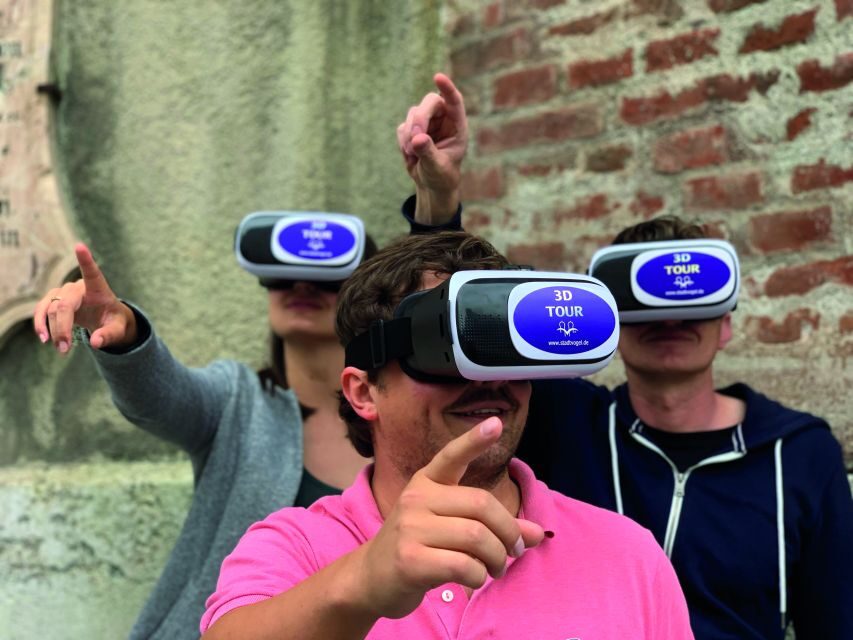
- Hands-on tech setup: your charged smartphone feeds the app into the VR glasses at the meeting point
Meeting at Orlandohaus (Platzl 4) with a blue-bag guide
You’ll start at a very specific point: meet directly in front of the Orlandohaus at Platzl 4. Your guide carries a big blue bag and a 3D Tour sign, so it’s not one of those “good luck finding each other” starts.
This matters because the tour is tech-based. You want a clean handoff from street meeting to app setup to your first VR moment. When you know exactly where to go, you spend less time buffering and more time walking and learning.
The tour is also wheelchair accessible, which is worth noting if you’re choosing this versus another “just steps and stairs” option in the Old Town.
Other Munich city tours we've reviewed in Munich



The 3D VR setup: why your charged smartphone isn’t optional
Plan for this tour like it’s part walking tour, part “use your phone as the brain.” The tour requires that all participants download an app at the meeting point. Then you insert the app into the VR glasses to see the 3D images.
You’ll want:
- a charged smartphone
- internet access at the start (so the app can be downloaded)
Here’s the practical takeaway: this is not a “walk up, put on glasses, it just works” experience. You’ll get more enjoyment if your device is ready, your group stays patient, and you treat the setup as part of the fun instead of a minor annoyance.
Also, keep your expectations realistic about what the VR will look like. Some people reported the glasses delivered photos rather than moving scenes, and that the pictures on their own phone were easier to see. That doesn’t mean you’ll have a bad time—but it does mean you should be mentally prepared for a VR experience that may not be fully cinematic.
Marienplatz split in two: 1570 on the west side, later Munich on the east
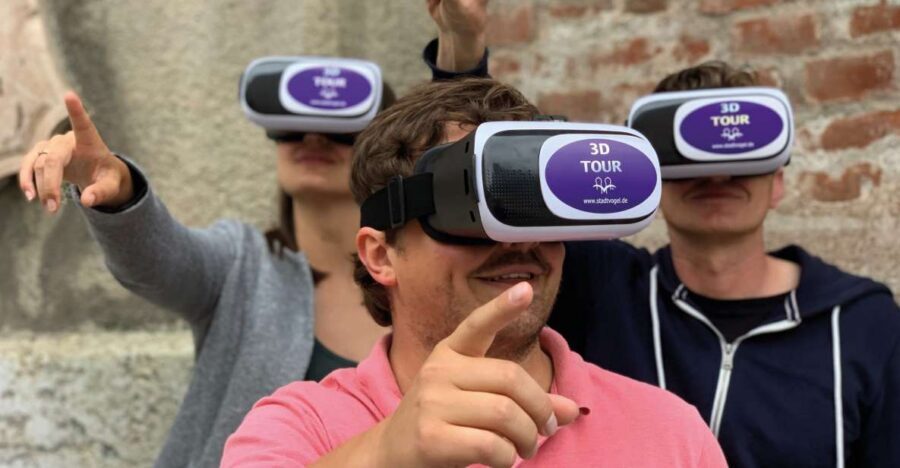
Marienplatz is the big storytelling stage, and the tour treats it like one square with two different time layers. For the tour, Marienplatz is divided in half: the western side takes you into a version of the city around 1570, while the eastern side shifts you ahead roughly 300 years.
Western Marienplatz around 1570: grain market, gallows, and the disgraceful donkey
On the west side, the tour focuses on daily life and darker public spectacle—very Munich, very Old Town. You’ll see renderings tied to the Medieval grain market and the area associated with gallows for executions.
Then there’s a detail I’d file under “history that sounds like a legend but is anchored in place”: the so-called disgraceful donkey. It’s exactly the kind of odd civic tradition that’s hard to pick up from a guidebook photo—yet it lands well when you’re standing where it happened and seeing it explained.
Why this works: the VR doesn’t replace the guide. It gives context so the square feels less like a pretty open space and more like a functional town center—markets, punishment, and public rules.
Eastern Marienplatz a few centuries later: old town hall in 1870 and street life visuals
On the eastern side, the tour highlights what the area looked like later, including what the Old Town Hall looked like in 1870 (including the first completed part). You’ll also see renderings connected to carriages and old professions in action.
This is where I think the experience becomes more than just “cool tech.” When you’re shown how buildings and street scenes changed, you start reading the present differently. You begin noticing why certain facades, spaces, and streets feel the way they do today.
One drawback to watch for: if your VR setup is glitchy or your images aren’t sharp, you might miss some of these finer details. If you can, keep your eyes on both the guide’s explanation and the renderings, and be ready to step your focus around a bit as the device switches views.
Other Old Town walking tours we've reviewed in Munich





Platzl in 1895: how the area became the Urmünchner place you see today
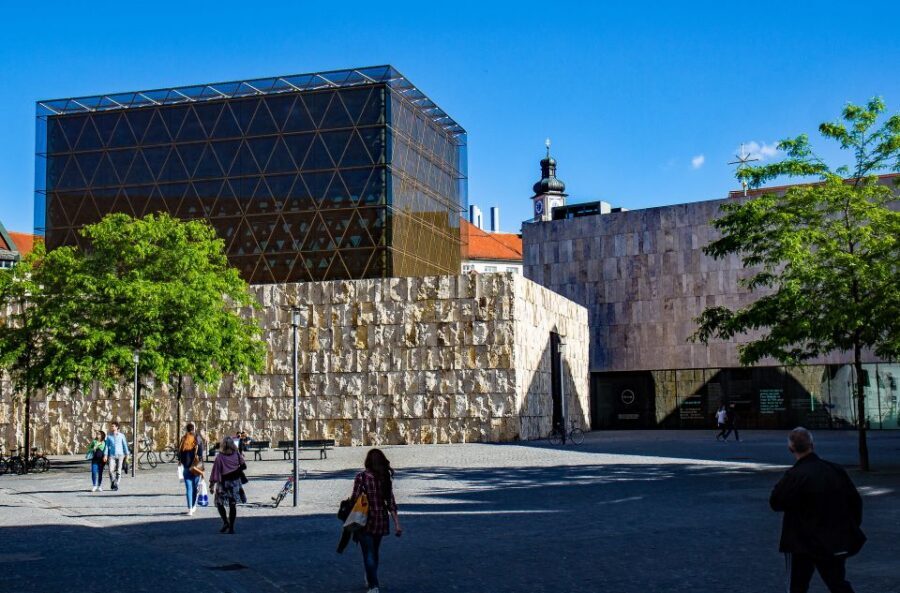
After Marienplatz, the tour shifts toward Platzl, with a set of “surprises” tied to 1895. The guide explains how this part of town came to be and how it changed into the Urmünchner place you recognize today.
Even without seeing every detail clearly, this stop is valuable because it gives you a historical narrative for a neighborhood that can otherwise feel like a blur of shops, beer halls, and street crowds. When you understand what role the area played—and how it evolved—you get a better sense of the Old Town’s logic.
This is also a nice pace change from Marienplatz. The square is big and iconic; Platzl feels more lived-in. VR here helps you connect the famous “Munich photo spots” with the quieter story of how the area developed.
Hofbräuhaus: seeing a legend in past and present forms
The tour doesn’t ignore modern Munich’s gravity. It brings you to the famous Hofbräuhaus and frames it in both past and present forms.
Why this stop matters: Hofbräuhaus is the kind of place people visit often, but they rarely see it through a time lens. The VR angle turns it from a single snapshot (today) into a comparison tool (then versus now). You’ll come away with a stronger sense that the Old Town’s big institutions didn’t appear fully formed—they grew, changed, and adapted.
If your VR images are clear, this is likely one of the more satisfying comparisons because it’s instantly recognizable. If your VR setup is weaker, still listen to the guide here—the historical framing can carry the stop even when the tech isn’t perfect.
How to make the most of a tech-and-walking combo in Munich
This kind of tour is different from a classic “stand, listen, walk, repeat” city guide. The best results come from a few simple habits.
First: treat the smartphone setup as part of the experience. Keep your phone charged, stay connected to the internet, and follow the guide’s instructions at the meeting point. If you show up with low battery, you’ll feel rushed the moment the app step begins.
Second: keep the group moving. VR moments are fun, but you’re still walking in Munich’s Old Town. If you pause too long to troubleshoot, it can slow everyone down. If something isn’t working, ask quickly and move on—your guide can usually adjust timing.
Third: balance attention. If the VR scene feels small or unclear, don’t force it. Look at what you can see, then rely on the guide to fill in the meaning. The strongest part of this tour is the way the visual time-cuts connect to explanations.
Finally: bring the right mindset. If you’re chasing state-of-the-art, motion-heavy VR, you might feel disappointed. If you’re happy with a guided story plus 3D reconstructions that help you imagine different eras, you’ll probably have more fun.
Price and value: is $37 for 2 hours a good deal?
At $37 per person for about 2 hours, this tour prices like a mixed product: a guided walking tour plus VR glasses and a phone-based VR app.
Here’s how I’d judge the value:
- You’re getting a guide and a structured walking route across major Old Town areas.
- You’re also paying for the 3D rendering concept—the “then vs now” effect at specific places like Marienplatz and Hofbräuhaus.
- The value depends heavily on one thing: how well the VR component works for your group. The experience is strong when the visuals are clear, and weaker when the glasses function like still-image viewers.
So if you love history and you’re curious about seeing famous spots time-traveled, $37 can feel fair. If you want fully animated VR or you expect zero tech fuss, you may feel like you paid for a “cool idea” that didn’t fully deliver.
Who should book this Munich Old Town 3D VR tour?
I’d steer this toward people who enjoy active sightseeing with a clear story and don’t mind smartphone-based tech.
You’ll likely enjoy it if:
- you want a German guide and like guided explanations
- you enjoy history that includes both everyday life (markets, professions) and darker public moments (like gallows mentioned in the tour)
- you’re traveling with friends or family and want something more hands-on than a standard walking tour
- you’re okay using your phone for the VR app and you have internet access
You might think twice if:
- you dislike tech setup steps
- you’re hoping for highly animated, movie-like VR footage
- you have concerns about visual clarity on VR glasses, especially based on how your devices behave
Should you book this Munich Old Town 3D VR tour?
If you like the idea of standing in front of Marienplatz and watching it time-slice into 1570 and later centuries, this is a fun and memorable way to understand the Old Town. The tour’s real strength is the pairing of location-based 3D reconstructions with a live German guide who connects the visuals to what you’re seeing on the street.
I’d book it if your expectations match what the VR is described to be: a guided, phone-assisted 3D viewing experience. I’d skip it if you expect slick, fully animated VR that never struggles with setup or display clarity.
FAQ
What is the meeting point for the tour?
Meet directly in front of the Orlandohaus (Platzl 4). The guide will have a big blue bag and a 3D Tour sign.
How long is the Munich Old Town 3D VR tour?
The tour lasts 2 hours.
What language is the live guide?
The live tour guide speaks German.
Do I need my smartphone for the VR part?
Yes. You must download an app onto your smartphone at the meeting point, and your smartphone is inserted into the VR glasses to see the 3D images.
What should I bring?
Bring a charged smartphone and internet access.
What’s included in the price?
Included are the guide, the walking tour, and VR glasses. Food and drinks are not included.