REVIEW · MUNICH
Munich: Scary Tour with actors in GERMAN
Book on GetYourGuide →Operated by Weis(s)er Stadtvogel GmbH · Bookable on GetYourGuide
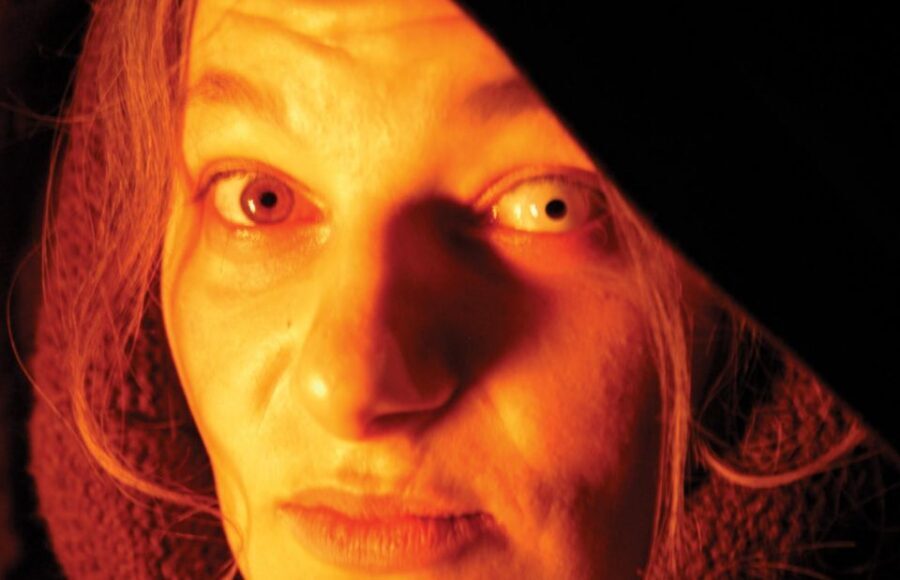
Tonight, Munich gets dark and theatrical. In a German 90-minute walking tour, costumed actors step out of the past along landmarks like Neuhauser Tor and Frauenkirche, acting out stories of witch hunts, prostitution, torture, and executions as you walk through the Old Town. I love how the show stays glued to the streets in front of you instead of feeling like a lecture in costumes.
I also love the tight mix of acting and plain historical explanation. Our guide, easy to spot with the BIG BLUE BAG marked Weis(s)er Stadtvogel, connected the drama to facts you can actually remember, including why executions were held outside the city and how the red-light district at the Platzl lasted until the 1972 Olympics. One possible drawback: it’s live German-only, so if you’re not comfortable with spoken German, you may miss a lot of the jokes and details.
In This Review
- Key highlights
- Meeting at Karlsplatz/Stachus: Finding the BIG BLUE BAG at Karlstor
- Neuhauser Tor and Salzstraße: When the city sent people out
- St. Michaelis Church and the Jesuit school: Renata and Father Ignatius on the edge of superstition
- Schöner Turm to Frauenkirche: Why the devil shows up where it’s windy
- Town Hall yard and alchemy talk: Marco Bragadino’s pitch and why crowds fell for it
- St. Peter’s Church and the hangman’s life: Torture as work, not just violence
- Old Town Hall and the Platzl: From torture rooms to the end of the red-light district
- Price and pacing: Is $46 worth it for 90 minutes of theater history?
- Who this tour fits best (and who should skip it)
- Should you book this Munich Scary Tour with actors in German?
- FAQ
- FAQ
- What language is the tour in?
- How long is the Munich Scary Tour?
- Where do we meet the guide?
- Which places does the route include?
- Is the tour wheelchair accessible?
- Does it run in bad weather?
- How much does it cost?
- Is there free cancellation and can I reserve without paying now?
Key highlights
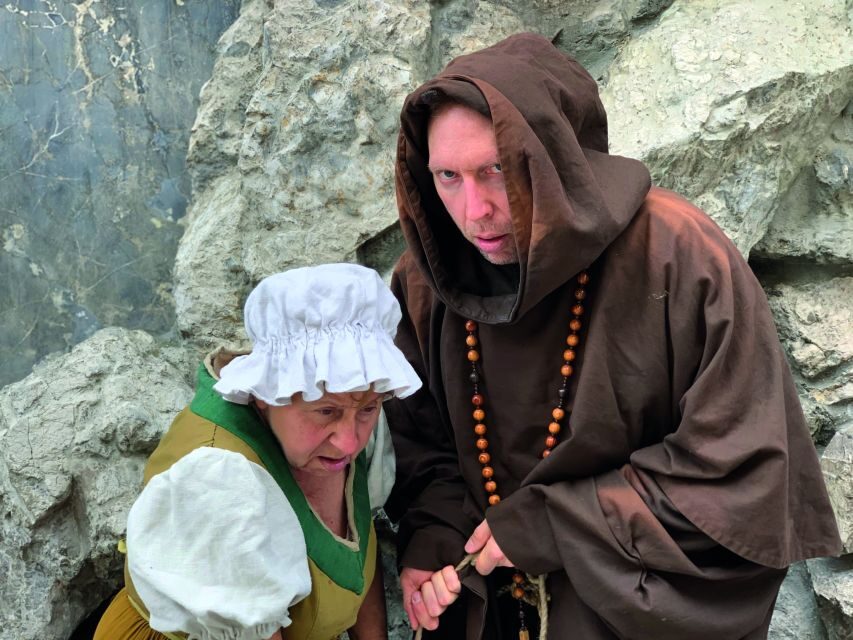
- Acting scenes at real Munich landmarks like Frauenkirche and the Town Hall area, not a generic theater setup
- Witch hunts, torture, and the devil played out with reenactments and story logic
- Street stops that map the storyline from Neuhauser Tor through Salzstraße and on to the Platzl
- Clear, memorable facts tucked into the drama (execution sites outside town, Munich’s red-light history)
- A guide you can find fast at Karlsplatz/Stachus under the Karlstor archway with a BIG BLUE BAG
Meeting at Karlsplatz/Stachus: Finding the BIG BLUE BAG at Karlstor
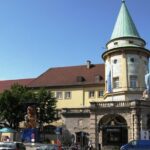
This tour starts right in the middle of things, at Karlsplatz/Stachus, under the archway of the Karlstor. You’ll know your guide fast: they’ll be wearing a BIG BLUE BAG with the white words Weis(s)er Stadtvogel on it. That matters, because this is a walking tour and the start time can feel like it arrives quickly.
Once you spot the blue bag, you’re set for a 90-minute evening walk through Munich’s darker legends and the real systems behind them. The vibe is theatrical, but it’s still a tour of actual places, so you’re not just following actors in an empty corridor.
Also, plan for weather. The tour runs rain or shine, so bring the same practical layer you’d wear for an evening stroll—Munich weather can change fast.
Other Munich city tours we've reviewed in Munich

Neuhauser Tor and Salzstraße: When the city sent people out
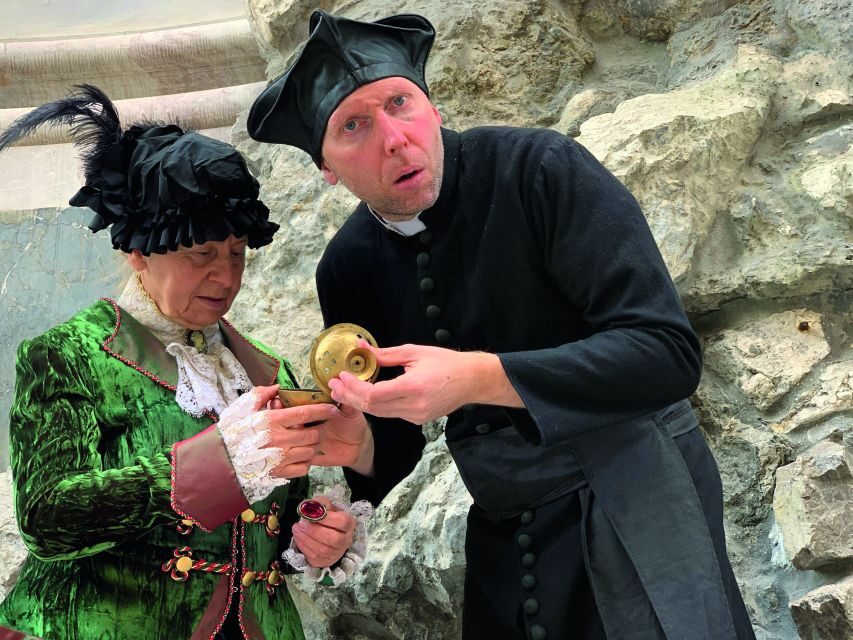
The storyline kicks off at Neuhauser Tor, which ties directly to public punishment. In this part of the walk, you hear how delinquents were led away toward execution outside of town. That might sound like grim trivia at first, but the tour uses it to explain how cities tried to control fear and morality—publicly, but at a distance.
Then you move along historic Salzstraße, and that shift from the gate into the street is important. It keeps the stories grounded in the way Munich was built and organized. You’re watching the map form in real time.
And yes, the acting ramps up. There’s a theme here—lives and fates shaped by religious fear, community pressure, and cruel entertainment. If you’re the type who likes your history with teeth, this is your sweet spot.
St. Michaelis Church and the Jesuit school: Renata and Father Ignatius on the edge of superstition
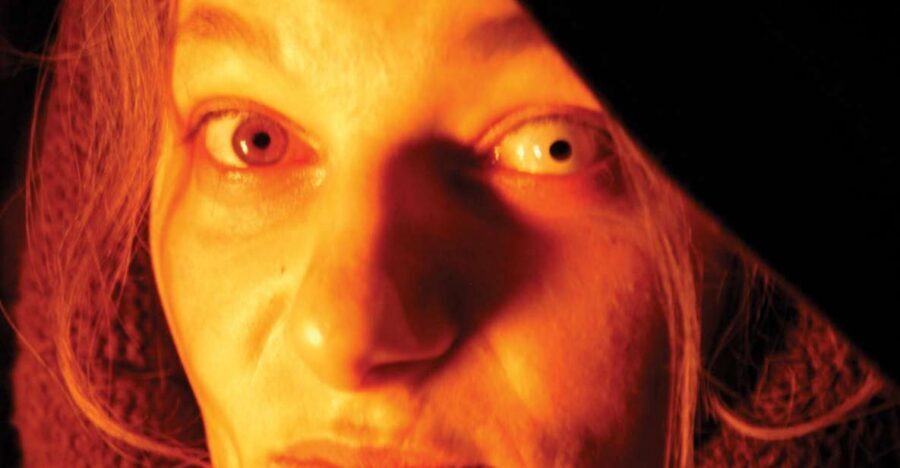
As you head deeper into the old center, you pass the former Jesuit school connected to the witch-hunt era. The tour uses that setting to show how official learning and religious institutions could coexist with terrifying accusations. You’re not just hearing about witches—you’re seeing the framework that made accusations plausible to ordinary people.
A standout reenactment involves an argument between the duchess Renata and Jesuit father Ignatius. The story lands at St. Michaelis Church, where the tower collapse is tied, in the legend, to accusations about bad women creating an unusual storm. It’s dramatic storytelling, but the value is that it shows how people explained disaster before modern science.
What you’ll get out of this stop is the feeling that superstition wasn’t floating in the air. It was tied to status, religion, and the way authority spoke to the public. You’ll walk away with a clearer picture of how a rumor could become a sentence.
Schöner Turm to Frauenkirche: Why the devil shows up where it’s windy
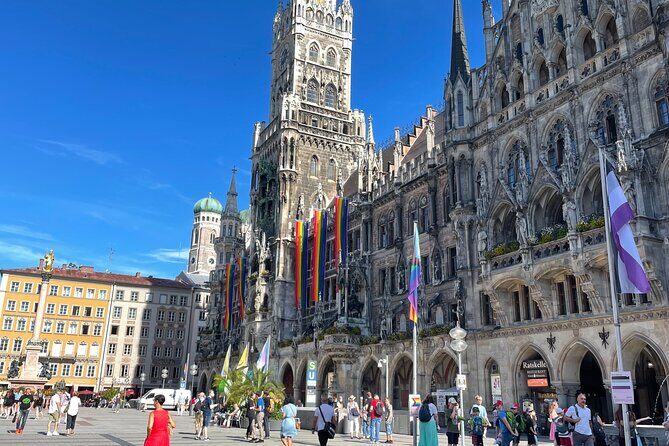
At Schöner Turm, you hear a darker personal tale—sadly, not every story stays mythic. The tour brings you to the Frauenkirche, and this is one of the most memorable pieces because the storytelling plays with the place itself. The description leans into how windy conditions at the church connect to the legend of the devil.
This is also where you meet the Prince of Darkness in the tour’s theatrical language. The guide links devil folklore to the idea that the devil helped the master builder construct the church, and then the show takes a more playful turn with the question of the devil’s shoe size. It sounds silly, but it actually works: it gives you emotional contrast so the overall dark subject doesn’t drown everything.
If you want a practical takeaway, it’s this: Munich’s landmark architecture isn’t only about engineering. Stories grew around it—sometimes as explanation, sometimes as entertainment, often as warning. You’re seeing how culture sticks to stone.
Town Hall yard and alchemy talk: Marco Bragadino’s pitch and why crowds fell for it
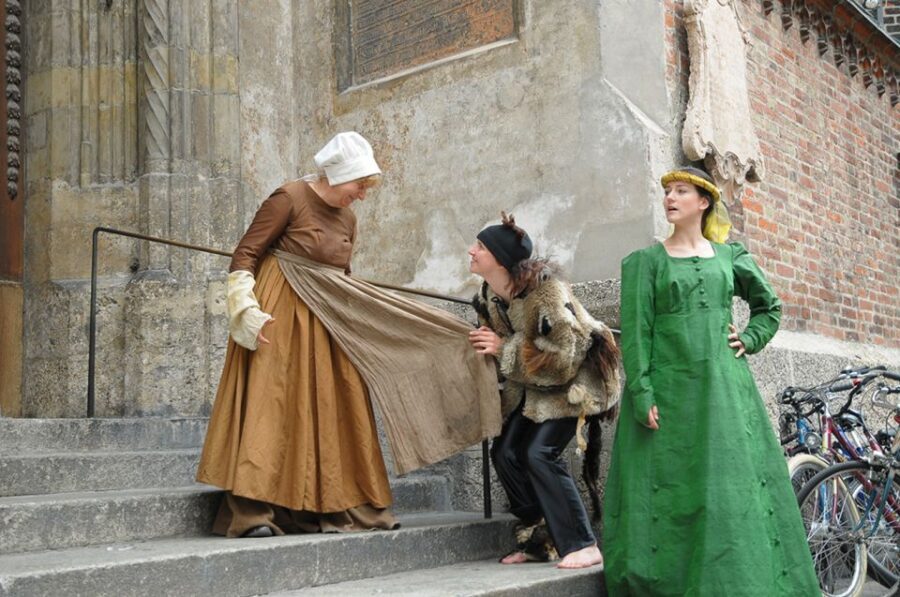
As you approach the Town Hall area, the tour shifts from courtroom violence to another kind of persuasion: the kind that sells hope, status, and miracles. You’ll hear about the alchemist Marco Bragadino, and yes, there’s a performance element—he’s there, addressing you with his arts.
This part is valuable because it reframes witch-hunt fear. Accusations didn’t just travel downward from authorities. They also connected to people searching for power, money, cures, or meaning in a world where misfortune felt personal.
The Town Hall yard setting adds weight. It’s where civic life and public attention gathered, so it makes sense that the tour would use it to show how crowds could be swept up—whether by religion, rumor, or claims of hidden knowledge. Acting keeps it fun, but the idea behind the acting is sharp.

St. Peter’s Church and the hangman’s life: Torture as work, not just violence
At St. Peter’s Church, the story turns to everyday reality for someone you don’t usually think about when you hear the word hangman. This stop covers how hangmen looked and why they were best avoided. More than that, you learn how their role worked in the system, including details tied to things like obtaining a gallows rope.
This section can feel intense because it strips away the movie version of punishment. You’re not watching an abstract monster—you’re hearing about a job and a social boundary. The tour’s acting makes the subject easier to process, but it doesn’t turn it into candy.
There’s also a moment with a beautiful woman escaping sure death. That kind of twist is the tour’s way of reminding you that even inside a brutal setup, not every story ends as the powerful want. The balancing act is part of what keeps the tour moving instead of only spiraling downward.
Old Town Hall and the Platzl: From torture rooms to the end of the red-light district
Near the Old Town Hall, the tour brings you across what’s described as a former torture chamber. This is where the show leans hardest into the grim side—grim enough that you may feel a little tense even if you came for the theater. The practical value is that it helps you understand how punishment was built into civic space and how the city used fear to enforce behavior.
Then you reach the Platzl, and the story pivots toward prostitution history. You’ll hear that the Platzl was home to Munich’s red light district until the Olympic Games of 1972. The tour ties that to what people later sang about in the famous song Skandal im Sperrbezirk, connecting pop culture to real urban change.
That 1970s-to-1972 timing matters because it shows how quickly “acceptable” and “unacceptable” can shift. The dark theme doesn’t stop at medieval and early modern legends; it continues into modern city decisions. You’ll finish with the feeling that the tour isn’t only about ghosts and devils. It’s also about how societies choose who gets punished and who gets pushed out.
Price and pacing: Is $46 worth it for 90 minutes of theater history?
At $46 per person for 90 minutes, you’re paying for a real walking route plus professional actors and reenactments. This isn’t a free museum lecture, and you shouldn’t expect it to feel like one. If you like history that talks back—through performance and scene changes—this price can feel fair quickly.
The pacing is part of the value. Stops are close enough that you keep moving, but you still get story beats: gate to street, street to church, church to civic buildings. That structure helps your brain hold onto details, like the why behind execution outside town and the why behind Munich’s red-light district ending in the 1970s-era policy shift tied to 1972.
One more practical note: it’s a German live tour. A rating is great, but language is the real make-or-break. If you speak German, you’ll get the humor and the sharper edges of the storytelling. If you don’t, you might still enjoy the acting, but you’ll likely miss some of the historical reasoning.
Who this tour fits best (and who should skip it)
This is a strong pick if you want Munich history with theater energy. You’ll enjoy it if you like walking city centers, standing in front of landmark buildings, and letting stories explain why certain places earned their legends.
It’s also a great choice if you’re the type who remembers stories better than facts lists. The tour’s style uses drama to make the connections—witch hunts tied to institutions, punishment tied to public space, and folklore tied to architecture.
Skip it if you strongly prefer light sightseeing. This is centered on witch hunts, prostitution, torture, and executions, so the tone will skew dark for long stretches.
Should you book this Munich Scary Tour with actors in German?
If you’re okay with dark subject matter and you can handle live German, I think this tour is a smart way to spend an evening in the center. You get a compact route through famous spots, and the acting adds enough variety that the history doesn’t feel like repetition.
Book it if you want memorable scenes at Neuhauser Tor, St. Michaelis Church, Frauenkirche, St. Peter’s Church, the Town Hall area, the Old Town Hall, and the Platzl—all tied into a single storyline. Skip it if language is a problem for you or if you want something more upbeat.
FAQ
FAQ
What language is the tour in?
The tour is in German, with a live guide.
How long is the Munich Scary Tour?
It lasts 90 minutes.
Where do we meet the guide?
Meet at Karlsplatz/Stachus, under the archway of the Karlstor. The guide wears a BIG BLUE BAG with the white words Weis(s)er Stadtvogel.
Which places does the route include?
The highlights include Neuhauser Tor, St. Michaelis Church, Frauenkirche, the Town Hall yard, St Peter’s Church, and the Old Town Hall, plus the Platzl area as part of the story.
Is the tour wheelchair accessible?
Yes, it is listed as wheelchair accessible.
Does it run in bad weather?
Yes. It takes place rain or shine.
How much does it cost?
The price is $46 per person.
Is there free cancellation and can I reserve without paying now?
Yes. You can cancel up to 24 hours in advance for a full refund, and you can reserve & pay later (book now and pay nothing today).