REVIEW · MUNICH
Munich’s 500 Years of Architecture Guided Tour
Book on GetYourGuide →Operated by Philipp's Munich Tours · Bookable on GetYourGuide
Munich’s buildings tell stories for 500 years. This tour strings those stories together in time order, from Frauenkirche in the late 1400s to Art Nouveau and modern design later on. I like how the guide, Philipp, keeps things personal and animated, with legends and behind-the-scenes details that make famous landmarks feel new.
Two things I especially liked: the mix of monumental churches and palaces with quieter river moments on the Isar River, and the fun ending sequence with Jugendstil, street art, and a striking modern museum finish. One drawback to plan for: it’s a winter walk-and-tram style experience, so you’ll need solid walking shoes and warm layers, and it’s not suitable for wheelchair users or people with mobility impairments.
In This Review
- Key highlights
- Why Munich’s 500-Year Architecture Tour Works
- Meeting at Frauenkirche: Getting There and What to Bring
- Frauenkirche and the Gothic Start: Where the Whole Story Begins
- St. Michael’s Church and the Renaissance Jump
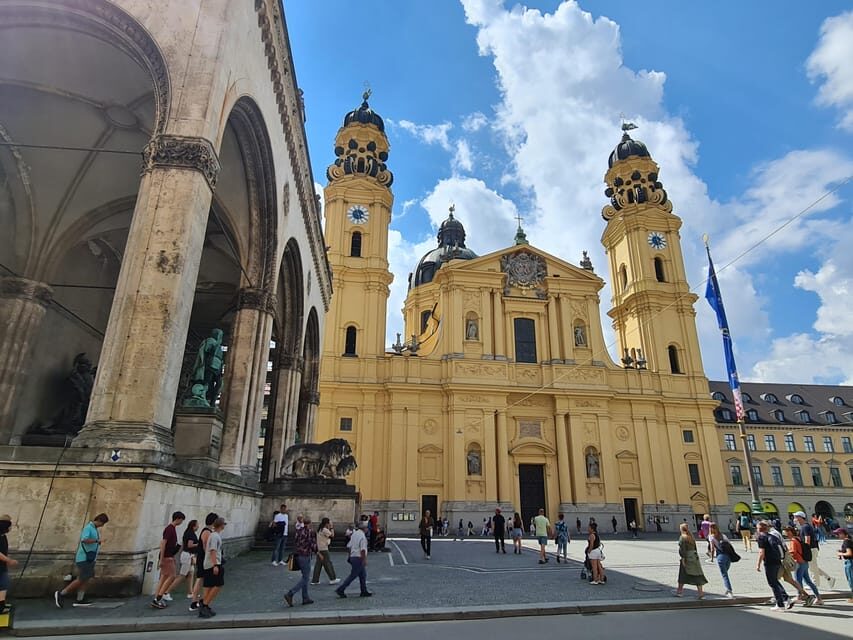
- Trinity Church and theatine Church: Baroque Energy in the Middle of the Walk
- Bavarian State Opera: Grand Facades, Real Purpose
- Maximilianstraße and St. Lukas: The Guided-Stroll Style
- Christmas Markets on the Route: Medieval Atmosphere Without Detours
- Tram to the Isar River: A Softer Side of 500 Years
- Jugendstil, Graffiti, and a Modern Museum Finish
- Price and Value: What $36 Buys You in Real Terms
- Who This Tour Suits Best (and Who Might Want Another Option)
- Should You Book This Munich Architecture Tour?
- FAQ
- Where does the tour start?
- How long is the Munich 500 Years of Architecture Guided Tour?
- How much does it cost?
- What languages is the tour offered in?
- Is transportation included?
- Does the tour include food and drinks?
- Can I visit buildings inside?
- Is it suitable for wheelchair users or mobility impairments?
Key highlights
- Frauenkirche to St. Michael’s: a time-ordered look at Gothic and Renaissance Munich, including St. Michael’s world-record claim
- Inside access (up to three buildings): you get a real chance to step in, not just stare at facades
- Christmas markets as part of the route: including a medieval-style market in a special winter setting
- Tram to the Isar for a calmer pace: plus stops connected to famous riverside architecture, including Alte Utting
- Jugendstil and street art closer to the finish: the tour ends with modern creative energy, not another church
- Philipp’s storytelling: the guide is entertaining, hands-on, and easy to follow in English or German
Why Munich’s 500-Year Architecture Tour Works
Munich can feel like a city of pretty streets. This tour makes it more than pretty. You watch architectural styles change as you move through time, so Gothic starts to look different right when you’re ready to notice it. Renaissance shapes make more sense once you’ve spent a bit of time with the churches that came before them. Baroque won’t just look fancy; it starts to feel like politics, power, and belief made visible in stone.
What I like about the approach is that it doesn’t treat buildings like museum objects. You get stories—royal tales, legends, and even some darker chapters—so the architecture turns into something human. And because the route is not only Old Town, you don’t end up with the same “view, photo, repeat” feeling for two straight hours.
Other Munich city tours we've reviewed in Munich


Meeting at Frauenkirche: Getting There and What to Bring
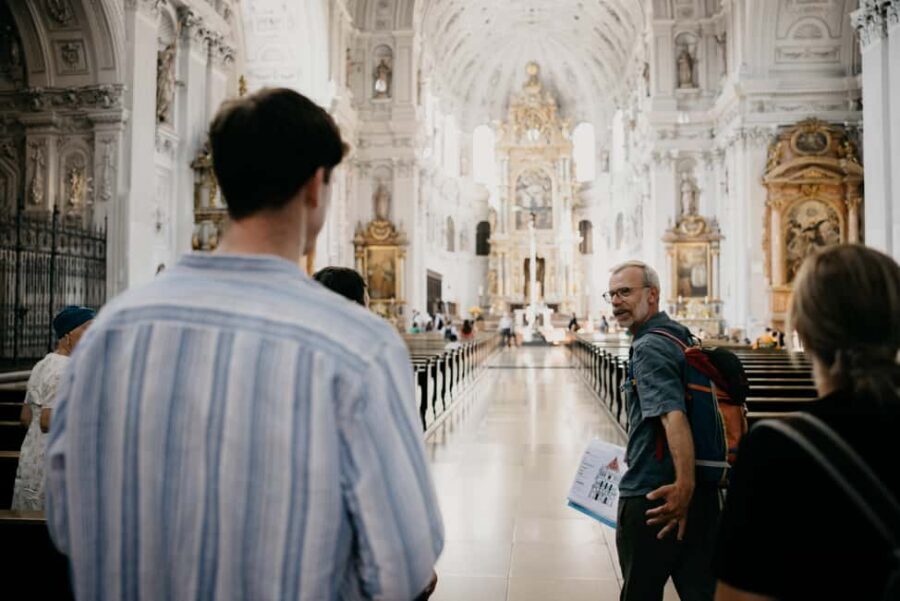
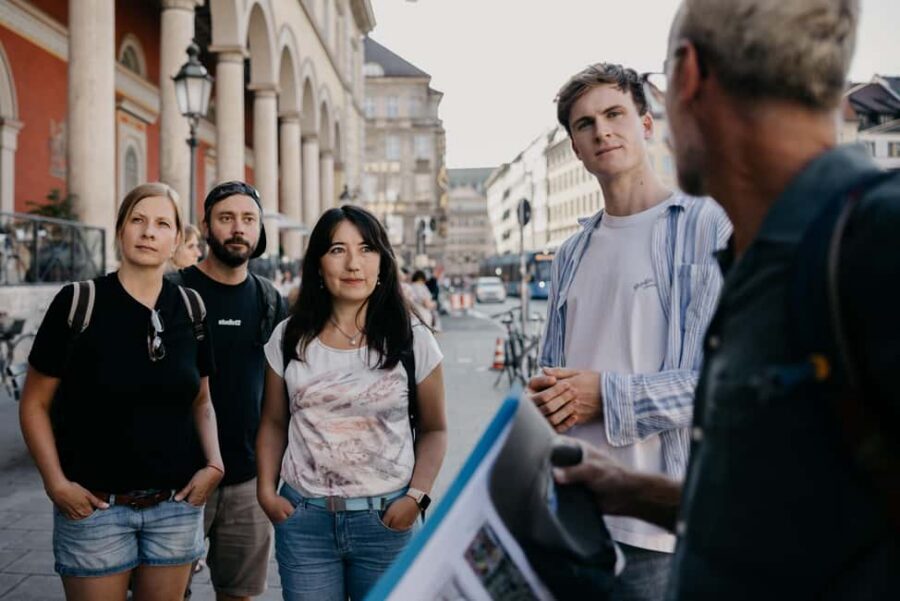
You start at Frauenplatz 1, outside the main entrance to the Frauenkirche. The meeting spot is easy to find once you know what to look for: the guide shows up in a yellow winter hat with a yellow backpack and a large blue presentation folder.
Getting there is straightforward:
- From Marienplatz (S-Bahn and U-Bahn U3/6), it’s about a 5-minute walk.
- From Hauptbahnhof München, it’s roughly a 15-minute walk.
Plan for winter comfort. The tour runs in colder weather, so bring warm clothing and wear shoes made for uneven stone and short uphill stretches. You’ll also be on your feet for the whole 2 hours, and the experience is not suitable for wheelchair users. If you’re sensitive to cold, this is one where layers matter.
Frauenkirche and the Gothic Start: Where the Whole Story Begins
The tour’s beginning in front of the Frauenkirche is a smart move. This is the kind of landmark where you can’t help but look up, and Gothic details show themselves best when you’re at the right distance. Starting here helps you “reset” your eyes before the guide brings in the broader 500-year timeline.
From the early stop, Philipp sets expectations: you’re going to move chronologically through major eras. That matters because Gothic in the late 1400s won’t feel like a random stop—it becomes the foundation for everything you see later: different proportions, different ideas of light and height, and different ways power was expressed through design.
St. Michael’s Church and the Renaissance Jump
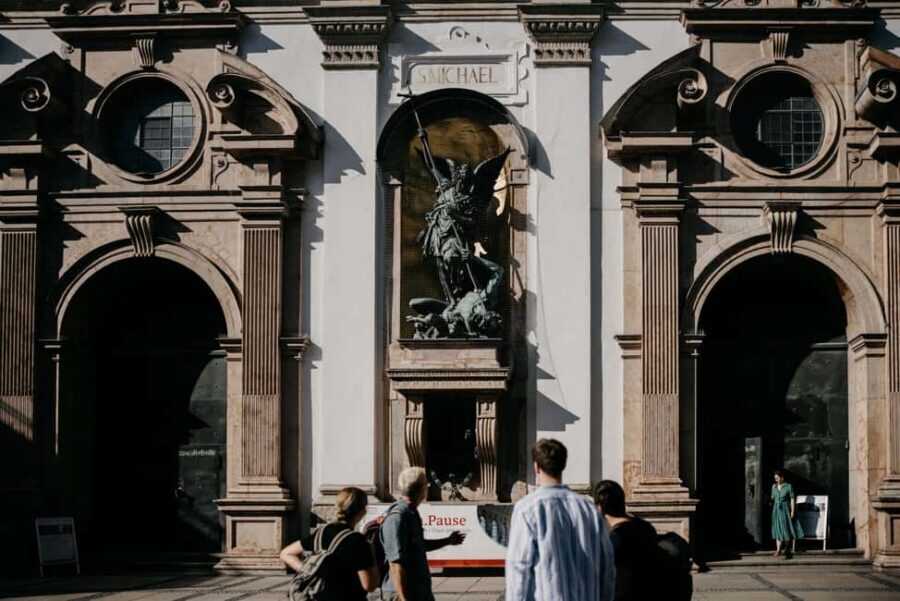
Next you head to St. Michael’s Church. This is a key moment in the tour because the guide frames it as a world-record-holding masterpiece. You may not know what to look for at first, and that’s fine. The point is that once Renaissance style starts to show up, you begin comparing the architecture you saw earlier without feeling lost.
After the Gothic foundation, Renaissance details can feel almost logical—cleaner lines, intentional symmetry, and a different relationship between decoration and structure. Even if churches aren’t your thing, this stop works well because it connects the design to why people built it the way they did.
Trinity Church and theatine Church: Baroque Energy in the Middle of the Walk
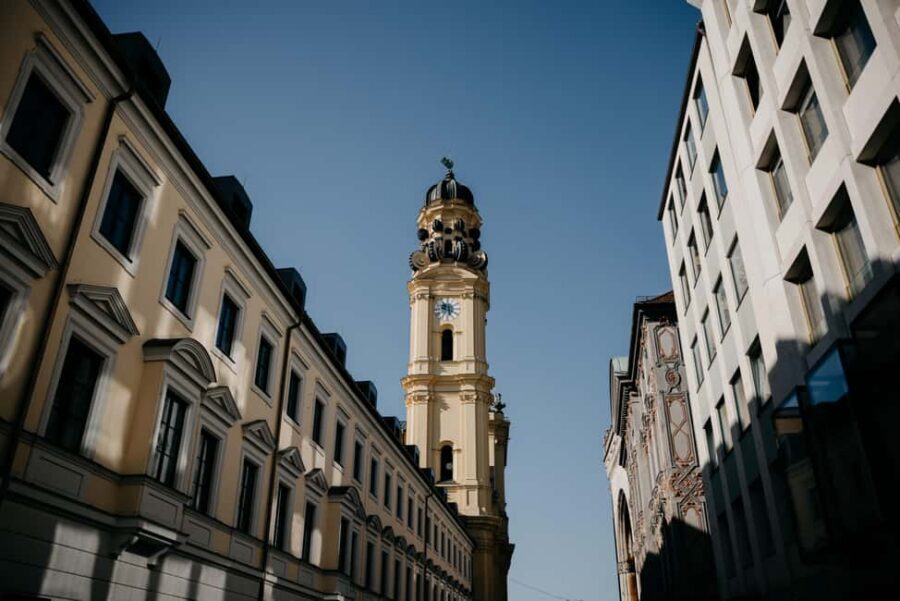
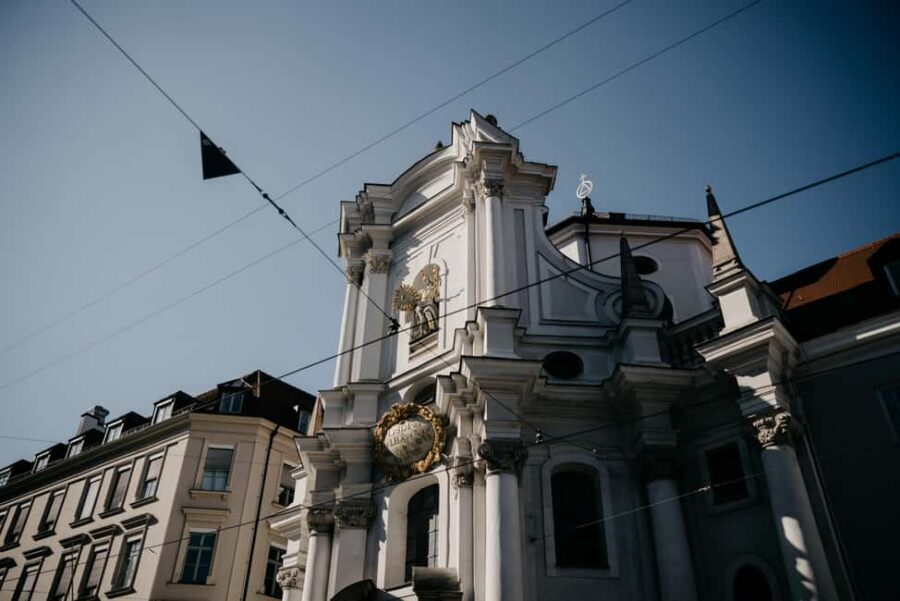
The next churches on your route—Trinity Church and Theatine Church—push the timeline into the kind of dramatic expression people associate with Baroque. This is where the tour becomes more than “style spotting.” You start picking up the emotional effect: how ornament changes the mood and how architecture becomes theater.
If you like getting context (who wanted what, when, and why), this is a good middle section. And because the tour is moving, you aren’t stuck in one place long enough to get bored. You keep momentum while the guide explains what you’re seeing.
One practical note: churches can have different rules and access at different times. The tour includes opportunities to visit up to three impressive buildings from the inside, so even if not every church is open on your day, you still have a strong chance to step into at least some interiors.
Other guided tours in Munich



Bavarian State Opera: Grand Facades, Real Purpose
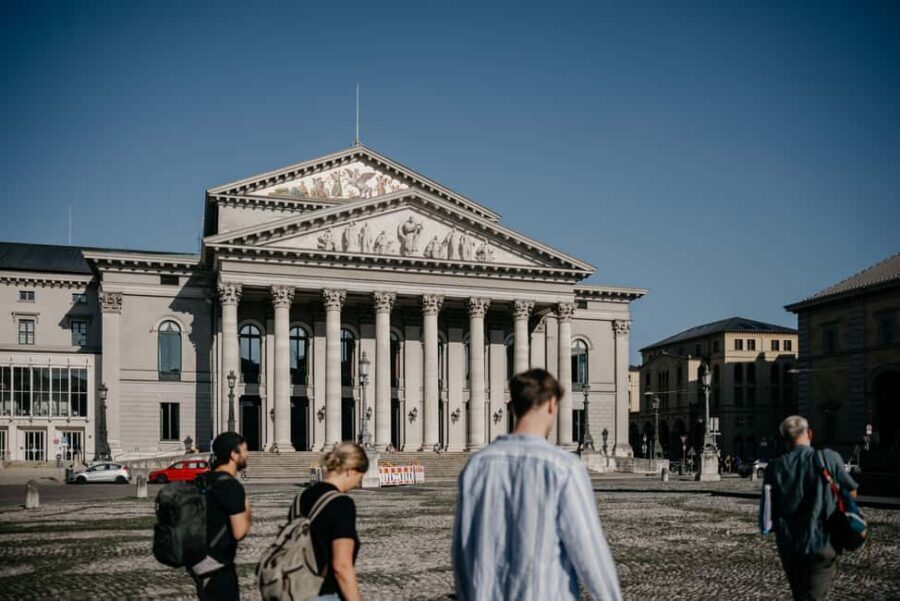
A stop at the Bavarian State Opera adds a change of pace from church architecture. Operas and theaters are still architecture with meaning, but it’s meaning tied to performance, public life, and city prestige.
I like including this because it broadens what “architecture” means on this tour. You’re not only learning about religious buildings and royal symbolism—you’re also seeing how Munich shaped spaces for culture and public gathering.
If you love photography, this is also one of the stops where façade details show up well from street level. If you prefer quiet viewing, this is a good moment to slow down and take the exterior in.
Maximilianstraße and St. Lukas: The Guided-Stroll Style
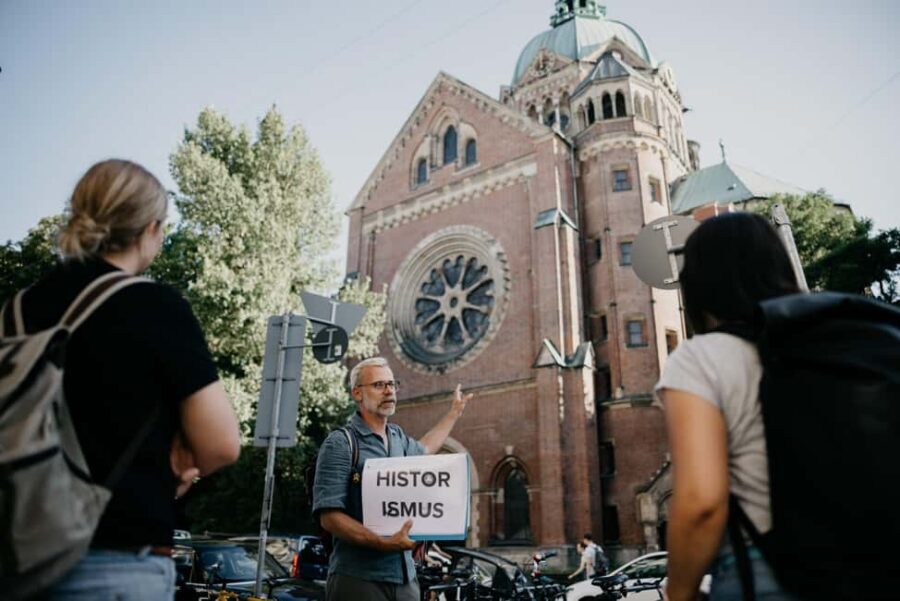
The tour then turns into a guided stroll along Maximilianstraße and a stop at St. Lukas with guided guidance. This section matters because it’s not purely about the biggest monuments. You start noticing how city planning and street design influence how buildings feel.
Maximilianstraße is the kind of street where a lot of visitors pass quickly. Here, you get the tour’s reasoning behind the look: how certain architectural choices create a sense of order and how later eras borrow and remix older ideas.
Then St. Lukas brings the focus back to specific design and storytelling. It’s the kind of stop that helps you connect the “timeline” to real streets, not just landmarks.
Christmas Markets on the Route: Medieval Atmosphere Without Detours
One of the best surprises is how the tour weaves in Christmas markets. You’re not just getting a history lecture while everything else happens around you. The tour includes visits to multiple Christmas markets, including a unique medieval Christmas market in a magical setting.
This works because the markets act like a living time machine. When you’re hearing about older eras and then you walk into a winter market vibe, it makes the past feel closer. It’s also a practical advantage: you get chances to pause and look around without feeling like you’ve added extra sightseeing on your own.
Important for expectations: food and drinks aren’t included, so if you want a snack or warm drink, you’ll pay for it separately. The tour is about architecture and stories, with markets as part of the setting—not a food tour.
Tram to the Isar River: A Softer Side of 500 Years
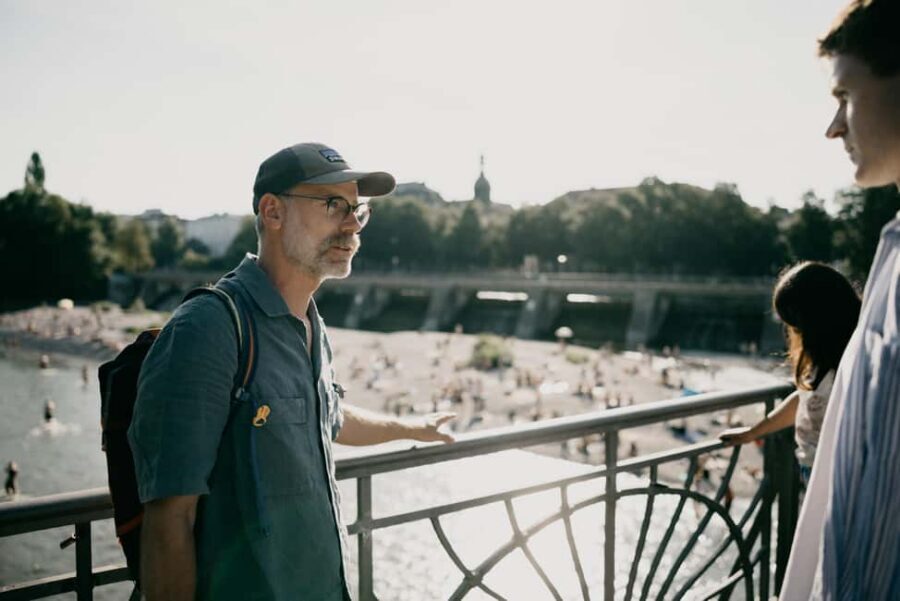
After the Old Town and markets, the tour smartly switches gears. You hop on a tram and head toward the calmer area by the Isar River. This is where the pacing feels good. Old Town can be intense in winter, so the river segment gives your brain room to absorb what you just learned.
The guide frames the riverside portion around world-record connections, plus surprising stories. You also get to see Alte Utting, an iconic riverside element that the New York Times has praised.
What I like here is the contrast: after churches, palatial styles, and ornate façades, you get open space and a different kind of architectural attention. Even if you don’t catch every story detail, the setting helps you understand why people built and lived where they did.
You’ll also want your camera ready. The river area tends to offer a “Munich you don’t always see” angle—less formal, more human.
Jugendstil, Graffiti, and a Modern Museum Finish
As you work toward the end, the tour shifts into Jugendstil (Art Nouveau) and later into modern design. This final stretch is one reason the tour feels worth it even if you think you might only care about the old stuff.
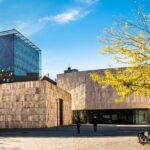
You explore the playful style of Jugendstil, then you move into areas that include street art. The ending includes a fantastic modern museum finish, and the vibe is intentionally different from the beginning. It’s the tour’s strongest argument that architecture isn’t stuck in the past.
That ending sequence also fits the way Munich actually feels day-to-day: historical buildings and creative contemporary spaces sharing the same city blocks. In a two-hour tour, that is rare. Most architecture tours get stuck in one era. This one moves forward.
Price and Value: What $36 Buys You in Real Terms
At $36 per person for 2 hours, the price is fair if you want both structure and access. Here’s why.
You get:
- A live guide (English or German)
- Guided coverage of historic Old Town and the Isar River area
- Visits to multiple Christmas markets
- A chance to visit up to three buildings from the inside
- A time-ordered architecture storyline, not random stops
What you don’t get is food and drinks, and transportation to and from the meeting point. That’s normal for a walking tour, but it means you should budget for snacks if you want them.
For me, the value comes from the mix: big landmarks plus a tram segment plus inside access potential plus a modern finish. If you only cared about a single church cluster, you’d likely pay less elsewhere. But if you want a coherent 500-year arc, $36 feels like a reasonable deal for the amount of guided interpretation you get.
Who This Tour Suits Best (and Who Might Want Another Option)
This tour is a great fit if you:
- Like learning architecture through stories, not just descriptions
- Want a short format that still covers multiple style periods
- Enjoy winter Munich, especially when it includes Christmas markets
- Like a route that gives you both monumental and calmer river moments
It’s less ideal if you:
- Need wheelchair access or have mobility limitations
- Prefer very slow sightseeing with long sit-down breaks
- Get cold easily and don’t dress in layers (this is a winter walking experience)
Should You Book This Munich Architecture Tour?
I’d book it if you want a compact way to see Munich as a timeline, not a list of monuments. The biggest selling point is how the guide keeps the story moving from Frauenkirche through Renaissance and Baroque stops, then out to the Isar River and ends in Art Nouveau and modern design. You also get Christmas markets worked into the route, which adds atmosphere without turning the tour into a food-only plan.
If you’re the type who likes architecture but thinks two hours might be too short to matter, this tour is exactly the right length. And if you’ve never cared much about style periods, the “legends and real context” angle is what makes it click.
If you can walk comfortably in winter and you like guided storytelling, you should book this one.
FAQ
Where does the tour start?
The tour starts outside the main entrance to the Frauenkirche at Frauenplatz 1.
How long is the Munich 500 Years of Architecture Guided Tour?
It runs for 2 hours.
How much does it cost?
The price is $36 per person.
What languages is the tour offered in?
The live tour guide is available in English and German.
Is transportation included?
Transportation to and from the meeting point is not included. During the tour, you do take a tram as part of the route.
Does the tour include food and drinks?
No. Food and drinks are not included.
Can I visit buildings inside?
You get a chance to visit up to three buildings from the inside, depending on access on the day.
Is it suitable for wheelchair users or mobility impairments?
No. It is not suitable for people with mobility impairments or wheelchair users.