REVIEW · NUREMBERG
Nuremberg: Medieval Darkness Exploration Game
Book on Viator →Operated by Questo · Bookable on Viator
This medieval mystery game turns Nuremberg’s streets into a clue trail. It is self-guided, timed just enough to keep you moving, and built for anyone who’d rather wander than sit through a lecture. I like the phone-based format (no pickup, no gear), and I like that you can start and stop when you want. One drawback to plan around: the clues and directions can be a bit tricky in places, so you’ll want your phone charged and GPS ready.
The route is designed around major landmarks in the old town core, from St. Lorenz Church to the Meat Bridge and the Hangman’s Bridge area. You get a small chunk of story at each stop, then you move on at your pace. Some segments also skip entry, so you’ll be solving around the site rather than paying to go inside.
At just $6 per person for about 3 hours, this is a low-cost way to stitch together famous sights with an actual reason to look closer. I think it’s best if you enjoy light problem-solving while sightseeing, not if you want a classic guided tour where everything is spelled out for you.
In This Review
- Key things to know before you play
- A phone-based medieval mystery game across Nuremberg
- Price and time: a 3-hour value walk
- Entering St. Lorenz: the first clue at Lorenzer Pl. 1
- Nassauer Haus and Frauenkirche: clues in the old town core
- Schöner Brunnen: using a landmark you can see from far away
- The Hole Prison and Imperial Castle: outside-only stops that still matter
- Tiergärtner Tower gate, Albrecht Dürer House, and Rockcellars
- St. Sebaldus to bridge crossings: the route tightens for the ending
- Ending at the Ehekarussell: story finish, city continuation
- How to make the game smoother (and less frustrating) in real life
- Who this Nuremberg medieval darkness game fits best
- Should you book it?
- FAQ
- How long is the Nuremberg medieval darkness exploration game?
- Do I need a tour guide?
- Do I need entry tickets to attractions?
- What language is the game offered in?
- Where do I start and where do I finish?
- Can I play the game at any time after booking?
Key things to know before you play
- Phone-only, no equipment: Your ticket lives in your phone and the game runs there.
- Start when you want: No fixed tour time after booking; you can play anytime during the app window.
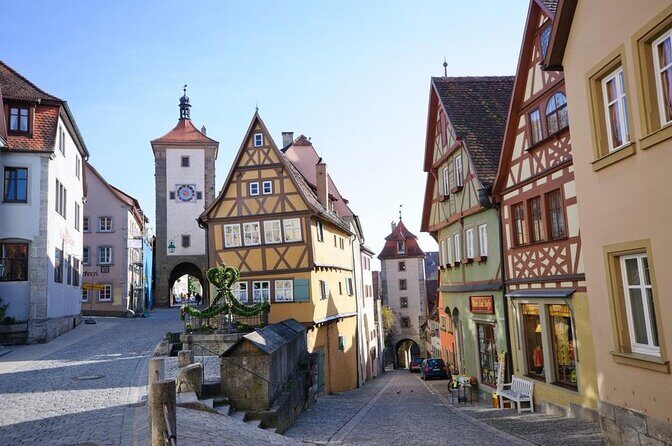
- Outdoor landmarks with a story: You’ll hit churches, bridges, squares, and gates, with clues at each.
- Some big stops are outside only: The Hole Prison, Imperial Castle, Dürer House, and Rockcellars are not included for interior visits.
- Navigation may need help: The in-app directions can be less clear than you expect, so use your phone GPS.
- It can be a little puzzly: If a question feels hard, tap fast so you don’t lose your momentum with the countdown.
A phone-based medieval mystery game across Nuremberg
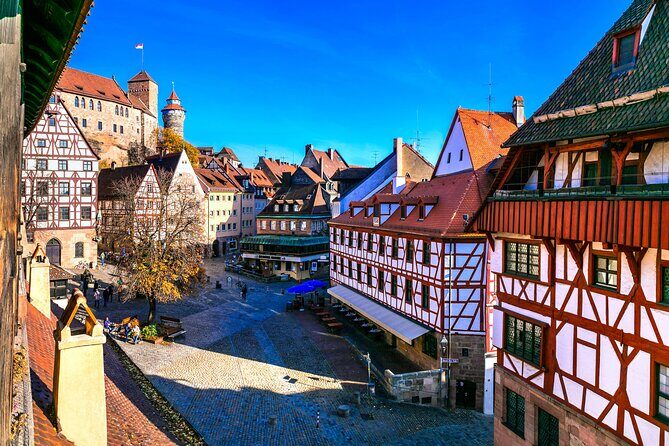
This experience is an interactive walk using your smartphone. You are not looking for a tour leader or waiting for a group to regroup. Instead, you show up at the start point, open the game, and follow a sequence of clue locations across central Nuremberg.
The medieval tone is part of the fun. The city’s famous landmarks are already dramatic—stained stone, old bridges, and towers with very serious names—so the game uses that atmosphere instead of trying to manufacture thrills. You get a short story clue at each stop, then the game directs you to the next place. It’s sightseeing with a mission.
Also, the pacing is flexible. Each site segment is built around a quick clue moment, but you can linger and keep exploring around the landmark before you move to the next one. That matters in Nuremberg, where you’ll often want a few extra minutes to look at details you noticed a moment ago.
Other Nuremberg day trips we've reviewed in Nuremberg

Price and time: a 3-hour value walk
At $6 per person, the math is pretty friendly. You are not paying for museum admissions (most entry tickets are not required to complete the game), and you are not paying for a guide’s labor. What you are paying for is the structure: the route, the prompts, and the self-contained “why am I going here?” storytelling.
The timing range is about 2 hours 55 minutes to 3 hours 25 minutes. That’s a solid half-day slot. If you like to read signs and pause for photos, plan closer to the longer end. If you are fast with clues and you keep moving, you can finish on the shorter side.
One small value trade-off: a couple of the most “headline” locations are not part of the interior visit. You’ll still visit the area, solve around it, and move on. If you were hoping for a museum-style experience inside those places, you’ll want to plan separate tickets later.
Entering St. Lorenz: the first clue at Lorenzer Pl. 1
You begin at St. Lorenz Church (St. Lorenz / Lorenzer Pl. 1). This is a smart starting choice because it’s a big visual anchor for the old town—so even if you’re slightly lost at first, you have a landmark that feels important right away.
At this first stop, you get the opening clue. It sets the story and gives you directions to the next location. You do not need any special equipment here. Just have your phone ready, tap through the prompts, and then step out to start matching the clue to what you see.
Practical tip: if the game has a question countdown, don’t wait until you’ve walked away to answer. Look first, then tap quickly. That simple habit saves time and keeps the game fun instead of stressful.
Nassauer Haus and Frauenkirche: clues in the old town core
Next you’ll bounce to Nassauer Haus. This segment is short but useful because it keeps the route moving through the core area. You get another clue to solve, then you are free to explore around that spot for as long as you like.
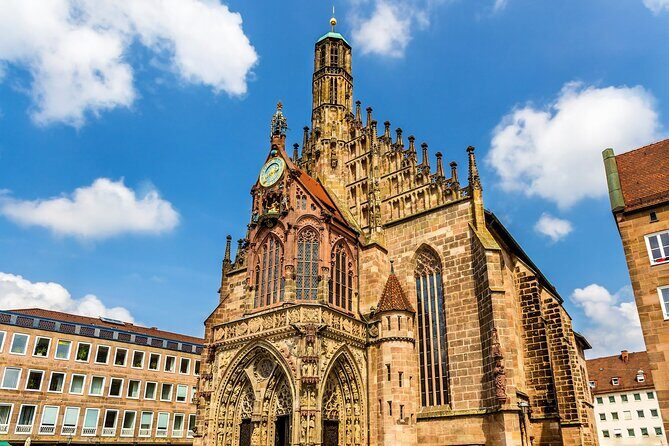
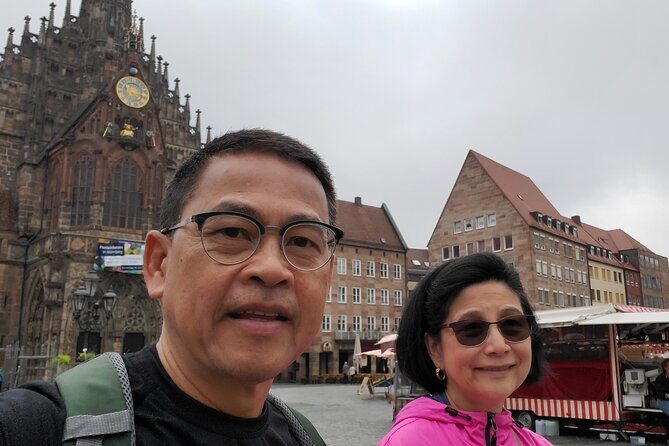
Then comes Frauenkirche (Church of our Lady). This is one of those stops where the building itself gives you good material for puzzle-solving: angles, facade details, and the general feel of the square area. The game uses that environment rather than asking you to hunt for something hidden indoors.
Two things I like about this stretch:
- You get repeated “reset points,” so you’re not stuck trying to solve a long chain of hints in your head.
- The pace stays walkable. You’re not shuttling far outside the historic center.
A drawback to plan for: if app directions feel vague, you may want your phone GPS to confirm you’re heading to the correct side of a square or street.
Schöner Brunnen: using a landmark you can see from far away
Your next stop is Schöner Brunnen (Beautiful Fountain). This is a classic Nuremberg “meet you in the middle” landmark, which makes it a friendly game stop. When something is visually obvious, you waste less time confirming location and more time enjoying the scene.
You’ll get a new clue at the fountain, then the game points you onward. Again, you can linger. Even if you’re not spending long inside anything, you can still take time to study what’s around you and let the game prompts connect to the real world.
If you like the outdoors-and-details type of sightseeing, this is where the game starts feeling smoother. When a location is easy to find, the puzzle side feels like a bonus, not a chore.
A few more Nuremberg tours and experiences worth a look


The Hole Prison and Imperial Castle: outside-only stops that still matter
Now the game heads toward some of the darker, high-drama parts of the medieval story.
Stop five is Mittelalterliche Lochgefängnisse / The Hole Prison. Here’s the key detail: the experience does not include a visit inside this attraction. You’ll solve the clue and continue, but you should not expect entry tickets or an interior tour as part of the game.
Stop seven is Imperial Castle of Nuremberg (Kaiserburg). Same idea: the tour does not include an inside visit. You’ll reach the castle area as part of the route and use it for story and clues, then move on.
This is not a bad setup. It can actually be a good one for budget travelers who want to see the famous sites without stacking ticket costs on top. But it does mean you may finish the game wanting to learn more at the castle or the dungeons with separate visits. If those interiors are a priority for you, make that a separate plan after the game ends.
Tiergärtner Tower gate, Albrecht Dürer House, and Rockcellars
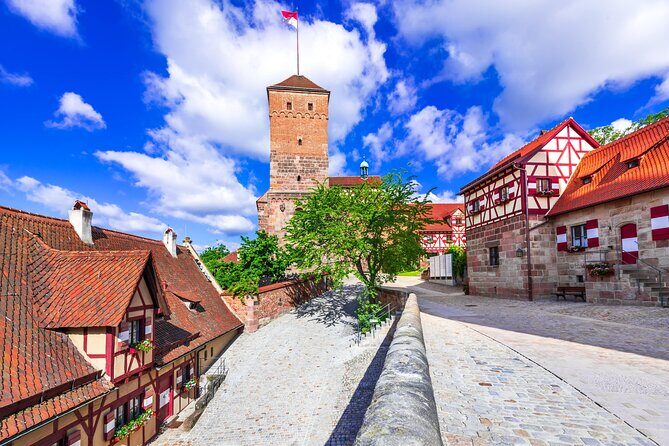
Next you’ll hit Beim Tiergärtnertor (Tiergärtner Tower gate). Gates and towers are great game locations because they’re built to be recognizable. Even if you’re still figuring out navigation, the physical structure helps you orient fast.
Then the route includes Museums Nuremberg – Albrecht Dürer House. Like the castle and Hole Prison, the experience does not include a visit inside. You’ll use the location as a clue stop and keep moving.
Then comes the Förderverein Nürnberger Felsengänge e.V. (Rockcellars) stop. Again: no interior visit included. You’ll get the clue and move on.
This part of the route is a reminder that this is primarily a walking game, not an admission-heavy checklist. If you’re happy with “see the place, do the puzzle, keep walking,” it works well. If you want to be inside several major attractions during the same outing, you’ll likely want to schedule additional paid visits separately.
St. Sebaldus to bridge crossings: the route tightens for the ending
After the Rockcellars segment, you reach St. Sebald (Sebalduskirche Nürnberg). Another clue, another chance to slow down and read the details around a church stop.
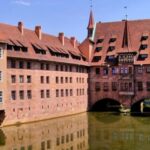
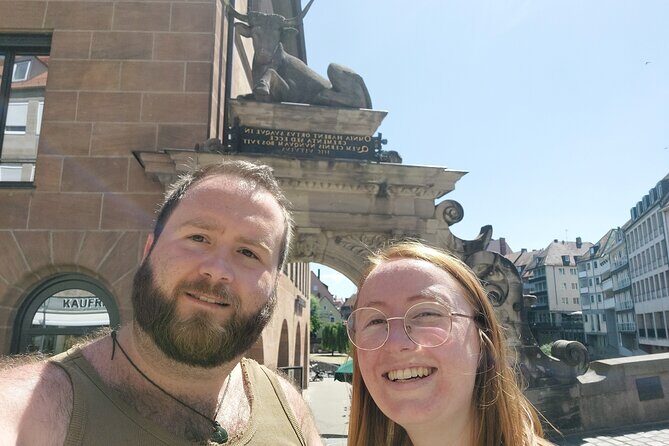
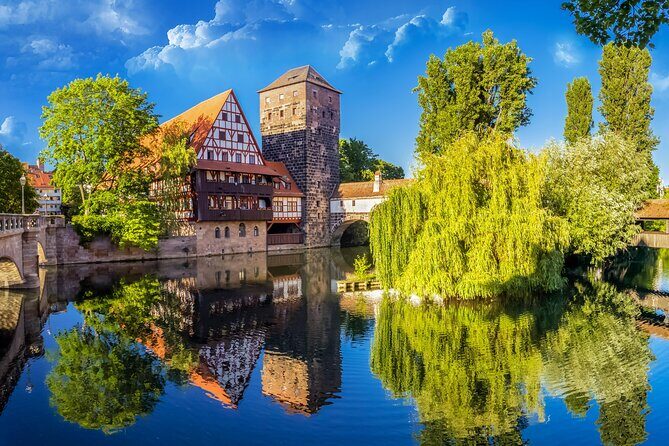
Then you’ll cross into the bridge-and-old-street energy with Fleischbrücke (Meat Bridge) and Hangman’s Bridge (Henkersteg). Bridges are great for these kinds of games because they act like natural timeline markers. You can look over the area, orient yourself, and then answer the next clue with what you just noticed.
The walk here feels like it gathers momentum. You are closer to the finish, and the scenery supports that shift. If you’re someone who likes city-walk rhythm, this section is satisfying.
One caution: bridges can feel obvious in daylight, but at dusk or in tricky weather, you may rely on GPS more. I suggest you don’t wait until you’re completely turned around to turn on location services.
Ending at the Ehekarussell: story finish, city continuation
The game wraps at Ehekarussell (Am Weißen Turm, 90402 Nürnberg). This is where the story and the city exploration game both end.
It’s a good finish point because it’s located near a recognizable “old town” feel rather than out in the suburbs. After the final clue, you can keep walking without feeling like you’re wandering away from everything.
I like endings like this. You get closure from the game, but you don’t feel trapped in it. If you still have energy, you can branch off toward whatever you want next—churches, shops, or just a quiet coffee somewhere nearby.
How to make the game smoother (and less frustrating) in real life
This is a fun concept, but it can go sideways if you approach it like a slow scavenger hunt. Here’s how I’d do it so you enjoy it more:
- Use your phone GPS from the start. The route is doable, but in-app maps/directions can feel unclear in parts. GPS helps you avoid wandering in circles.
- Answer quickly when a question appears. If there’s a timer or quick-respond feel, look at the landmark first, then tap to answer fast so you don’t miss the moment.
- Treat it like a walk, not a museum visit. Several stops are outside-only. Plan on standing, looking, solving, and moving on.
- Bring a charged phone and a small step rhythm. This is self-guided. If your battery dies or the screen times out, your progress stalls.
- Wear comfortable shoes. You’ll connect multiple church, bridge, gate, and square areas in one outing.
Also, keep your expectations realistic. At this price and format, the game is a structure for exploring. It’s not meant to replace a guided explanation for every major landmark.
Who this Nuremberg medieval darkness game fits best
This works best for you if:
- You want a self-guided way to see famous Nuremberg sights without coordinating with a guide.
- You like light puzzles and story clues that make you pay attention to what you’re standing in front of.
- You’re traveling on a budget and prefer spending money on local meals and optional paid entries rather than built-in admissions.
It might feel less satisfying if:
- You want a detailed, narrated interpretation of each landmark.
- You planned to go inside multiple attractions during the same session.
- You dislike timed interactions on your phone and prefer fully open-ended sightseeing.
One more thought on value: because the average rating is 3.8 from 18 ratings, you should expect the occasional rough edge, like unclear navigation or clue difficulty. That doesn’t kill the experience, but it does mean you should go in with the right attitude: playful, flexible, and ready to use GPS.
Should you book it?
If you’re in Nuremberg for a few days and you want one outing that mixes “see the sights” with “do something fun while you see them,” I’d say yes. The $6 price, the phone-only setup, and the route through major landmarks make it a practical way to cover a lot of ground in about three hours.
Book it when you:
- Like walking routes you can start and stop at your own pace.
- Want an easy win on navigation with help from your phone.
- Are okay with outside-only stops at several attractions.
Skip it if you:
- Want a guided explanation at every stop.
- Need guaranteed crystal-clear directions with no phone use.
- Expect interior tickets to be part of the package.
FAQ
How long is the Nuremberg medieval darkness exploration game?
Plan for about 2 hours 55 minutes to 3 hours 25 minutes.
Do I need a tour guide?
No. It is a self-guided experience. There is no tour guide included.
Do I need entry tickets to attractions?
Entry tickets are not included for some attractions, and they are not needed to complete the tour. Several stops note admission is free, while others specify tickets are not included and that the tour does not include a visit inside.
What language is the game offered in?
The game is offered in English.
Where do I start and where do I finish?
Start at St. Lorenz (Lorenzer Pl. 1, 90403 Nürnberg) and finish at Ehekarussell (Am Weißen Turm, 90402 Nürnberg).
Can I play the game at any time after booking?
Yes. You can play anytime after booking without rescheduling.