REVIEW · NUREMBERG
Nuremberg: Walking Tour of Former Nazi Party Rally Grounds
Book on GetYourGuide →Operated by Geschichte Für Alle e.V. · Bookable on GetYourGuide
Nuremberg’s former Nazi Party Rally Grounds don’t work as a quick photo stop. This guided walking tour connects the huge, staged architecture to the propaganda rallies that once ran through it, using on-the-ground context, and even period-style visuals to help you picture what has been lost.
Two things I like a lot: you get a clear walkthrough of the National Socialist use of architecture (not just a list of sites), and you end at Zeppelin Field, where the scale of the spectacle hits you fast. One thing to consider: it’s a walking-focused route through a large outdoor site, and it’s not suitable for people with mobility impairments.
If you want the “how it worked” side of this history—along with an honest look at how these spaces are discussed today—you’ll likely find it compelling. If you prefer minimal walking or a purely memorial-focused visit, you may want to plan something else alongside it.
In This Review
- Key things to know before you go
- Following the Great Road toward Zeppelin Field
- Congress Hall scale and why it mattered
- Große Straße: the north-south spine of propaganda staging
- Zeppelin Field: where the spectacle became a machine
- The other side of the system: camps, propaganda, and how history is framed
- How the guide approach shapes the whole experience
- Walking amount, terrain, and when to wear comfy shoes
- Where you start and end: make it easy on yourself
- Price: why $15 can feel like more than it is
- Who this tour suits best (and who might not)
- Should you book this Nazi Party Rally Grounds walk?
- FAQ
- Where do I meet the tour guide?
- Is there more than one starting location?
- How long is the tour?
- What does the tour cost?
- What language is the live guide available in?
- Does the tour run in bad weather?
- Is there food or drinks included?
- Where does the tour end?
- Is the tour suitable for people with mobility impairments?
- Can I cancel and get a refund?
Key things to know before you go
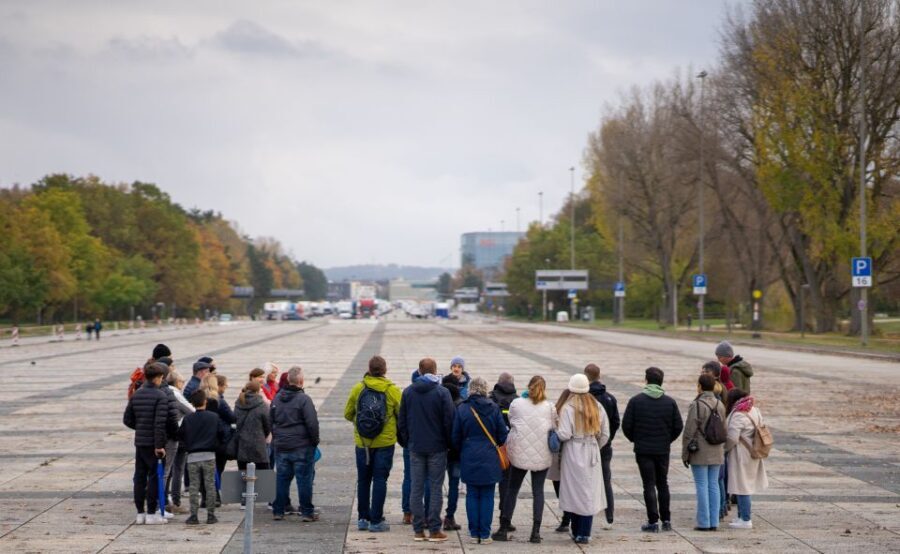
- The Great Road route: you follow the north-south axis toward Zeppelin Field.
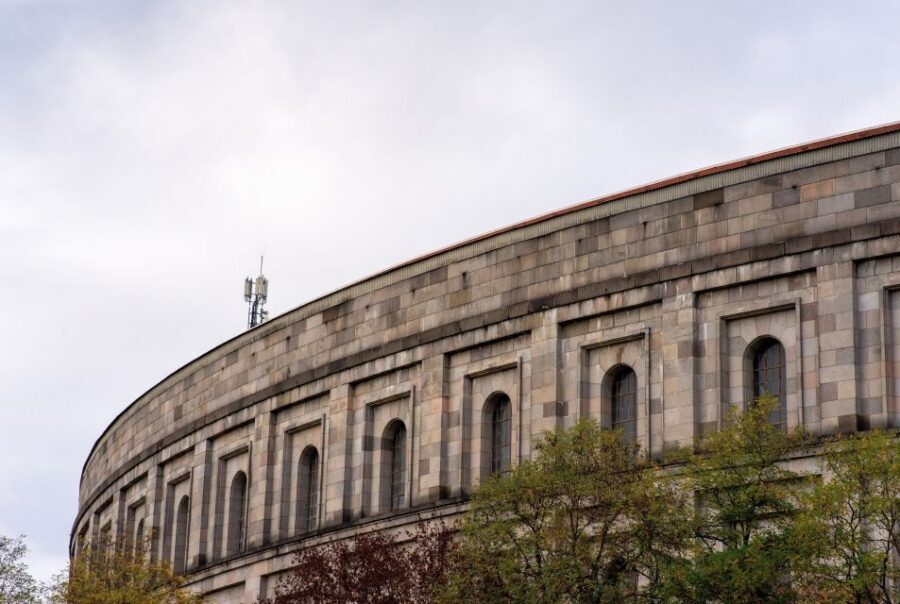
- Ruins with real scale: Congress Hall is described at about 40 meters in standing sense.
- Architecture tied to staging: you’ll focus on function, not just form.
- Zeppelin Tribune capacity: the setting is linked to holding up to 200,000 people.
- Discussion of ongoing use: you’ll hear how people think about the site now.
- Guides named by past guests: guides like Thurston, Frank, Anita, Sylvia, Marina, Bettina, and Kai are repeatedly praised for clear, careful explanations.
Following the Great Road toward Zeppelin Field
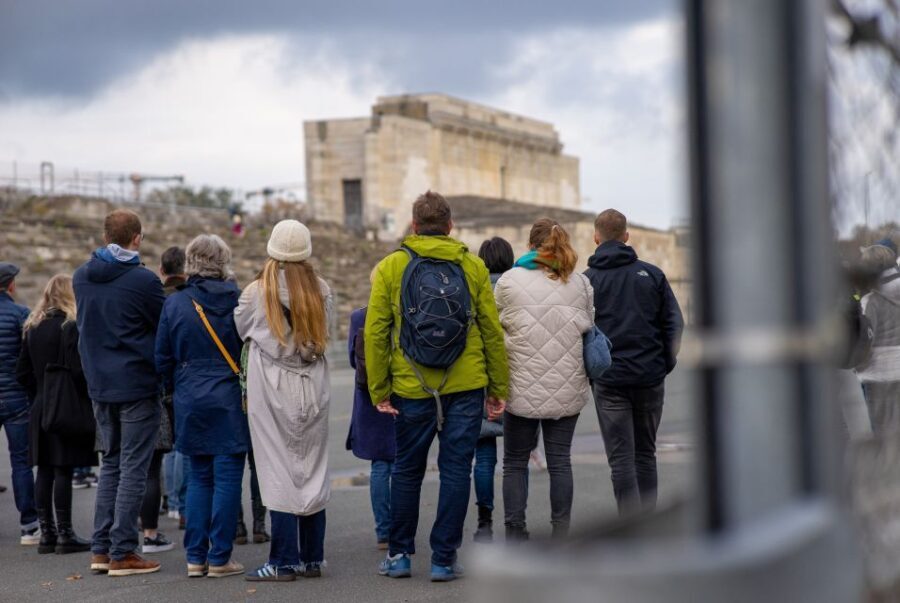
This tour is built around one idea: these grounds were not random buildings. They were tools. The Nazi party used monumental design, strict lines, and huge open spaces to turn mass politics into something that felt inevitable, massive, and “bigger than people.” On this walk, you get the chain of cause and effect rather than just a museum-style timeline.
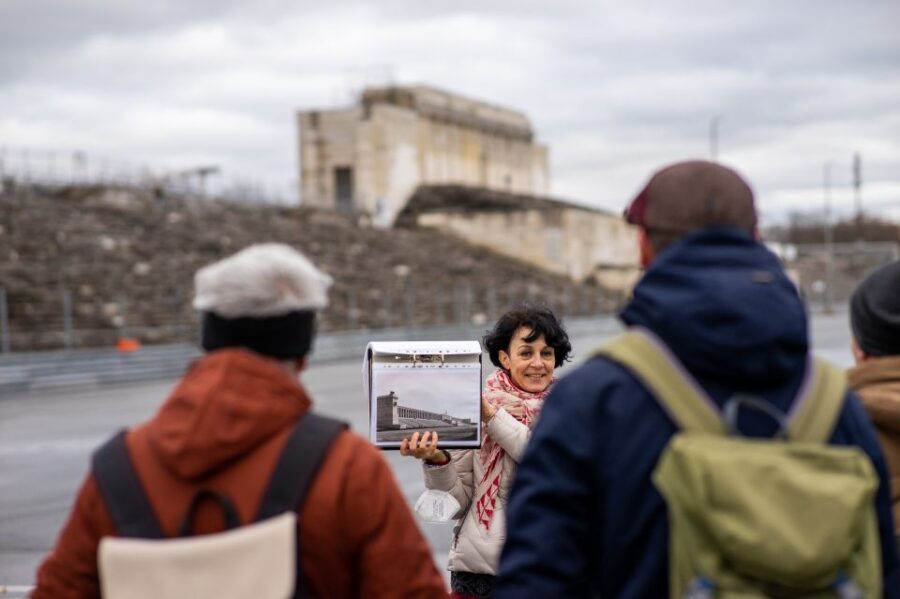
The route starts near the Documentation Center at Bayernstraße 110, where you meet the guide by the entrance stairs. The guide carries a picture folder and wears a name tag for Geschichte Für Alle e.V. That matters, because the tour doesn’t rely on your imagination alone. You’re meant to compare what the structures looked like when they were in full use to what you see today.
The pace is intentionally educational. You’ll repeatedly stop at points where lines of sight and building placement explain the staging of rallies. That’s a key difference from doing this on your own: you’re not just passing objects, you’re getting the “why here” behind them.
And yes, it’s weatherproof in the practical sense. The tour takes place rain or shine, so bring what you’d bring for an outdoor walk in Bavaria—layers and decent shoes.
Other Third Reich & WWII tours we've reviewed in Nuremberg
Congress Hall scale and why it mattered
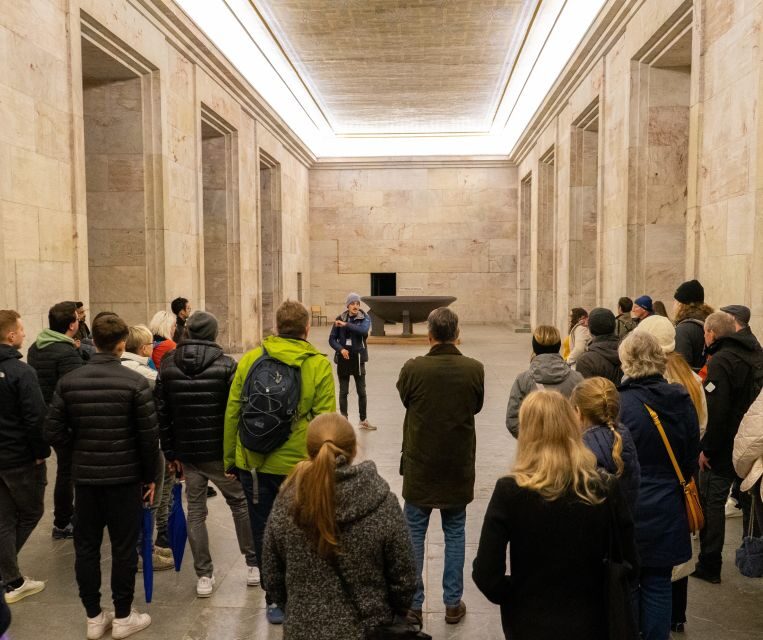
One of the most striking parts is how the tour frames the remains of Congress Hall. Even if you’re not a history buff, you can feel the intention in the way these spaces were engineered for attention. The tour places emphasis on the scale—Congress Hall is described as about 40 meters in standing sense—so you can grasp that this was built to dominate the cityscape and the audience’s body language.
What I find valuable here is the translation. You don’t just hear that it was “monumental.” You learn how monumental design changes what people think they’re participating in. A rally in a normal hall is human scale. A rally on these grounds was designed to feel like you were inside a system—one run by the party, backed by symbolism, and protected by intimidation.
As you move along, your guide also helps you connect the architecture to the basic National Socialist view of history. That topic can sound abstract if someone just lists dates and ideology. Here, you’re shown how the visuals, the massive forms, and the event layout all reinforced a single message: the party’s story was the story.
Große Straße: the north-south spine of propaganda staging
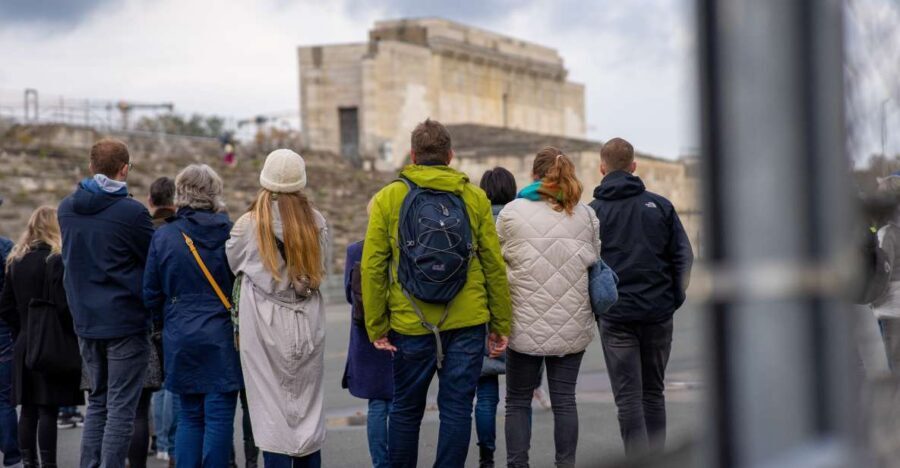
The tour’s middle stretch follows the route along the Große Straße, often described as the “Great Road,” which runs as a north-south axis toward Zeppelin Field. This is one of those “walk and understand” segments. You’re not just moving; you’re learning how the site was organized to manage crowds.
Monumental urban planning can be hard to grasp from a map. Walking the axis makes it easier. It shows how open space funnels you into specific directions and viewpoints. It also helps you notice how the site layout reinforces authority—long sight lines, planned mass movement, and the kind of visual control that makes rallies feel choreographed.
If you’ve seen other political architecture in Europe, you’ll start recognizing the pattern: control the space, and you control the mood. That’s the underlying takeaway here.
Zeppelin Field: where the spectacle became a machine
Eventually you reach Zeppelinfeld, and the meaning of everything before it clicks into place. Zeppelin Field is where the grounds shift from “buildings you can describe” into “an environment you can feel.” The tour guide uses the space to explain how events were staged and how crowds could be arranged for maximum impact.
A standout detail from the tour description: the Zeppelin Tribune was designed to hold up to 200,000 people. Even if you don’t picture that number instantly, your guide helps you understand why capacity matters. Large seating and commanding sight lines turn speeches into pageantry and pageantry into pressure.
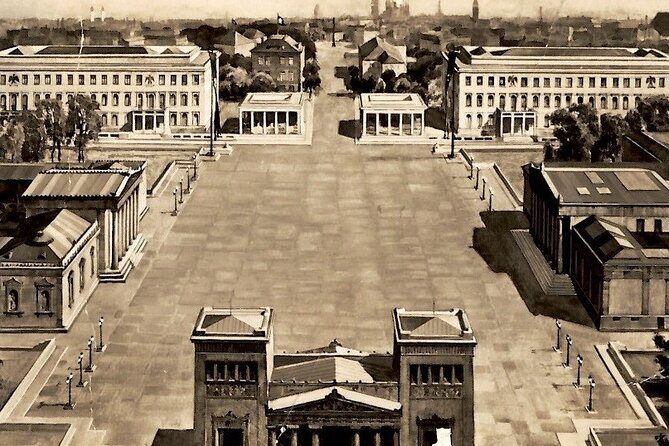
Many guides also use visuals to show what the field would have looked like when the structures were intact and the rallies were actively taking place. That’s useful because a lot of what remains is concrete and repetition—without context, it can blend together. With context, each open area and ruin becomes part of a planned show.
One practical caution from real experiences on this kind of route: timing matters. In winter, you can lose daylight before you finish. Several guests specifically mention that the tour can end close to darkness, which makes it harder to see Zeppelin Field properly. If you care about viewing the site in good light, choose a departure time earlier in the day when you have options.
The other side of the system: camps, propaganda, and how history is framed
The tour doesn’t treat these rally grounds as a standalone artifact. It explicitly discusses the other side of the concentration camp system and the mass-scale propaganda shows connected to Nazi rallies. That is heavy subject matter, and you should go in expecting careful handling rather than sensationalism.
I appreciate that the tour focuses on effect: how propaganda used spectacle, architecture, and public staging to normalize ideology. It’s not just moral condemnation stated from a distance. Instead, you’re guided through how the party built a public atmosphere—what people saw, how it was arranged, and what it attempted to persuade.
You’ll also hear about the current discussion around the use of the site. That part matters because it helps you avoid a common trap: treating the past like a closed chapter. These grounds are still debated because they’re still visible, still political in meaning, and still capable of being misread.
Other Nuremberg day trips we've reviewed in Nuremberg

How the guide approach shapes the whole experience
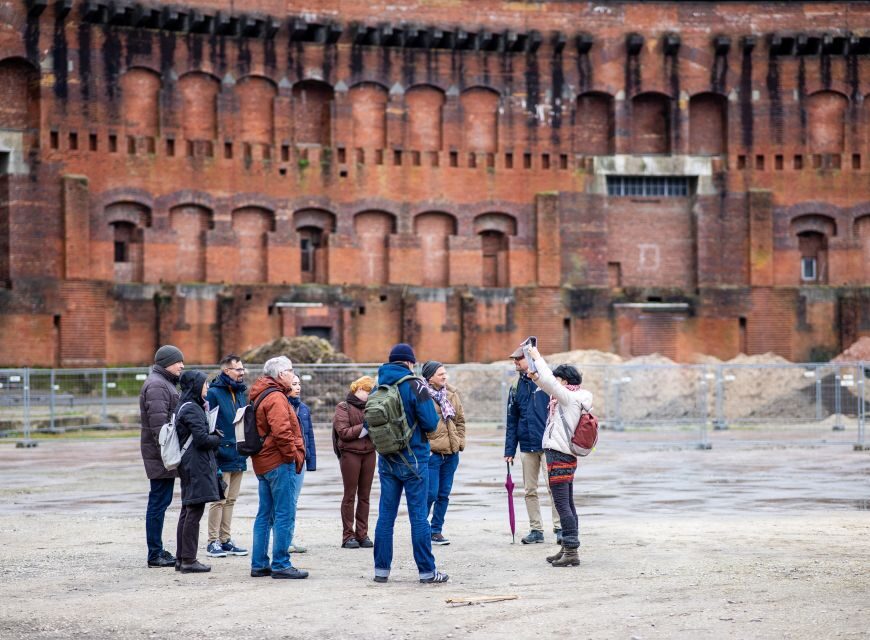
The guides behind this tour seem to share a style: clear explanations, careful language, and built-in tools for comprehension. Past guests repeatedly praised the way guides handle tough history sensitively and in an engaging way.
Specific names that show up in strong reviews include Thurston, Frank, Anita, Sylvia, Marina, Bettina, Kai, Alan, Andreas, Anne, and Kristin O, along with many others. While the person you get may differ, the pattern is consistent: you’re not left guessing why a place looks the way it does.
A practical plus is the use of a picture folder. It helps you connect today’s ruins to historical appearance, especially when parts of the structure are gone. It also supports questions. Many guests mention the guides answering questions in detail and encouraging people to think about intentions, audience reactions, and how staging worked.
If you like learning through explanation and Q&A rather than just hearing a narration, this format is a good fit.
Walking amount, terrain, and when to wear comfy shoes
This is a 2-hour walking tour in an outdoor, open area. Even when the stops aren’t long, you’ll still cover ground. That shows up in real feedback: people note it’s more walking than expected, and others call out that it’s a huge area.
The good news: 2 hours is manageable if you wear solid shoes and don’t plan to multitask heavily (like checking your phone constantly). The site is also not a tight museum hallway where you can rest every few minutes. It’s space—so you’ll want to dress for weather and comfort.
Also keep daylight in mind. If your priority is seeing everything clearly, especially Zeppelin Field, plan for an earlier start if possible. In winter, some guests report the end can get quite dark.
Where you start and end: make it easy on yourself
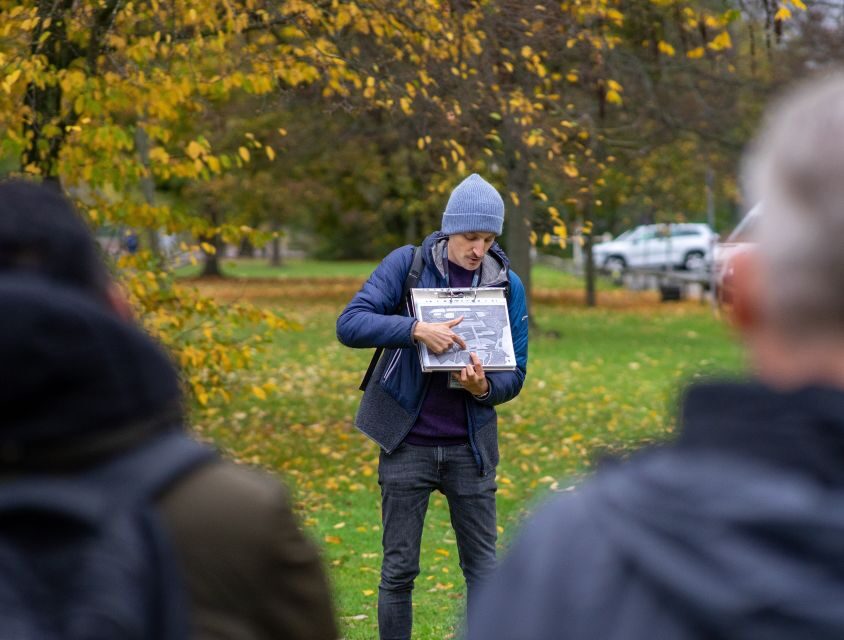
Meet at the guide by the entrance stairs next to the Documentation Center at Bayernstraße 110. The tour also notes an alternative starting option at Kongresshalle, but the described meeting point is the Documentation Center stairs.
The tour finishes at Zeppelinfeld, so your final photos and impressions will be anchored there. That’s helpful for planning the rest of your day: you can build a post-tour plan around being near Zeppelin Field rather than needing to travel back for one last stop.
Because the tour is a guided walk, you also benefit from not having to figure out the logic of where to stand and what to look for at each ruin.
Price: why $15 can feel like more than it is
At $15 per person for a 2-hour guided experience, the value is mostly about interpretation. Without a guide, you can certainly walk the grounds. But you’ll miss the connective tissue: why the north-south axis matters, why the ruins were built at this scale, and how the architecture served propaganda goals.
This tour also includes a guided focus on the Nazi rally system and its effects, plus a discussion of contemporary use of the site. Those parts take careful explanation, and they’re exactly the kind of thing that adds value when time is limited.
No food or drinks are included. That’s normal for a 2-hour tour, but plan a snack and water before you meet, especially in colder months.
Who this tour suits best (and who might not)
This tour is a strong fit if you:
- Want a structured way to understand how propaganda worked in public space
- Like walking tours where each stop has a job
- Prefer clear context around sensitive history, not just sightseeing
- Appreciate guides who can answer questions directly
It may not be the best choice if you:
- Have mobility limits that make outdoor walking difficult (the tour is not suitable for people with mobility impairments)
- Want minimal walking or a short, low-effort stop
- Get overwhelmed by heavy subject matter without time to process
If you’re traveling with someone who only wants light history, you might find this heavy. If your group wants real explanations, it can be deeply grounding in the best way: it helps you think clearly about how systems of power operate.
Should you book this Nazi Party Rally Grounds walk?
I’d book it if you want the grounds to make sense. The best part isn’t the ruins by themselves. It’s the guided logic that connects space, spectacle, and propaganda—and the insistence on discussing the broader crimes and the ongoing conversations about how the site is used.
If you’re going in winter or when daylight runs out early, choose a departure time that gives you enough light for Zeppelin Field. Bring comfortable shoes, plan for rain, and go with the mindset that the tour will ask you to look closely.
At $15 for 2 hours, with a guide-led, stop-by-stop explanation format, it’s a very practical way to get a respectful, informed view of one of Europe’s most difficult sites.
FAQ
Where do I meet the tour guide?
Meet next to the entrance stairs to the Dokumentationszentrum Reichsparteitagsgelände at Bayernstraße 110. The guide will be holding a picture folder and wearing a name tag for Geschichte Für Alle e.V.
Is there more than one starting location?
Yes. Besides meeting at the Documentation Center, there is also a starting option at Kongresshalle.
How long is the tour?
The duration is 2 hours.
What does the tour cost?
It costs $15 per person.
What language is the live guide available in?
The live guide is available in German and English.
Does the tour run in bad weather?
Yes. This tour takes place rain or shine.
Is there food or drinks included?
No. Food and drinks are not included.
Where does the tour end?
The tour finishes at Zeppelinfeld.
Is the tour suitable for people with mobility impairments?
No, it is listed as not suitable for people with mobility impairments.
Can I cancel and get a refund?
Yes. Free cancellation is available up to 24 hours in advance for a full refund.