REVIEW · NUREMBERG
Stein: Public guided tour of the “Old Mine” museum
Book on GetYourGuide →Operated by A.W. Faber-Castell Vertrieb GmbH · Bookable on GetYourGuide
One stop, and suddenly pencils feel different.
This guided visit at Faber-Castell Erleben turns old lead-mine production rooms into a hands-on-feeling lesson in how pencils and their cores were made over the 19th and 20th centuries. I like that the focus stays practical and visual, not abstract, and that you move through the museum at a steady 1.5-hour pace with a live guide in German or English.
What I especially like: you see the process inside real historic production spaces along the Rednitz River, and you get a clear sense of how making pencil components worked when it was far more labor-intensive. One thing to plan for: the tour moves along fairly fast, so you may not have time to stop and read every single photo and label in depth.
Also note the site isn’t barrier-free. You’ll walk long distances on historic ground, so wear sturdy shoes and expect some uneven footing.
In This Review
- Key things I’d notice before you go
- Stein’s pencil roots: why the Old Mine matters
- Getting your bearings at Faber-Castell Erleben
- Inside the Old Mine: historic rooms along the Rednitz
- What the guided tour actually teaches you
- Two floors, one storyline: why the pace can feel tight
- The castle side of the story and the store discount payoff
- What to wear and how to plan your visit
- Price and value: is $14 a good deal?
- Who this tour is best for (and who should skip it)
- Should you book the Old Mine guided tour in Stein?
- FAQ
- How long is the Old Mine guided tour?
- Where does the tour meet?
- What languages are the tours in?
- Is a souvenir included?
- Do I get a discount at the castle store?
- Is the museum tour barrier-free?
- What should I wear for the tour?
- Can I cancel for a full refund?
- Is reserve now and pay later available?
Key things I’d notice before you go
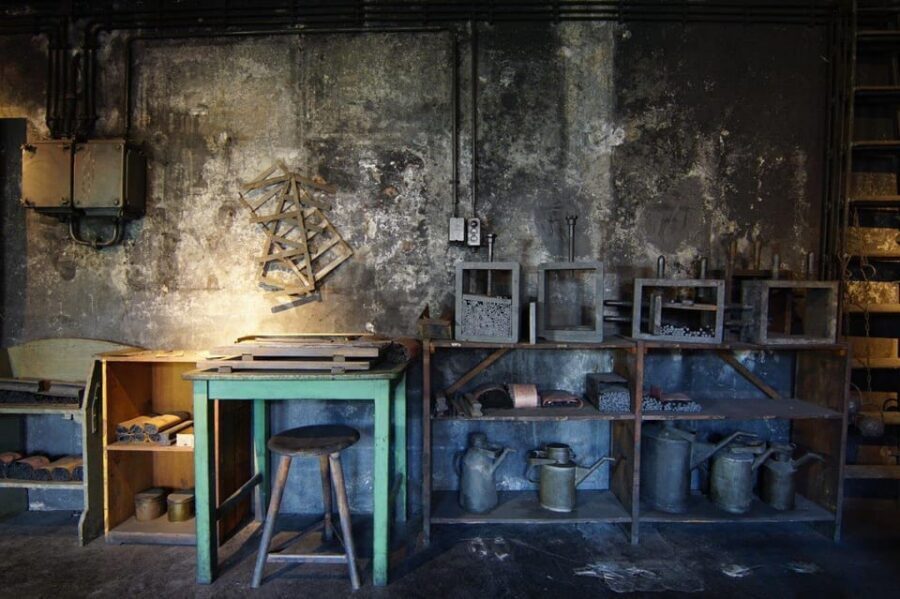
- Old production rooms in a listed building from 1848, by the Rednitz in Stein near Nuremberg
- Two floors of mine production that explain lead- and color-pencil related manufacturing in the 19th/20th centuries
- Live German/English guide guiding you through what you’re seeing on-site
- You leave with a souvenir included in the ticket
- 15% off in the castle store (Mon–Fri) on the same day as your tour
Stein’s pencil roots: why the Old Mine matters
If you’ve ever wondered why a pencil feels like a small object with a big story, this is the place to connect the dots. In Stein (Bavaria, near Nuremberg), the Faber-Castell headquarters preserve historic production spaces and explain how pencil-making links to mining and materials work.
The main draw here is that you’re not just looking at display cases. You’re walking through rooms tied to actual production: mine processing areas that were later adapted for visitors. That change—from working rooms to museum rooms—is part of the experience. It makes the history feel physical.
And there’s a clever theme thread that runs through the site: the program mentions a special focus connecting the castle with a press-camp topic. You don’t need to love castle history to enjoy it, but it helps explain how the site’s functions and eras overlapped instead of existing in neat, separate chapters.
Other guided tours in Nuremberg


Getting your bearings at Faber-Castell Erleben
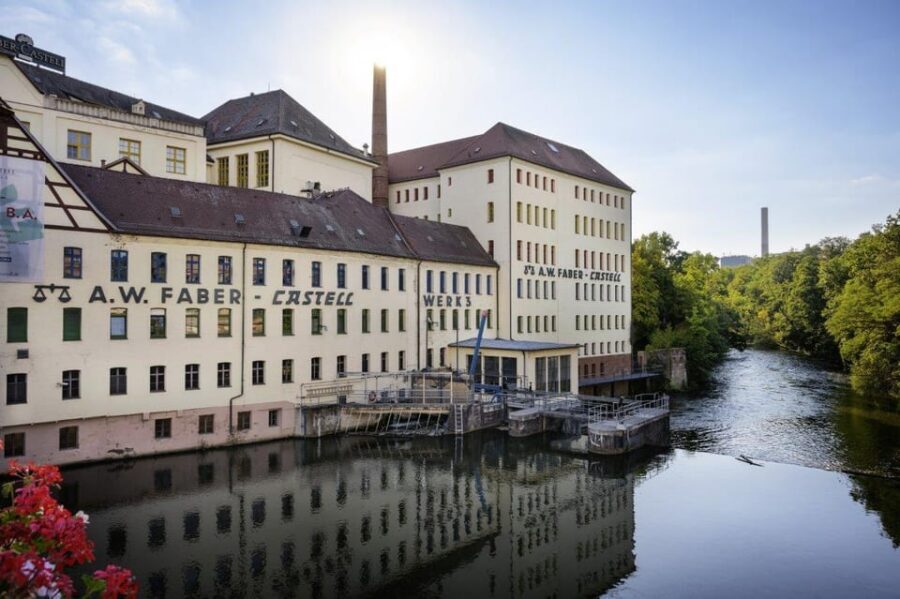
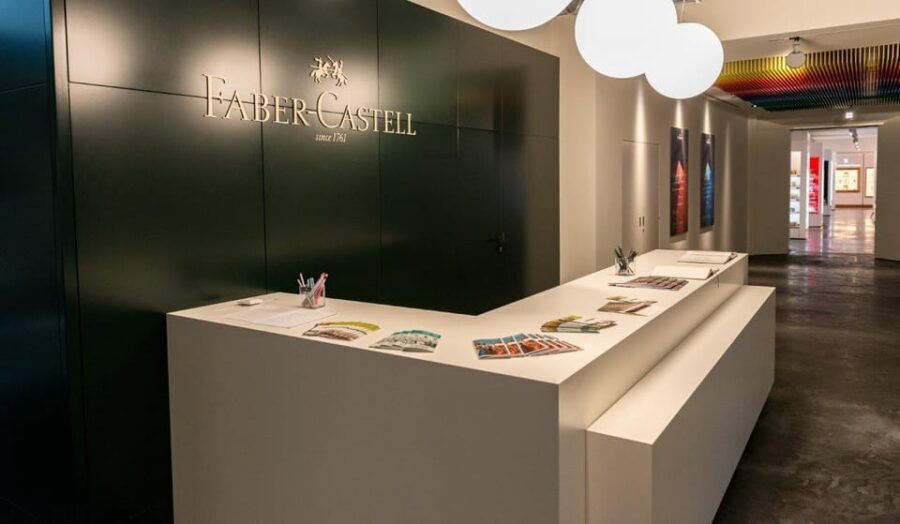
Your tour starts at the Faber-Castell Visitor Center at Faber-Castell Erleben, where you can get oriented before stepping into the museum spaces. Because the premises include historic buildings, you’ll want to arrive with a clear head and comfortable shoes—once you start walking, you’ll be on foot for stretches.
This is also where the site’s “feel” comes through. Faber-Castell is a brand you already know, but here the setting makes it more grounded: it’s the company’s headquarters, not a random souvenir stop. If you like seeing how famous names connect to actual buildings and processes, you’ll appreciate that shift right away.
One small practical detail: some of the content shown in the spaces is presented in its original language. With a German/English live guide, you’ll be fine, but it’s smart to be ready for a bit of reading on your own if you want to catch every label.
Inside the Old Mine: historic rooms along the Rednitz
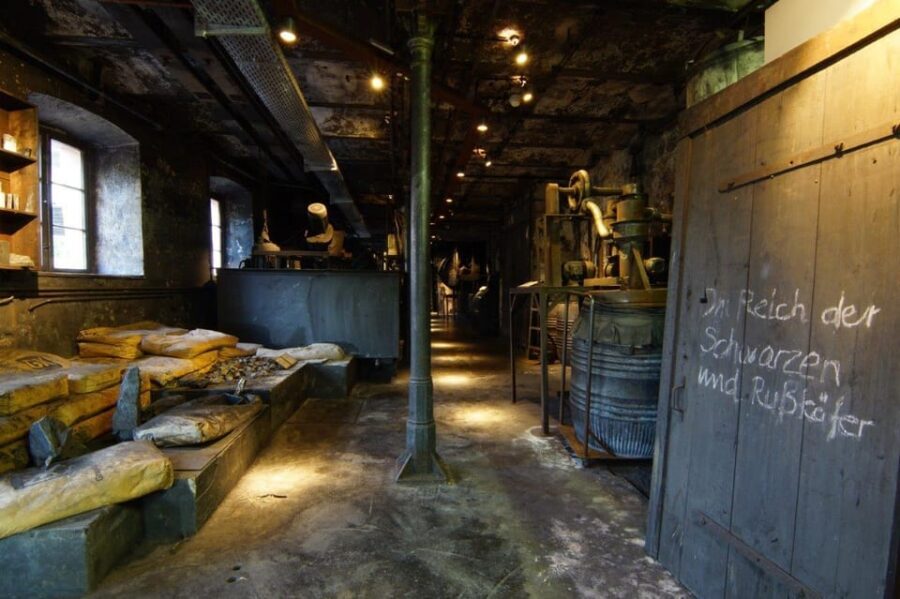
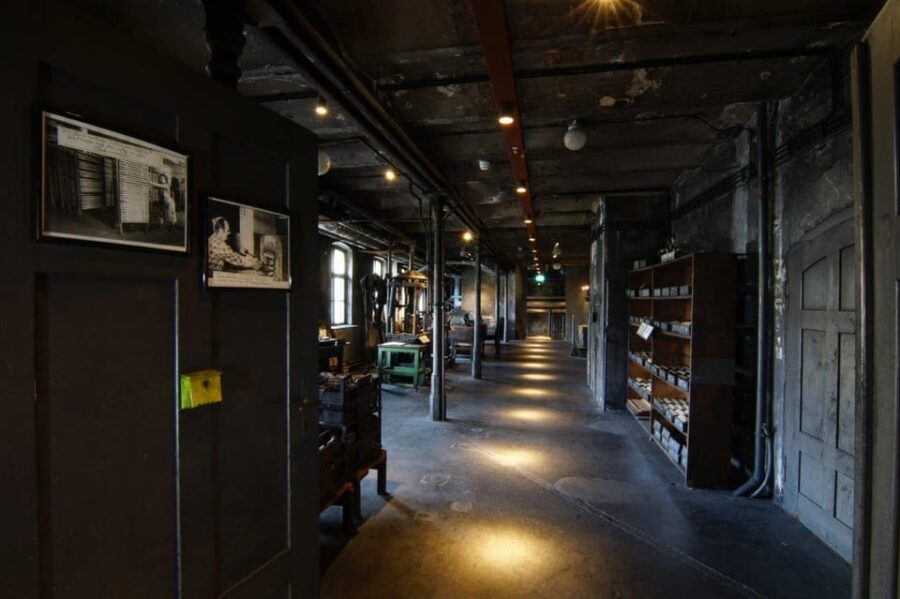
The guided museum portion is the heart of the experience: Alte Mine / Old Mine at Faber-Castell. The museum draws on historic mine production rooms in a listed building dating from 1848. That’s important because you’re not touring a modern reconstruction meant to look old—you’re in an older industrial structure with layered space.
The museum takes place over two floors, and the guide leads you through features that explain lead mine production in the 19th and 20th centuries. You’ll see how the manufacturing process worked and what made it complicated when compared with today’s tools and workflows.
As you move through the rooms, keep an eye on how the building is described as an ensemble of different eras and levels—so you’re not just looking at one straight-line timeline. It’s more like walking through stacked chapters. That’s exactly why the museum setting works: it turns industrial history into something you can understand with your feet and eyes.
What the guided tour actually teaches you
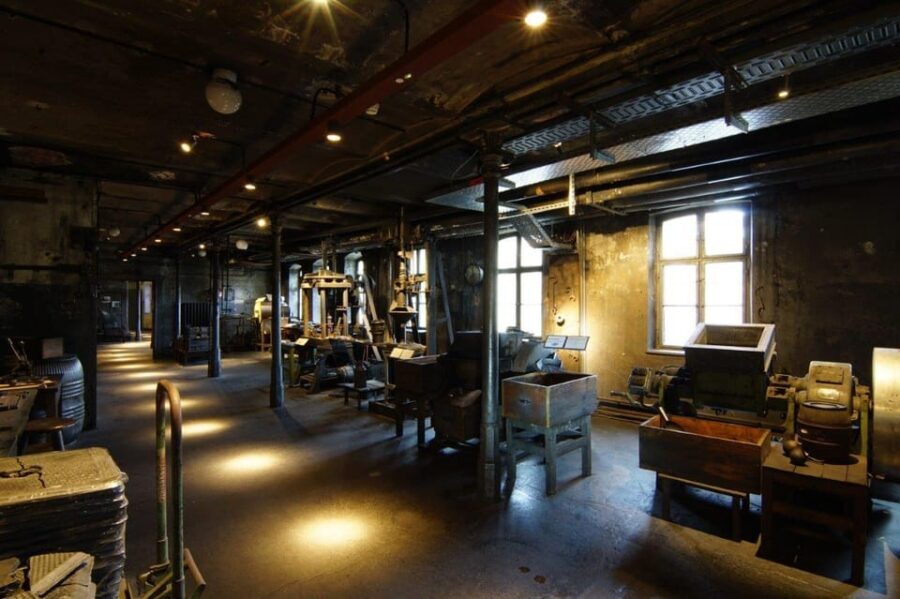
The Old Mine tour does a solid job of connecting “how materials are processed” to “how pencil cores end up in your hand.” You learn about the general production of pencil materials, including how lead and colored pencil cores were made. Then the guide narrows in on the mines and the specific production rooms that supported that work.
Here’s the part I think you’ll appreciate even if you’re not a science person: the explanations are aimed at making the workflow understandable. You’re shown how the manufacturing process could be traced through older exhibits and equipment, and you can compare it to what happens today, because the core idea is similar even when the methods have changed.
One review-style moment worth planning for: some of the historical photos and label text can be hard to fully read during a fast-paced tour. That doesn’t mean the info isn’t good—it means you might want to pace yourself mentally. If you’re the type who likes to linger with captions, just know the guide keeps moving so the group stays on schedule. After the tour, if you have time in the area, you’ll likely want to circle back and slow down.
Two floors, one storyline: why the pace can feel tight
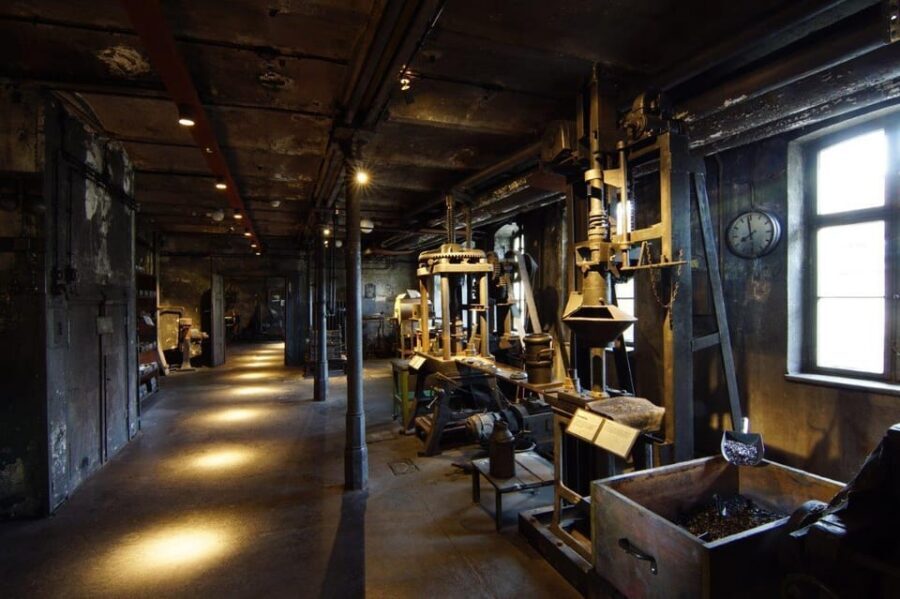
Most of the museum’s story is on two floors, and that layout shapes how you experience the tour. The benefit is that you get a vertical sense of how production spaces functioned. The drawback is that 1.5 hours doesn’t allow you to read everything at maximum speed and minimum speed at the same time.
So here’s a practical way to handle it: go with the guide first. Follow the “big picture” points as you walk. If something catches your attention—an exhibit, a photo set, a panel you can read clearly—make a mental note to return to it later if you can. You’ll still come away with understanding, but you won’t feel like you rushed through the whole thing.
I also like that the tour helps explain not only what was produced but why production was so laborious and time-consuming in the late 19th century. When you see older production contexts, it becomes obvious that making pencil-related materials wasn’t a quick assembly line. It was work that required patience, process control, and plenty of manual effort.




The castle side of the story and the store discount payoff
Even though the museum tour is your main event, the broader castle setting matters for two reasons. First, it gives context for why you’re visiting Faber-Castell at all: it’s the headquarters site, not a standalone exhibit. Second, it creates a simple reward after the tour.
You get 15% off at the store at the castle on the day of your tour, valid Mon–Fri. That’s a real value boost if you plan to buy something anyway—pens, pencils, paper goods, and souvenir items are exactly the sort of things people pick up at a pencil-focused site.
The ticket also includes a souvenir, so you’re not leaving empty-handed even before you shop. If you enjoy bringing back one small object that has a story attached, this helps you feel like the ticket paid off twice: once in the museum, once back in your bag.
What to wear and how to plan your visit
This is one of those tours where comfort affects your enjoyment. The premises are historic and not barrier-free, and you should expect long walking distances and sturdy surfaces that aren’t designed for speed.
So wear shoes with grip and support. Even if you’re comfortable on your feet, you’ll still want to reduce the strain so you can focus on what the guide is pointing out.
Also plan for a bit of standing and moving while the guide brings the group along. This isn’t a sit-and-watch lecture. It’s a walk-through museum experience where you’re learning by seeing the spaces where production happened.
Price and value: is $14 a good deal?
At about $14 per person, this guided museum tour can be a strong value if you like structured explanations. You’re paying for a live guide, a 1.5-hour museum visit, and you receive a souvenir included with the ticket.
On top of that, the store discount can add even more value, especially if you want to buy pencils or branded gifts the same day. Since the discount is only Mon–Fri, you’ll want to line it up with your schedule. If you’re visiting over the weekend, the museum still stands on its own, but you may not get that extra savings punch.
In short: if you’re interested in how pencil-making ties to industrial processes—and you’re glad to learn through a guided walkthrough—this price feels fair. If you’re the type who hates tours and prefers to read at your own pace, you might feel constrained by the time.
Who this tour is best for (and who should skip it)
I’d recommend this tour to you if you like:
- industrial history told with real rooms and real equipment-style displays
- practical explanations of how manufacturing works, not just dates and names
- learning in a structured group setting with a guide in German or English
It’s also a great fit if you’re traveling with someone who enjoys craft or materials—pencil lovers, makers, teachers, and even curious kids (as long as they’re okay with walking).
You might skip it if:
- you dislike museums where you have limited time at each exhibit
- you’re unable to manage walking around historic, not barrier-free premises
Should you book the Old Mine guided tour in Stein?
I’d book it if you want a short, focused way to understand pencil production through industrial spaces. At 1.5 hours, it’s long enough to learn real process details, and short enough to fit into a day trip from the Nuremberg area without draining your schedule.
Book it especially if you plan to visit Faber-Castell Erleben anyway. The tour connects the brand name you recognize with the place it came from—historic production rooms, mine production context, and a clear guide-led storyline.
If you care about reading every label slowly, go in with a plan: follow the guide first, then use any spare time you have on-site to slow down. And don’t forget the shoes—this one rewards comfortable walking.
FAQ
How long is the Old Mine guided tour?
The guided tour lasts about 1.5 hours.
Where does the tour meet?
You meet at the Faber-Castell Visitor Center at Faber-Castell Erleben.
What languages are the tours in?
The live tour guide offers German and English.
Is a souvenir included?
Yes. The ticket includes a souvenir.
Do I get a discount at the castle store?
Yes. You get 15% off in the store at the castle on the day of your tour, Mon–Fri.
Is the museum tour barrier-free?
No. The premises, including historic areas, are not barrier-free, and you should plan to walk long distances.
What should I wear for the tour?
Wear sturdy shoes, since the grounds are in historic areas and involve walking.
Can I cancel for a full refund?
Yes. You can cancel up to 24 hours in advance for a full refund.
Is reserve now and pay later available?
Yes. You can reserve now & pay later, keeping your plans flexible.