REVIEW · NUREMBERG
Medieval Tour in Nuremberg in Spanish
Book on Viator →Operated by Hallo Nuremberg! · Bookable on Viator
Medieval Nuremberg has a hidden pulse. This Spanish-guided walk turns ordinary streets into a storybook of witchcraft, executions, love, death, and the city’s own myths. You’ll move at an easy pace with lots of short stops, so you can actually take the place in instead of just rushing past it.
What I liked most is the way the guide connects the city’s famous landmarks to the lesser-known “other Nuremberg.” And I also love the tone: funny where it can be, spooky where it needs to be, with Fede standing out for how he communicates and keeps things lively even when the weather isn’t cooperating. The only real drawback to plan for is that it’s a lot of walking for a tour length of about 2 hours 30 minutes, so comfortable shoes matter.
In This Review
- Key highlights you won’t want to miss
- A 3:30 pm story walk through streets you already know
- Value and pricing: what $19.60 really buys you
- Getting ready: shoes, rain, and how to follow the guide
- Stop 1: Hauptmarkt and the city’s pulse
- Stop 2: St. Lorenz and the church-building stories
- Stop 3: Heilig-Geist-Spital and Till Eulenspiegel
- Stop 4: Weisser Turm and the first city wall idea
- Stop 5: Ehekarussell and the source of married-life delights
- Stop 6: Unschlitthaus and Kaspar Hauser
- Stop 7: Hangman’s Bridge and the executioner
- Stop 8: Weißgerbergasse, the most medieval alley feel
- Stop 9: Beim Tiergärtnertor and hidden wall history
- Stop 10: Kaiserburg and the dark legends near the Imperial Castle
- What you’re really getting: medieval Nuremberg as a way of seeing
- Who should book this tour
- Practical FAQ
- FAQ
- Is the tour guided in Spanish?
- How long is the Medieval Tour in Nuremberg?
- Where does the tour start and end?
- What time does the tour begin?
- Is the ticket mobile?
- Do I need to pay for admission at the stops?
- How big is the group?
- Is free cancellation available?
- Should you book this medieval Nuremberg tour?
Key highlights you won’t want to miss
- Spanish guide who brings the stories to life stop by stop
- 2.5 hours of walking with short, manageable stops across central Nuremberg
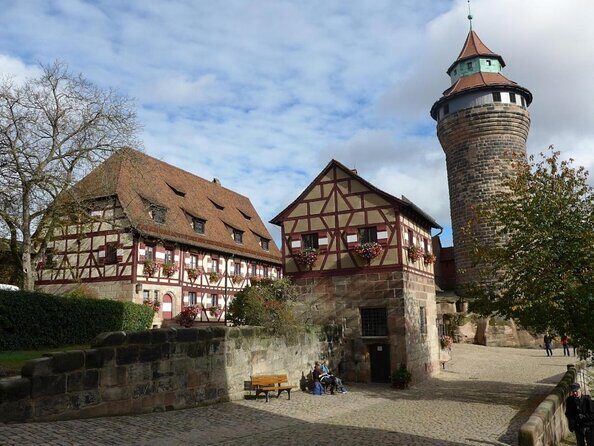
- Hauptmarkt to Kaiserburg: from the city’s heartbeat to the Imperial Castle
- Dark jobs and medieval legends: executioner, witchcraft, and the “orphan of Europe”
- Weißgerbergasse and the medieval street vibe, plus city-wall details
A 3:30 pm story walk through streets you already know
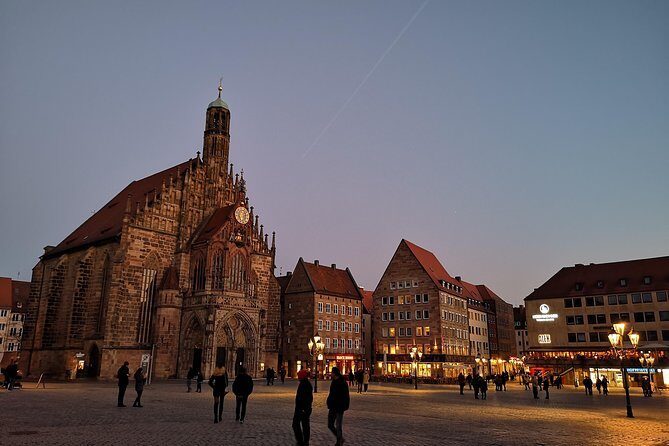
This tour is timed for late afternoon. It starts at 3:30 pm at Hauptmarkt 14, and the walk ends at the Imperial Castle of Nuremberg (Kaiserburg). That timing can be a sweet spot: you get daylight for photos, and you’re not fighting the middle of the day.
The format is simple. You’ll get a Spanish guide, a mobile ticket, and a route that keeps you outdoors for about 2 hours 30 minutes. With a maximum of 30 travelers, it feels like a guided stroll rather than a cattle-line.
If you’re hoping for a quiet, museum-only experience, this isn’t that. This is Nuremberg told through characters and themes, with places used like chapters. If you enjoy history that has plot, you’ll probably have a great time.
Other Nuremberg day trips we've reviewed in Nuremberg

Value and pricing: what $19.60 really buys you
At $19.60 per person, this is one of the more budget-friendly ways to get a guided overview of central Nuremberg in Spanish. You’re not paying for long museum tickets or add-on attractions; the itinerary uses key places with admission tickets marked as free for the stops listed.
That matters because it lowers the risk of feeling “nickel-and-dimed.” It also means the value comes mainly from the guide and the storytelling: you’re buying interpretation, not entry fees.
One more practical angle: the tour is around 2.5 hours, so it fits easily into a day without eating your whole schedule. If you have limited time in Nuremberg but want more than the obvious sights, this price-to-time ratio is hard to beat.
Getting ready: shoes, rain, and how to follow the guide
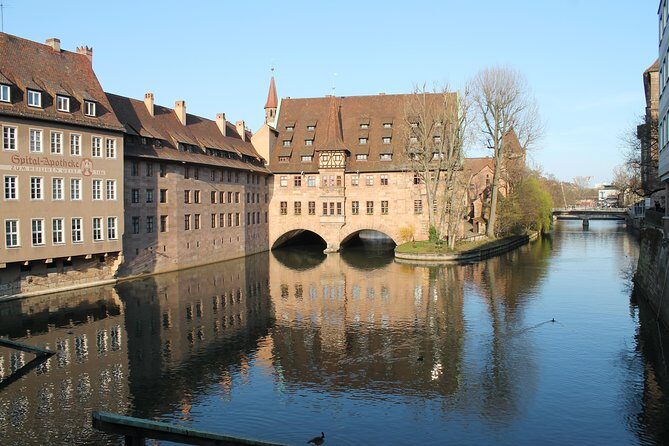
This is a walking tour. Even though each stop is short, you’ll be moving from one landmark to the next for the full 2 hours 30 minutes.
Plan for weather. One review I saw mentioned a rainy afternoon, and the guide still kept the experience fun and smooth. That suggests you should come prepared for the sky to change, like you would for any late-day city walk.
Also, bring what you need for comfort. Soda or pop isn’t listed as included, so consider carrying water. And since the tour uses a mobile ticket, make sure your phone battery is healthy.
Stop 1: Hauptmarkt and the city’s pulse
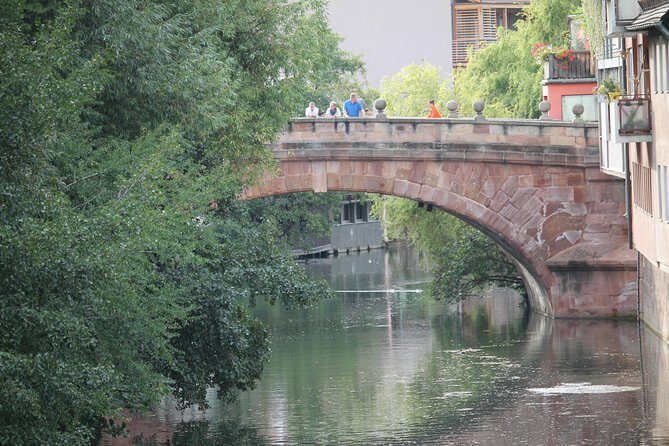
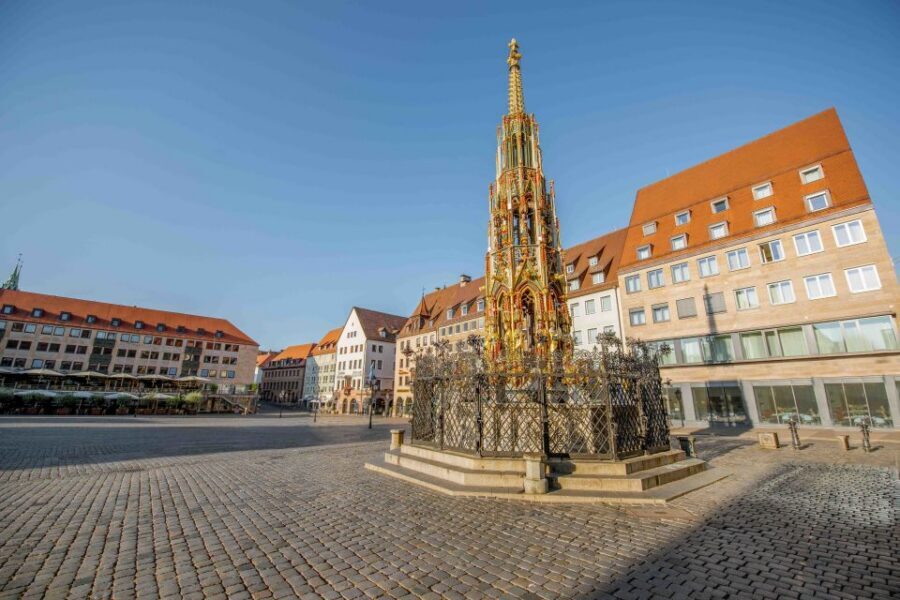
You’ll begin at Hauptmarkt, the central square where Nuremberg feels like Nuremberg. This first stop sets the stage with the history of the city, giving you a framework for everything that follows.
I like starting here because it helps you “zoom out” quickly. Once you know the basics, the details in later streets and walls make more sense.
Time here is brief, about 10 minutes, so don’t expect a full lecture. Expect orientation: key facts and the kind of story threads that will pop again at later stops.
Stop 2: St. Lorenz and the church-building stories
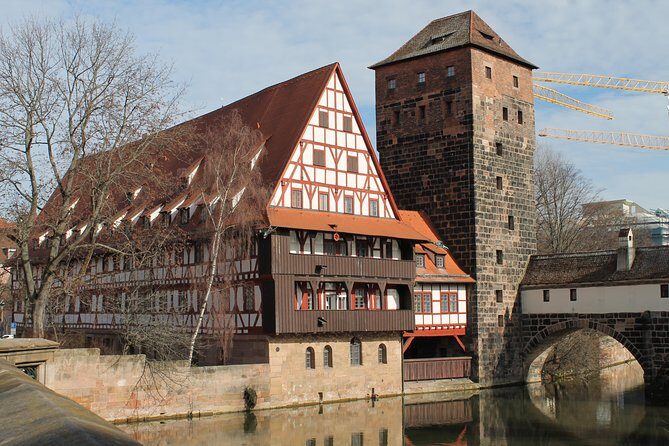
Next comes St. Lorenz, where the tour focuses on the construction of the church and its particular stories. This is a good match for the tour’s style: instead of only admiring the building, you’re nudged to notice how people shaped it and why it mattered.
With another 10-minute stop, the goal is clarity, not overload. You’ll probably come away with a few hooks you can carry into your own exploring after the tour.
If you enjoy architecture but hate being trapped in long explanations, this stop hits a nice balance.
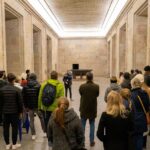




Stop 3: Heilig-Geist-Spital and Till Eulenspiegel
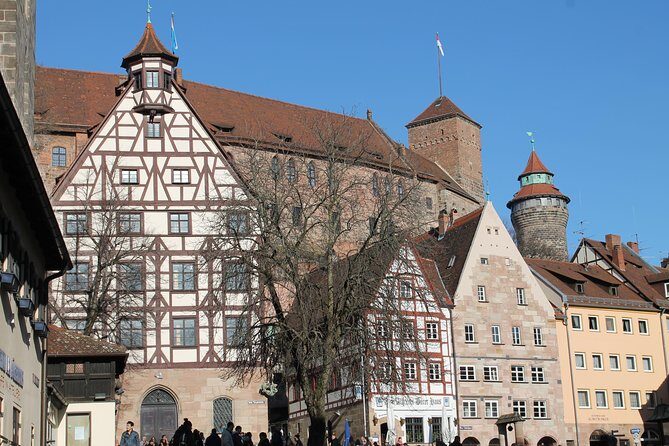
At Heilig-Geist-Spital, you’ll hear about Till Eulenspiegel. This is where the tour leans into legend and character—someone you can easily remember because the story has a mischievous, human feel.
This stop lasts about 10 minutes, so you’ll get a pointed summary rather than a deep research session. Still, it works because Till Eulenspiegel is the kind of figure who helps you understand how people used stories to comment on society.
If you like folklore that doesn’t feel like homework, you’ll likely enjoy this part.
Stop 4: Weisser Turm and the first city wall idea
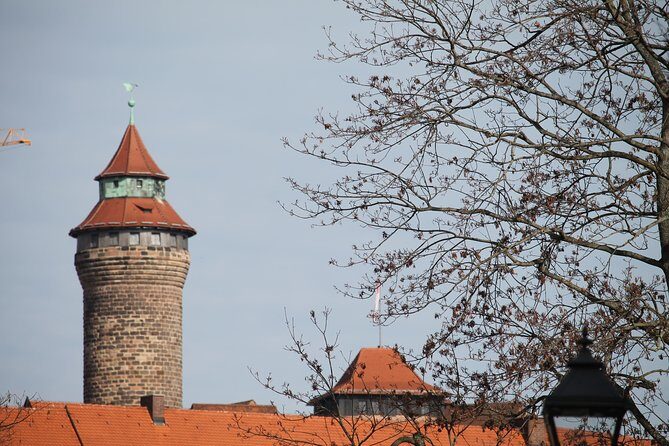
Then it’s Weisser Turm, presented as the tower of the first city wall. City walls are one of those topics that can feel abstract—until you connect the physical structure to what it protected and how people lived around it.
Time is short here, about 5 minutes. That’s enough to give you a “line of sight” understanding: where the defensive logic started and how it shaped the city’s growth.
This stop is a good breather too. You get the thrill of the story without overloading your brain.
Stop 5: Ehekarussell and the source of married-life delights
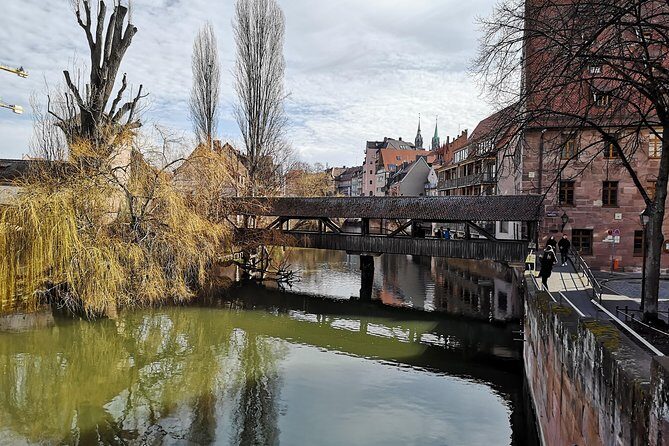
After the wall, you’ll shift to something more surprising: Ehekarussell, described as the source of the delights of married life. It’s a name that sounds playful, but the tour keeps it tied to medieval ideas around love, social rules, and daily life.
This is also where the tour’s theme list makes sense in real-world terms. When you hear about love and death in Nuremberg, it’s not just random darkness. It’s how people organized their world—through public symbols, rituals, and stories.
Another 10-minute stop keeps it from dragging. You’ll likely find yourself smiling at how medieval life could be both strict and strangely theatrical.
Stop 6: Unschlitthaus and Kaspar Hauser
At Unschlitthaus, the focus turns to Kaspar Hauser, described as the most mysterious character in Europe. The tour frames him as the orphan of Europe and links his story to palace intrigues.
This is the kind of stop that can change your whole mood. It’s one thing to hear about medieval legends and executions. It’s another to step into a setting where a real-sounding mystery hangs in the air.
Time is about 10 minutes, but Kaspar Hauser is the sort of topic that sticks with you after the tour ends. If you like human stories inside historical settings, don’t rush your photos here.
Stop 7: Hangman’s Bridge and the executioner
Next is Hangman’s Bridge, tied to the Executioner of Nuremberg—his trade and achievements. This isn’t just “scary history.” The tour frames the executioner as a profession, which helps you understand how medieval society worked: every role had a place, even the least desired ones.
The tour time here is about 10 minutes. That’s enough to land the big idea without turning it into gore-fest. You’ll probably walk away thinking about how fear, law, and public spectacle overlapped.
If you’re sensitive to dark topics, you’ll still want to know this is part of the route. But it’s handled as explanation and story, not shock.
Stop 8: Weißgerbergasse, the most medieval alley feel
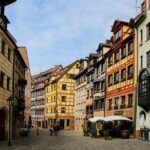
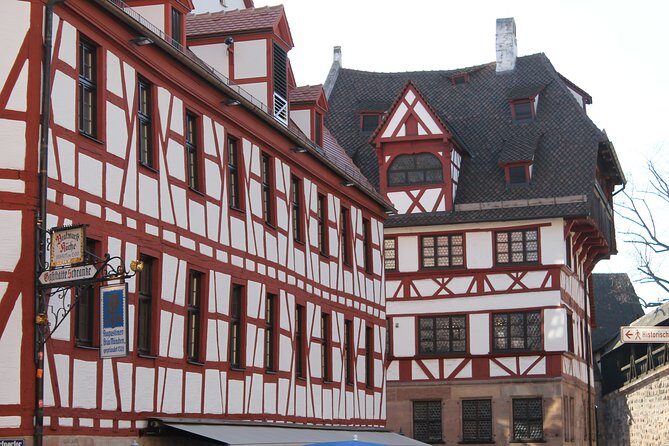
Then you hit Weißgerbergasse, described as the most medieval street in the city. This is the stop I’d recommend slowing down for. Streets like this are where you can feel the medieval scale—tight passageways, old textures, and the sense that daily life used to happen right here.
Time is 10 minutes, and it’s one of the better locations for lingering. Use this moment to picture earlier trades and movement through town, because the tour has been setting those themes up all along.
If you like photography, this is where you’ll likely get the most “period” look in a way that still feels real.
Stop 9: Beim Tiergärtnertor and hidden wall history
Now you get Beim Tiergärtnertor, focused on the city walls and their hidden history. You’ll keep seeing the idea that the walls weren’t just barriers; they were part of a whole living system with entrances, pathways, and meaning.
Time is only about 5 minutes, so treat this as a quick orientation stop. The value is in the connection: you’ve been hearing about defensive structures, and now you see a specific segment with story.
If you want to add your own exploring after the tour, this is a helpful cue for where to look next on your own.
Stop 10: Kaiserburg and the dark legends near the Imperial Castle
The tour ends at Kaiserburg, the Imperial Castle of Nuremberg. This final stop is about dark stories connected to the castle, including flying horses and women of bad life.
Time is about 15 minutes, which is decent for a final stop because it gives you room to process what you’ve heard. I like endings like this because it ties the medieval themes to a place that naturally feels powerful.
Also, ending at the castle makes practical sense. It’s one of the biggest landmarks in town, so you can keep exploring afterward without needing to relocate.
What you’re really getting: medieval Nuremberg as a way of seeing
This tour is more than a list of sights. It’s a method: you walk, you listen, and you start connecting motifs.
You’ll hear about witches and witchcraft as solutions to fear, and about medieval legends with figures like the devil and knights who fly with their horses. You’ll also get references to public sources of madness, love, and death, and ideas around trades like Mendel’s book and the least desired job of the executioner.
That’s why the tour works well even if you already know the headline attractions. The guide helps you notice the small, story-friendly details you might otherwise pass by.
And that’s where Fede shines in the reviews I saw: he communicated clearly so people could find him, and he mixed the history with humor. One review also credited him with keeping the afternoon pleasant even with rain, which is exactly what you want from a guide when your plans get wet.
Who should book this tour
I’d point this tour at travelers who like story-driven walking tours, especially if you want the medieval side of Nuremberg in Spanish. It’s also a good choice if you want a guided path through central highlights without paying museum-ticket prices.
You’ll probably enjoy it if you:
- Like folklore and historical characters alongside landmarks
- Want a fast way to understand Nuremberg’s “other stories”
- Enjoy a guide who can keep energy up during a rainy walk
If you want only straightforward facts with no legends, this might feel too theatrical. But if you’re open to medieval myths as a window into how people thought, you’ll get a lot out of it.
Practical FAQ
FAQ
Is the tour guided in Spanish?
Yes. The tour includes a guide in Spanish.
How long is the Medieval Tour in Nuremberg?
It lasts approximately 2 hours 30 minutes.
Where does the tour start and end?
It starts at Hauptmarkt 14, 90403 Nürnberg, Germany and ends at the Imperial Castle of Nuremberg (Burg 17, 90403 Nürnberg, Germany).
What time does the tour begin?
The start time is 3:30 pm.
Is the ticket mobile?
Yes, the tour uses a mobile ticket.
Do I need to pay for admission at the stops?
The listed stops show admission ticket free for each segment.
How big is the group?
The tour has a maximum of 30 travelers.
Is free cancellation available?
Yes. You can cancel for a full refund if you cancel up to 24 hours in advance.
Should you book this medieval Nuremberg tour?
If you’re trying to choose between doing Nuremberg on your own or adding a guide, I’d lean toward booking this one. The price is reasonable for a Spanish guide, the route covers big medieval anchors plus the darker, lesser-expected stories, and the stops are short enough that you’re not stuck through long explanations.
It’s also a smart pick if you want a “whole city” feel: square, churches, legends, alleys, walls, and then the castle to close it out. And with a guide like Fede getting strong marks for staying organized and making the time enjoyable, you’re likely to walk away with Nuremberg sticking in your head for the right reasons.