REVIEW · MUNICH
Nuremberg Private Guided Tour from Munich by Rail
Book on Viator →Operated by Nuremberg City of Empires Tours · Bookable on Viator
Nuremberg packs a lot into one day. This private tour takes you from Munich by rail to Germany’s old walled core and then into the WWII landmarks that explain how the city became a hinge point in modern history. You can also shape the day with your guide, so it doesn’t feel like you’re marching through Nuremberg on rails.
I really like two things here: roundtrip train transport is included, so your day runs on schedule instead of guesswork. I also love the private guide part, because you’re not stuck with a script that ignores what you care about.
One possible drawback: some of the best “inside” stops have extra admission. Expect added costs for things like the courthouse exhibition and certain museum entries, plus lunch is on your own.
In This Review
- Quick hits before you go
- A Private Day Trip to Nuremberg from Munich, Run on Rail Time
- Getting Your Bearings in Nuremberg’s Old Town: Altstadt, Crafts, Market Square, and the Beautiful Fountain
- Kaiserburg Castle and the Old-City Stops That Matter: Dürer House and St. Sebaldus Church
- WWII Landmarks Without the Self-Planning Stress: Kongresshalle and the Documentation Center Grounds
- The Guide Makes the Day Feel Custom (and Some Names Are Mentioned a Lot)
- Timing, Pace, and Where Lunch Fits in the Middle of History
- Price and Value: What $474.09 per Person Covers and Who It Fits Best
- Should You Book This Private Nuremberg Tour from Munich?
- FAQ
- How long is the Nuremberg private guided tour from Munich?
- What is the price per person?
- Is roundtrip train transport included?
- Is hotel pickup included?
- Will the tour be only for my group?
- What language is the guide?
- What admission fees are not included?
- Are food and drinks included?
- Where is the meeting point in Munich?
- When will I receive confirmation?
- Can I cancel for a full refund?
Quick hits before you go
- Rail transport from Munich is built in, so you don’t waste time coordinating connections.
- Most key Old Town stops are free to enter, which helps you control your total day cost.
- WWII sites are included with guided context, not just a quick look from the sidewalk.
- Short, well-timed blocks at major landmarks keep the day moving without feeling frantic.
- Guides can adapt the pace—you’ll see flexibility mentioned, including earlier starts for some groups.
- Lunch works naturally in the historic center, especially around the main market area.
A Private Day Trip to Nuremberg from Munich, Run on Rail Time
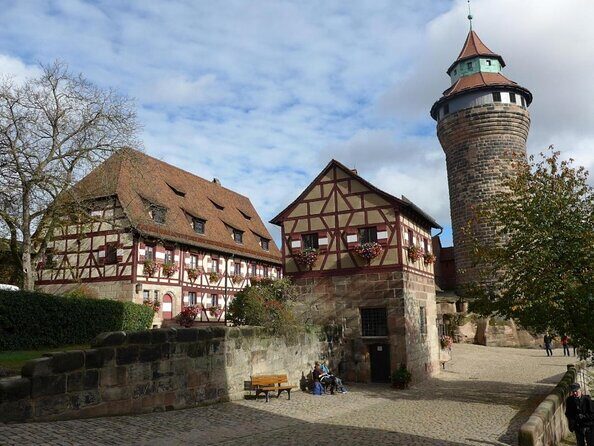
This is a full-day outing, roughly 8 to 9 hours, designed as a clean day-trip loop: meet in Munich, ride the train together, explore Nuremberg with a guide, then head back to the same starting point. The big win is that the rail logistics are handled for you. That matters because train travel between Munich and Nuremberg is frequent—but planning how you’ll get everyone from station to sights to station is the real time tax.
You also get options for where to meet. The official start is Munich Hauptbahnhof, but hotel pickup is offered, so you might begin the day with the guide handling the handoff and direction from your lodging. If your group is small, this “you-only” setup can feel like having a local historian with a driver’s-eye view of the schedule.
The day blends walking in the old city with time at heavy-history sites. That’s a lot for one calendar day, but it’s the reason this tour is popular: it gives you both the medieval city feel and the WWII context, without forcing you to plan those connections yourself.
Other Nuremberg day trips we've reviewed in Munich

Getting Your Bearings in Nuremberg’s Old Town: Altstadt, Crafts, Market Square, and the Beautiful Fountain
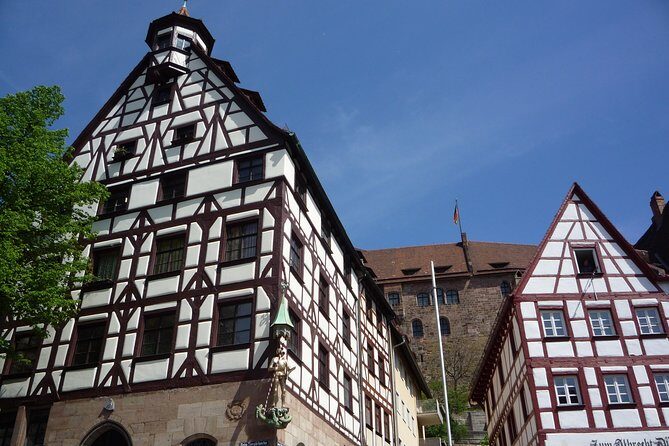
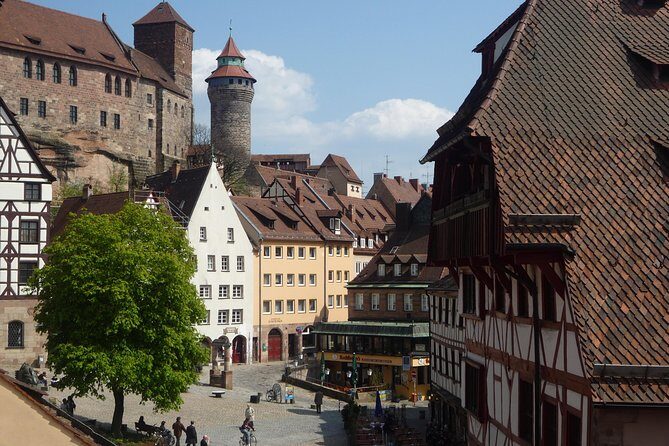
The tour starts with Nuremberg’s Altstadt, the walled medieval center, and you get about an hour here. This is where you learn the “shape” of the city: where power lived, where trade ran, and why the center looks the way it does. Even if you’re not a history buff, the old street pattern makes the rest of the day easier to understand.
After that, you’ll pass through the Handwerkerhof, a reproduction of a traditional craftsman’s court—small, quick, and focused on old-world shop life. It’s only about 10 minutes, but it works as a palate reset. You go from big history to a smaller, human-scale look at trade and craft.
Then you land at Hauptmarkt, where the marketplace has anchored city life since the 1300s. You’re given about 15 minutes, which is enough to feel the main square’s role without spending your whole day chasing photos. If you want lunch, this area is a natural “base camp” because it’s easy to regroup and it’s surrounded by places to eat.
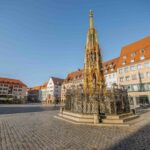
Short but memorable is Der Schöne Brunnen, the Beautiful Fountain. Expect about 10 minutes to take in the golden Gothic tower and the wishing ring details. This fountain is a classic Nuremberg landmark for a reason: it’s ornate, it’s central, and it helps you spot the city’s artistic side even after you’ve spent time with tougher WWII sites later.
Practical tip: wear comfortable shoes for the old center. You’ll be on your feet for a while, and the day is built around quick stops, not long bus rides that let you sit.
Kaiserburg Castle and the Old-City Stops That Matter: Dürer House and St. Sebaldus Church
Next comes Kaiserburg Nuremberg, the Imperial Castle, with roots going back to at least 1050. You get about 15 minutes, which is the sweet spot for castle views and story—enough time to understand what it was (seat of power) and why it mattered for centuries, but not so long that you’re stuck waiting for everyone else.
From here, you may head to Albrecht-Dürer-Haus, the original home of the famous Renaissance artist. The stop is listed as about 5 minutes, and the admission is not included. One key consideration: the Dürer house can be closed on some days. So treat the exterior and the explanation as your reliable win, and only add the interior if you’re sure it’s open when you arrive.
Then you move to St. Sebaldus Church, about 15 minutes. This is described as the oldest church in Nuremberg, tied to the city’s patron saint. Like the Dürer house, it’s marked as admission not included. If you’re the type who likes to see how religious art and civic identity overlap, this stop is one of the best “bridges” between medieval city life and the later eras the guide will discuss.
What I like about this block is the pacing. You get one major fortress (Kaiserburg), then two smaller but meaningful culture stops (Dürer House and St. Sebaldus). It prevents the day from becoming only “landmarks as checkboxes.” Even in limited time, you end up with different textures of Nuremberg.
WWII Landmarks Without the Self-Planning Stress: Kongresshalle and the Documentation Center Grounds
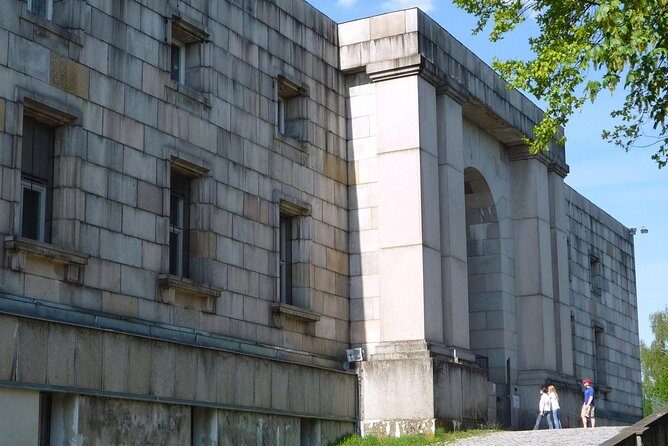
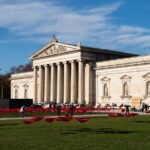
The tour’s heavy-history portion is focused and efficient. You visit Kongresshalle Nuremberg, the unfinished Congress Hall linked to the Nazi Party, with about 15 minutes here. It’s unfinished for a reason—and your guide’s job is to help you read that emptiness, the scale, and what it says about ambition, propaganda, and reality.
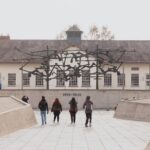
Next is Documentation Center Nazi Party Rally Grounds, with about 1 hour. This is the former Nazi Party rally grounds, and it’s where the story gets anchored with exhibits and context. Even though the stop itself is listed as free in the schedule, the tour data also flags that you may need to pay an entrance fee for the Documentation Center exhibition (listed as €7.50 per person). So I’d budget for that extra if you want full exhibit time, not just a quick walkthrough.
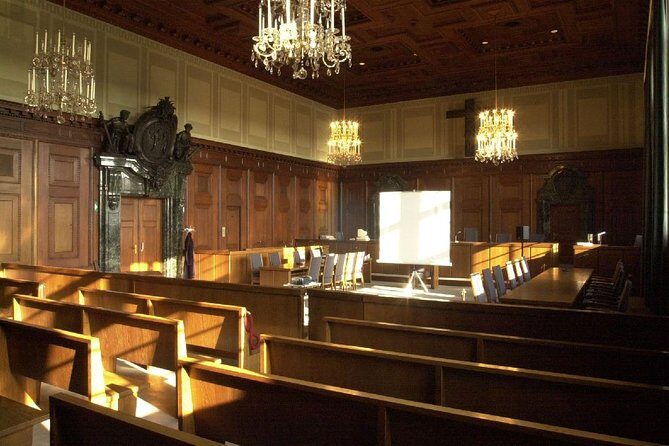
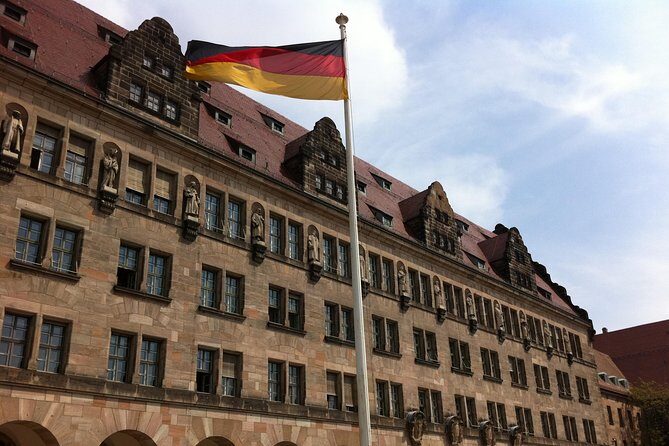
You’ll also encounter the Nuremberg trials courthouse exhibition as part of the broader WWII framing, with a separate €7.50 per person entrance fee listed for that exhibition as well. If you’d rather spend your money where it connects most to your interests, ask your guide which exhibition portion is most worth the ticket on the day you go.
A grounded way to approach this part of the tour: don’t rush it just to “get through” the places. The value here is the human context—how the city’s buildings, institutions, and public spaces were used. The day is structured so you don’t arrive at these sites cold.
The Guide Makes the Day Feel Custom (and Some Names Are Mentioned a Lot)
This is a private tour, meaning it’s only your group—no mixing in with strangers. That’s not just a comfort thing. It changes the whole experience: your guide can slow down for your questions, and you can rearrange priorities without the pressure of a large crowd.
There’s also a clear theme in the feedback about guide style. Names like Susanna and Jason come up for their prep and ability to answer questions clearly, with visuals and context. Paul is noted for being flexible and personable, even treating the day like a conversation rather than a lecture. Chris, Akim, Nick, Jeff, and Curt also show up in the pattern of what works—timing, good English, and making the transport and transitions feel manageable.
One very practical advantage shows up repeatedly: the guide helps you handle the moving parts. That includes getting from the train to the right areas, managing transitions smoothly, and keeping the day from turning into a scavenger hunt. Some guides have also been praised for keeping a relaxed-yet-efficient pace, so you can still get time for lunch without feeling like you’re sacrificing key sites.
So if you care about more than just photos—if you want to understand what you’re looking at—this is where the tour earns its price.
Other Munich city tours we've reviewed in Munich


Timing, Pace, and Where Lunch Fits in the Middle of History
The schedule is built on short landmark blocks, not marathon sightseeing. After you spend time in the Altstadt and the main square areas, you’ll shift to castle time, then switch gears again to the WWII landmarks. That change-of-topic rhythm is exactly what prevents this tour from feeling monotonous.
Train time matters. In the experience, the rail portion is described as roughly 90 to 120 minutes each way, so your “8 to 9 hours” includes real travel time—not just the time on foot in Nuremberg. The guide’s value is how they use that day structure: they give you context during the walking segments and keep transitions smooth so you’re not stuck waiting around.
Lunch isn’t included, but the tour naturally places you near food options, especially around the market square area and central stops. If you want the most stress-free lunch, plan for a quick sit-down or a casual meal near where your group is already gathered.
If you’re prone to museum fatigue, this tour helps you pace yourself. The WWII sites include a full 1 hour block at the documentation grounds, while the rest of the day alternates smaller stops. It’s a good balance if you want meaning without turning the whole day into a seminar.
Price and Value: What $474.09 per Person Covers and Who It Fits Best
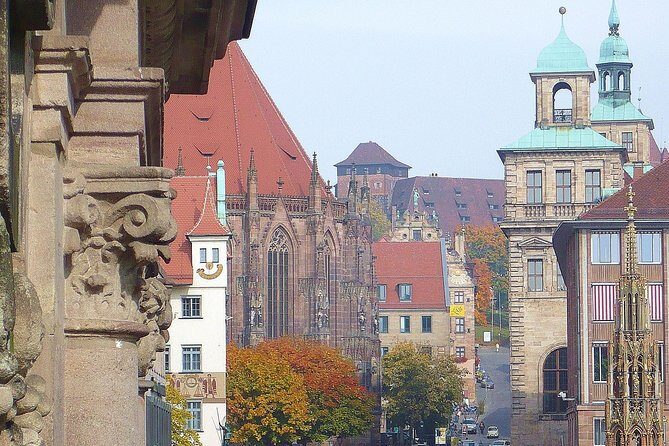
At $474.09 per person, this isn’t a budget day trip. You’re paying for three things that cost time and energy when you do it on your own:
- Private, English-speaking guide time
- Roundtrip train transport from Munich
- Pickup and drop-off options (depending on where you’re staying)
If you were trying to DIY the day, the biggest hidden cost is not ticket price—it’s coordinating the right route, keeping everyone together, and deciding what to see in the limited time you have. This tour bundles those decisions into one guided plan.
Also, there’s a hint that the operator expects groups to plan ahead: this is often booked about 86 days in advance on average. That’s a sign it’s popular with people who want a specific day and guide availability.
Who gets the best value? People who:
- want a one-day, structured hit of both medieval Nuremberg and WWII sites,
- prefer not to spend half the day reading maps and transit screens,
- value having a guide who can shape the route based on your interests.
Who might find it less worth it? If you love planning and you’re comfortable building a schedule around trains and museum hours, you could potentially do it cheaper. But you’ll work harder for the same flow and context.
Should You Book This Private Nuremberg Tour from Munich?
Yes—if you want a guided day that connects medieval landmarks with WWII sites, without making you solve transport and timing. This tour is strongest when you value explanation, not just sightseeing. The private format is also a big deal: your time stays yours.
If your priorities are extremely narrow—say, only the WWII exhibitions—or you’re on a tight budget, you might hesitate because some key entries are not included and meals are on your own. Still, even then, paying for the guide plus the rail simplifies the day in a way that feels worth it.
My rule of thumb: if you’re the type who asks why a place matters, book it. If you just want photos and you’re happy reading on your own, you may not need the private guide.
FAQ
How long is the Nuremberg private guided tour from Munich?
It runs about 8 to 9 hours.
What is the price per person?
The price is $474.09 per person.
Is roundtrip train transport included?
Yes. Roundtrip train transport from Munich is included.
Is hotel pickup included?
Hotel pickup is offered, and meeting at Munich Hauptbahnhof is also possible.
Will the tour be only for my group?
Yes. It’s a private tour, so only your group participates.
What language is the guide?
The tour is offered in English.
What admission fees are not included?
Not included are entrance fees such as the courthouse exhibition or the Documentation Center Nazi Party Rally Grounds, listed as €7.50 per person, and also admission for stops like Albrecht-Dürer-Haus and St. Sebaldus Church (listed as not included).
Are food and drinks included?
No. Food and drinks are not included.
Where is the meeting point in Munich?
The meeting point is Hauptbahnhof, 80335 Munich, Germany.
When will I receive confirmation?
You should receive confirmation within 48 hours of booking, subject to availability.
Can I cancel for a full refund?
Yes. Free cancellation is available if you cancel at least 24 hours in advance for a full refund.