REVIEW · MUNICH
The Old Town Walking Tour: Munich
Book on Viator →Operated by The Local Experience · Bookable on Viator
Your first Munich walk starts here. In just 2 hours 15 minutes, you cover a big chunk of the Old Town with quick stops at major sights, plus free admission where noted. What makes it work is the mix of famous landmarks and street-level context, with guides who focus on helping you understand how the city got shaped.
I particularly love the small-group feel (max 24), which keeps questions from getting lost and makes the stories easier to follow. I also like the free-entry stops built into the route, so the tour isn’t just looking from the outside—it gives you real time at places like Frauenkirche and the Glockenspiel area.
One thing to plan for: the stops are short on purpose, so you get good highlights, not long lingering. If you need lots of time to shop or sit down for a drink, you’ll want to leave room afterward—especially since the tour finishes in the Old Town near Max-Joseph-Platz (and the exact end point can vary a bit by guide).
In This Review
- Key highlights worth showing up for
- Why the 10:15am Old Town route is a smart first-day move
- Meeting at Karlsplatz 10 and starting with the right momentum
- Frauenkirche: a landmark church stop that anchors everything
- Marienplatz and the Rathaus-Glockenspiel: watching the Old Town at work
- Viktualienmarkt: one of Germany’s biggest markets, with time to snack
- Old Town Hall ruins, WWII memory, and a Juliette statue
- Hofbräuhaus interior look: why it became Munich’s beer symbol
- Max-Josefs-Platz: royal family rule and a funny Opera House story
- What makes the guides so effective: storytelling, not just facts
- Price and value: how $3.61 works as a practical deal
- Who this walking tour fits best
- My quick decision guide: should you book?
- FAQ
- How long is the Old Town Walking Tour?
- What is the meeting point and where does the tour end?
- Is the tour in English?
- Are there admission tickets included for the stops?
- What’s included in the price, and what isn’t?
- Is the tour ever cancelled after booking?
Key highlights worth showing up for

- Max 24 people keeps it personal and easier to hear your guide.
- English mobile ticket means less hassle once you’re on the move.
- Free admission at each listed stop lets you step inside key sights quickly.
- Marienplatz Glockenspiel stop puts you right where the Old Town action happens.
- Hofbräuhaus interior peek helps you understand why it became famous.
- Royal family stories at Max-Josefs-Platz ties landmarks to how Munich ruled itself for centuries.
Why the 10:15am Old Town route is a smart first-day move
This is the kind of walk that helps you get oriented fast. Starting at 10:15am gives you daylight for photos and enough time afterward to explore on your own. The pacing is designed for seeing a lot without turning the experience into a marathon.
You’re also paying very little for a guided route—$3.61 per person—so the value is about what’s included: a live English guide, all fees and taxes, and a schedule that hits major Munich moments in a tight loop. That price point makes it a great “starter tour” when you’re still building your bearings.
The only catch is the format. This is a walking tour with brief stops, so if you want to deeply study architecture or spend an hour inside one church, you may feel rushed. Think of this as the map + story combo, not the full textbook version.
Other Munich city tours we've reviewed in Munich


Meeting at Karlsplatz 10 and starting with the right momentum
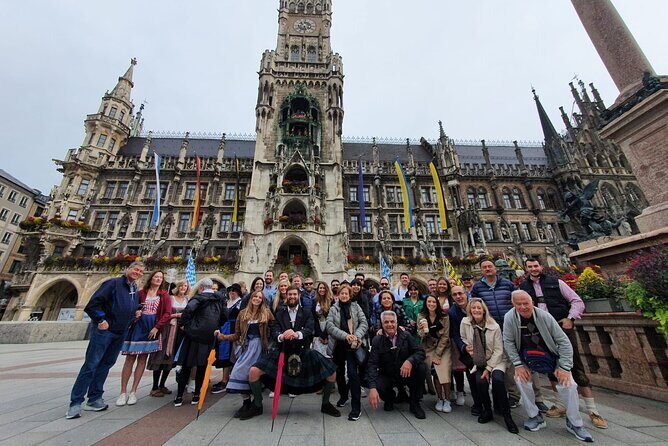
The walk begins at Karlsplatz 10, 80331 München. That’s a helpful starting location because it puts you close to the city’s walking flow and easy onward connections. The tour is near public transportation, so you can usually reach the meeting point without a complicated plan.
From the first minutes, your guide is doing the main job: shaping how you’ll see the Old Town. Instead of treating the route as a checklist, the commentary helps you connect each stop to the bigger picture—church power, city governance, markets, and beer hall culture all showing up within a small area.
If you arrive a few minutes early, you’ll settle faster. Wear comfortable shoes. This is Munich, and Old Town streets add up.
Frauenkirche: a landmark church stop that anchors everything
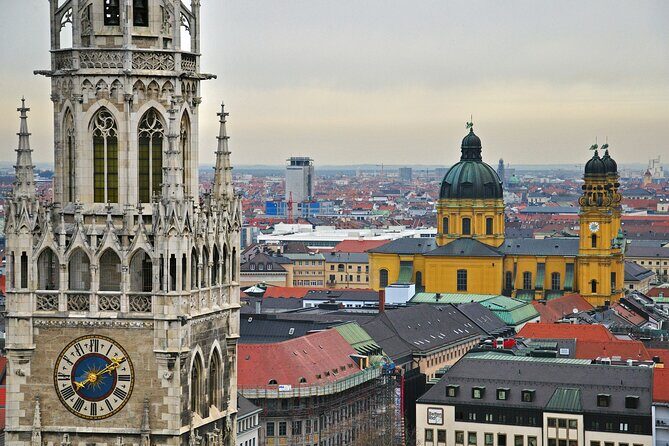
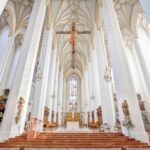
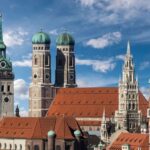
The first stop is Frauenkirche—Munich’s landmark church—with about 5 minutes on site and free admission noted for the stop. Even in a short visit, it matters because the church’s presence sets the tone for the whole area.
What I like about starting here is that it gives you an immediate “spine” for the city. When you later reach Marienplatz and the historic civic buildings, you can feel how religious power and public life worked side by side. In other words: the walking tour isn’t random. It builds a sense of hierarchy.
In a quick stop, don’t expect a long, slow viewing. Instead, look around with intention: take a moment to absorb what makes the church recognizable, then listen for your guide’s framing before moving on.
Marienplatz and the Rathaus-Glockenspiel: watching the Old Town at work
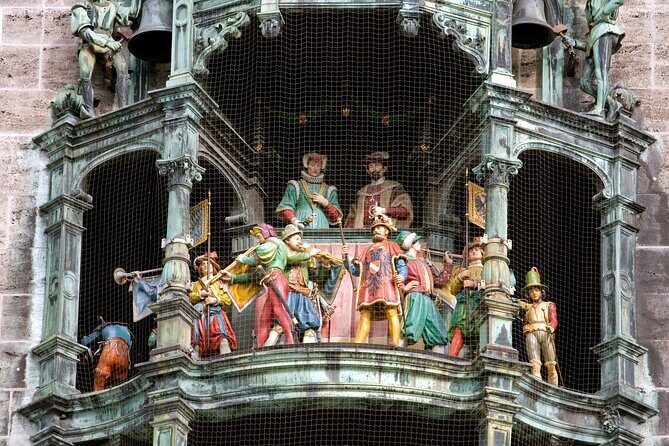
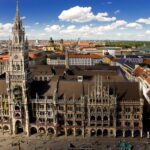
Next comes Rathaus-Glockenspiel at Marienplatz, with around 15 minutes. This is one of Munich’s most popular attractions, and the tour explicitly focuses on making sure you don’t miss the main activity.
Even if you’re not a “watch the whole show” person, this stop helps you understand why Marienplatz became a magnet. It’s where civic pride meets daily street life, and it sits right in the center of the city’s most famous square energy.
The practical tip: this is likely the busiest part of the route. If you care about clear photos, arrive with patience, and position yourself where you can see without blocking others. Your guide will help with timing and where to stand, but the square crowd factor is real for a reason.
Viktualienmarkt: one of Germany’s biggest markets, with time to snack
Then you’ll stroll through Viktualienmarkt, scheduled for about 15 minutes, with it described as one of the largest markets in Germany. This stop isn’t about history homework. It’s about sensibility—how Munich eats, shops, and treats fresh food like part of the city’s everyday identity.
If you like market wandering, you’ll enjoy the shift in pace. Markets are naturally messier and more human than monuments. They’re also a great place to catch small details: local produce, the rhythm of vendors, and how people move when they’re actually shopping instead of sightseeing.
Don’t feel pressured to buy anything. But if you want a quick bite, this is where the tour makes sense. Take the time to taste or sample something small, then keep moving. The rest of the day keeps rewarding curiosity.
Other Old Town walking tours we've reviewed in Munich
Old Town Hall ruins, WWII memory, and a Juliette statue
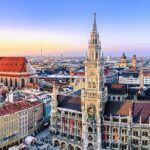
The route moves to the Old Town Hall, including a note that it was destroyed during WWII. The stop is about 10 minutes, and it also includes a statue of Juliette from Shakespeare’s famous play.
This is a smart short stop because it teaches you something easy to miss when you only look at the restored facades. War didn’t just destroy buildings—it changed what the city chose to remember and what it decided to rebuild or symbolize. Your guide’s job here is to connect that memory to what you see on the street today.
The Juliette detail is also useful. It’s an example of how Munich didn’t only rebuild for function; it also layered in culture and storytelling. In ten minutes, you get a real sense of how a city keeps multiple identities at once: civic, historical, and artistic.
Hofbräuhaus interior look: why it became Munich’s beer symbol
Next is Staatliches Hofbräuhaus (often shortened to Hofbräuhaus), with about 15 minutes. The tour frames it as the world’s most famous beer hall and includes a stop to check out the inside.
This is one of those stops that helps you understand the myth. A famous beer hall isn’t famous because it’s only about beer. It’s also about atmosphere, architecture, and the role it played in social life. Even with limited time, stepping inside lets you feel the scale and design cues you can’t fully get from a photo outside.
A practical expectation: this is not a long sit-down meal tour. It’s more of a controlled “see why it matters” visit. If you want to order food or a drink, treat it as your own add-on afterward, not something the tour promises as included.
Max-Josefs-Platz: royal family rule and a funny Opera House story
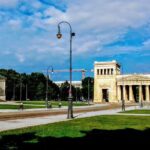
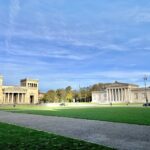
The final stop is Max-Josefs-Platz, about 20 minutes, focused on the history of the Bavarian Royal Family, which ruled for over 700 years. It also includes a funny story connected to the city Opera House.
This stop ties the whole walk together. You’ve seen churches, squares, markets, and civic remnants. Now you get the governance thread: who held power, how long that power lasted, and how it shows up in the city’s cultural storytelling. The Opera House anecdote adds a human angle—more entertainment than lecture—so the last portion doesn’t feel heavy.
Also, this is where your tour ends near Max-Joseph-Platz 4 (the exact end location can vary depending on route and guide). That matters because you can continue exploring without having to retrace your steps.
What makes the guides so effective: storytelling, not just facts
The biggest strength of this tour is how the guide performs the material. In recent experiences, Timmy stood out for sharing tons of useful information and tons of tips, and making the small-group format feel special. Dani also earned high praise for storytelling that makes Munich feel alive, with humor that even helped a teen who thought walking tours were boring.
A good way to think about it: you’re not just hearing dates and names. You’re getting help seeing cause and effect—why a church matters to city layout, why a market reflects everyday identity, and why a WWII-related detail still carries meaning.
And importantly, the tour isn’t scripted. That’s why you’ll finish with personalized tips for other places of interest. If you’re the type who likes to decide what to do next in the moment, this is a real advantage.
Price and value: how $3.61 works as a practical deal
At $3.61 per person, the price is strikingly low for a guided 2h15 walk that includes fees and taxes and stops with free admission noted. The value isn’t only “cheap”—it’s structured.
Here’s what you’re really buying:
- A guided route that already connects the major highlights
- Stops where you don’t have to figure out whether you can go in
- A small group size (max 24), which makes the experience easier to follow
The main value trade-off is time. You’re not paying for a slow, in-depth museum day. You’re paying for a fast, coherent Old Town orientation plus practical tips you can use right away.
If you’re on a budget, this is the kind of tour that lets you spend your money on experiences later instead of spending it all upfront.
Who this walking tour fits best
This tour makes the most sense if:
- You’re visiting Munich for the first time and want orientation fast
- You like landmarks but also want stories that explain what you’re seeing
- You prefer a smaller group where you can actually hear the guide
It also looks friendly for a wide range of people because it notes that most travelers can participate, service animals are allowed, and it’s near public transportation. If you’re traveling with someone who gets tired easily, the shorter stops and total duration help keep things manageable.
If you’re someone who needs a lot of quiet time or deep study at one site, you might feel constrained. In that case, you can still enjoy this tour as the “starter,” then do your longer visits later.
My quick decision guide: should you book?
Yes, I’d book this if you want an efficient, guided Old Town overview that covers the big hitters and adds context. The combination of free-entry stops, a small group, and guide-led storytelling makes it feel like more than the price suggests.
Skip it only if you know you hate walking tours, you need long time inside one location, or you’re hoping for a food-focused experience with long tasting stops. This is a highlights-with-context walk, and that’s exactly what it’s best at.
If you’re building your Munich plan, this is a strong early stop—one that helps you choose what to revisit later.
FAQ
How long is the Old Town Walking Tour?
It runs for about 2 hours 15 minutes.
What is the meeting point and where does the tour end?
The tour starts at Karlsplatz 10, 80331 München and ends near Max-Joseph-Platz 4, 80539 München. The end location may vary depending on the guide and route.
Is the tour in English?
Yes, the tour is offered in English.
Are there admission tickets included for the stops?
The tour notes free admission tickets at the listed stops (including Frauenkirche and the other featured sites).
What’s included in the price, and what isn’t?
Included: all fees and taxes. Not included: transport to the meeting point and tips & gratuities.
Is the tour ever cancelled after booking?
Yes. The experience requires a minimum number of travelers, so it can be cancelled if that minimum isn’t met. If it’s cancelled for that reason, you’ll be offered a different date/experience or a full refund.