REVIEW · NUREMBERG
Das ehemalige Reichsparteitagsgelände – Geländebegehung
Book on Viator →Operated by Geschichte Für Alle e.V. · Bookable on Viator
Nazi architecture teaches fast. This Geländebegehung focuses on what the buildings were meant to do, showing how the Reichsparteitage were staged as a giant propaganda machine. I especially liked the clear, understandable guidance—it turns huge, intimidating structures into something you can actually follow. The second thing I value is the balance: you don’t just get spectacle; you also get the other side of the system connected to concentration camps, plus today’s debate about how the site is used.
One consideration: the tour is in German, so if you’re not comfortable with that, you may feel shut out even if you can read the plaques. Also, this is an emotionally heavy topic, and the open-air scale can make it feel even more intense than a typical museum visit. Still, if you want to understand how architecture served power, it’s one of the most direct ways to do it.
You’ll visit three key places—Zeppelinfeld, the Kongresshalle, and the Große Straße—and the route is designed to make the connections click in a short time. Expect about two hours total, end at Zeppelinfeld, and plan for outdoor walking between stops.
In This Review
- Key highlights you’ll feel right away
- Why the Reichsparteitagsgelände still hits hard
- Price and logistics: what $16.13 buys you
- The route starts to make sense at Bayernstraße
- Zeppelinfeld: the mass stage named after Zeppelin
- Kongresshalle Nürnberg: the unfinished giant meant to intimidate
- Große Straße: a 60-meter-wide axis that organizes the entire site
- What the guide does well (and why it matters)
- Making the most of 2 hours outdoors
- Should you book this Geländebegehung?
- FAQ
- Is the tour in English?
- How long is the experience?
- What is the price per person?
- Do I get a ticket on my phone?
- Where do I meet, and where does it end?
- How large is the group?
- Is this near public transportation?
- Are service animals allowed?
- Can I cancel for a full refund?
Key highlights you’ll feel right away
- Zeppelinfeld’s purpose: the mass-events center, named after Zeppelin and used for parades and staged military showpieces
- Kongresshalle’s scale: an unfinished giant built to impress, modeled in spirit on ancient Rome (including the Colosseum)
- Große Straße as an axis: a planned north-south processional road—60 meters wide—meant to structure the whole site
- A guide who explains clearly: praised for making the stations easy to understand and for answering questions
- Big ideas in a short time: 2 hours that connect architecture, staging, and the darker context behind the rallies
Why the Reichsparteitagsgelände still hits hard
This ground in Nuremberg holds some of the most significant surviving remnants of national-socialist architecture in Germany. That alone makes the place important, but what matters for your visit is how the tour frames it: you’re not only looking at old stones. You’re seeing how those spaces were built to produce an effect—on crowds, on belief, and on behavior.
I like that the visit treats the rally complex as a system, not a random collection of dramatic buildings. The tour approach explains the Reichsparteitage as a gigantic propaganda show, while also referencing the darker reality tied to the concentration camp system. That pairing helps you avoid the common trap of studying buildings like they’re only art or only engineering.
There’s also a modern layer. The tour gives context for why people still argue about how to use the site today. Even if you’re not following German politics closely, you’ll leave with a better sense of why this place remains morally and culturally charged.
If you're still narrowing it down, here are other tours in Nuremberg we've reviewed.
Price and logistics: what $16.13 buys you
At $16.13 per person, this is priced like a straightforward, practical guided walk—yet it covers three major areas of the site in about 2 hours. You’re also getting a mobile ticket, which is convenient if you don’t want to fuss with paper.
A useful detail for your planning: the key stops listed for the tour are marked with admission ticket free. So your money is mainly paying for the guided explanation and the structured route, not for extra museum-style entry fees.
A small group size helps. This experience runs with a maximum of 30 people, which usually means you can ask questions and still keep your place in the story. The tour is also near public transportation, so you’re not forced into a long pre-walk just to get started.
One more practical note: the tour is German-language. Since the itinerary is short and the explanations are doing the heavy lifting, language matters here more than on a purely self-guided walk.
The route starts to make sense at Bayernstraße
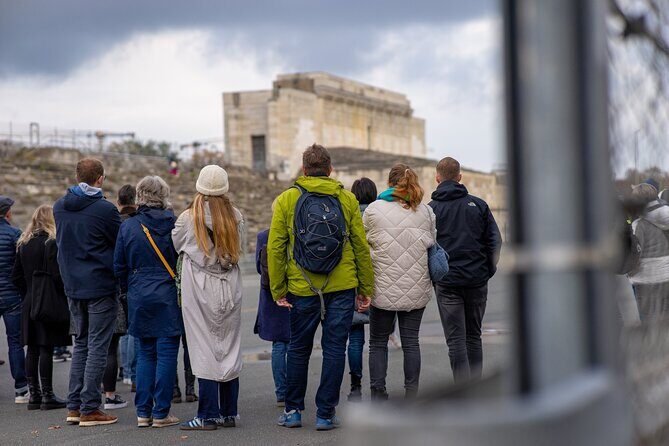
The meeting point is Bayernstraße 110, 90478 Nürnberg, and the tour ends at Zeppelinfeld, Zeppelinstraße, 90471 Nürnberg. That start-to-finish design is smart because the complex is huge—ending at Zeppelinfeld means you don’t have to backtrack across the rally grounds.
I like that the itinerary moves in a way that lets you build mental maps fast: you start with the biggest mass-event field, then you shift to the massive hall meant for a political congress, and then you widen out to the processional road that organizes everything around it. This order helps you understand why the Nazis invested in both crowds and architecture.
Because it’s an outdoor walk with three stops, the “how long” matters. The listed time per stop is roughly 30 minutes, 30 minutes, and 20 minutes. That’s enough to learn the key ideas without turning it into a lecture marathon.
Zeppelinfeld: the mass stage named after Zeppelin
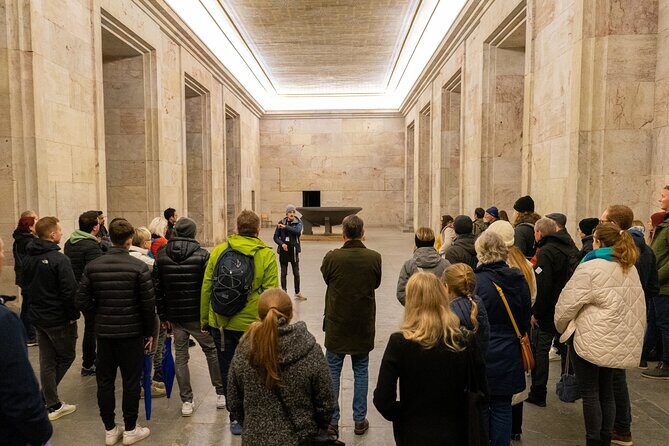
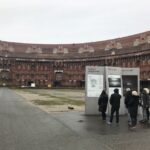
Zeppelinfeld was the central piece of the Reichsparteitagsgelände during the Nazi era. It’s not just a random open field; it’s a carefully used stage for public politics. The name connects to a real historic moment: it’s named after Graf Zeppelin, who performed a sensational landing with one of his airships on the field in 1909.
On this tour, Zeppelinfeld is where you understand the rally complex as a theater for mass participation. The field and its grand tribune were used for most of the major events during the Kundgebungen. You’ll hear how parades and staged military “show events” helped turn ideology into something you could feel in your body—through movement, noise, and synchronized crowd presence.
The itinerary highlights specific events held there, including the Reichsarbeitsdienst marches and days like Tag der Politischen Leiter and Tag der Gemeinschaft. Even if those names aren’t familiar, they’re useful because they show how the Nazis designed the rallies around different social roles. It wasn’t only about party leaders—it was about organizing participation.
Practical consideration: this area is open and built for mass gatherings, which means weather and wind can play a big role in comfort. Bring a layer if the day is cool, and wear shoes that handle uneven ground around large outdoor spaces.
Kongresshalle Nürnberg: the unfinished giant meant to intimidate
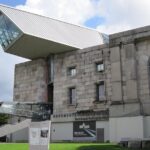
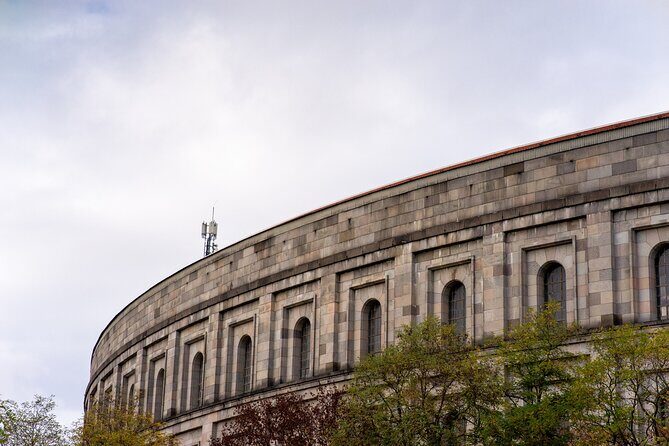
Next comes the Kongresshalle Nürnberg, which was intended to host the party congress during the Reichsparteitage. What’s striking is that the building was not finished during its intended use, yet it’s still one of the largest structures in Nuremberg today.
The tour helps you understand why this matters. The idea wasn’t only to hold people inside; it was to impress them with what the space promised. The Kongresshalle is often compared to ancient architecture, with a clear reference point to the Colosseum in Rome. That connection helps explain the psychological strategy: drawing on the authority and permanence people associate with classical empires.
You also get the scale in a way you can grasp. The building was planned for 50,000 people, which would have made it the largest hall in the world at the time. When you hear that number in the context of how public events were staged, you start seeing the architecture as part of the performance—not just a backdrop.
Possible drawback: because the hall was never fully completed, you might notice the structure’s unfinished nature in your own way. That’s not a problem, but it does mean the building can feel like a mix of plan and impact rather than a perfectly “complete” monument. The guide’s job here is to connect what you see to what it was meant to achieve, and that explanation is the real value.
Große Straße: a 60-meter-wide axis that organizes the entire site
The third stop is Große Straße, and this is where you shift from buildings to planning. Construction began in 1935, and the road was designed as a central parade route for the Wehrmacht. It’s planned to be 60 meters wide and about 2 kilometers long, though only around 1.5 kilometers was completed.
Standing at a place like this, the “why” becomes easier to understand: the road isn’t only a road. It functions as a north-south axis for the whole site. The guide helps you see how key structures and event locations are arranged around it, so the complex reads like a carefully designed machine for movement.
This stop is listed for about 20 minutes, so it’s brief—but it pays off. When you’ve seen Zeppelinfeld’s mass space and Kongresshalle’s intimidating scale, Groß Straße shows the connective tissue: how the Nazis planned the route of attention and the flow of people.
Practical tip: because you’re working with a wide open axis, it can be easy to lose your sense of direction if you’re not actively following the guide’s explanation. If you have questions, ask them here—this part is often the easiest place to clarify how the site is laid out.
What the guide does well (and why it matters)
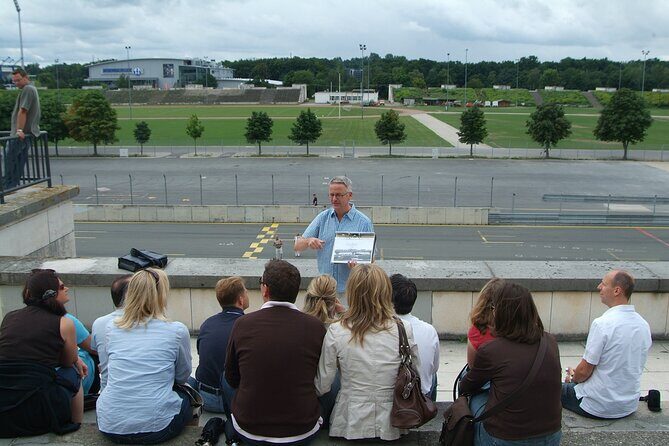
One of the most praised aspects of this experience is the delivery. The explanations are described as very informative and easy to understand, and the tour is praised for being engaging rather than dull. People specifically highlight how the guide presents the stations in a very visual and approachable way.
There’s also a strong emphasis on Q&A. One named example in the feedback: Herr Clemens is mentioned for presenting the stations in an especially clear, vivid way. Other feedback points to guides who enjoy teaching and can answer questions thoroughly. That matters because this site can be overwhelming on your own—large, monumental spaces are exactly where context helps most.
Most importantly, the guide’s structure connects the dots between three things: architecture, staging, and ideology. That connection is the difference between a “photos on the move” visit and a learning experience that stays with you.
If you’re worried about how to process uncomfortable history, you’ll appreciate that the tour doesn’t frame the site as purely aesthetic. It explicitly references the propaganda side and the concentration camp system as the darker underside of the era. That balance is not a small detail—it’s the reason the tour feels responsible instead of sensational.
Making the most of 2 hours outdoors
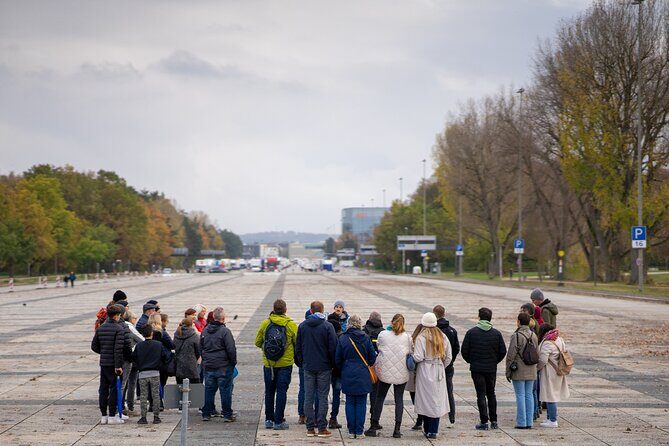
This is a short tour by design, so you’ll want to think like a sprinter, not a tourist who needs a long sit-down. With three stops and roughly 30/30/20 minutes, you’ll get time for learning, but not for deep wandering.
Here’s how I’d prepare so you leave satisfied:
- Wear comfortable walking shoes for outdoor ground and big open spaces.
- Bring a layer for changing weather. Even on a calm day, outdoor rally grounds can feel exposed.
- If you want photos, be strategic. The monumental scale is the story, so aim to capture the features the guide emphasizes rather than only sweeping shots.
Because the experience is German-language, it helps to arrive with a basic attitude: you’re there for explanation and context. If you try to treat it like a self-guided stroll, the best parts—the connections—will pass too quickly.
Should you book this Geländebegehung?
I’d book this tour if you want a practical, focused way to understand how national-socialist architecture was used to stage power. It’s also a good choice if you like tours where the guide is active: clear explanations, visual presentation, and the ability to answer questions make a real difference here.
You might skip it if German-language history tours aren’t your thing, or if you need a lighter approach to WWII-era sites. This is not a casual sightseeing route, and the open-air scale makes the subject feel immediate.
One more value angle: for $16.13, you get a structured route across three of the most important areas—plus admission at the listed stops is marked free. That’s strong value for people who want guided context without spending all day in museums.
If your goal is to leave Nuremberg with a clearer understanding of propaganda as a built environment—and not just a list of names—this tour is an efficient and worthwhile booking.
FAQ
Is the tour in English?
The tour is German-language. If you prefer English explanations, this one may feel limiting.
How long is the experience?
The duration is about 2 hours.
What is the price per person?
The price is $16.13 per person.
Do I get a ticket on my phone?
Yes. The experience includes a mobile ticket.
Where do I meet, and where does it end?
Meet at Bayernstraße 110, 90478 Nürnberg. The tour ends at Zeppelinfeld, Zeppelinstraße, 90471 Nürnberg.
How large is the group?
The tour has a maximum of 30 people.
Is this near public transportation?
Yes, it’s near public transportation.
Are service animals allowed?
Yes, service animals are allowed.
Can I cancel for a full refund?
Yes. Free cancellation is available up to 24 hours in advance for a full refund. If you cancel less than 24 hours before the start time, the amount paid is not refunded.