REVIEW · NUREMBERG
Nuremberg Old Town Walking Tour in English
Book on Viator →Operated by Nuremberg City of Empires Tours · Bookable on Viator
Nuremberg’s story shows up fast. In about two hours, you’ll move from Kaiserburg to Hauptmarkt with an English guide connecting the city’s imperial era and its darker Nazi-era chapter, plus photo stops at major landmarks along the way.
I especially like the street-level mix: half-timbered Old Town lanes and cobblestones for atmosphere, paired with real context so you don’t just look at buildings—you understand why they mattered. One thing to keep in mind: it’s a walking tour, so expect some steady pacing on uneven surfaces, and you’ll get more of the essentials than a long sit-down in every church.
In This Review
- Key highlights you should notice
- A 2-hour Old Town walk that connects eras
- Getting oriented fast: from Nürnberg Hbf to Hauptmarkt
- Albrecht Dürer House: art you can anchor to a place
- Old Town streets and Pegnitz: the photo walk part of the deal
- Kaiserburg (Nuremberg Castle): emperors, saints, and the moral weight
- St. Lawrence Church spire and war-scarred resilience
- Schöner Brunnen: the wishing ring you’ll remember
- Hauptmarkt and Christkindlesmarkt: where the city centers itself
- Handwerkerhof and Altes Rathaus: crafts and civic power
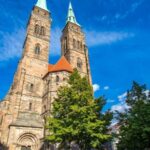
- St. Sebaldus Church: exterior stop energy, not a ticketed deep dive
- The price and what makes it feel worth it
- English quality, guide style, and pacing: what to plan for
- Who this tour is for (and who might want a different option)
- Should you book the Nuremberg Old Town Walking Tour?
- FAQ
- FAQ
- How long is the Nuremberg Old Town walking tour?
- What language is the tour offered in?
- How much does the tour cost?
- Where do I meet the guide, and where does the tour end?
- What time does the tour start?
- How large is the group?
- Is anything included besides the guide?
- Is the tour canceled if the weather is bad?
- Are service animals allowed?
Key highlights you should notice
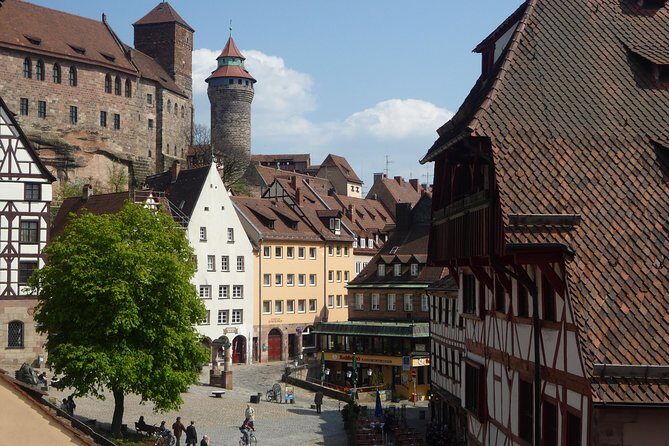
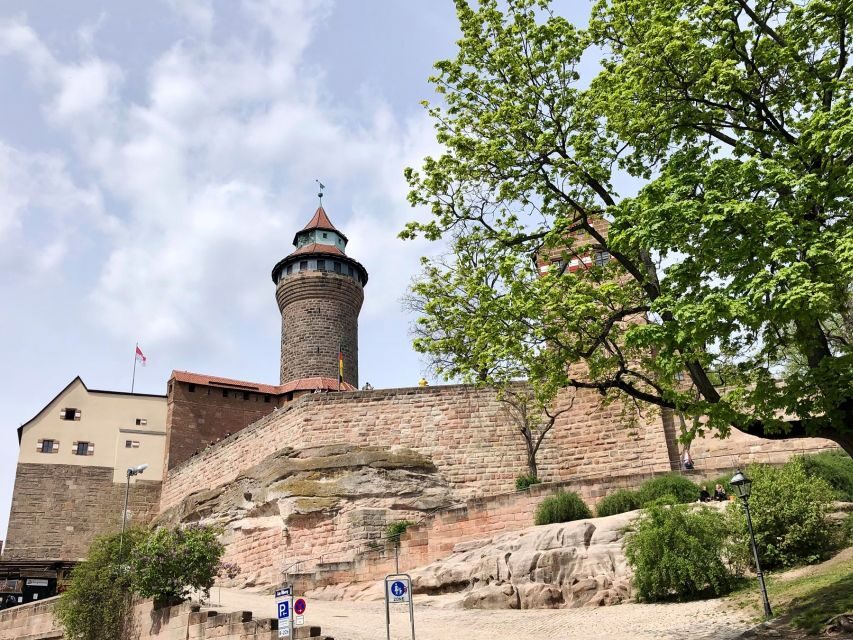
- Kaiserburg imperial courtyards: a key setting for stories about emperors, saints, and sinners
- Hauptmarkt and the Christkindlesmarkt vibe: the city’s central square comes alive in December
- Schöner Brunnen photo moment: golden Gothic tower and the wishing ring
- Dürer House stop: the Renaissance artist’s original home, now a museum
- Church spires and war-scarred survival: including the St. Lawrence Church spire story
- Small group feel: max 25 people, so questions stay possible
A 2-hour Old Town walk that connects eras
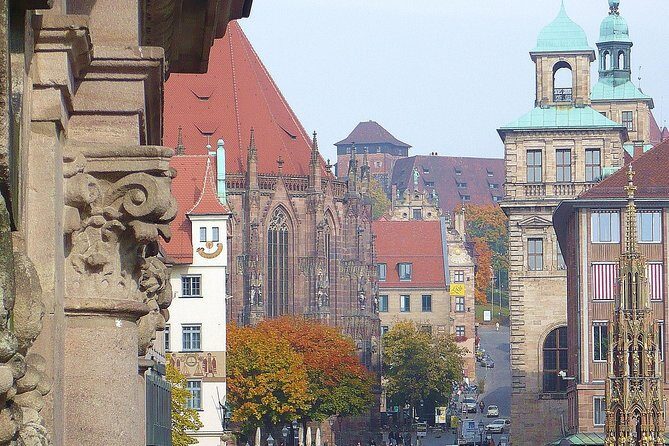
This is the kind of tour that helps you read a city. Nuremberg can feel like it has two faces at once: an imperial past that shows up in fortifications and grand civic spaces, and a 20th-century past you can’t ignore. The good news is you don’t study it from a book. You get it as you walk, stop, look, and ask questions.
The tour is also practical. It starts at Nürnberg HbfBahnhofspl. and finishes in the Hauptmarkt area, so you end right where you can keep exploring on your own. And the time window is friendly: about 2 hours means you can still fit in museums, coffee, and dinner without burning your whole day.
Other Nuremberg day trips we've reviewed in Nuremberg

Getting oriented fast: from Nürnberg Hbf to Hauptmarkt
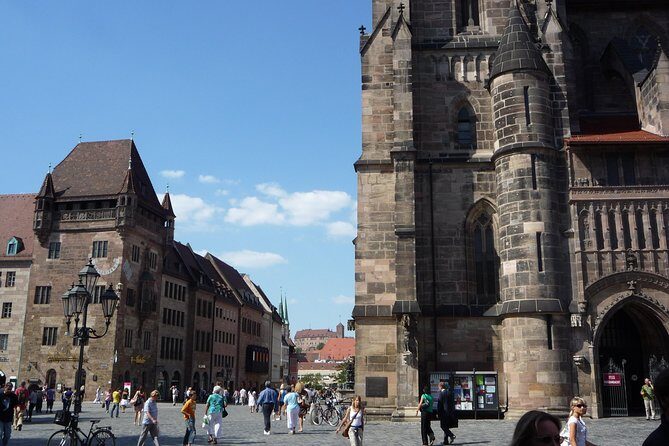
Meeting at the main train station is smart. If you arrive by train, you’re not trying to hunt down a hotel address in a maze of medieval streets. From there, you work your way through the Old Town core at an easy, relaxed walking pace.
Because the endpoint is Hauptmarkt (the central square), you’re not stuck at the edge of town after the tour. You finish where people gather, where you can grab a snack, and where you’ll naturally want to wander next. It’s also an advantage for photos: you end up near the most famous public spaces early enough to catch the light and decide what to revisit later.
Albrecht Dürer House: art you can anchor to a place
One of the tour’s best “first-time visitor” moves is the stop at the original home of Albrecht Dürer, now a museum. You’re not just hearing general talk about Nuremberg. You see how creativity ties into this city’s identity.
Dürer’s name matters here because the tour links art to the half-timbered visual language of the Old Town. When you later spot timber-framed facades and ornate details, you’ll have a mental handle: this is the look and feel of the era the guide is describing.
What to know: since the museum part isn’t listed as an included ticket stop in the basic itinerary description, treat it mainly as a guided orientation stop. If you want to spend serious time inside, you might plan a separate visit.
Old Town streets and Pegnitz: the photo walk part of the deal
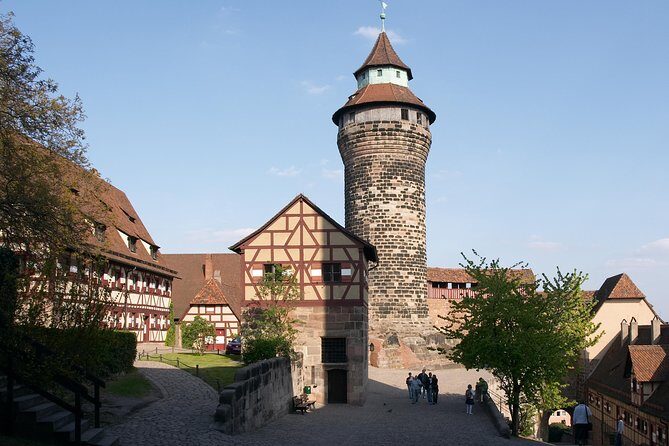
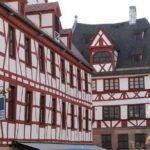
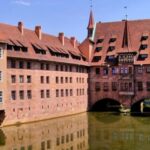
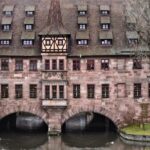
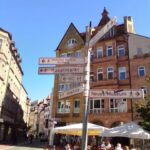
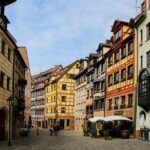
As you move through the historic lanes, you’ll get the real Nuremberg texture: cobbled streets, half-timbered houses, and the River Pegnitz as a scenic backdrop. This is the section that makes the tour feel less like a lecture and more like a walk through an actual place.
Photo moments are built in. You’ll pause for pictures around the medieval city walls and near major churches, so you’re not taking photos while still trying to keep up with the group. If you like travel that looks good on your phone without turning into a sprint, this pacing helps.
One practical tip: wear shoes you trust. Cobblestones look cute, but they can be slick when wet, and Nuremberg’s walking is real walking.
Kaiserburg (Nuremberg Castle): emperors, saints, and the moral weight
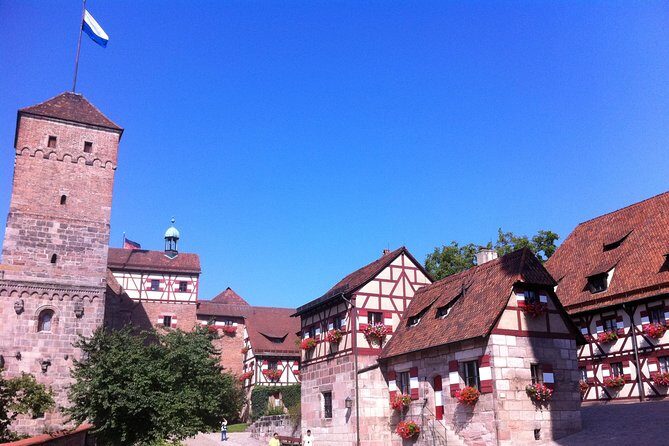
The star stop for many people is the imperial castle, Kaiserburg. The tour frames it as a place with long reach: it dates back to at least 1050, and it’s where stories unfold about emperors, saints, and sinners.
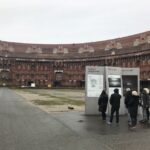
This is also where the tour’s balancing act really shows. The guide covers Nuremberg’s association with the Third Reich and Nazi history. Whether you’re coming in with background knowledge or you’re starting fresh, this part matters because it puts the modern historical narrative into the same physical space as the medieval one.
How to get the most out of this stop: ask a question about what you’re seeing right now. For example, don’t just admire walls and courtyards. Ask why this place mattered politically during different periods. You’ll likely hear answers that make the rest of Old Town click into place.
Other Old Town walking tours we've reviewed in Nuremberg



St. Lawrence Church spire and war-scarred resilience
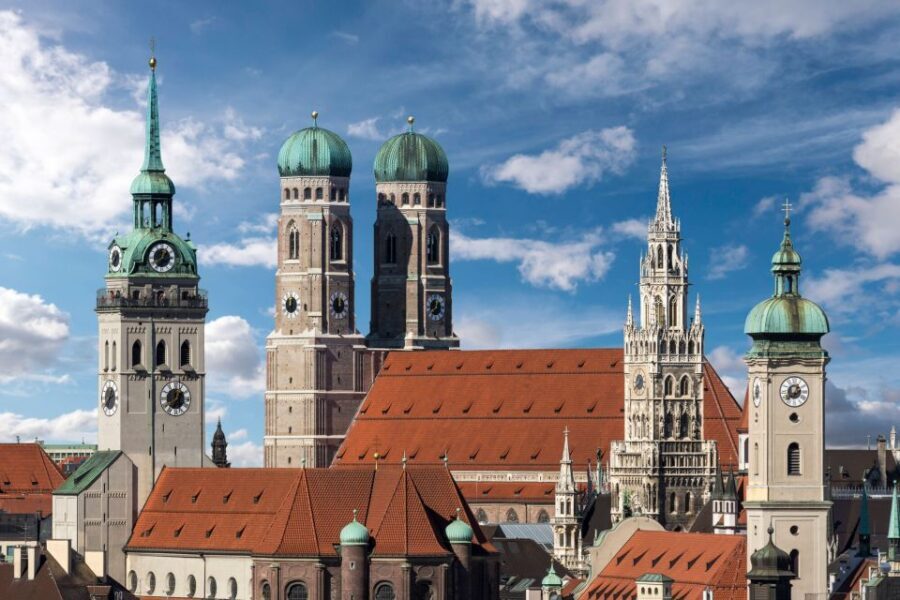
Nuremberg’s church stories aren’t just spiritual. They’re also about survival. The guide points out the dramatic spire of St. Lawrence Church, including the fact it was almost demolished during World War II.
That detail changes how you look at it. From far away, a spire is just a landmark. After a story like that, it becomes a symbol of what the city endured and what it rebuilt.
This stop is also a good check for your priorities. If you want deep inside-church time, a walking tour might feel short. If your goal is to see the spire, hear context, and keep moving, you’ll be happy.
Schöner Brunnen: the wishing ring you’ll remember
When the tour hits Schöner Brunnen, you get one of Nuremberg’s most playful photo stops. The fountain includes a golden Gothic tower and the famous wishing ring.
This is one of those places where “just looking” turns into a memory anchor. You’ll hear the story behind it, then you’ll walk away and spot the same fountain in your mind every time you picture Nuremberg Old Town.
Also, it’s a useful break. You’re not only learning; you’re pausing in a spot that’s naturally interesting even if you don’t care about every historical detail.
Hauptmarkt and Christkindlesmarkt: where the city centers itself
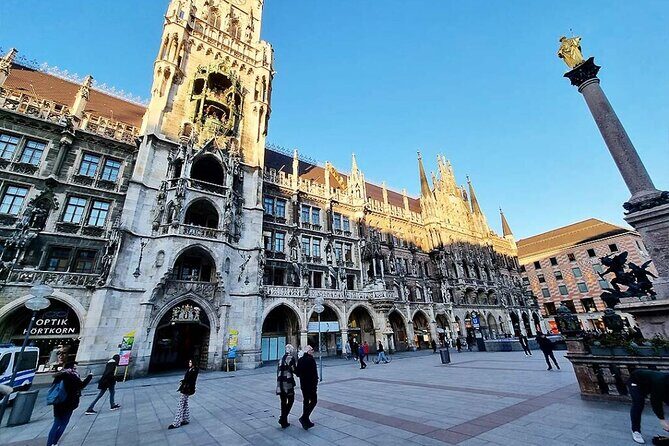
If you’re visiting in December, this is the section you’ll probably feel most. Hauptmarkt is the center of the city going back to the 1300s, and it’s also the site of the annual Christkindlesmarkt.
Even if you’re not there during market season, the square is still worth seeing because it’s exactly where a city gathers. It’s hard to explain until you stand there: this is where Nuremberg’s civic identity plays out in public.
Worth knowing: the tour description treats the Christmas market as a highlight, but it doesn’t promise you lots of time for shopping or eating. Think of this stop as atmosphere plus context, not a full market afternoon.
Handwerkerhof and Altes Rathaus: crafts and civic power
After the big square moments, the tour slows down into smaller, story-rich spaces.
You’ll stop at Handwerkerhof, described as a beautifully reconstructed craftsman’s market with shops and restaurants. It’s a good reminder that Old Town isn’t only about castles and churches. It’s also about the daily economy that kept the city running.
Then you’ll reach Altes Rathaus (the Old Town Hall from 1622). This is the kind of sight that helps you understand how a town governed itself, long before everything became a modern bureaucracy.
If you like cities where buildings show how people worked and made decisions, these stops will land well. If you want only the biggest-ticket landmarks, these might feel like supporting cast—but they do matter for the full picture.
St. Sebaldus Church: exterior stop energy, not a ticketed deep dive
The itinerary includes a stop at St. Sebaldus Church, noted as the oldest church in the city and tied to the city’s patron saint, Saint Sebald. The tour info also says admission is not included for this stop.
So here’s the honest expectation: you should plan for an exterior-and-context visit during the tour. If you want to go inside and take your time, plan a separate visit later.
This isn’t a downside; it’s just a match of expectations. A short guided stop gives you orientation. Going inside on your own lets you decide how long you want to stay.
The price and what makes it feel worth it
At $21.77 per person for about 2 hours, you’re paying for a local guide plus a tightly chosen set of stops. Many of the key sights on the walk are listed as free to enter on the tour’s schedule, with only one church admission flagged as not included.
In practical terms, the value is this: you’re not just getting photos—you’re getting explanations that help you connect Kaiserburg, Hauptmarkt, and the church spires to specific eras the guide covers. If you’re the type of traveler who likes to understand what you see in real time, that kind of guidance is exactly where money tends to work.
Also, the group size cap of 25 people helps. You’re less likely to feel like you’re in a cattle line, and you can usually ask at least a question or two.
English quality, guide style, and pacing: what to plan for
The tour is offered in English, and the overall feedback is strong on clarity and engagement. You’ll see guides praised by name in different groups, including Hannes, Jeff, Dimitri, Elizabeth, Suzanne, Paul, Natasha, Jason, and Chris.
Pacing is usually described as fun and well paced, with some groups noting that hills are limited. Still, it’s wise to assume you’ll walk on uneven surfaces and keep moving for the full 2 hours. If you need frequent slow-downs, look for a guide who offers breaks and ask for that early.
One caution from the feedback set: a small number of guests felt a guide’s photo choices or phrasing didn’t sit well with them. If that kind of content matters to you, it’s totally fair to communicate your preferences in the moment, or simply stick to asking questions about the sites rather than the extras.
Who this tour is for (and who might want a different option)
This tour is ideal if:
- you want a first look at Nuremberg’s Old Town fast
- you like your history tied to real places, not just names and dates
- you’re okay with a walking pace and short stops, not long museum hours
It may be less ideal if:
- you want a deep dive into church interiors and long quiet time in each building
- you prefer very slow, sit-down sightseeing blocks
- you have a tight schedule where you can’t afford a missed minute or two
If you’re visiting in December, the Christkindlesmarkt stop adds extra energy. If you’re visiting another month, the square still works because it’s the city’s center, not only a seasonal attraction.
Should you book the Nuremberg Old Town Walking Tour?
Yes, if you want a clean, efficient way to get your bearings and understand what you’re seeing. The mix of Kaiserburg, Hauptmarkt, Schöner Brunnen, and church spire stories gives you a solid snapshot of Nuremberg’s big eras in a format that doesn’t swallow your day.
I’d book this sooner rather than later in your trip. Finishing in the Hauptmarkt area makes it easy to keep going on your own after the tour ends.
If you’re sensitive about how historical topics are framed, or you want more time inside buildings, keep your expectations aligned: this is a guided walk with key context, not an all-day museum plan.
FAQ
FAQ
How long is the Nuremberg Old Town walking tour?
It runs for about 2 hours (approx.).
What language is the tour offered in?
The tour is offered in English.
How much does the tour cost?
The price is $21.77 per person.
Where do I meet the guide, and where does the tour end?
You meet at Nürnberg HbfBahnhofspl., 90443 Nürnberg, Germany, and the tour ends at Hauptmarkt, 90403 Nürnberg, Germany.
What time does the tour start?
The start time is 10:00 am.
How large is the group?
The tour has a maximum of 25 travelers.
Is anything included besides the guide?
The tour includes a local guide. The itinerary notes that many stops are ticket free, while admission for St. Sebaldus Church is not included.
Is the tour canceled if the weather is bad?
Yes. This experience requires good weather. If it’s canceled due to poor weather, you’ll be offered a different date or a full refund.
Are service animals allowed?
Yes, service animals are allowed.