REVIEW · MUNICH
Munich Third Reich and WWII Segway Tour
Book on Viator →Operated by FireWheels GmbH · Bookable on Viator
Munich turns darker fast on this Segway tour. You’ll glide past key places tied to the rise of the Nazi movement, hear how Munich helped shape that story, and follow the threads that lead to resistance and the end of the regime—all on streets where cars don’t go. It’s a fast, memorable way to connect names like Führerbau and White Rose to what your guide is explaining as you roll along.
I like how the experience mixes movement with meaning: it’s designed to help you see more than a normal walk, while your guide keeps the story straight as you hop between stops. I also like that the guides slow down for real people—nervous riders get time to get comfortable, and the pace leaves room for questions and photos (I’ve seen guides called out like Claudia, Josef, Karl, and Rawen for being patient and engaged).
One drawback to weigh: it can feel crowded in parts of central Munich, and Segways can be temperamental if you’re not paying close attention. If it’s cold, bundle up; riding wind-chill is real, and a chill day can make the “fun fast” part less fun.
In This Review
- Key Highlights at a Glance
- A Nazi-Era Munich Story, Told on a Segway
- Price and Timing: Is $82.82 Good Value for 3 Hours?
- Where You Start and How the Route Really Feels
- Riding the Segway: Easy for Many, Not for Every Mood
- Stop by Stop: Königsplatz to the Führerbau Area
- Braunes Haus, Schelling-Salon, and the Resistance Thread
- Hitler’s Apartments and the Idea of Munich Being Remade
- Beer-Hall Landmarks and Where the Story Gets Intense
- What the Guides Do Well (and Why It Affects Your Experience)
- Who Should Book This Tour, and Who Should Think Twice
- Should You Book This Segway Tour of Third Reich and WWII Munich?
- FAQ
- How long is the Munich Third Reich and WWII Segway Tour?
- Where does the tour start?
- What time does the tour depart?
- Is the tour offered in English?
- Is admission included?
- How big is the group?
- Can I cancel for a full refund?
Key Highlights at a Glance
- Segway routing around traffic limits: go where cars can’t, so you move faster and smoother than on foot
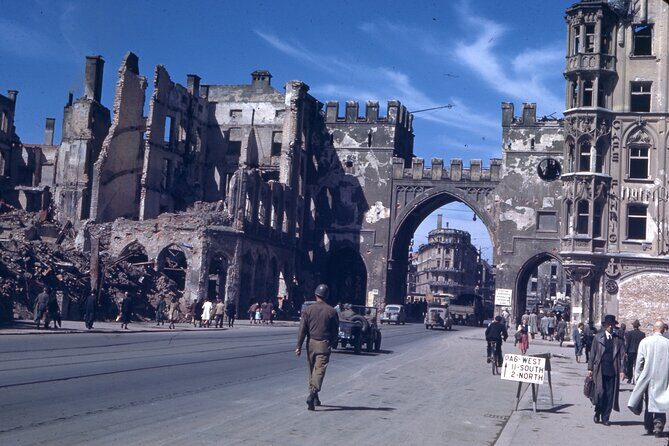
- A Nazi-era story arc: your guide connects the rise, the power struggle, and the resistance thread across the route
- Stops like Königsplatz and Führerbau: you’ll see major regime-associated landmarks plus nearby context-building sites
- Small group size (max 20): easier for questions and photo stops than big-bus tours
- Guides who slow down: multiple guides are praised for patience, especially with first-timers
A Nazi-Era Munich Story, Told on a Segway
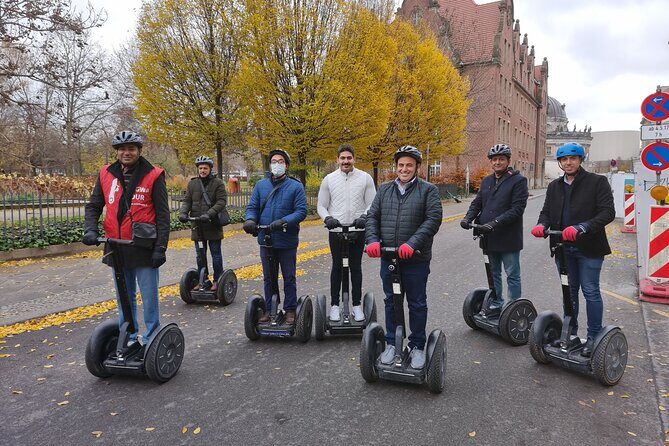
This is not a “sit and listen” history tour. It’s built for motion, and that matters, because Munich’s key Nazi-era places are spread out enough that walking alone can feel like a checklist. On a Segway, you cover ground quickly, then your guide ties that location to the larger storyline you’re following.
The tour’s big promise is practical: it helps you understand the rise of power in Germany through Munich connections, including why the Beer Hall Putsch failed, and how Hitler envisioned reshaping Munich. The route also aims to show the “other side,” including people who tried to fight the Nazi regime—so you’re not only seeing buildings, you’re hearing what they meant in the larger conflict.
And yes, it’s also just fun. Several reviews highlight that even first-time riders get up to speed fast and that the Segway aspect beats trudging around in busy crowds on foot.
Other Third Reich & WWII tours we've reviewed in Munich



Price and Timing: Is $82.82 Good Value for 3 Hours?
At about $82.82 per person for roughly 3 hours, the value depends on your priorities: if you want history plus speed, this is a solid deal for Munich. You’re not just paying for the guide; you’re paying for guided Segway time, which effectively turns multiple neighborhoods into one focused outing.
A detail that helps the math: the tour notes admission ticket free, so you’re mostly paying for the experience itself, not museum entry. And with mobile ticketing and a set start time (10:00 am), you can plan around a single morning block instead of juggling multiple stops.
The timing also works well for couples and families because it’s long enough to cover meaningful ground but short enough that it doesn’t eat your whole day. For people visiting for the first time, this can be a good “get bearings” tour before you go explore more on your own.
Where You Start and How the Route Really Feels
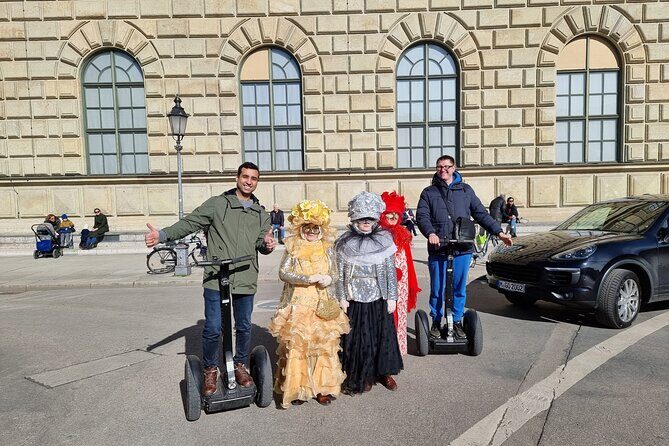
You meet at Artur-Kutscher-Platz 2A, 80802 München, and the tour ends back at the same place. That matters because you’re not left crossing town afterward with tired legs and a phone battery that’s already giving up.
Also, the tour runs as a maximum of 20 travelers. That’s a sweet spot: big enough that the vibe feels lively, small enough that your guide can address questions without turning every stop into a bottleneck. Multiple reviews praise photo time and the chance to ask questions, and that usually comes from a group size that doesn’t explode at the first intersection.
One more practical point: this is offered in English, and confirmation is received at booking. It also says it’s near public transportation, which is handy if you’re mixing it with other city plans.
Riding the Segway: Easy for Many, Not for Every Mood
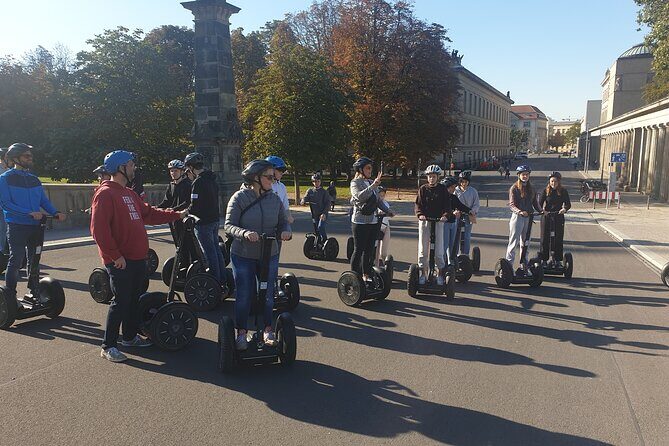
The Segway part is a major reason this tour works. Reviews repeatedly call out that it’s easy to learn and that guides take their time when people are nervous. If you’re the type who learns best by trying, you’ll likely relax after you practice the basics and feel the rhythm.
Still, there are two things to keep in mind. First, you need to pay attention—Segways are simple, but physics doesn’t care if you’re sightseeing with your full heart. One review describes a rider having a problem and falling backwards; it wasn’t presented as a disaster, but it’s a reminder to keep control.
Second, Munich weather can turn quickly. If it’s cold, plan for wind chill while you ride. One review bluntly says to rug up because it gets cold circling around on a Segway. That’s not dramatic; it’s just the reality of moving at speed with air all around you.
Stop by Stop: Königsplatz to the Führerbau Area
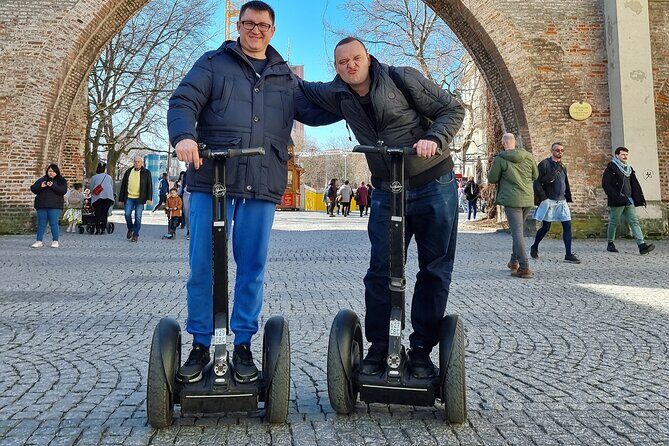
The route is structured around Munich’s key Nazi-linked sites, starting with the area where the story begins in your guide’s telling. You’ll hear how a young Austrian man came to Munich and how, over time, he turned that city into the capital of his political movement. The guide also connects the larger narrative: the rise and the fall, plus the pushback against the regime.
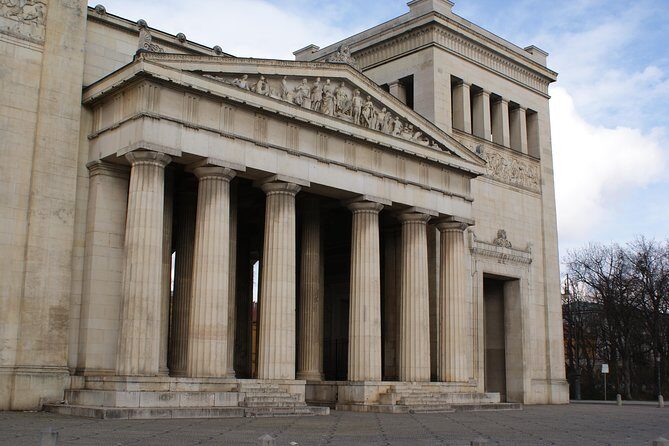
Early on, you’ll roll past and around major visual anchors such as Alte Synagoge, Königsplatz, and Führerbau. Even if you don’t know the names cold, this is where the tour helps you. Your guide uses what you’re seeing to explain why Munich mattered, and why the story wasn’t only happening in Berlin or at distant battlefields.
What makes this segment valuable is pacing. Instead of stopping for one building and then hurrying, the route is designed so the story feels continuous. You’re not only seeing a facade; you’re hearing how that facade connects to the political movement and the consequences that followed.
A potential drawback here is simple: it can be busy. One review mentions the route felt crowded and that the day didn’t match the expectation of focusing only on WWII landmarks. If you want a strict “WWII-only” route with no distractions, you may have to mentally accept that central Munich is also normal central Munich.
Other Munich city tours we've reviewed in Munich





Braunes Haus, Schelling-Salon, and the Resistance Thread
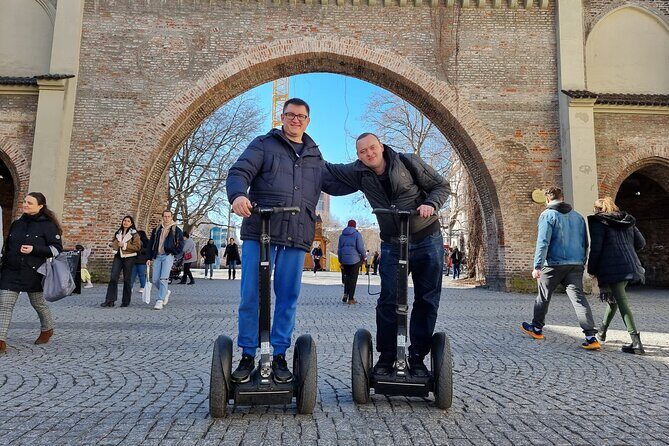
As you move forward, the tour keeps widening the lens beyond the most obvious propaganda-era imagery. You’ll pass sites listed on the route such as Braunes Haus, Schelling-Salon, and the area marked as White Rose.
This is where the tour’s messaging becomes important. The overview explicitly aims to cover not just how the Nazi movement gained power, but also who tried to fight it and why certain uprisings didn’t succeed. The inclusion of the White Rose stop signals that the guide isn’t treating “the Nazis” as the whole story; it’s showing that resistance existed alongside repression.
You’ll also see places like Haus der Kunst and Angel of Peace on the itinerary. Even without turning every stop into a lecture, those names give your guide space to talk about Munich as a stage where ideology and culture collided. The value here is that the tour ties those collisions to the wider timeline, so you leave with more than a photo set.
If you’re traveling with teenagers, this part tends to land well. One family review notes teens had a blast while still absorbing WWII information. That’s the sweet spot: history made digestible, not dumbed down.
Hitler’s Apartments and the Idea of Munich Being Remade
Later in the route, you’ll see stops including Hitler’s apartment 1933, Hitler’s apartment 1920–29, and Maximilianeum (the itinerary also lists areas tied to Maximilianeum Strasse). This section is where the tour’s theme shifts from “movement rises” to “the city gets planned around the movement.”
The tour description says you’ll learn how Hitler wanted to rebuild Munich. That theme helps you connect the buildings you see with the bigger intent: power isn’t only about speeches; it’s about shaping streets, institutions, and daily life.
You’ll also pass Maximilianeum and its nearby area, plus Residenz München and Odeonsplatz. These stops matter because Munich isn’t frozen in time. You’re watching history layer over older city identities, which is one reason this kind of guide-led route works better than a self-guided photo mission.
Just remember the experience is meant to move. If you want to linger, you may need to balance your curiosity with the tour rhythm. The good news: reviews mention guides taking time for questions and photo-taking, so you’re not stuck rushing past everything.
Beer-Hall Landmarks and Where the Story Gets Intense
The itinerary includes Hofbraukeller and Hofbräuhaus, both famous beer-hall landmarks. This is one of those moments where history and the real city collide. You’re learning about major political drama, and you’re doing it while passing places that are also part of Munich’s everyday identity.
The tour also lists Odeonsplatz and Residenz München, which help ground you in the broader city center so the Nazi-era story doesn’t feel like isolated monuments. Instead, it feels like it’s woven into the Munich you’re walking through.
And because the tour is Segway-based, it keeps the tension from turning into a slow, tiring grind. That’s a real advantage if you’re trying to fit this kind of topic into a short stay. You get the intensity of WWII context without the stamina drain of a long walk.
What the Guides Do Well (and Why It Affects Your Experience)
The guide can make or break a topic like this. In the feedback, guides are repeatedly praised for being friendly, taking time, and handling questions without brushing people off. Names that come up include Claudia, Josef, Karl, and Rawen, and a recurring theme is patience—especially with first-time riders.
One review notes a guide helped nervous Segway riders feel safe and comfortable before moving into traffic-flow decisions and tighter areas. Another emphasizes that the guide took time for photo opportunities, which matters because you’re going to want visuals to remember names like Führerbau and Braunes Haus.
The most serious operational hiccup mentioned is that one day was less organized because a guide didn’t come. That’s rare, but it’s the kind of risk you should keep in mind with any guided service. If you’re booking on a tight schedule, you’ll feel better knowing you can still get value even if the day is slightly less smooth.
Who Should Book This Tour, and Who Should Think Twice
This is a great fit if you want a 3-hour history-and-city mash-up and you’re okay riding a Segway through central Munich. It’s also explicitly framed as good for families and couples, and reviews support that with examples of teens and grandparents doing it and enjoying both the motion and the WWII context.
You should consider a different option if you have trouble riding on two-wheeled devices or if you hate cold wind. The tour itself says most travelers can participate, but the experience still requires you to feel comfortable with the Segway basics.
It can also be worth mentally setting your expectation about what you’ll see. Even when the theme is WWII and the Third Reich, you’re still moving through real city blocks, which can include more “street life” than you expect—especially on crowded days. If your ideal tour is 100% museum-quiet and monument-only, this may not match your vibe.
Should You Book This Segway Tour of Third Reich and WWII Munich?
I think this is a strong booking if you want history with momentum. For the price, you’re getting a guided route through major Nazi-era and resistance-linked names, plus the practicality of covering ground quickly in a city where everything is spread out. The small group size helps keep the story understandable, and the ride makes it easier to handle a heavy topic without getting physically drained.
I’d book it if you:
- want more Munich per hour than walking
- like your history guided with clear connections to what you’re seeing
- are traveling with teens, or you just learn better when you can move
Skip it if you:
- don’t feel steady on a Segway
- are likely to be miserable in cold wind
- need the day to be quiet, isolated, and strictly WWII-focused with zero city distractions
If you’re on the fence, this tour is one of the better ways to get oriented in Munich while still facing the serious parts of its 20th-century story.
FAQ
How long is the Munich Third Reich and WWII Segway Tour?
The tour lasts about 3 hours.
Where does the tour start?
You meet at Artur-Kutscher-Platz 2A, 80802 München, Germany.
What time does the tour depart?
The start time is 10:00 am.
Is the tour offered in English?
Yes, the tour is offered in English.
Is admission included?
The tour lists admission ticket free.
How big is the group?
The tour has a maximum of 20 travelers.
Can I cancel for a full refund?
Yes. You can cancel up to 24 hours in advance for a full refund.