REVIEW · NUREMBERG
Nuremberg Third Reich Tour in Spanish
Book on Viator →Operated by Hallo Nuremberg! · Bookable on Viator
Nuremberg has a way of teaching fast. This Spanish-language tour strings together the city’s role from medieval antisemitic violence through Nazi era propaganda and on to postwar reckoning. I like that it keeps the focus on the real places where power was staged and decisions were made.
Two things I really liked: the pace and clarity. Stops are short (about 10–15 minutes each), so you don’t get lost in one location, and the story keeps moving. Also, the guide experience stands out—Federico runs the tour with strong context, and the whole thing feels both ameno and well documented, even when the subject matter gets heavy.
One consideration: this is not a light history stroll. You’ll cover antisemitism from the Middle Ages through National Socialism, plus destruction, persecution, and the Nuremberg Trials—so come ready for difficult topics, not just architecture photos.
In This Review
- Quick hits before you go
- Why this Nuremberg tour hits harder than a museum
- Starting at Hauptmarkt at 3:30 pm: the route’s logic
- Frauenkirche: starting with the 1349 pogrom and the city’s role
- St. Sebaldus Church: from medieval antisemitism to National Socialism
- Nuremberger Rathaus: Hitler’s history and how the city links in
- Gedenkstätte an der Nürnberger Hauptsynagoge: destruction and the Night of the Broken Glass
- Katharinenkirche: ruins, battle, liberation, and rebuilding
- St. Lorenz: the Via Crucis and its link to the camp
- Nuremberg State Theater: opera house and National Socialism
- Charterhouse Gate: the Nuremberg Trials
- Street of Human Rights: rebirth from the ashes
- Price and value: $19.70 for 3 hours in Spanish
- What the group size and style mean for you
- When you should skip it
- Who this tour suits best
- Should you book the Nuremberg Third Reich Tour in Spanish?
- FAQ
- What language is the tour in?
- How long does the tour last?
- How much does it cost?
- Where do I meet the tour?
- Where does the tour end?
- Is there admission included for the stops?
- Do I need to bring a paper ticket?
- Are drinks included?
- Is the tour dependent on weather?
- What’s the cancellation rule?
Quick hits before you go
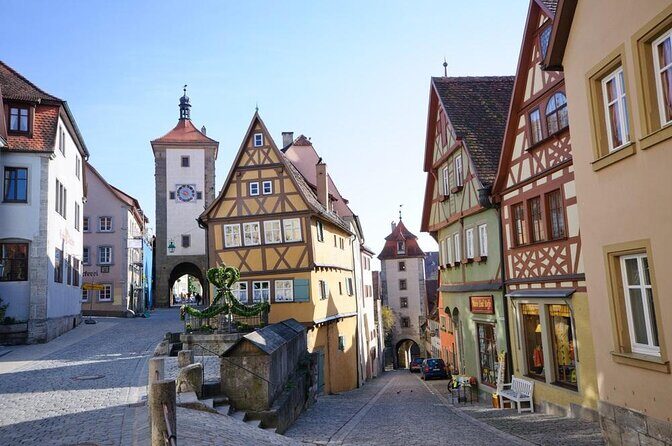
- Spanish guide with a well-paced, story-driven route across major Nuremberg sites
- Nine stops that connect medieval pogroms, Kristallnacht, concentration-camp references, and the Trials
- Free admission at the listed stops, so you’re mostly paying for the guide and time
- Start at Hauptmarkt (3:30 pm) and end near the Street of Human Rights near the central station
- Small group cap (30 people) that helps the guide keep things organized
- Mobile ticket you can use on the day, plus it’s easy to reach via public transport
Why this Nuremberg tour hits harder than a museum
I like tours that help you see a city as a living document. This one does that by linking Nuremberg’s identity—political, religious, and civic—directly to what happened to Jewish communities and how the Nazi regime used the city’s image. Instead of isolating events in a timeline, you get a chain of cause-and-effect you can actually picture while walking.
The best part is how the route moves across different types of locations. You’re not only looking at monuments. You’re standing by churches, civic buildings, and cultural spaces that were part of daily life, then hearing how that same environment got twisted for exclusion and ideology. For me, that’s where the learning becomes real.
And yes, the tone is serious. You should expect discussion of antisemitism and Nazi propaganda themes, including references tied to concentration camps and the anti-Jewish violence of the era. If that’s not what you want right now, it’ll feel heavy. But if you want honest context in the streets, this tour is built for that.
Other Third Reich & WWII tours we've reviewed in Nuremberg
Starting at Hauptmarkt at 3:30 pm: the route’s logic
The tour meets at Hauptmarkt 14 in central Nuremberg. It starts at 3:30 pm and runs for about 3 hours. That timing matters because you can get a lot done in the afternoon without burning a full day.
From a practical point of view, a 3-hour format with roughly nine stops means you’ll be moving, but not sprinting. Each site is given a focused slice of attention (often around 10–15 minutes). If you like structured walking tours that don’t drag, you’ll probably appreciate the rhythm.
It also ends near the Street of Human Rights (Kartäusergasse 1), close to the central train station and about a 10-minute walk from the start area. Translation: you’re not stuck far out at the end. You can grab food or hop on public transport without planning your whole evening around the tour.
Frauenkirche: starting with the 1349 pogrom and the city’s role
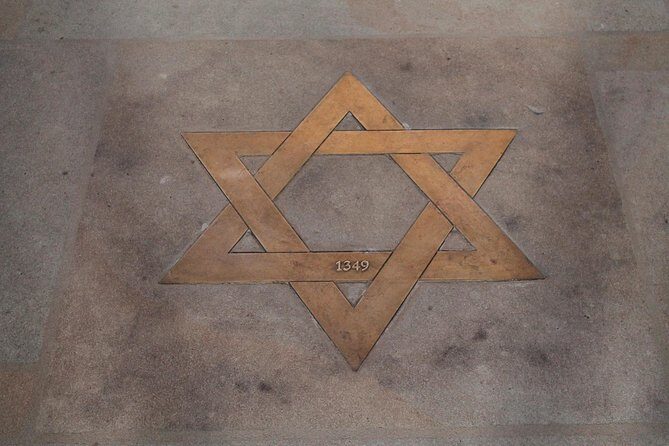
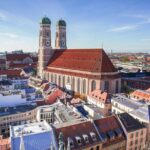
You begin at Frauenkirche, where the tour looks at the pogrom of 1349 and the Jewish quarter’s relationship with the city. This is a smart opener because it reframes the story. You’re not starting in 1930s politics. You’re starting with medieval dynamics—how hatred and violence can take root long before modern propaganda slogans ever appear.
Even in a short stop, this location sets up one of the tour’s core themes: antisemitism didn’t appear out of nowhere. It was supported, repeated, and justified through time—then later exploited and intensified by the Nazi system.
Practical tip: if you’re visiting in warm weather, bring water and take shade when you can. One review specifically called out how the tour stayed muy ameno even during heat, which tells me the guide keeps the pace and explanations engaging when the sun is doing its thing.
St. Sebaldus Church: from medieval antisemitism to National Socialism
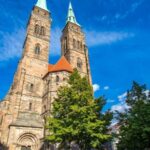
Next up is St. Sebaldus Church, with a focus on antisemitism from the Middle Ages to National Socialism. I like that the tour keeps stepping forward instead of treating each era like a separate, unrelated chapter.
This stop also helps you understand why churches matter in this story. These weren’t only spiritual buildings. They were landmarks of authority and identity. When you connect that to centuries of exclusionary attitudes, the later Nazi use of symbolism doesn’t feel random—it feels like a continuation.
The tour’s timing here is friendly: about 15 minutes gives you enough time to absorb the message without turning the stop into a long lecture.
Nuremberger Rathaus: Hitler’s history and how the city links in
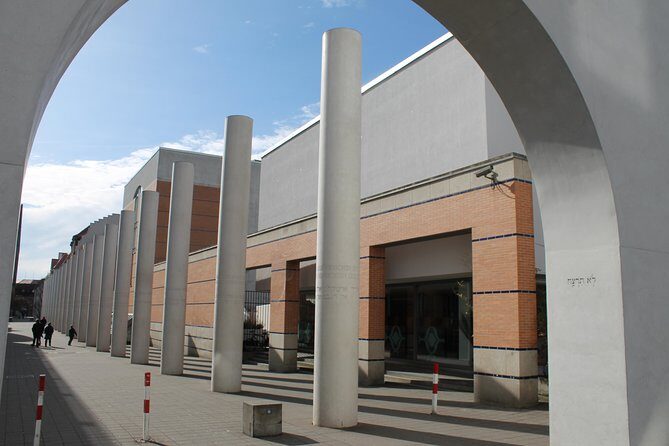
At the Nuremberger Rathaus, the tour covers the history of Hitler and his link with Nuremberg. This is where the route turns toward the Nazi era in a more direct way.
Nuremberg was treated as a special stage for the regime. The tour explains that Hitler saw the city as connected to Germanic traditions and used it as a propaganda center—meant to keep a particular myth of German power alive inside Nazi structure. You also learn that influential anti-Jewish voices were promoted from within the city, including Julius Streicher, connected to the weekly Der Stürmer.
If you tend to think of propaganda as something that happened only in speeches or posters, this stop helps correct that. The setting mattered. Buildings mattered. Cities mattered.
Other Nuremberg day trips we've reviewed in Nuremberg
Gedenkstätte an der Nürnberger Hauptsynagoge: destruction and the Night of the Broken Glass
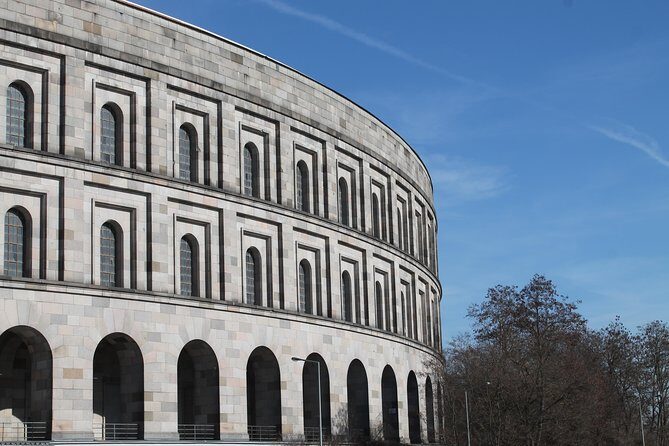
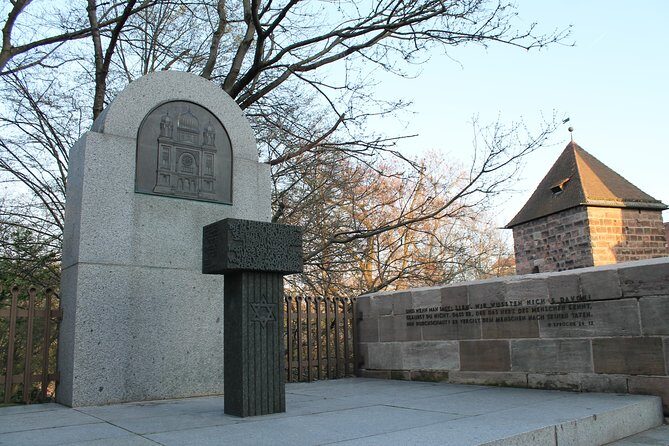
At Gedenkstätte an der Nürnberger Hauptsynagoge, the focus is the main synagogue of Nuremberg, its destruction, and the Night of the Broken Crystals (Kristallnacht). It’s one of those stops where the information feels immediate because you’re standing in the area tied to what was taken away.
The tour uses this point to connect ideology to action. You can hear how Nazi antisemitism wasn’t only a belief system—it became coordinated destruction, carried out in the open and backed by the state.
This stop is short—around 10 minutes—but it sets a strong emotional and historical anchor for what comes next. It’s not a “look and move on” moment; it’s a “remember why this happened” moment.
Katharinenkirche: ruins, battle, liberation, and rebuilding
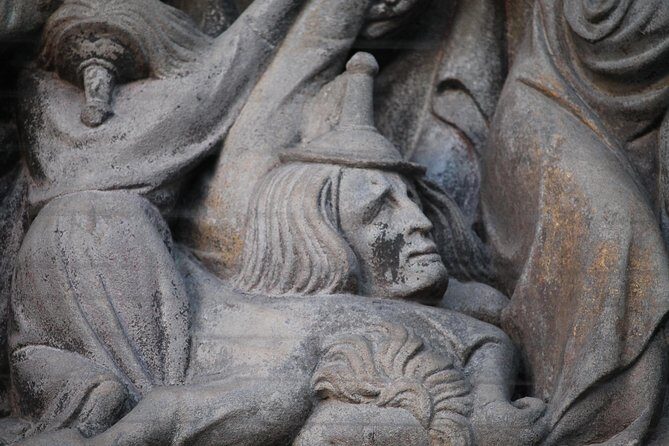
You then reach Katharinenkirche, centered on the ruins of the church of Santa Catalina, the battle and liberation of Nuremberg, and how the city was reconstructed. This is an important shift in tone, but not a reset.
After the Nazi-focused stops, this section adds the other half of the story: what came after. Nuremberg’s physical destruction and reconstruction become part of how the city tried to move forward—while still living with what happened.
A short stop here works well because the emotional processing doesn’t need a long detour to be effective. Still, if you want more time studying the building remnants and architectural aftermath, plan to spend extra minutes later on your own.
St. Lorenz: the Via Crucis and its link to the camp
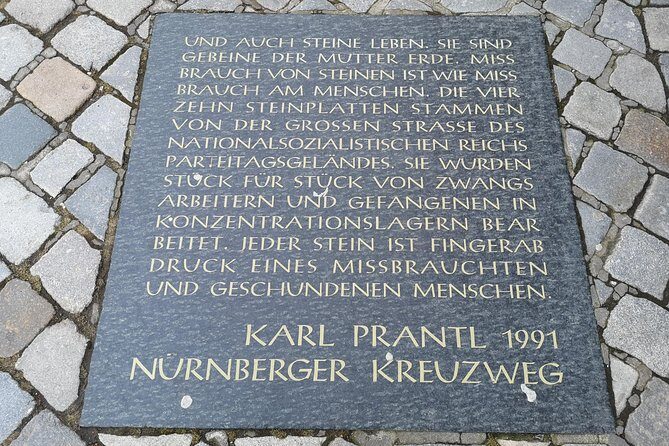
At St. Lorenz, the tour looks at the Via Crucis and its relationship with the Nuremberg Concentration Camp. This is a delicate point. I like that the tour doesn’t pretend religion and public symbolism can’t be bent for cruel purposes. It shows how public imagery and messaging could be connected—directly or indirectly—to a brutal system.
The reference is handled within a brief 10-minute timeframe. That keeps the focus on understanding, not sensationalizing. Still, this is one of the stops where I’d recommend you slow down mentally, even if you’re walking fast physically.
Nuremberg State Theater: opera house and National Socialism
The next stop is the Nuremberg State Theater, where the tour explains the opera house and its link with National Socialism. Cultural institutions often get underestimated in these stories. People assume politics lived only in offices and rallies.
But regimes don’t only control policy. They control culture, presentation, and public legitimacy. This stop makes that idea tangible by pointing you to the kind of space where society’s image gets staged.
It’s also a good example of the tour’s balancing act: you learn about power and ideology in places that don’t look like obvious “history sites.” That contrast is part of why this tour can feel so impactful.
Charterhouse Gate: the Nuremberg Trials
At the Charterhouse Gate, the tour covers the Nuremberg Trials. This is where the story becomes about accountability, at least in part.
After learning how the city supported propaganda and how antisemitism was entrenched through time, the Trials section gives you the postwar response. I appreciate that the route doesn’t end with Nazi-era imagery and leave you with only darkness. It moves toward what followed and why that mattered.
Time is again tight—about 15 minutes—but it’s a logical closing chapter before the final “walking forward” segment.
Street of Human Rights: rebirth from the ashes
The tour ends at the Street of the Rights of Man / Street of Human Rights, tied to the idea of the city’s “rebirth” after its destruction. This stop is about the outcome and the meaning behind a rebuilt city.
After the Nazi period and the Trials, finishing with human rights language helps you avoid ending in pure sadness. It doesn’t erase what happened. It frames what the city tried to say about the future.
And because this area is near the train station, it’s also practical. You can turn the end of the tour into a smooth transition to dinner, a museum visit, or a train ride out of town.
Price and value: $19.70 for 3 hours in Spanish
At $19.70 per person, this tour is good value if you want context without paying for multiple sites separately. You get a Spanish guide, and the listed stops show admission ticket free for each location on the itinerary. That combination matters: guides are where the value usually lives, and free admissions prevent cost creep.
Also, the tour is only about 3 hours, so it doesn’t steal an entire day. For a city like Nuremberg—where you’ll likely want to see several serious sites—short guided structure is often the best use of your limited time.
What you won’t get: soda/pop. Simple fix—bring a small bottle of water if you’re out in warm weather, especially since the tour lists a good weather requirement.
What the group size and style mean for you
The cap is 30 travelers. That’s big enough that you won’t feel like you’re competing for attention, but small enough that the guide can keep the flow under control. One review praised the tour as flexible and dynamic. That fits a format where each stop has a set time, but the guide can respond to the group.
And the reviews you’ll likely relate to in real life are about the tour being ameno and complete, with a guide who knows his material. When a tour is well documented, it helps you connect dots quickly and not just read plaques. That’s what you’re paying for.
When you should skip it
You should think twice if you want a purely architectural walking tour or if you’re looking for a cheerful theme. This route deals with antisemitism, Nazi propaganda, destruction, and the Nuremberg Trials. It’s educational and serious, not casual.
You might also want to plan extra time elsewhere if you’re the type who stands in one place and wants long reading breaks. The tour is structured by time, so it won’t satisfy the “I want to linger for an hour at every stop” style.
Who this tour suits best
This is ideal if you:
- want a guided story rather than reading alone
- prefer a Spanish-speaking guide and a group format
- like a route that links eras together: medieval → Nazi → postwar
- value free admission stops and clear pacing
It’s less ideal if you only want the lighter side of Nuremberg or you’re sensitive to heavy subject matter and want to avoid it entirely.
Should you book the Nuremberg Third Reich Tour in Spanish?
Yes—if you’re ready for serious history and you want it explained in a way you can follow while walking. The price-to-time ratio is strong, the stops are high-impact, and the guide-led pacing keeps the experience engaging rather than turning it into a long grind.
If you’re hoping for a casual stroll, or you want a “photo only” route, you may find it too focused and too emotionally direct. But if you want context that connects multiple parts of the city to what happened there, this is a smart booking.
FAQ
What language is the tour in?
The tour includes a guide in Spanish.
How long does the tour last?
It lasts about 3 hours.
How much does it cost?
The price is $19.70 per person.
Where do I meet the tour?
You meet at Hauptmarkt 14, 90403 Nürnberg, Germany.
Where does the tour end?
It ends near Street of Human Rights at Kartäusergasse 1, 90402 Nürnberg, Germany, close to the central train station.
Is there admission included for the stops?
The itinerary lists admission ticket free for each stop.
Do I need to bring a paper ticket?
You use a mobile ticket.
Are drinks included?
No. Soda/pop is not included.
Is the tour dependent on weather?
Yes. The tour requires good weather, and if it’s canceled due to poor weather you’ll be offered a different date or a full refund.
What’s the cancellation rule?
You can cancel for a full refund up to 24 hours before the experience’s start time.