REVIEW · NUREMBERG
Nuremberg: Nuclear Bunker in Main Railway Station
Book on GetYourGuide →Operated by Förderverein Nürnberger Felsengänge e.V. · Bookable on GetYourGuide
Cold War fear, right under your feet.
This tour takes you into a nuclear bunker built beneath Nuremberg’s main railway station, where you’ll see how civilian protection was planned after WWII and the atomic bombings. I love the direct, practical way the exhibits explain the threat and the response. I also like the small moments that make it real, like the chance to try the bunkered-down posture on a pallet and sit with the scale of crowding. One thing to consider: the setting is underground and enclosed, so if you’re claustrophobic, this is probably not for you.
You’ll also get more than “nukes only.” The bunker was designed to help shield people not just from nuclear danger, but also from biological and chemical attacks. That broader approach makes the story feel less like sci-fi and more like a real planning mindset during the Cold War. The main drawback is simple: it’s not a long, leisurely wander—plan for a timed 75-minute tour, rain or shine, and you can’t drift in late.
In This Review
- Key things to know before you go
- Entering the Nuclear Bunker from Nuremberg’s Main Station
- What the 75 Minutes Underground Actually Feels Like
- From Atomic Bombs to a New Civilian Threat Model
- Civilian Protection Exhibits: Designed for Real People
- Seeing the Destructive Power: The Simulation Moment
- More Than Nuclear: Biological and Chemical Defense Concepts
- The Pallet Experience: “How cramped would it be?”
- Guide Style and the Tone: Serious, But Human
- Price and Value: Is $15 a good deal for 75 minutes?
- Practical Rules Inside the Bunker
- Who Should Book This Nuclear Bunker Tour
- Should You Book the Nuremberg Nuclear Bunker Tour?
- FAQ
- FAQ
- How long is the tour?
- How much does the Nuremberg nuclear bunker tour cost?
- What’s included in the price?
- What language is the guided tour in?
- Where do I meet for the tour?
- Is this tour suitable for children?
- Is it wheelchair accessible or suitable for mobility impairments?
- Are there rules I should know before entering the bunker?
Key things to know before you go
- Real civil-defense planning: The exhibits focus on how protection was imagined for civilians and travelers.
- Multiple threats covered: Nuclear, plus biological and chemical attack protection concepts.
- Simulation-led context: You get an idea of how nuclear weapons developed over time.
- Try the space: You can lie down or sit on a pallet to feel how cramped it would be.
- Guide in German: The tour is live and German-language only.
- Hidden entrance: The entry is tucked in the station’s basement passageways—get your bearings first.
Entering the Nuclear Bunker from Nuremberg’s Main Station
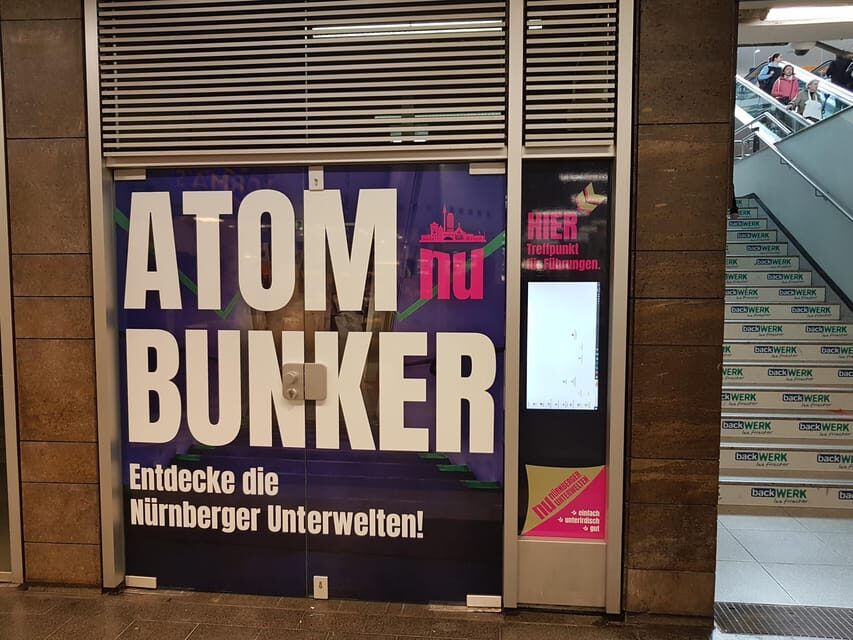
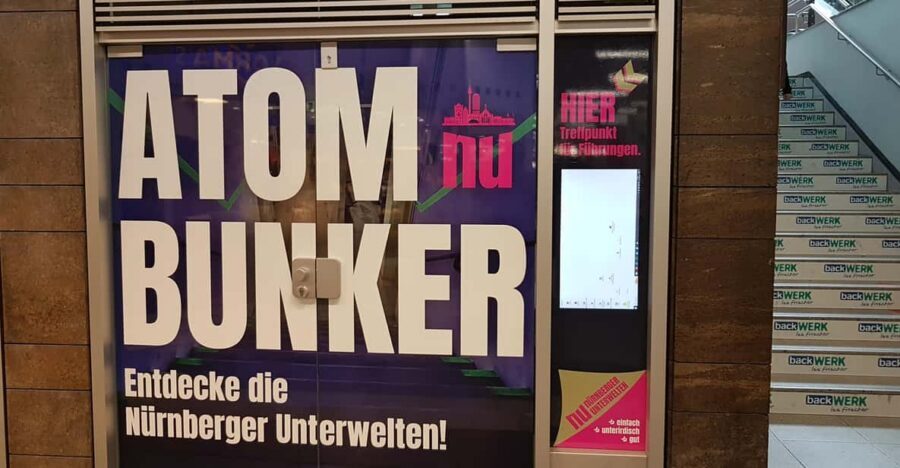
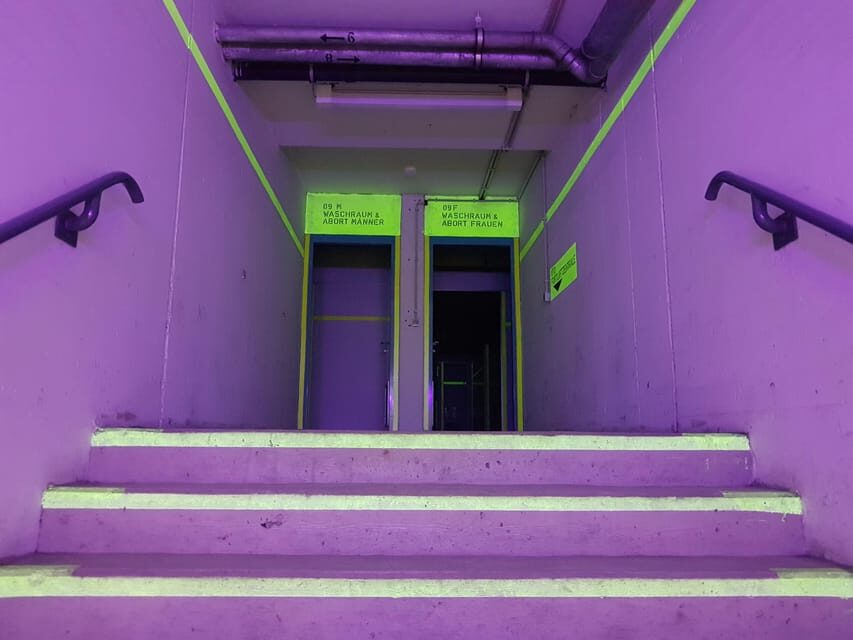
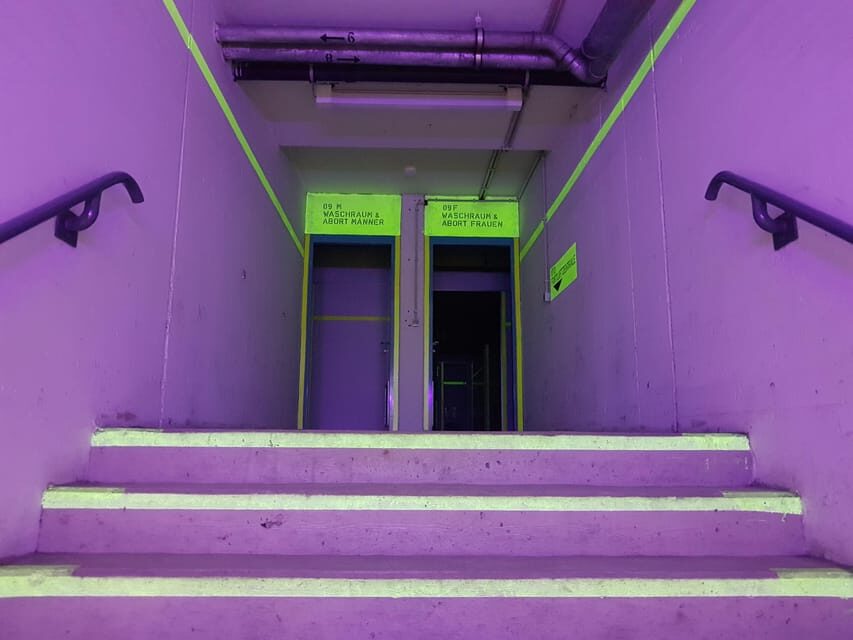
The experience starts where you’d least expect it: inside Nuremberg’s main railway station. You’ll want to build in a few minutes just to find the right route down to the basement floors, because the entrance can feel easy to miss.
Enter the station through the main portal and head to the main hall. From there, you’ll see four escalators leading to the basements. Take the long escalator down to the shopping arcade (Königstorpassage), or choose the short escalator followed by a step staircase. At the bottom, turn sharply right right away. The entrance to the bunker sits on the right wall, so this turn is your key landmark. You’ll wait there for the tour to begin, directly at the spot by Yorma’s restaurant.
If you don’t arrive from Nürnberg, this extra effort matters. The station is busy, and the bunker entry doesn’t announce itself like a standalone museum door. A small tip that pays off: check where those escalators are before your group boards, so you’re not guessing in the minute before start time.
Other Nuremberg day trips we've reviewed in Nuremberg


What the 75 Minutes Underground Actually Feels Like
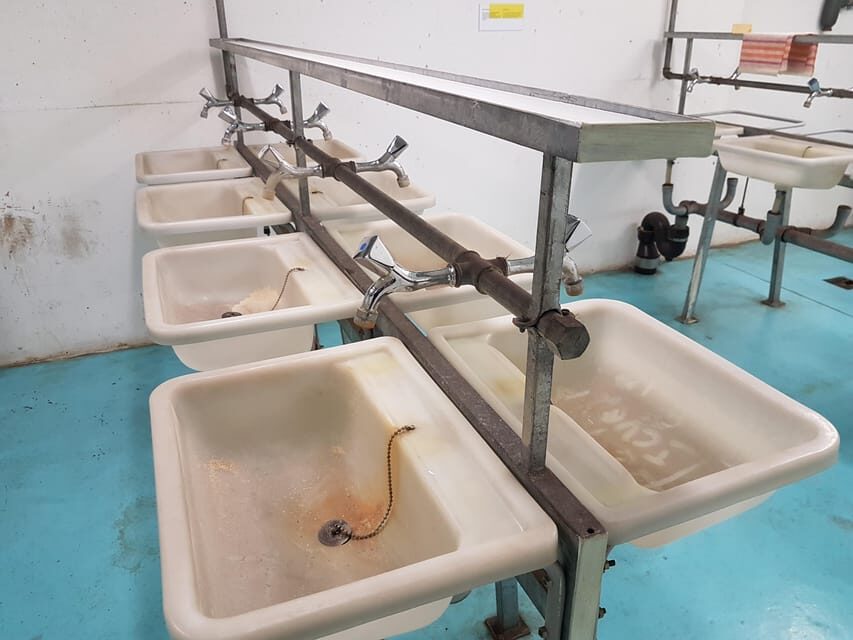
This is not a “read everything slowly” type of tour. It’s 75 minutes with a live guide, and the pace is built around the story flow: why bunkers existed, what threats planners considered, and how the bunker space might have felt.
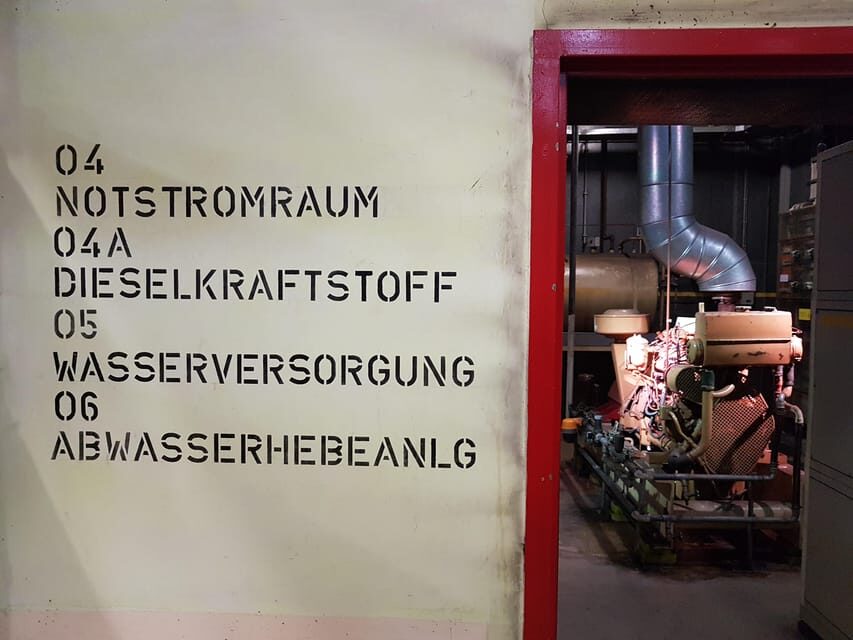
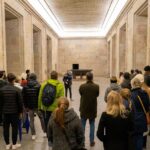
Once you’re down there, the bunker environment does the work for the lesson. You’re not just looking at posters behind glass. You’re moving through the facility and experiencing how a protective space would constrain movement, sight lines, and comfort. The tour includes a moment that really changes your perspective: you can lie down on a pallet or sit, imagining what it would feel like to be cooped up with several hundred people.
That one part is worth the ticket by itself, because it forces you to stop treating the whole Cold War story like a distant headline. You feel the scale in your body. It’s also a reminder that “protection” wasn’t about comfort—it was about survival odds, however limited those odds were.
A practical note: the tour runs rain or shine, and you need to be aware that there can be no entry after the tour starting time. If you’re the kind of person who likes to linger at platforms or grab coffee right up to the last second, consider arriving early and settling in.
From Atomic Bombs to a New Civilian Threat Model
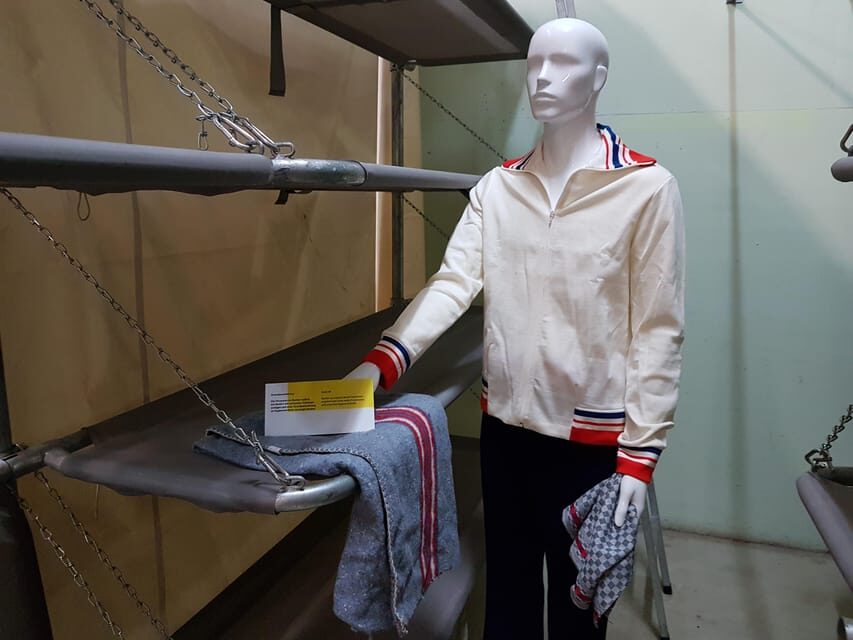
The tour’s core theme is the shift in how people were expected to live with a new kind of danger. After WWII ended and atomic bombs were used in Japan, the arms race became a defining feature of the Cold War. The question the bunker addresses is blunt: how do you protect the public when the threat is so sudden and so massive?
The nuclear bunker under Nuremberg’s central station was intended to protect a portion of the city’s inhabitants, but especially travelers, who were considered vulnerable in any fast-moving crisis. That focus is a smart detail: civilians weren’t the only ones planners worried about. Anyone passing through the city at the wrong time would need a place to go.
You’ll see how planners turned that fear into physical infrastructure. The exhibits explain that the bunker wasn’t a one-purpose structure. It was built with the expectation that threats could come in multiple forms, including nuclear, biological, and chemical dangers.
If you like history that connects policy to concrete spaces, you’ll enjoy how the story stays grounded. The tour doesn’t just list events. It asks you to imagine the decisions leaders had to make once the threat became unimaginable.
Civilian Protection Exhibits: Designed for Real People
What makes these displays stand out is the focus on civilian protection rather than military theater. The bunker narrative centers on what people were told to expect and how they might respond if a worst-case scenario arrived.
As you move through the exhibits, you’ll get information about the means envisaged to confront danger. That includes how the whole civil-defense emphasis changed after WWII. The tour frames it as a rethinking of how to protect the civilian population, shaped by the risk of nuclear warfare.
One of the best parts of this approach is that it doesn’t let you stay abstract. You’re nudged toward “what would I do?” and “where would I go?” which is exactly what civil defense is about. Even if you don’t have deep background knowledge, the explanations are built to bring you up to speed.
Also, the bunker has a computer simulation that gives you an idea of how nuclear weapons developed from early atomic bombs toward modern warheads. It’s not just about scale—it’s about timeline and progress, which helps you understand why planning had to evolve so quickly.
Seeing the Destructive Power: The Simulation Moment
Nuclear weapons can be hard to grasp because they’re so far beyond everyday experience. This tour tackles that problem head-on with a computer simulation.
The simulation helps you picture the ominous development of the nuclear weapons arsenal. It also gives context for how influential the first atomic bombs were compared to modern nuclear warheads. Even if you think you already know the basics, it’s the kind of visual explanation that makes the numbers and progression feel more real.
This is the moment when the tour’s emotional weight clicks into place. Until then, you’re learning how protection was supposed to work. Then you get a clearer sense of what the threat actually implied, which sharpens the meaning of everything else you saw.
The result is not panic. It’s understanding. You leave with a more accurate mental model of the Cold War mindset, where the goal wasn’t to eliminate danger. It was to reduce helplessness.




More Than Nuclear: Biological and Chemical Defense Concepts
It would be easy for a nuclear bunker tour to center everything around atomic weapons alone. This one doesn’t. The bunker was designed to provide shielding against biological and chemical attacks as well.
That detail matters because it changes how you read the room. You’re not just seeing a monument to one fear. You’re seeing a structure built for a broader threat environment—one where planners assumed multiple hazards could appear, sometimes together, sometimes unpredictably.
In practical terms, this broader framing also helps you connect the bunker story to the wider history of civilian protection. It shows that Cold War civil defense didn’t rely on one scenario. It aimed to reduce risk across different categories of attack.
As you walk through the exhibits, look for how the displays explain the logic behind protection measures. Even without technical detail overload, the message is clear: the bunker was a tool designed for survival planning, not for comfort.
The Pallet Experience: “How cramped would it be?”
One of the most memorable parts of this tour is the chance to experience the space. The bunker tour lets you lie down on a pallet or sit, so you can imagine the feeling of being cooped up with hundreds of people.
This is where the emotional weight shifts from information to body memory. You start thinking about airflow, posture, movement limits, and patience. You also get a better sense of why these bunkers needed procedures and discipline—because if people can’t move, share space, or stay calm, protection becomes harder.
The tour also helps you connect crowding to the reason civilian shelters were planned around real public behavior, not just engineering. The design isn’t only about walls. It’s about what people can realistically do inside those walls.
If you’re someone who hates tight spaces, take this as a warning: the opportunity to sit or lie down is part of the educational value. If you can’t handle that kind of closeness, you may want to skip this tour and choose a different Nuremberg WW2/Cold War stop instead.
Guide Style and the Tone: Serious, But Human
The live guide is German-speaking. That’s a plus if you speak enough German to follow comfortably, and it can be a limitation if you don’t. The tour is built to be understood through explanations and exhibit context, not through English-only signage.
What I appreciate is the way the tour keeps the mood grounded. There’s a theme of using humor and common sense to balance the atmosphere. That matters because nuclear history is heavy. A guide who can keep things human helps you learn without freezing up or feeling like you’re trapped in a lecture.
In short: if you’re open to a serious topic delivered with practical clarity, you’ll probably enjoy the tone. If you want only documentary-level severity, you might find the conversational approach less stiff than some people expect.
Price and Value: Is $15 a good deal for 75 minutes?

At $15 per person and 75 minutes long, this tour is good value if you want a compact, high-impact experience. You’re paying for entry plus a guide, and the content isn’t watered down. The tour includes Cold War civilian-protection context, a nuclear weapons simulation element, and an interactive space moment.
What’s not included is what you’d expect from an underground attraction: transportation and food or drinks. You also need to plan around the rules inside (no food/drinks, no large bags, no touching exhibits, and no selfie sticks). So bring only what you can carry easily and leave bulky stuff behind.
The biggest value factor isn’t the price tag. It’s that you leave with something memorable you can’t get from a quick museum glance: the sense of scale and confinement, paired with a guided explanation of nuclear and other threat planning.
If your time in Nuremberg is tight, this is a strong pick. It’s long enough to make the topic coherent, but not so long that it feels like a commitment you regret on a busy itinerary.
Practical Rules Inside the Bunker
These details affect comfort and smoothness, so take them seriously:
- No smoking
- No food and drinks
- No luggage or large bags
- Pets not allowed (assistance dogs allowed)
- No selfie sticks
- Do not touch the exhibits
Also remember: the tour takes place rain or shine, and there’s no entry after the starting time. If you’re traveling with a tight schedule, arrive early enough to find the bunker entrance without stress.
Who Should Book This Nuclear Bunker Tour
I’d book this if you want history that connects global events to local planning, and you like tours where the space itself supports the message. It’s especially suitable for adults and older teens who can handle the topic and the setting.
You should skip it if any of these apply:
- Children under 8
- Mobility impairments (this tour is not suitable for everyone)
- Claustrophobia
- Wheelchair users
Even if you’re fascinated by WWII and Cold War history, the physical environment is part of the point here. If enclosed spaces bother you, it won’t just be uncomfortable—it can also ruin the learning experience.
Should You Book the Nuremberg Nuclear Bunker Tour?
If you’re choosing between this and another standard museum stop, I’d lean toward booking it for one reason: it gives you a full story in a short time, and you experience the space, not just the facts. The combination of civilian protection context, the nuclear weapons simulation element, and the pallet moment makes it a memorable “how would this feel” lesson.
Book it if you can do basic underground walking and you’re comfortable with the idea of tight quarters. Skip it if you have claustrophobia or need accessibility accommodations this tour can’t support.
FAQ
FAQ
How long is the tour?
The tour lasts about 75 minutes.
How much does the Nuremberg nuclear bunker tour cost?
It costs $15 per person.
What’s included in the price?
The price includes the nuclear bunker entry fee and a live guide.
What language is the guided tour in?
The tour guide speaks German.
Where do I meet for the tour?
Go into the station through the main portal, reach the main hall, then take the escalators down to the basement level. Turn sharply right at the foot of the escalator stairs to find the bunker entrance on the right wall, near Yorma’s restaurant.
Is this tour suitable for children?
It is not suitable for children under 8 years old.
Is it wheelchair accessible or suitable for mobility impairments?
People with mobility impairments and wheelchair users should not take this tour.
Are there rules I should know before entering the bunker?
Yes. Smoking is not allowed, and you can’t bring food or drinks, luggage or large bags, or pets (assistance dogs allowed). Selfie sticks are also not allowed, and you must not touch the exhibits.