REVIEW · MUNICH
München: Stadtführung Henker, Huren, Hexen in GERMAN
Book on GetYourGuide →Operated by Weis(s)er Stadtvogel GmbH · Bookable on GetYourGuide
Munich gets darker than you expect. This 2-hour walk connects executioners, prostitution, and witch hunts into one city system, moving through big landmarks like St. Michael’s Church and the Frauenkirche while your guide tells the stories behind the fear. I especially love how the tour turns history into street-level explanations, and I like the sharp focus on places tied to punishment, like the Neuhauser Tor exit route. One possible drawback: it’s German only, and the route can include church time—so if you came for zero detours and pure answers, plan for some slower beats.
The format stays straightforward and real: no actors, no reenactments, just a live guide with anecdotes. You can pick a shared group or a private tour, and the whole thing runs rain or shine, so bring comfortable shoes and a head for uncomfortable topics.
In This Review
- Key points I’d plan around
- A 2-hour walk where punishment, sex work, and fear overlap
- Where you meet: Neuhauser archway and the blue-bag guide
- St. Michael’s Church: a landmark used as a story doorway
- Frauenkirche and Alter Hof: seeing authority in stone
- Neuhauser Tor: the place delinquents were led out
- Along the salt road and to a former Jesuit college for the witch hunts
- What it feels like: fun anecdotes, but no “show”
- Choosing shared vs private: how you’ll get your best experience
- Price and value: is $25 for 2 hours fair here?
- Who this tour suits best (and who might not love it)
- Quick booking and readiness tips that actually help
- Should you book this Henker, Huren, Hexen tour?
- FAQ
- What language is the tour guide?
- How long is the tour?
- Where do I meet the guide?
- Which major sites are included?
- Can I choose a private tour?
- Are entrance fees included?
- Is it rain or shine, and is there reenactment?
- Is the tour wheelchair accessible?
Key points I’d plan around
- Neuhauser meeting point: under the Neuhauser archway, with your guide in a BIG BLUE BAG labeled Weis(s)er Stadtvogel.
- Three themes in one tour: executioners, prostitutes, and witches, tied together through how Munich was run.
- Major Munich landmarks: St. Michael’s Church, the Frauenkirche, and the Old Court (Alter Hof) show the power backdrop.
- Actual “departure” location: you stand at the Neuhauser Tor area, tied to people being led out for execution.
- Witch-hunt stops along key streets: you pass the historic salt road and reach a former Jesuit college tied to the hunts.
- No drama props: it’s not theatre; it’s guide-led history with explanation, even if the subject matter is grim.
A 2-hour walk where punishment, sex work, and fear overlap
This tour is built around one big question: what did executioners, prostitutes, and alleged witches in Munich have in common? You don’t get a neat, modern morality lesson. Instead, you get a city-organized explanation of power, control, and outsourcing the dirty work.
The tone is a mix of dark and oddly human. Your guide doesn’t just list crimes. They connect roles that, on the surface, seem unrelated—then show how they fit into the way Munich operated. When the guide points out the systems behind punishment, it helps you see the city as something run by people with very practical jobs. That angle is what I’d call the tour’s real value: it makes the weird connections feel logical, not random.
If you’re the type who likes turning famous landmarks into story anchors, you’ll enjoy this. You’ll also walk away with a couple of specific takeaways you can bring to other conversations in Munich, like why the headquarters connected to this work sat outside the city, and why prostitution finally ended in the 1970s.
If you're still narrowing it down, here are other tours in Munich we've reviewed.


Where you meet: Neuhauser archway and the blue-bag guide
Your starting point is easy to miss if you arrive late or assume signage will do the work for you. Meet your guide under the Neuhauser archway. The guide wears a BIG BLUE BAG with the white text Weis(s)er Stadtvogel, so you can spot them from a short distance.
This matters because the tour is only 2 hours, so you don’t want the “waiting around” tax. Once you find the right person, you’re off on a focused route with quick transitions between stops. It also helps that you should plan on comfortable shoes, because you’re walking through the historic center as your guide explains what you’re looking at.
St. Michael’s Church: a landmark used as a story doorway
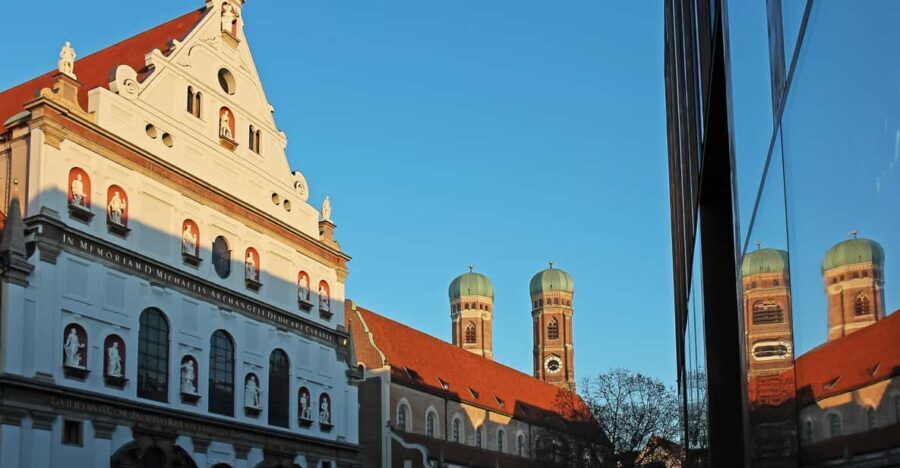
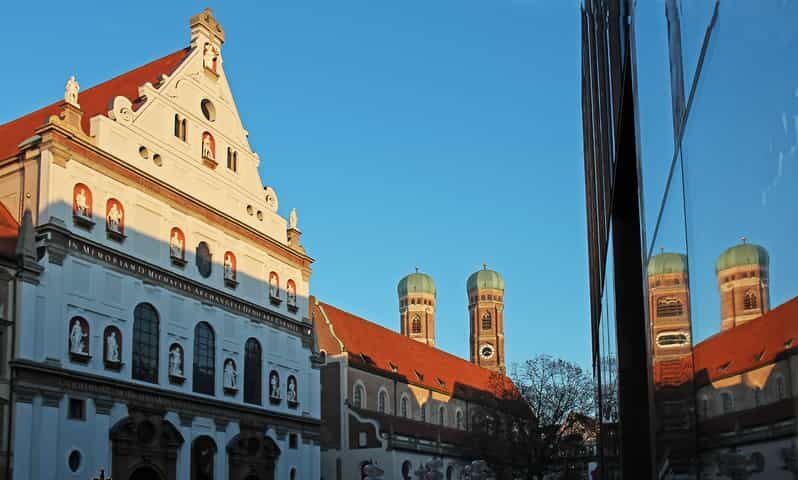
One of the first headline stops is St. Michael’s Church. Like many central European churches, it’s visually impressive. But here, it’s also treated as a clue to how the city’s official world and its harsh underworld shared the same geography.
In a tour like this, churches can go two directions. Sometimes they become scenery. Sometimes they become context. On this one, the goal is context: you’re learning how Munich’s institutions and authorities handled law, punishment, and public order. Even if you personally don’t care about architecture, you’ll still get use out of the stop because it functions as a narrative reset point.
A practical tip: if you don’t catch every word in German right away, don’t panic. The guide keeps anchoring explanations to what you’re standing near. That helps you keep up even when language slips for a moment.
Frauenkirche and Alter Hof: seeing authority in stone
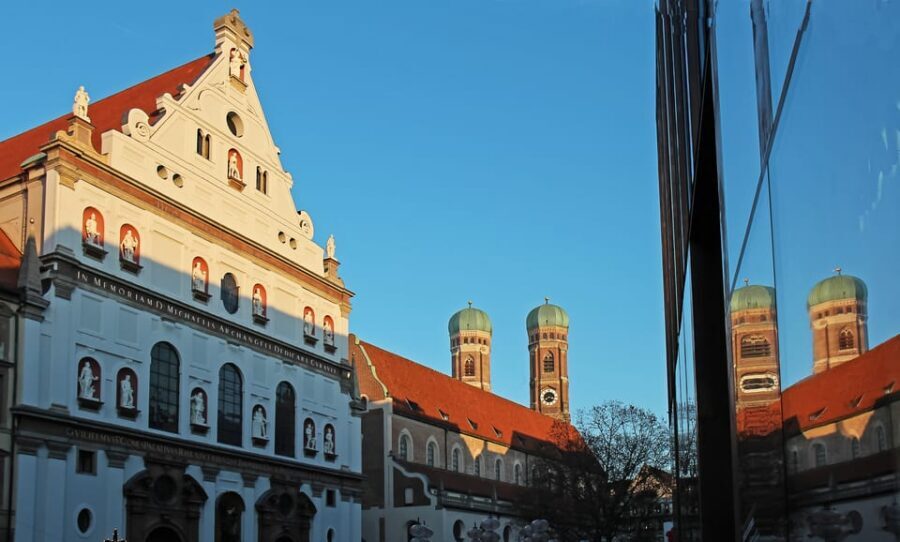
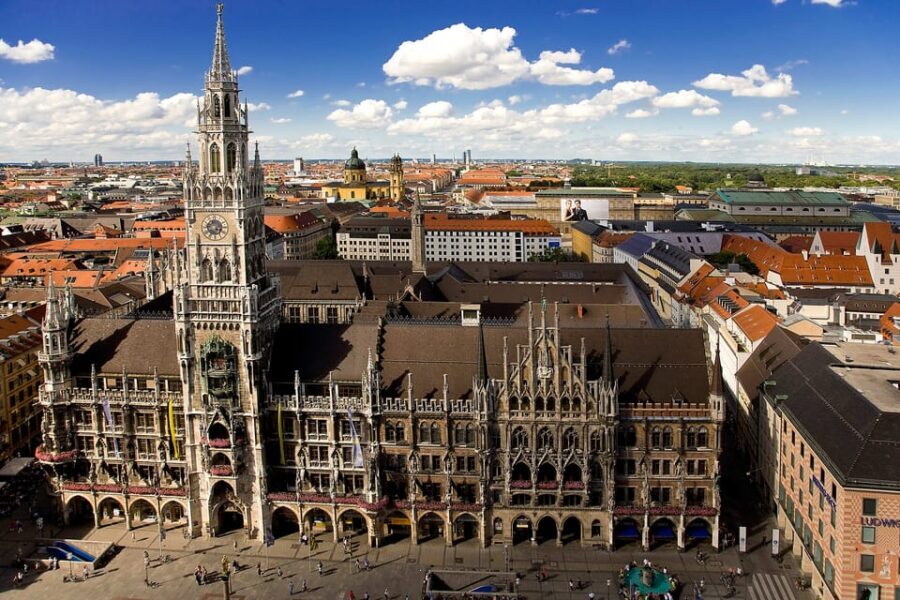
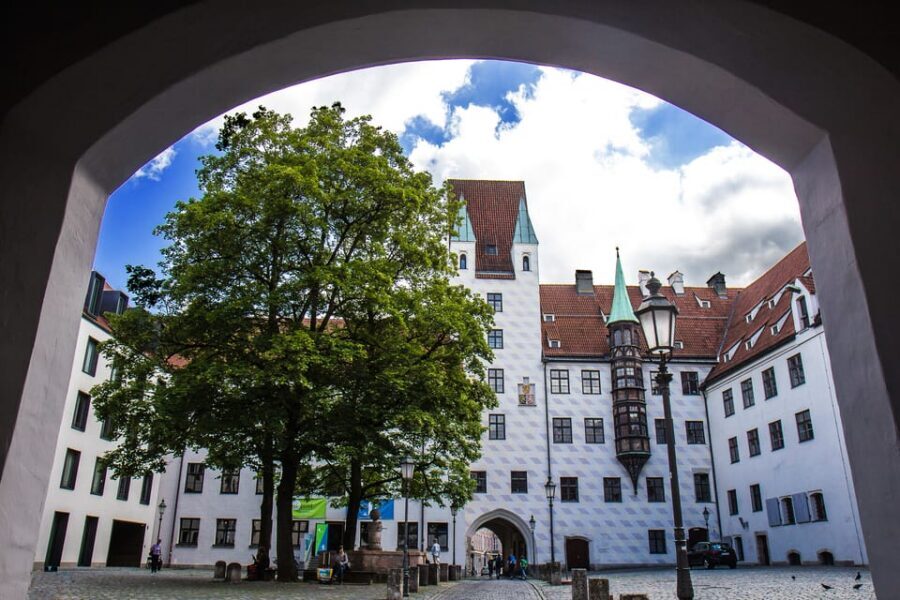
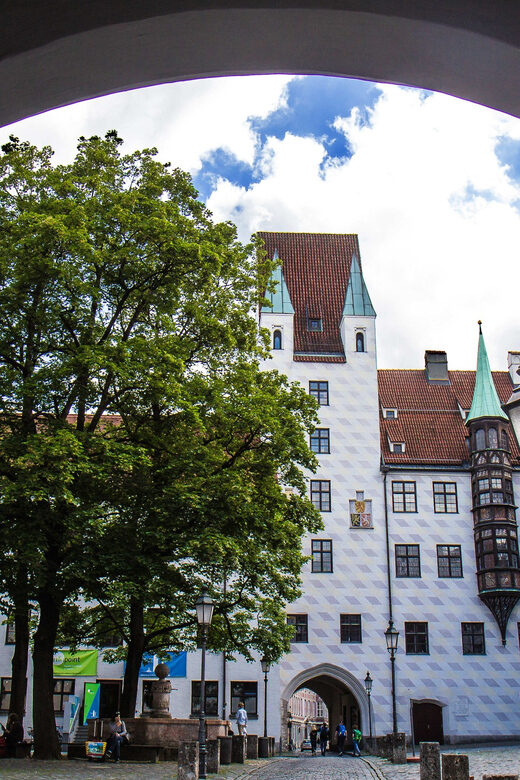
Next up is the area around the Frauenkirche—Munich’s most famous church—and a look at the Alter Hof (Old Court). This is where the tour’s “who ran the city” angle becomes visible.
The tour leans on the idea that systems didn’t operate in a vacuum. Authority, legal power, and punishment were tied to the city’s leadership. By placing you near major power landmarks, your guide can explain how the city’s governance shaped what happened to people on the margins—especially those tied to the themes of torture, execution, and sexual exploitation.
I like this part because it forces you to connect two things tourists often keep separate: monuments tourists photograph and the darker functions those same historic spaces once served. You don’t need to agree with the past to learn from it. You just need to be willing to look at the city as a functioning place with brutal realities.
One consideration: if you prefer a tight, topic-only route, this is where pacing might test you. There’s enough church time in the center that the tour can feel longer than you expect, especially when there’s a lot going on around major churches.
Neuhauser Tor: the place delinquents were led out
You’ll also stop at the Neuhauser Tor, described as the place where delinquents were led out of the city to be executed. This is the most direct “this happened here” moment on the walk.
Standing near a location like that changes the tone instantly. Before this, you’re building a picture of systems. Here, you get a spatial link to the outcome: people didn’t just suffer abstract punishments. They moved through a defined urban route and faced the consequences after leaving the city.
I’d treat this as your mental anchor for the whole tour. When the guide later connects different roles—executioners, women targeted as sex workers, and people accused of witchcraft—this is the kind of reality the explanations are pointing toward: the city had ways to label, remove, and punish.
Also, note the tour isn’t staged with anything like reenactment or actors. The weight comes from the facts your guide explains, not from theatrical effects.


Along the salt road and to a former Jesuit college for the witch hunts
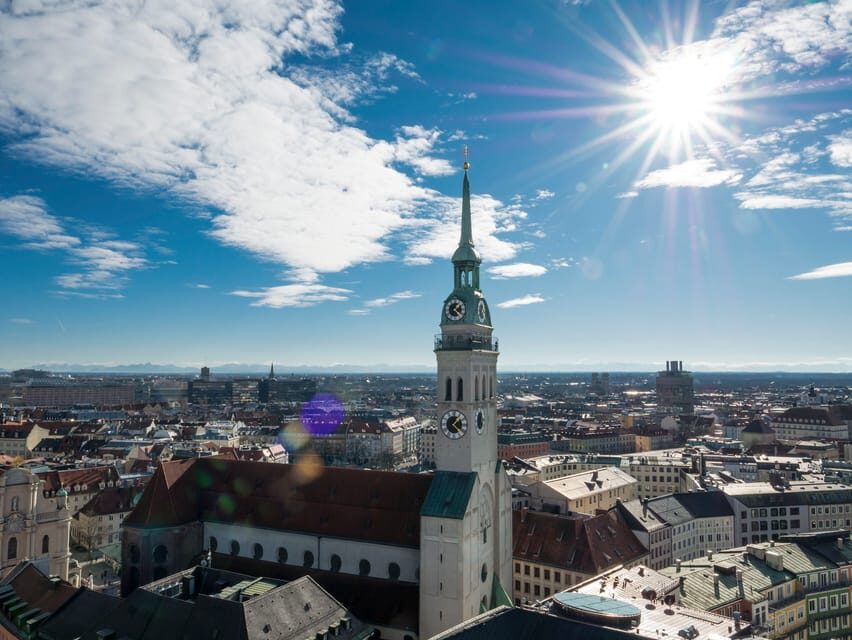
The tour then shifts to the witch-hunt side, with a walk along the historic salt road and a stop at a former Jesuit college tied to the hunts.
Why do these locations matter? Because your guide is aiming to show that witch-hunting wasn’t only about superstition. It was organized, conducted through institutions, and it used city geography. Passing the salt road gives you a sense of movement and routes—routes that mattered for trade, for travel, and for how people and information moved. Then the former Jesuit college stop puts the story near the kinds of educational or power-linked buildings that often shaped investigations.
One of the specific things your guide explains here is the reason the headquarters associated with this work were outside the city. That detail is important because it hints at both logistics and social control: the city could enforce order while keeping certain operations at arm’s length.
You’ll also hear the guide talk about why prostitution ended in the 1970s. That moment is a useful contrast. The tour starts in a world of medieval or early-modern brutality, but it doesn’t end there. It gives you a thread into more modern changes in how the city dealt with sexual exploitation.
What it feels like: fun anecdotes, but no “show”
This tour is described as story-driven, and you should expect fun stories and anecdotes from your guide. That can sound like a contradiction with topics like torture and executions, but it works because the anecdotes are meant to clarify people and motivations, not soften the facts.
You also won’t get actors. The tour explicitly does not include reenactment. So don’t come expecting staged witch trials or dramatic execution scene “effects.” Instead, you’ll get a guided conversation that uses landmarks like set pieces for explanation.
A practical note for language learners: the tour is live in German, and a single guide can only do so much with noise levels around crowded church areas. If you’re relying on every word, keep your expectations realistic. If you can understand the main points, the structure still holds.
Choosing shared vs private: how you’ll get your best experience
You can choose between a shared group or a private tour. That choice can change the experience more than you might think.
- With a shared group, you’re likely moving at a pace that works for the group, with your guide handling timing and flow for everyone.
- With a private tour, you can usually ask more questions and get more focused attention on what you care about—like which parts of the system your guide emphasizes most (executioners, sex work, or witch hunts).
If you’re particularly sensitive to the topic mix, or if German isn’t your strongest language, private can be a smart way to make sure you catch the core explanations without feeling left behind.
Price and value: is $25 for 2 hours fair here?
At about $25 per person for a 2-hour guided walk, the value is in what you get for the price: a knowledgeable city guide and a route that hits major landmarks without charging you additional entrance fees.
Entrance fees are not included, so you’re not paying extra to access museums or ticketed sites. Instead, your money buys the guide’s connective tissue: turning famous buildings and street locations into a coherent story about punishment and social control. That’s exactly where tours like this earn their keep. The guide does the work of making the connections clear, and you do the walking.
Is it worth it if you’re only looking for pretty pictures? Probably not. But if you want Munich with context, and you can handle uncomfortable themes, it’s a straightforward deal for central walking time.
Who this tour suits best (and who might not love it)
This is ideal for you if you:
- like city tours that explain how power worked, not just what things look like
- want a thematic route with clear story anchors at specific Munich locations
- enjoy guides who bring facts and anecdotes together so the material sticks
It may be a frustrating choice if you:
- want an English-language tour
- dislike church-heavy pacing
- are looking for a tightly balanced equal focus on every theme (executioners vs sex work vs witch hunts). The balance can depend on your guide’s emphasis.
Because the topics are heavy—witch hunts, prostitution, torture, executions—give yourself some emotional room too. This is “history with consequences,” not a light afternoon.
One more note on mobility: the tour is listed as wheelchair accessible, but it is also marked not suitable for people with mobility impairments. If that applies to you, treat it as a strong “check first” signal. Don’t assume one label automatically solves real-world constraints on a walking city route.
Quick booking and readiness tips that actually help
This one runs rain or shine, so pack for weather. You’ll be outside, and you’ll be walking from landmark to landmark. Also, bring comfortable shoes. That sounds obvious, but on a themed route like this, you’ll be thinking and listening while you walk—so blisters will ruin the point.
One small mindset tip: go in expecting history that links people and systems. If you’re hoping for simple answers or modern-style moral clarity, you might feel irritated by the complexity. If you’re open to understanding how the city’s machinery worked, you’ll get far more out of the stops.
Should you book this Henker, Huren, Hexen tour?
Book it if you want Munich to make sense as a place where official power and brutal enforcement intersected with everyday life. You’ll get major landmarks, a clear thematic thread, and guide-led storytelling with no theatre crutches.
Skip it if German-only tours frustrate you, if church pacing will annoy you, or if you’re not comfortable with topics like executions and torture. And if mobility is a concern, confirm your ability to handle the walking route first, since the accessibility notes conflict.
If you fit the first group, this is a memorable, thought-provoking way to see the center of Munich with a different set of eyes.
FAQ
What language is the tour guide?
The live tour guide speaks German.
How long is the tour?
The tour lasts 2 hours.
Where do I meet the guide?
Meet your guide under the Neuhauser archway. The guide will be wearing a BIG BLUE BAG with the white words Weis(s)er Stadtvogel.
Which major sites are included?
The tour includes St. Michael’s Church, the Frauenkirche, and passes landmarks such as Alter Hof. You’ll also be at the area of Neuhauser Tor, and you’ll go along the historic salt road to a former Jesuit college tied to the witch hunts.
Can I choose a private tour?
Yes. You can choose between a shared group or a private tour.
Are entrance fees included?
No. Entrance fees are not included.
Is it rain or shine, and is there reenactment?
It runs rain or shine, and there are no actors or reenactment.
Is the tour wheelchair accessible?
It’s listed as wheelchair accessible, but it’s also marked not suitable for people with mobility impairments. If you have mobility needs, it’s smart to check your situation with the provider before you go.