REVIEW · MUNICH
Munich in the 3rd Reich and WW2 private walking tour
Book on Viator →Operated by Dark History Tours · Bookable on Viator
Munich can look peaceful. Then this tour flips the lights on.
This is a private walking experience focused on how Munich became the Hauptstadt der Bewegung before and during World War II. I like that you get undivided attention from your guide, so questions don’t get swept into the usual “we’ll cover it later” pile. I’m also a big fan of the way guides use visual material and props to make the places and dates feel real, with names like Taff, Kevin, and Joanne showing up in the tour story.
The main thing to consider is that it’s still a walking tour. You’ll cover moderate distances on sidewalks, and it runs in all weather, with a beer hall-style break that may not fit everyone’s idea of a rest stop.
In This Review
- Key things you should notice before you book
- From Isar Gate to Odeonsplatz: why this route hits hard
- Private attention makes the difference in a sensitive subject
- The timeline you’ll walk through: from Versailles to Munich’s own rise
- Beer hall history and the power of public spectacle
- The SS origins and Kristallnacht: how policy turned into violence
- Nazi Party Headquarters and the Munich Pact: the politics of false calm
- Allied bombing and the fall to U.S. forces: when the city changed
- Guide style: what you’re really paying for
- Timing and weather: a practical heads-up
- Meeting points that won’t waste your morning
- Price and value: does $423 make sense here?
- Who this tour is best for
- Should you book Munich in the 3rd Reich and WW2?
- FAQ
- How long is the private Munich in the 3rd Reich and WW2 walking tour?
- What is the price for the tour?
- Is the tour private or shared with other travelers?
- Where does the tour start and end?
- What language is the tour offered in?
- Does the tour run in bad weather?
- How much walking is involved?
- Is there a break during the tour?
- When will I receive confirmation after booking?
- What is the cancellation policy?
Key things you should notice before you book
- Private, small-group feel for direct questions and pace control (up to 6 people per group).
- Beer hall stop tied to the history, with options to request a different break if you prefer a café.
- A guided “how it happened” timeline running from post–World War I trauma through the Nazi rise and wartime collapse.
- Central Munich locations between Isar Gate and Odeonsplatz, close to major sights and transit.
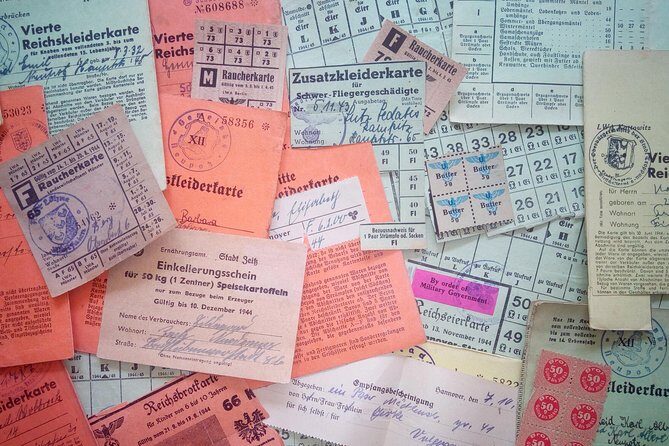
- Guides who use pictures and memorabilia to connect what you see to what was happening.
- Route adjustments are possible when weather or time gets tight, without turning it into a skim.
From Isar Gate to Odeonsplatz: why this route hits hard
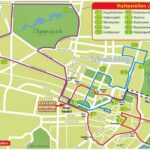
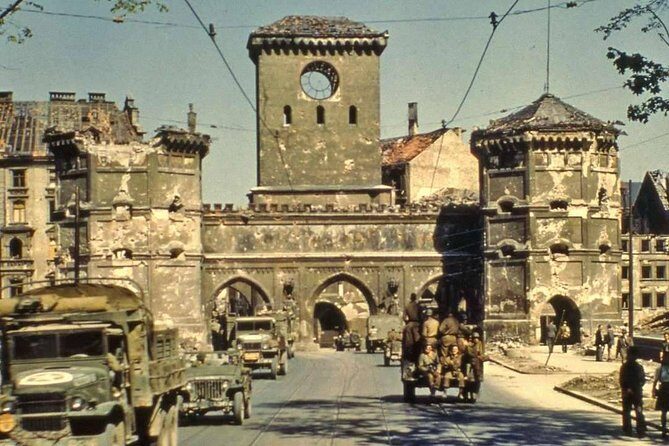
This tour is designed around Munich’s historical core. It starts at Isar Gate (Isartor), Tal 50, and finishes at Odeonsplatz, right by the Residenz area and only a short walk from Marienplatz. That matters because the Nazi story in Munich isn’t locked away in a single museum. It plays out across the same streets people still walk today.
You’ll move on foot, site-to-site, and your guide keeps the timeline connected. That’s a key part of the value here. A lot of World War II material can feel like a textbook chapter that you read and forget. Here, the setting stays in front of you while your guide explains how each step built toward the next one.
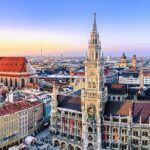
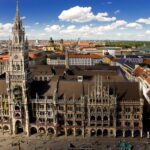
And yes, Munich has the postcard stuff too—churches, beauty, and the traditional culture visitors come for. This tour puts the dark side in the same frames. It’s not about “ruining” the city. It’s about understanding the city’s layers, and why today’s calm can be so misleading.
Other Munich city tours we've reviewed in Munich

Private attention makes the difference in a sensitive subject
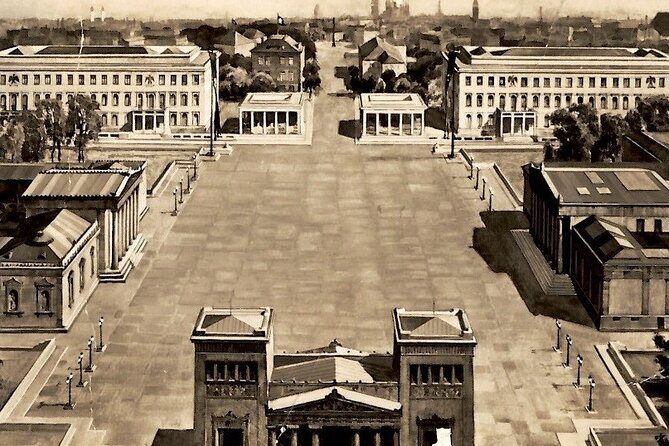
History tours can be hit or miss when they turn into a fast parade of facts. This one stays more human. With a private tour, you’re not competing with other voices, and you’re not stuck with a generic script that assumes everyone’s already heard the same basics.
That’s especially important for material like the origins of the Nazi movement, the birth of the SS, and how antisemitic state power escalated into mass violence. In this format, you can ask clarifying questions as you go. Your guide can also adjust the pace for your group, including families with teens.
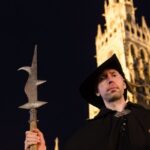
The guides highlighted in the experience—people like Taff, Kevin, and Joanne—are repeatedly praised for being ready with references and visuals. One review notes photos and memorabilia backing up the stops. Another mentions a guide acting out parts of the story. Whether you love drama or prefer straight facts, the common theme is clarity: you’re shown the connections, not just told to accept them.
The timeline you’ll walk through: from Versailles to Munich’s own rise
The story begins in the aftermath of World War I and the Treaty of Versailles. Your guide uses those political and economic shocks to explain why Germany—and Munich—became fertile ground for extremism. The postwar period isn’t introduced as a vague “things were bad.” It’s framed as a specific set of conditions that pulled people toward radical answers.
You’ll also hear about Munich’s brief period of political chaos, including the moment when a Soviet Republic formed in the city. That’s not a random detour. It sets up the instability that helped the Nazi Party gain traction later.
Then comes the entry point that makes Munich matter in the broader WWII story: Adolf Hitler and the Nazi Party’s early rise, including Munich branding itself as Hauptstadt der Bewegung—the Capital of the Movement. When a city chooses to become a headquarters for a cause, it changes what you see on the ground. That’s the point of doing this as a walking tour instead of a lecture in a room.
If you like understanding causes, not just outcomes, this format is a strong fit.
Beer hall history and the power of public spectacle
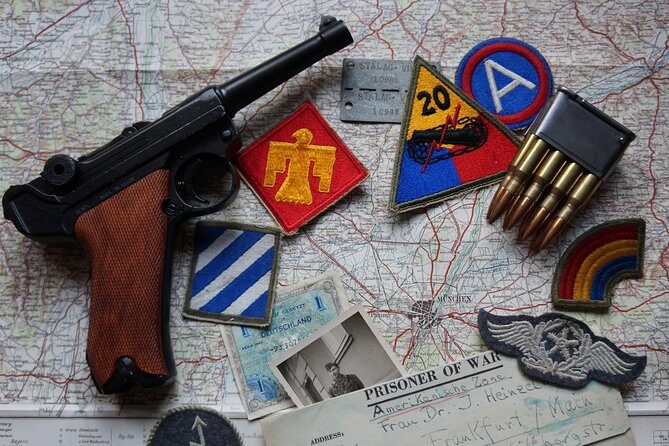
One of the most memorable parts for many people is the beer hall connection. The tour generally stops for a break in a beer hall associated with this history, and one review specifically calls out Hofbräuhaus. You can take the break as beer-and-people-watching time, or you can ask your guide to pivot to a café instead. Refreshments aren’t included, so budget accordingly.
The practical benefit of the stop is that it gives your brain a breather while you’re still “in the story.” These events weren’t just speeches in a vacuum. They were social moments, staged for impact, and designed to spread quickly through public channels.
This is also where the conversation around the Beer Hall Putsch becomes easier to grasp. Instead of hearing about it as distant history, you’re standing in the kind of place where crowds gathered and ideas traveled fast. Your guide’s job is to connect what happened in those settings to how the Nazi movement gained momentum.
It’s also where private pacing helps. If you want to ask why people followed, or how propaganda worked in practice, this tour gives you room to do that.
The SS origins and Kristallnacht: how policy turned into violence
The tour doesn’t treat the Nazi regime as a single villain with one switch that flips to war. It shows how ideology turned into institutions, and institutions turned into coordinated persecution.
You’ll cover the birthplace of the SS and the role of Nazi power before the war became fully global. Your guide then moves into Crystal Night (Kristallnacht) and the origins of the Holocaust. That’s heavy material, and the tour’s value is that it aims for explanation rather than shock.
In a private setting, you can also steer the emotional intensity. If you want a clear, chronological understanding, you can focus on the sequence. If your group needs it broken down differently—more context first, less detail at certain points—your guide has the flexibility to adjust.
One review mentions that a guide answered questions honestly. That’s what you want here. This topic is too complicated for guesswork, and too serious for vague storytelling.
Other walking tours we've reviewed in Munich
Nazi Party Headquarters and the Munich Pact: the politics of false calm
Another major anchor is the Nazi Party Headquarters and the signing of the Munich Pact. Even if you’ve heard the name before, it lands differently when you’re on the ground in the city where these political moves were treated as reality.
This is the part where “how this happened” becomes “how this was sold.” The Munich Pact wasn’t just an agreement; it was part of a political strategy that shaped choices right up to the outbreak of wider war.
Standing near places connected to these decisions helps you connect the dots between big headlines and local power. It also makes the lesson more memorable. You stop thinking of the pact as a line in a timeline and start seeing it as a turning point created by people with power in specific rooms.
If you’re the kind of person who gets annoyed by tours that skip the hard political logic, this section is a big reason to choose a guide here rather than rely on self-guided reading.
Allied bombing and the fall to U.S. forces: when the city changed
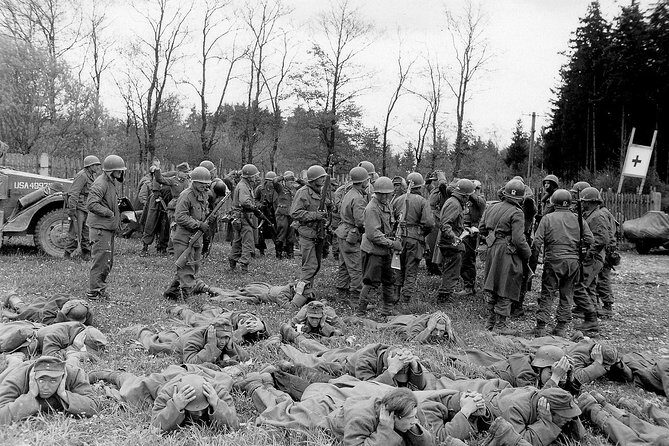
By the time the tour reaches the Allied bombing campaign and how the city fell to U.S. forces in 1945, you’re already carrying the earlier context. That matters. Without it, bombing and defeat can feel like an ending you already know.
With the earlier Nazi rise explained, the wartime destruction fits into a larger cause-and-effect story. Your guide walks you through what the bombing meant for Munich and how the city’s fate shifted as the war turned.
This is also where you’ll appreciate the walking format again. It’s not just dates in your head. It’s the physical city around you, still standing. You’re watching your understanding update while you move.
If your group is sensitive to graphic detail, you can usually set expectations by how you ask questions. Private tours mean you can keep it focused on political and human-scale context rather than anything too explicit.
Guide style: what you’re really paying for
The price is $423.44 per group, up to 6 people. That can sound steep until you compare it to the value of a private professional guide for roughly 3.5–4.5 hours. If you fill the group, you’re looking at about $70–$75 per person—often cheaper than a lot of “big-ticket” day trips when you factor in that you’re getting custom attention.
In the reviews, guides like Taff and Kevin are repeatedly praised for being on time, friendly, and prepared with images. One review even notes that the guide brought props and helped make details easy to understand. Another highlights how a guide tailored the tour when time got limited, including in snow and freezing weather.
That adaptability matters more than people expect. A tour that sticks rigidly to a plan can become frustrating when weather, energy levels, or family schedules change. A guide who can shift the route while preserving substance is a quality indicator.
Also, if you’re bringing a kid, there’s at least one mention of an 11-year-old (and teenagers) staying engaged. That tells me the guides aren’t just reciting facts—they’re shaping the story into something people can follow.
Timing and weather: a practical heads-up
The tour runs about 3 hours 30 minutes to 4 hours 30 minutes. It operates in all weather, so you need to dress for real conditions. That doesn’t mean it becomes unpleasant—it means your guide isn’t canceling because the sky is doing its usual Munich routine.
Wear suitable footwear. There’s moderate walking, and you’ll be on sidewalks and city paths for the full experience.
Also, you’ll generally take a break at a beer hall tied to the history. Refreshments aren’t included, so plan for your own drinks or snacks.
If you’d rather use the break for something quieter, tell the guide. One review notes that the tour can be adapted if needed, including shortening the route when cold weather makes it smarter.
Meeting points that won’t waste your morning
Start: Isar Gate, Tal 50, 80331 München.
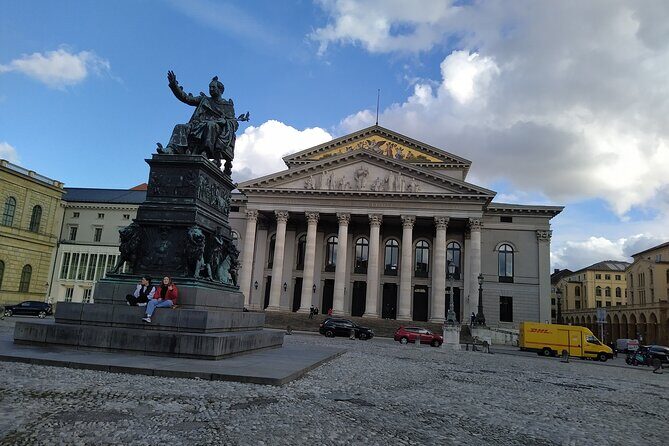
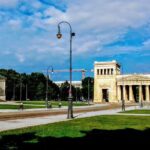
End: Odeonsplatz, Odeonspl. 3, 80539 München (near the Residenz and close to Marienplatz).
The tour is near public transportation, so you should be able to connect without a taxi. There’s also mention that pick up may be either in the main train station (Hauptbahnhof) or the main square (Marienplatz). For a private tour, I’d treat that as a helpful option if you’re coming in from elsewhere and don’t want to figure out the best tram drop-off.
One practical tip: on days with winter weather, use your shoes to win. Ice is not your friend.
Price and value: does $423 make sense here?
For a private walking tour, pricing depends on three things: guide time, group size, and how much “customization” you get.
Here, you’re paying for:
- A professional guide for a multi-hour walk
- Private group attention (up to 6)
- A structured historical route through major WWII and Nazi-era reference points
- Visual support like photos and memorabilia mentioned in the tour experience
If you’re a history fan, this can be a high-value day because it compresses planning effort. You don’t have to stitch together reading, museum hours, and route logic. Your guide does the linking for you while you walk between the key places.
If you’re traveling solo, the price is still fixed per group. You might prefer the private feel over the cost, but it’s one reason the “up to 6” setup matters.
Who this tour is best for
This is a strong choice if you:
- Want a clear, chronological understanding of how Munich fit into the Nazi rise and WWII
- Appreciate a guide who can answer questions and use visuals
- Like walking tours that connect political history to real street-level locations
- Are traveling with teens who can handle serious topics with context
It may be less ideal if you:
- Want a mostly light, sightseeing-focused day
- Have very limited mobility and can’t handle moderate walking
- Prefer a museum-only format with indoor pacing
Should you book Munich in the 3rd Reich and WW2?
I’d book it if your goal is understanding. This tour is built to explain how Munich became a center of Nazi power, how the regime expanded from ideology to institutions and persecution, and how the city experienced wartime destruction and defeat.
Choose it especially if you value a private guide who can keep the story organized without turning it into a dry lecture. The repeated themes in the experience—prepared guides, visual aids, flexibility in cold weather, and the chance to ask questions—make it easier to see why it earns such consistently strong ratings.
If you’re on the fence, think about what you want from Munich. If you only want photos and beer gardens, stick to the lighter routes. If you want the city’s darker chapter put into clear, grounded context, this one is a serious, worthwhile use of your time.
FAQ
How long is the private Munich in the 3rd Reich and WW2 walking tour?
It runs about 3 hours 30 minutes to 4 hours 30 minutes.
What is the price for the tour?
It costs $423.44 per group, up to 6 people.
Is the tour private or shared with other travelers?
It’s private. Only your group participates.
Where does the tour start and end?
It starts at Isar Gate, Tal 50, 80331 München, and ends at Odeonsplatz, Odeonspl. 3, 80539 München.
What language is the tour offered in?
The tour is offered in English.
Does the tour run in bad weather?
Yes. It operates in all weather conditions, so dress appropriately.
How much walking is involved?
There is a moderate amount of walking. It’s a walking tour with no car or bus used.
Is there a break during the tour?
The tour generally stops for a break in a beer hall associated with this history. Refreshments are not included, and you can ask for a café instead.
When will I receive confirmation after booking?
Confirmation is received within 48 hours of booking, subject to availability.
What is the cancellation policy?
You can cancel for free up to 24 hours in advance for a full refund. If you cancel less than 24 hours before the start time, the amount paid is not refunded.