REVIEW · MUNICH
Munich Macabre Group Walking Tour
Book on Viator →Operated by Dark History Tours · Bookable on Viator
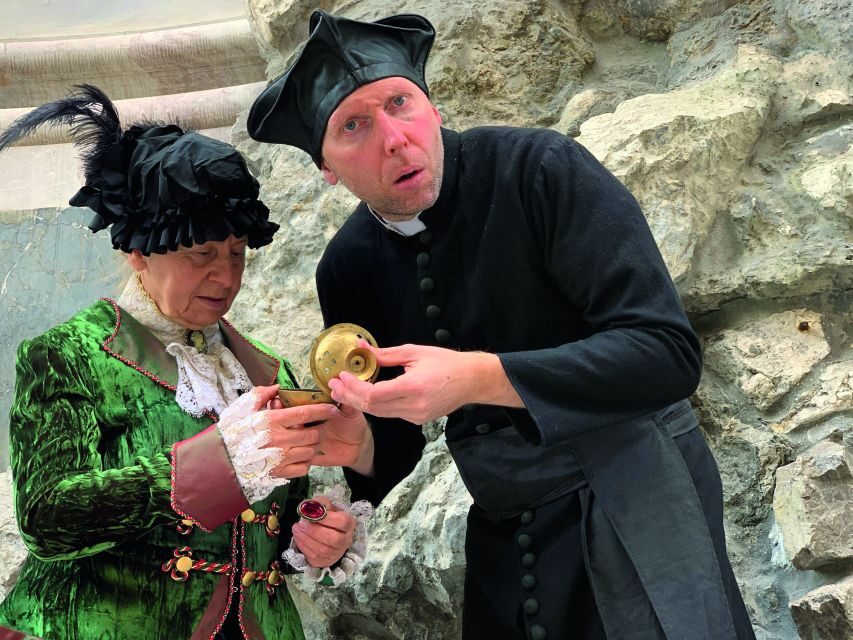
Macabre history in Munich is usually something you read about. Here you handle artifacts and connect the dots on the street. The star is archaeologist and historian Taff Simon, who doesn’t just recite facts—he frames them like a real investigation, with props, coins, and hands-on moments.
I love the interactive archaeology side most: you get to examine original ancient coins, plus replica medieval swords and armor-like pieces. I also love the way everyday places—Marienplatz, St. Peter’s Church, Viktualienmarkt—turn into evidence for bigger stories like the Black Death and the ways blame traveled through medieval Munich.
One possible drawback: this tour leans into grim topics (plague rumors, anti-Jewish accusations, executions, witch trials). If your trip is built around only light sightseeing, you may find the subject matter a bit heavy.
In This Review
- Key highlights you’ll remember
- Hands-on Munich with Taff Simon’s forensic storytelling
- Price and value for a 2.5-hour English tour with medieval beer
- Stop 1: Marienplatz and why the city grew the way it did
- Stop 2: Landschaftstraße and the medieval Jewish quarter’s grim “blame machine”
- Stop 3: St. Peter’s Church and learning to read what gravestones say
- Stop 4: Viktualienmarkt and medieval food rules behind normal pretzels
- Stop 5: Alter Hof, Wittelsbach power, medieval combat, and a 1944 discovery
- Stop 6: Old Town Hall and the witch trial of the Pappenheimers
- Returning to Marienplatz with practical ideas (and a pint mindset)
- Who should book this tour, and who might skip it
- Quick on-the-ground tips before you go
- Should you book the Munich Macabre Group Walking Tour?
- FAQ
- What language is the tour offered in?
- How long is the Munich Macabre group walking tour?
- Where do you meet for the tour?
- What’s included besides the guide?
- Do you get full servings of medieval beer?
- How many people are on the tour?
- Is the content appropriate for young children?
- Can the tour be canceled if weather is bad?
Key highlights you’ll remember
- An archaeologist-led walk with a real forensic approach to small objects and big events
- Hands-on handling of original coins and archaeological finds, plus replica medieval arms
- Medieval beer samples (not full pours) with clear context for why beer mattered
- Munich’s major “old town” sites used as a timeline: Marienplatz to Old Town Hall
- Stories with cause-and-effect links across centuries, not just shock value
Hands-on Munich with Taff Simon’s forensic storytelling
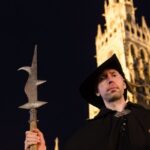
This tour works because it treats history like evidence. You start at Marienplatz with the guide in full period-leaning costume, then move through the old streets using buildings as clues for how Munich formed and how power operated. The tone is more campfire-story than lecture, even when the topics turn dark.
What makes it feel different is the mix: local details, archaeological thinking, and humor that keeps the group from getting stuck in dread. You’re also not wandering alone. The guide leads you step-by-step, so you can focus on the clues instead of maps.
One practical note: the group is kept small, up to 15 people, which makes it easier to ask questions and keep the pace from dragging.
Other Munich city tours we've reviewed in Munich


Price and value for a 2.5-hour English tour with medieval beer
At $42.24 per person for about 2 hours 30 minutes to 2 hours 45 minutes, you’re paying for more than a standard “walk and talk.” The big value is bundled in:
- You get medieval beer samples included, connected to brewing history (and the guide explains why beer was central to daily life).
- You get hands-on access to real ancient items (like coins) and replica medieval arms and armor-style pieces.
- The guide is an archaeologist and historian, not someone reading a script.
If you’re used to city tours that feel like audio guides with a face, this one is closer to a night class where the classroom is Munich’s old core. And because it’s only in English, you can relax into the details without struggling through translations.
Stop 1: Marienplatz and why the city grew the way it did
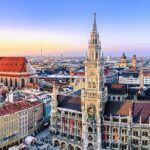
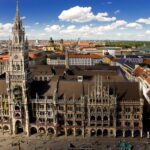
You meet at the Fischbrunnen at Marienplatz 8 around 6:00 pm. The first stage is about getting your mental map in place: Munich’s origins, why this square matters, and what you’re looking at when you see a city that has layered centuries on top of itself.
This matters because the rest of the walk isn’t random. It’s a timeline that uses iconic Munich spots like the first page of a book. Once you understand what the guide means by “city shape” and “why here,” you start noticing how the stories fit.
This stop is short—about 15 minutes—and it sets the tone: you’re going to be moving, listening, and sometimes physically examining objects.
Stop 2: Landschaftstraße and the medieval Jewish quarter’s grim “blame machine”
Landschaftstraße looks ordinary today, but it sits near the area tied to the medieval Jewish quarter. Here the tour shifts from city-building to how communities were judged and punished.
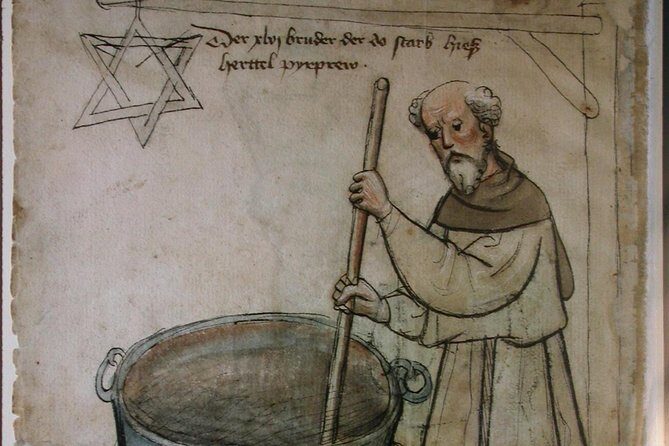
You’ll learn how Jewish residents contributed to Munich’s economic and cultural life—and then how they were targeted through baseless accusations. The guide explains the logic used to blame them for the Black Death, plus claims like blood libel, criminality, and witchcraft-related accusations. The point isn’t just that it happened; it’s how rumors became “evidence.”
There’s also a modern angle: recent archaeology from the U-Bahn project helped clarify what this part of Munich was like in earlier centuries. For me, that’s a key value of doing a walking tour with an archaeologist—the past isn’t only told; it’s updated by what’s been found.
A practical consideration: this section can be emotionally heavy. The tour doesn’t sugarcoat it, and it asks you to sit with how quickly societies can turn against neighbors.
Stop 3: St. Peter’s Church and learning to read what gravestones say
St. Peter’s Church is a strong pivot point. It’s one of the oldest churches in Munich, and the tour uses that age to talk about burial practices across time.
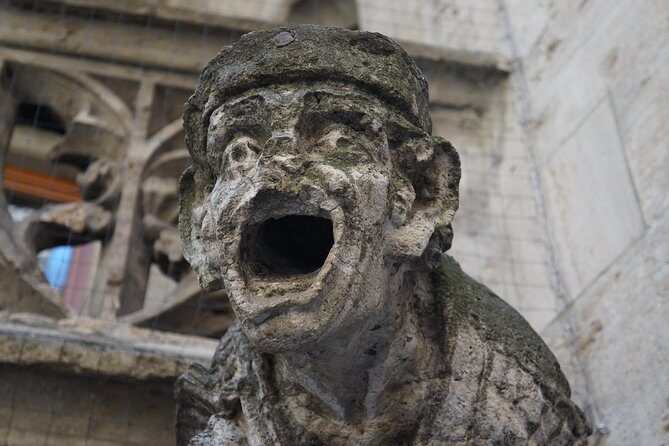
You’ll get a crash course in deciphering symbols on gravestones, and you’ll hear how burial rites evolved—from early Bavarians to later periods where the phrase “rest in peace” didn’t always mean what we’d like to think. The guide talks about class, trades, and guilds as they show up in stonework and memorial details.
Then comes one of the most hands-on moments: you may handle and examine original ancient coins that would have been used for alms. It’s a small object, but it links daily religion, charity, and ritual into one tangible item.
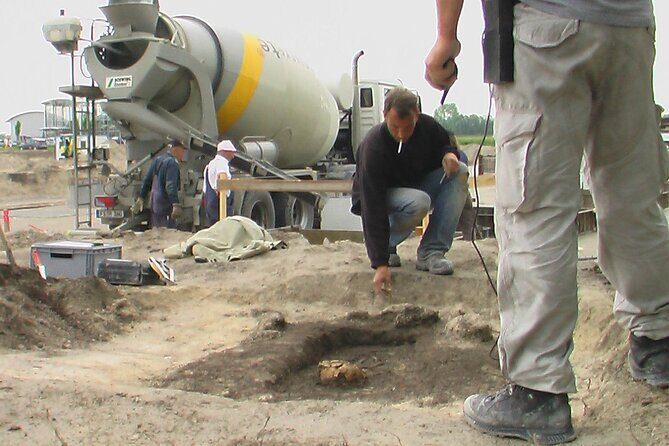
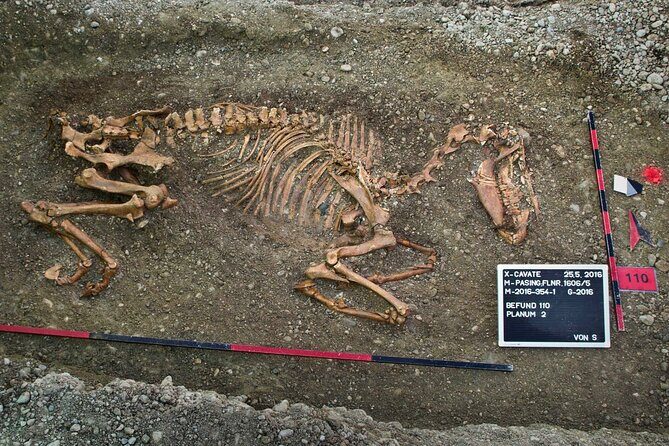
This stop also includes sensitive examples from early medieval burials shown through photos connected to archaeological excavation work (often linked to construction sites). The guide frames it as educational: how people treated the dead helps explain beliefs and social structure. You also hear about grave goods like jewelry and even weaponry in some graves.
If you’re sensitive to death imagery, give yourself permission to step back mentally and focus on the archaeology and symbolism.
Other walking tours we've reviewed in Munich
Stop 4: Viktualienmarkt and medieval food rules behind normal pretzels
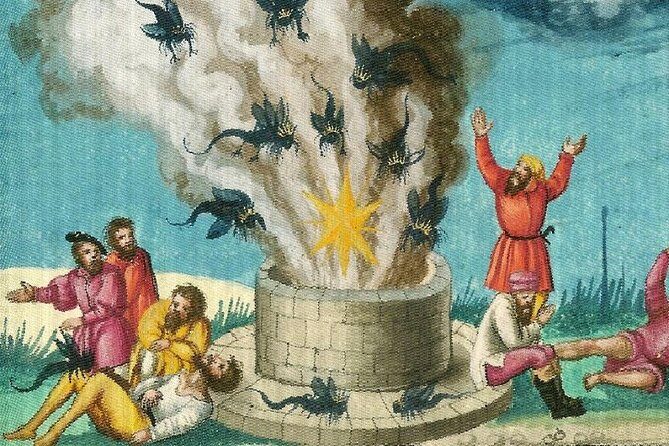
Viktualienmarkt feels like the friendly heart of today’s Munich—cheese, pretzels, and the kind of market atmosphere that makes you hungry on purpose. But the tour flips the script by asking what it would have meant in medieval times.
You’ll learn why being at a market wasn’t always safe for everyone, and why outcasts might not be welcome. The guide then connects food to punishment: what the penalties were for making bad beer and pretzels, and how regulation shaped what people ate and drank.
This is also where you get to try authentic medieval beer samples. The important detail: these are samples, not full pours. Still, the tasting makes the brewing stories land in your senses instead of staying in your head.
If you’ve ever wondered why Munich treats beer like more than a beverage, this stop gives you the medieval context—why brewing, quality, and control mattered to society.
Stop 5: Alter Hof, Wittelsbach power, medieval combat, and a 1944 discovery
Alter Hof was originally a castle for the Wittelsbacher—the Bavarian royal family. The tour uses that power base to talk about a murder that shocked medieval Europe, then follows the ripple effects on later generations in Munich.
After that, the mood turns physical. You learn about aspects of medieval combat through theories associated with Hans Talhoffer, the legendary late medieval sword master. You may even handle replica swords and possibly some armor-like gear.
That hands-on combat piece is more than entertainment. It gives you a way to understand what “knowing your world” meant in medieval life—skill, status, and danger weren’t abstract.
Time permitting, there’s also an archaeological surprise tied to 1944. An Allied bomb unintentionally unearthed seriously ancient artifacts, and the guide uses that find to show how even dramatic events can expose older layers of daily life. You might get to handle and compare different types of ancient pottery and other artifacts.
One drawback here can be timing. If the day runs tight or the group moves quickly through earlier stops, you may lose some of the optional archaeology at Alter Hof. Still, the overall themes stay intact.
Stop 6: Old Town Hall and the witch trial of the Pappenheimers
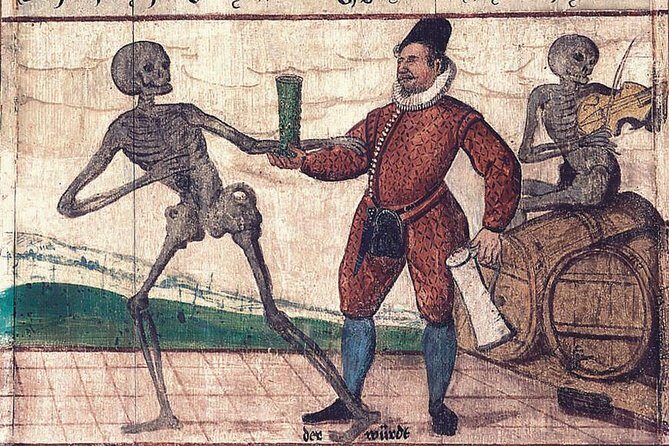
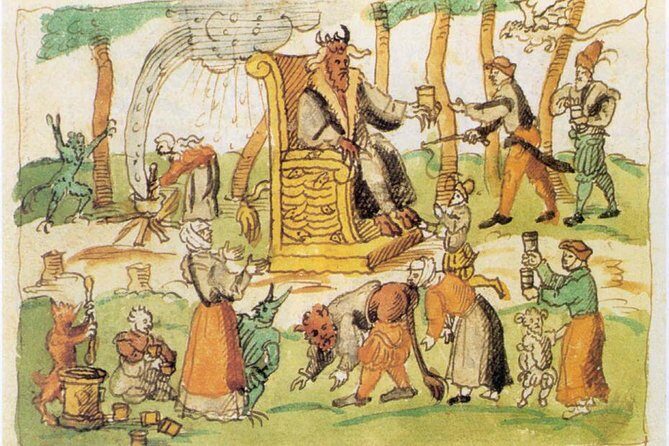
This is the sharpest “dark chapter” stop: the Old Town Hall is tied to one of the most vicious witch trials in German history. You’ll hear the background, the charges, and how methods used to gather “evidence” trapped families that had no real path out.
The guide tells the story of the Pappenheimers and explains how far-reaching consequences hit long after the trial—connections even reaching to a town in colonial Massachusetts. It’s a good reminder that fear doesn’t stay local. Ideas travel.
This stop is also where the tour’s balance matters. It doesn’t frame it as simple monster-story. It frames it as a system: social pressure, legal procedures, and rumor turned into momentum.
If you’re on the fence about whether “macabre” history is your thing, this stop is the clearest sign of the tour’s style. It’s not just spooky. It’s historical cause-and-effect, with human harm at the center.
Returning to Marienplatz with practical ideas (and a pint mindset)
You end back at Marienplatz, near where you began. The wrap-up is short—about 5 minutes—but it’s useful. You’ll get recommendations for further reading and suggestions for places to eat and drink nearby.
The best part of ending where you started is that you’re instantly re-anchored. After 2.5 hours of dense stories, you don’t have to do mental geometry to find your next step.
Also, because you’ve moved through Munich’s old core in a purposeful loop, the city looks different afterward. You start seeing streets and buildings as part of a timeline, not just scenery.
Who should book this tour, and who might skip it
I think you should book if you like history that feels hands-on and street-level, not dusty and distant. It’s ideal for people who enjoy archaeology, symbols, and objects, and who want beer history tied to everyday reality.
It also works well for mixed-age groups. The tour explicitly notes that it can be done with most travelers, and it’s been a hit with teens and families. That said, some content may not suit younger kids, and you may want to consider the tour’s darker moments when deciding.
Skip (or think twice) if you want a light, purely sightseeing night. The tour includes gruesome and sensitive subjects, and the provider even notes it’s not recommended for people with an over vivid imagination.
Finally, wear good footwear. There are some uneven surfaces, and you’ll be outside walking and standing for long stretches. If you think you’ll need seating, it may not be available at every stop, so plan to speak up when booking.
Quick on-the-ground tips before you go
- Bring comfortable shoes for uneven old-town surfaces.
- Expect a 6:00 pm start and a finish back at Marienplatz.
- Dress for the weather. The tour is weather-dependent and route changes can happen if needed, with the guide keeping the historical themes aligned.
- If you want to ask questions, this is a good tour for it. The format leaves room for interaction rather than one-way lecturing.
If English-only tours are your thing, you’re in luck. This one is offered only in English.
Should you book the Munich Macabre Group Walking Tour?
Yes, if you want Munich with texture and evidence. This is one of those tours where the price makes sense because you get actual handling of objects, not just photos and captions. The guide, Taff Simon, brings stories to life with a mix of archaeology, street-level history, and humor that helps the darker material stay understandable.
You might skip it if you’re after upbeat sightseeing only, or if sensitive topics would ruin your evening. Otherwise, this is a memorable way to learn why Munich looks the way it does—while also facing the parts of the past that cities often hide.
FAQ
What language is the tour offered in?
The tour is only offered in English.
How long is the Munich Macabre group walking tour?
The duration is about 2 hours 30 minutes to 2 hours 45 minutes.
Where do you meet for the tour?
You meet at the Fischbrunnen, Marienplatz 8, 80331 München, Germany, and the tour ends back at the meeting point.
What’s included besides the guide?
The tour includes alcoholic beverage samples, specifically medieval beer samples, and the chance to handle original ancient artefacts plus replica medieval arms and armour.
Do you get full servings of medieval beer?
No. The tour offers samples only, not full ones.
How many people are on the tour?
The tour has a maximum of 15 travelers.
Is the content appropriate for young children?
Some content is not really suitable for particularly young children. The provider says you can bring them and they will try to temper some of the more descriptive elements.
Can the tour be canceled if weather is bad?
Yes. The tour requires good weather, and if it’s canceled due to poor weather you’ll be offered a different date or a full refund.