REVIEW · MUNICH
Munich: Night Watchman Tour in English
Book on GetYourGuide →Operated by Weis(s)er Stadtvogel GmbH · Bookable on GetYourGuide
A lantern in the dark makes a city feel small.
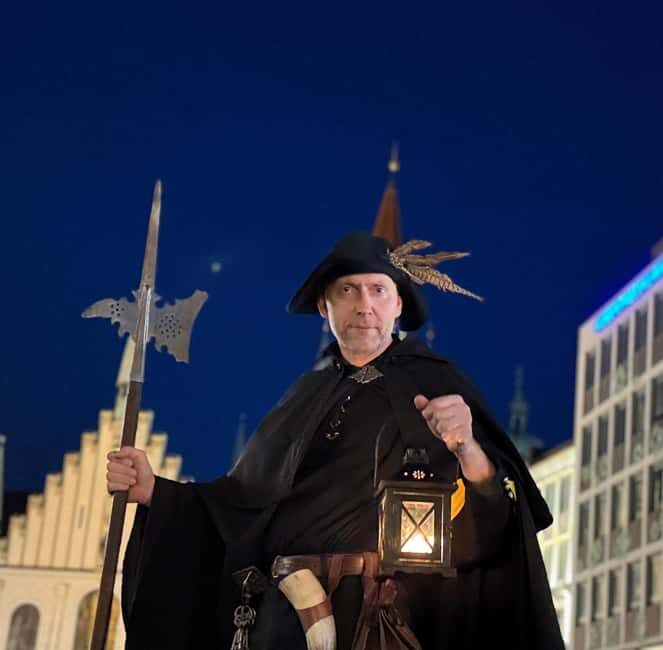
That’s the trick of this Munich night watchman walk: you follow a guide in medieval costume through the old center as stories turn the streets into 800-year-old living history. The guide’s lantern and theatrical storytelling are the main event, and they do a great job of making everyday medieval life make sense.
I also like the practical route and the way the tour points out small streets and sights that many people miss on their own. You get a focused 1.5 hours with just enough walking to see the atmosphere without feeling like you’re on a long trek.
One thing to consider: it’s cold at night, and the tour is outdoors. If you’re not into chilly cobblestones and short, story-heavy stops, plan to bundle up.
In This Review
- Key highlights you’ll actually notice
- Meeting the Night Watchman at Marienplatz’s Mary’s Column
- How Medieval Munich Worked: Walls, Closed Gates, and the Watchman’s Job
- The Walking Route: Marienplatz to Viktualienmarkt and the Frauenkirche Area
- What Your Lantern-Led Guide Actually Talks About
- Little Alleys and Forgotten Corners: Why This Tour Works Better at Night
- Humor, Showmanship, and the Story-to-Place Connection
- Price and Value: Why $22 for 1.5 Hours Can Be a Smart Buy
- Who Should Book This Night Watchman Tour (and Who Might Skip It)
- Should You Book the Munich Night Watchman Tour?
- FAQ
- How long is the Munich night watchman tour?
- Where do I meet the tour guide?
- Is the tour offered in English?
- What is included in the ticket price?
- How much does it cost?
- Is the tour wheelchair accessible?
- Are there different starting times?
- Can I cancel for a full refund?
- Can I reserve now and pay later?
Key highlights you’ll actually notice
- Meet right at Mary’s Column in Marienplatz, the easiest landmark in central Munich to find at night
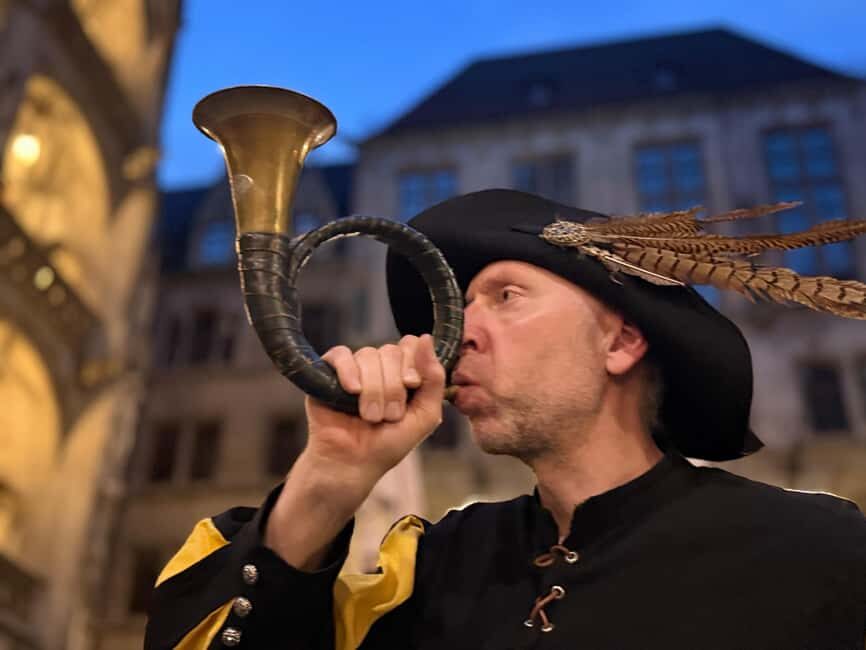
- A guide in medieval clothes with a lantern, so the role-playing isn’t just props
- Humor plus history, with guides like Monique, Hans, and Heinz bringing facts to life
- Tight medieval core route, typically covering Marienplatz toward Viktualienmarkt and the Frauenkirche area
- Folktales and legends alongside real context, including kings, saints, monks, and old Munich characters
- Even pacing varies by weather, with at least one guide speeding up when everyone got cold
Meeting the Night Watchman at Marienplatz’s Mary’s Column
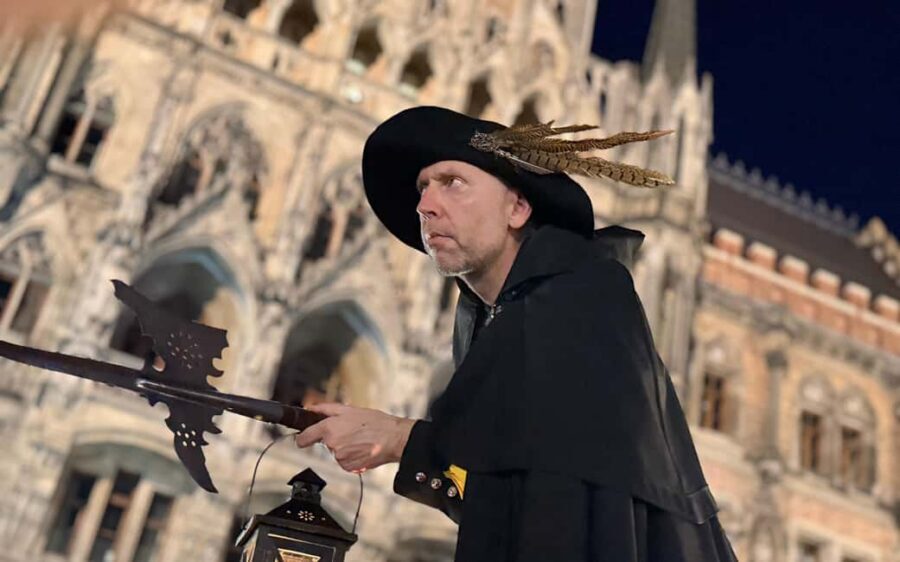
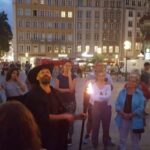
If you want medieval Munich without messing around with directions, start here. The tour meets at Mary’s Column in the exact center of Marienplatz, so you don’t need a map app to get your bearings. It’s also a smart time to anchor yourself: night makes the central squares feel less crowded and more story-friendly.
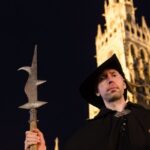
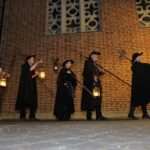
From that first minute, the vibe is set. Your guide shows up dressed for the part, carrying a lantern like the city’s night watch. That lantern matters more than you’d think. Daytime Munich can look like smooth modern streets with a few historic leftovers. At night, the light creates its own stage, and the guide uses that to frame the stories.
I like that the tour is live and in English, so you can actually keep up with the details and jokes. And since it’s about 1.5 hours, it fits nicely on a dinner day when you still want one “only in Munich” activity.
Other Munich city tours we've reviewed in Munich



How Medieval Munich Worked: Walls, Closed Gates, and the Watchman’s Job
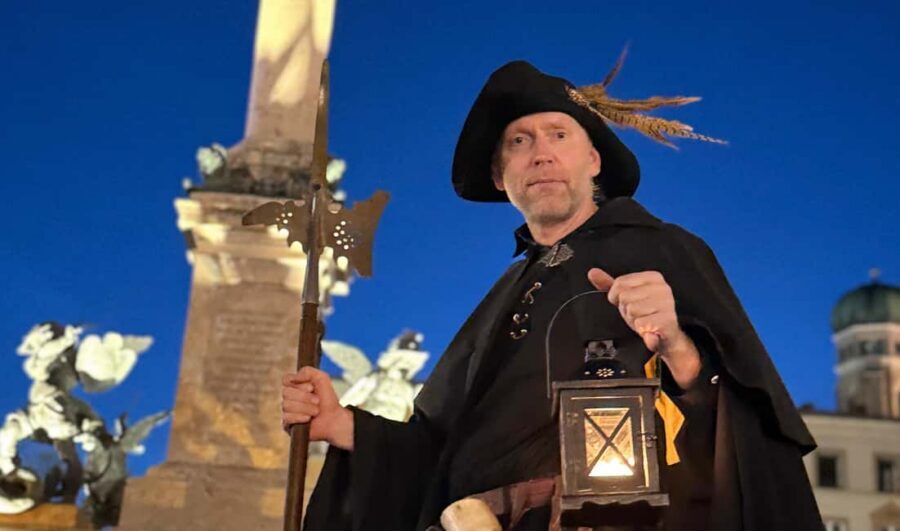
The core idea is simple: in medieval times, Munich wasn’t an all-day open city. You’re told it was a small walled town—about 400 meters in diameter—with gates that closed at dusk. After that, people stayed home while the night watch kept watch for trouble.
This is where the tour gets more interesting than a basic walking history. The stories aren’t just names and dates. They explain the everyday logic of fear, order, and superstition—why people believed what they did, and how city life worked when most residents couldn’t read or write.
You also hear about the “divine order” that guided life, and the idea of the city as the City of the Monks. Even if you’re not a theology person, it helps you understand why certain religious figures and institutions mattered so much in everyday decisions. Medieval cities ran on routines, rules, and stories people repeated until they felt like truth.
And yes, a lantern creates drama. But it’s not just for atmosphere. It also makes the watchman role feel practical—like this person had to spot danger in the dark with limited information.
The Walking Route: Marienplatz to Viktualienmarkt and the Frauenkirche Area
This tour keeps the walking area tight, which I consider a plus. The route typically runs through Munich’s historic center, and the practical sights you’re likely to hit are in the stretch from Marienplatz toward Viktualienmarkt, then into the Frauenkirche area.
Why that matters: you get to focus on the medieval feel instead of spending half your time crossing modern Munich. Viktualienmarkt is a great reference point because it sits right in the middle of old-town life. Even if you’re just passing by, it gives you a sense of how the city’s public spaces stayed active while the rest of the world changed around them.
The Frauenkirche area is also a smart choice. It’s one of the city’s most recognizable landmarks, so it anchors your mental map. If you’re trying to connect the medieval stories to what’s still visible today, that combination works well.
A heads-up on logistics: it’s a night walk, so expect uneven surfaces and cooler air. If you’re sensitive to cold or plan to wear fashion shoes, bring something grippier and wear layers. Several reviews specifically call out how chilly it gets and how guides adjust pacing at the end when people are cold.
What Your Lantern-Led Guide Actually Talks About
The main reason people keep giving this tour high marks is the guide performance. You’ll meet a person acting as a night watchman—medieval clothes, lantern, and storytelling that mixes history with folktales. Names you may hear in other bookings include Monique, Hans, and Heinz (with one review also mentioning guidance by Hannes). Even when the specific guide changes, the style stays consistent: clear storytelling, strong showmanship, and a sense of timing.
The content leans broad for a short tour: kings and saints, monks, local legends, and the kinds of “famous” people and everyday characters that shaped old Munich. One review also highlights how the tour connects history to what you see today, which is exactly the right goal for a night walk.
Also, don’t expect a strict lecture. You’ll get humor and anecdotes threaded through the facts. That’s useful for two reasons:
- It helps you remember the story beats later.
- It turns uncertain medieval life into something you can picture.
One review notes that the pace stayed relaxed and didn’t rush through the center. That’s a big quality marker for me. A short tour can easily feel like a sprint. Here, the best versions give you time to look, pause, and listen.
Little Alleys and Forgotten Corners: Why This Tour Works Better at Night
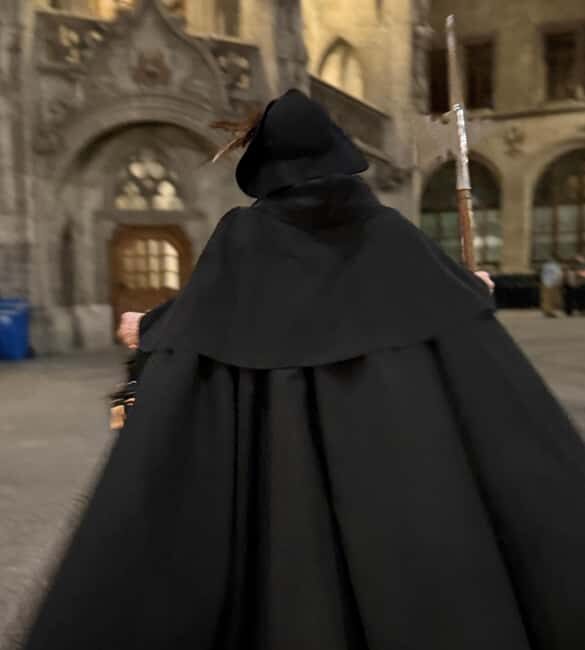
Munich is easy to over-simplify. People see big squares, quick photos, and move on. This is different. The tour focuses on little alleys and spots you’re unlikely to find on your own—places where medieval-era street patterns still feel present.
Night helps, too. When it’s dark, your senses narrow. You notice textures, shadows, and the shape of the street. The guide uses that effect to guide your imagination. The lantern isn’t just light; it’s a cue that tells you where the story action is.
I especially like this approach if you already feel you’ve “seen the main sights.” You don’t need another photo of the obvious landmark. You need a sense of how the old city moved, how people talked, and what the night watch might have seen from one corner to the next.
And it’s not only mood. You also get references that help you build a mental map of medieval life—from the cradle to the grave—so the tour isn’t random folklore. It’s connected folklore.
Other Night Watchman tours we've reviewed in Munich


Humor, Showmanship, and the Story-to-Place Connection
A lot of history tours fail at one thing: they make you listen to a voice. This one aims to make you watch a scene.
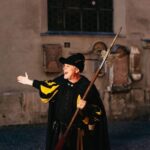
Several reviews praise the guides for being entertaining and funny while still staying informative. There’s a pattern in the feedback: the guide isn’t just reciting history; they’re acting it out, and they’re doing it with clear structure. That matters when you’re moving through streets that don’t naturally scream medieval.
One review even calls out that the guide sped up at the end because everyone was cold. That might sound small, but it’s actually a sign of good tour management. The best guides read the room and adjust without throwing away the story.
If you’re the type who likes a little theater, you’ll probably enjoy this more than a conventional walking tour. If you prefer quiet, museum-style learning, you might still like it—but come with the understanding that this tour uses performance as part of the delivery.
Price and Value: Why $22 for 1.5 Hours Can Be a Smart Buy
Let’s talk value in plain terms. At $22 per person for about 1.5 hours, you’re paying for two things: a live guide and a very specific storytelling format in a central area. Compared with many paid city experiences, this is relatively affordable.
Where the value really shows:
- You don’t need tickets for major attractions.
- You get a guide-led interpretation of the city center at a time when it’s often less busy.
- The focus is on small, hard-to-find details, which is exactly where free self-guided walking can fall flat.
That said, value depends on what you want. If you’re looking for a long sightseeing loop, entry fees, and big monument stops, this won’t replace a full-day plan. But if you want a compact “Munich at night with a medieval twist,” it’s strong.
Also, the reviews suggest you may get everything from small-group experiences to even just a few people. One booking specifically described a tour with only the two of them, which turned it into a more personal guided walk. Even if you don’t get that lucky, the short length keeps it from dragging.
Who Should Book This Night Watchman Tour (and Who Might Skip It)
This is a great pick if you want:
- A short evening activity that fits easily around dinner plans
- A way to understand medieval Munich without a textbook
- Stories delivered with humor and theatrical costume rather than pure lecture
- A route that’s central and walkable, with stops tied to real landmarks
It may be less of a match if:
- You hate walking at night or dislike cold weather (bring layers)
- You only want modern-history facts or technical architecture details
- You’re expecting a long list of major attractions with lots of time inside buildings
One more note: English is the live language on this tour, and the format is clearly designed to keep you following along. If you’re traveling with kids, this can work well because the watchman persona and lantern visuals make stories easier to picture.
Should You Book the Munich Night Watchman Tour?
I’d book it if you want a story-led evening that gives you a fresh angle on Munich’s old center. The combination of Marienplatz meeting point, lantern-led guiding, and medieval tales about daily life turns a simple walk into something memorable.
I’d skip it only if you’re uncomfortable outdoors at night or you prefer strictly quiet, self-paced sightseeing. But if you’re willing to bundle up and let a guide steer your attention, this is an easy-value way to see Munich with different eyes.
If you’re weighing it against other evening plans, this one wins for sheer uniqueness per minute: where else do you get medieval Munich drama, told in English, starting right at Mary’s Column?
FAQ
How long is the Munich night watchman tour?
The tour runs for 1.5 hours.
Where do I meet the tour guide?
You meet at Mary’s Column in the center of Marienplatz.
Is the tour offered in English?
Yes, the live tour guide speaks English.
What is included in the ticket price?
You get a live tour guide for the 1.5-hour experience, with the guide dressed in medieval clothes.
How much does it cost?
The price is listed as $22 per person.
Is the tour wheelchair accessible?
Yes, it is listed as wheelchair accessible.
Are there different starting times?
You’ll need to check availability to see starting times.
Can I cancel for a full refund?
Yes. Cancellation is available up to 24 hours in advance for a full refund.
Can I reserve now and pay later?
Yes, you can reserve your spot and pay later.