REVIEW · NUREMBERG
Nuremberg: Medieval Ages Tour in Spanish
Book on GetYourGuide →Operated by Hallo Nuremberg! · Bookable on GetYourGuide
Nuremberg’s Middle Ages feel close-up here. This Spanish guided walk threads together witch hunts, public punishments, and the city’s clever defenses, all while you move through historic streets and viewpoints. I love that it treats everyday life as the main story, not just big monuments, and I also love how the guides (like Jonathan, Víctor, or Federico) turn hard topics into clear, story-driven lessons you can follow. One drawback: the subject matter is dark (witch trials and executions), so you may want a lighter theme if that isn’t your thing.
You start at the Frauenkirche area in Hauptmarkt and end at the Imperial Castle, so it’s easy to fit into a day. You’re looking at a short, focused experience—3 hours—that gives you context fast, but it’s not a substitute for museum time if you want artifacts and deep indoor exhibits.
Key things that make this tour worth your time
- Witch trials explained in plain language, including how accusations and punishment shaped daily life
- Trödelmarkt Island + Franz Schmidt’s house, where fear and order were enforced in public
- One well-paced route from Frauenkirche to the Imperial Castle, built for walking and photos
- Medieval legends with attitude: devils, flying knights, and even far-out stories like galactic aliens
- City defense tactics, showing Nuremberg didn’t just gossip and punish—it prepared for invaders
- Guides who keep you involved, with the energy to answer questions without rushing
In This Review
- From Frauenkirche to the Imperial Castle: a tight 3-hour walk through Nuremberg
- A good fit
- A not-so-perfect fit
- The Frauenkirche and the Church of Our Lady: starting with a landmark that sets the tone
- Witch hunts and public trails: how Nuremberg handled fear and blame
- Why this section is valuable
- What to watch for in your mindset
- Trödelmarkt Island and Franz Schmidt: seeing the executioner’s world
- A realistic expectation
- Weissgerbergasse and the medieval streetscape: professions and daily routines
- Why streets matter more than you think
- Medieval military tactics and city defense: Nuremberg wasn’t only a courtroom
- The guide matters: what Spanish delivery feels like on this tour
- Practical notes you’ll care about on the day
- Where the meeting point shifts in late 2025 / early 2026
- Wheelchair accessibility
- Is it worth $20? Value for your time and attention
- The trade-off
- Should you book the Nuremberg Medieval Ages Tour in Spanish?
- FAQ
- FAQ
- How long is the Medieval Ages Tour in Spanish in Nuremberg?
- What is the price of the tour?
- Is the tour guided in Spanish?
- Where do I meet the guide?
- How do I find the guide at the meeting point?
- Is there a different meeting point during late 2025 and early 2026?
- What’s included in the tour price?
- What is not included?
- Is the tour wheelchair accessible?
- What should I bring?
- Afterword: one last practical tip
From Frauenkirche to the Imperial Castle: a tight 3-hour walk through Nuremberg

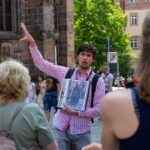
This tour is built like a guided story walk. You meet in front of the main entrance of the Frauenkirche, right in Hauptmarkt, and the guide carries a red-and-white umbrella so you can spot them quickly. Then you shift from one “chapter” to the next, with short stops for photos and guided segments that keep the pace moving.
What I like most about the format is how compact it is. Instead of spreading facts across multiple days, you get a focused timeline of how medieval Nuremberg functioned—what people feared, what officials tried to control, and what everyday routines looked like behind the stone walls. With a 3-hour duration, you can still do other sights afterward without feeling like you’ve been out all day.
The last stretch ends at the Imperial Castle of Nuremberg, which works as a payoff point. You start among church architecture and central squares, then you finish with the big-picture power symbol—castle authority—so the whole experience feels organized.
A good fit
If you like city walks where the guide talks as you move—especially if you enjoy medieval stories with a human angle—you’ll probably have a great time. It’s also a strong option if Spanish is your preferred language and you want something more than a static audio guide.
Other Nuremberg day trips we've reviewed in Nuremberg

A not-so-perfect fit
If you only want bright, sunny medieval scenes and you’re sensitive to topics like witch hunts and public executions, you may feel uncomfortable with the tone. The tour covers those realities directly, even if the presentation stays tour-friendly.
The Frauenkirche and the Church of Our Lady: starting with a landmark that sets the tone
.jpg)
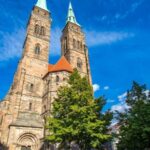
You begin at Frauenkirche, and then you pause at the Church of Our Lady (Frauenkirche / Liebfrauenkirche area) for a short photo stop. It’s a quick moment, but it matters. Starting at a major church gives you an anchor for the whole medieval worldview: religion wasn’t just a background detail—it shaped how people interpreted illness, misfortune, morality, and punishment.
From there, the tour’s story energy kicks in. The guide connects the architecture and the central square feeling to the broader theme: officials and communities weren’t just living “beside” the past; they were making decisions that affected real bodies and real lives.
If you’re the type who likes to understand why a place looks the way it does, this beginning helps you get your bearings fast. You don’t have to be a medieval scholar to follow it.
Witch hunts and public trails: how Nuremberg handled fear and blame
.jpg)
This is the heart of the tour’s “dark medieval” theme. You’ll learn about Nuremberg’s witch hunts, where hundreds of women were accused of witchcraft. The guide frames it as more than courtroom drama. The point is the impact: how fear moved through a community, how accusations spread, and how public trails and punishments reinforced the idea that order had to be restored.
What I appreciate here is that you’re not just hearing spooky history. You’re learning how institutions worked. The tour treats witch trials as part of how a medieval city managed chaos—social conflict, illness anxiety, and the need for someone to blame. That turns the topic from sensational into understandable.
Why this section is valuable
A lot of historical tours either soften the story or go too technical. Here, the emphasis is on everyday life and how citizens lived under that pressure. You come away with a better sense of what it meant to be normal in a time when rumor and authority could collide.


What to watch for in your mindset
If you want a purely entertainment-driven legend walk, this isn’t that. You’ll likely spend time with uncomfortable material, and the guide doesn’t seem to treat it like a joke. Still, it’s presented in a structured way, so you’re not left lost.
Trödelmarkt Island and Franz Schmidt: seeing the executioner’s world
.jpg)
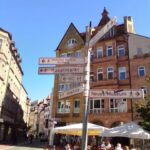
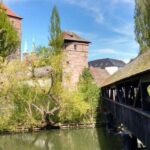
Then the tour shifts from trials to the lived reality of punishment. You head to Trödelmarkt Island, a key stop tied to the city’s notorious executioner, Franz Schmidt, and the guide explains how this role fit into the medieval system.
It’s a haunting idea: an executioner’s home and a place associated with public punishments right there in the urban fabric. Standing in that kind of setting changes how you interpret what you heard about witch hunts. The tour connects fear, authority, and spectacle—showing how punishment wasn’t hidden away. It was part of public life.
The tour also leans into the atmosphere—perfectly preserved cobblestone streets—and you’ll hear stories that make the era feel immediate. The guide’s tales can include devils, knights on flying horses, and even far-out claims like galactic aliens. That sounds goofy on paper, but in context it’s actually useful: these legends reflect what people talked about and what stories circulated when knowledge traveled by word of mouth.
A realistic expectation
This isn’t a museum exhibit. You’re absorbing history and legend while walking. The guide’s job is to connect the dots so you don’t just hear dark facts—you understand how the city’s narrative formed around them.
Weissgerbergasse and the medieval streetscape: professions and daily routines
.jpg)
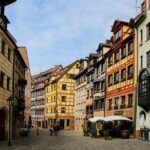
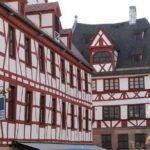
You’ll spend time in Weissgerbergasse, another highlight stop where the tour pauses for a guided segment. Even without a huge indoor “show,” a street like this helps you grasp how medieval work and identity sat right alongside politics and punishment.
This part of the tour is where the everyday-life promise becomes real. The guide aims to show you daily activities, professions, and customs that helped shape modern Nuremberg. You’re not just learning what happened in courts. You’re learning what the city was like for regular people moving through their jobs, errands, and routines.
Why streets matter more than you think
A lot of history tours focus on a single monument and call it done. Here, the value is in how you connect multiple points across the city: church authority, trial culture, punishment spaces, working streets, and then finally the castle. When you stitch them together with walking and stories, the city becomes a system.
Medieval military tactics and city defense: Nuremberg wasn’t only a courtroom
.jpg)
Another theme that makes the tour feel more balanced is the attention to military tactics used by city officials to protect against invaders. This gives you a different angle on power.
Instead of imagining medieval cities as helpless victims of the next army, the tour explains that officials planned, built, and responded to threats. Even if you don’t get a tactical textbook level of detail, the takeaway is strong: Nuremberg had to manage external danger while also handling internal conflict like witch hunts.
It also helps the story not feel one-note. You’re seeing multiple sides of civic life—law and fear, yes, but also preparation and strategy.
The guide matters: what Spanish delivery feels like on this tour
.jpg)
This is a Spanish live guided tour, and that changes how accessible it feels. In a city like Nuremberg, the details can get dense fast, but a good guide keeps it on a human scale.
The reviews you can read about this tour point to strong guide energy: Jonathan is described as passionate and charming, with a way of getting you involved and answering questions without brushing them off. Víctor gets credit for being great. Federico is praised for making the tour entertaining and for offering helpful extra information when people had questions, including pointers about transport and restaurants.
You don’t have to worry about being left behind with the language. The tour is designed for Spanish-speaking visitors, and the pacing and short stops make it easier to stay oriented even if you’re still getting used to a new vocabulary set.
Practical notes you’ll care about on the day
.jpg)
This is a walking tour with a 3-hour duration, so think comfort first. Bring comfortable shoes. The route moves through cobblestone streets and between central landmarks, so you’ll want traction and support.
Also, the tour doesn’t include food and drinks, and it doesn’t include museum tickets. That’s not a dealbreaker, but it does affect planning. If you’re going right after a meal, you’ll likely be fine. If you’re going later, consider grabbing something beforehand so you don’t feel rushed to eat mid-tour.
Where the meeting point shifts in late 2025 / early 2026
Most of the year, you meet in front of the main entrance of the Frauenkirche, in Hauptmarkt. Between November 22, 2025, and January 6, 2026, the meeting point changes: it’s next to the Ship of Fools Fountain at Plobenhofstraße 10, between the Museumsbrücke Bridge and Hauptmarkt. The guide is still identifiable by the red and white umbrella, so even if the location changes, you should be able to find them.
Wheelchair accessibility
The tour is listed as wheelchair accessible, which is a big plus. Still, since it’s a walking city route, it’s smart to bring your expectations to match that: you’ll want to move comfortably through historic streets.
Is it worth $20? Value for your time and attention
.jpg)
For $20 per person over 3 hours, this tour offers a lot of value if your goal is understanding Nuremberg in context. You’re getting several big themes packed into one run: witch hunts and public trials, the executioner Franz Schmidt linked to Trödelmarkt Island, city defense tactics, and the way legends spread through medieval life.
Here’s how the value math works for real people:
- You’re paying for a live guide in Spanish rather than self-guided reading.
- You’re not paying for museum tickets or a meal, so the focus stays on the walking narrative.
- You’re getting a route that ends at the Imperial Castle, which helps you finish with a strong sense of place.
The trade-off
Because it’s a guided walk, you won’t get the kind of object-based detail you’d see inside museums. If you’re the type who loves artifacts and deep archival specifics, you’ll likely want to pair this tour with at least one museum visit afterward. But if your goal is a clean first pass through the city’s medieval character, the price-to-time ratio looks strong.
Should you book the Nuremberg Medieval Ages Tour in Spanish?
.jpg)
Book it if you want a short, story-rich walking tour that explains how Nuremberg worked—socially and politically—and if Spanish is your preferred language. You’ll come away with clearer mental images: why witch accusations could take hold, how punishment was staged, and how civic life also included preparation for invaders.
Don’t book it if you strongly prefer light medieval legends only, or if you’d rather spend your time on museum rooms and artifacts than on street-level storytelling. The tour’s tone is built around dark chapters, and it doesn’t shy away from that.
FAQ
FAQ
How long is the Medieval Ages Tour in Spanish in Nuremberg?
The tour lasts 3 hours.
What is the price of the tour?
The price is $20 per person.
Is the tour guided in Spanish?
Yes, it is a live tour guide in Spanish.
Where do I meet the guide?
You meet in front of the main entrance of the Frauenkirche, in Hauptmarkt.
How do I find the guide at the meeting point?
The guide will be carrying a white and red umbrella.
Is there a different meeting point during late 2025 and early 2026?
Yes. Between November 22, 2025, and January 6, 2026, the meeting point is next to the Ship of Fools Fountain, Plobenhofstraße 10, between the Museumsbrücke Bridge and Hauptmarkt.
What’s included in the tour price?
A Spanish guide is included.
What is not included?
Food and drinks are not included, and museum tickets are not included.
Is the tour wheelchair accessible?
Yes, the tour is listed as wheelchair accessible.
What should I bring?
Wear comfortable shoes.
Afterword: one last practical tip
If you’re going on a warm day, plan to wear breathable clothes and pace yourself during photo stops. This tour keeps moving, so you’ll enjoy it more if you start comfortable and stay that way.