REVIEW · MUNICH
Walking Tour on Resistance to Nazism in Munich
Book on Viator →Operated by Explora Múnich · Bookable on Viator
Munich doesn’t let you look away. This 2.5-hour Resistance to Nazism walking tour walks you through the places where control tightened and where people pushed back anyway. I like that it connects big events to real street corners and buildings you can still see today.
I also love the way the story keeps shifting focus, from royal circles and political parties to militia and the German Church. And if you get a guide like Laura or Maca, you’ll likely get clear explanations delivered with real care (those names show up again and again in guide feedback).
One possible drawback: the topics are heavy, and the pace is steady. Plan for a emotionally serious walk, not a casual sightseeing stroll.
In This Review
- Key highlights you’ll actually feel on this tour
- A Resistance Story That Works Especially Well in Munich’s Streets
- The Route Details: Odeonsplatz at 3:00 pm to Georg-Elser-Platz
- Value Check: What $19.49 Buys You in Real Learning Time
- Hofgarten and Bavarian Power: How “Normal Life” Looked Under Nazis
- Bayerische Staatskanzlei and the Sopade: Political Resistance Beyond the Headlines
- Prinzregentenstraße and the Luftwaffe Command Center: Resistance Inside the System
- Bavarian National Museum and the Valkyrie Operation: When Resistance Turned Tactical
- Haus der Kunst and Nazi Censorship: Degenerate Art, Press Control, and Cultural Power
- Ludwigskirche, the Church, and Law T4: Resistance With Moral Teeth
- Denkstätte Weiße Rose and White Rose: The Most Famous Munich Resistance Group
- Türkenstraße and the Georg Elser Memorial: Paying Attention to Stop a Leader
- Guide Quality Makes a Big Difference Here
- Should You Book This Resistance to Nazism Walking Tour?
- FAQ
- How much does the walking tour cost?
- How long is the Walking Tour on Resistance to Nazism in Munich?
- What time does the tour start?
- Where does the tour start and end?
- Is the ticket mobile or printed?
- Are there admission tickets required at the stops?
- What is the maximum group size?
- Is the tour near public transportation?
- Are service animals allowed?
- What is the cancellation policy?
Key highlights you’ll actually feel on this tour
- Small group size (max 25) keeps questions possible and the pace human.
- All stops are ticket-free listed as Admission Ticket Free, which helps you keep the trip simple.
- Two major forms of resistance get real attention: organized opposition and individual action.
- Munich-specific landmarks like the Denkstätte Weiße Rose and the Georg Elser memorial make history feel local.
- A route that starts at Odeonsplatz and ends at Georg-Elser-Platz saves you from backtracking.
A Resistance Story That Works Especially Well in Munich’s Streets
I like history tours that don’t treat the past like a museum piece. This one is built around the idea that Nazi power didn’t appear out of nowhere—it changed daily life, pressured institutions, and forced people to choose sides.
What makes this experience work is its balance of perspectives. You hear about those who followed the regime, but the main energy goes toward people who resisted in different ways. Some acts were public, some were political, and some were personal. The tour structure nudges you to see resistance as something messy and human, not a single movie-style moment.
Other Munich city tours we've reviewed in Munich



The Route Details: Odeonsplatz at 3:00 pm to Georg-Elser-Platz
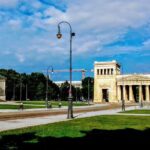
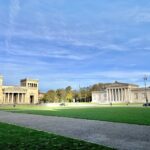
The walk starts at Odeonsplatz (Odeonsplatz, 80333 München) and ends at Georg-Elser-Platz (80799 München-Maxvorstadt). The start time is listed as 3:00 pm, and the whole thing runs about 2 hours 30 minutes.
That end point matters. It means you can often keep exploring after the tour without doubling back. It also helps you mentally frame it as a route, not a loop of the same street views.
Logistics are straightforward:
- It’s near public transportation, so you’re not stuck with a long first leg on foot.
- It’s a mobile ticket experience, so you can keep everything on your phone.
- The group size is capped at 25.
If you’re hoping for a slow, sit-down pace, keep your expectations realistic. It’s designed for walking and stop-and-go discussion, which is great for learning—but bring comfortable shoes.
Value Check: What $19.49 Buys You in Real Learning Time
At $19.49 per person, this is priced like a budget-friendly city history walk. The value comes from two things: time and access.
First, you get about 2.5 hours of guided context rather than just reading plaques. That time matters because Nazi-era Munich is full of powerful sites—and it’s easy to miss the links between them. A guide helps you connect the dots without requiring you to be a walking encyclopedia.
Second, the stops are listed with Admission Ticket Free for each location. So even though you’re paying for the tour, you’re not paying extra at every turn just to look around. (Still, if you find a site is closed at the time you visit, you’ll have to accept that reality—this is a real city, not a controlled set.)
One more practical point: the tour is commonly booked 141 days in advance on average. That suggests demand. If you want a specific date, don’t wait until the last minute.
Hofgarten and Bavarian Power: How “Normal Life” Looked Under Nazis
Stop 1 is Hofgarten, where you’ll talk about how the royal family lived during the Nazi period and what the political situation was at that time.
This stop is useful because it targets a common blind spot. It’s tempting to think Nazi rule was only about street-level terror, propaganda posters, and party meetings. But institutions—including those tied to older structures like royalty—still shaped the atmosphere people experienced. You’ll learn how public life could keep moving while the regime tightened its grip.
You might also enjoy this stop if you like social context. Instead of only focusing on major conspiracies, it asks: what did everyday power actually look like?
One thing to watch: a stop like this can feel a bit abstract if you’re hoping for clear “proof” moments. The value here is the explanation of relationships and incentives, not just objects.
Bayerische Staatskanzlei and the Sopade: Political Resistance Beyond the Headlines
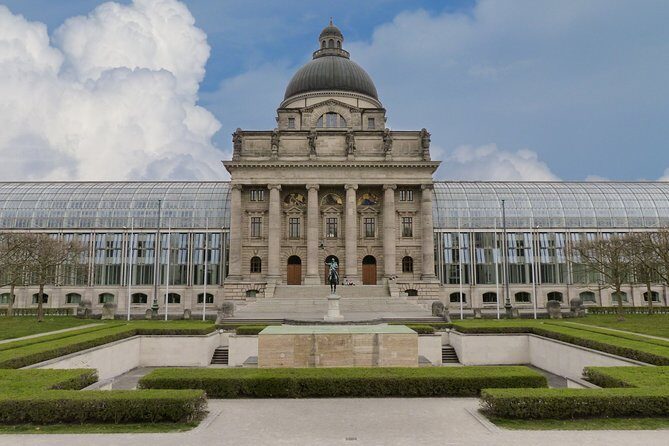
Stop 2 is Bayerische Staatskanzlei. This is where the conversation turns toward political parties and their resistance to the Nazi regime, including discussion of the Sopade.
This part helps you understand that resistance wasn’t only armed or clandestine. There was political pushback too, and political exile and organization played roles in how opposition tried to keep their voices alive.
I like that this stop anchors you in the idea of opposition as an ecosystem: parties, communications, and networks—things that don’t make the news headlines the way dramatic events do, but can influence how people learn, organize, and persist.
Other walking tours we've reviewed in Munich
Prinzregentenstraße and the Luftwaffe Command Center: Resistance Inside the System
Stop 3 takes you to Prinzregentenstraße, tied to the former Luftwaffe Command Center. Here, you discuss resistance within the militia itself.
This stop tends to hit hard because it complicates the “good guys vs. bad guys” story. When resistance comes from inside military structures, it changes how you understand both complicity and dissent. It also shows how regime loyalty was not unanimous—even in places built for obedience.
If you enjoy strategic history, this is a strong moment. War planning, command culture, and moral choices inside a system all show up here.
Bavarian National Museum and the Valkyrie Operation: When Resistance Turned Tactical
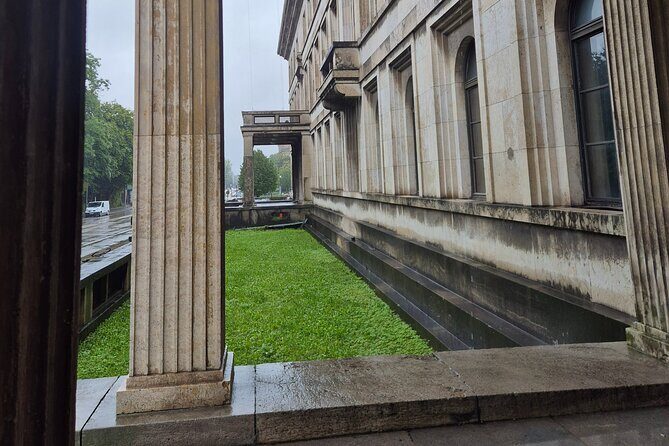
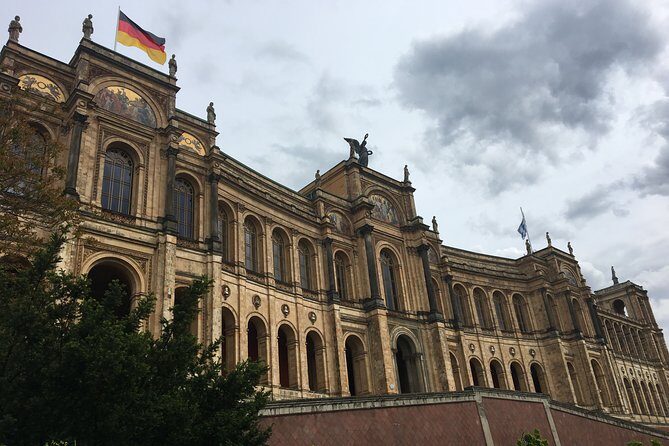
Stop 4 is the Bavarian National Museum, focused on what happened in the Valkyrie Operation.
This is one of those topics where Munich’s physical setting matters. You’re not only hearing about a plot. You’re standing in a city connected to the machinery of the time—so the story feels less like a generic German history lesson and more like something rooted in place.
What I like about this stop is the way it bridges resistance from ideology into action. It raises the questions people usually skip: What did conspirators believe would happen next? How did they think they could interrupt the regime’s control?
Possible consideration: because this is a 2.5-hour tour, you won’t get unlimited time for every detail of every plan. You’ll get the main thread clearly, but if you want every name and date, you may want a follow-up reading session after.
Haus der Kunst and Nazi Censorship: Degenerate Art, Press Control, and Cultural Power
Stop 5 is Haus der Kunst, where you’ll learn about how Nazism tried to censor art. You’ll also hear about the exhibition of Degenerate Art, plus how control of the press worked through propaganda.
This is where the tour becomes very modern in feel. It helps you see that propaganda isn’t only slogans. It’s also institutions shaping what gets shown, what gets funded, and what gets dismissed as unworthy.
Even if you’re not an art person, this stop is worth it. Art policy is power policy. And the tour frames it so you can connect cultural control to wider political control.
One drawback to expect: art and media topics can be more conceptual than memorial stops. If you prefer action-heavy stories, you may find you want to ask your guide one follow-up question to ground the topic in everyday impact.
Ludwigskirche, the Church, and Law T4: Resistance With Moral Teeth
Stop 6 is Ludwigskirche, and the tour explains the relationship between the Church and Nazism, plus Law T4 and how religious communities resisted the regime.
This is serious material. It’s also important, because Law T4 represents how the regime used law and bureaucracy to attack human rights in a systematic way. Bringing the Church into the story shows you that resistance could come through moral authority, public pressure, and refusal—even when that refusal carried risk.
I like that the tour doesn’t treat religious resistance as simple heroics. It frames the relationship as complicated, pressured, and consequential.
Tip for your comfort: bring the mindset that this stop is meant to weigh on you. You’ll get more out of the explanation if you let the discomfort do its job.
Denkstätte Weiße Rose and White Rose: The Most Famous Munich Resistance Group
Stop 7 is the Denkstätte Weiße Rose. This is where you meet The White Rose, the best-known resistance group in Munich.
If you want a clearer “why these people mattered” moment, this is it. White Rose is often referenced in history books, but a local site makes it feel less like a chapter title and more like a choice made in a particular city under particular pressure.
I also like that the tour places them in a chain of resistance rather than treating them as isolated heroes. You can see how resistance movements feed each other: ideas circulate, people take risks, and networks form.
Türkenstraße and the Georg Elser Memorial: Paying Attention to Stop a Leader
Stop 8 is Türkenstraße, focused on the Georg Elser Memorial and the story of being attentive against the life of the Führer himself.
This portion is a reminder that resistance sometimes looks like intense focus and preparation rather than public speeches. It also highlights how surveillance and fear shaped the environment—because if you’re thinking about attacking a leader, you’re already living inside a system designed to prevent that.
This stop often gives visitors a different emotional tone than the White Rose section. You’ll likely feel the tension shift from moral defiance toward direct action.
Guide Quality Makes a Big Difference Here
With a topic like this, the guide matters more than usual. The tour’s reputation for guide performance shows up in names like Laura, Maca, Javier, Jaime, and Julieta.
From what you can expect based on how these guides are described, the best guides do two things well:
- They explain clearly, so you’re not stuck translating history on the fly.
- They answer questions without making you feel like you should already know everything.
If you get one of the guides known for friendly delivery and detailed, easy-to-follow explanations, the tour becomes not only informative but also easier to process emotionally. The difference is huge when you’re learning about hard subjects.
Should You Book This Resistance to Nazism Walking Tour?
I’d book it if you want:
- A structured Munich walk with 2.5 hours of guided context.
- Real stops tied to resistance themes like Sopade, Valkyrie, Degenerate Art, the White Rose, and Georg Elser.
- A small group setting (max 25) where you can ask questions.
I’d skip it or consider it carefully if:
- You need a light, fun evening. This tour is built around dictatorship, persecution, and refusal.
- You dislike walking tours with steady pacing. The format is stop-based, not a long museum sit-down.
If you like history that connects politics, culture, and daily life, this one fits. And starting at Odeonsplatz and ending at Georg-Elser-Platz makes it easy to keep your day flowing afterward.
FAQ
How much does the walking tour cost?
The tour costs $19.49 per person.
How long is the Walking Tour on Resistance to Nazism in Munich?
It lasts about 2 hours 30 minutes.
What time does the tour start?
The start time is 3:00 pm.
Where does the tour start and end?
It starts at Odeonsplatz (Odeonsplatz, 80333 München, Germany) and ends at Georg-Elser-Platz (80799 München-Maxvorstadt, Germany).
Is the ticket mobile or printed?
This experience uses a mobile ticket.
Are there admission tickets required at the stops?
Each listed stop shows Admission Ticket Free, meaning you won’t need to buy paid admission tickets for those stops as part of the tour.
What is the maximum group size?
The tour has a maximum of 25 travelers.
Is the tour near public transportation?
Yes, it is near public transportation.
Are service animals allowed?
Yes, service animals are allowed.
What is the cancellation policy?
You can cancel for a full refund if you cancel up to 24 hours in advance of the experience start time.