REVIEW · MUNICH
Third Reich Tour Munich
Book on Viator →Operated by Go Tours Munich · Bookable on Viator
Munich has a chilling trail. This guided walk ties key sites of the Third Reich into one clear story, from the Isartor area through beer halls, the failed Beer Hall Putsch site, and ending at Königsplatz. You’ll also stop at the Führerbau and a memorial for victims, so the tour doesn’t just follow the spectacle.
What I like most is how the guide turns street corners into a timeline. In the small groups (up to 20), guides like Kaevan and Jamie keep a calm, steady pace and actually answer questions. I also appreciate that the route includes both the locations tied to Nazi power and the places meant for remembrance, including the eternal flame memorial.
One consideration: the subject matter is heavy, and much of the time is spent outdoors between stops. If the weather is cold or wet, you’ll want to dress for real walking rather than sightseeing by postcard.
In This Review
- Key things to know before you go
- Entering Munich’s Third Reich story at Isartor Gate
- Sterneckerbräu: where early Nazi organizing took shape
- Hofbräuhaus and the crowd machine: meetings and speeches
- Feldherrnhalle: the 1923 Beer Hall Putsch and its aftermath
- Platz der Opfer des Nationalsozialismus: remembrance with an eternal flame
- Führerbau near Königsplatz: offices, decisions, and the Munich Agreement
- Königsplatz: when architecture became propaganda
- Price and value: about $34.73 for 2.5 hours of guided focus
- Getting back after the tour ends at Königsplatz
- Who this tour is best for (and who might want something else)
- Should you book this Third Reich tour in Munich?
- FAQ
- How much does the Third Reich tour in Munich cost?
- How long is the tour?
- Where does the tour start?
- Where does the tour end, and how do I get back to the center?
- What sites are included on the route?
- Is there a mobile ticket?
- Are admission tickets included?
- What is the group size limit?
- What is the cancellation policy?
Key things to know before you go
- Small group size (up to 20): easier questions, less rushing, and a more personal feel.
- Real walking route: the tour flows from Isartor to Königsplatz with multiple historic stops.
- Start and end in practical spots: easy transit after the tour at Königsplatz.
- Expert guides with Q&A time: expect thoughtful answers and good pacing.
- Stops include remembrance: you’ll visit a memorial square honoring victims.
- Mobile ticket: access is handled digitally on the day.
Entering Munich’s Third Reich story at Isartor Gate
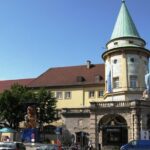
The tour starts at the Isartor Gate area (Tal 50, 80331 München). It’s a simple meet-up point, and that matters because when you’re dealing with sensitive history, you don’t want chaos at the beginning. Once everyone’s together, your guide sets the tone: this is a fact-based route that moves through power, propaganda, and then the human cost.
From the start, you’ll get the sense that Munich’s Nazi-era story isn’t confined to one “big monument.” Instead, it’s spread across normal-looking buildings and squares you might otherwise walk past. That’s the point of the format: you learn how ordinary city space was used to organize crowds and influence people.
If you’re a history buff, you’ll like the structure. If you’re a curious traveler who doesn’t want a textbook, you’ll still benefit because the route keeps things connected.
Other Third Reich & WWII tours we've reviewed in Munich

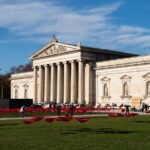

Sterneckerbräu: where early Nazi organizing took shape
Your next stop is Sterneckerbräu, a former beer hall tied to the early Nazi Party. This is where the prototype Nazi Party was founded, and it’s described as an early meeting place for Adolf Hitler and his followers. That “beer hall” detail is crucial because it shows how public life and political organizing overlapped in the early days.
You’ll get context on why this kind of venue mattered. In practical terms, it helped turn gatherings into momentum, and it let leaders speak to people in a familiar setting. The tour keeps the focus on what happened there and how it fit into the rise of the movement.
Time here is short (about 15 minutes), so you won’t get stuck in one place. You also don’t need to be an expert already; the guide’s job is to connect the dots as you move.
Hofbräuhaus and the crowd machine: meetings and speeches
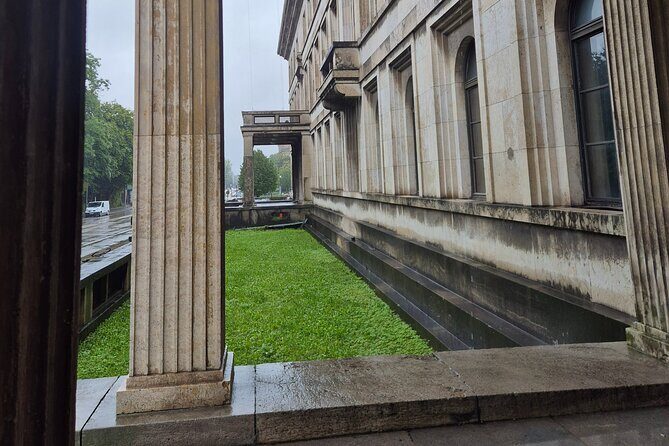
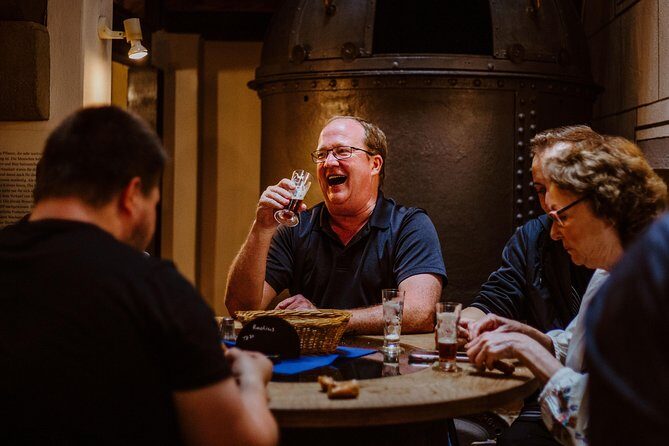
Then you head to the Staatliches Hofbräuhaus, one of Munich’s most famous beer halls. Here, the early Nazi Party meetings happened, including meetings involving Adolf Hitler. As the movement gained momentum, the crowds grew, and Hofbräuhaus becomes part of that shift.
What I appreciate about this stop is that it links location to messaging. The tour explains the significance of the hall in Nazi propaganda efforts, not just as a place where people met. You get a clearer sense of how speeches and public attention were staged.
This stop runs about 25 minutes. That’s enough time to absorb the context without feeling like you’re trapped in a long indoor session. If you’re the type who likes to ask questions, this is often the kind of place where your guide can answer on the spot.
Feldherrnhalle: the 1923 Beer Hall Putsch and its aftermath
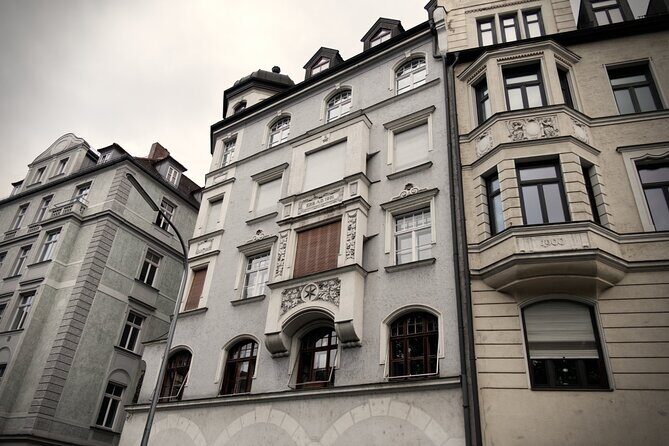
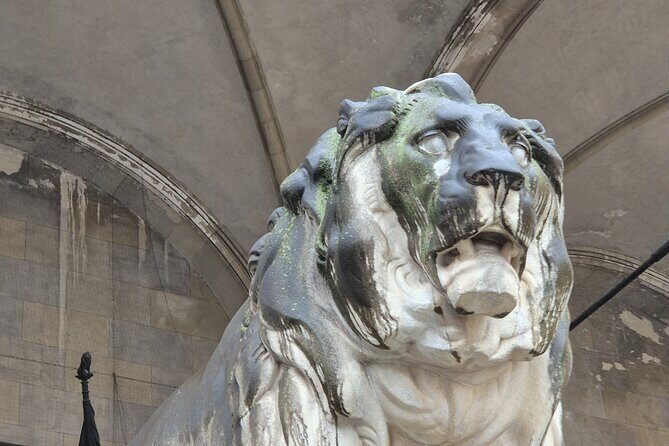
Next comes the Feldherrnhalle, tied to the failed Beer Hall Putsch in 1923. Adolf Hitler and his followers attempted to seize power here, and the tour connects that event to how the monument later became a symbol.
You’ll learn how it was treated as Nazi martyrdom after the clash between Nazi supporters and Bavarian police. This part of the tour doesn’t just list events. It helps you understand the mechanism: violence and failure still got repackaged into a story that could help the movement gain support.
You’ll spend about 25 minutes at this stop. It’s long enough to understand the sequence, but you’re still moving steadily through the route. One practical note: monuments and squares can be windy and cold, so plan for the weather to hit when you stop and the group pauses.
Platz der Opfer des Nationalsozialismus: remembrance with an eternal flame
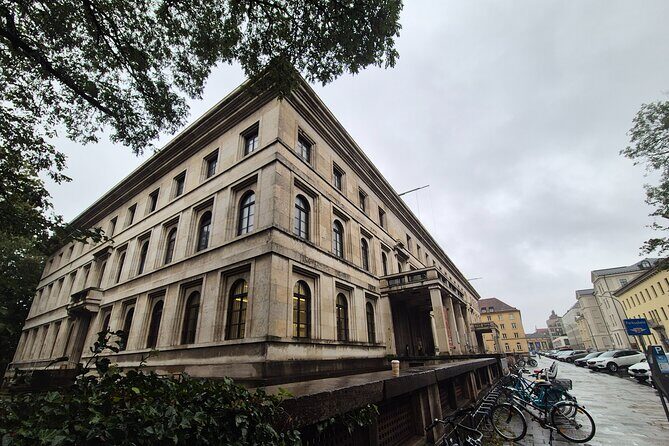
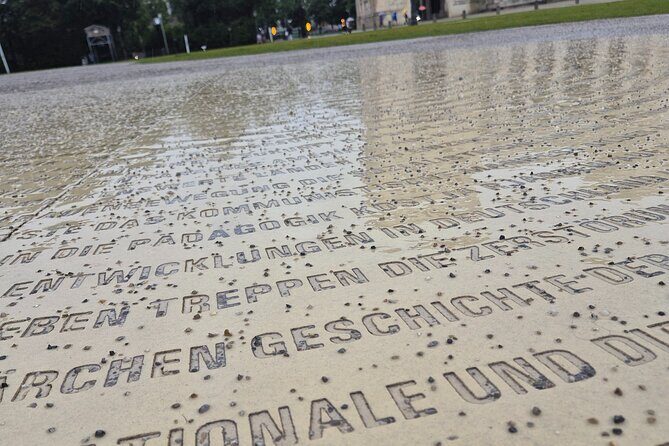
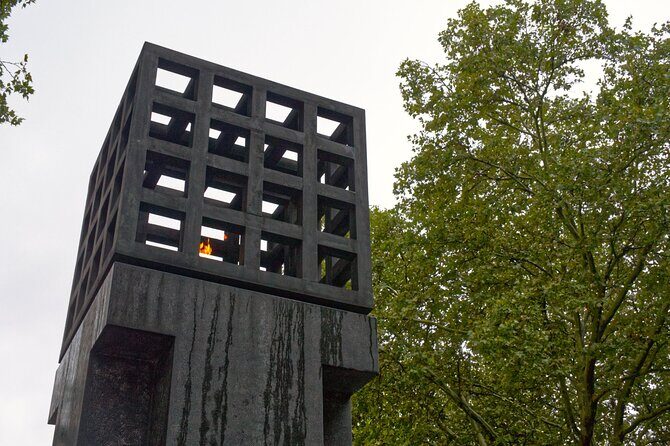
After the power locations, the tour shifts tone at the Platz der Opfer des Nationalsozialismus. This memorial honors those persecuted by the Nazi regime, and it includes a striking eternal flame.
This is one of the most important stops because it prevents the tour from becoming only about buildings and strategy. You’re asked to pay tribute, and the guide frames why it matters that Munich confronts the past instead of smoothing it over.
About 20 minutes here gives you time to read the space and absorb the meaning without feeling rushed. If you care about respectful travel—about how we remember atrocities—this stop is likely to hit harder than the earlier sights. That’s not a bad thing. It’s the point.
Other Munich city tours we've reviewed in Munich

Führerbau near Königsplatz: offices, decisions, and the Munich Agreement
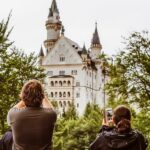
Then it’s on to the Führerbau, Hitler’s official offices in Munich. The guide explains that this is where he met with high-ranking officials and orchestrated key decisions. You also connect this building to the signing of the Munich Agreement in 1938.
This stop (about 20 minutes) is valuable because it changes scale. Early stops feel like “public spaces.” This one feels like “power infrastructure,” where people handled decisions that affected real lives. You learn how the same city could host both propaganda stages and the machinery of decision-making.
As you look at the building today, the tour frames it as a reminder of Munich’s dark past and the role it played in Nazi history. That’s a good way to think about architecture in sensitive contexts. The building isn’t just old—it’s evidence.
Königsplatz: when architecture became propaganda
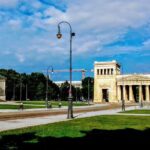
The tour ends with Königsplatz, a grand square the Nazis transformed into a stage for mass rallies and military parades. The guide talks about the architecture being used to reflect Nazi ideals of power and control. This is also where you hear about ceremonies and book-burnings tied to Nazi support.
You’ll walk through the square and absorb how “designed space” can shape behavior. It’s not magic. It’s layout, scale, and audience management. Even if you’ve seen big squares in other European cities, this one has a different meaning because you’re learning how it was used for propaganda.
The time here is about 20 minutes. It’s enough to understand the theme and take photos thoughtfully if you want them. Then the group finishes at Königsplatz, and you’re in a location that’s easy to keep moving from.
Price and value: about $34.73 for 2.5 hours of guided focus
At $34.73 per person, this tour sits in the budget-to-mid range for guided city history. The big value isn’t just the duration (around 2 hours 30 minutes). It’s the fact that you get a structured route through multiple sites that would be harder to connect on your own without turning it into a chaotic self-made slog.
Two added value points:
- Guides are described as experienced and provide accurate commentary.
- Admission tickets are listed as free at the stops.
Also, the tour runs with a maximum of 20 travelers, and that group size is the difference between listening and getting lost. With small groups, your questions don’t get swallowed by the crowd.
One small scheduling reality: it’s commonly booked about 7 days in advance. If you’re traveling in peak season or on a tight schedule, book earlier so you can pick a time that fits your day.
Getting back after the tour ends at Königsplatz
The tour finishes at Königsplatz 1, 80333 München. This is one of those endings that makes logistics easier. From there, returning to the city center is straightforward.
You can take the U2 U-Bahn from Königsplatz Station to Central Station (one stop, about one minute). Buses and trams are also nearby. If you prefer walking, Munich Old City is less than 15 minutes away.
This kind of ending matters because it reduces the stress of planning your next move right after a heavy, intense tour. You can head to lunch or a museum nearby without needing a complicated transit puzzle.
Who this tour is best for (and who might want something else)
This tour fits history buffs, adventure seekers, and curious travelers who want context tied to real places. It also works well if you like a guided route that doesn’t just hit the famous postcard stops.
It’s especially good if you enjoy asking questions. The guide format is set up for dialogue, and the small group size helps. People also tend to value the pace, since you’re not forced to run from place to place while everything is explained at speed.
If you’re looking for a light, carefree “beer hall tour,” this is not that. The memorial stop is part of the experience, and the overall tone is serious.
Should you book this Third Reich tour in Munich?
I think you should book it if you want a focused, walkable route through key Nazi-era sites with a guide who keeps the story connected. The combination of beer hall locations, the Feldherrnhalle event site, and the remembrance memorial makes it more balanced than tours that only chase scandal or only chase architecture.
I’d skip it if you’re trying to avoid uncomfortable topics or you hate outdoor walking in unpredictable weather. Also, if you prefer self-guided exploration with no structured stops, you might find a guided route too “fixed.”
If you go, go with the mindset of respectful learning. This is the kind of tour where the details matter—and the guide’s pace helps you keep up without missing the meaning.
FAQ
How much does the Third Reich tour in Munich cost?
The price is $34.73 per person.
How long is the tour?
It lasts about 2 hours 30 minutes.
Where does the tour start?
You meet at Isar Gate (Tal 50, 80331 München, Germany).
Where does the tour end, and how do I get back to the center?
The tour ends at Königsplatz 1, 80333 München. From Königsplatz Station, take the U2 to Central Station (one stop, about one minute). You can also use nearby buses and trams, or walk to Munich Old City in less than 15 minutes.
What sites are included on the route?
The tour includes Isartor, Sterneckerbräu, Staatliches Hofbräuhaus, Feldherrnhalle, Platz der Opfer des Nationalsozialismus, the Führerbau, and Königsplatz.
Is there a mobile ticket?
Yes. The tour includes a mobile ticket.
Are admission tickets included?
Admission tickets are listed as free at the stops.
What is the group size limit?
The tour has a maximum of 20 travelers.
What is the cancellation policy?
You can cancel for a full refund up to 24 hours in advance of the experience start time. If you cancel less than 24 hours before, you don’t get a refund. Cut-off times are based on local time.