REVIEW · MUNICH
Fall in Love with Munich in a Private Old Town Walking Tour
Book on Viator →Operated by Victoria – Key to Munich · Bookable on Viator
Munich old-timers will tell you: start with the right walk. This private Old Town tour with Victoria – Key to Munich turns the center of the city into a story you can actually follow, from medieval fortifications to the famous squares. I love the private format (up to 6 people), because the pace can stay comfortable even with strollers or grandparents in the group. I also like that entrance fees are included, so you spend your time looking at the sites instead of budgeting every stop.
One thing to consider: the route includes a stop tied to Nazi history, including Adolf Hitler’s first public speech. If that subject hits a little hard for you, go in knowing it’s part of Munich’s modern story, then let the guide handle the context so the tour stays meaningful rather than awkward.
In This Review
- Key takeaways
- A 2-hour private Old Town walk built for real understanding
- Is it worth the money?
- Starting under the Isar Gate: medieval fortifications and Munich origin myths
- Sterneckerbräu: when political history enters the old streets
- Dürnbräugasse: a quick hit of tavern survival
- Hofbräuhaus München: royal brewing past, beer hall present, and the meaning behind the rituals
- If you’re not a beer person
- Pfistermühle: the pretzel story and Munich symbolism
- Alter Hof: Wittelsbach roots, a royal courtyard legend, and Munich’s colors
- Dallmayr Delikatessenhaus: gourmet tradition with a royal lineage
- Schäfflerstraße and the pest story: legends you can actually picture
- Frauenkirche: the devil’s footprint, construction legend, and the wind tale
- Marienplatz: Fischbrunnen, local mini-traditions, and the Glockenspiel
- After the tour: use Marienplatz wisely
- The pacing, storytelling, and visuals that make it feel easy
- What’s included (and what you should plan for)
- Price and value: $157.28 for up to 6 people
- Who should book this Munich Old Town tour
- Should you book this private Old Town walking tour?
- FAQ
- How long is the private Munich Old Town walking tour?
- Is this a private tour, and how many people can be in the group?
- Is the tour offered in English, and do I get a mobile ticket?
- Are entrance fees included during the tour?
- Where do we meet, and where does the tour end?
- Can I cancel for free?
Key takeaways
- True private pacing with Victoria for families and mixed-age groups, not a shove-through crowd
- Entrance fees included, so key stops are not just viewed from outside
- Story-first walking that connects buildings to real events, legends, and local habits
- iPad visuals (maps and images) that help you understand what you’re seeing
- Food-and-beer recommendations for after the tour, so you leave with a plan
A 2-hour private Old Town walk built for real understanding
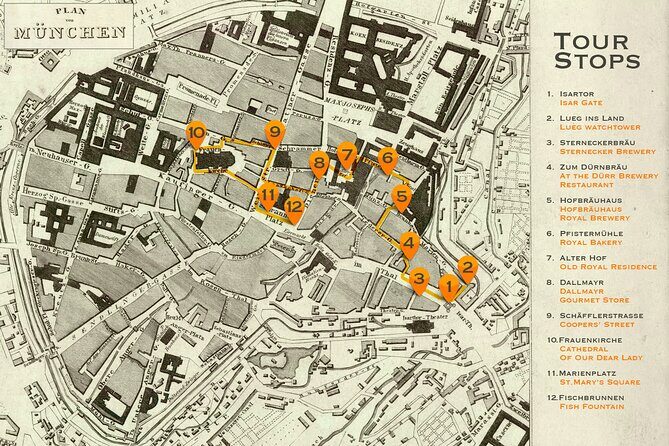
This is the kind of Munich tour that does more than tick off landmarks. It’s designed to help you place everything you’ll see afterward. In about two hours you cover a long stretch of the old core—walls, beer culture, royal connections, major churches, and the showpiece of the city square—without feeling like you’re sprinting between photos.
The private size (up to 6) matters here. Munich’s center is busy, and even when you’re moving at a “comfortable pace,” crowds can still slow you down. With a private group, Victoria can keep the flow steady, pause when questions pop up, and adjust when someone needs a breather mid-walk.
And yes, it’s not just lecture mode. The tour is built around stories you can picture: medieval defenses and gate legends, brewing history and how Munich’s beer culture shaped social life, and the kind of local folklore that makes the city feel personal instead of museum-flat. You’ll get plenty of context for why the buildings look the way they do—and why locals keep retelling certain scenes.
Other Munich city tours we've reviewed in Munich


Is it worth the money?
At $157.28 per group (up to 6), the price works out best when you’re traveling with at least one or two people you’d otherwise spend time coordinating with. That’s because you’re paying for a private guide, not per person in a big group.
Also, entrance fees being included is a real value booster. You’re not stuck outside every site while paying for “views only.” Instead, you’re guided into the parts that matter—like the interiors at major stops—so the tour actually saves you time later.
Starting under the Isar Gate: medieval fortifications and Munich origin myths
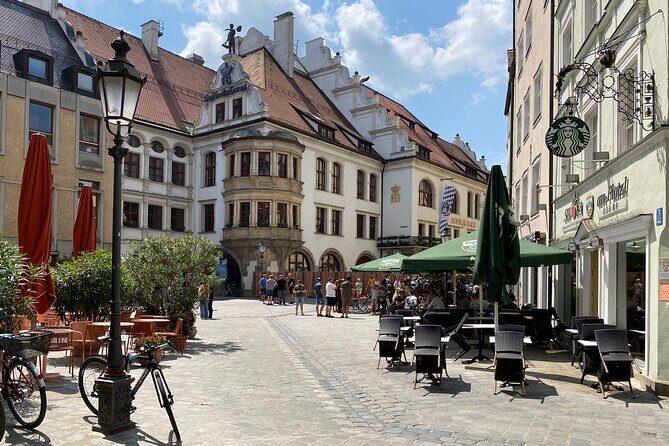
You meet under the central arch of the Isar Gate (Isartor), at Tal 50. This is a strong place to start because it frames Munich’s old town as a defended settlement, not just a pretty city center.
At Isartor you’ll hear how the medieval city fortifications shaped the way Munich grew. You’ll also spot disguised remains of the main medieval city wall—small details that are easy to miss on your own. Then the guide connects it to city foundation legends, plus a couple of entertaining historical angles that show how Munich tells its own origin stories.
Two things I’d highlight about this opening:
- It’s a fast route to context. By the time you reach the beer hall and the big square, the buildings feel less random.
- It sets the tone for how the rest of the walk works: story first, facts second, with visuals used when helpful.
One minor practical note: since you start at the gate area and walk through narrower streets later, wear shoes that handle cobblestones and don’t rely on luck for traction.
Sterneckerbräu: when political history enters the old streets
After Isartor, the tour heads toward Sterneckerbräu, a stop tied to one of the most unsettling chapters in European history. Here you’ll hear about the building connected to Adolf Hitler’s first public speech that helped lead him toward the German Workers’ Party. The guide also explains how the building’s role changed over time as it became a key location linked to the Nazi Party.
This is the one stop where you should mentally prepare for heavy material. The tour doesn’t pretend this history is “just another fact.” Instead, it places it in the city fabric, which is exactly what helps a city like Munich make sense in 2026, not in a postcard fantasy.
If you’re sensitive to this topic, you can still take value from the stop:
- You’ll understand how Munich’s streets tie into broader German history.
- You’ll get a clearer timeline for what you’ll read later in museums.
- You’re not doing it alone; you get guided context so it doesn’t feel like random bleak trivia.
Dürnbräugasse: a quick hit of tavern survival
A short walk brings you into Dürnbräugasse, where you pass the oldest tavern in town. The point here isn’t just “old = interesting.” It’s how a place survives for more than half a millennium while the city around it changes.
This stop is brief, but it’s part of a larger theme: Munich’s identity has always been tied to everyday gathering places. Even when the tour moves on, that idea stays in your head.
Other Old Town walking tours we've reviewed in Munich



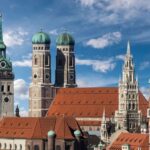
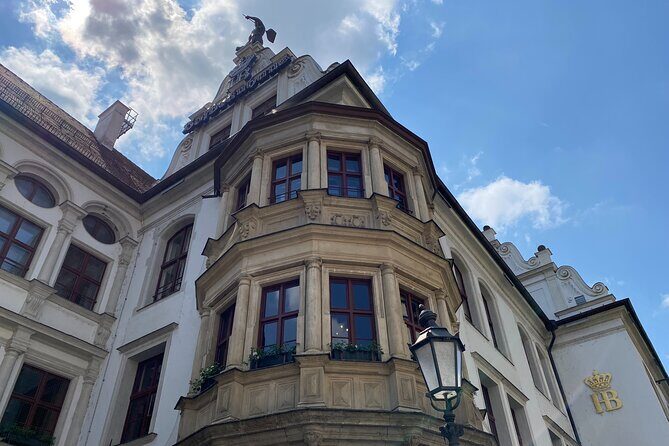
Hofbräuhaus München: royal brewing past, beer hall present, and the meaning behind the rituals
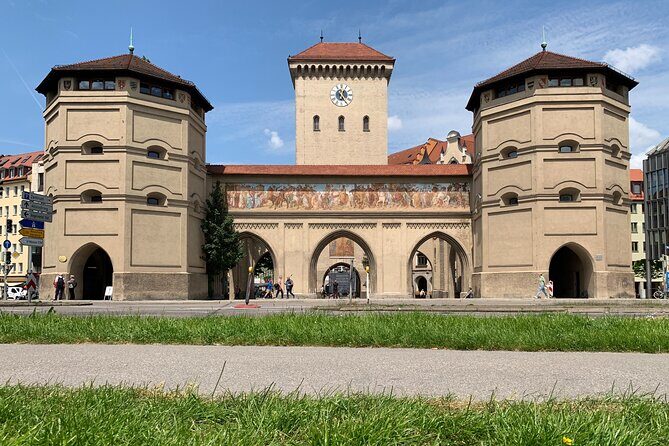
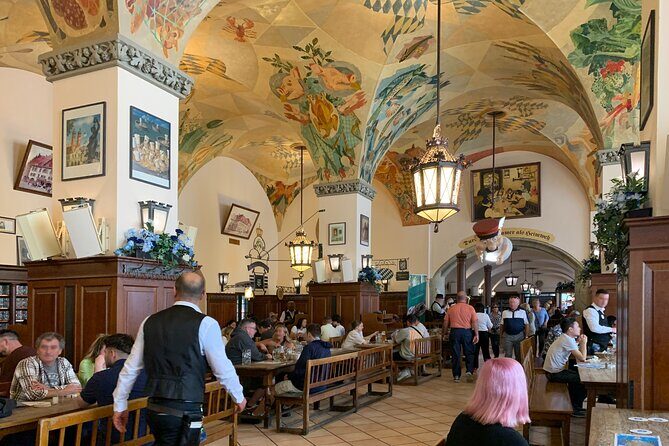
Then comes the big one: Hofbräuhaus München. This isn’t just famous—it’s a symbol of how beer turned into public culture in Munich.
You’ll visit the former royal brewery and then step into the main hall, where you can admire the interiors. The guide points out details you might otherwise miss, including the style of regular tables. You’ll also learn about the beer purity tradition and how it connects to the broader Bavarian brewing culture, including Oktoberfest and even the way beer gardens work in the city’s social life.
A standout moment is the guide’s focus on objects and traditions. You’ll hear about the beer “angel” mentioned with the hall’s lore, and you’ll get explanations tied to practices that locals treat as normal. That helps you understand why people act the way they do in Munich beer spaces: it’s not only about alcohol, it’s about ritual, identity, and community.
If you’re not a beer person
You can still enjoy this stop. The value isn’t only tasting. The guide explains the traditions and history behind why the beer hall looks and feels the way it does, which turns the place into a cultural reading rather than a sales pitch.
Pfistermühle: the pretzel story and Munich symbolism
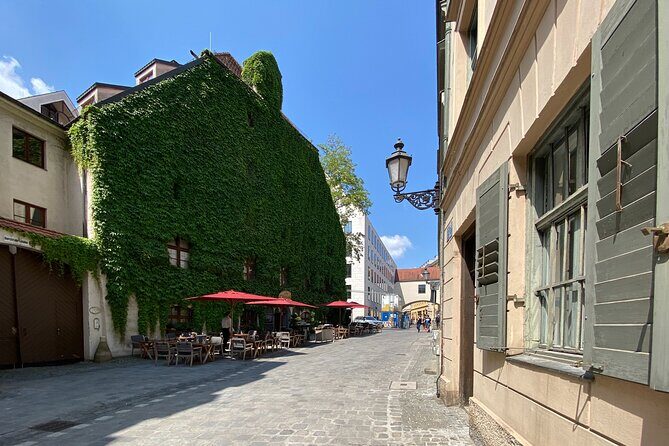
Next up is Restaurant Pfistermühle, linked to the former royal bakery. This is a short stop, but it’s one I like for how it shows Munich’s food history as symbolism.
You’ll hear the legend of the pretzel and how it connects to Munich. It’s the kind of story that makes you notice details when you later see baked goods around town. You’ll start connecting food shapes with local identity, not just eating something “because it’s famous.”
Alter Hof: Wittelsbach roots, a royal courtyard legend, and Munich’s colors
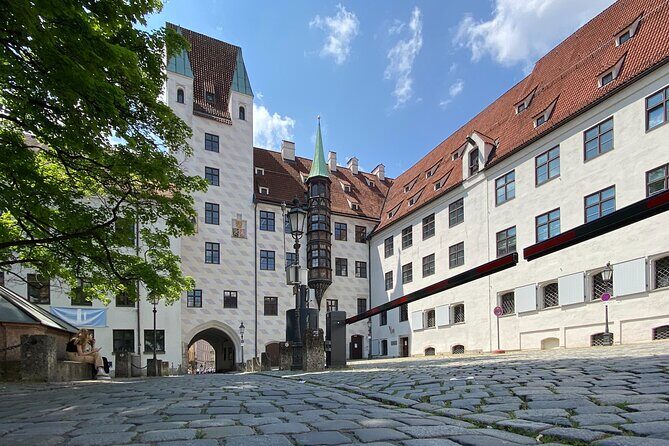
At Alter Hof, you step into the inner courtyard tied to the first residence of the Wittelsbach royal family in Munich. This is where the walk shifts from everyday culture and beer to governance and dynasty.
You’ll hear a legend about the Royal Zoo and its unexpected role connected to Holy Roman Emperor Louis IV. You’ll also learn how Munich’s flag got its colors, tying the city’s present look to royal-era decisions and symbols.
Even if you’re not a “royal history” fan, courtyard spaces like this work well on a walking tour because you can feel the scale. And because the guide connects the space to people and events, it doesn’t feel like you’re looking at an empty stone box.
Dallmayr Delikatessenhaus: gourmet tradition with a royal lineage
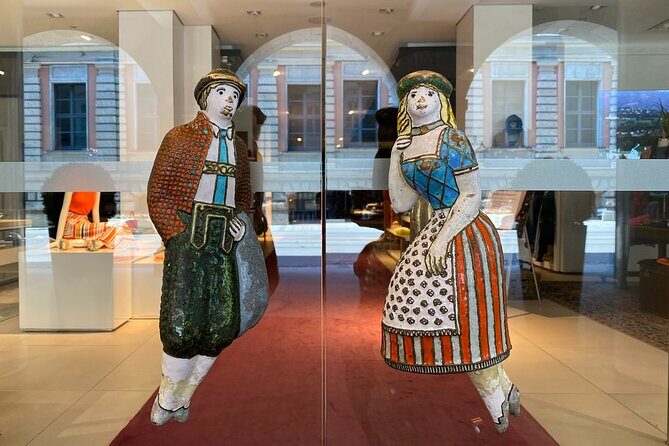
Then you pass Dallmayr Delikatessenhaus, a historical gourmet store with longstanding royal tradition that now runs as one of the major delicatessen companies in Europe.
This stop is short, but it’s a nice reminder that Munich’s story includes shopping culture—especially food and coffee. The guide shares interesting history details and also gives practical insider tips for food lovers and coffee addicts.
If you like to plan your stay around cafés, bakeries, and specialty shops, this stop matters. It’s not just window-shopping; it’s direction for where to spend your next free hour.
Schäfflerstraße and the pest story: legends you can actually picture
Crossing Schäfflerstraße brings you to Coopers’ Street and a Munich legend about a 16th-century pest containment celebration. The story includes a traditional dance performed in Munich’s capital and carried into modern memory.
This kind of folklore is worth it on a walking tour because it gives you something to look for when you later read about festivals or old ceremonies. The dance element adds a physical rhythm to the story, which makes it easier to remember than a timeline alone.
Frauenkirche: the devil’s footprint, construction legend, and the wind tale
Now you reach Frauenkirche, Munich’s cathedral. You’ll hear legends about its construction and how the interiors relate to that story. Then the guide points you toward the Devil’s footprint—an old superstition-style detail that turns the building into a character in the city’s mythology.
You’ll also hear a curious tale about the wind around the cathedral all year, regardless of season. That’s the kind of story that can sound odd until you stand in the space and understand why locals keep repeating it. It makes the cathedral feel less like a static monument and more like a place that behaves like an environment.
The stop is about 20 minutes, which is enough time to take photos without feeling stuck.
Marienplatz: Fischbrunnen, local mini-traditions, and the Glockenspiel
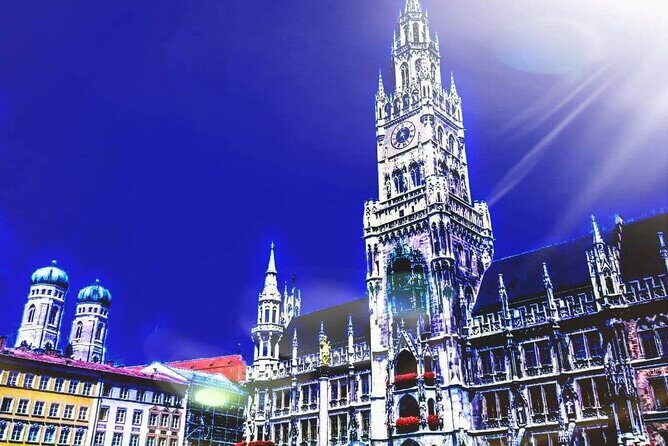
The walk ends at Marienplatz, the central square and heart of old town. This is where Munich’s “big postcard moments” live, and the guide helps you see them with better context than you’d get from wandering alone.
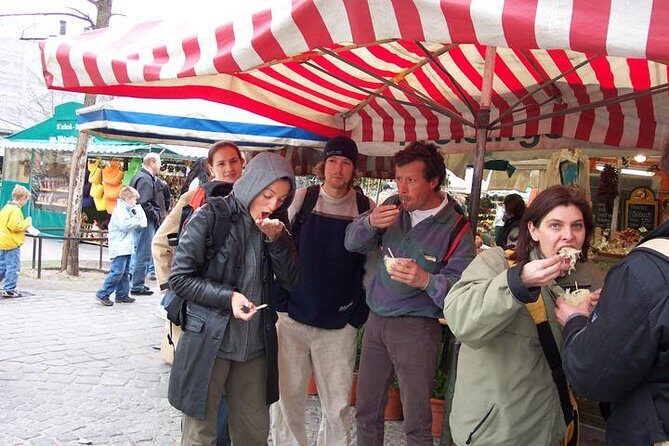
You’ll admire the Fischbrunnen (Fish Fountain), and you’ll learn local traditions connected to it—things like wallet washing and Butchers’ Jump. The guide also shares the story of where Munich white sausage was invented and why that story matters.
Then there’s the Glockenspiel, the mechanical clock that reenacts scenes from city history with tunes of the carillon. You’ll get oriented on what you’re looking at and why it repeats the scenes locals care about.
After the tour: use Marienplatz wisely
Because the tour ends at Marienplatz, you can immediately turn the stories into action. This is where you can head for coffee, look at nearby side streets, and keep moving through town with a stronger sense of what’s nearby and why it’s there.
If you’ve only got one day and want to avoid wasting it on random wandering, this ending point is a big advantage.
The pacing, storytelling, and visuals that make it feel easy
If there’s one reason this tour earns such a consistent reputation, it’s the way Victoria runs it. She keeps things moving without rushing, and she balances humor with facts so you don’t feel trapped in a lecture.
From the way she’s described, you should expect:
- A lively storytelling style that ties details together so each stop connects to the last
- Use of pictures and maps on her iPad to clarify what you’re looking at
- Flexibility when the group includes different needs (like strollers or grandparents)
- Practical care during the walk, including a bathroom stop midway
- A strong willingness to answer questions, not just talk at you
That combination is why this tour works for mixed groups, including families and even teenagers. A good walking guide doesn’t just know the city—they know how to keep people curious at street level.
What’s included (and what you should plan for)
Included:
- A digital map of the itinerary
- A private 2-hour walking tour covering old town highlights and hidden details
- A guide fluent in English
- Insider tips and recommendations for places to eat, shop, and see next
- Entrance tickets at key stops
Not included:
- Food and drinks
So come prepared to treat the tour as your “set the stage” outing, then plan meals afterward. If you’re hoping to eat during the two hours, you might find it’s harder to fit in. The tour’s value comes from walking, seeing, and hearing.
Price and value: $157.28 for up to 6 people
Let’s talk about the money in plain terms.
You pay $157.28 per group for up to 6 people. That means:
- If you’re a solo traveler, it’s not the cheapest option, and you should weigh it against a group tour.
- If you’re traveling with two to four people, the price tends to feel fair because everyone gets private attention and included admissions.
- If you want high-quality direction for food and next-day plans, you’re also paying for that “after the tour” usefulness.
The entrance fees included piece is a meaningful cost reducer. Many city tours say you’ll visit major sites but don’t include the ticketed parts. Here, the plan expects you to go inside key locations rather than only stand outside for a few photos.
For Munich, where old town is compact but sites can require ticketed entry, this layout is a smart way to spend a couple of hours efficiently.
Who should book this Munich Old Town tour
This is a good match if you want:
- A first-time Munich orientation built around stories, not just architecture
- A private format that works for different ages
- Included admissions so you see inside important sites
- Practical advice for where to eat, drink, and what else to do next
It may be less ideal if:
- You dislike guided conversation and prefer total independence
- You want a purely light, entertainment-only tour and would rather avoid Nazi-era context tied to a specific stop
Should you book this private Old Town walking tour?
I’d book it if you’re serious about understanding Munich’s center in a short time. Two hours is enough to connect medieval fortifications, brewing culture, royal links, and major square traditions into one coherent walk—especially with a guide who uses visuals and keeps the pace flexible.
If your travel style is “show me the best shortcuts to understanding,” this tour fits that. And if you’re starting your Munich trip, ending at Marienplatz is a strong springboard for the rest of your day.
FAQ
How long is the private Munich Old Town walking tour?
The tour lasts about 2 hours.
Is this a private tour, and how many people can be in the group?
Yes, it’s private. The group size is up to 6 people.
Is the tour offered in English, and do I get a mobile ticket?
The tour is offered in English, and it uses a mobile ticket.
Are entrance fees included during the tour?
Yes. Entrance tickets are included for the stops where admission applies.
Where do we meet, and where does the tour end?
You meet under the central arch of the Isar Gate at Tal 50, 80331 München, and the tour ends at Marienplatz, 80331 München.
Can I cancel for free?
Yes. You can cancel up to 24 hours in advance for a full refund.
If you tell me your travel month and whether anyone in your group has mobility limits or is traveling with kids, I can help you decide the best time of day to start this walk.