REVIEW · MUNICH
Munich Segway Tour
Book on Viator →Operated by Fat Tire Tours - Berlin · Bookable on Viator
Munich on a Segway is oddly addictive. This 3 to 4 hour ride mixes hands-on practice with guided city storytelling, so you cover real ground without doing the stop-and-start walking shuffle. I like that you start with a solid 30-minute orientation and a small group capped at 8 people, which makes it easier to learn fast and ask questions.
You’ll glide through Munich’s older core and major green spaces, then swing by big-name sights like the Hofgarten area, the English Garden, and the Deutsches Museum area. I also love that the route includes everyday Munich moments, like the Viktualienmarkt market and the Residenz area, not just pretty buildings from the sidewalk.
One thing to consider: the tour is designed for people who can handle hills and basic movement, and it is not recommended if you have knee or balance issues. If you’re a first-time rider, go into it calm and focused, not overconfident.
In This Review
- Key takeaways before you book
- Getting the hang of a Segway fast (and safely)
- From Karlsplatz toward old Munich: how the morning starts
- Hofgarten and the Royal Gardens reset
- Rolling along the Isar and into Munich’s “real life” vibe
- English Garden time and the Deutsches Museum pass-by
- Markets and Residenz area: the city’s daily heartbeat
- Gartnerplatz and a pass by the Jewish Museum
- Price and what you actually get for $90.05
- Who should book this Segway tour (and who should skip it)
- Guides and small-group coaching make or break it
- Should you book the Munich Segway Tour?
- FAQ
- How long is the Munich Segway tour?
- Where does the tour start?
- Do I need prior Segway experience?
- What are the age and weight requirements?
- Is the tour suitable for people with knee or balance problems?
- What if the weather is bad, or I need to cancel?
Key takeaways before you book

- Small group size (up to 8) means more coaching and less crowd chaos
- 30-minute Segway training helps you get comfortable before the longer city glide
- Prime Munich mix of parks and landmarks keeps the ride interesting hour to hour
- Viktualienmarkt and Residenz area stops add real local flavor beyond sightseeing photos
- Wet weather ponchos included so light rain is usually less of a problem
- Professional English-speaking guides bring the history to street level (Karl, Susanna, Rob, Mark, Mike, just to name a few)
Getting the hang of a Segway fast (and safely)
The whole experience starts with you meeting the guide near Karlsplatz 4, in central Munich. From there, you get an orientation session that lasts about 30 minutes, so you learn the basics before you try to “drive” through the city.
This matters more than you might think. A good Segway tour is mostly good teaching, not good marketing. When you have time to practice turning, stopping, and maintaining balance, you spend the rest of the tour looking at Munich instead of thinking about your feet.
You also get the practical gear: a helmet is included, and wet weather ponchos are provided if rain shows up. For many people, that combo is what keeps the mood light even if the day isn’t perfectly sunny.
Other Munich city tours we've reviewed in Munich



From Karlsplatz toward old Munich: how the morning starts
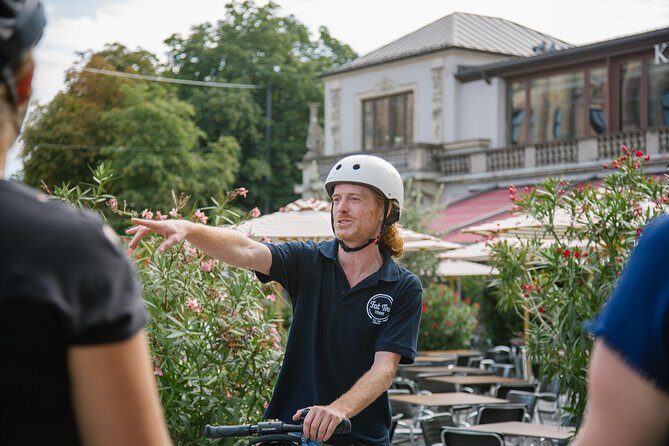
After the training, the tour runs like a guided glide circuit. You begin in the old-city area and then cover a lot quickly, which is the real payoff of a Segway tour in Munich. Instead of picking one neighborhood and treating the rest as a bonus, this format lets you see multiple zones in a half-day window.
One of the smartest parts is pacing. You get time to practice early, then move into “active sightseeing” while the guide talks. That means you’re learning as you go, like a moving walking tour where the head turns are easier because you’re not constantly worrying about where to step next.
Expect the guide to point out landmarks and neighborhoods as you roll past them. Along the way you’ll see well-known institutions like Ludwig-Maximilians-Universität (LMU) and you’ll get glides that connect the older city to Munich’s greener spaces.
Hofgarten and the Royal Gardens reset
A major anchor stop is Hofgarten, the Royal Gardens area. This is where the tour slows into something more scenic, with a calmer, landscaped feel than the streets you’re leaving behind.
Why this stop works: Hofgarten gives you a break from dense city blocks without losing momentum. You also get a natural “photo moment” where your speed feels less frantic, and your brain catches up with what you’ve already seen.
You’ll spend time here while the guide gives context about Munich’s story. Even if you’re not a hardcore history person, the guided framing helps you recognize how the city’s identity shifted from early roots to modern culture.
Rolling along the Isar and into Munich’s “real life” vibe
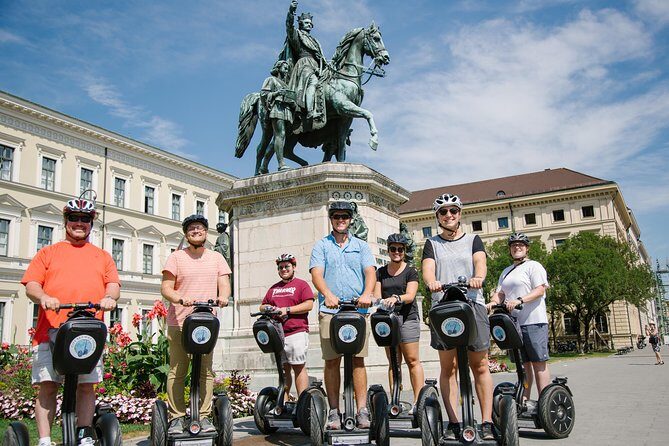
The route also connects to the Isar waterfront area, which is one reason this tour can feel like Munich instead of just a checklist. The Isar gives you that open, local energy—people walking, biking, and hanging out—so the guide’s facts don’t float in a vacuum.
I like this because it turns sightseeing into something you can picture living people doing daily. You’re not just learning names of buildings; you’re seeing where the city breathes.
From there, the tour carries you toward the English Garden zone, so the green-space theme stays consistent instead of feeling like two unrelated rides stitched together.
English Garden time and the Deutsches Museum pass-by
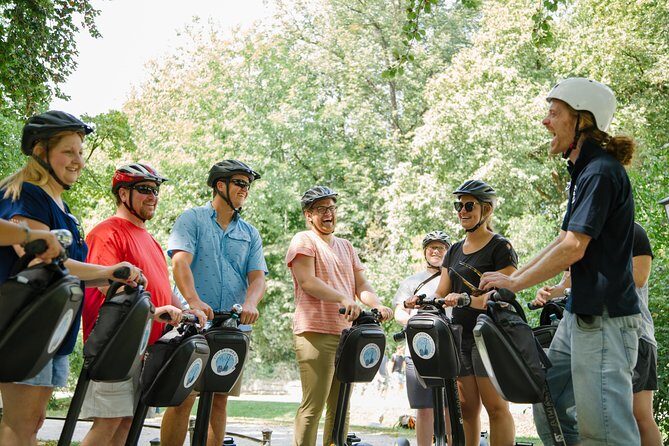
The tour includes passing by and riding near the English Garden. This is a smart choice, because the English Garden area is big enough that it changes the feel of the tour even if you aren’t stopping for a long sit-down. You get that wide-open Munich mood, plus plenty of chances to slow down and take photos.
You’ll also pass the Deutsches Museum area. Even if you don’t enter, seeing it from your path helps you understand the “why” behind the landmark: it’s one of those places that signals Munich’s education-and-innovation reputation.
If you’re someone who likes context, this part tends to deliver. Guides often connect the dots between science, culture, and how Munich became what it is today. (And yes, this is where a good guide really makes a difference. Names you may hear in guide feedback include Rob and Mark, both praised for mixing history with energy.)






Markets and Residenz area: the city’s daily heartbeat
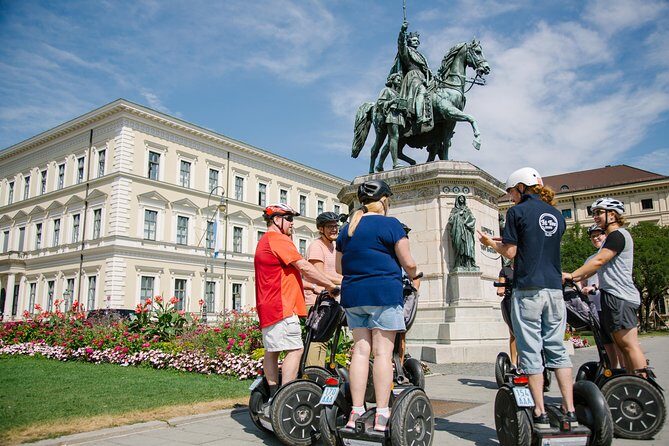
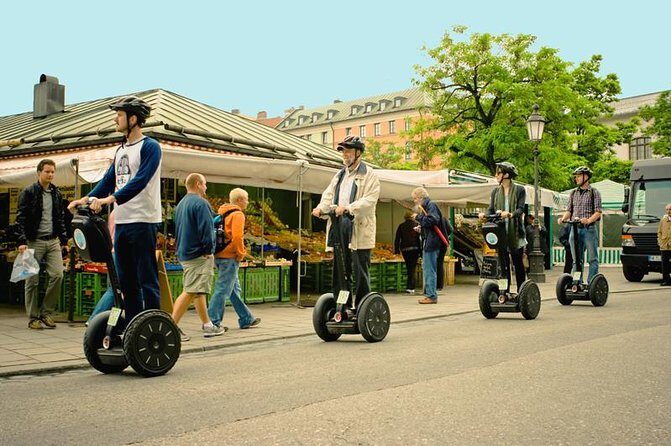
Viktualienmarkt is one of the stops that brings the tour to earth. Markets are where cities feel most normal, and this one is designed to make you look up from the ride for a moment and take in everyday Munich.
You can use this time as a reset: grab water, scan the stalls, and keep your eyes open for what’s local. It also makes the Segway feel practical rather than gimmicky—you’re not just tooling past sights; you’re actually arriving somewhere with texture.
Then the tour moves toward the former Royal Residence at Residenz area. That contrast is excellent: market life on one side, monumental power and court culture on the other. Together, they help you understand Munich’s scale—how the city can be both charmingly human and impressively formal.
Gartnerplatz and a pass by the Jewish Museum
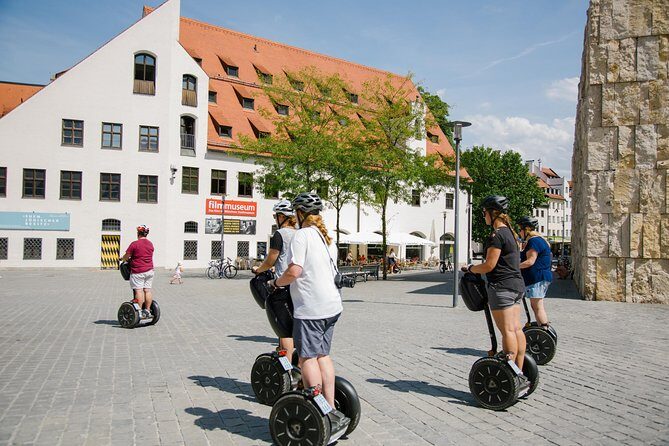
Another neighborhood glide includes Gartnerplatz. This part is valuable for two reasons. First, it’s a chance to see Munich beyond the most tourist-heavy corridors. Second, it adds variety to the feel of the route—different streets, different energy, different photo angles.
The tour also includes a pass by the Jewish Museum. Even though it’s not described as a long internal visit, a pass-by stop is still useful here because it marks an important part of Munich’s modern story. The guide’s commentary is what turns it into more than a sight sign.
Price and what you actually get for $90.05
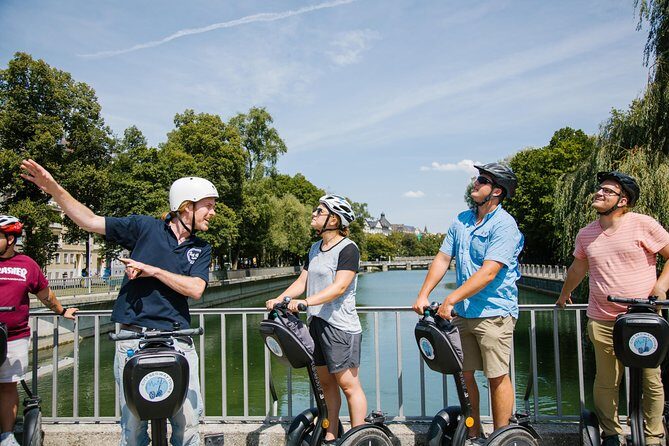
At about $90.05 per person for a 3 to 4 hour small-group tour, the price is easier to judge when you break down what’s included. You’re paying for the Segway itself, a helmet, rain ponchos if needed, and that crucial 30-minute training time.
You’re also paying for time saved. Munich’s main sights are spaced out in a way that makes pure walking feel slow. With the Segway format, you cover more ground while still hearing a guided explanation at each key point.
What isn’t included is food and drink during any snack or lunch break. That’s normal for this type of tour, but it matters if you’re someone who gets hungry mid-ride. Plan to either eat before you meet or budget for whatever the guide’s break schedule ends up meaning for you.
Who should book this Segway tour (and who should skip it)
This tour is best for people who want a mix of movement and narration. If you like parks, scenic routes, and landmark stops all in one half-day, you’ll likely enjoy the flow.
You should also feel comfortable with the physical requirements. Participants must weigh roughly 100 to 250 lbs (45 to 110 kg). Minimum age is 14. You should be able to make motions like climbing and descending stairs without assistance.
If you have knee or balance problems, this is not recommended. And because the tour involves riding between sites that can include uphill and downhill segments, I’d treat first-time Segway riding with respect. Learn carefully during training, and don’t rush the first minutes after you leave the office.
Guides and small-group coaching make or break it
One of the strongest themes in the experience is coaching quality. Multiple guide names show up in feedback—Karl, Susanna, Rob, Mark, Mike—and the common thread is that they don’t just talk. They teach. They also keep things safe and organized when riders are new.
That matters for a few reasons:
- New riders can get confident faster when instruction is clear.
- When the group is small (up to 8), you’re more likely to get personal corrections.
- Better guides tend to connect the sites with stories you can remember later, not just facts you forget after the ride.
There’s also a practical tech note to keep in mind: if you’re relying on an app map to track the exact route, it may not match every turn perfectly. I’d treat navigation tools as helpful context, not a guarantee.
Should you book the Munich Segway Tour?
I’d book this if you want an efficient way to see Munich without sacrificing guided context. The combination of small-group size, 30-minute training, and stops that mix Hofgarten, English Garden area sights, Viktualienmarkt, and the Residenz area makes it a strong “half-day Munich” option.
I wouldn’t book it if you’re dealing with balance or knee limitations, or if you’re worried about hills and stairs. Also, if you hate learning on the spot, go for a walking or bus tour instead.
If your goal is to cover more than one side of Munich in one morning or afternoon—parks plus landmarks plus market energy—this tour is a solid fit.
FAQ
How long is the Munich Segway tour?
The tour runs about 3 to 4 hours.
Where does the tour start?
Meeting point is Karlsplatz 4, 80335 München, Germany. The tour ends back at the meeting point.
Do I need prior Segway experience?
No prior experience is required. You get a Segway orientation session of about 30 minutes to learn the basics before you ride the route.
What are the age and weight requirements?
Minimum age is 14 years. Riders must weigh between about 100 lbs and 250 lbs (approximately 45 kg to 110 kg).
Is the tour suitable for people with knee or balance problems?
It is not recommended for travelers with knee or balance problems.
What if the weather is bad, or I need to cancel?
This experience requires good weather. If it’s canceled due to poor weather, you’ll be offered a different date or a full refund. You can cancel for a full refund up to 24 hours in advance of the experience start time.