REVIEW · MUNICH
Paul’s Private Tour in Munich old City
Book on Viator →Operated by Paul Riedel · Bookable on Viator
Munich starts to make sense quickly with this tour. It’s a private walking route through the center, with a guide who adjusts the pace and focus to your interests while you hit landmark hits like Frauenkirche and Marienplatz. Along the way, you also get built-in “Munich moments,” like a beer garden stop for photos and local food and shop pointers.
I especially like how the tour helps you get your bearings fast without constantly checking a map. I also like the practical side: your guide’s suggestions for shops and restaurants, plus the included book Loving Munich, are meant for using after the walk (not just listening and moving on).
One thing to plan for: this is a packed 2 hours, and some interiors depend on service hours (especially churches). Also, a few stops cover heavy 20th-century history, so if you prefer a lighter day, flag that early so the guide can steer the balance.
In This Review
- Key highlights worth knowing before you go
- A 2-hour Munich Old Town circuit that helps you plan the rest
- Start point to finish: your walk runs from Karlstor to Odeonsplatz
- Step-by-step itinerary: what each stop adds to the Munich story
- Frauenkirche: the centerpiece and the timing question
- Biergarten photo stop: Munich-style atmosphere without the planning work
- Heilig Geist: the market area’s layered past
- St. Peter’s Church: old Munich roots
- Maximillianstrasse: monumental facades and luxury shopping energy
- Marienplatz: how a small market became a town
- Residenz München (outside): the royal power base
- Bayerische Staatsoper: King Ludwig II and Wagner’s shadow
- Odeonsplatz: Bavaria’s architecture and the war consequences
- Funf Hofe (Five Courts): modern luxury in the old center
- Promenadeplatz: a celebrity footnote with practical payoff
- Platzl: a reconstructed medieval pass-through
- Rathaus-Glockenspiel: engineering inside the story
- Neus Rathaus: facade personalities
- Old Town Hall: a dark turn tied to Reichspogromnacht
- Mariensaule: Mary, the Thirty Years War, and Munich’s memory
- Viscardigasse: Hitler’s Putsch and the Nazi terror aftermath
- What makes the guide experience feel worth it
- Food and shop tips you can use immediately
- Practical advice: shoes, interior stops, and how to steer the tour
- Should you book Paul’s Private Tour in Munich’s Old City?
- FAQ
- How long is Paul’s Private Tour in Munich’s old city?
- Is this a private tour?
- Is pickup offered?
- Where does the tour start?
- Where does the tour end?
- What’s included in the price?
- What is not included?
- Are entrance tickets included for the church stops?
- Is a mobile ticket used?
- Are service animals allowed?
Key highlights worth knowing before you go
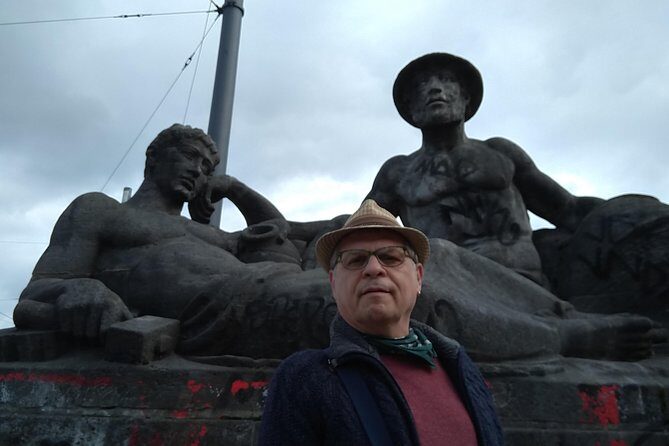
- Private and flexible route: Customize what you emphasize while still covering the core Old Town sights
- Photo-friendly stops: A dedicated beer garden pause and strong viewpoints along the route
- Landmark-to-landmark pacing: You’ll connect major squares and buildings in one logical circuit
- Church interiors are optional: You’ll go inside only when timing allows for service hours
- Serious history mixed in: Stops at places tied to the Nazi era and World War II
- Real-use tips: Restaurant and shop recommendations, plus Loving Munich in your pack
A 2-hour Munich Old Town circuit that helps you plan the rest
At $127.72 per person, this tour isn’t trying to be cheap. The value is that you’re paying for a private guide who can tailor what you care about while walking you through Munich’s most recognizable Old Town core. In a city where it’s easy to get “attracted” to the shiny bits and miss the why, a guide gives you the connective tissue.
You’ll also like the structure if you only have a short window. This is an “arrival day” style tour for many people: you land, you walk, you understand where things are, and then you can spend the next days exploring with confidence.
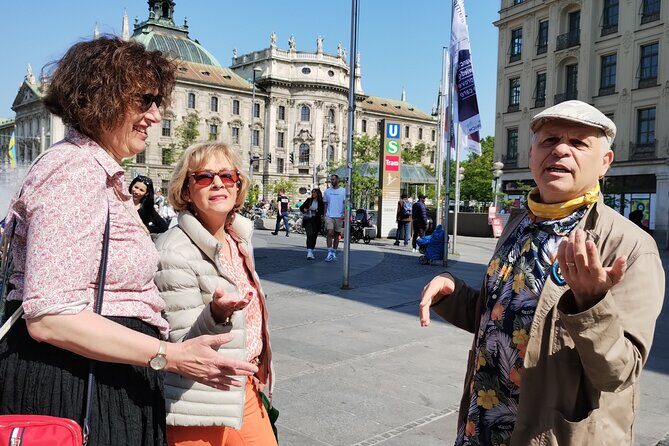
And the private setup matters more than you’d think. With only your group, you can ask questions without the pressure of keeping up with a larger pack. That makes the tour feel more like a conversation than a timed lecture.
Other Munich city tours we've reviewed in Munich


Start point to finish: your walk runs from Karlstor to Odeonsplatz
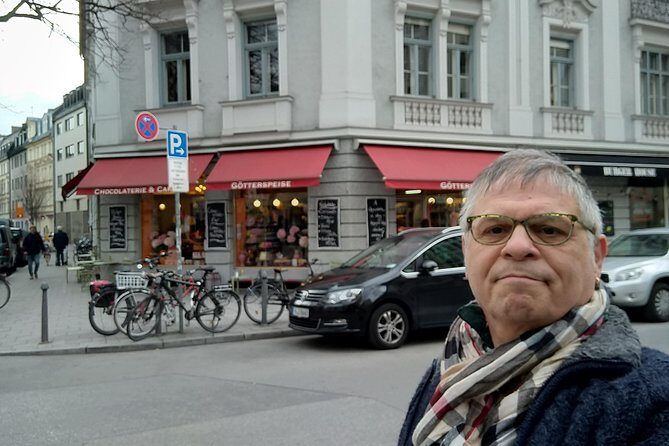
The experience starts at Karlstor / Neuhauser Str. (80331 München) and ends at Odeonsplatz (80333 München). Pickup is offered, and you’ll also be near public transportation, which can help if you want to line up your day around trains and tram stops.
This route is built for feet. It’s only about 2 hours, but it’s still a city-center walk with many short stops, including time at squares and in front of major buildings. If you’ve got limited mobility, you might find it better to request a calmer pace in advance (the operator notes seniors adaptation is possible).
Also, take note of the vibe: it’s not a “sit and admire” tour. It’s a “walk, stop, learn, look closer” tour. Bring good walking shoes. You’ll be glad you did.
Step-by-step itinerary: what each stop adds to the Munich story
Frauenkirche: the centerpiece and the timing question
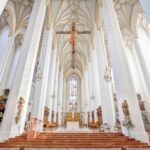
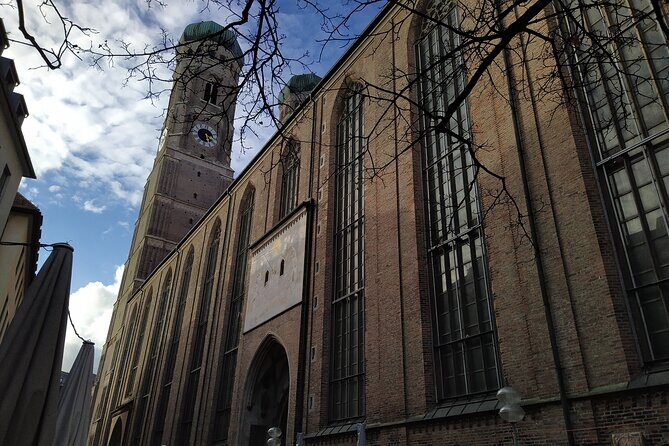
You begin with Frauenkirche. The guide gives a full overview of the monument and construction, and if you want, you can go inside. The catch is simple: interior time depends on when you arrive because of service hours.
This stop sets the tone for the day. It’s not just about admiring a church exterior; it’s where the guide helps you understand why this building matters in Munich’s visual identity. It’s also a great first anchor because you’ll spend the rest of your walk “placing” other sights in relation to this landmark.
Practical tip: If the church doors are open, go inside. If not, you’ll still get the story and you can enjoy the exterior without wasting time.
Biergarten photo stop: Munich-style atmosphere without the planning work
Next comes a biergarten visit with special places for memorable pictures. The guide knows where to stand to get good angles and a more “Munich” feel.
This is a smart inclusion for travelers who want more than architecture. It breaks the rhythm of constant stone-and-history stops. It also gives you a quick visual souvenir moment that doesn’t require extra transit or extra scheduling.
Other city tours we've reviewed in Munich


Heilig Geist: the market area’s layered past
To finalize the visit near Viktualienmarkt, you’ll reach Heilig Geist. This is a short stop that still packs context: you’ll see and hear the history of the place before it became a church, with an optional inside visit if timing works.
Heilig Geist helps you connect Munich’s everyday life (the market world) with its longer historical transformations. Even if you’re not a “church interior” person, the story makes the location feel alive.
St. Peter’s Church: old Munich roots
Then it’s St. Peter’s Church, presented as the first church in Munich—even before Munich existed, according to the tour framing. If you want, you can visit inside to see baroque works and reliquaries.
This stop is where you get a sense of continuity: the guide links early religious presence to the city that grew around it. If you’re traveling with kids or people who get bored in churches, the guide can likely adjust the depth—just ask.
Maximillianstrasse: monumental facades and luxury shopping energy
You move to Maximillianstrasse, described as home to monumental constructions and what the guide frames as one of the richest shopping stretches from here. It’s a quick stop, about five minutes, but it’s still useful.
Why it matters: this street helps you understand Munich beyond its historic squares. It’s how modern prosperity shows up in the cityscape, side by side with older landmarks.
Marienplatz: how a small market became a town
Next, you reach Marienplatz. You’ll hear how Munich grew from an insignificant market into a major town. It’s a short explanation window, but it gives you a mindset shift: you start seeing squares as engines of growth, not just photo backdrops.
If you only knew Munich from Oktoberfest posters, Marienplatz is one of the places that changes your mental image of the city.
Residenz München (outside): the royal power base
At Residenz München, you visit the royal palace outside. If you want, the guide offers another special visit inside the palace.
Even on an exterior-only stop, Residenz is important because it anchors the “power and wealth” side of Munich. The guide ties it to the story of rulers and the city’s development.
If you’re the type who loves museums but doesn’t have time today, this stop gives you enough to decide later if you want to schedule a full palace visit.
Bayerische Staatsoper: King Ludwig II and Wagner’s shadow
You then go to Bayerische Staatsoper. The guide links it to King Ludwig II and Richard Wagner, and promises a history-focused explanation that moves from the 18th century through World War II and up to today.
This is one of the tour’s “culture meets politics” moments. Even if you’re not a classical music person, you’ll leave with a clearer picture of why these names show up so often in Bavaria’s story.
Odeonsplatz: Bavaria’s architecture and the war consequences
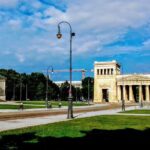
Next is Odeonsplatz. The guide shares what this place says about Bavaria: architecture, kings, and the consequences of the World War.
This stop is where the tour starts to feel less like a casual sightseeing stroll and more like a guided city chapter. It’s still time-efficient, but it adds weight.
Funf Hofe (Five Courts): modern luxury in the old center
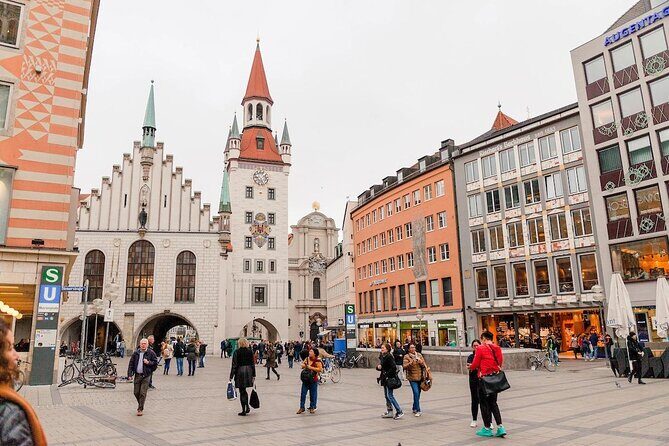
Then comes Funf Hofe (Five Courts) and its Elyasson Sculpture, plus the modern luxury mall vibe. It’s short, but it reminds you that Munich isn’t only medieval and baroque. The city layers eras right on top of each other.
If shopping isn’t your thing, you can still enjoy it as a “how Munich evolved” contrast.
Promenadeplatz: a celebrity footnote with practical payoff
At Promenadeplatz, you’ll hear that Michael Jackson was many times here. More importantly for your day-to-day travel plans, the guide uses this stop to present fine restaurants, cafes, and stay options.
This is where the tour turns from “history walk” into “your next meal sorted.” It’s one of the reasons people value these private guides: they know what to recommend in real terms, not just what’s famous.
Platzl: a reconstructed medieval pass-through
You then pass through Platzl, including a reconstruction from the medieval city. It’s quick, about five minutes, but it’s a useful reminder that parts of Munich are shaped by later rebuilding choices.
This stop is best for travelers who like to notice layers: what’s original, what’s restored, and what’s imagined back into the city fabric.
Rathaus-Glockenspiel: engineering inside the story
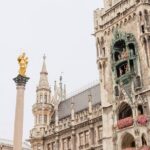
Next, you reach the Rathaus-Glockenspiel at New Town Hall territory. This is the classic Munich clock, and the guide explains the background. You’ll also hear that the guide has visited the “master of engineering” inside, and shares the most actual and fascinating histories about it.
This is a fun stop because it’s tangible. You can look at the facade features and then get the “how it works / why it matters” explanation that makes the scene stick.
Neus Rathaus: facade personalities
Then comes the New Town Hall (Neus Rathaus). You’ll get an architecture explanation and a walkthrough of personalities in the facade.
This is another “you’ll notice it more now” stop. Once someone points out who’s represented and why, the building starts talking back at you when you look at it.
Old Town Hall: a dark turn tied to Reichspogromnacht
At the Old Town Hall, the tour points to a place where Goebbels once signed the Reichspogromnacht order. It’s brief (about five minutes), but it’s heavy.
This is the kind of moment where personalization matters. If you want less focus on 20th-century events, you should say so right away. The route is flexible, and the guide’s job is to match your interests while still showing the key landmarks.
Mariensaule: Mary, the Thirty Years War, and Munich’s memory
Then you finish the central arc at Mariensaule. The guide explains the history behind Holy Mary and the 30 Years War.
This stop shifts you from Nazi-era history to older European conflict patterns, reminding you that “Munich history” is not a single era. It’s repeated waves of politics, belief, and rebuilding.
Viscardigasse: Hitler’s Putsch and the Nazi terror aftermath
Finally, the tour ends at Viscardigasse, tied to Hitler’s Putsch, the second World War, and the way over Nazi terror.
This is the tour’s closing emotional weight. It’s not presented as a graphic or theatrical story here; it’s a historical framing. Still, it’s wise to mentally prepare yourself for the seriousness if you’re traveling with teens or prefer lighter topics.
What makes the guide experience feel worth it
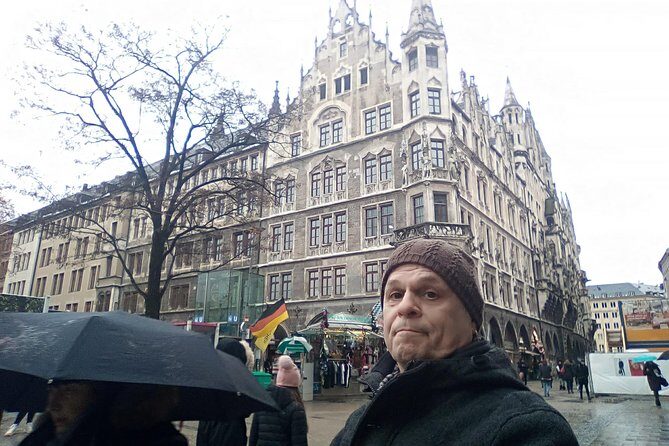
Across the guide team (names that come up often include Paul, John, Martin, Genny, Sybille, Freya, and Johannes), there’s a recurring theme in how the tour is delivered: the pacing stays lively, and the guide keeps the focus on what you care about.
You can also expect humor and energy from some guides. One common detail from guide-led experiences: guides often bring in small personal touches like jokes or quick “what to do next” guidance. That makes the walk less like a checklist and more like a day with a knowledgeable local friend.
And don’t skip the included materials. You get Paul’s book Loving Munich, which gives you something to reference after you leave. It’s especially useful if you want to plan a second day around markets, churches, or the neighborhoods you pass during this tour.
Food and shop tips you can use immediately
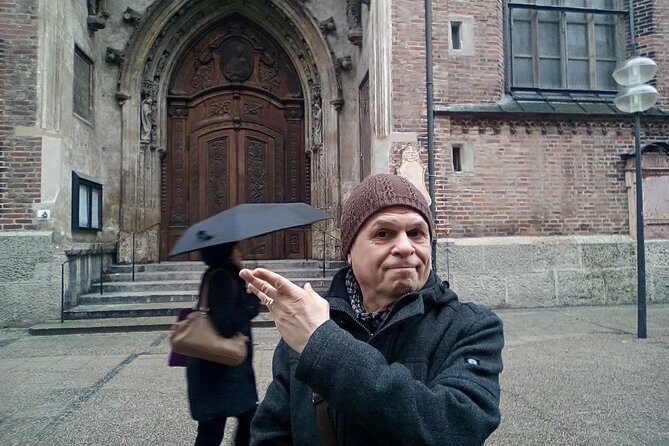
This is built into the tour design. The itinerary includes stops with obvious “you are hungry” context, like the beer garden break and the market-area church stop. On top of that, you get restaurant and shop suggestions for your stay.
A few guides have also added small moments like market food tastings in the past. Even if yours doesn’t, you can still ask for practical guidance, like where to grab a good lunch near your next sightseeing plan.
If you love to eat well but hate complicated planning, this part is a quiet value-add. Munich can feel a bit intimidating if you don’t know which streets to trust.
Practical advice: shoes, interior stops, and how to steer the tour
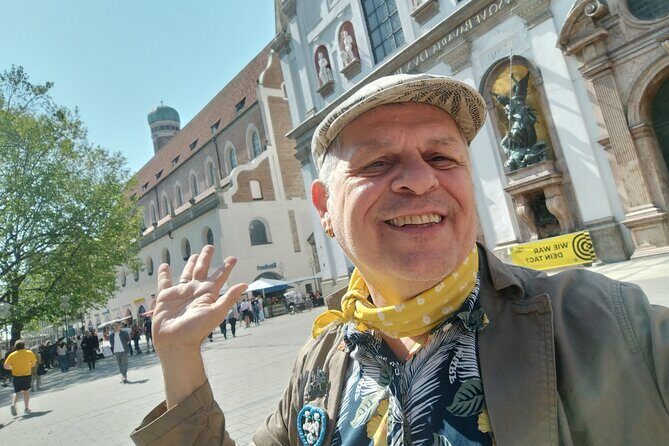
A few practical notes make the difference between a good day and a great one:
- Wear comfortable shoes. You’re walking between major squares and stops, and the time at each site is short but frequent.
- For church interiors, go with the flow. The tour notes service hours affect whether you enter, especially at Frauenkirche and potentially other church stops.
- If the heavier history stops feel like too much, say so early. The route is designed to be flexible and customized based on your interests.
- If you want more shopping time, ask your guide to weight Maximillianstrasse and the mall area more heavily. If you want more quiet history, you can steer toward churches and civic buildings.
Should you book Paul’s Private Tour in Munich’s Old City?
Book it if you want a smart first look at Munich with time-efficient landmark coverage and a guide who can steer the day. It’s a great fit for first-time visitors, arrival-day planners, and anyone who wants both famous sights and usable “what now” recommendations.
Skip it (or adjust your expectations) if you dislike packed schedules, need guaranteed indoor access to churches, or prefer to avoid serious 20th-century history topics. In that case, you can still consider the tour, but you should communicate what you want the guide to emphasize.
FAQ
How long is Paul’s Private Tour in Munich’s old city?
The tour is about 2 hours.
Is this a private tour?
Yes. It’s a private tour/activity, and only your group will participate.
Is pickup offered?
Pickup is offered.
Where does the tour start?
It starts at KarlstorNeuhauser Str., 80331 München, Germany.
Where does the tour end?
It ends at OdeonsplatzOdeonspl., 80333 München, Germany.
What’s included in the price?
Included: a guided tour with full background of the buildings and city, restaurant and shop suggestions, and the book Loving Munich.
What is not included?
Tips or gratuity for your guide are not included. Also, any person over the booked number pays 35 € to the guide at the beginning of the tour.
Are entrance tickets included for the church stops?
The itinerary lists several stops with admission ticket free, and some optional inside visits depend on service hours.
Is a mobile ticket used?
Yes, mobile ticket is listed as a feature.
Are service animals allowed?
Yes, service animals are allowed.