REVIEW · MUNICH
Private Tour of Nymphenburg Palace and Gardens
Book on Viator →Operated by Tom's Tours · Bookable on Viator
Nymphenburg feels like a royal escape. This private tour turns a famous Munich sight into a guided story, starting with a smooth trip from Hauptbahnhof and then shifting into the baroque palace and court life. You’ll hear how the royal family shaped Bavaria, with plenty of scene-setting and Q-and-A time along the way, plus free time to explore palace rooms at your own pace.
What I like most is the combo of Nymphenburg Palace plus the garden pavilions, not just a quick exterior lap. The guide (often Tom) also brings practical add-ons like clear explanations and visual aids, and he keeps the pace comfortable so you don’t feel rushed. One drawback to flag: you may walk more than you expect when getting from the station area to the palace by tram and public transport, especially if you ask for a meeting point farther off the standard route.
In This Review
- Key things to know before you go
- Nymphenburg Palace and Gardens: why this tour works so well
- Getting to the grounds: Hauptbahnhof is your starting point
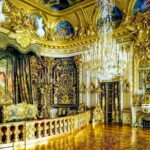
- Inside Nymphenburg Palace: rooms you can actually understand
- The garden walk to the pavilions: where the day turns memorable
- The four park pavilions: what to expect at each stop
- Amalienburg (hunting lodge)
- Badenburg Palace (baroque pool)
- Pagodenburg (Chinese-inspired pleasure palace)
- Magdalenenklause (hermitage, grotto, and miracle spring)
- When your trip falls in the cold-season closures
- Marstallmuseum: carriage museum for 16 Oct–28 Mar
- Timing and pacing: 5 hours that don’t feel too heavy
- Price and value: what you get for $192.77 per person
- Who should book this Nymphenburg private tour
- Should you book Tom’s Nymphenburg Palace and Gardens tour?
- FAQ
- Is this tour private or shared?
- How long is the Nymphenburg Palace and Gardens tour?
- Where does the tour meet, and where does it end?
- What language is the tour offered in?
- Are admission tickets included?
- Are the Amalienburg, Badenburg, Pagodenburg, and Magdalenenklause stops open all year?
Key things to know before you go
- Private group experience: Only your group participates, so questions and pacing are flexible.
- Included admissions: Palace visit plus multiple pavilion stops come with admission tickets included.
- Tom’s in-the-moment teaching style: Expect explanations, humor, and visual aids that make the royal stories easier to follow.
- Gardens are the main event: You’ll spend real time outside, including pavilions and special garden features.
- Season affects what you can see: Several pavilions are closed from mid-October to late March.
- Return to Hauptbahnhof: The tour ends back at the meeting point, so you’re not left figuring out transit.
Nymphenburg Palace and Gardens: why this tour works so well
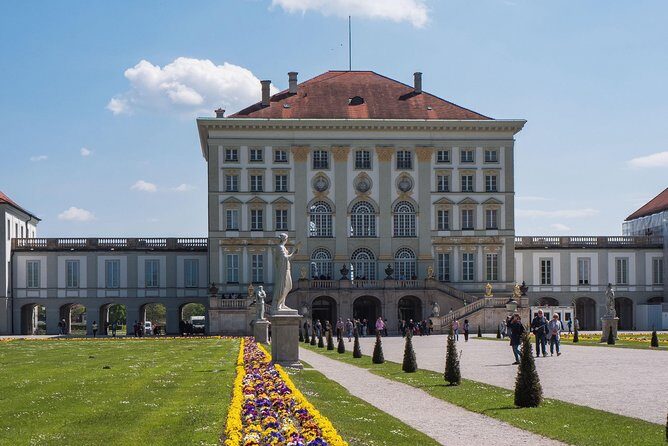
Nymphenburg is the kind of place where first-time visitors often do the basics and still feel like they missed something. The palace looks spectacular, sure. But the real “aha” comes when you understand it as a functioning royal world—who lived there, how decisions were made, and how the court shaped daily life behind the ornate rooms.
This tour is built for exactly that. You’re not just walking from room to room. You get guided context for what you’re seeing: court life, roles, and the contrast between the big ceremonial side of royalty and the daily grind that kept everything running. That makes the architecture and decoration feel less like wallpaper and more like evidence.
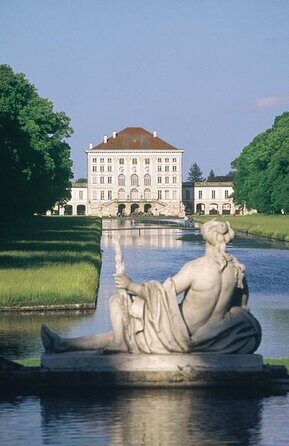
The garden portion is where the experience gets even more satisfying. The park is extensive, with a mix of formal French-style planning and English-style wandering. You also don’t just admire it from a distance. You move through the garden to the pavilions—small buildings designed for escape, display, and pleasure. It’s the difference between seeing the set and seeing how the story plays out.
Other private tours in Munich



Getting to the grounds: Hauptbahnhof is your starting point
The meeting point is Munich’s main train station, Hauptbahnhof. The tour starts in the morning, with opening hours listed as 9:30 AM–10:00 AM (daily). From there, your guide takes you to Nymphenburg using public transport, so you’re not spending time on figuring out tickets, stops, or which line goes where.
In practice, this is a big value add. Even travelers who love DIY planning often hit a wall with transit timing when they’re juggling a palace visit, garden walking, and entry ticket timing. Having someone handle the route keeps the day from feeling like logistics homework.
One thing to plan for: public transport plus walking. One review flagged unexpected walking when the meeting point wasn’t the usual station-area start. The important takeaway for you is this: if you want a custom meeting spot, the standard station-area meeting reduces the walking time. If you meet off the standard route, you might add a few extra minutes on foot.
Inside Nymphenburg Palace: rooms you can actually understand
The palace time is the heart of the visit, and the way it’s handled matters. You’ll be brought through the baroque palace with a guide who connects what you see to the people and politics behind it.
You can expect a mix of:
- High-level explanations of the royal family and how the palace functioned in their world
- Court-life details, including the roles of servants and the rhythms of daily life
- Room-by-room interpretation that helps you notice what you’d normally ignore
The “Game of Thrones” comparison is used here as a way to make the stories click. It’s not that Nymphenburg is fantasy; it’s that court behavior, power, and intrigue feel familiar when you hear the characters explained in plain language.
You also get time to explore. This is key. Even a great guide can’t slow down every visitor’s curiosity in real time. Having free time means you can go back to the room that grabbed you, or linger where the decor stops you mid-sentence.
Practical note: Nymphenburg is a big complex. The guided portion focuses on specific rooms rather than trying to cover everything. That’s a feature, not a bug. You’ll leave feeling oriented and informed, not exhausted and blank.
The garden walk to the pavilions: where the day turns memorable

After the palace rooms, the day moves outside. This is where Nymphenburg changes from “architectural sight” into “you’re in someone’s world.”
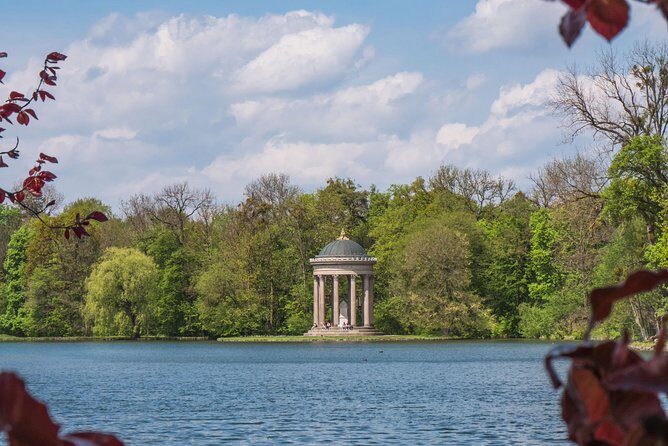
You’ll walk past fountains and statues and then head toward the pavilions—four special garden buildings connected to Elector Max Emmanuel’s tastes and the Empresses and electors who used the grounds. The tour’s format keeps the walk purposeful: you’re not wandering without a reason.
If you like gardens, this is often the part people remember most. One reason is variety. The grounds mix structured design with the more relaxed flow of an English-style park. Another reason is the pavilions themselves: each building is a different kind of statement—hunting, leisure, stylized fantasy, or contemplative escape.
What to watch for as you go:
- The way the garden paths guide your eye toward the next building
- How each pavilion’s theme shows the tastes of the ruling family
- The contrast between big palace power indoors and controlled pleasure outdoors
The four park pavilions: what to expect at each stop
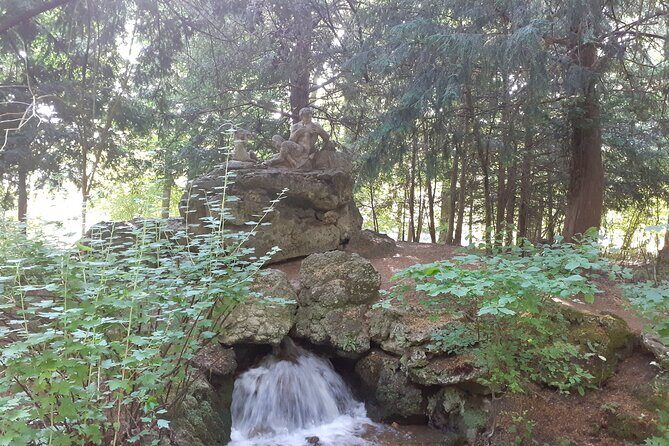
The pavilion visits are short, but they’re targeted. Expect quick orientation plus enough context that you understand why each building exists and what it was for.






Amalienburg (hunting lodge)
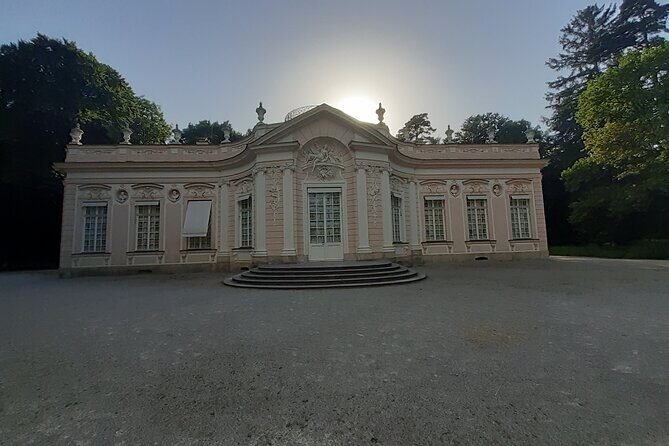
Amalienburg is described as the hunting lodge of an empress and a Rocco-style masterpiece. It’s a perfect stop if you want something visually rich without needing hours to read a museum label wall.
Good to know: Amalienburg is closed from 16 October to 28 March.
Badenburg Palace (baroque pool)
Badenburg is where you get the playful side of court life. It’s tied to Elector Max Emmanuel and his baroque swimming pool, meaning it’s not just a pretty building—it’s a statement about leisure.
Good to know: Badenburg is closed from 16 October to 28 March.
Pagodenburg (Chinese-inspired pleasure palace)
Pagodenburg is a Chinese-inspired mini pleasure palace, built as part of the early pavilion ideas of Elector Max Emmanuel. If you enjoy “different worlds within a royal garden,” this is one of the more surprising stops.
Good to know: Pagodenburg is closed from 16 October to 28 March.
Magdalenenklause (hermitage, grotto, and miracle spring)
Magdalenenklause is the contemplative escape: a hermitage where electors and kings of Bavaria could get away from court life. It’s also known for its shell grotto and a miracle-working spring.
This one often hits hardest for visitors because the theme shifts from leisure display to reflection and ritual. The setting helps, too, because the building feels like a pause button in the middle of all that palace pomp.
Good to know: Magdalenenklause is closed from 16 October to 28 March.
When your trip falls in the cold-season closures
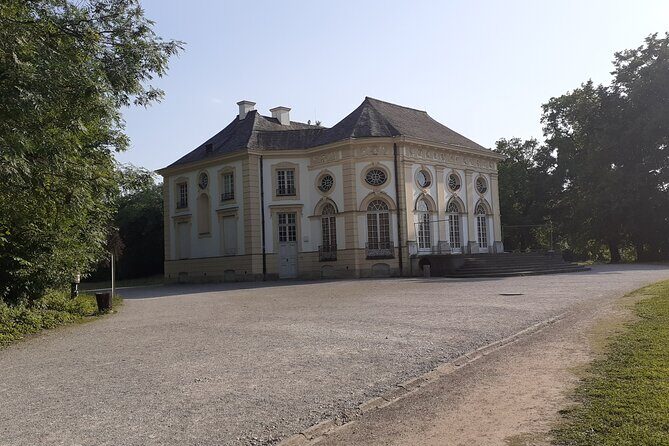
Nymphenburg’s garden pavilion lineup changes by season. From 16 October to 28 March, Amalienburg, Badenburg, Pagodenburg, and Magdalenenklause are closed.
If your dates fall in that window, you’ll still get the palace experience and the garden walking, but you should expect fewer pavilion stops. The tour’s structure still makes sense because you’re not left with a “half day.” Instead, you get a different set of highlights depending on what’s open.
Marstallmuseum: carriage museum for 16 Oct–28 Mar
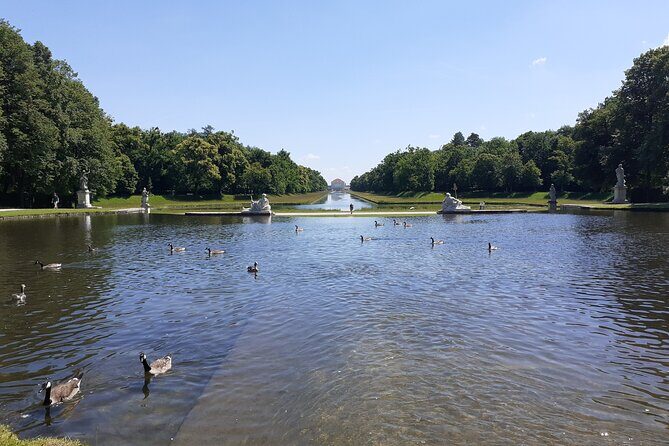
There’s also a seasonal museum add-on: the Schloss Nymphenburg Marstallmuseum (carriage museum). It’s listed as open only from 16 October to 28 March.
If you’re visiting in the colder months, this is the stop that helps the tour feel complete. It adds a different angle on the Wittelsbachs—showing how they traveled and how their everyday systems connected to court display.
If you’re visiting outside that season, you won’t see the Marstallmuseum as part of this specific itinerary, since it’s not listed as available year-round.
Timing and pacing: 5 hours that don’t feel too heavy
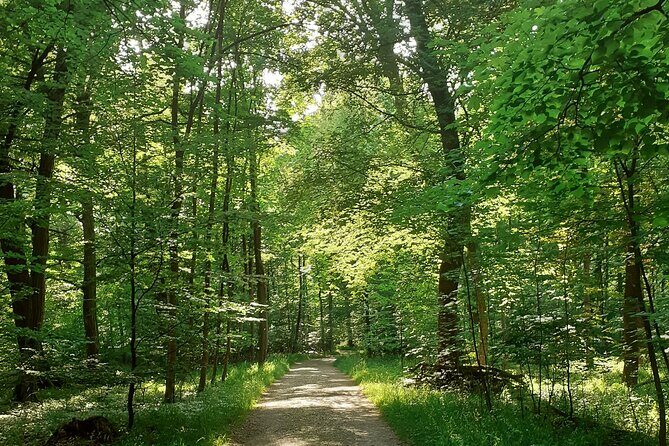
The tour runs about 5 hours. That length sounds standard until you do the math for a palace plus gardens plus pavilion stops. Nymphenburg involves walking, and the garden can tempt you to keep going past where you planned to stop.
This is why pacing matters. The guide approach here is designed to keep the day comfortable, with breaks in storytelling and room for questions. It’s especially useful if you’re traveling with mixed ages or if weather is hot. The goal is to help you see the main sights without turning it into a marathon.
Also, consider your footwear. Even with a guide, you’ll spend enough time outdoors that good shoes make the day feel easier.
Price and value: what you get for $192.77 per person
At $192.77 per person for a private tour, the price feels steep only if you compare it to a self-guided palace ticket and a map. But that’s not the right comparison.
Here’s what you’re paying for:
- A guide who explains palace and court stories in a way that makes the rooms easier to understand
- A private group setup, so you don’t lose time to waiting your turn in a large group
- Transit help from Hauptbahnhof using public transport
- Included admission tickets for the palace and multiple pavilion stops
- A flexible pace with time to ask questions and wander briefly on your own
If you’re a couple, a small family, or a group who likes asking follow-up questions, this is often good value because you’re buying time and context, not just movement. If you’re a solo traveler on a tight budget, a self-guided visit may be cheaper—but you’ll also give up the “how to read what you’re looking at” part.
A useful signal: it’s booked far in advance on average. That usually means the schedule is popular, especially during better weather months.
Who should book this Nymphenburg private tour
This tour is a strong fit if you:
- Want a palace visit that feels explained, not just observed
- Care more about gardens and buildings with stories than about ticking off every room
- Like the comfort of having entry tickets handled and not thinking about transit details
- Travel as a group where privacy matters
It may be less ideal if you’re extremely sensitive to walking. Even at a well-paced level, you’ll be moving around by tram and on foot between stops.
Should you book Tom’s Nymphenburg Palace and Gardens tour?
Yes, if you want Nymphenburg to make sense and feel worth the time. The palace isn’t treated like a checklist. The gardens aren’t treated like a quick walk-by. With a guide like Tom, you get explanations plus visual support that helps the whole place click faster.
Before you book, check two things:
- Your dates in relation to the seasonal closures (16 Oct to 28 Mar changes pavilion availability)
- Your comfort with public transport and walking from Hauptbahnhof
If you can handle a few hours of active exploring, this private setup is a great way to experience Nymphenburg at a human pace, with more meaning than most fast visits.
FAQ
Is this tour private or shared?
This is a private tour/activity, which means only your group participates.
How long is the Nymphenburg Palace and Gardens tour?
The duration is approximately 5 hours.
Where does the tour meet, and where does it end?
The start point is Hauptbahnhof in Munich, and the activity ends back at the same meeting point.
What language is the tour offered in?
The tour is offered in English.
Are admission tickets included?
Yes. Admission tickets are included for the palace and the listed pavilion stops, as well as the carriage museum when it applies by season.
Are the Amalienburg, Badenburg, Pagodenburg, and Magdalenenklause stops open all year?
No. Those stops are listed as closed from 16 October to 28 March. The Marstallmuseum is listed as open only from 16 October to 28 March.