REVIEW · MUNICH
Munich: Third Reich Guided City Walking Tour
Book on GetYourGuide →Operated by Bayern a medida GmbH & Co KG · Bookable on GetYourGuide
Munich forces you to look closer. This Spanish guided walk links street corners to the Nazi movement’s rise, starting in Marienplatz and building toward Königsplatz.
I love how the route ties big political events to specific places, including Hofbräuhaus and Haus der Kunst, so the story feels grounded. I also like the Beer Hall Putsch focus and how the tour handles resistance topics with Georg Elser and the White Rose.
One real drawback: this tour is Spanish only, and kids under 13 can’t join.
In This Review
- Key things you’ll notice on this Munich Third Reich walk
- Munich’s Third Reich Story, Walked Block by Block
- Starting at Marienplatz: Setting the Stage for 1930s Power
- Odeonsplatz and Hofbräuhaus: The Beer Hall Putsch Explained in Place
- Haus der Kunst: Nazi Propaganda Architecture and the War on Art
- Resistance in Munich: Georg Elser and the White Rose
- Führerbau and the 1938 Munich Agreement: Where Diplomacy Meets Dictatorship
- Price, Timing, and What You Really Get for $23
- What the Guide Approach Feels Like (Based on the Tour’s Design)
- Who Should Take This Spanish-Language Munich Walk
- Should You Book This Munich Third Reich Walking Tour?
- FAQ
- Where does the tour start?
- Where does the tour end?
- How long is the guided walking tour?
- What language is the tour guide?
- How much does the tour cost?
- Are children allowed?
- What should I bring?
- Does the tour include food or drinks?
- Can I get a refund if I cancel?
- Is this tour open to people who don’t speak Spanish?
Key things you’ll notice on this Munich Third Reich walk
- Marienplatz to Königsplatz: a clear timeline you can follow on foot across central landmarks
- Odeonsplatz and Hofbräuhaus: the early Nazi push and the Beer Hall Putsch explained on site
- Haus der Kunst: the first Nazi propaganda building, plus what the regime did to art
- Resistance chapters: stories of Georg Elser and the White Rose
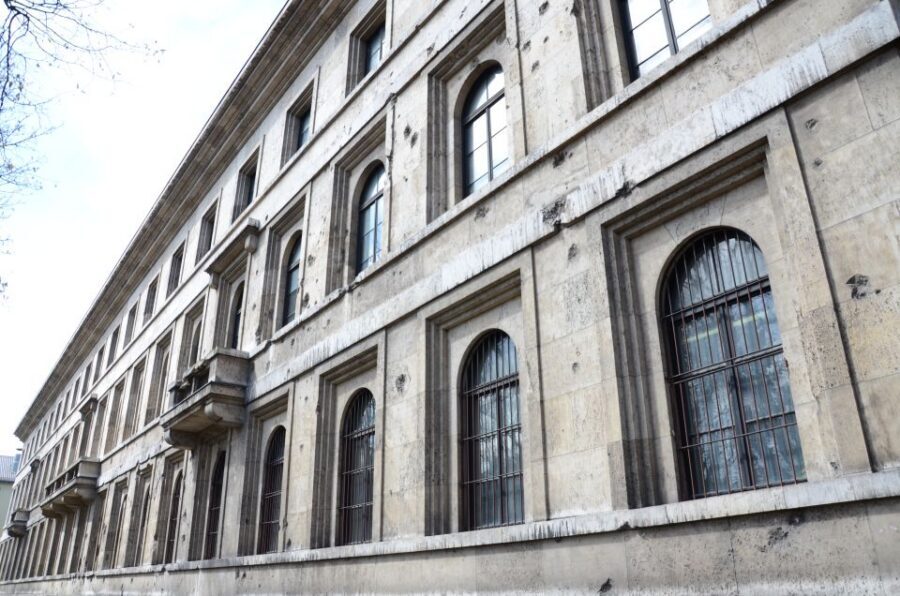
- Führerbau and the 1938 Munich Agreement: how dictatorship-era decisions land in real architecture
Munich’s Third Reich Story, Walked Block by Block
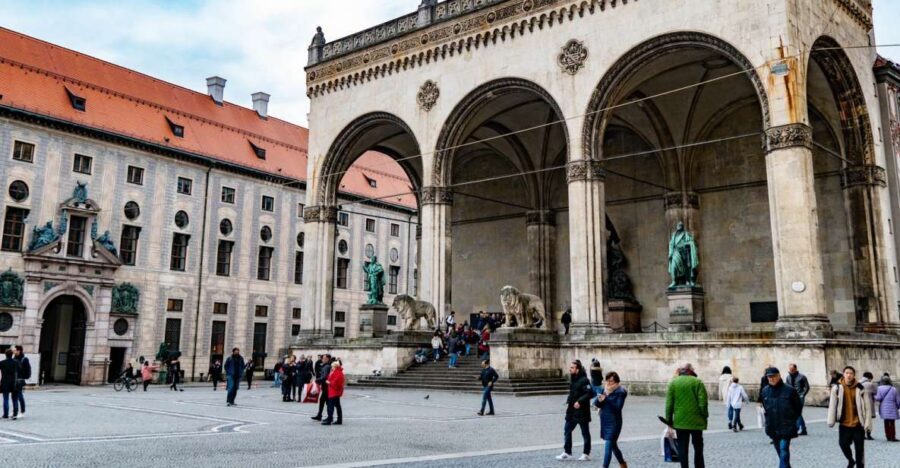
This is the kind of tour that makes you slow down without needing tricks or drama. You move through the city center and watch a political movement turn into a regime, with stops tied to names and buildings you’ll actually see on a map.
I like that the tour keeps the focus on the sequence of events: origins, turning points, propaganda, then resistance and aftermath. You’ll get a guided narrative that stays connected to place, which is exactly what helps in a topic like this.
The format is simple: it’s a walking tour of about 2.5 hours with a live guide. For $23 per person, you’re paying for guided explanation at key sites, not for a museum ticket stack or a long transit plan.
Other Third Reich & WWII tours we've reviewed in Munich


Starting at Marienplatz: Setting the Stage for 1930s Power
The tour begins where many Munich walks begin: Marienplatz, at the Tourist Information Office. That’s a smart start because it puts you in the heart of the city, where the later Nazi-era landmarks sit within reach.
From the first moment, the guide’s goal is to trace political origins—how the Nazi movement took shape in Munich and why these locations mattered. You’re not just looking at buildings; you’re learning what happened there and how it changed the political temperature.
One practical tip for this kind of tour: wear comfortable shoes and expect steady walking. Central Munich streets are manageable, but you’ll feel it after a couple hours of stops and starts.
Odeonsplatz and Hofbräuhaus: The Beer Hall Putsch Explained in Place
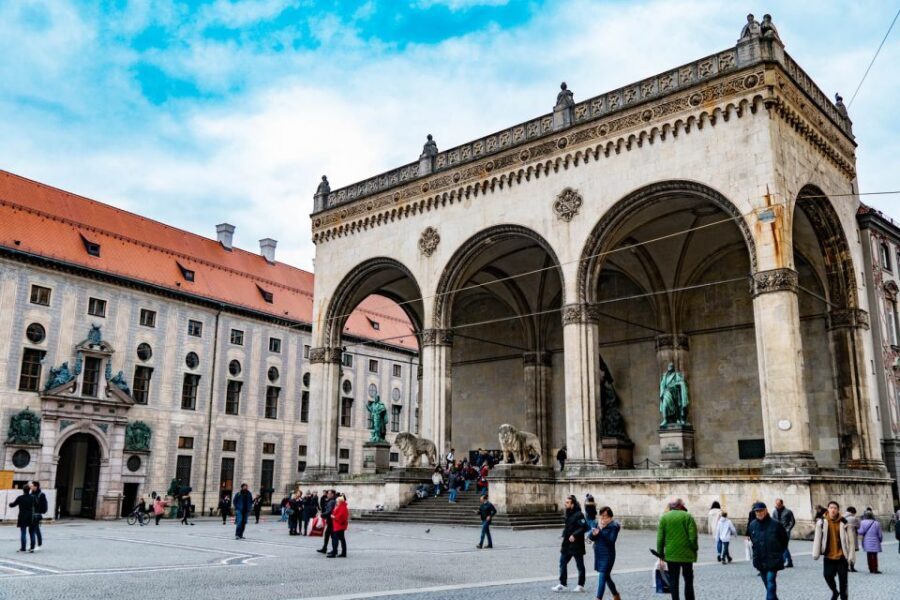
Next comes Odeonsplatz, and the tour’s narrative really tightens. This is where the story of the Nazi party’s early push connects to the real events people associate with the Beer Hall Putsch.
The stop at Hofbräuhaus is especially important to the tour’s theme. You’ll hear how the putsch became a defining moment for the early movement and how the Nazi party’s rise in Munich wasn’t random—it was tied to specific public power plays.
I like that the guide keeps the explanation linked to what you can see. When you stand near places tied to a coup attempt and political theater, terms like party beginnings and failed power grabs become more than textbook lines.
If you prefer tours that prioritize big ideas, this one works, but it also rewards people who enjoy the “why this building, why this square” angle. It’s not just facts; it’s cause-and-effect in urban form.
Haus der Kunst: Nazi Propaganda Architecture and the War on Art
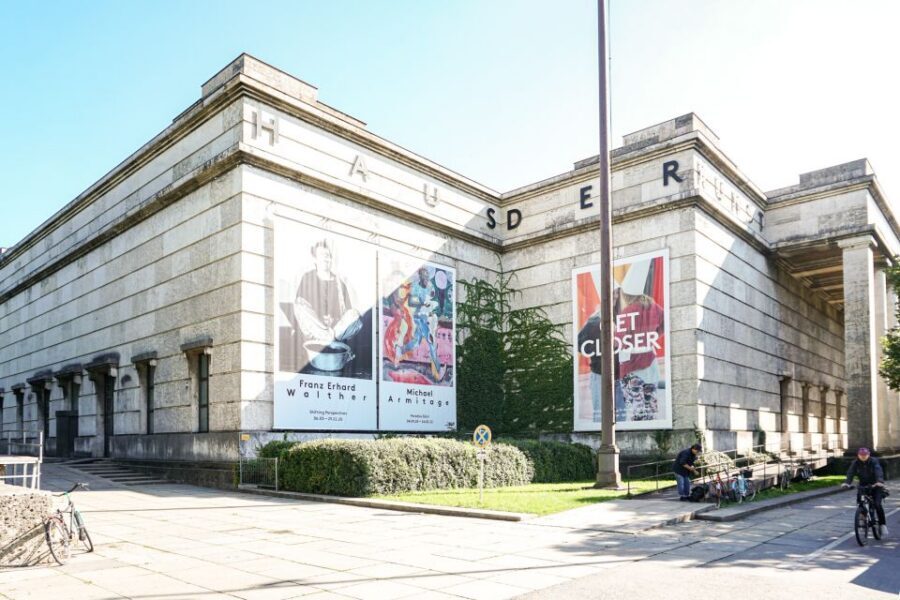
After Odeonsplatz and Hofbräuhaus, you reach the front of Haus der Kunst. This stop is more than a photo opportunity, because the building is described as the first propaganda building in Nazi Germany.
That detail matters. It tells you the regime didn’t treat art and exhibitions as neutral culture; it used them as tools. You’ll learn how the Nazi government influenced art and how degenerate art was handled and banned under the regime.
This part of the tour is valuable if you’re trying to understand how authoritarian power works beyond politics. A party can seize offices, but it also shapes what people are allowed to admire, study, or support.
Expect the guide to connect architecture and messaging—how a prominent public building can become a loud signal. If you’ve ever wondered how propaganda spreads through culture, this is the moment when the tour points you toward the mechanism.
Resistance in Munich: Georg Elser and the White Rose
Then the tour shifts from the machinery of power to the risks of opposing it. You’ll discover the German Resistance movement, with protagonists like Georg Elser and the White Rose.
This is one of the most important parts of the route because it prevents the story from becoming one-sided. You see that the same streets tied to Nazi ambition also housed people who refused to go along.
I appreciate how the tour treats resistance as a real thread, not a footnote. When the guide names individuals, the history becomes more human—choices, courage, and consequences—rather than only dates and slogans.
If you’re the kind of traveler who likes balanced historical tours, this structure helps. You get the political origins and propaganda side, then you get the counter-story of dissent.
Other Munich city tours we've reviewed in Munich

Führerbau and the 1938 Munich Agreement: Where Diplomacy Meets Dictatorship
The tour reaches Führerbau, a key stop tied to a moment that still shapes how people talk about Munich-era policy. This is presented as the place where the Munich Agreement was signed in 1938.
That’s a heavy topic, and the value here is that it’s grounded in a specific location. You’re not reading about diplomacy in the abstract—you’re standing where a major decision was made, and you can see how formal agreements connect to the consequences that followed.
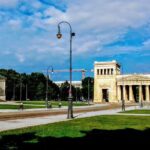
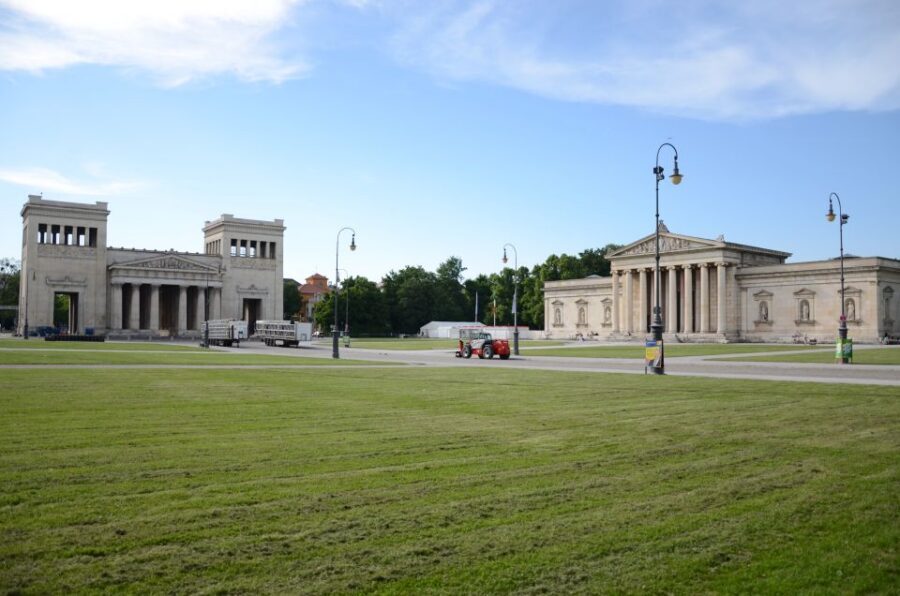
After that, you move toward the final stretch at Königsplatz. The tour closes back at the meeting point, so you don’t have to puzzle out a separate end location.
I like ending near Königsplatz because it gives your brain a little space to process. You’ve walked from the origins of movement politics to the machinery of state decisions, and then you finish in a place that feels designed for public presence and monument-scale views.
Price, Timing, and What You Really Get for $23
Let’s talk value. The tour costs $23 per person and lasts 2.5 hours, with a guide included and no food stops included. In other words, you’re paying for a focused guided narrative at multiple historical landmarks.
For a walking tour, time is the product. Two and a half hours is long enough to cover a meaningful arc—origins, events like the Beer Hall Putsch, propaganda architecture, and resistance—without turning into a marathon.
You’ll also want to factor in the language constraint. The tour uses a live guide in Spanish, and it’s not open to travelers who don’t speak Spanish. If you’re comfortable in Spanish, that’s a plus: you’ll follow the explanation closely at each stop instead of piecing together translations on the fly.
The tour length also means you can fit it into a Munich day with other sightseeing. It’s not a whole-day commitment, but it gives you context that makes later museum visits, or even casual street walking, click faster.
What the Guide Approach Feels Like (Based on the Tour’s Design)
The tour’s structure is built around pacing and clarity: you move between landmarks in a logical sequence, with each stop tied to a specific chapter of the Nazi era story. The result is that you’re not stuck listening for long stretches without a “reason” to be at that next corner.
I also like how the guide is positioned as a live interpreter of events rather than a reciter of names. Since the focus includes both Nazi origins and the German Resistance movement, a good guide has to balance the story and keep it understandable.
The tour’s overall tone is serious, and it should be. You’re handling real political violence and repression, so the best experience comes when you’re ready to listen rather than treat it like a themed sightseeing walk.
Who Should Take This Spanish-Language Munich Walk
This tour is a strong match if you want history tied to real places and you’re comfortable processing difficult topics. If you like guided context at the exact coordinates where events happened, the Marienplatz-to-Königsplatz route makes sense.
It’s also a good fit for Spanish speakers who want a history tour that doesn’t waste time. Because everything is in Spanish, you won’t lose the thread jumping between audio and visuals, which can happen on self-guided options.
On the other hand, it’s not a fit if you need English interpretation. The tour states it is not open to people who don’t speak Spanish, so language isn’t a minor detail here—it’s central to participation.
Children under 13 also can’t join. If you’re traveling as a family, you’ll need to choose a different option for younger kids.
Should You Book This Munich Third Reich Walking Tour?
Book it if Spanish works for you and you want a short, structured walking history of the Nazi movement in Munich. The stops hit the major anchors—Hofbräuhaus, Haus der Kunst, Führerbau, and Königsplatz—and the narrative includes both the rise of the party and the courage of resistance.
Skip it if you’re not comfortable with Spanish or if a walking tour of 2.5 hours feels too long for your style of travel. Also, if you prefer purely visual sightseeing with minimal historical framing, this will feel like the opposite of that.
FAQ
Where does the tour start?
Meet your guide in front of the Tourist Information Office at Marienplatz.
Where does the tour end?
The tour ends back at the meeting point in Marienplatz.
How long is the guided walking tour?
It lasts 2.5 hours.
What language is the tour guide?
The live tour guide speaks Spanish.
How much does the tour cost?
The price is $23 per person.
Are children allowed?
No. Children under 13 are not allowed to participate.
What should I bring?
Wear comfortable shoes for the walking route.
Does the tour include food or drinks?
No. Food and drinks are not included.
Can I get a refund if I cancel?
Yes. There is free cancellation up to 24 hours in advance for a full refund.
Is this tour open to people who don’t speak Spanish?
No. This tour is not open to travelers who do not speak Spanish.