REVIEW · MUNICH
Munich: Third Reich and World War II Private Guided Tour
Book on GetYourGuide →Operated by Rosotravel Germany · Bookable on GetYourGuide
Munich has a way of showing you the past. This private walking tour connects famous squares and buildings to the rise of the Nazis, the Beer Hall Putsch, and the wartime destruction that followed. You’ll also be encouraged to ask hard questions about Munich’s role and its citizens’ choices, not just memorize dates.
I especially like how the guide points you to specific places tied to Nazi power and propaganda, then gives you the story to match. I also like the format: a private guide means you can move at your pace and get clear answers, including about supporters and resistance groups like the White Rose.
One thing to consider: the subject matter is heavy, and the tour includes World War II and the bombing and liberation of Munich in 1945. If you prefer a light, sightseeing-only day, this route may feel intense.
In This Review
- Key things I’d focus on before you go
- Marienplatz: where politics met the public square
- Hofbräuhaus and the 1920 speech that sparked momentum
- Following the Beer Hall Putsch route: Feldherrnhalle to Odeonsplatz
- Munich’s Nazi offices and Führerbau: power in brick and signatures
- Monument to the Victims and the resistance thread
- Königsplatz: mass rallies and book burning
- The 4.5-hour option: NS Documentation Center for WWI–postwar context
- How long is enough: 3 hours vs 4.5 hours
- A private guide experience: where value really shows
- Cost and value: is $311 per person worth it?
- Who should book this Third Reich and WWII Munich tour?
- Should you book it?
- FAQ
- Where does the tour start?
- How long is the walking tour?
- What’s included in the 3-hour option?
- Is the NS Documentation Center included?
- What stops does the tour include?
- What languages are available for the guide?
- Is the tour private and wheelchair accessible?
- What are the cancellation terms?
Key things I’d focus on before you go
- Marienplatz start point ties Nazi propaganda to the public heart of Munich
- Hofbräuhaus am Platzl links a major Nazi speech to the party’s origin story
- Beer Hall Putsch walk follows the route toward Feldherrnhalle and Odeonsplatz
- Führerbau and the Munich Agreement site adds important political context in 1938
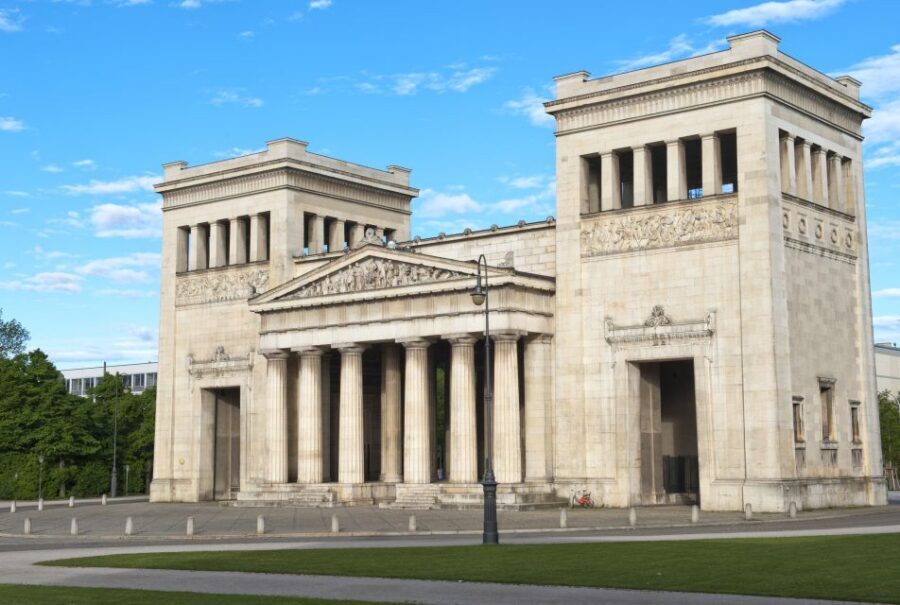
- Königsplatz rallies and book burning shows how mass ideology was staged
- NS Documentation Center option (4.5h) adds exhibits on WWI, WWII, and postwar Munich
Marienplatz: where politics met the public square
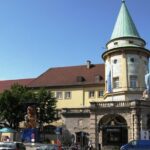
Your tour begins at Marienplatz, right in Munich’s Old Town, where a lot of Nazi propaganda energy once played out. Meeting at the front of BEYOND by Geisel (Marienplatz 22, opposite St Peter) helps you get oriented quickly before you move into the walking route.
What I like here is the way you start in a real civic space instead of a classroom. You’re standing where public life and political messaging collided, and that makes everything that follows feel more grounded.
You’ll also get a close look at the Neues Rathaus area and how the city still carries traces of the 1945 bombings that wiped out much of downtown. Even without getting graphic, it changes the tone of the tour because Munich isn’t treated as an abstract backdrop.
Other Third Reich & WWII tours we've reviewed in Munich


Hofbräuhaus and the 1920 speech that sparked momentum
Next comes Hofbräuhaus am Platzl, one of the tour’s most recognizable stops. Adolf Hitler made a speech there in 1920 connected to the founding of the National Socialist German Workers’ Party.
This is where the tour’s origin story matters. The point isn’t just that something big happened; it’s that the guide frames how the Nazi movement built support in Munich before it controlled the country. Hearing the story in the same place where it was promoted helps you understand why propaganda worked on real people.
If you know Munich only as beer-hall postcard scenes, this stop can be a wake-up call. It’s still the Hofbräuhaus, but you’re watching history through a darker lens.
Following the Beer Hall Putsch route: Feldherrnhalle to Odeonsplatz
The tour then tracks the path connected to the Beer Hall Putsch, moving toward Feldherrnhalle and Odeonsplatz. You’ll learn about the Nazi attempt to storm the Bavarian Defense Ministry as part of this sequence, and how that episode influenced Hitler’s later political writing, Mein Kampf.
For me, the walking route is the key. It turns a complicated political event into something you can map with your feet, one stop at a time. You’re not just hearing that things happened; you’re seeing the route and imagining the momentum of that moment.
You’ll also get a clearer picture of the broader landscape: supporters, resistance, and the push-and-pull between intimidation and opposition in the city. That resistance piece is a major part of making the story feel complete rather than one-sided.
Munich’s Nazi offices and Führerbau: power in brick and signatures
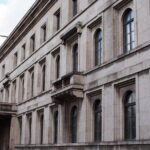
One of the most striking parts of the tour is the shift from propaganda sites to the buildings that represented administration and authority. You’ll pass former office buildings of the Nazi Party, including Führerbau, often linked to high-level political moments.
A standout detail here is the connection to the Munich Agreement in 1938, signed by Chamberlain and Hitler at the Führerbau. That alone gives you a concrete way to connect Nazi influence to European diplomacy, not just street-level events.
This section matters because it helps you see how the Nazi story wasn’t only loud speeches and rallies. It also lived in paperwork, meetings, and official spaces. The guide’s job is to connect those dots so the architecture isn’t just a backdrop.
Monument to the Victims and the resistance thread
Not every tour covers resistance with equal care, but this one does. You’ll stop at the Monument to the Victims of National Socialism and hear about resistance against the Nazi regime, including the White Rose Group led by five university students.
I appreciate this balance. It prevents the tour from becoming only a list of Nazi actions and Nazi leaders. Instead, you get a sense that opposition existed, even when it was dangerous and often crushed.
If you’re visiting Munich with a student mindset, this is the moment where you can ask the guide about consequences. What did resistance look like on the ground? What happened to people who refused to go along? The tour is built for these kinds of difficult questions.
Other Munich city tours we've reviewed in Munich

Königsplatz: mass rallies and book burning
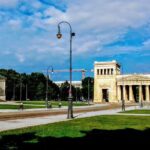
The walking route ends at Königsplatz, a site strongly associated with Nazi mass rallies. You’ll also learn about book burning connected to the ideology the Nazis tried to enforce.
This is one of those stops where you feel how “public culture” can be weaponized. You see why authoritarian movements don’t just control governments; they try to control what people read, think, and believe. The guide helps you connect that to the larger timeline from Hitler’s rise through WWII and into 1945.
If you’ve visited other parts of Germany and seen memorials, Königsplatz still feels specific. It’s tied to deliberate staging: crowds gathered for ideology, not only for events.
The 4.5-hour option: NS Documentation Center for WWI–postwar context
If you choose the 4.5-hour version, your final stop expands into a deeper historical layer at the NS Documentation Center for the History of National Socialism. The core walking tour still takes you through the major sites, but this option adds more evidence-based context in a museum setting.
The documentation center includes photographs, documents, and texts, plus film projections and media stations showing the origin and rise of the Nazi movement, the war period, and postwar developments in Munich. This matters because outdoor stops can’t give you everything you need to understand causes and consequences.
What I’d do: if you want a strong understanding of the full arc from WWI-era conditions to WWII to what came after, take the longer option. You’ll likely leave with clearer answers instead of only a set of emotional impressions.
The private guide is also built into the experience, helping you interpret complex material and answer your questions. In a museum full of dense exhibits, that kind of guidance can be the difference between seeing facts and understanding them.
How long is enough: 3 hours vs 4.5 hours
With the 3-hour option, you get a focused walking route through key locations tied to Nazi origins, propaganda, and major events connected to the party’s rise and the war years in Munich. It’s a strong choice if you’re pairing this with other Munich activities and want a complete but time-efficient story.
With the 4.5-hour option, you’re trading extra time for added depth via the NS Documentation Center’s exhibits. I think this is the better value if you want a more rounded view of history beyond what you can read in the street-level setting.
If your schedule allows it, the extra half hour can be the part that turns “I saw the sites” into “I understand the system and its aftermath.”
A private guide experience: where value really shows
This is a private group tour, which sounds like marketing language until you realize what it changes. You can ask difficult questions without feeling rushed, and your guide can adjust the pacing to what you want to understand most.
Also, you get a guide who can work in English, German, French, Italian, or Spanish. That matters in a subject like this, where wording and nuance can make the story clearer or blur it.
And yes, you’ll be walking. Comfort matters, especially if you want to slow down for photos or to stand and really listen at each point.
Cost and value: is $311 per person worth it?
At $311 per person for the 3-hour version, you’re paying for a private historian guide and a route built around specific, high-stakes sites in Munich. You’re not just buying general sightseeing; you’re buying interpretation tied to locations like Hofbräuhaus, Führerbau, and Königsplatz.
If you compare that to group tours, the price may look steep at first. But private guiding is often what you need for a topic this sensitive and complex, especially when you want direct answers and the ability to ask questions on the spot.
If you choose the 4.5-hour option, you’re also adding the NS Documentation Center visit, with its documents, photos, film projections, and media stations. For many people, that’s where the “value” equation shifts in favor of this tour.
Who should book this Third Reich and WWII Munich tour?
I’d book this if you want Munich with context, not just monuments. This tour is ideal for people who like their history placed in real streets, squares, and buildings, and who want to understand the Nazi movement’s origins and expansion.
It also fits well if you care about balance—learning about supporters and resistance groups, not only the machinery of power. The White Rose reference and the victims monument help the story stay human.
If you’re visiting Munich mainly for casual sightseeing or you’re short on time, you might feel the content is too heavy. In that case, the shorter walk could still be useful, but go in with realistic expectations.
Should you book it?
Yes, I’d book it if you’re the type of traveler who likes to connect a place to what happened there. Starting at Marienplatz, walking the Beer Hall Putsch route, and ending at Königsplatz gives you a clear spine to the story.
I’d choose the 4.5-hour option if you want more than street-level highlights. The NS Documentation Center’s exhibits on WWI, WWII, and postwar Munich add the context your brain will want after you’ve walked past so many symbols.
If you want to learn in a thoughtful, guided way, this is exactly the kind of experience that can make Munich history feel understandable instead of just overwhelming.
FAQ
Where does the tour start?
You meet your guide in front of hotel BEYOND by Geisel at Marienplatz 22, 80331 Munich, opposite St Peter. Please do not enter the hotel; it’s only a meeting point.
How long is the walking tour?
The standard option is 3 hours (270 minutes). There is also a longer 4.5-hour option that includes an additional museum visit.
What’s included in the 3-hour option?
The 3-hour option is a walking tour through Munich’s Old Town with stops connected to Third Reich and WWII history.
Is the NS Documentation Center included?
The NS Documentation Center visit is included only with the 4.5-hour option.
What stops does the tour include?
You’ll visit sites such as Marienplatz, Neues Rathaus, Hofbräuhaus am Platzl, Feldherrnhalle, Odeonsplatz, the Monument to the Victims of National Socialism, the former Nazi Party office buildings including Führerbau, and end at Königsplatz.
What languages are available for the guide?
The guide can work in English, German, French, Italian, and Spanish.
Is the tour private and wheelchair accessible?
It’s a private group, and the tour is wheelchair accessible.
What are the cancellation terms?
Free cancellation is available up to 24 hours in advance for a full refund.