REVIEW · NUREMBERG
Nürnberg kennenlernen: Highlights in der Altstadt
Book on GetYourGuide →Operated by Geschichte Für Alle e.V. · Bookable on GetYourGuide
Medieval Nuremberg is best on foot. You get a calm stroll along the Pegnitz River and a satisfying finale at Kettensteg. I like how the route strings together real places with human stories, not just stone facts. The only thing to watch is the walking: it’s a street-and-steps kind of tour, so it’s not the best fit if you have mobility limits.
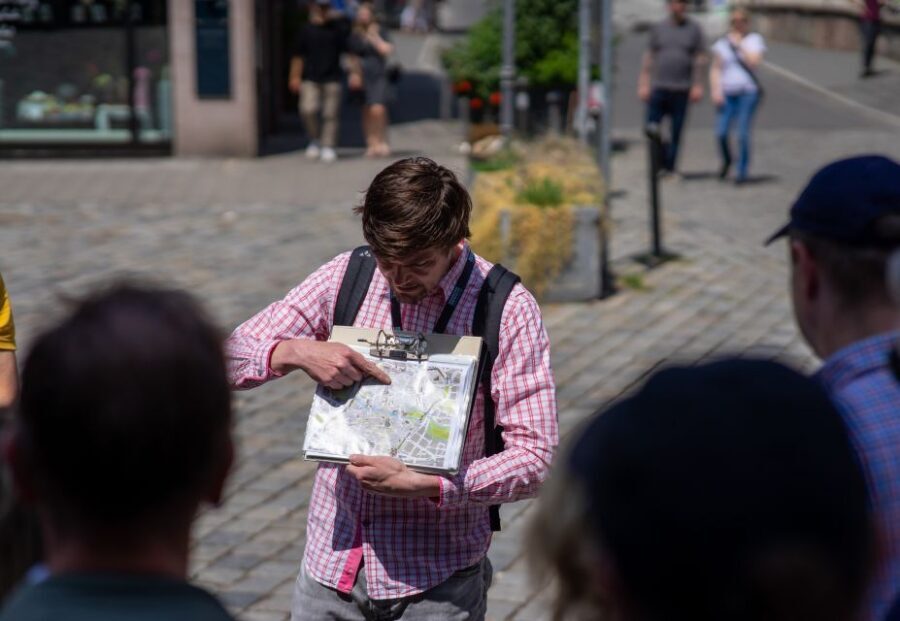
You’ll start at the Henkerhaus Museum area, right where the Hangman’s House is. The guide meets you in front of it, holding a picture folder and wearing a name tag for Geschichte Für Alle e.V. Expect a German live guide and a steady pace that keeps things moving through the center.
Bring comfortable shoes and plan for weather. This is the kind of tour where you’ll want water in your pocket, because the best moments come when you’re standing still—looking up at church spires, then walking again to the next view.
In This Review
- Key points before you go
- Hangman’s House to the Pegnitz: Your Nuremberg “start button”
- Hauptmarkt and Frauenkirche: Where Nuremberg looks most like a postcard
- Sebalduskirche and Saint Sebaldus: Fact, legend, and what you should remember
- Weißgerbergasse: A medieval lane that survived
- Kettensteg to Maxbrücke: The bridge finale you’ll talk about later
- The guides make the difference: Jo, Klemens, Sonja, and the storytelling style
- Price and value: Is $15 worth 1.5 hours of Nuremberg?
- Who this tour suits best (and who should skip it)
- Should you book this Nuremberg Old Town walk?
- FAQ
- Where do I meet the guide?
- How long is the walking tour?
- What language is the tour guide speaking?
- What are the main places you visit on the walk?
- Is Kettensteg included, and why is it special?
- What should I bring with me?
- Is the tour wheelchair accessible?
- Can I cancel for a refund, and can I pay later?
Key points before you go
- Pegnitz River walk through the Old Town for an easy, scenic start
- Hauptmarkt + Frauenkirche gives you the big skyline of gothic Nuremberg
- Saint Sebaldus at Sebalduskirche with the mix of real and fictional stories
- Weißgerbergasse for a medieval lane that was spared from war destruction
- Kettensteg to Maxbrücke ends on Europe’s oldest preserved metal suspension bridge
Hangman’s House to the Pegnitz: Your Nuremberg “start button”
The tour begins at the Hangman’s House (Henkerhaus Museum). Even if you’re not usually into macabre history, this opening works. It sets a tone for the whole walk: Nuremberg wasn’t built by kings alone—it was shaped by everyday life, fear, work, and craft.
From there, you’ll move into the Old Town atmosphere, starting with the kind of guided framing that helps you read the city. You’re not just passing buildings; you’re learning how people lived around them and what the city counted as important.
Then comes the Pegnitz River stretch. This is one of my favorite ways to understand a historic city. Rivers act like natural corridors, and you can feel how the Old Town was organized around movement, trade, and practical routes. If you’ve ever felt lost in old centers, this part helps you get your bearings fast: you walk forward, you cross bridges, and the city starts to make sense in your legs as much as in your head.
You’ll also pass the Fleisch Bridge along the way. Bridges in medieval cities are never just crossings. They were social and economic choke points—places where people and goods flowed. On a guided walk, those details turn a short crossing into a “why this matters” moment.
Practical tip: when you’re near the river, pause for a few seconds. The views are best when you stop trying to outwalk the story.
If you're still narrowing it down, here are other tours in Nuremberg we've reviewed.

Hauptmarkt and Frauenkirche: Where Nuremberg looks most like a postcard
Next, the route leads you to the heart of the city: Hauptmarkt Nürnberg. This is the place tied to the Christkindlesmarkt tradition. Even if you aren’t there in winter, knowing this square’s seasonal role makes it easier to picture how the city “turns on” during the market months.
Hauptmarkt is also where you feel the Old Town’s public life. Squares are where the city’s power shows up—religious, political, and commercial all in one spot. As you stand there, it’s easier to understand why Nuremberg became a serious player in its region.
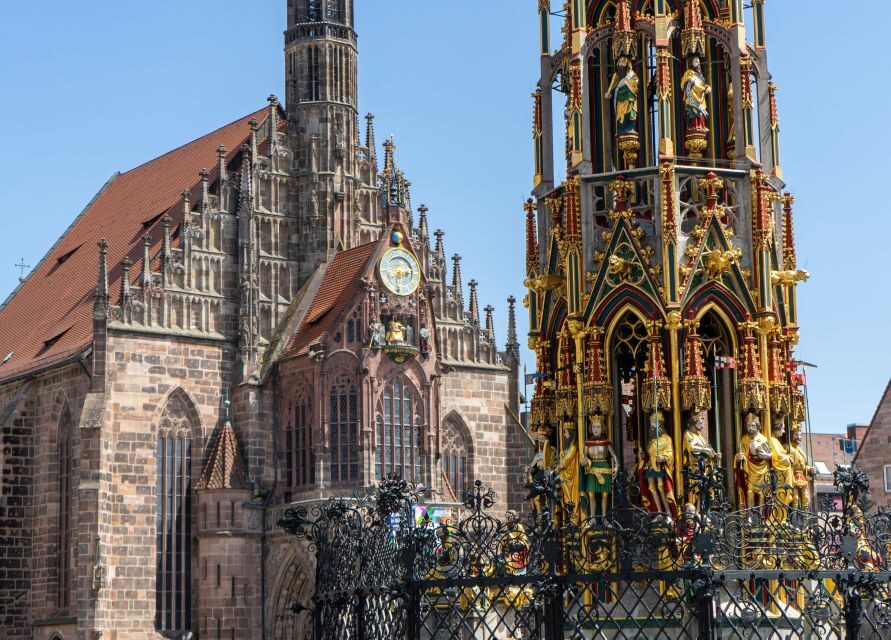
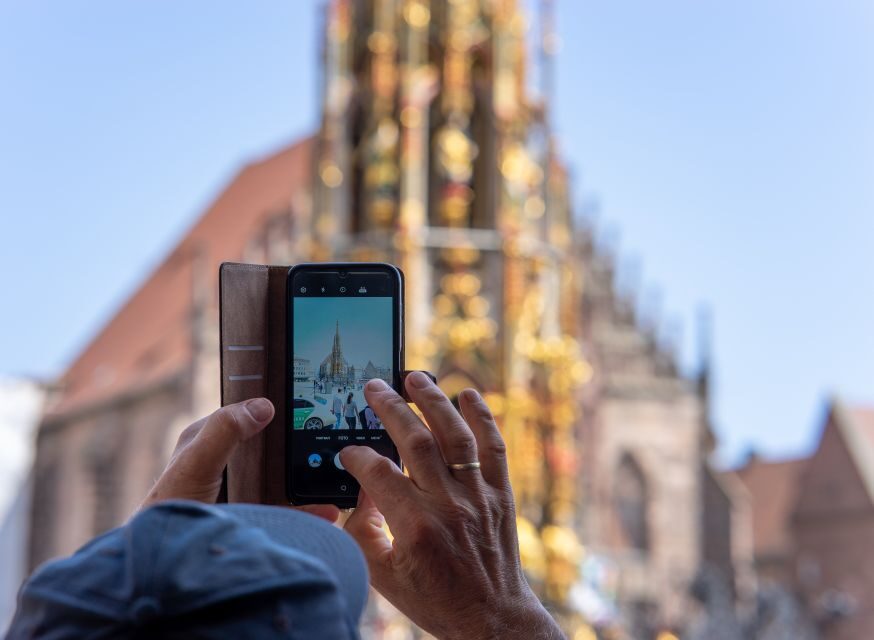
Right after that, you’ll see the Frauenkirche and its gothic spires. The effect is immediate: you look up, and suddenly you understand the city’s skyline logic. In a self-guided walk, it’s possible to admire the church and move on. On this tour, you’re guided to look at what the architecture communicates, not just how it looks in photos.
You’ll also cover the area around the historic town hall. That matters because the town hall isn’t decorative—it’s the civic backbone. Learning how the Old Town’s leadership lived and operated gives the whole block a different meaning.
One small consideration: this part of the route is the busiest area of the center. If you’re sensitive to crowds, plan to keep a relaxed pace and expect some stop-and-go as the guide chats and the group flows around people.
Sebalduskirche and Saint Sebaldus: Fact, legend, and what you should remember
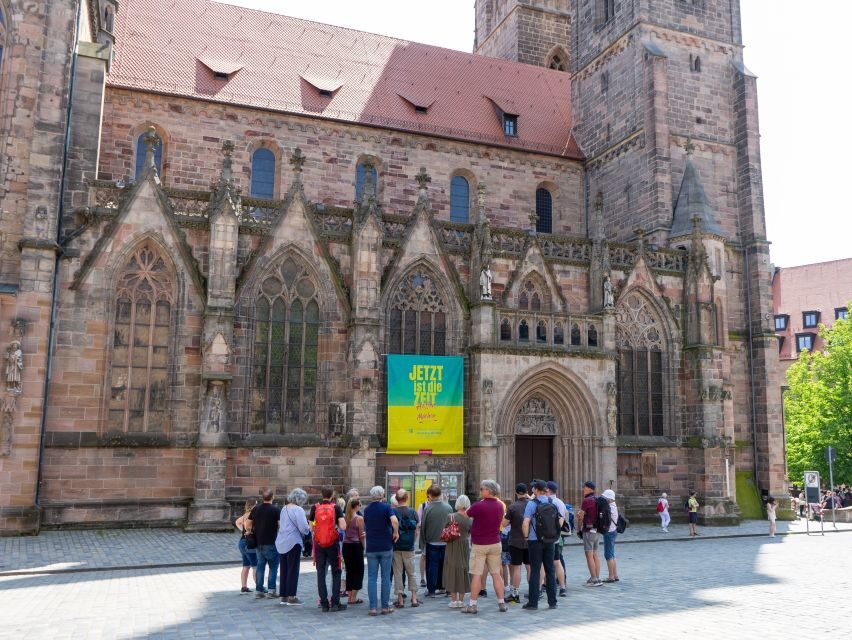
The walk continues to St. Sebaldus Church (Sebalduskirche), one of the oldest churches in Nuremberg. This stop is a great example of what a guided tour can do better than any checklist: it connects a building to stories people actually used to explain their world.
Here’s the key difference. You won’t only hear what’s true. You’ll also learn about the mix of fictional and true stories tied to Saint Sebaldus. That blend is important, because it shows how medieval communities thought. Legends weren’t random inventions—they were tools for identity, comfort, and explanation.
In practical terms, this stop turns the church from a “pretty building” into a place with meaning. You start noticing details because you know what to look for: the kind of history a church carries, not just the shape of its roofline.
My advice: don’t rush the questions. If your guide pauses to explain the Saint Sebaldus story, use that moment to look around slowly. You’ll get more out of the building when you let the story and the space meet in your brain.
Weißgerbergasse: A medieval lane that survived
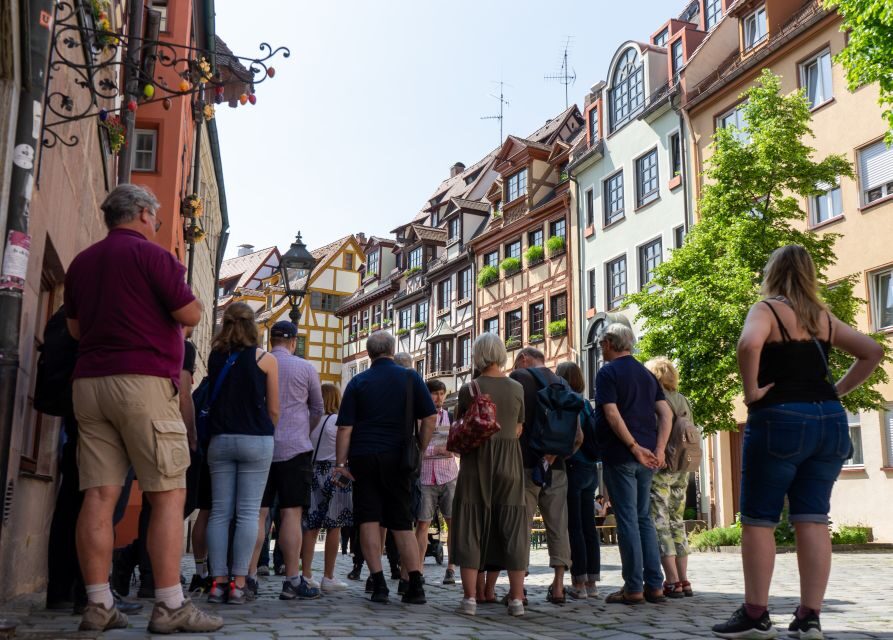
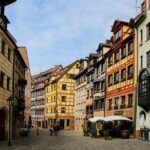
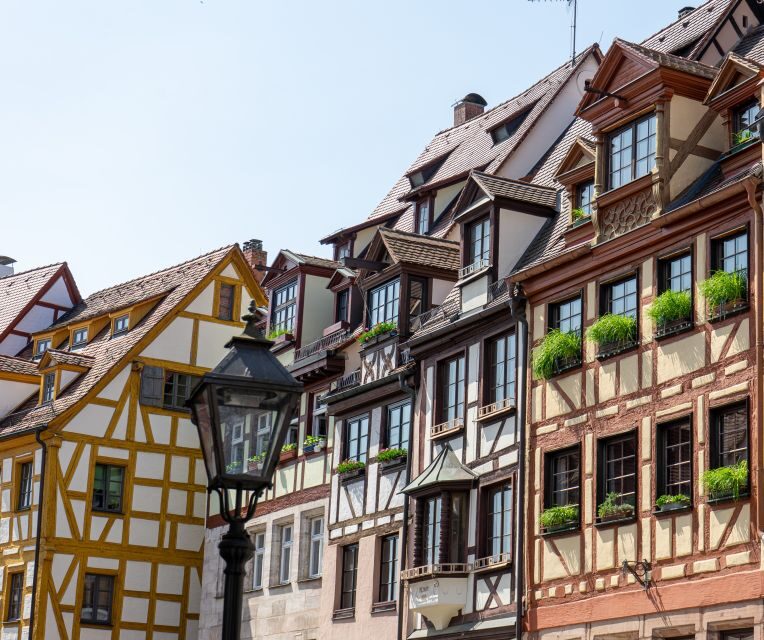
One of the best moments in the tour comes when you walk through Weißgerbergasse. This is where you feel the city’s continuity. The lane was spared from war destruction, and that changes the whole experience.
Without that context, you might see it as “a pretty old street.” With it, the lane becomes evidence. It’s a stretch where the city retains a more original texture—street scale, building presence, and the sense of a lived-in medieval route.
This segment also works well for photos, but I’d treat it as more than a photo stop. Narrow lanes can be disorienting on your own; a guide keeps you oriented and helps you understand why this street is significant beyond aesthetics.
If you like walking routes that feel human—like you’re passing where real people once worked and traveled—this is the part you’ll remember later.
Small tip: if the weather is wet, go slow here. Narrow streets can mean slick stones and uneven surfaces, and you’ll want safe footing.
Kettensteg to Maxbrücke: The bridge finale you’ll talk about later
The tour ends with one of Europe’s most specific, memorable sights: the Kettensteg, the oldest preserved metal suspension bridge in Europe. This is the kind of landmark that’s hard to describe without seeing it, because it’s both engineering and atmosphere.
Crossing it is the point. You don’t just look at a bridge—you experience it: the sensation of standing on a structure built to span a route, the view opening up as you move across, and that satisfying “we did the last segment” feeling.
When you reach the other side, you finish on the old Maxbrücke. That ending matters, because it gives you a final way to connect the bridge story back to the broader river-and-city layout. You’re leaving the tour with your mental map tightened.
Why this ending works: it’s visually strong, it’s tied to the city’s geography, and it’s a clean capstone for a 1.5-hour walk. You’ll likely feel like the tour has a beginning, middle, and ending instead of just a scatter of stops.


The guides make the difference: Jo, Klemens, Sonja, and the storytelling style
The walk is led by a German guide from Geschichte Für Alle e.V. What stands out is how the tour stays readable and fun without turning into a joke parade.
You may get a guide like Jo, Klemens, or Sonja (these names come up often). The style is consistent: clear explanations, small stories to break up the flow, and enough humor to keep medieval history from feeling like homework.
That matters for value. A 1.5-hour tour is short. If the guide is good, you feel like your time was used well. If the guide is stiff, you’ll feel like you paid for walking.
Here, the vibe is that the guide knows the city and knows how to pass it on. That’s what makes the Old Town feel alive rather than staged.
Price and value: Is $15 worth 1.5 hours of Nuremberg?
At about $15 per person for a 1.5-hour guided walk, the price feels fair for what you get—especially in a central area where you’d otherwise pay transport time and still miss context.
You’re paying for three things:
- A guided storyline that links major landmarks into one coherent route
- Explanations that help you understand why buildings matter
- A structured path so you don’t waste your energy figuring out what to see next
If you enjoy history but you don’t want to spend hours building a self-guided plan, this is a strong bargain. Also, since it focuses on the Old Town core, it’s easy to pair with other day plans without turning your day into logistics.
The only reason it might not feel like value is if you already know the city well and just want to wander. In that case, a self-paced walk could suit you. But if you want your questions answered while you’re standing in the right place, the guide time is the product.
Who this tour suits best (and who should skip it)
This walk is best if you:
- Want an efficient first look at Nuremberg’s Old Town
- Like history tied to real sites (churches, town hall, streets, bridges)
- Prefer guided context over guidebooks
- Enjoy the river-and-Old-Town layout style
It may not suit you as well if you:
- Have mobility limitations. The tour listing says wheelchair accessible, but it also states it is not suitable for people with mobility impairments, so you should take that conflict seriously and double-check with the operator.
- Want a slow, sit-down sightseeing experience. This is mainly on foot and designed to cover multiple landmarks in a short window.
Should you book this Nuremberg Old Town walk?
Yes—if you want a well-paced introduction to Nuremberg that actually connects the dots. The combination of Pegnitz River, Hauptmarkt, Frauenkirche, Sebalduskirche, Weißgerbergasse, and the Kettensteg finale creates a route that feels intentional, not random.
Book it especially if you care about stories and meaning, not just photos. And if you’re lucky enough to get a guide like Jo, Klemens, or Sonja, you’ll likely leave with the kind of city understanding that sticks.
FAQ
Where do I meet the guide?
You meet the tour guide in front of the Hangman’s House (Henkerhaus Museum). The guide will be holding a picture folder and wearing a name tag for Geschichte Für Alle e.V.
How long is the walking tour?
The tour lasts about 1.5 hours.
What language is the tour guide speaking?
The live tour guide speaks German.
What are the main places you visit on the walk?
You walk along the Pegnitz River through Nuremberg’s Old Town, cross near Hauptmarkt (where the Christkindlesmarkt takes place), visit sites including Frauenkirche and St. Sebaldus Church, pass through Weißgerbergasse, and end by crossing Kettensteg toward Maxbrücke.
Is Kettensteg included, and why is it special?
Yes. You cross Kettensteg, described as the oldest preserved metal suspension bridge in Europe, and the tour ends on the other side at Maxbrücke.
What should I bring with me?
Bring comfortable shoes, water, and weather-appropriate clothing.
Is the tour wheelchair accessible?
The activity is listed as wheelchair accessible, but it also notes it is not suitable for people with mobility impairments. If that applies to you, it’s smart to check before booking.
Can I cancel for a refund, and can I pay later?
Yes. You can cancel up to 24 hours in advance for a full refund. You can also reserve now & pay later to keep your plans flexible.