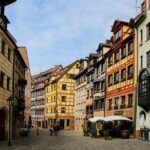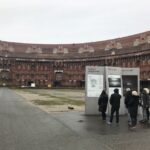
Nuremberg is best learned on your feet. This walking tour strings together the city’s key sights in a logical route, then slows down at each stop for stories you would never pick up from a map. I love the no-map approach where the guide keeps you moving, and I love the way a local Nuremberg guide connects big eras like the Reformation and the Golden Age to real buildings you can actually see. One thing to consider: the walk includes hilly, cobbled sections up toward Kaiserburg, so wear solid shoes and expect a bit of effort.
Price-wise, it’s a small-ticket way to get your bearings fast, without turning your day into a checklist. You’ll also get practical ideas for what to do next, because the guide’s job here is more than pointing out landmarks. If you want history in the background while you quietly stroll, this one may feel too story-forward; if you want context while you move, you’re in the right place.
In This Review
- Quick hits before you go
- A foot-powered primer that starts in the right place
- Price and value: what $3.63 buys you in real time
- The route from Schöner Brunnen to Hauptmarkt: fountains, legends, and the old-town heart
- St. Sebaldus Church: where the Reformation era shows up in stone
- Kaiserburg and the triple-castle skyline: views, structure, and effort
- Albrecht Dürer’s house: the city’s most famous son, in real walls
- Tiergartnertorturm and Weissgerbergasse: towers and the craft streets that survived war
- Altstadt corners: St. Lorenz, castle gardens, and the executioner’s house
- What makes the guide style work (and how to get the most out of it)
- Who should book this Nuremberg walk
- Should you book this walking tour?
- FAQ
- Where does the walking tour start?
- What time does the tour begin?
- How long is the tour?
- Is the tour offered in English?
- Do I get a mobile ticket?
- Does the tour require paying for admission at the stops?
- How big is the group?
- Are service animals allowed?
- What should I wear for the walk?
- Where does the tour end?
Quick hits before you go
- A native English guide who navigates for you, so you spend less time figuring out turns and more time watching the city
- Schöner Brunnen, St. Sebaldus, Hauptmarkt, Kaiserburg and more, all in about 2.5 hours
- WW2 history handled with care, plus how the old town was rebuilt after destruction
- Steep hill factor for Kaiserburg, with breaks built into the pacing
- A Google Map QR code can be shared by the guide, helpful for exploring after the tour
A foot-powered primer that starts in the right place
Your tour begins at the Schöner Brunnen / Hauptmarkt area (Schöner Brunnen is right in the old-town center). This matters more than it sounds. When you start in the main historic core, you immediately get a sense of how Nuremberg’s civic life used to work: fountains, churches, trade squares, and the castle looming above.
The tour format is simple and effective. You’ll walk from one landmark to the next with short stops that include context, legends, and what to notice. There’s also a steady rhythm that helps you keep pace, which matters in Nuremberg because the streets can be uneven and the ground is not always forgiving.
Other Nuremberg day trips we've reviewed in Nuremberg

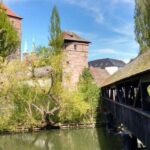
Price and value: what $3.63 buys you in real time
At $3.63 per person, this is priced like a smart add-on, not a big museum commitment. That’s the point. You’re buying time with a guide who can explain what you’re looking at—especially the things you’d otherwise miss because the buildings themselves are only half the story.
The best value here is efficiency. In roughly 2 hours 30 minutes, you cover the old town’s essentials: Gothic architecture near the market, major churches tied to religion and music, the castle complex that defines the skyline, and the medieval craft lanes that show daily life. For many first-timers, that’s the difference between wandering randomly and understanding the city as you go.
Also, the tour’s size is capped at up to 50 travelers. That’s big enough to feel social, but small enough that a good guide can still keep the narrative moving and keep the group together.
The route from Schöner Brunnen to Hauptmarkt: fountains, legends, and the old-town heart
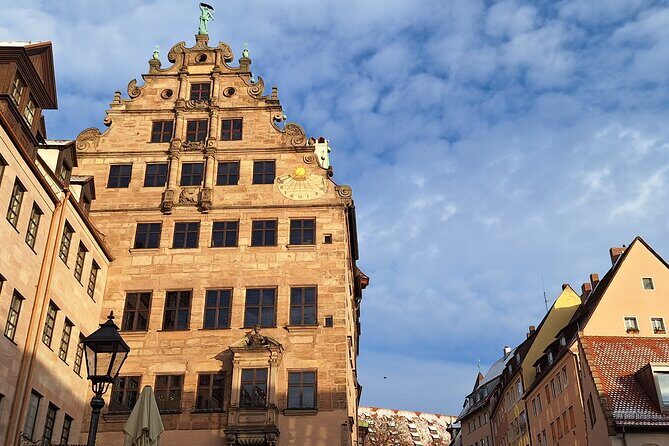
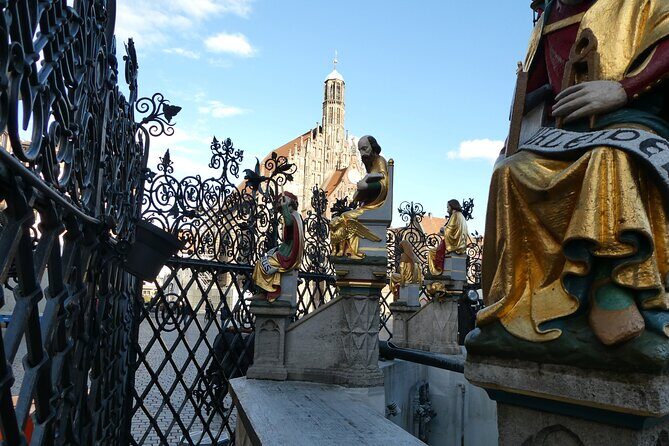
Stop one is Der Schöne Brunnen. This is more than a pretty fountain centerpiece. The meeting point area traces back to the late 14th century, and it’s famous for its Gothic craftsmanship. Your guide also ties it to Nuremberg’s most well-known legend, which gives you something fun to hold onto while you walk.
From there, you reach Hauptmarkt, the main square in Nuremberg’s old town. This is where the city’s public life was concentrated—market day energy, civic ceremonies, and the constant churn of trade. Here you’re pointed toward key landmarks around the square, including the Beautiful Fountain and the Frauenkirche (and you’ll hear about Männleinslaufen, a famous attraction associated with the square).
Two practical takeaways for you:
- You’ll start noticing the city’s layout in layers—square to church to castle—rather than as random buildings.
- You’ll understand why people gather in these exact spots, not just because they’re scenic.
A minor drawback: the first part can feel like “a lot, quickly,” especially if you’re sensitive to walking pace. The good news is the guide keeps explanations tight and on topic so the momentum doesn’t turn into fatigue.
St. Sebaldus Church: where the Reformation era shows up in stone
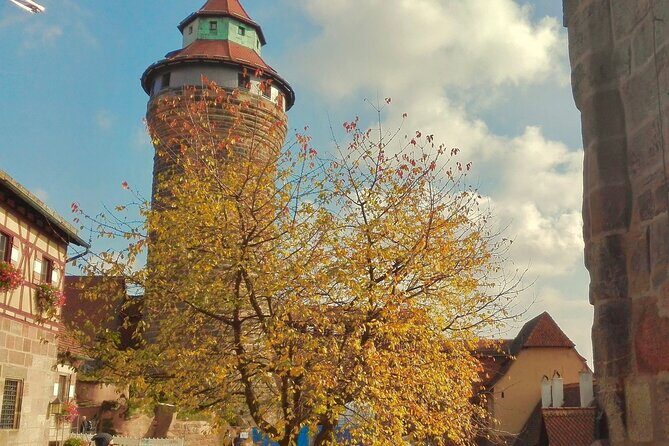
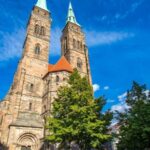
At St. Sebaldus Church, you’re looking at a Romanesque-Gothic masterpiece and learning why it’s considered Nuremberg’s most important church. This is one of those stops where the building gives you a baseline, and the guide gives you meaning.
You’ll hear about religion’s changing role in the city, with emphasis on the Reformation, and you’ll also connect it to Nuremberg’s musical legacy. That combo—faith plus music—helps you see Nuremberg as more than a medieval trade hub. It’s also a place where culture and public identity were deeply tied to institutions.
If you care about how ideas spread through everyday life, this is a strong stop. The architecture is the anchor; the story tells you what that architecture meant to real people.
Kaiserburg and the triple-castle skyline: views, structure, and effort
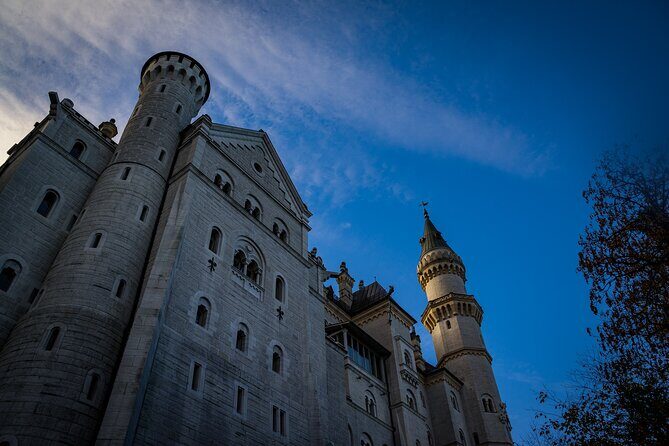
One of the biggest moments is Kaiserburg Nürnberg, the castle that dominates the city view. It’s described as a triple castle with three main parts: the Imperial Castle, the Burggrafenburg, and the imperial city buildings. Even if you don’t go inside every section, the guide’s explanation helps you understand the scale and the different functions.
This is also the part where your body has an opinion. Multiple guides in this format manage the climb carefully, but the city’s topography is real. The walk up involves a steep grade and cobbled surfaces, so plan for a slow, steady rhythm.
What I like about this is that the pacing is built with breaks in mind. One guide even made sure the group had a photo and drink break around the castle area (about 10–15 minutes), which is exactly what you need after climbing.
Practical advice:
- Bring water if it’s warm.
- Take the climb as part of the tour, not something to “power through.”
- If you have knee or mobility limits, be ready to adjust mid-route. The tour narrative supports that kind of flexibility.
Other walking tours we've reviewed in Nuremberg


Albrecht Dürer’s house: the city’s most famous son, in real walls
Next comes Albrecht-Dürer-Haus, a medieval house built around 1420. What makes it fascinating is how it changed over time. The property gained its current appearance through modernization carried out after 1500 by Bernhard Walther. Then, from 1509 to his death in 1528, it served as Albrecht Dürer’s home and workplace.
This stop works well because you’re not just hearing art-history facts. You’re walking through a location that lets you picture how a major artist lived in his own time. It also reinforces the bigger theme of Nuremberg: craftsmanship, trade, and creativity were all connected.
If you’re a first-time Dürer fan, this stop gives you a foundation. If you already know his work, it still adds value because it places his life inside the city’s physical story.
Tiergartnertorturm and Weissgerbergasse: towers and the craft streets that survived war
Back out in the streets, Tiergartnertorturm is a 14th-century defensive tower that rises over one of Nuremberg’s most beautiful squares. This is a reminder that the old town wasn’t built just for looks. It was built for defense and control—especially when the city’s trade status made it important.
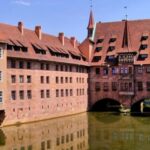
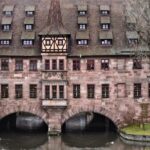
Then you’ll move to Weissgerbergasse, Nuremberg’s famous craftsmen’s street. This is where the tour gets especially human. You learn why the street mattered, and you also hear about what happened to the old town during World War II—including destruction and later reconstruction.
You’ll appreciate this stop more if you care about continuity: how a city rebuilds itself after trauma without simply starting over from scratch. The guide’s job here is to connect the physical street to the people who worked there, and then to the post-war reality of rebuilding.
It’s one of the best stops for anyone who thinks medieval towns are just “old stone.” Here you see how the old stone is part of a more modern recovery story.
Altstadt corners: St. Lorenz, castle gardens, and the executioner’s house
The tour wraps with an Altstadt walk that doesn’t just repeat the main highlights. You’ll pass or discuss major sites like the churches of St. Sebald and St. Lorenz, plus the imperial castle again from another angle in the overall route.
More importantly, you’ll hear about hidden-feeling spots such as castle gardens and the executioner’s house. That doesn’t mean you’re suddenly doing a scary attraction. It means the guide helps you see Nuremberg as a real working city, not a postcard machine.
This is also where you tend to get the most useful “what should I do next” advice. Because the tour ends back where you started, you can immediately use the context you just learned to choose your next walk, meal, or museum stop.
What makes the guide style work (and how to get the most out of it)
The best reviews for this experience are consistent: the guides are locals who tell stories with care, humor, and structure. Names you might encounter include Daniella, Andreas, Dennis, Alexandra, or Tom—and each seems to bring a slightly different storytelling flavor. Common thread: they explain details without turning the tour into a lecture.
Here are a few ways you’ll get more out of it:
- Keep your questions short. The guide is built for interaction, especially at the stops.
- Ask what to see next in the neighborhoods you’re walking through, not just the top attractions.
- If the guide offers extra visuals, like a Google Map QR code, grab it. That’s a practical tool for continuing your exploration afterward.
And yes, your feet matter. Plan for hills and cobblestones. Bring shoes you can trust. The tour can be adjusted by pace, but the terrain doesn’t disappear.
Who should book this Nuremberg walk
This tour is a strong match if you:
- Want a quick, guided orientation to Nuremberg’s old town
- Enjoy history told through buildings, not just dates
- Want the castle and the medieval craft streets in one compact route
- Prefer an English-speaking guide who grew up in Nuremberg
It may be less ideal if:
- You can’t manage uneven ground or steep climbs without breaks
- You prefer silent sightseeing over story-led walks
- You only want inside-only museum time (this is mainly an outdoor orientation)
Should you book this walking tour?
If you’re visiting Nuremberg for the first time and you want the city to make sense fast, I think this is an easy yes. The value comes from the combination of major landmarks and the smaller street-level details, all stitched together with a local guide’s perspective. You’ll walk away with a mental map of how the castle, markets, churches, and craft areas connect.
My call: book it if you’re comfortable with a bit of walking up to the castle and you want context while you travel through the old town. It’s the kind of tour that makes your later self-guided exploring feel smarter, not harder.
FAQ
Where does the walking tour start?
The tour starts at Schöner Brunnen / Hauptmarkt, 90403 Nürnberg, Germany.
What time does the tour begin?
The start time listed is 11:30 am.
How long is the tour?
The duration is about 2 hours 30 minutes.
Is the tour offered in English?
Yes, it’s offered in English.
Do I get a mobile ticket?
Yes, the tour includes a mobile ticket.
Does the tour require paying for admission at the stops?
The listed stops show admission ticket free for each of them during the tour.
How big is the group?
The tour has a maximum of 50 travelers.
Are service animals allowed?
Yes, service animals are allowed.
What should I wear for the walk?
This is an old-town walking route with hills and cobblestones mentioned in the experience, so comfortable shoes are a good idea.
Where does the tour end?
It ends back at the meeting point (the tour finishes where it started).